

P0304 on 2008-2009 Cadillac STS: Cylinder 4 Misfire Causes and Fixes
P0304 indicates a misfire on cylinder 4. On the 2008-2009 Cadillac STS, this is most often caused by a failed ignition coil or a worn spark plug. For models with the 3.6L V6 engine, carbon buildup on the intake valves is another common cause, especially noticeable during cold starts.
- P0304 signifies a misfire on cylinder 4, the middle cylinder on the driver's side (V6) or the second cylinder from the front on the passenger's side (V8).
- Start your diagnosis by swapping the ignition coil from cylinder 4 with another cylinder to see if the misfire code follows the coil. This is the most common failure.
- If the coil is good, perform the same swap test with the spark plug.
- On the 3.6L V6 engine, if ignition parts are good, the cause is likely carbon buildup on the intake valves, which typically requires professional cleaning.
- Do not ignore a flashing check engine light, as this signals a severe misfire that can quickly destroy the catalytic converter, leading to a much more expensive repair.
What's Unique About the 2008-2009 Cadillac STS
The 2008-2009 STS was available with two distinct engines: the 4.6L Northstar V8 and the then-new 3.6L direct-injection (LLT) V6. While ignition components are a common cause on both, the 3.6L V6 is particularly susceptible to carbon buildup on intake valves, a known issue with early direct-injection engines that can cause misfires, especially when cold. Additionally, a Technical Service Bulletin (TSB #PIP5038B) for the 2008 model lists P0304 among a large group of misfire and coil circuit codes, advising technicians to check ignition coil grounds (G109 and G112 on the STS) and follow specific diagnostic procedures, suggesting potential for broader electrical issues.
Diagnostic Flowchart
Tap your situation to follow the diagnostic path that matches what you're seeing on this vehicle.
Symptoms You May Notice
- Check Engine Light is on or flashing
- Rough or shaky idle
- Hesitation or stumbling during acceleration
- Reduced engine power
- Noticeable fuel smell from the exhaust
- Engine may stall or be difficult to start
- Replacing the catalytic converter when it has been damaged by a persistent misfire, without fixing the root cause of the misfire first.
- Replacing fuel pumps or mass airflow sensors when the issue is isolated to a single cylinder's ignition components.
- On the 3.6L V6, repeatedly replacing plugs and coils when the underlying issue is carbon buildup on the intake valves.
Most Likely Causes
- Faulty Ignition Coil 🔴 High Probability → Shop Ignition Coil Coil-on-plug ignition systems are subjected to high heat and vibration, leading to eventual failure. It's a very common failure point on most modern engines. TSB #PIP5038B notes that for vehicles built before Dec 2008 with repeat coil failures, all 6 coils, plugs, and the ECM may need replacement as a unit.
How to confirm: Swap the ignition coil from cylinder 4 with another cylinder (e.g., cylinder 2). Clear the codes and drive the vehicle. If the code changes to P0302, the ignition coil is faulty. Be aware, as one owner on CadillacForums.com discovered, it is possible to get a brand new faulty coil, so the swap test is crucial.
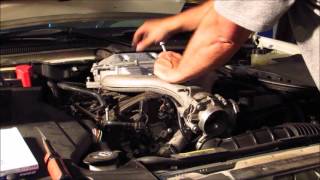
Typical fix: Replace the failed ignition coil. 🎬 Watch: Step-by-step guide to replacing STS coils and spark plugs. Many technicians recommend replacing all coils on the bank, or all coils on the engine if they are original, to prevent future failures. Ensure the coil ground bolts are clean and torqued to 15 lb-ft as per TSB PIP5038B.
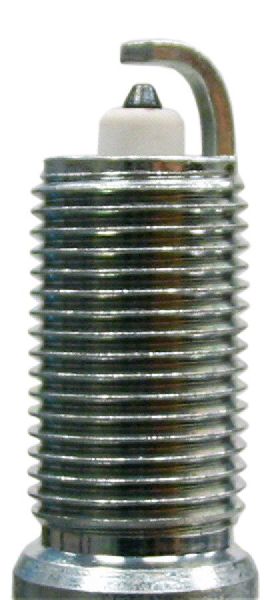
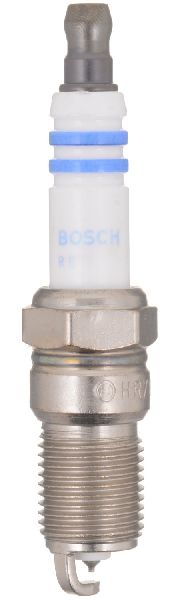
Est. part cost: $40-$90 - Worn or Fouled Spark Plug 🔴 High Probability → Shop Spark Plug Spark plugs are a regular maintenance item with a 100,000-mile service life. Worn electrodes or carbon/oil fouling can prevent a strong spark, leading to a misfire. Oil fouling can occur due to leaking valve cover gaskets, a common issue on higher-mileage engines.
How to confirm: After confirming the coil is good, swap the spark plug from cylinder 4 with another cylinder. If the misfire code follows the plug, the spark plug is the issue. Visually inspect the plug for wear, oil, or carbon tracking. The correct gap for the OEM Iridium plug is pre-set and should not be adjusted.
Typical fix: Replace the spark plug. It is best practice to replace all spark plugs at the same time with high-quality Iridium plugs (ACDelco, NGK, or Denso) as specified by the manufacturer.
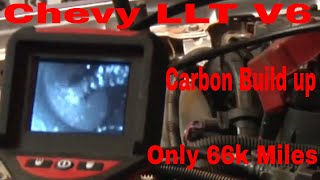
Est. part cost: $10-$25 per plug - Carbon Buildup on Intake Valves (3.6L V6 Only) 🟡 Medium Probability The 3.6L LLT V6 engine uses direct injection, which sprays fuel directly into the cylinder. This means fuel detergents don't wash over the intake valves, allowing carbon deposits to form over time, restricting airflow and causing misfires. 🎬 See what carbon buildup looks like on the 3.6L intake valves. This is often more apparent on a cold start and may not be felt by the driver but will log a code.
How to confirm: This is difficult to confirm without some disassembly. If ignition and fuel system checks pass, a borescope inspection of the intake valves is the next step. This is a known issue per GM bulletin PIP5029G (now superseded by 16-NA-383), which covers misfires that may appear after 5,000 miles or more due to this issue.
Typical fix: The intake valves need to be cleaned. This is typically done via walnut shell blasting. GM also outlines a chemical cleaning procedure in TSB 16-NA-383 using Upper Engine and Fuel Injector Cleaner, which involves a 2.5-3 hour soak.
Est. part cost: $0 (service cost) - Faulty Fuel Injector ⚪ Low Probability → Shop Fuel Injector While less common than ignition issues, fuel injectors can become clogged or fail electrically. On the 3.6L V6, replacement is labor-intensive as it requires removing the intake manifold.
How to confirm: Listen to the injector with a mechanic's stethoscope; it should have a consistent clicking sound. Compare it to an adjacent injector. An advanced scan tool can perform a fuel injector balance test. A user on 2CarPros.com reported codes P0204 and P0304 together, pointing to a wiring issue or faulty ECM driver for the injector.
Typical fix: Replace the clogged or failed fuel injector. The fuel rail may need to be removed for access. If multiple injector codes are present, suspect a wiring harness issue.
Est. part cost: $70-$150
Rare But Worth Checking
- Intake Manifold Gasket Leak: → Shop Engine Intake Manifold A vacuum leak near the cylinder 4 intake runner can lean out the mixture and cause a misfire. This may also trigger lean codes like P0171 or P0174.
- Low Compression: A mechanical engine problem like a bad valve, worn piston rings, or a leaking head gasket can cause a persistent misfire on one cylinder. A compression test is required to diagnose this. TSB 16-NA-383 notes that severe carbon can cause valves to stick, leading to zero compression when cold.
- Wiring Harness or Connector Issue: A loose or broken connector clip on the fuel injector or ignition coil can cause an intermittent misfire. A user on Lincoln vs Cadillac Forums fixed their P0304 by simply re-seating a loose fuel injector connector. Additionally, TSB PIP4924D, which applies to platform mates with the 3.6L engine, warns of wiring harness chafing against the intake, valve covers, or fuel lines causing injector circuit codes.
Diagnosis Steps
- Read the code with an OBD-II scanner and note any other codes present, especially other misfire or circuit codes.
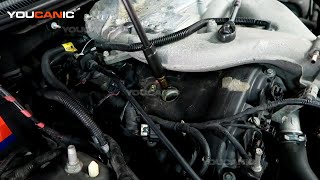
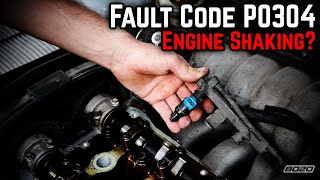
- Identify cylinder 4. 🎬 Watch this breakdown to find the root cause of your misfire. On the 3.6L V6, it is the middle cylinder on the driver's side (Bank 2). On the 4.6L V8, it is the second cylinder from the front on the passenger's side (Bank 1).
- Swap the ignition coil from cylinder 4 with the coil from cylinder 2 (front cylinder on the driver's side for V6, or front on passenger side for V8).
- Clear the codes, start the engine, and let it run or drive it briefly. Re-scan for codes.
- If the code has moved to P0302, the ignition coil is the faulty part and must be replaced.
- If the code remains P0304, the coil is likely good. Move the spark plug from cylinder 4 to cylinder 2 and repeat the test. If the code changes to P0302, the spark plug is bad.
- If the code still remains P0304, inspect the wiring and connector for the cylinder 4 ignition coil and fuel injector for any damage, corrosion, or looseness. Check the coil boot for a loose fit per TSB #PIP4819A.
- If ignition components are confirmed good, consider a clogged fuel injector or, on the 3.6L V6, carbon buildup on the intake valves as the next likely causes.
- For persistent issues, a compression test should be performed on cylinder 4 to rule out mechanical engine problems like sticking valves or bad rings.
Parts You'll Likely Need
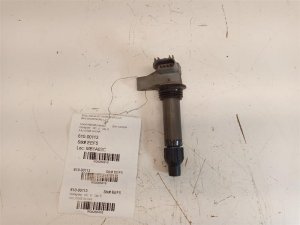
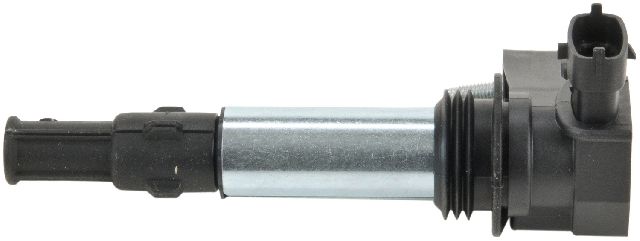
- Ignition Coil
(OEM #12632479 (Also known as D515C))— This is the most common cause of a single-cylinder misfire due to failure from heat and age.
Trusted brands: ACDelco (OEM), Delphi, NGK, Denso
OEM price range: $60-$90
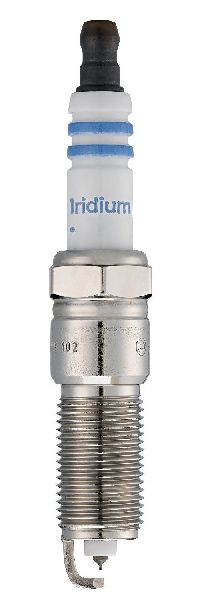
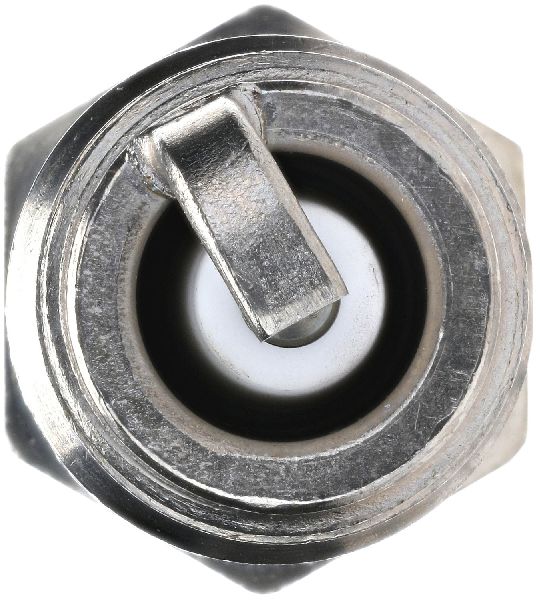
Aftermarket price range: $35-$60 - Iridium Spark Plug
(OEM #41-107 (Alternative P/N: 41-987))— Spark plugs are a maintenance item and a worn or fouled plug is a primary cause of weak spark and misfires.
Trusted brands: ACDelco (OEM), NGK, Denso, Bosch
OEM price range: $15-$25
Aftermarket price range: $10-$18
Related Codes That Often Appear With This One
- P0300 — If the condition causing the P0304 is intermittent or affects other cylinders (like a vacuum leak or carbon buildup), a general P0300 (Random/Multiple Cylinder Misfire) code may also be stored.
- P0302, P0306 — On the V6 engine, cylinders 2, 4, and 6 are on the same bank (Bank 2, driver's side). A problem affecting that entire bank, like a vacuum leak or a bad ground for that bank's coils, could cause misfires on multiple cylinders on that side.
- P0354 — This code indicates a fault in the ignition coil primary or secondary circuit for cylinder 4. It often appears with P0304 and points directly to a problem with the coil, its wiring, or the ECM driver.
- P0204 — This code for 'Injector Circuit/Open - Cylinder 4' points to an electrical issue with the fuel injector. If seen with P0304, it strongly suggests the misfire is fuel-related, likely a bad injector, wiring problem, or ECM fault, not a spark issue.
Technical Service Bulletins (TSBs) & Recalls
- PIP5038B: Mentions that P0304 can be set along with numerous other misfire and coil circuit DTCs, requiring adherence to published service information for diagnosis, including checking coil grounds.
- PIP5029G: Details the issue of engine misfires due to major carbon deposits on intake valves for direct-injection engines, including the 3.6L LLT.
- PIP4819A: Calls for inspecting and replacing loose-fitting spark plug boots as a potential fix for P030x codes.
Platform-Specific Known Issues
- TSB #PIP5038B: Misfire & Ignition Circuit Codes: This bulletin notes that P0304 can appear with a wide range of other misfire and ignition circuit codes (P0300-P0306, P0351-P0356). It advises technicians to check for clean and properly torqued ignition coil grounds (G109 and G112 on the STS) and follow specific service diagnostics, indicating a potentially complex electrical or ECM-related issue rather than a simple component failure.
- TSB #PIP5029G: Carbon Buildup on 3.6L V6: As documented in this GM bulletin, the direct-injection 3.6L LLT engine is prone to carbon deposits on the intake valves, which can cause misfires that are often more noticeable on a cold start. The bulletin describes a chemical cleaning procedure as a potential fix.
Mechanic-Grade Diagnostic Values
- Ignition Coil Primary Resistance (3.6L V6) — expected: 0.4 - 2.0 Ohms. Failure: A reading of 0 indicates a short; a significantly higher or OL reading indicates an open circuit.
- Ignition Coil Secondary Resistance (3.6L V6) — expected: 8.0 kΩ - 15.0 kΩ. Failure: A reading outside this range indicates a faulty secondary winding.
- Fuel Injector Resistance (3.6L LLT V6) — expected: 1.5 - 1.6 Ohms. Failure: A reading significantly higher (open) or lower (shorted) than this range indicates a failed injector.
- High-Pressure Fuel Rail Pressure at Idle (3.6L LLT V6) — expected: 1.9 - 5.0 MPa (276 - 725 PSI). Failure: Pressure consistently below this range at idle can indicate a weak high-pressure fuel pump (HPFP).
- Low-Pressure Fuel System Pressure (3.6L LLT V6) — expected: ~58 PSI. Failure: Pressure significantly lower than this indicates a problem with the in-tank fuel pump or its supply.
Hidden / Shadow Codes Worth Checking
- Misfire History / Misfire Graph: This is not a DTC but a live data parameter on professional scan tools that shows the raw count of misfire events per cylinder. It can reveal intermittent or low-frequency misfires that have not yet met the threshold to set a P0304 code. (see via Requires a professional-grade scan tool like a GM Tech 2 or GDS2.)
Scan Tool Commands That Help
- GM Tech 2 / GDS2: Misfire Graphic / Misfire Data List — Use this to monitor real-time misfire counts on each cylinder. This helps confirm if the misfire is isolated to cylinder 4 or if other cylinders are also misfiring at a lower rate, which might suggest a systemic issue like a vacuum leak or fuel delivery problem.
- GM Tech 2 / GDS2: Crankshaft Position (CKP) System Variation Learn Procedure — Perform this relearn procedure after replacing a crankshaft sensor, camshaft sensor, or reprogramming the ECM. It improves the accuracy of misfire detection by compensating for minor mechanical tolerances and wear in the timing system. Failure to do so can lead to false misfire counts.
Wiring & Ground Locations
- G109 and G112 — These are the primary ignition coil grounds for the 3.6L V6 in the STS. While exact diagrams are scarce, TSB PIP5038B identifies them as critical. On similar GM platforms, these grounds are located on the rear of the cylinder heads. A wiring diagram for the 2008 STS confirms G109 is a ground distribution point.. TSB #PIP5038B explicitly states that loose or dirty connections at G109 and G112 can cause electromagnetic interference (EMI) that leads to misfires and repeat ignition coil failure. Cleaning the ground terminals and bolt, then torquing to 15 lb-ft is a required diagnostic step before replacing parts.
- G107 (4.6L V8) — Located on the rear side of the right cylinder head.. This is a primary engine ground for the V8. A poor connection here can cause erratic behavior from various engine sensors and actuators, including the ignition system, leading to misfires.
Real Owner Repair Stories
- CadillacForums.com user 'spencer' (Cadillac (model not specified, but P0304 context is relevant)) — Persistent P0304 misfire code.
❌ Tried (didn't work) Replaced Spark Plugs, Replaced Spark Plug Wires, Replaced all 4 ignition coils (on a 4-cyl) or the bank of coils, Checked fuel injectors and vacuum
✅ What actually fixed it The owner discovered that one of the brand new ACCEL ignition coils they had installed was faulty out of the box. Swapping in another new coil resolved the P0304 code. - Reddit user on r/MechanicAdvice (Chevy Traverse (with 3.6L V6, same engine family)) — Intermittent no crank/no start, multiple communication loss DTCs.
❌ Tried (didn't work) Initial diagnosis was confusing due to multiple communication codes.
✅ What actually fixed it After a transmission replacement by a shop, the main ground bolt on the back of the cylinder head (G110 on this vehicle) was cross-threaded and not tight. This caused an intermittent loss of ground for the engine modules. Creating a new, secure ground path fixed all issues.
OEM Part Supersession History
12590990, 12610626, 12618542→12632479 (ACDelco D515C)— Standard part evolution for improved durability, materials, or manufacturing process.
Model Year Variations Within This Range
- 2008-2009: The 2008 model year was the first to feature the 3.6L direct-injection (LLT) V6, replacing the previous port-injected V6. The 2009 model was largely a carryover with only superficial changes. Therefore, the primary causes and fixes, especially those related to the LLT V6 engine (carbon buildup, specific grounds), apply to both years in this range.
Helpful Videos

Used OEM Parts in Stock
New Aftermarket Parts Available


The information in this article is provided for general reference and educational purposes only. Vehicle specifications, procedures, and part compatibility can vary by production date, trim level, and region. Always consult your vehicle's factory service manual and verify part numbers before purchasing or performing repairs. Safety-critical components such as airbags, seat belts, and braking systems should be installed by a qualified professional.
- Cadillac STS:
- 🧭 Diagnostic Flowchart
- 🎬 Helpful Videos
- 🛍️ Shop This Part
- What's Unique About the 2008-2009 Cadillac STS
- Symptoms You May Notice
- Most Likely Causes
- Rare But Worth Checking
- Diagnosis Steps
- Parts You'll Likely Need
- Related Codes That Often Appear With This One
- Technical Service Bulletins (TSBs) & Recalls
- Platform-Specific Known Issues
- Mechanic-Grade Diagnostic Values
- Hidden / Shadow Codes Worth Checking
- Scan Tool Commands That Help
- Wiring & Ground Locations
- Real Owner Repair Stories
- OEM Part Supersession History
- Model Year Variations Within This Range
- 🎟️ Get 5% Off