

P0304 on 2011-2013 Chevrolet Camaro: Cylinder 4 Misfire Causes and Fixes
P0304 means cylinder 4 is misfiring. On V8 models, the most likely cause is a faulty spark plug or a loose/bad spark plug wire, per a GM Technical Service Bulletin. On V6 models, it's typically a bad spark plug or ignition coil. Expect to spend $15-$75 on parts for a DIY fix.
- P0304 is a misfire on cylinder 4. Do not drive if the check engine light is flashing.
- On V8 engines, check the spark plug wire on cylinder 4 first, as loose wires are a known issue.
- On V6 engines, the most likely culprits are a bad ignition coil or spark plug.
- A simple diagnostic step is to swap the ignition coil (V6) or spark plug with an adjacent cylinder to see if the misfire code follows.
- Always use the correct cylinder layout diagram for your specific engine (V6 or V8) to ensure you are working on the correct cylinder.
What's Unique About the 2011-2013 Chevrolet CAMARO
For the 2011-2013 Camaro, the cause of a P0304 code often depends on the engine. V8 models are specifically called out in a GM Technical Service Bulletin (TSB #PIP4819A) for having issues with loose spark plug wires causing misfires. V6 models, which use a coil-on-plug ignition system, are more prone to individual ignition coil failures. Additionally, the direct-injected V6 engines (LLT and LFX) can be susceptible to carbon buildup on intake valves, which can lead to misfires over time, a condition detailed in TSB #PIP5029B. The L99 V8 engine also features Active Fuel Management (AFM), and while a tune can disable it, the mechanical components remain; a failing AFM lifter on cylinder 4 can cause a persistent misfire that isn't resolved by ignition or fuel system repairs.
Diagnostic Flowchart
Tap your situation to follow the diagnostic path that matches what you're seeing on this vehicle.
Symptoms You May Notice
- Rough or shaking idle
- Hesitation or stumbling during acceleration
- Noticeable loss of engine power
- Check Engine Light is on and steady, or flashing in severe cases
- Smell of unburned gasoline from the exhaust
- Reduced fuel economy
- Service StabiliTrak warning light may also illuminate
- Replacing oxygen sensors. A misfire can cause an O2 sensor to read incorrectly, but the sensor itself is rarely the cause of a single-cylinder misfire code.
- Assuming spark plugs are good because they haven't reached their 100,000-mile service interval. Fouling or defects can cause them to fail much earlier.
Most Likely Causes
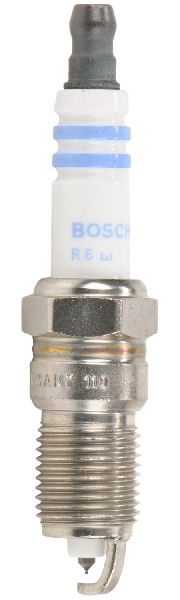
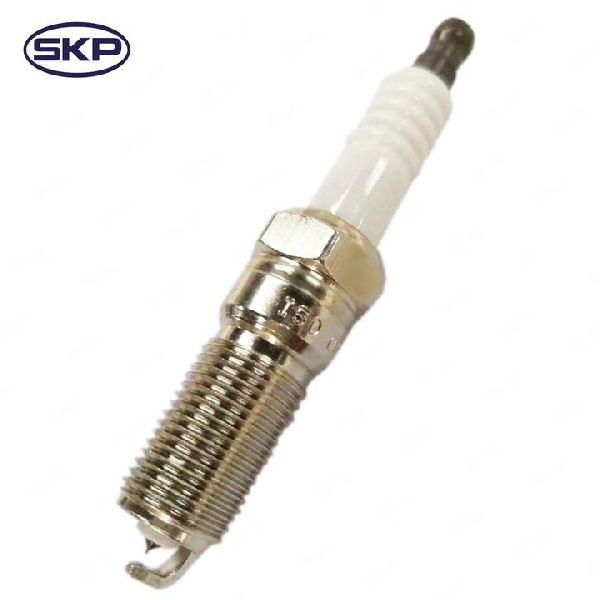
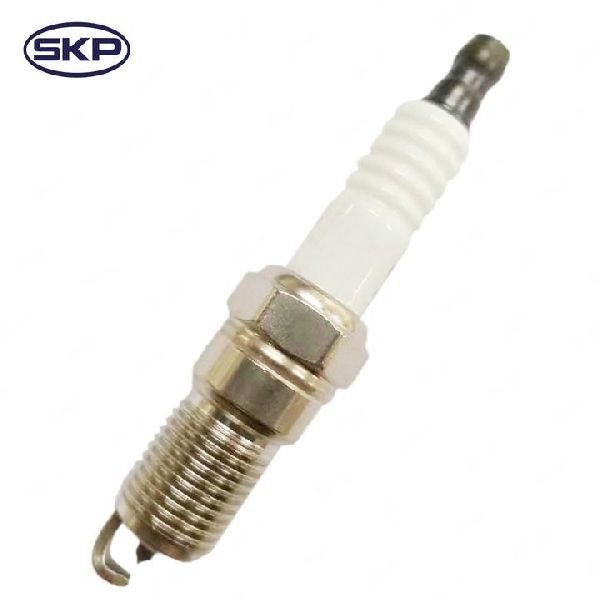
- Worn or Fouled Spark Plug 🔴 High Probability → Shop Spark Plug Spark plugs are a maintenance item. While rated for 100,000 miles, oil fouling or carbon can cause them to fail prematurely.
How to confirm: Remove the spark plug from cylinder 4 and inspect it. Look for a worn electrode, heavy carbon deposits, or signs of oil/coolant fouling. Compare it to a plug from a working cylinder. A plug from the misfiring cylinder may have more carbon buildup.
Typical fix: Replace the spark plug. It is highly recommended to replace all spark plugs at the same time for even performance. The correct ACDelco Iridium plug is 41-109.
Est. part cost: $8-$20 per plug - Faulty Spark Plug Wire (V8 Models) 🔴 High Probability → Shop Spark Plug A known issue documented in GM TSB #PIP4819A, which states that loose spark plug wires can cause misfires on 2011 models. Wires can also fail from heat exposure from aftermarket headers.
How to confirm: Inspect the spark plug wire for cylinder 4. Ensure it is securely clicked onto both the ignition coil and the spark plug. Check for any visible damage, burns, or arcing marks on the wire and boot. Test the wire's resistance with a multimeter; a bad wire will show no or infinite resistance.
Typical fix: Replace the spark plug wire. It's best practice to replace the entire set of wires.
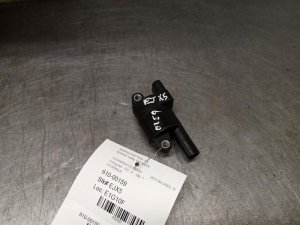
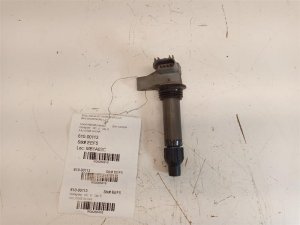
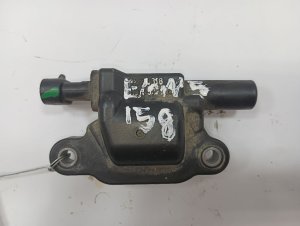
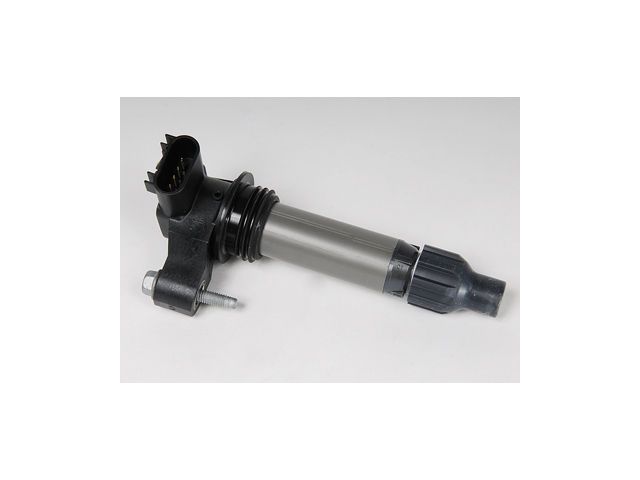
Est. part cost: $50-$90 for a full set - Faulty Ignition Coil (V6 Models) 🔴 High Probability → Shop Ignition Coil V6 engines use a coil-on-plug design where each cylinder has its own coil. These coils are a common failure point as the vehicle ages and are a primary suspect for a single-cylinder misfire.
How to confirm: Swap the ignition coil from cylinder 4 with another cylinder (e.g., cylinder 2). Clear the codes and drive the car. If the code changes to P0302, the ignition coil is faulty.
Typical fix: Replace the failed ignition coil. The OEM part is ACDelco D515C. 🎬 See how to replace a V6 coil pack in minutes.
Est. part cost: $40-$75 - Clogged or Faulty Fuel Injector 🟡 Medium Probability → Shop Fuel Injector Direct injection (DI) injectors on both V6 and V8 engines operate under high pressure and can fail electrically or become clogged. Wiring harness chafing near the injector is also a known issue on related GM platforms.
How to confirm: Listen to the injector with a mechanic's stethoscope; it should make a consistent clicking sound. You can also swap the injector with another cylinder to see if the misfire code follows, though this is more labor-intensive. Another diagnostic step is to check the injector wiring for damage.
Typical fix: Replace the faulty fuel injector. It's often recommended to have all injectors professionally cleaned and tested at the same time.
Est. part cost: $60-$120
Rare But Worth Checking
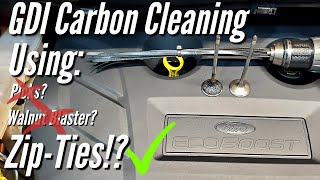
- Intake Valve Carbon Buildup (V6 Models): The 3.6L LLT and LFX are direct-injection engines, which are prone to carbon buildup on the back of the intake valves over time. This can restrict airflow and cause misfires, especially on cold starts. This is mentioned in TSB #PIP5029B. The recommended fix is professional walnut shell blasting of the valves. 🎬 Watch: Step-by-step intake valve cleaning for the 3.6L LFX engine.
- Vacuum Leak: A leak in the intake manifold gasket or a vacuum hose near cylinder 4 can lean out the air/fuel mixture and cause a misfire.
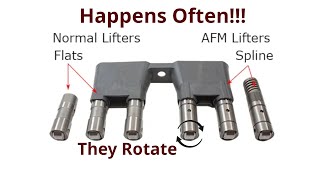
- Internal Engine Mechanical Failure (AFM Lifter): Though uncommon, a misfire can be caused by a loss of compression. On L99 V8s with Active Fuel Management (AFM), a collapsed or stuck lifter on cylinder 4 is a known, though rare, cause. This may not make noise but can be confirmed by removing the valve cover and observing rocker arm movement while cranking the engine.
Diagnosis Steps
- Read the codes with an OBD-II scanner and confirm P0304 is the primary code. Note any other codes like P0300.
- Identify the engine (V6 or V8) and locate cylinder #4. For V8s, it's the second cylinder on the passenger side. 🎬 Watch: A real-world diagnosis of P0304 on a Camaro SS. For V6s, it's the middle cylinder on the driver's side.
- For V8 Models: Inspect the spark plug wire for cylinder 4. Ensure it's fully seated on the coil and plug. Check for damage. Per TSB #PIP4819A, this is a primary check. A user on Camaro5.com found a brand new wire had failed due to heat, so inspect even new parts.
- For V6 Models: Swap the ignition coil from cylinder 4 with an adjacent cylinder (like cylinder 2). Clear the codes, run the engine, and see if the misfire code moves to the new cylinder (P0302). If it does, the coil is bad.
- If the misfire did not move with the coil/wire, swap the spark plug from cylinder 4 with the one from the cylinder you just used for the coil swap. Clear codes and check again. If the misfire moves, the spark plug is bad.
- If the misfire remains on cylinder 4, the issue is likely fuel or mechanical. Check the wiring and connector to the fuel injector on cylinder 4 for damage or looseness. Listen for a steady clicking sound from the injector.
- If the injector seems okay, perform a compression test on cylinder 4 to rule out internal engine problems. Compression should be consistent with other cylinders.
- For L99 V8s: If compression is good but the misfire persists, consider a failed AFM lifter. This can be visually inspected by removing the passenger-side valve cover and watching the rocker arm movement for cylinder 4 while the engine is cranked.
- Inspect for vacuum leaks around the intake manifold near cylinder 4.
Parts You'll Likely Need
- Spark Plug
(OEM #ACDelco 41-109 (GM #12622561))— Spark plugs are a common wear item and the most frequent cause of a single-cylinder misfire. The 41-109 is the specified Iridium plug for these engines.
Trusted brands: ACDelco, NGK
OEM price range: $12-$18
Aftermarket price range: $8-$15 - Ignition Coil (V6)
(OEM #ACDelco D515C (GM #12632479))— On V6 models with a coil-on-plug system, individual coils are a common failure point leading to misfires.
Trusted brands: ACDelco, Delphi
OEM price range: $60-$75
Aftermarket price range: $35-$55 - Spark Plug Wire Set (V8)
(OEM #ACDelco 9508G (Set #19305816))— A known issue on V8 models, where loose or failed wires cause misfires, as noted in a TSB. The ACDelco Professional set is a common replacement.
Trusted brands: ACDelco
OEM price range: $60-$90
Aftermarket price range: $40-$70
Related Codes That Often Appear With This One
- P0300 — If the condition causing the P0304 is intermittent or beginning to affect other cylinders, a P0300 (Random/Multiple Cylinder Misfire) code may also be stored.
- P2099 — A misfire on Bank 2 (which includes cylinder 4) can lead to a rich fuel condition, potentially triggering a 'Post Catalyst Fuel Trim Too Rich Bank 2' code.
Technical Service Bulletins (TSBs) & Recalls
- PIP4819A: Service Engine Soon light with engine misfires, advises inspection and replacement of loose spark plug wires.
- PIP5029B: Engine Misfires Due To Major Carbon Deposits On The Intake And Or Exhaust Valves on direct-injected engines.
Platform-Specific Known Issues
- TSB #PIP4819A: Specifically for 2011 models, this bulletin points to loose spark plug wires as a direct cause for misfire codes, including P0304. The fix is to inspect and replace any loose-fitting wires.
- TSB #PIP5029B: This bulletin applies to the direct-injected V6 engines (LLT, LFX) and notes that significant carbon deposits on intake valves can cause misfires, often noticeable on a cold start.
- AFM Lifter Failure (L99 V8): Owners on forums have traced persistent P0304 codes that were not fixed by ignition or fuel parts to a collapsed Active Fuel Management (AFM) lifter on cylinder 4.
Mechanic-Grade Diagnostic Values
- Low-Pressure Fuel System (All Engines) — expected: 58-62 PSI at idle.. Failure: On V8 models, the FPCM is programmed to drop pressure towards 48-51 PSI at high RPM; this is normal. Pressure significantly below 58 PSI at idle indicates a weak in-tank pump or FPCM issue.
- High-Pressure Fuel System (Direct Injection Engines) — expected: 750 - 3,000 PSI, depending on engine demand.. Failure: Readings outside this range, viewed on a capable scan tool, point to an issue with the high-pressure mechanical fuel pump.
- Ignition Coil Resistance (V8 and V6) — expected: Primary side: ~0.4-2.0 Ohms. Secondary side: ~5,000-10,000 Ohms (5k-10k Ω).. Failure: A reading of infinite resistance (OL) or a value significantly outside the expected range indicates a failed coil.
- ECM Pinout for AFM (L99 V8) — expected: Pin 10 (Orange wire) on the X1 connector at the ECM controls the Cylinder 4 Shutoff Solenoid for the Active Fuel Management system.. Failure: Testing at this pin can help diagnose electrical issues with the AFM system when a lifter failure is suspected.
Hidden / Shadow Codes Worth Checking
- Mode 6, Test ID $A2-$AF: Mode 6 data contains misfire counters for each cylinder, even for misfires not yet severe enough to set a trouble code. Cylinder 4 would be Test ID $A5. This allows a technician to see small or intermittent misfires. (see via A professional-grade OBD-II scanner or software (like Torque Pro, GDS2) that can access Mode 6 test results.)
Scan Tool Commands That Help
- GDS2 / Professional Scan Tool: Cylinder Power Balance Test — This is a crucial test when a P0304 persists after swapping ignition and fuel components. The tool deactivates each cylinder one by one and measures the RPM drop. If disabling cylinder 4 causes little or no RPM drop compared to other cylinders, it confirms that cylinder 4 is not contributing power, pointing to a mechanical or persistent fuel/spark issue.
- GDS2 / Professional Scan Tool: Fuel Injector Balance Test — To test a fuel injector without physically removing it. The scan tool commands the injector to open for a specific duration, and the resulting drop in fuel rail pressure is measured. This can identify a clogged or weak injector on cylinder 4.
Wiring & Ground Locations
- G102 — Located at the left rear of the engine.. This is the ground point for the ignition coils. A loose or corroded connection here can cause a weak spark on one or more cylinders, leading to misfires that are difficult to diagnose.
- G103 — Located on the left front of the engine block, part of the main negative battery cable harness.. This is a primary ground for the Engine Control Module (ECM). A poor connection can cause a wide range of erratic engine management issues, including phantom misfire codes.
Real Owner Repair Stories
- camaro5.com user 'jlsat3' (2013 Camaro L99 V8 with over 150,000 miles) — Flashing CEL, rough running, Service StabiliTrak light, P0304 code.
❌ Tried (didn't work) Swapped spark plug wires between cylinder 2 and 4., Swapped spark plugs, ignition coils, and wires between cylinder 2 and 4.
✅ What actually fixed it The misfire remained on cylinder 4 after swapping all ignition components, strongly indicating a mechanical issue. The confirmed cause was a collapsed AFM (Active Fuel Management) lifter. The diagnostic step was to remove the valve cover and observe that a rocker arm was not moving correctly.
"I Checked Everything" — The Actual Cause
- A persistent P0304 on an L99 V8 that isn't resolved by replacing the plug, wire, and coil often points to a failed AFM lifter. Standard diagnostic procedures like a smoke test for vacuum leaks would come back clean, and even a compression test might show good numbers if the exhaust lifter is the one that has collapsed. The true cause is internal and mechanical, requiring removal of the valve cover for visual confirmation.
When the Usual Fixes Don't Work
- While the most common causes for a P0304 are ignition-related, on the L99 V8 engine it is crucial not to rule out a mechanical failure of the AFM system. As documented in owner forums, it is entirely possible to replace the spark plug, ignition coil, and spark plug wire on cylinder 4 and have the misfire persist, ultimately being caused by a collapsed AFM lifter which requires significant mechanical repair.
OEM Part Supersession History
Varies→ACDelco 41-109— ACDelco 41-109 is the current specified Iridium spark plug for these engines.
Heads up: CRITICAL: These Iridium plugs are pre-gapped from the factory. Do NOT attempt to check or change the gap. Doing so can damage the fine iridium tip, leading to misfires. If the gap is incorrect, the plug should be replaced, not adjusted.
Model Year Variations Within This Range
- 2011 vs 2012-2013: The V6 engine changed from the 3.6L LLT (2011) to the 3.6L LFX (2012-2013). The LFX is a significant update, featuring integrated exhaust manifolds (no separate headers), a lighter composite intake manifold, and a different ECM (Delphi on LFX vs. Bosch on LLT). These differences affect parts compatibility for components like intake manifold spacers and exhaust headers.
Helpful Videos


Used OEM Parts in Stock
New Aftermarket Parts Available

The information in this article is provided for general reference and educational purposes only. Vehicle specifications, procedures, and part compatibility can vary by production date, trim level, and region. Always consult your vehicle's factory service manual and verify part numbers before purchasing or performing repairs. Safety-critical components such as airbags, seat belts, and braking systems should be installed by a qualified professional.
- Chevrolet CAMARO:
- 🧭 Diagnostic Flowchart
- 🎬 Helpful Videos
- 🛍️ Shop This Part
- What's Unique About the 2011-2013 Chevrolet CAMARO
- Symptoms You May Notice
- Most Likely Causes
- Rare But Worth Checking
- Diagnosis Steps
- Parts You'll Likely Need
- Related Codes That Often Appear With This One
- Technical Service Bulletins (TSBs) & Recalls
- Platform-Specific Known Issues
- Mechanic-Grade Diagnostic Values
- Hidden / Shadow Codes Worth Checking
- Scan Tool Commands That Help
- Wiring & Ground Locations
- Real Owner Repair Stories
- "I Checked Everything" — The Actual Cause
- When the Usual Fixes Don't Work
- OEM Part Supersession History
- Model Year Variations Within This Range
- 🎟️ Get 5% Off