

P0304 on 2013-2015 Chevrolet Sonic: Cylinder 4 Misfire Causes and Fixes
P0304 on a Chevy Sonic indicates a misfire in cylinder 4, most often caused by a faulty ignition coil pack or a worn spark plug. For the 1.4L Turbo engine, a failed PCV system within the valve cover or intake manifold is another very common culprit, often accompanied by a P0171 code. A DIY fix with ignition parts typically costs between $50 and $200.
- P0304 on a 2013-2015 Sonic is a misfire on cylinder 4, usually due to a bad spark plug or ignition coil.
- For the 1.4L Turbo engine, always suspect a failed PCV system (valve cover or intake manifold) if you also have a lean code (P0171) or hear a hissing noise.
- Start your diagnosis with the cheapest and easiest parts: inspect and/or swap spark plugs before replacing the more expensive ignition coil pack.
- Do not drive the vehicle if the check engine light is flashing, as this can cause rapid and costly damage to the catalytic converter.
- Replacing the ignition coil and spark plugs is a straightforward DIY job that requires minimal tools.
What's Unique About the 2013-2015 Chevrolet SONIC
While ignition system failures are common on many vehicles, the 2013-2015 Sonic with the 1.4L Turbo engine has a particularly high failure rate for its Positive Crankcase Ventilation (PCV) system. This system has two key failure points: a check valve inside the intake manifold can fail and get sucked into the engine, and a rubber diaphragm inside the valve cover can rupture. Both failures create a massive vacuum leak, often causing a loud hissing or whistling sound. This unmetered air leans out the air-fuel mixture, causing rough running, a P0171 (System Too Lean) code, and setting misfire codes like P0304. Many owners misdiagnose this as a simple ignition or fuel injector problem, replacing parts without fixing the root cause.
Diagnostic Flowchart
Tap your situation to follow the diagnostic path that matches what you're seeing on this vehicle.
Symptoms You May Notice
- Rough or shaky idle.
- Hesitation or stumbling during acceleration.
- Noticeable loss of engine power.
- Flashing or steady Check Engine Light.
- Smell of unburned gasoline from the exhaust.
- Service Stabilitrak warning light may come on during severe misfires.
- For 1.4L Turbo, a distinct hissing or whistling sound from the engine bay may be heard.
- Replacing fuel injectors when the actual problem is a failed PCV system on the 1.4L Turbo engine.
- Replacing oxygen (O2) sensors, as they might report a lean condition (P0171) caused by the PCV vacuum leak, but are not the root cause themselves.
Most Likely Causes
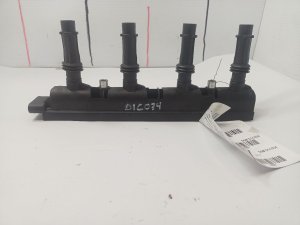
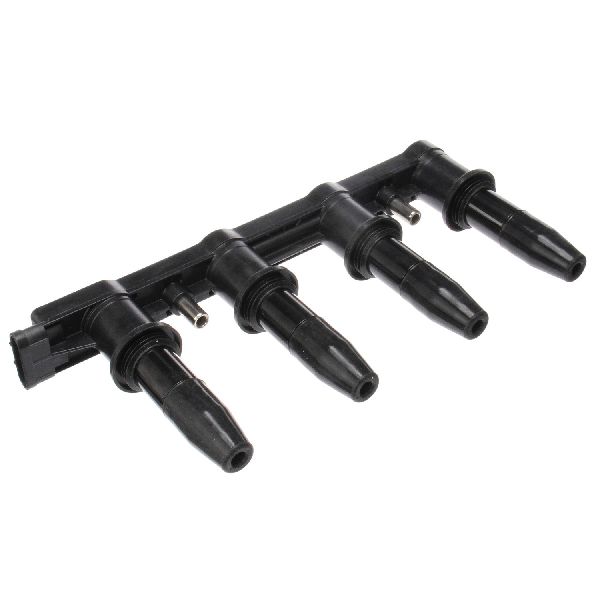
- Faulty Ignition Coil Pack 🔴 High Probability → Shop Ignition Coil The Sonic uses a single coil pack assembly that sits over all four spark plugs. Heat and vibration can cause one of the internal coils to fail or the housing to crack, leading to a misfire on a single cylinder. These coil packs are notoriously sensitive to damage, with owners reporting that even new, out-of-the-box parts can be faulty if they were dropped during shipping.
How to confirm: The easiest method is to swap the ignition coil with another one, but since the Sonic uses a one-piece coil rail, this isn't possible. Visually inspect the coil pack for cracks, burn marks (arcing), or corrosion on the springs inside the boots. A hairline crack can cause the spark to ground against the cylinder head instead of firing the plug, especially once the engine is warm. Given its high failure rate, replacement is a very common fix.
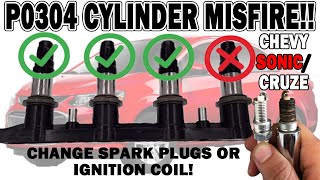
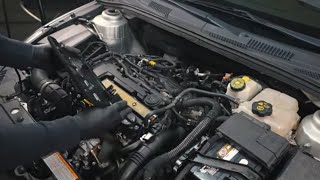
Typical fix: Replace the entire ignition coil pack assembly. 🎬 Watch: Step-by-step guide to replacing the coil pack and plugs. It is highly recommended to replace all four spark plugs at the same time.
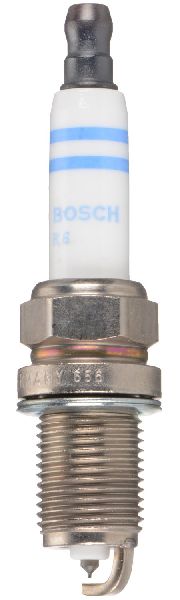
Est. part cost: $80-$240 - Worn or Fouled Spark Plug 🔴 High Probability → Shop Spark Plug
How to confirm: Remove the spark plug from cylinder 4 and inspect it. Look for a worn electrode, heavy carbon buildup, oil/fuel fouling, or an incorrect gap. You can swap the cylinder 4 spark plug with one from another cylinder (e.g., cylinder 1). Clear the codes and drive. If the code changes to P0301, the spark plug is the culprit.
Typical fix: Replace the spark plug. It is recommended to replace all four spark plugs at the same time, ensuring they are torqued to the manufacturer's specification as loose plugs can also cause issues.
Est. part cost: $20-$50 for a set of four - PCV System Failure (1.4L Turbo Engine Only) 🔴 High Probability The 1.4L Turbo engine has two common PCV failure points: a check valve in the intake manifold and a rubber diaphragm in the valve cover. When either fails, it creates a large vacuum leak, leading to a lean air-fuel mixture and misfires. Symptoms often include a hissing noise from the engine bay or a strong vacuum at the oil cap when the engine is running.
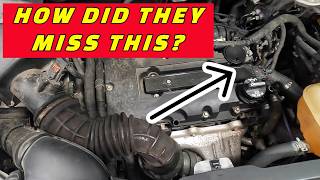
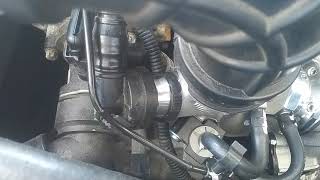
How to confirm: With the engine running, try to remove the oil fill cap. If there is a strong vacuum holding it down, or if you hear a loud sucking/hissing sound from the small hole on the PCV housing on the valve cover, the diaphragm has likely failed. Inspecting the intake manifold check valve requires removing the throttle body for a visual check; often, it will be missing entirely.
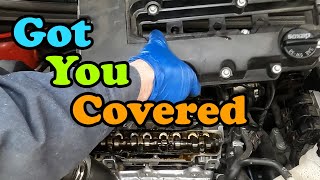
Typical fix: If the diaphragm has failed, the entire valve cover assembly must be replaced. 🎬 Watch: How to replace the valve cover on your Sonic. If the intake manifold check valve is missing, the manifold must be replaced (Dorman offers a redesigned version, 615-380) or an aftermarket external check valve kit can be installed.
Est. part cost: $50-$150 for a new valve cover; $150-$200 for a redesigned intake manifold. - Faulty Fuel Injector 🟡 Medium Probability → Shop Fuel Injector
How to confirm: Listen to the injector with a mechanic's stethoscope to ensure it's clicking. A more definitive test is to swap the cylinder 4 fuel injector with one from another cylinder. If the misfire code moves to the other cylinder, the injector is bad. However, on the Sonic, misfire codes are more often caused by ignition or PCV issues than injectors.
Typical fix: Replace the faulty fuel injector. It's often recommended to replace them as a set for balanced performance.
Est. part cost: $40-$90 per injector
Rare But Worth Checking
- Low Engine Compression: This indicates a more serious internal engine problem, such as a leaking valve, worn piston rings, or a bad head gasket. A compression test is needed to confirm this after ruling out ignition and fuel issues. A healthy range is typically 120-150 PSI.
- Leaking Valve Cover Gasket: → Shop Engine Valve Cover If the valve cover gasket fails, oil can leak into the spark plug tubes, fouling the spark plug and shorting out the ignition coil boot, causing a misfire. When you remove the ignition coil, check for oil in or around the spark plug for cylinder 4.
- Carbon Buildup on Valves: As described in GM TSB 16-NA-383, excessive carbon deposits on the intake valves can cause them to stick or not seal properly, especially when the engine is cold. This can lead to a loss of compression and misfires. This is more common on direct-injection engines but can affect port-injected engines as well. A chemical cleaning procedure is the recommended fix.
Diagnosis Steps
- Read the codes with an OBD-II scanner to confirm P0304 and check for any other codes, especially P0171 or P0300.
- If you have a 1.4L Turbo, perform a quick check of the PCV system: with the engine running, listen for a loud hissing sound and check for a strong vacuum at the oil fill cap. A loud hiss or difficulty removing the cap points to a failed valve cover diaphragm.
- Remove the ignition coil pack and inspect it for cracks, burn marks, or corrosion inside the boots. Check the spark plug tubes for any standing oil, which indicates a leaking valve cover gasket.
- Remove the spark plug from cylinder 4. Inspect it for wear, damage, or fouling (oil/fuel).
- For a definitive test, swap the spark plug from cylinder 4 with another cylinder (e.g., cylinder 2). Clear the codes and drive the vehicle. If the code changes to P0302, the spark plug is bad.
- If the misfire remains on cylinder 4, the most likely cause is the ignition coil pack. Given its high failure rate, replacement is a common and effective diagnostic step.
- If a new coil and plugs do not resolve the issue (especially on a 1.4L Turbo), the next step is to investigate the intake manifold PCV check valve. This requires removing the throttle body to see if the orange check valve is missing.
- If ignition and PCV systems are confirmed to be good, investigate the fuel injector for cylinder 4. Listen for its operation or swap it with another cylinder's injector.
- If all else fails, perform an engine compression test to check for mechanical issues like bad valves or piston rings within cylinder 4.
Parts You'll Likely Need
- Ignition Coil Pack
(OEM #55579072 (for 1.4L), 25186687 (for 1.8L))— This is one of the most common failure points for a single-cylinder misfire on the Sonic. They are known to crack or fail internally.
Trusted brands: ACDelco, Delphi, NGK
OEM price range: $150-$240
Aftermarket price range: $80-$160 - Spark Plugs
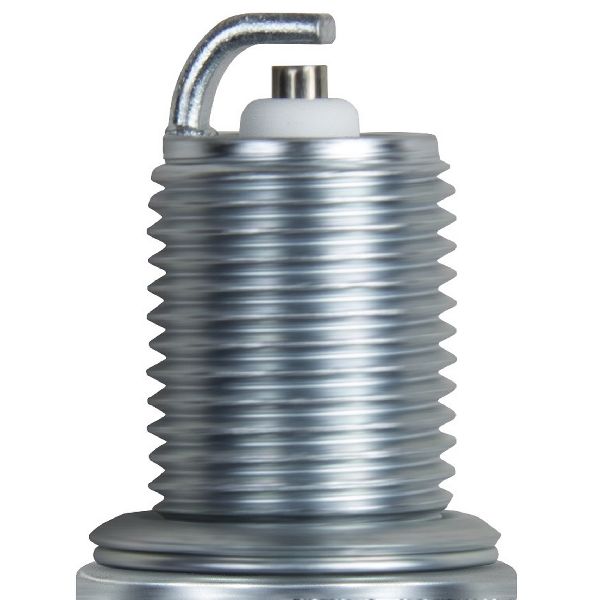
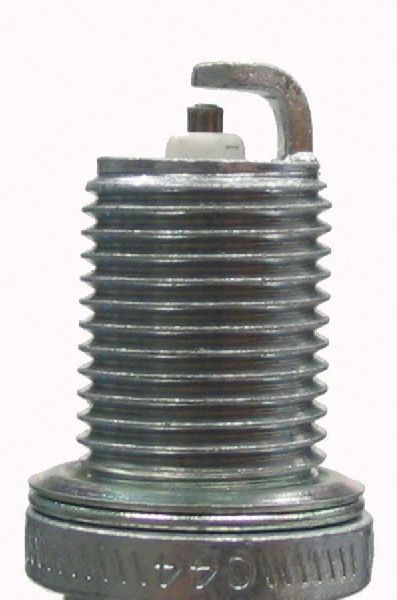
(OEM #41-121 (for 1.4L), 41-122 (for 1.8L))— Spark plugs are a regular maintenance item and a frequent cause of misfires as they wear out or become fouled.
Trusted brands: ACDelco, NGK
OEM price range: $30-$50 (set of 4)
Aftermarket price range: $20-$40 (set of 4) - Engine Valve Cover (1.4L Turbo)
(OEM #25203036)— The integrated PCV diaphragm is a known high-failure item on the 1.4L Turbo engine, causing vacuum leaks that lead to misfires.
Trusted brands: ACDelco (GM Genuine), Dorman
OEM price range: $115-$160
Aftermarket price range: $50-$100
Related Codes That Often Appear With This One
- P0300 — If the misfire is intermittent or affects multiple cylinders, a P0300 (Random Misfire Detected) code may appear alongside P0304.
- P0171 — This code for 'System Too Lean' is very common with the PCV system failure on the 1.4L Turbo engine, as the vacuum leak allows unmetered air into the engine.
- P0299 — An 'Engine Underboost' code can sometimes appear alongside a misfire on the 1.4L Turbo, especially if the misfire is related to a large vacuum leak from the PCV system, which affects the turbo's ability to build pressure.
Technical Service Bulletins (TSBs) & Recalls
- Information on Rough Idle, Crank No Start, Extended Crank or Misfire Due to Excessive Carbon on Top of Valves: GM issued this bulletin for a wide range of gasoline engines, including those in the Sonic, that may exhibit misfire codes (P0300-P0308) that are more apparent on a cold start. The cause is identified as major carbon buildup on the intake and/or exhaust valves, which can prevent them from seating properly. The diagnostic procedure involves a cylinder decarboning process using GM Upper Engine and Fuel Injector Cleaner and advising the customer to use Top Tier gasoline.
- Intermittent Engine Misfire and Service Engine Soon Lamp: This TSB addresses intermittent misfires, specifically mentioning codes P0300, P0301, and P0304. It instructs technicians to follow standard diagnostics first, implying these codes can sometimes have less common causes that are not immediately obvious.
Platform-Specific Known Issues
- A known issue with the 1.4L Turbo engine is the failure of the PCV check valve inside the intake manifold, which causes symptoms identical to a failed valve cover diaphragm. This often requires an aftermarket kit to fix or a full intake manifold replacement.
- The plastic connector tab on the ignition coil pack wiring harness is notoriously brittle and often breaks, preventing a secure connection. A zip tie is a common DIY solution to hold the connector firmly in place after it breaks.
Mechanic-Grade Diagnostic Values
- Fuel Injector Pulse Width at Idle — expected: 2.0ms - 3.0ms. Failure: A value significantly shorter or longer than other cylinders indicates a fueling problem or a command issue from the ECM for that cylinder.
- Long-Term Fuel Trim (LTFT) — expected: -5% to +5%. Failure: High positive values (e.g., > +10%) indicate the engine is consistently running lean, often due to a vacuum leak like a failed PCV system.
- Engine Compression — expected: 120 - 150 PSI per cylinder, with minimal variation between cylinders.. Failure: A reading on cylinder 4 that is significantly lower than the others points to a mechanical engine problem like a bad valve or worn piston rings.
Hidden / Shadow Codes Worth Checking
- Misfire History Counters: The ECM stores a history of misfire events for each cylinder that may not be severe enough to set a permanent DTC. These counters can show if cylinder 4 has a history of intermittent misfires even if the Check Engine Light is not currently on. (see via A GM-specific scan tool like a Tech2 or software like GDS2 is required to access the 'Misfire Data' or 'Misfire History' menu within the Engine Control Module data list.)
Scan Tool Commands That Help
- GDS2 (Global Diagnostic System 2): Cylinder Power Balance — This test allows the technician to disable one cylinder at a time to see the corresponding drop in engine RPM. If disabling cylinder 4 causes little or no change in RPM, it confirms that cylinder is not contributing power.
- GDS2 (Global Diagnostic System 2): Injector Test — This function can individually command each fuel injector to operate, allowing a technician to confirm the injector is clicking and functioning without having to remove it from the engine.
- GDS2 (Global Diagnostic System 2): Reset Adaptive Values — After a repair, especially one related to vacuum leaks or fuel delivery, resetting the engine's learned fuel trim values can help the ECM adapt to the new parts more quickly and confirm the fix.
Wiring & Ground Locations
- ECM Connector X2, Pin 4 — On the Engine Control Module (ECM), which is typically located near the battery.. This is the control circuit for the cylinder 4 fuel injector. A continuity or voltage test at this pin can determine if the ECM is sending the signal and if the wiring harness is intact.
- ECM Connector X2, Pin 44 (1.8L) or similar on 1.4L — On the Engine Control Module (ECM) near the battery.. This pin provides the ignition control signal for the cylinder 4 portion of the coil pack. Checking for a signal here can rule out or confirm an ECM driver or wiring fault.
Real Owner Repair Stories
- Reddit user 'the_3rd_Peep' on r/ChevySonic (Chevrolet Sonic, year not specified) — Severe misfires and Stabilitrak light activation.
❌ Tried (didn't work) A mechanic could not find the issue after 6 hours, suspected a bad ECU.
✅ What actually fixed it The owner first replaced all fuel injectors based on an auto parts store scan, which worked for a few weeks. When the misfire returned (without the Stabilitrak light), they then replaced the purge valve and spark plugs, which finally resolved the issue. - YouTube video from 'Bearded Garage' (2015 Chevrolet Sonic LT) — Hesitation and jumping while at idle, P0304 code present.
❌ Tried (didn't work) Swapped spark plugs between cylinder 3 and 4, but the misfire code remained P0304, ruling out the spark plug as the sole cause.
✅ What actually fixed it Replacing the entire ignition coil pack assembly resolved the misfire. The owner also replaced all four spark plugs at the same time as good practice. - Reddit user 'birdcatx7' on r/cruze (shared 1.4L engine) (2013 Chevrolet Cruze 1.4L) — Sudden loss of engine power, severe shaking, Service StabiliTrak light, and a P0304 code.
❌ Tried (didn't work) Replaced all spark plugs and the ignition coil pack., Replaced all fuel injectors.
✅ What actually fixed it The issue remained unresolved after replacing all common ignition and fuel components for cylinder 4. A forum expert suggested checking the ECM connectors for corrosion caused by a leaking coolant temperature sensor wicking coolant down the harness, a known issue on this platform that can burn out the #4 coil driver. The final resolution was not posted, but this points to a complex wiring or ECM issue.
When the Usual Fixes Don't Work
- In one documented case on a 2013 Sonic, the owner experienced a P0304 and P0171. Following common advice, they replaced the valve cover (for the PCV issue) but the misfire and shaking continued, indicating that while the PCV system is a very common cause, it is not always the root problem, and further diagnosis of the ignition and fuel systems is necessary.
OEM Part Supersession History
25198874, 55573746, 25198498, 25198877→25203036, which was then superseded by 25209141— GM updated the valve cover assembly for the 1.4L Turbo engine multiple times, likely to improve the durability of the integrated PCV system diaphragm which is a common failure point.
Heads up: All listed part numbers are for the 1.4L (LUV) engine and should be interchangeable, but it is always recommended to use the latest available part number (25209141) for the most recent design improvements.
Model Year Variations Within This Range
- 2013-2014 vs 2015: In 2015, the 1.4L Turbo engine became standard on the LTZ trim level, whereas it was optional on lower trims in prior years. This increases the likelihood of encountering PCV-related misfires on 2015 LTZ models compared to the 1.8L engine.
- 2013: Some minor changes were made to the cam position sensor and corresponding ECU programming starting in the 2013 model year. While not a direct cause of P0304, it's a known variation within the specified vehicle range.
Helpful Videos

Used OEM Parts in Stock
New Aftermarket Parts Available

The information in this article is provided for general reference and educational purposes only. Vehicle specifications, procedures, and part compatibility can vary by production date, trim level, and region. Always consult your vehicle's factory service manual and verify part numbers before purchasing or performing repairs. Safety-critical components such as airbags, seat belts, and braking systems should be installed by a qualified professional.
- Chevrolet SONIC:
- 🧭 Diagnostic Flowchart
- 🎬 Helpful Videos
- 🛍️ Shop This Part
- What's Unique About the 2013-2015 Chevrolet SONIC
- Symptoms You May Notice
- Most Likely Causes
- Rare But Worth Checking
- Diagnosis Steps
- Parts You'll Likely Need
- Related Codes That Often Appear With This One
- Technical Service Bulletins (TSBs) & Recalls
- Platform-Specific Known Issues
- Mechanic-Grade Diagnostic Values
- Hidden / Shadow Codes Worth Checking
- Scan Tool Commands That Help
- Wiring & Ground Locations
- Real Owner Repair Stories
- When the Usual Fixes Don't Work
- OEM Part Supersession History
- Model Year Variations Within This Range
- 🎟️ Get 5% Off