

P0304 on 2010-2017 Chevrolet Tahoe: Cylinder 4 Misfire Causes and Fixes
P0304 indicates a misfire in cylinder 4. On the 2010-2017 Tahoe, this is most often caused by a bad spark plug, wire, or ignition coil. However, a failed Active Fuel Management (AFM) lifter is a very common and more serious cause, especially if you hear a ticking noise. This lifter failure is a well-documented issue across GM's V8 truck and SUV lineup.
- P0304 is a misfire on cylinder 4, located on the driver's side of the engine, second cylinder from the front.
- Always start diagnosis with simple, inexpensive parts: check the spark plug wire, swap the spark plug, and swap the ignition coil.
- Listen carefully for a ticking or tapping noise from the engine. This is a strong sign of the common but expensive AFM lifter failure.
- Do not ignore a flashing Check Engine Light. Continued driving can cause catastrophic damage to your catalytic converter, adding thousands to the repair bill.
- If the cause is a failed lifter, consider replacing all AFM lifters (or doing an AFM delete) to prevent future failures on other cylinders.
What's Unique About the 2010-2017 Chevrolet TAHOE

The V8 engines in this generation of Tahoe are equipped with Active Fuel Management (AFM), which deactivates cylinders—including cylinder 4—to improve fuel economy. Unfortunately, the hydraulic lifters used for this system are a known major failure point. They can become stuck or collapse, leading to a persistent P0304 misfire that requires significant engine repair. The failure is often linked to issues with oil pressure or aeration, which damages the lifter's internal locking pins. While simple ignition faults are common, the high probability of a failed AFM lifter makes diagnosis on this platform particularly important.
Diagnostic Flowchart

Tap your situation to follow the diagnostic path that matches what you're seeing on this vehicle.
Generation note: This range covers two Tahoe generations. The 2010-2014 models (GMT900 platform) use Gen IV V8s with port injection. The 2015-2017 models (K2XX platform) use Gen V V8s with direct injection. While both are prone to AFM lifter failure, the 2015+ direct injection engines can also suffer from misfires due to carbon buildup on intake valves, a less common issue on the earlier port-injected engines. TSB 16-NA-383 addresses this carbon buildup issue, which can cause misfires after accumulating as few as 5,000 miles.
Symptoms You May Notice
- Flashing or solid Check Engine Light
- Rough idle or shaking, especially at a stop
- Engine hesitation or stumbling during acceleration
- Noticeable loss of power
- A rhythmic ticking or tapping noise from the engine, especially on a cold start
- Service StabiliTrak message may appear on the dash
- Smoke from the exhaust if the lifter failure is severe
- Replacing only the spark plug when a failed AFM lifter is the true cause.
- Replacing the catalytic converter for a related P0420/P0430 code without first fixing the P0304 misfire that is causing the converter to fail.
Most Likely Causes

- Failed Active Fuel Management (AFM) Lifter 🔴 High Probability → Shop Engine Valve Lifter The AFM system deactivates cylinders 1, 4, 6, and 7. The special lifters for these cylinders are a well-documented failure point across this entire GM truck platform. Failure can be due to the lifter's internal mechanism failing, often from oiling issues, or the roller becoming damaged, which in turn damages the camshaft. TSBs like PIP4568L directly address collapsed AFM lifters as a cause for misfires and engine noise.
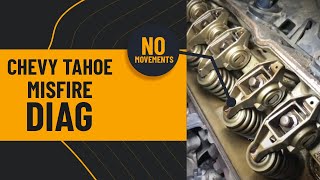
How to confirm: A consistent ticking noise is a strong indicator. A mechanic can perform a cylinder compression test, which may show low compression on cylinder 4. Visually inspecting the valve train with the valve cover removed is a definitive test; you will see the rocker arms for cylinder 4 not moving or moving less than the others. A bent pushrod is also commonly found along with a collapsed lifter.
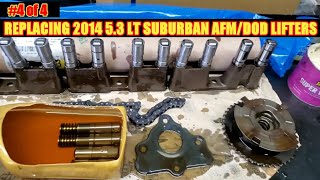
Typical fix: This is an extensive repair. It involves removing the cylinder head to replace the failed lifter(s). Per TSB 15-06-01-002M, it is critical to inspect the camshaft for lobe damage and replace it if any wear is found. It is strongly recommended to replace all AFM lifters, the four lifter guides, and the Valve Lifter Oil Manifold (VLOM) at the same time. Many owners opt for an 'AFM delete', replacing all AFM components with standard parts and reprogramming the ECM to prevent future failures. 🎬 See this detailed walkthrough of the AFM lifter replacement process.
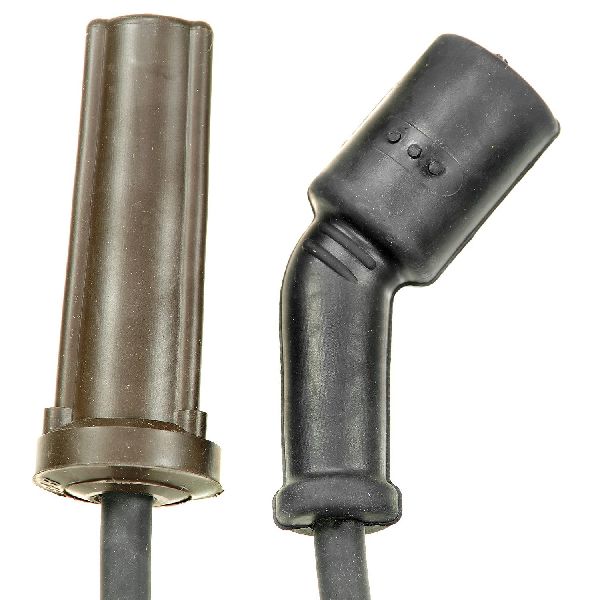
Est. part cost: $500-$1500 for lifters, camshaft, and gaskets - Worn Spark Plug or Faulty Spark Plug Wire 🟡 Medium Probability → Shop Spark Plug As per TSB #PIP4819A, loose or faulty spark plug wires are a known issue. Wires can degrade from heat, and spark plugs are a normal wear item. Owners often replace these first before suspecting a larger issue.
How to confirm: Swap the spark plug from cylinder 4 with another cylinder (e.g., cylinder 2). If the misfire code changes to P0302, the spark plug is bad. Do the same with the spark plug wire. Visually inspect the wire for damage and the spark plug for wear, carbon, or oil fouling. A cracked porcelain insulator on the spark plug can be a hard-to-spot cause.
Typical fix: Replace the spark plugs and/or spark plug wires. It's best practice to replace all plugs and wires at the same time.
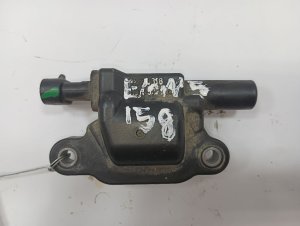
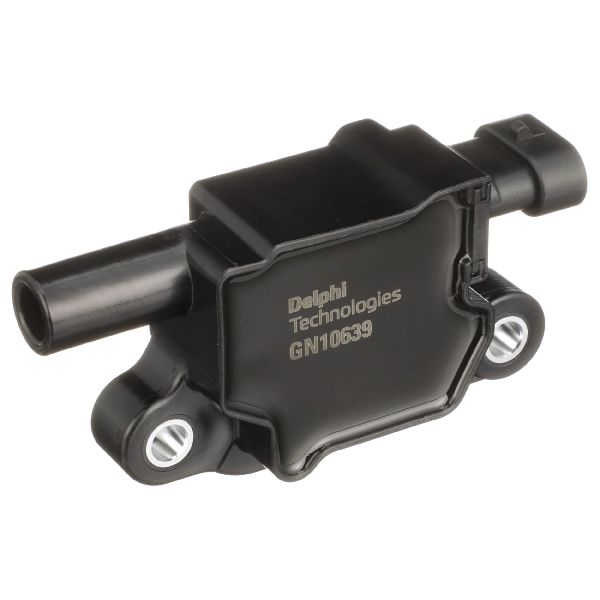
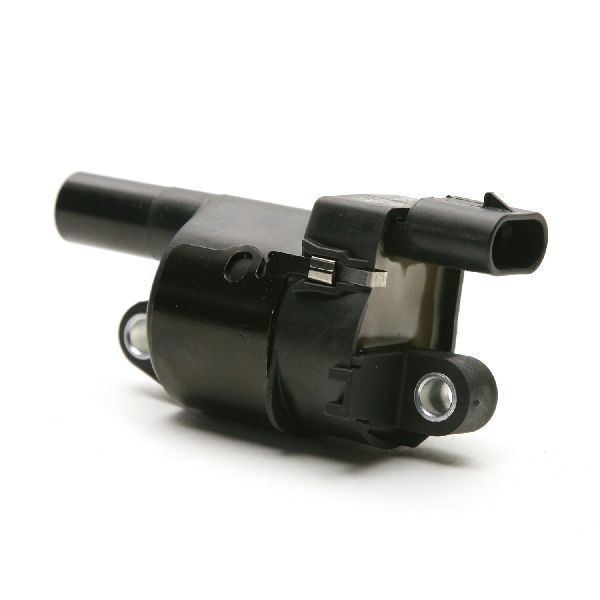
Est. part cost: $60-$150 for a full set of quality plugs and wires - Faulty Ignition Coil 🟡 Medium Probability → Shop Ignition Coil
How to confirm: Swap the ignition coil from cylinder 4 with another cylinder (e.g., cylinder 2). Clear the codes and drive the vehicle. If the code returns as P0302, the ignition coil is the faulty component. This is a common, simple diagnostic step. 🎬 Watch: A pro mechanic's step-by-step misfire diagnosis guide.
Typical fix: Replace the faulty ignition coil.
Est. part cost: $30-$70 for a single coil - Clogged or Failed Fuel Injector ⚪ Low Probability → Shop Fuel Injector On 2015+ models with direct injection, injectors can fail or become clogged with carbon. On all models, wiring to the injector can become damaged. GM issued a special coverage program (N192281820) for injectors on some 2016-2017 models, extending the warranty to 10 years/150,000 miles in certain states.
How to confirm: A professional can perform a fuel injector balance test. Another method is to listen to the injector with a mechanic's stethoscope; it should have a consistent clicking sound. You can also swap the injector with another cylinder to see if the misfire code moves. Resistance should be around 12.7 ohms.
Typical fix: Replace the faulty fuel injector. On direct injection models (2015+), this is more labor-intensive as the intake manifold must be removed.
Est. part cost: $50-$150 for a single injector
Rare But Worth Checking
- Intake Manifold Gasket Leak: → Shop Engine Intake Manifold A vacuum leak near the cylinder 4 intake runner can lean out the air/fuel mixture, causing a misfire. This can be diagnosed with a smoke test, as suggested by users on forums when ignition and fuel parts check out.
- Carbon Buildup on Intake Valves: Primarily an issue on the 2015+ direct-injected engines. Carbon can build up on the back of the intake valves, restricting airflow and causing misfires, especially on cold starts. TSB 16-NA-383 outlines using GM's Top Engine Cleaner to resolve this without disassembly. 🎬 Watch: How to clean engine carbon deposits yourself.
- Valve Lifter Oil Manifold (VLOM) Failure: The VLOM directs oil to the AFM lifters. It contains small filters that can clog and solenoids that can fail, starving the lifters of oil and causing them to collapse. GM released an updated VLOM (part #12571609, later superseded by #12698755) to help address this. It is often replaced as part of a comprehensive AFM lifter repair.
Diagnosis Steps

- Read the code with an OBD-II scanner to confirm P0304.
- Check for any other stored codes, especially P0300 or catalyst codes.
- Listen for an engine ticking or chirping noise, which strongly suggests a mechanical issue like a lifter.
- If no ticking is present, perform basic ignition system swaps. Swap the ignition coil from cylinder 4 to cylinder 2. Clear codes and see if the misfire moves to P0302. If not, do the same for the spark plug and wire.
- Inspect the original spark plug from cylinder 4. Is it wet with fuel, covered in oil, or does it look normal? This provides clues to the cause. Black and crusty plugs are a common finding. A hairline crack in the porcelain insulator can be the cause and is easy to miss.
- If ignition parts are ruled out, check oil level and condition. Low or dirty oil can contribute to AFM lifter failure.
- Perform a compression test. A significantly lower reading in cylinder 4 points to a mechanical issue like a bad valve, piston ring, or, most likely, a failed AFM lifter. However, some owners report normal compression even with a bad lifter.
- If a lifter is suspected, remove the driver's side valve cover and observe the valve train while the engine is cranked or running to confirm lack of movement on cylinder 4's rockers.
Parts You'll Likely Need
- AFM Lifter Kit
(OEM #12698946 (Lifter))— This is the most probable serious failure causing a P0304. A kit often includes all lifters (AFM and standard), guides, and necessary gaskets. The AFM lifter itself is part #12698946.
Trusted brands: ACDelco, Delphi, Melling
OEM price range: $400-$700
Aftermarket price range: $250-$500 - Spark Plugs and Wires
(OEM #41-162 (Spark Plug))— These are common wear items and a frequent cause of misfires. The TSB specifically calls out checking the wires.
Trusted brands: ACDelco, NGK
OEM price range: $100-$180
Aftermarket price range: $60-$120 - Ignition Coil
(OEM #12611424)— A common and easy-to-diagnose cause of a single-cylinder misfire.
Trusted brands: ACDelco, Delphi
OEM price range: $50-$80
Aftermarket price range: $30-$60 - Valve Lifter Oil Manifold (VLOM)
(OEM #12571609)— This part directs oil to the AFM lifters and is a common failure point. It's recommended to replace it during a lifter job. It was later superseded by part #12698755.
Trusted brands: ACDelco
OEM price range: $150-$250
Aftermarket price range: $100-$180
Related Codes That Often Appear With This One
- P0300 — If the misfire is intermittent or affects other cylinders, a P0300 (Random/Multiple Misfire Detected) code may be stored alongside P0304.
- P0430 — A persistent misfire on Bank 2 (which includes cylinder 4) will dump unburned fuel into the exhaust, destroying the catalytic converter and triggering a P0430 (Catalyst System Efficiency Below Threshold Bank 2) code.
Technical Service Bulletins (TSBs) & Recalls
- PIP4819A: Engine Misfire, Service Engine Soon Lamp, Loose Spark Plug Wires. [TSB #PIP4819A]
- 19-NA-219: Discusses misfires and engine noises related to worn cam/lifters and collapsed AFM lifters.
- 16-NA-383: Details misfire codes caused by excessive carbon buildup on valves.
Platform-Specific Known Issues

- TSB #PIP4819A: Specifically mentions engine misfires (including P0304) on 2010 models can be caused by loose spark plug wires that require inspection and replacement.
- TSB #19-NA-219: Discusses how a collapsed AFM lifter, worn camshaft lobe, or sticking valve can cause misfires and/or engine noises like chirps and ticks. This bulletin helps guide technicians when initial diagnosis doesn't find the cause.
- TSB #15-06-01-002M: Provides detailed information on diagnosing and repairing a collapsed or stuck AFM lifter, noting it can cause a P0300 misfire code and ticking noise. It instructs technicians to inspect the camshaft for damage and replace it along with the lifters if wear is found.
- TSB #16-NA-383: Addresses rough idle and misfire codes (P0300-P0308) caused by heavy carbon buildup on intake and exhaust valves, particularly on direct injection engines.
Mechanic-Grade Diagnostic Values
- Fuel Injector Resistance — expected: Approx. 12.7 Ohms. Failure: Significantly higher or lower resistance, or an open circuit.
- Fuel Trim (Short Term and Long Term) — expected: -5% to +5%. Failure: High positive values indicate a lean condition (possible vacuum leak or clogged injector), while high negative values indicate a rich condition.
- Fuel Pressure (2010-2014 Port Injection) — expected: 60-66 PSI (Key On, Engine Off). Failure: Pressure below this range can cause lean misfires across multiple cylinders, but could contribute to a single cylinder misfire if an injector is borderline.
- Running Compression Test — expected: Consistent readings across all cylinders.. Failure: A cylinder that shows significantly lower compression while running can indicate a valvetrain problem, such as a sticking or collapsed lifter, even if a static compression test is normal.
Scan Tool Commands That Help
- GDS2 / Tech2: Cylinder Power Balance Test — This function allows a technician to disable individual fuel injectors one by one to see the effect on engine RPM. If disabling cylinder 4 has little to no effect on RPM drop compared to other cylinders, it confirms that cylinder 4 is not contributing power, thus isolating the misfire without swapping parts.
- GDS2 / Tech2: Misfire Counter Live Data — Essential for diagnosis. This allows you to see which specific cylinder is misfiring and how frequently. It can confirm the P0304 is isolated to cylinder 4 and not part of a larger random misfire (P0300) issue.
Wiring & Ground Locations
- G102 — Located at the left rear of the engine.. This ground point is specifically for all 8 ignition coils. A loose or corroded connection here could cause weak spark or intermittent misfires on any cylinder, including cylinder 4.
- G103 / G104 — Located on the rear of the cylinder heads (G103 on driver's side, G104 on passenger's).. These are primary engine-to-chassis grounds. A poor connection, particularly on G103 (driver's side, near cylinder 4), can cause a host of electrical issues for the ECM and related sensors, potentially leading to misfire codes. A GM TSB mentions checking G103 for clean, tight connections to resolve unexplained electrical problems.
- ECM Connector (e.g., X1) — On the Engine Control Module, typically mounted on the driver's side of the engine bay.. The signal to fire the ignition coil and fuel injector for cylinder 4 originates here. For example, on some GM ECMs, Pin 5 might control the ignition coil for cylinder 1, while Pin 47 controls the fuel injector for cylinder 4. A corroded pin or damaged wire at the connector can cause a persistent misfire on a single cylinder.
- Engine Harness (Chafe Point) — Can chafe on the front corner of the left-hand (driver's side) cylinder head.. GM has noted that the engine wiring harness can rub through on sharp edges of the cylinder head or brackets. This could damage the specific wires for the cylinder 4 coil or injector, causing an intermittent or constant short to ground and a P0304 code.
Real Owner Repair Stories
- Tahoe Yukon Forum (2016 Denali, 107k miles) — Stumbling engine, flashing CEL, traction control light on, smoke from exhaust.
❌ Tried (didn't work) Replaced spark plug and wire, Swapped ignition coils
✅ What actually fixed it The dealer confirmed a collapsed lifter on cylinder 4 and a broken pushrod. The final repair cost was $5400, as the extended warranty denied the claim. - Tahoe Yukon Forum (2010 Yukon XL 5.3L, 225k miles) — Immediate P0304 code, rough idle (400-1000 RPM swing), StabiliTrak and traction control lights on, incorrect transmission shifting.
❌ Tried (didn't work) Replaced coil packs, Replaced ignition wires, Replaced spark plugs
✅ What actually fixed it The user suspected an AFM lifter failure and was advised to check wiring harness grounds first before proceeding with the major mechanical repair. While the final fix isn't posted, the story highlights how severe symptoms point away from simple ignition causes. - Tahoe Yukon Forum (2010 Tahoe 5.3L Flex Fuel) — Rough running, flashing CEL, P0304. Spark indicator tool showed spark for a few seconds on cylinder 4, then it would stop.
❌ Tried (didn't work) Swapped coil pack and spark plug wire between cylinders 2 and 4, Installed new spark plug in cylinder 4, Compression test showed equal compression on cylinders 2, 4, and 6
✅ What actually fixed it The user suspected an intermittent wiring connection or a faulty ECM driver for cylinder 4, as all mechanical and basic ignition tests passed. This points to a rare electrical fault rather than the more common mechanical (lifter) or ignition component failure.
OEM Part Supersession History
12571609→12698755— Updated design for the Valve Lifter Oil Manifold (VLOM) to improve reliability and prevent debris-related failures that could lead to lifter collapse.
Heads up: The new part is a direct replacement for the old one and should be used in all repairs to prevent repeat failures.
Model Year Variations Within This Range
- 2015-2017: These models use the Gen V V8 with direct injection (DI). This makes them susceptible to misfires from carbon buildup on intake valves, an issue less common on the 2010-2014 port-injected Gen IV engines. The DI fuel system also runs at much higher pressure and has different injector and high-pressure fuel pump components.
- 2010-2014: These models use the Gen IV V8 with port fuel injection. The fuel system operates at a lower pressure (around 60-66 PSI) compared to the DI engines. While still prone to AFM lifter failure, they do not typically suffer from intake valve carbon buildup as the fuel spray naturally cleans the valves.
Helpful Videos
![How to Fix P0304 Engine Code in 3 Minutes [2 DIY Methods / Only $4.33]](https://img.youtube.com/vi/i7ubv6oYJlI/mqdefault.jpg)

Used OEM Parts in Stock
New Aftermarket Parts Available


The information in this article is provided for general reference and educational purposes only. Vehicle specifications, procedures, and part compatibility can vary by production date, trim level, and region. Always consult your vehicle's factory service manual and verify part numbers before purchasing or performing repairs. Safety-critical components such as airbags, seat belts, and braking systems should be installed by a qualified professional.
- Chevrolet TAHOE:
- 🧭 Diagnostic Flowchart
- 🎬 Helpful Videos
- 🛍️ Shop This Part
- What's Unique About the 2010-2017 Chevrolet TAHOE
- Symptoms You May Notice
- Most Likely Causes
- Rare But Worth Checking
- Diagnosis Steps
- Parts You'll Likely Need
- Related Codes That Often Appear With This One
- Technical Service Bulletins (TSBs) & Recalls
- Platform-Specific Known Issues
- Mechanic-Grade Diagnostic Values
- Scan Tool Commands That Help
- Wiring & Ground Locations
- Real Owner Repair Stories
- OEM Part Supersession History
- Model Year Variations Within This Range
- 🎟️ Get 5% Off