

P0304 on 2011-2014 Chrysler 300: Cylinder 4 Misfire Causes and Fixes
P0304 indicates a misfire on cylinder 4. On the 3.6L V6, besides common ignition coil or spark plug failure, this code can point to a serious, well-documented cylinder head issue requiring a leak-down test to confirm. For the 5.7L Hemi, it's typically a bad coil, plug, or fuel injector, but can also be an early sign of lifter failure related to the MDS system.
- P0304 is a misfire on cylinder 4. On a 2011-2014 Chrysler 300, the most common fixes are a new ignition coil or spark plug.
- If your 300 has the 3.6L V6 engine (especially 2011-2013), P0304 could indicate a serious, known cylinder head defect.
- A simple way to diagnose a bad ignition coil is to swap it with another cylinder and see if the misfire code follows.
- If basic ignition parts don't fix the P0304 on a 3.6L V6, a cylinder leak-down test is the next critical step before considering more expensive repairs.
- Driving with a flashing check engine light can cause expensive damage to your catalytic converter.
What's Unique About the 2011-2014 Chrysler 300
For the 2011-2014 Chrysler 300, the engine type significantly changes the diagnosis for P0304. While any engine can have a bad spark plug or coil, early 3.6L Pentastar V6 engines (2011-2013 models) are known for a specific defect in the left cylinder head that causes misfires on cylinders 2, 4, and 6. This issue was so prevalent that Chrysler issued a warranty extension (X56) to cover the cylinder head replacement. Therefore, on a 3.6L V6, P0304 requires a more in-depth diagnosis beyond simple ignition parts. On the 5.7L Hemi, a P0304 code can sometimes be an early indicator of a failing MDS (Multi-Displacement System) lifter, as cylinder 4 is one of the cylinders deactivated by MDS.
Diagnostic Flowchart
Tap your situation to follow the diagnostic path that matches what you're seeing on this vehicle.
Symptoms You May Notice
- Rough or shaky idle, sometimes dying at a stop.
- Hesitation or stumbling during acceleration.
- Noticeable loss of engine power.
- Solid or flashing Check Engine Light.
- Smell of unburnt fuel from the exhaust.
- White smoke/vapor from the exhaust on cold starts, which clears after a few seconds (can indicate a coolant leak into the cylinder).
- On 3.6L V6 engines, repeatedly replacing spark plugs and ignition coils without performing a leak-down test, failing to identify the underlying cylinder head issue.
- Mistaking a rocker arm/camshaft failure for the more well-known cylinder head defect on the 3.6L V6.
Most Likely Causes
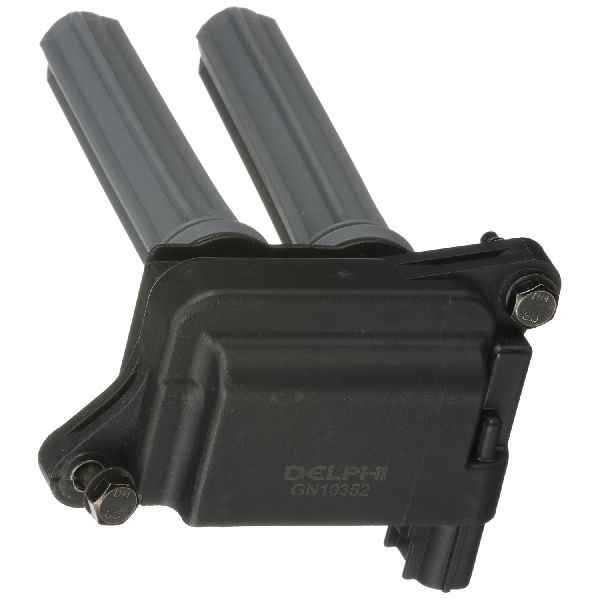
- Faulty Ignition Coil 🔴 High Probability → Shop Ignition Coil
How to confirm: Swap the ignition coil from cylinder 4 with another cylinder (e.g., cylinder 2 on the 3.6L V6 or cylinder 2 on the 5.7L V8). Clear the codes and drive. If the code changes to P0302, the ignition coil is the faulty part. This is a common first step recommended in owner forums.
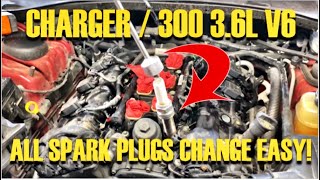
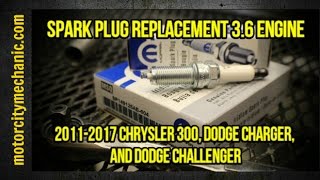
Typical fix: Replace the failed ignition coil. 🎬 Watch: Fast and easy spark plug and coil replacement guide. It is often recommended to replace the spark plug at the same time.
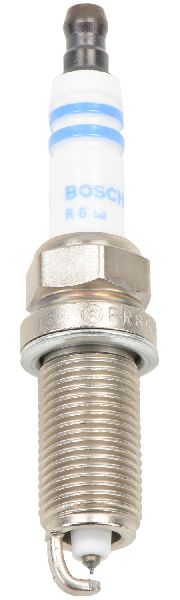
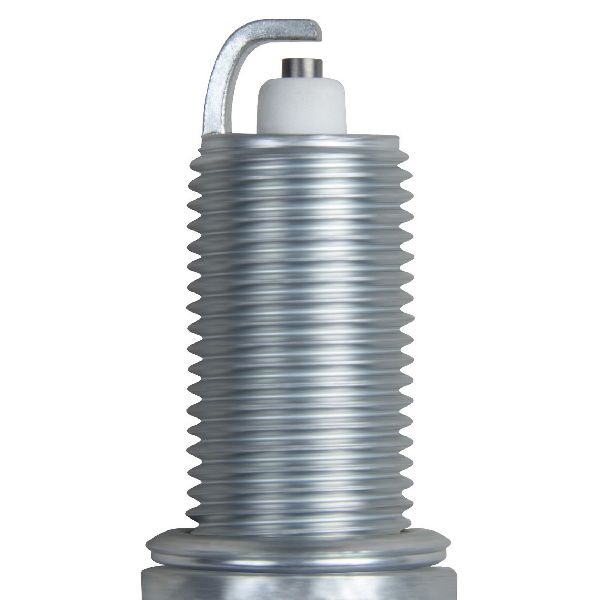
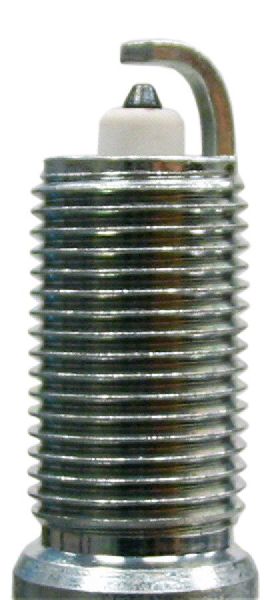
Est. part cost: $30-$75 - Worn or Fouled Spark Plug 🔴 High Probability → Shop Spark Plug Spark plugs are a regular maintenance item and wear out over time. The manufacturer recommends replacement at 100,000 miles, but they can fail sooner, causing an intermittent or constant misfire.
How to confirm: Remove the spark plug from cylinder 4 and inspect it for wear, carbon buildup, or oil/coolant fouling. Compare it to a new plug. A plug fouled with oil can indicate bad valve seals or piston rings, while a coolant-fouled plug points to a head gasket or cylinder head issue.
Typical fix: Replace the spark plug. It's best practice to replace all spark plugs at the same time for even performance. Simply replacing the plug without addressing the cause of fouling will result in the new plug failing as well.
Est. part cost: $10-$25 per plug - Defective Left Cylinder Head (3.6L V6 Only) 🟡 Medium Probability → Shop Engine Cylinder Head 2011-2013 models with the 3.6L Pentastar V6 are subject to a known manufacturing defect causing excessive valve guide wear in the left cylinder head, which houses cylinders 2, 4, and 6. This was addressed by TSB 09-002-14 and warranty extension X56.
How to confirm: If new coils and plugs do not fix the misfire, a cylinder leak-down test is required. Per TSB #09-002-14 REV. B, leakage of 25% or more confirms a faulty cylinder head. A compression test may also show lower-than-normal readings on cylinder 4.
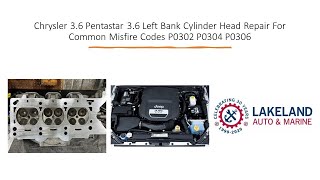
Typical fix: The left cylinder head assembly must be replaced with an updated part. This was covered 🎬 See this walkthrough of the Pentastar left cylinder head repair. under Chrysler's extended warranty X56 (10 years/150,000 miles), but most vehicles will now be outside that coverage period, resulting in an expensive out-of-pocket repair.
Est. part cost: $800-$1500 - Faulty Fuel Injector ⚪ Low Probability → Shop Fuel Injector
How to confirm: After ruling out spark issues, you can listen for the injector's clicking sound with a mechanic's stethoscope. A more definitive test involves swapping the injector with another cylinder, but this is more labor-intensive.
Typical fix: Replace the faulty fuel injector and its seals. Some owners on forums report this as the final fix after ignition parts fail to solve the problem.
Est. part cost: $50-$120
Rare But Worth Checking
- Failed Rocker Arms/Lifters (3.6L V6): → Shop Engine Rocker Arm The 'Pentastar Tick' can be caused by failing rocker arm needle bearings, which can seize, wipe out a camshaft lobe, and cause a persistent misfire on one cylinder. This is often misdiagnosed as the cylinder head issue, but can be confirmed by removing the valve cover and inspecting the camshaft lobes and rocker arms for wear.
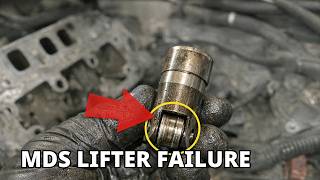
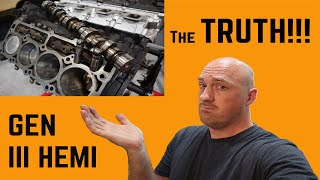
- Failed MDS Lifter (5.7L Hemi): On the 5.7L Hemi, cylinder 4 is one of the cylinders deactivated by the Multi-Displacement System (MDS). A failing MDS solenoid or, more commonly, a collapsed MDS lifter can cause a P0304 code. This can be a precursor to a more serious camshaft failure if not addressed. The failure is often attributed to oil breakdown from extended idle times. 🎬 Watch: How to identify and prevent Hemi lifter failure.
- Vacuum Leak: A leak in the intake manifold gasket or a vacuum hose can lean out the air-fuel mixture and cause a misfire. This would often be accompanied by other codes and can sometimes be found by spraying soapy water on suspected areas while the engine is running and looking for bubbles.
Diagnosis Steps
- Identify Cylinder 4: For the 3.6L V6, cylinder 4 is the middle cylinder on the driver's side (left bank). For the 5.7L Hemi, it is the second cylinder from the front on the passenger's side (left bank).
- Check for a Flashing Check Engine Light: If flashing, avoid heavy acceleration to protect the catalytic converter.
- Swap the Ignition Coil: Swap the ignition coil from cylinder 4 with an adjacent, easily accessible cylinder (like cylinder 2). Clear the codes and see if the misfire code follows the coil (e.g., P0302). If it does, the coil is bad. This is the most common and easiest first diagnostic step.
- Inspect and Swap the Spark Plug: If the misfire remains on cylinder 4, remove the spark plug. Inspect for wear, damage, or fouling (oil, fuel, or coolant). A wet or coolant-fouled plug on a cold start can indicate a head or head gasket leak.
- Check the Fuel Injector: Listen to the injector with a stethoscope to ensure it's clicking rhythmically. Check the wiring harness for damage. Swapping injectors is more involved but is a definitive test.
- Perform a Cylinder Leak-Down Test (Especially for 3.6L V6): If the above steps do not resolve the issue, a mechanical problem is likely. A leak-down test pressurizes the cylinder to find leaks. Per Chrysler TSB #09-002-14 REV. B, leakage over 25% on a 3.6L V6 indicates the need for cylinder head replacement.
- Inspect Valvetrain (3.6L & 5.7L): If a leak-down test is inconclusive but a mechanical issue is suspected, remove the valve cover for the affected bank. On the 3.6L, inspect the rocker arms and camshaft lobes for scoring or wear. On the 5.7L, inspect the lifters and camshaft, especially if a 'Hemi tick' is present.
Parts You'll Likely Need
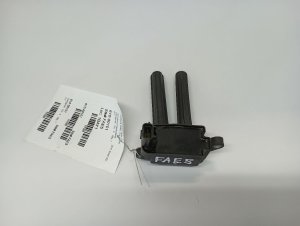
- Ignition Coil
(OEM #5149168AI)— Ignition coils are a very common failure point causing misfires. They are exposed to high heat and vibration.
Trusted brands: Mopar, NGK, Delphi
OEM price range: $50-$80
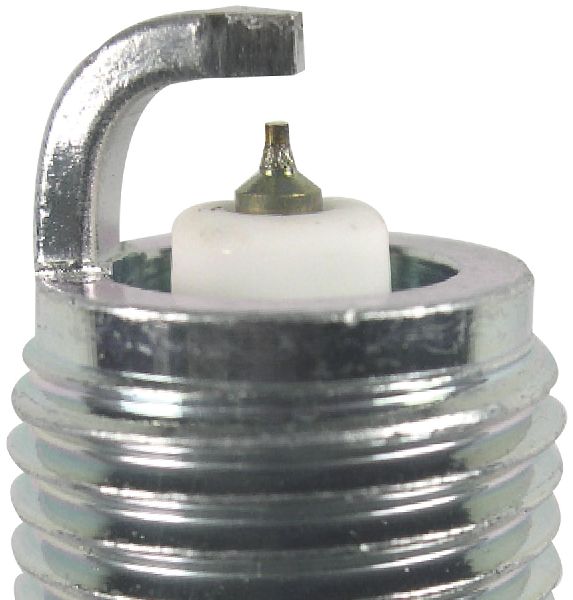
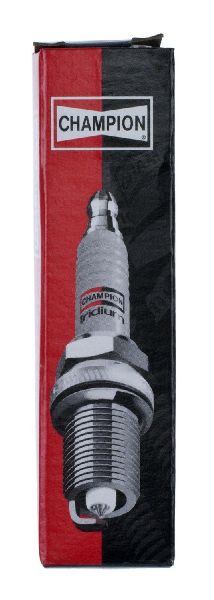
Aftermarket price range: $30-$60 - Spark Plug
(OEM #SP149125AE)— Spark plugs are a maintenance item that wears out, causing a weak or inconsistent spark.
Trusted brands: NGK, Champion
OEM price range: $15-$25
Aftermarket price range: $8-$15 - Cylinder Head Assembly, Left (3.6L V6)
(OEM #68141353AC (supersedes RL141353AC, 68141353AB, 68141353AA))— For 2011-2013 3.6L engines, this is the definitive fix for the known valve guide issue that causes P0302, P0304, and P0306. The 'AC' revision is the updated part.
Trusted brands: Mopar
OEM price range: $1000-$1500
Aftermarket price range: $800-$1200
Related Codes That Often Appear With This One
- P0300 — If the misfire is intermittent or affects other cylinders, a P0300 (Random/Multiple Cylinder Misfire) code may be stored alongside P0304.
- P0302, P0306 — On the 3.6L V6, seeing these codes with P0304 strongly suggests the known left cylinder head issue, as all three cylinders are on the same bank (the left bank).
Technical Service Bulletins (TSBs) & Recalls
- 09-002-14 REV. B: This is the final revision of the technical service bulletin that details the diagnosis and repair for the 3.6L V6 left cylinder head issue. It specifies performing a cylinder leakage test on cylinders 2, 4, and 6 and replacing the head if leakage is 25% or greater.
- X56 Warranty Extension: The customer-facing notification and dealer bulletin extending the warranty on the 3.6L left cylinder head to 10 years/150,000 miles for the misfire condition.
Platform-Specific Known Issues
- Warranty Extension X56 for 3.6L V6 Left Cylinder Head: Chrysler acknowledged a defect in the left cylinder head on 2011-2013 models (built on or before July 25, 2012) equipped with the 3.6L engine. This defect causes misfires on cylinders 2, 4, and/or 6. The warranty was extended to 10 years or 150,000 miles to cover the repair. Most vehicles are now past this coverage period.
- 5.7L Hemi MDS Lifter Failure: Cylinder 4 is an MDS cylinder, meaning it is deactivated under light load to save fuel. A collapsed lifter on this cylinder is a known issue that will set a P0304 code.
Mechanic-Grade Diagnostic Values
- Short-Term and Long-Term Fuel Trim — expected: Between -5% and +5%. Failure: High positive values indicate the engine is running too lean (not enough fuel), while high negative values indicate it is running too rich (too much fuel). A vacuum leak or fuel delivery issue causing the misfire can push these values out of range.
Scan Tool Commands That Help
- wiTECH (Chrysler Dealer Tool) or advanced aftermarket scanner: Cylinder Contribution Test / Power Balance Test — This test helps identify if cylinder 4 is contributing less power than other cylinders, confirming the misfire is happening in real-time. It's a valuable step before physically disassembling components, though it won't pinpoint the exact cause (spark, fuel, or compression).
Wiring & Ground Locations
- G101 — Located on the right front of the engine compartment.. A poor ground at this location can affect various engine sensors and components, potentially causing erratic behavior that could be misinterpreted as a component failure.
- G901a — Located on the left front of the engine compartment.. This is a primary ground point. Corrosion or a loose connection here can cause widespread electrical issues, including problems with the ignition or fuel systems that could lead to a misfire code.
- Cylinder Head Ground — On the 3.6L V6, there is a ground point on the passenger side cylinder head.. This ground is critical for the proper operation of the ignition coils. A poor connection here can cause a weak spark and lead to misfires on that bank.
Real Owner Repair Stories
- Jeep Wrangler Forums (JL / JLU) (2019 Jeep with 3.6L Pentastar engine) — Rough idle on cold start-up which smoothed out after warming up, P0304 code present.
❌ Tried (didn't work) Replaced all spark plugs, Replaced all ignition coils
✅ What actually fixed it The final fix was replacing the rocker arms on the cylinder 4 bank. This resolved the cold start rough idle and cleared the P0304 code. - Dodge Journey Forum (2015 Dodge Journey Crossroad 3.6L with 94,000 miles) — P0304 code, low RPM at idle (500-600 RPM).
❌ Tried (didn't work) Swapped coils between cylinders 4 and 2, Replaced all coil boots, Replaced spark plug #4, Cleaned fuel injectors (externally), Cleaned O2 sensors
✅ What actually fixed it The user did not post a final resolution, but other forum members suggested the external cleaning of the injectors was insufficient and recommended a professional cleaning or replacement, or using a strong in-tank fuel system cleaner like Seafoam over a long drive, as the spray pattern is internal to the injector.
OEM Part Supersession History
5149168AH→5149168AI, which was then superseded by 5149168AJ— Standard part revision and improvement by the manufacturer to increase reliability and performance.
Heads up: All revisions (AH, AI, AJ) are generally interchangeable for the 2011-2014 model years.
Model Year Variations Within This Range
- 2011-2015: The initial 3.6L Pentastar engine used a 10.2:1 compression ratio.
- 2016 and later (outside this vehicle's range but relevant context): For the 2016 model year, the 3.6L Pentastar was updated with a higher 11.3:1 compression ratio, a two-stage variable valve lift (VVL) system, new ignition coils, and other internal changes to improve efficiency and power. While these later parts may not be backward compatible, it highlights that not all Pentastar engines are identical.
Helpful Videos

Used OEM Parts in Stock
New Aftermarket Parts Available

The information in this article is provided for general reference and educational purposes only. Vehicle specifications, procedures, and part compatibility can vary by production date, trim level, and region. Always consult your vehicle's factory service manual and verify part numbers before purchasing or performing repairs. Safety-critical components such as airbags, seat belts, and braking systems should be installed by a qualified professional.
- Chrysler 300:
- 🧭 Diagnostic Flowchart
- 🎬 Helpful Videos
- 🛍️ Shop This Part
- What's Unique About the 2011-2014 Chrysler 300
- Symptoms You May Notice
- Most Likely Causes
- Rare But Worth Checking
- Diagnosis Steps
- Parts You'll Likely Need
- Related Codes That Often Appear With This One
- Technical Service Bulletins (TSBs) & Recalls
- Platform-Specific Known Issues
- Mechanic-Grade Diagnostic Values
- Scan Tool Commands That Help
- Wiring & Ground Locations
- Real Owner Repair Stories
- OEM Part Supersession History
- Model Year Variations Within This Range
- 🎟️ Get 5% Off