

P0304 on 2015-2016 Dodge Grand Caravan: Cylinder 4 Misfire Causes and Fixes
P0304 on a 2015-2016 Dodge Grand Caravan indicates a misfire in cylinder #4. The most common cause is a faulty ignition coil or a worn spark plug. Both are affordable parts and relatively easy to replace on cylinder #4, which is located on the front-facing bank of the engine (radiator side), making it the most accessible of the six cylinders.
- P0304 specifically points to a misfire in cylinder #4.
- The most likely cause is a bad ignition coil or spark plug, which are easy to access on cylinder #4 (front bank, middle position).
- Use the 'swap test' to diagnose the ignition coil and spark plug before buying new parts.
- Do not drive if the Check Engine Light is flashing, as this can quickly lead to expensive catalytic converter damage.
- If new coils and plugs don't fix the issue, the next most likely culprit is the fuel injector for cylinder #4.
What's Unique About the 2015-2016 Dodge CARAVAN
The 2015-2016 Grand Caravan uses the ubiquitous 3.6L Pentastar V6 engine, found across many Chrysler, Dodge, and Jeep vehicles. While ignition components are the usual suspects for a P0304, this engine family has a known history of valvetrain issues, such as failing rocker arms with bad bearings, that can also cause misfires. Although earlier model years (2011-2013) were more prone to a specific cylinder head defect requiring TSB 09-002-14 REV. B, a persistent P0304 on a 2015-2016 model that isn't solved by ignition or fuel parts could point to these less common, but notable, mechanical issues. One owner of a 2015 Town & Country reported needing a left cylinder head replacement for a P0304, indicating the problem can still occur on later models.
Diagnostic Flowchart
Tap your situation to follow the diagnostic path that matches what you're seeing on this vehicle.
Symptoms You May Notice
- Rough or shaky idle
- Hesitation or stumbling during acceleration
- Reduced engine power
- Flashing or solid Check Engine Light
- Poor fuel economy
- Smell of unburnt fuel from the exhaust
- Engine dying when put in reverse
- Replacing the oxygen (O2) sensors. A misfire can cause an O2 sensor to report unusual readings, but the sensor itself is rarely the cause of a single-cylinder misfire.
- Assuming a vacuum leak. While a large vacuum leak can cause misfires, it typically results in a random misfire code (P0300) or affects multiple cylinders, not just one.
Most Likely Causes
- Faulty Ignition Coil 🔴 High Probability → Shop Ignition Coil Coil-on-plug ignition coils are a common failure item on many modern engines as they age due to heat and vibration.
How to confirm: The easiest way to confirm a bad coil is to swap the ignition coil from cylinder #4 with another cylinder on the same bank (e.g., #2 or #6). Clear the codes and drive. If the misfire code moves to the new cylinder (e.g., P0302 or P0306), the coil is faulty. This is a no-cost diagnostic step.
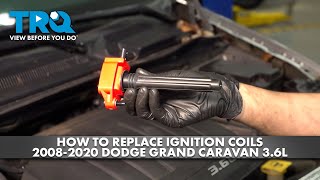
Typical fix: Replace the faulty ignition coil. Many technicians recommend replacing all coils on the bank, or all six, if they are original and high-mileage.
Est. part cost: $30-$70 - Worn or Fouled Spark Plug 🔴 High Probability → Shop Spark Plug
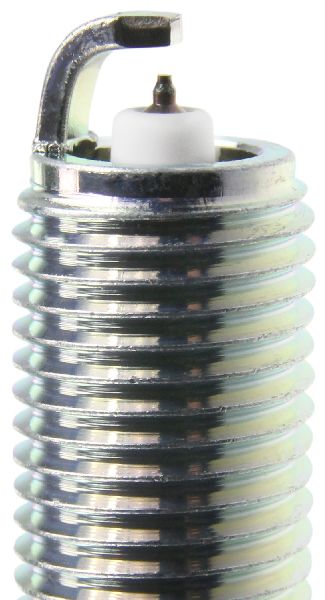
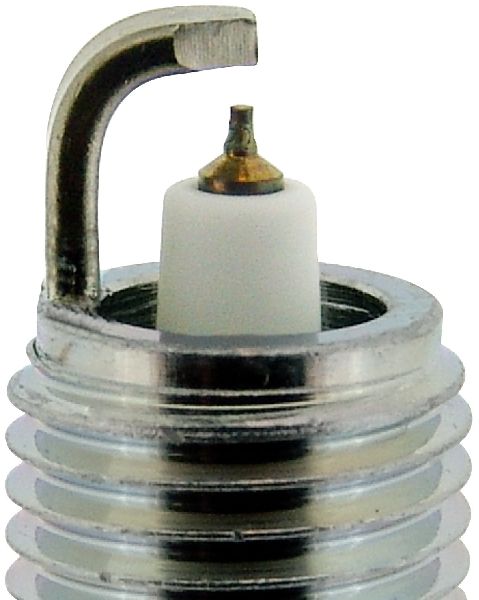
How to confirm: After ruling out the ignition coil, inspect the spark plug from cylinder #4. Look for heavy carbon buildup, oil fouling, a worn/damaged electrode, or an incorrect gap (should be 0.044"). You can also swap the spark plug with another cylinder to see if the misfire follows.
Typical fix: Replace the spark plug. It is best practice to replace all six spark plugs at the same time if they are near the end of their service life (typically 100,000 miles).
Est. part cost: $10-$25 per plug - Faulty Fuel Injector 🟡 Medium Probability → Shop Fuel Injector
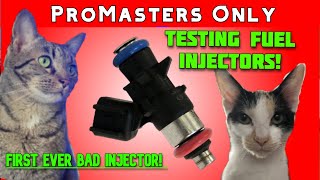
How to confirm: If the coil and plug are good, the fuel injector is the next likely cause. A 'noid' light can be used to check if the injector is receiving an electrical pulse from the PCM. You can also listen for a clicking sound from the injector with a mechanic's stethoscope. A user on Reddit with a 2014 model confirmed a P0304 was solved by replacing the fuel injector after it returned two years later, suggesting it can be a recurring issue. A definitive test is to measure the injector's resistance; a healthy injector should read around 12 ohms.
Typical fix: Replace the faulty fuel injector. It's often recommended to replace the upper intake plenum gaskets when performing this job, as the intake must be removed to access the injectors on the rear bank, though cylinder #4's injector is on the more accessible front bank.
Est. part cost: $50-$120
Rare But Worth Checking
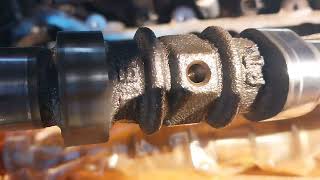
- Failed Rocker Arm/Lifter: → Shop Engine Rocker Arm The 3.6L Pentastar engine is known for potential valvetrain issues, including failing rocker arm bearings which can seize or collapse. This often produces an audible ticking noise from the top of the engine and can lead to a persistent misfire if the rocker arm damages the camshaft. A user on the 2CarPros forum with a P0304 specifically asked if a known bad roller arm could be the cause.
- Faulty Powertrain Control Module (PCM): → Shop Engine Control Module (ECM) TSB 18-069-16 REV. A is critical for this model year. It states that vehicles built between July 27, 2015 (MDH 0727XX) and September 11, 2015 (MDH 0911XX) may have a PCM with inadequate environmental protection. The TSB explicitly states that if a vehicle's VIN is on the recall list, the PCM must be replaced without further diagnosis. This can cause P0304 and other misfire codes.
- Low Engine Compression: Internal mechanical problems like a burnt valve, leaking head gasket, or damaged piston/cylinder wall can cause a loss of compression and a misfire. A compression test and/or a cylinder leak-down test would be needed to diagnose this. A user on a Dodge Journey forum with the same engine reported a P0304 was ultimately caused by a bad piston ring after all other common causes were ruled out.
Diagnosis Steps
- Read the code with an OBD-II scanner and note any other codes present, such as P0300, P0204, or P219B.
- Identify Cylinder #4. On the Grand Caravan's transversely mounted 3.6L V6, the cylinder bank closer to the radiator is Bank 2, containing cylinders 2, 4, and 6 from passenger to driver side. Cylinder #4 is the middle cylinder on the front (radiator side) bank, making it relatively easy to access.
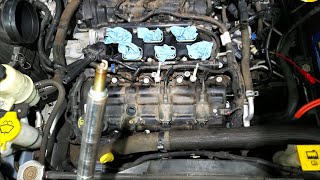
- Perform an 'ignition coil swap test'. Swap the ignition coil from cylinder #4 with the coil from cylinder #2. Clear the codes, run the engine, and re-scan. If the code changes to P0302, the ignition coil is the problem.
- If the code remains P0304, inspect and swap the spark plug from cylinder #4 with cylinder #2. If the code then changes to P0302, the spark plug is faulty. Check the old plug for fouling or damage.
- If the misfire still stays on cylinder #4, the problem is likely fuel or mechanical. Check the fuel injector wiring with a 'noid' light to ensure it's receiving a signal. Look for code P0204, which points directly to an injector circuit fault.
- If the injector signal is present, consider swapping the fuel injector (a more advanced task) or proceeding to mechanical checks.
- Perform a compression test on cylinder #4 and compare it to a healthy cylinder (e.g., #2). A significant loss of pressure (more than 15-20% difference) indicates an internal engine problem.
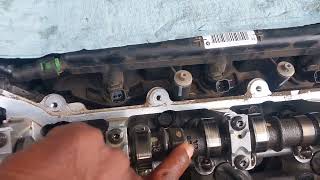
- If a ticking noise is present, remove the valve cover to inspect the valvetrain (rocker arms and camshafts) for damage, which is a known issue on this engine.
Parts You'll Likely Need
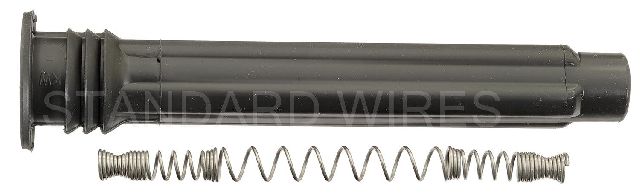
- Ignition Coil
(OEM #5149168AJ)— This is one of the most common failure points for a single-cylinder misfire. Cylinder #4 is on the easily accessible front bank.
Trusted brands: Mopar, NGK, Denso, Bosch
OEM price range: $70-$90
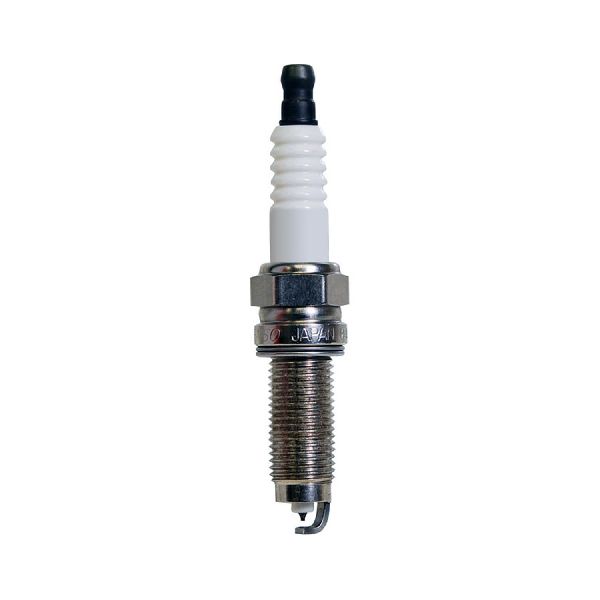
Aftermarket price range: $30-$60 - Spark Plug
(OEM #SP149125AF)— Spark plugs are a routine maintenance item and a primary cause of misfires as they wear out or become fouled.
Trusted brands: Mopar, NGK, Champion
OEM price range: $15-$25
Aftermarket price range: $8-$18
Related Codes That Often Appear With This One
- P0300 — If the misfire is intermittent or if the underlying cause (like a failing PCM or valvetrain issue) begins to affect other cylinders, a P0300 (Random/Multiple Cylinder Misfire) code may appear.
- P0302, P0306 — These codes indicate misfires on cylinders 2 and 6. Since cylinders 2, 4, and 6 are all on the same bank (front, radiator side), an issue affecting that entire bank, like a failing catalyst or a valvetrain problem on that head, could cause these codes to appear together.
- P0204 — This code indicates 'Injector Circuit/Open - Cylinder 4'. If you see this code alongside P0304, it strongly suggests the problem is with the fuel injector for cylinder 4 or its wiring, rather than spark or compression.
- P219B — This code indicates 'Bank 2 Air-Fuel Ratio Imbalance'. Since cylinder 4 is on Bank 2, a persistent misfire there can disrupt the air-fuel mixture for the entire bank, causing the oxygen sensors to report an imbalance. A Ram 1500 owner with the 3.6L engine reported this code along with P0304 and P0204.
Technical Service Bulletins (TSBs) & Recalls
- 18-069-16 REV. A: Mentions P0304 as a possible Diagnostic Trouble Code (DTC) related to engine misfires caused by a faulty PCM on vehicles built between 07/27/2015 and 09/11/2015. The fix is a complete PCM replacement.
Platform-Specific Known Issues
- TSB #18-069-16 REV. A was issued for some 2015-2016 models built between July 27, 2015, and September 11, 2015 for a faulty PCM that could cause misfire codes. The TSB states the PCM may have 'inadequate environmental protection' and that if the VIN is on the associated list, the module should be replaced without further diagnosis.
Mechanic-Grade Diagnostic Values
- Fuel Injector Resistance — expected: Approximately 12.0 - 12.4 ohms. Failure: A significantly higher reading (e.g., 63 ohms) or an open circuit (infinite resistance) indicates a failed injector. A reading slightly out of spec (e.g., 11.4 ohms) may still be problematic.
- Engine Compression (Dry Test) — expected: 120 - 150 PSI, with minimal variation between cylinders (less than 15-20%).. Failure: Significantly lower pressure in cylinder #4 compared to a healthy cylinder points to a mechanical issue like worn piston rings, or a valve/valve seat problem.
- Engine Compression (Wet Test for Injector Leak) — expected: PSI should be similar to dry test.. Failure: An extremely high reading (e.g., over 200 PSI) during a compression test performed with the fuel injectors still connected can indicate a leaking or dribbling injector washing the cylinder walls with fuel.
- Fuel Pressure — expected: The 3.6L Pentastar uses a returnless fuel system, maintaining pressure at the rail. While a specific PSI value was not found in the search, it is regulated by the in-tank fuel pump module.. Failure: Low fuel pressure would typically cause multiple/random misfires (P0300) rather than a single cylinder misfire like P0304.
Hidden / Shadow Codes Worth Checking
- Mode $06 Misfire Counts: Advanced scan tools can access Mode $06 data, which includes raw misfire counts for each cylinder before they are high enough to trigger a Check Engine Light. This can help confirm if cylinder #4 is the only one misfiring or if other cylinders are also experiencing minor misfires. (see via Use a professional-grade OBD-II scanner or an app with advanced diagnostic capabilities (e.g., wiTECH for Chrysler/Dodge, or other high-end scanners).)
Scan Tool Commands That Help
- wiTECH (or equivalent professional scanner): Cylinder Contribution Test / Power Balance Test — This function allows the technician to disable individual fuel injectors one by one to see the effect on engine RPM. If disabling cylinder #4 causes little or no change in RPM drop compared to other cylinders, it confirms that cylinder is not contributing power, isolating the fault to that cylinder.
- wiTECH (or equivalent professional scanner): Actuator Tests (e.g., Fuel Injector, Ignition Coil) — Allows the technician to command the PCM to fire the ignition coil or fuel injector for cylinder #4 while the engine is off. This can be used with a test light (noid light for injector) or spark tester to confirm the entire circuit from the PCM to the component is functional.
Wiring & Ground Locations
- Cylinder 4 Ignition Coil Connector — On the front (radiator side) valve cover, the middle ignition coil. The connector has pins for the control circuit from the PCM and a power feed.. A poor connection, corrosion, or a broken wire at this specific connector will prevent the coil from firing, directly causing a P0304. The wiring harness in this area is subject to heat and vibration.
- Cylinder 4 Fuel Injector Connector — On the front fuel rail, middle injector. Access requires removing the upper intake manifold.. Similar to the coil, a fault in the injector's connector or wiring will cause a P0304, often accompanied by a P0204 (Injector Circuit Fault). The resistance across the two pins of the injector itself should be checked.
Real Owner Repair Stories
- Reddit user in r/Dodge (2014 Dodge Grand Caravan SXT) — P0304 code, engine hesitation from 0-5 mph.
❌ Tried (didn't work) Replaced coil pack on cylinder #4 with OEM part, Replaced all spark plugs with OEM parts
✅ What actually fixed it Replacing the fuel injector on cylinder #4 resolved the issue. The same problem returned two years later, and replacing the injector again fixed it, indicating it can be a recurring failure point. - YouTube video by 'Fix It Angel' (2014 Chrysler Town & Country (same 3.6L engine)) — P0304, P0300, rough idle, stalling.
❌ Tried (didn't work) Replaced spark plugs, Replaced ignition coils
✅ What actually fixed it The PCV valve had failed and was completely clogged. Replacing the PCV valve resolved the misfire codes and rough running. - Reddit user in r/MechanicAdvice (2013 Dodge Grand Caravan, 120k miles) — P0304, rough idle, dying in reverse, ticking noise.
❌ Tried (didn't work) Replaced all spark plugs, Replaced all coil packs
✅ What actually fixed it The user was advised that after replacing ignition parts, the next step was to inspect the valvetrain. The combination of a ticking noise and a persistent misfire after a tune-up strongly pointed to a failing rocker arm, a known issue on higher-mileage Pentastar engines.
When the Usual Fixes Don't Work
- In several documented cases, owners replaced both the ignition coil and spark plug for cylinder #4, which are the most common culprits, only to have the P0304 code persist. One such owner on a Reddit forum ultimately fixed the issue by replacing the fuel injector, which failed again two years later, suggesting it can be a specific weak point for that cylinder. Another owner of a similar vehicle found the true cause to be a completely failed PCV valve, a part not directly related to ignition or fuel delivery for a specific cylinder, which was causing a system-wide imbalance that manifested as a single cylinder misfire.
OEM Part Supersession History
5149168AH, 5149168AI→5149168AJ— Standard component revision and improvement by the manufacturer.
Model Year Variations Within This Range
- 2016: For the 2016 model year, FCA released an updated version of the 3.6L Pentastar engine with features like two-stage variable valve lift (VVL), a cooled EGR system, and a higher compression ratio (11.3:1 vs 10.2:1). However, sources indicate this updated engine was not used in the Grand Caravan, which continued with the original Pentastar design until the end of its production.
Helpful Videos




We Have This Part in Stock


The information in this article is provided for general reference and educational purposes only. Vehicle specifications, procedures, and part compatibility can vary by production date, trim level, and region. Always consult your vehicle's factory service manual and verify part numbers before purchasing or performing repairs. Safety-critical components such as airbags, seat belts, and braking systems should be installed by a qualified professional.
- Dodge CARAVAN:
- 🧭 Diagnostic Flowchart
- 🎬 Helpful Videos
- 🛍️ Shop This Part
- What's Unique About the 2015-2016 Dodge CARAVAN
- Symptoms You May Notice
- Most Likely Causes
- Rare But Worth Checking
- Diagnosis Steps
- Parts You'll Likely Need
- Related Codes That Often Appear With This One
- Technical Service Bulletins (TSBs) & Recalls
- Platform-Specific Known Issues
- Mechanic-Grade Diagnostic Values
- Hidden / Shadow Codes Worth Checking
- Scan Tool Commands That Help
- Wiring & Ground Locations
- Real Owner Repair Stories
- When the Usual Fixes Don't Work
- OEM Part Supersession History
- Model Year Variations Within This Range
- 🎟️ Get 5% Off