

P0304 on 2007-2014 Ford Edge 3.5L V6: Cylinder 4 Misfire Causes and Fixes
P0304 indicates a misfire on cylinder 4. For the 3.5L V6 in the Ford Edge, this is most often caused by a bad ignition coil or a worn spark plug. Cylinder 4 is located on the front bank (near the radiator), making it easy to access for diagnosis and repair. A DIY fix is common, costing around $30-$80 for a new coil and plug.
- P0304 on a 2007-2014 Edge 3.5L means cylinder #4 is misfiring.
- The most likely cause is a bad ignition coil, followed by a worn spark plug.
- Cylinder 4 is on the front, radiator-side bank, making it easy to access for DIY diagnosis.
- The easiest diagnostic step is to swap the ignition coil from cylinder 4 to cylinder 5 to see if the misfire code follows.
- If the check engine light is flashing, avoid driving to prevent damage to the catalytic converter.
What's Unique About the 2007-2014 Ford Edge
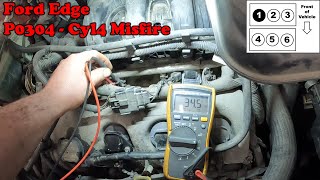
On the 2007-2014 Ford Edge with the 3.5L V6 engine, a P0304 code is a straightforward ignition or fuel-related issue. Unlike some other Ford engines where this code can signal catastrophic problems like coolant intrusion, the 3.5L Cyclone V6 is not widely known for this specific failure mode. The cylinder layout is a key factor for this vehicle; cylinder 4 is on the front bank (Bank 2), closest to the radiator, making it significantly easier 🎬 See a simple DIY diagnosis of a Cylinder 4 misfire to access and repair than the rear cylinders (1-2-3). This accessibility makes diagnosis and DIY repair much more manageable.
Generation note: The 2007-2014 model years cover the entire first generation of the Ford Edge, including the 2011 facelift. The core 3.5L Cyclone V6 engine and ignition system remained consistent throughout this period, so the causes and fixes for a P0304 code are the same across these years.
Symptoms You May Notice
- Rough or shaky idle
- Hesitation or stumbling during acceleration
- Flashing or solid Check Engine Light
- Reduced engine power
- Poor fuel economy
- Smell of unburned fuel from the exhaust
- Loss of cabin heat or engine overheating in extreme cases
- Replacing the oxygen sensor for Bank 2. An O2 sensor will typically set its own codes and affect all three cylinders on that bank, not just one.
- Replacing the catalytic converter. A misfire can damage a catalytic converter, but a bad converter does not cause a single-cylinder misfire code.
Most Likely Causes
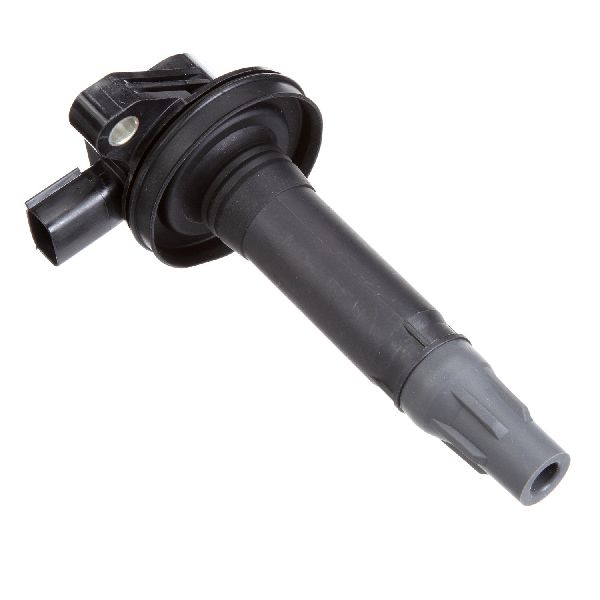
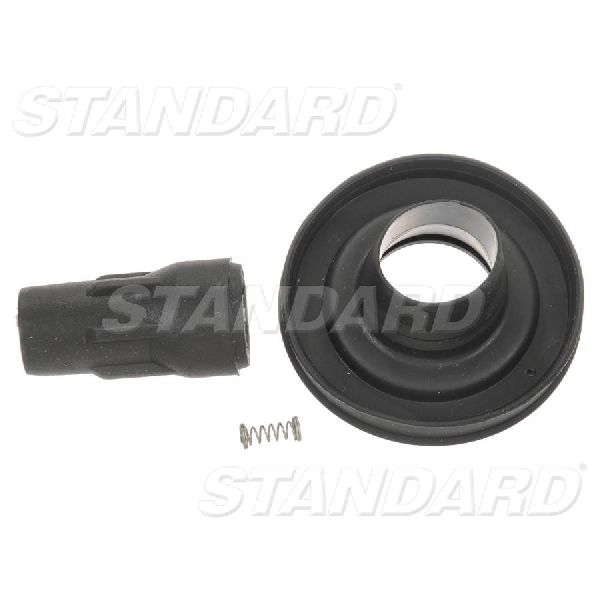
- Faulty Ignition Coil 🔴 High Probability → Shop Ignition Coil Coil-on-plug ignition systems are common points of failure on many modern engines as they age. The two-wire coil design on this engine can also short internally, potentially damaging the PCM.
How to confirm: Swap the ignition coil from cylinder 4 with an adjacent coil (e.g., cylinder 5). Clear the codes and drive the vehicle. If the code changes to P0305, the ignition coil is confirmed to be faulty.
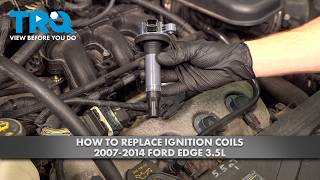
Typical fix: Replace the faulty ignition coil 🎬 Watch: Step-by-step guide to replacing your ignition coils (Motorcraft DG520). It is often recommended to replace the corresponding spark plug at the same time.
Est. part cost: $25-$60 - Worn or Fouled Spark Plug 🔴 High Probability → Shop Spark Plug
How to confirm: After ruling out the ignition coil, remove the spark plug from cylinder 4. Inspect it for wear (eroded electrode), carbon fouling, oil, or coolant contamination. A worn or damaged plug can't produce a strong enough spark.
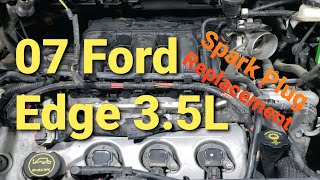
Typical fix: Replace the spark plug in cylinder 4 (Motorcraft SP-520). It is best practice to replace all six spark plugs if they are near the end of their service interval (typically around 100,000 miles).
Est. part cost: $5-$15 per plug - Clogged or Failed Fuel Injector 🟡 Medium Probability → Shop Fuel Injector
How to confirm: Listen to the fuel injector on cylinder 4 with a mechanic's stethoscope; it should have a steady, audible clicking sound similar to the other injectors. You can also measure its resistance with a multimeter; a good injector should read between 11 and 14 ohms. A significantly higher reading indicates failure. Note that a specific injector code like P0204 may not always be present.
Typical fix: Replace the faulty fuel injector. This is more involved as it requires depressurizing the fuel rail.
Est. part cost: $40-$100
Rare But Worth Checking
- Vacuum Leak: A leak in the intake manifold gasket near cylinder 4 can lean out the air/fuel mixture and cause a misfire. This is less common for a single-cylinder misfire but still possible.
- PCM (Powertrain Control Module) Failure: In some Ford vehicles, the driver circuit within the PCM that controls the ignition coil can fail. This is often caused by a shorted two-wire ignition coil sending excessive current back to the PCM. If a P0304 code persists after replacing the coil, plug, and injector, PCM failure is a strong possibility.
- Internal Engine Mechanical Problem: This is the least likely cause and includes issues like low compression from a bad valve, worn piston rings, or camshaft damage. A compression test on cylinder 4 is required to diagnose this. Note: A catastrophic internal water pump failure can cause coolant to mix with oil, but this typically presents with other codes (like P0016) and symptoms before a single cylinder misfire is the primary concern.
Diagnosis Steps
- Read the code with an OBD-II scanner to confirm P0304 and check for any other codes.
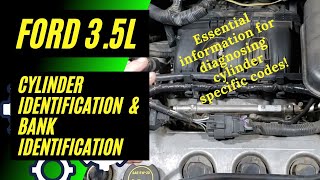
- Identify cylinder 4. On the 🎬 Watch: How to identify the cylinders and banks on your Ford transversely mounted 3.5L V6 in the Edge, it is the cylinder on the front bank (closest to the radiator) on the passenger side. The front bank is cylinders 4-5-6 (passenger to driver side), and the rear bank is 1-2-3.
- Swap the ignition coil from cylinder 4 with the coil from cylinder 5 (the middle cylinder on the front bank).
- Clear the codes, start the engine, and let it run or drive it until the check engine light returns.
- Re-scan for codes. If the code is now P0305, the ignition coil is bad and needs to be replaced.
- If the code remains P0304, the coil is likely good. Proceed to inspect the spark plug. Remove the plug from cylinder 4 and check its condition. Replace it if it's worn, fouled, or damaged.
- If the plug and coil are good, the next step is to check the fuel injector. Listen for a consistent clicking sound. If it's silent or sounds different from other injectors, it may be faulty. Check its resistance with a multimeter; a reading far from the 11-14 ohm specification suggests failure.
- If ignition and fuel components check out, consider a more advanced diagnosis, such as a compression test to rule out mechanical engine problems or checking for a vacuum leak near cylinder 4. If all parts test good, investigate the possibility of a failed PCM driver circuit.
Parts You'll Likely Need
- Ignition Coil
(OEM #DG520 (Motorcraft))— This is the most common failure part for a single-cylinder misfire on this engine.
Trusted brands: Motorcraft, NGK, Denso
OEM price range: $40-$60
Aftermarket price range: $25-$45 - Spark Plug
(OEM #SP-520 (Motorcraft))— Spark plugs are a regular maintenance item and can cause misfires when worn. It's best practice to replace the plug when replacing the coil.
Trusted brands: Motorcraft, NGK, Autolite
OEM price range: $8-$12
Aftermarket price range: $5-$10
Related Codes That Often Appear With This One
- P0300 — If the misfire is intermittent or affects multiple cylinders, a P0300 (Random Misfire Detected) may appear alongside the specific cylinder code.
- P0316 — This code indicates a misfire was detected within the first 1,000 engine revolutions on startup, which is common when a hard fault like a bad coil exists.
Platform-Specific Known Issues
- The 3.5L V6 uses a two-wire coil design. A known failure mode is for an ignition coil to short internally, which can damage the corresponding driver circuit in the Powertrain Control Module (PCM). This results in a persistent misfire on that cylinder that cannot be fixed by replacing the coil, plug, or injector, necessitating a PCM repair or replacement.
- It is important to distinguish this platform's issues from others. While some Ford engines (notably the 2.0L EcoBoost) are known for coolant intrusion into cylinders causing misfires, that is not a common cause for P0304 on the 3.5L V6. The primary coolant-related failure on the 3.5L is the internal water pump, which typically results in coolant mixing with oil and causes more severe symptoms like overheating and timing codes.
- Manufacturer Bulletin #SSM 47204 notes that some Ford Edge vehicles with the 2.0L EcoBoost engine may exhibit rough running with DTCs P0300-P0304 and P0316 due to coolant intrusion caused by corrosion on the engine block.
Mechanic-Grade Diagnostic Values
- Fuel Injector Resistance — expected: 11-14 Ohms. Failure: A reading of infinity (Open Loop/OL) or significantly outside the expected range.
- Ignition Coil Primary Resistance — expected: ~0.55-0.66 Ohms. Failure: A reading significantly higher or lower than the specification.
- Ignition Coil Secondary Resistance — expected: 5.5k - 6.1k Ohms. Failure: A reading significantly outside the specification.
- Injector Pulse Width (at idle) — expected: 0.8 ms to 2.5 ms. Failure: A pulse width for cylinder 4 that is significantly different from the other cylinders.
- Low-Pressure Fuel System — expected: Around 60 PSI. Failure: Pressure significantly below specification, though this would likely affect more than one cylinder.
Hidden / Shadow Codes Worth Checking
- Mode $06, Test ID $A2-$AD, Comp ID $0C: Provides misfire counts for the current or last driving cycle for each cylinder (Cylinder 4 is typically Component ID $04). This allows a technician to see small numbers of misfires on a specific cylinder before they accumulate enough to trigger a P0304 code. (see via An advanced OBD-II scanner capable of reading Mode $06 data, such as Ford's IDS, FORScan, or other professional-grade scanners.)
Scan Tool Commands That Help
- Ford IDS (or equivalent): Power Balance Test — This bidirectional test graphically displays the RPM drop and power contribution of each cylinder. It can quickly confirm that cylinder 4 is the source of the misfire without swapping any parts. Negative numbers indicate poor contribution.
Real Owner Repair Stories
- Ford Edge Forum (2007 Ford Edge) — Persistent P0304 misfire on cylinder 4.
❌ Tried (didn't work) Replacing the spark plug on cylinder 4, Replacing the ignition coil on cylinder 4, Swapping the new coil and plug to another cylinder (misfire did not move)
✅ What actually fixed it The owner suspected a PCM failure, which is a known, though rare, issue on these vehicles when the coil driver circuit fails. - NHTSA ODI #11515903 — An owner reported that after the check engine light came on with code P0304, they replaced the spark plug and ignition coil, but the light returned and the vehicle began to overheat.
- NHTSA ODI #11378511 — A driver took their vehicle in for a P0304 code and was advised by the dealership to replace the long block at a cost of $6,800, noting a loss of cabin heat.
OEM Part Supersession History
7T4Z-12029-E→DG520 (Motorcraft Service Number)— Standard part number update for service replacement.SP-520→SP-589 (Newer version)— Part number update/revision.
Heads up: The parts are interchangeable for this application.
Model Year Variations Within This Range
- 2007-2010: The 3.5L V6 engine produced 265 horsepower and had variable timing on the intake camshafts only.
- 2011-2014: The 3.5L V6 was updated with Twin Independent Variable Camshaft Timing (Ti-VCT), allowing timing adjustments on both intake and exhaust camshafts. This, along with other tuning, increased output to 285 horsepower. While the fundamental causes of P0304 are the same, the addition of exhaust VVT solenoids adds another potential (though rare) diagnostic point.
Diagnostic Flowchart
Other Known Issues on This Vehicle
Issues unrelated to this code that are worth knowing about as an owner of this generation:
- Internal Water Pump Failure 🔴 High — A known design flaw. Failure can occur without warning, often between 80,000-120,000 miles. When the pump's seal fails, it leaks coolant directly into the engine oil, leading to bearing damage and catastrophic engine failure.
- Power Transfer Unit (PTU) Failure (AWD Models) 🔴 High — Very common. The PTU is located next to the hot exhaust, causing the gear oil to break down. Ford deemed it 'unserviceable' with no drain plug, leading to failures often starting around 50,000-100,000 miles. Symptoms include a grinding noise or a smell of burning gear oil.
- Electronic Throttle Body Failure 🟠 Medium — Widespread issue where the vehicle suddenly enters 'limp mode' with a wrench light. It's an internal electronic fault, not fixed by cleaning. (Ref: Ford Customer Satisfaction Program 13N03 (expired) extended the warranty. TSB 10-21-6 also addressed this for some models.)
- Persistent 'Door Ajar' Light 🟡 Low — Extremely common. A faulty microswitch inside the door latch assembly fails, causing the light to stay on, which can drain the battery. (Ref: TSB 18-2013 was issued for the 2011-2013 models, suggesting a cleaning procedure. Most owners find replacing the latch assembly is the only permanent fix.)
- Faulty Brake Booster 🟠 Medium — Common on 2007-2015 models. A tear in the internal diaphragm causes a hissing noise and a hard or spongy brake pedal. (Ref: Ford addressed this with Customer Satisfaction Program 13N02 and Recall 23S12 for some years.)
Used vs. New Parts: Buying Guide for This Vehicle
When a used part is the smart pick: For this repair, using used parts is generally not recommended for the primary failure items. Ignition coils and spark plugs are wear items, and their remaining lifespan is unknown. A used fuel injector carries a risk of being clogged or having a weak spray pattern.
Donor-vehicle mileage cap: roughly under 80000 miles for the part to have meaningful remaining life.
What to inspect on the donor part:
- For an ignition coil, check for cracks in the plastic housing or corrosion on the electrical connector.
- Ensure the vehicle the part came from was not in a front-end collision that could have damaged front-bank components.
- Ask for the donor vehicle's mileage; lower is always better.
OEM-only on this vehicle (don't cheap out):
- Ignition Coil: Due to the risk of a faulty aftermarket coil damaging the PCM, using OEM Motorcraft coils is strongly recommended by forum veterans and mechanics.
Aftermarket brands forum-validated for this vehicle:
- NGK (Ignition Coils, Spark Plugs)
- Denso (Ignition Coils, Spark Plugs)
- Mishimoto (Ignition Coils)
Brands owners have reported issues with on this vehicle:
- Unnamed, no-brand ignition coils from online marketplaces are frequently cited as having a short lifespan and potentially causing further issues.
Real Owner Stories
Aggregated from forums and TSBs cited above. Mileages and costs reflect what owners reported in those sources.
2009 Ford Edge 3.5L V6 — 110000 miles
Symptoms: P0304 code present; owner attempted to swap coils and plugs between cylinders 4 and 5 but the code did not move.
What fixed it: The standard diagnostic process led the owner to suspect a fuel injector or a more complex issue after coil and plug swaps failed to move the code.
Source hint: Ford Edge Forum: 'P0304 4th cylinder misfire'
2007 Ford Edge 3.5L V6
Symptoms: Persistent P0304 code even after a new plug and coil were installed and swapped.
What fixed it: The owner investigated a PCM failure and the need for a rebuild after standard component replacements failed.
Source hint: Ford Edge Forum: 'Misfire cyl 4'
2013 Ford Edge 3.5L V6
Symptoms: Persistent P0304 misfire.
What fixed it: The cause was identified as a likely PCM failure because the misfire remained after replacing all plugs, coils, and the fuel injector on cylinder 4.
Source hint: 2CarPros: '2013 Ford Edge Code P0304 02 4 Misfire'
2013 Ford Edge 3.5L V6 — 102000 miles
Symptoms: Engine running rough with a P0304 code.
What fixed it: The owner followed the recommended first step of replacing the spark plug and ignition coil.
Source hint: Ford Edge Forum: 'P0304 code on 13 Edge'
Ford Edge Owner Report — NHTSA ODI #11677487
Symptoms: Check engine light with code P0304 and white smoke from the exhaust only at first morning startup.
What fixed it: This report describes symptoms often associated with internal engine issues requiring professional mechanical inspection.
Ford Edge Owner Report — NHTSA ODI #11477036
Symptoms: Check engine light with codes P0302, P0303, and P0304.
What fixed it: A mechanic confirmed via borescope that coolant had leaked into the cylinder and caused a crack, necessitating an entire engine replacement.
Related OBD-II Codes
Frequently Asked Questions
Where is cylinder 4 located on my 2007-2014 Ford Edge 3.5L V6?
Which specific ignition coil and spark plug should I use for my Edge?
Can a bad ignition coil damage other parts of my Ford Edge?
Is P0304 on my 3.5L Edge likely caused by the common Ford coolant intrusion issue?
How can I tell if my P0304 code is a fuel injector rather than a coil?
At what mileage should I consider replacing all my spark plugs to prevent P0304?
Helpful Videos
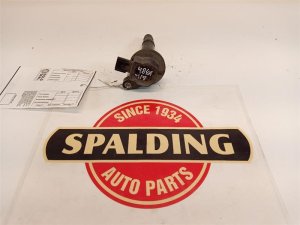
Used OEM Parts in Stock
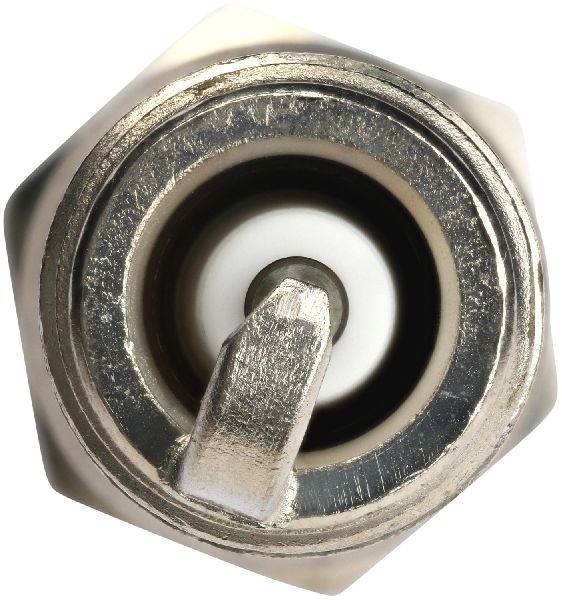
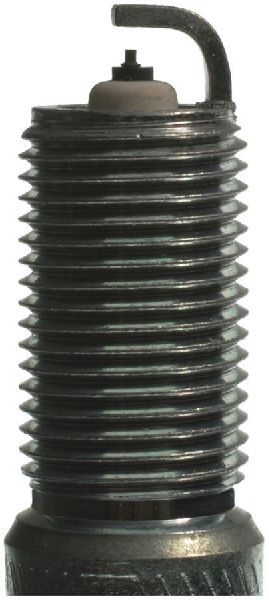
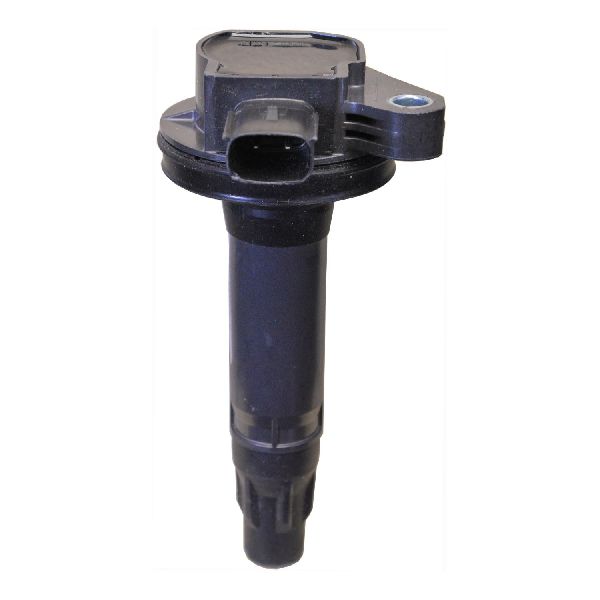
New Aftermarket Parts Available


The information in this article is provided for general reference and educational purposes only. Vehicle specifications, procedures, and part compatibility can vary by production date, trim level, and region. Always consult your vehicle's factory service manual and verify part numbers before purchasing or performing repairs. Safety-critical components such as airbags, seat belts, and braking systems should be installed by a qualified professional.
- Ford Edge:
- 🧭 Diagnostic Flowchart
- 🎬 Helpful Videos
- 🛍️ Shop This Part
- What's Unique About the 2007-2014 Ford Edge
- Symptoms You May Notice
- Most Likely Causes
- Rare But Worth Checking
- Diagnosis Steps
- Parts You'll Likely Need
- Related Codes That Often Appear With This One
- Platform-Specific Known Issues
- Mechanic-Grade Diagnostic Values
- Hidden / Shadow Codes Worth Checking
- Scan Tool Commands That Help
- Real Owner Repair Stories
- OEM Part Supersession History
- Model Year Variations Within This Range
- Other Known Issues on This Vehicle
- Used vs. New Parts: Buying Guide for This Vehicle
- Real Owner Stories
- 2009 Ford Edge 3.5L V6 — 110000 miles
- 2007 Ford Edge 3.5L V6
- 2013 Ford Edge 3.5L V6
- 2013 Ford Edge 3.5L V6 — 102000 miles
- Ford Edge Owner Report — NHTSA ODI #11677487
- Ford Edge Owner Report — NHTSA ODI #11477036
- Related OBD-II Codes
- Frequently Asked Questions
- 🎟️ Get 5% Off