

P0304 on 2021 Ford Explorer 3.0L EcoBoost: Cylinder 4 Misfire Causes and Fixes
P0304 indicates a misfire on cylinder 4. The most common fixes are replacing a faulty ignition coil or a worn spark plug. However, a critical recall (24S55 / NHTSA 24V635000) exists for potential intake valve failure on this engine, which can also cause this code. If a coil and plug swap doesn't fix it, dealer service is strongly recommended to investigate the valve issue or a potential fuel injector problem.
- P0304 on a 2021 Explorer 3.0L is a serious code that requires immediate attention.
- While a bad ignition coil or spark plug is the most likely cause, do not rule out the major safety recall (24S55) for fractured intake valves.
- Always check for open recalls using your vehicle's VIN.
- If swapping the coil and plug to another cylinder does not move the misfire code, professional diagnosis is strongly recommended to check for fuel system or internal engine problems.
What's Unique About the 2021-2021 Ford Explorer
While ignition components are the usual suspects for a misfire on any engine, the 2021 Explorer with the 3.0L EcoBoost has a significant known issue. Ford issued a recall (24S55, also NHTSA campaign 24V635000) for certain 2021-2022 models because the intake valves can fracture. The root cause was identified as intake valves exceeding hardness specifications due to a supplier's grinding process, making them brittle. A fractured 🎬 Watch: A detailed breakdown of the Ford engine recall valve can lead to a loss of compression, misfires like P0304, and potentially catastrophic engine failure. This elevates the seriousness of a P0304 code beyond a simple tune-up issue and makes a professional diagnosis crucial if basic fixes don't work.
Symptoms You May Notice
- Rough or vibrating idle
- Hesitation or stuttering when accelerating
- Noticeable loss of engine power
- Solid or flashing Check Engine Light
- Smell of unburnt fuel from the exhaust
- Engine may make unusual metallic noises if the misfire is caused by a mechanical failure like a broken valve.
- Replacing oxygen sensors. O2 sensors report on emissions after the fact; they do not cause a single-cylinder misfire. A bad reading is a symptom, not the cause.
- Replacing the catalytic converter. A persistent misfire can destroy a catalytic converter by sending unburnt fuel into it, but a bad converter will not cause a P0304 code.
Most Likely Causes
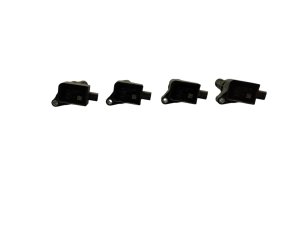
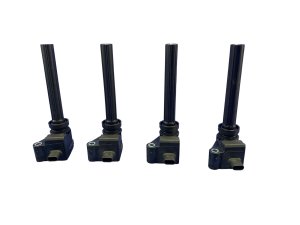
- Faulty Ignition Coil 🔴 High Probability → Shop Ignition Coil Coil-on-plug systems are common failure points on modern engines, and the high heat within the turbocharged 3.0L EcoBoost engine bay can accelerate wear and tear on the coil's electronics and housing.
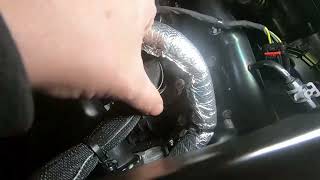
How to confirm: Swap the ignition coil from cylinder 4 with another cylinder (e.g., cylinder 5, the middle cylinder on the same bank). Clear the codes and drive. 🎬 See this walkthrough on troubleshooting a cylinder misfire If the code changes to P0305, the ignition coil is faulty. Visually inspect the coil for cracks or carbon tracking upon removal.
Typical fix: Replace the faulty ignition coil. It is often recommended to replace the corresponding spark plug at the same time. The OEM Motorcraft part number is often cited as DG-588 (engineering number PB5E-12A366-AA) or PB5Z-12029-A.
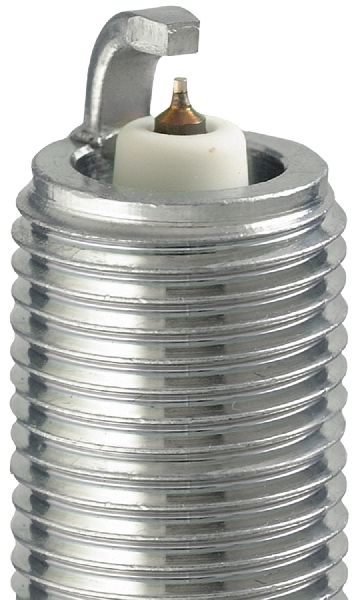
Est. part cost: $50-$90 - Worn or Fouled Spark Plug 🔴 High Probability → Shop Spark Plug Turbocharged, direct-injection (GDI) engines are harder on spark plugs than naturally aspirated engines due to higher cylinder pressures and temperatures. While the official service interval can be long, many owners recommend replacement every 40,000-60,000 miles to prevent issues.
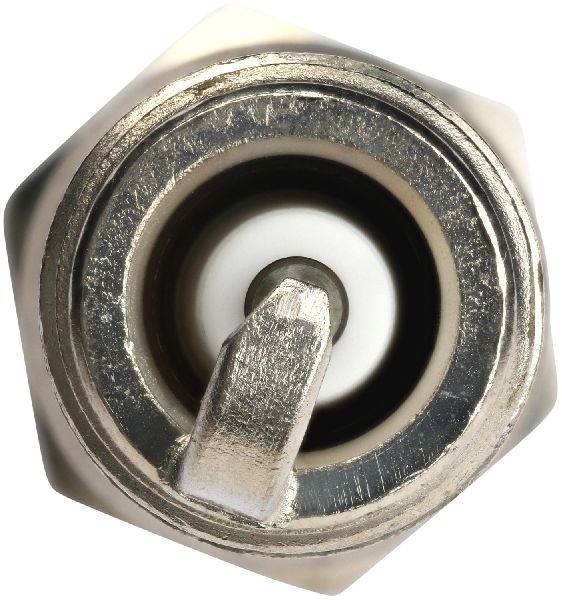
How to confirm: After confirming the coil is good, remove the spark plug from cylinder 4. Inspect it for wear on the electrode, carbon fouling, oil, coolant residue, or cracks in the porcelain insulator. A correct gap is crucial; always verify before installation.
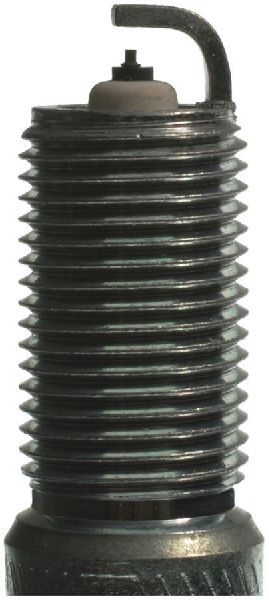
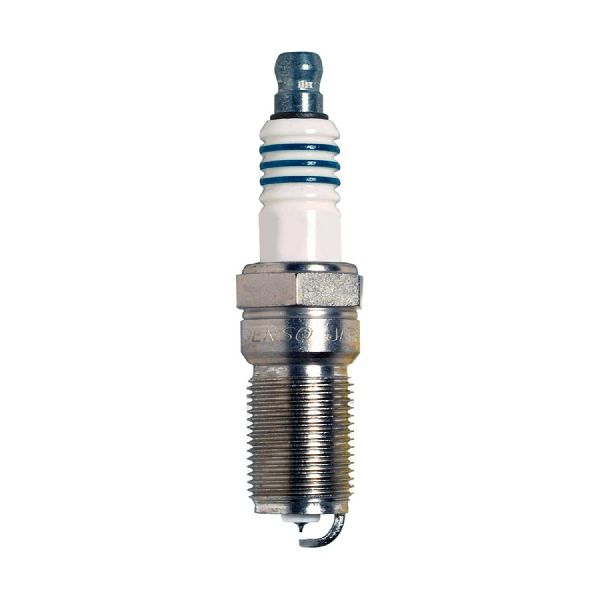
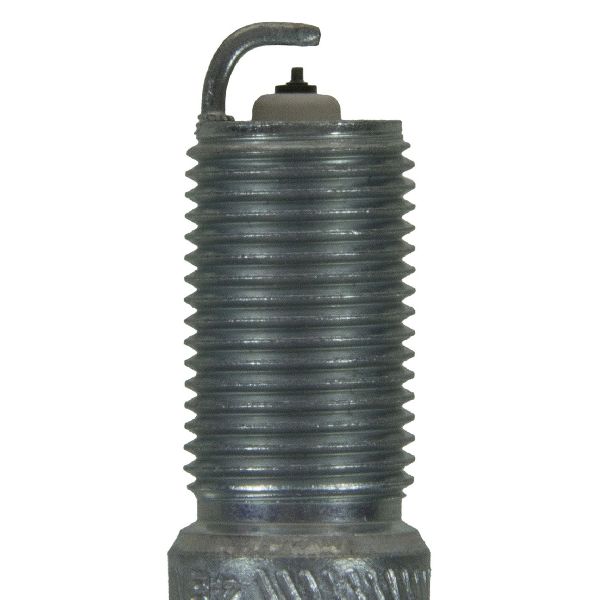
Typical fix: Replace the spark plug. It is best practice to replace all six spark plugs as a set with high-quality Iridium or Ruthenium plugs to ensure even performance. OEM Motorcraft plugs are often CYFS-12Y-RT3 or SP-594, but always verify by VIN.
Est. part cost: $15-$30 per plug - Faulty Fuel Injector 🟡 Medium Probability → Shop Fuel Injector Direct injection (GDI) fuel injectors operate under extremely high pressure and are susceptible to clogging from carbon deposits or electronic failure. Unlike port injection, GDI injectors are not cleaned by fuel additives in the gas tank.
How to confirm: This is more difficult for DIY. A professional can perform a fuel injector balance test with a high-level scan tool. A DIY method is to swap the injector from cylinder 4 with another cylinder, but this is a much more involved job than swapping a coil or plug. Listening for a consistent clicking sound with a mechanic's stethoscope can sometimes identify a dead injector.
Typical fix: Replace the fuel injector on cylinder 4. This is a more advanced repair that often requires removing the intake manifold.
Est. part cost: $70-$150
Rare But Worth Checking
- Cracked Intake Valve (Recall 24S55): A recall was issued for 2021-2022 Explorers with the 3.0L EcoBoost because intake valves can fracture, causing misfires and catastrophic engine failure. The cause was traced to brittle valves from a supplier. The remedy involves a dealer-performed engine cycle test and, if it fails, a complete engine replacement, free of charge. If basic ignition and fuel checks don't resolve P0304, this is a strong possibility that must be investigated by a Ford dealer.
- Intake Valve Carbon Buildup: As a direct-injection engine, fuel doesn't wash over the intake valves, allowing carbon deposits to form over time (typically 60k+ miles). This can restrict airflow or cause the valve to not seat properly, leading to misfires, especially on a cold engine. This requires physical cleaning, such as walnut blasting.
- Low Compression: Internal engine damage such as a worn piston ring, damaged cylinder wall, or a leaking head gasket can cause a misfire. A mechanical compression test is the definitive way to diagnose this. A reading on one cylinder that is significantly lower than the others indicates a serious problem.
Diagnosis Steps
- Read the codes with an OBD-II scanner and note any other codes present, especially P0300 or P0316.
- If the Check Engine Light is flashing, limit driving to avoid damaging the catalytic converter.
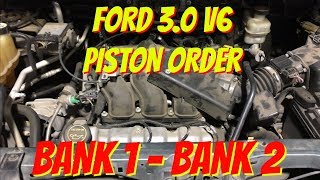
- Locate cylinder 4. On the 3.0L EcoBoost, the passenger side bank is cylinders 1-2-3 (rear to front) and the driver side bank is 4-5-6 (front to rear). Cylinder 4 is on the driver's side, closest to the radiator.
- Swap the ignition coil from cylinder 4 with the coil from cylinder 5 (the middle cylinder on the driver's side).
- Clear the codes with the scanner, start the engine, and let it idle or drive briefly. If the code returns as P0305, the ignition coil is bad and needs replacement.
- If the code remains P0304, move the spark plug from cylinder 4 to cylinder 5 (leaving the swapped coil in place). Clear codes and drive.
- If the code now moves to P0305, the spark plug is bad. Replace all six plugs for best results.
- If the code remains P0304 after swapping both the coil and plug, the issue is more complex.
- Check your vehicle's VIN for open recalls on the Ford or NHTSA website, specifically recall 24S55 (NHTSA 24V635000) for the intake valve failure.
- At this point, the problem is likely a faulty fuel injector or an internal mechanical issue (like carbon buildup or the valve recall). Professional diagnosis is recommended to test the fuel injector and perform a compression or leak-down test.
Parts You'll Likely Need
- Ignition Coil
(OEM #PB5Z-12029-A / DG-588)— This is one of the most common failure items to cause a single-cylinder misfire and is the first logical part to test via swapping due to its accessibility.
Trusted brands: Motorcraft, NGK, Denso
OEM price range: $80-$130
Aftermarket price range: $40-$70 - Spark Plug
(OEM #CYFS-12Y-RT3 / SP-594)— Spark plugs are a regular maintenance item that can wear out and cause misfires. They are the second-easiest component to check. Use of Iridium or Ruthenium plugs is critical for this engine.
Trusted brands: Motorcraft, NGK
OEM price range: $20-$30
Aftermarket price range: $15-$25
Related Codes That Often Appear With This One
- P0300 — If multiple cylinders are misfiring randomly, you may see P0300 (Random/Multiple Cylinder Misfire) alongside the specific cylinder code. This often points to a systemic issue like a vacuum leak or fuel delivery problem.
- P0316 — This code indicates a misfire was detected within the first 1,000 engine revolutions on startup. It is common with cold-start issues like carbon buildup, failing components, or even a borderline weak battery affecting the ignition system.
Technical Service Bulletins (TSBs) & Recalls
- Recall 24S55: Engine intake valves may break while driving, which can result in engine failure and a loss of drive power.
- TSB 23-2250: Pertains to the 10R80 transmission in 2020-2023 Explorers (and other models) which may exhibit harsh/delayed shifts or engagement. While not a direct cause of a single-cylinder misfire, severe drivetrain issues can sometimes be misdiag
- TSB 24-2191: A manufacturer service bulletin notes that vehicles equipped with a 3.5L PowerBoost may exhibit an illuminated MIL and set cylinder misfire DTCs including P0304, which may be due to the software level of the powertrain control module (PCM).
- TSB 23-2011: This bulletin indicates that some vehicles may exhibit an illuminated MIL with DTCs P0300, P0304, and/or P0316 due to water build up in the spark plug well(s) leading to signs of corrosion.
- SSM 53869: A manufacturer bulletin for vehicles with the 2.3L EcoBoost engine and 10R60 transmission notes that DTCs P0300 through P0304 may be accompanied by a buck/jerk sensation while driving between 35-55 mph in gears 7-10.
Platform-Specific Known Issues
- Recall 24S55 / NHTSA Campaign 24V635000: Ford recalled certain 2021-2022 Explorer models with the 2.7L or 3.0L EcoBoost engines because the intake valves may fracture. A fractured valve can lead to a loss of compression, causing a misfire (like P0304) and potential catastrophic engine failure. The issue was traced to improperly hardened valves from a supplier.
- Recall 23S55 / NHTSA Campaign 23V-675: Affecting 2020-2022 Explorers, the rear axle mounting bolt can fracture, leading to a loss of drive power or a rollaway condition when in Park. While not a direct cause of P0304, it is a major safety issue for this platform.
Mechanic-Grade Diagnostic Values
- High-Pressure Fuel Rail Pressure (FRP) — expected: Varies with demand, from ~200 psi at idle to over 2,900 psi under load. OEM maximum is rated at 250 bar (3600 psi).. Failure: Pressure that is significantly below commanded pressure on a scan tool, or pressure that does not increase with engine load.
- Fuel Injector Resistance — expected: Approximately 1 to 2 ohms across the two pins.. Failure: An open circuit (infinite resistance) or a reading significantly different from the other injectors. All injectors should measure very closely to each other.
- Mode 6 Misfire Count (Cylinder 4) — expected: Value of 0 for the current and last 10 driving cycles.. Failure: Any non-zero value indicates the PCM has recorded misfire events for cylinder 4, even if they weren't sufficient to set a Check Engine Light.
Hidden / Shadow Codes Worth Checking
- Mode 6, Test ID $A5: This is not a DTC, but a diagnostic monitor for cylinder 4 misfire counts. It tracks misfires that may not be frequent or severe enough to trigger the P0304 code and illuminate the check engine light. (see via A professional scan tool with Mode 6 capabilities is required. Accessing Generic OBD-II functions and navigating to Mode 6 will display test results for various onboard monitors, including misfire counts for each cylinder.)
Scan Tool Commands That Help
- Ford IDS (or equivalent high-level scanner): Power Balance Test — This is a primary diagnostic step to confirm which cylinder is misfiring without physically swapping parts. The tool deactivates each cylinder one by one and graphically displays the RPM drop, allowing the technician to see that cylinder 4 is not contributing as much power as the others.
- Ford IDS (or equivalent high-level scanner): Relative Injector Flow Test — Used when a fuel injector is suspected of being clogged or faulty. This test helps determine if an injector is flowing differently compared to the others.
- Ford IDS (or equivalent high-level scanner): Injector Quantity Adjustment (IQA) Programming — This is a required step after replacing a GDI fuel injector. The new injector will have a unique flow characteristic code that must be programmed into the PCM to ensure precise fuel delivery and optimal engine operation.
Wiring & Ground Locations
- Fuse F22 (Engine Compartment Fuse Box) — In the under-hood fuse box, also known as the Power Distribution Box.. This 20A fuse supplies power to all six ignition coils. While a failure would likely cause multiple misfires (P0300), a loose connection or intermittent fault could theoretically manifest as a single cylinder issue initially.
- Engine-to-Chassis Ground Strap — Typically runs from the engine block to the strut tower on the passenger or driver side.. A poor ground connection can cause erratic behavior in the ignition system. The ignition coils rely on a solid ground to function correctly. Technicians have noted that cleaning paint from the strut tower mounting point to ensure a bare-metal connection can resolve intermittent electrical issues.
OEM Part Supersession History
JT4Z-12029-A, KT4Z-12029-A, DG583→PB5Z-12029-A— Standard part evolution for improved durability, materials, or manufacturing process.
Diagnostic Flowchart
Other Known Issues on This Vehicle
Issues unrelated to this code that are worth knowing about as an owner of this generation:
- Rear Axle Bolt Fracture 🔴 High — Common enough to trigger multiple recalls (22S27, 23S55) across 2020-2022 models. Can occur during hard acceleration. (Ref: Recall 22S27 / 22V255, Recall 23S55 / 23V-675)
- 10-Speed (10R80) Transmission Harsh Shifting 🟠 Medium — Widespread complaints of erratic, harsh, or delayed shifts. Affects many Ford models with this transmission. (Ref: TSB 23-2250)
- Fracturing Intake Valves 🔴 High — Affects 2021-2022 models with 2.7L/3.0L engines built before November 2021. Can lead to sudden, catastrophic engine failure. (Ref: Recall 24S55 / 24V635000)
- Rearview Camera Failure / Blue Screen 🟡 Low — Very common issue across multiple Ford/Lincoln models, leading to several recalls. The screen may go blue or black, disabling the camera. (Ref: Multiple recalls, e.g., 23V-022)
- Leaking Engine Mounts 🟠 Medium — A recall was issued for incorrectly tightened motor mount fasteners on some 2020-2021 models, which could lead to loosening and potential axle disconnection. Other TSBs mention fluid-filled mounts leaking. (Ref: Recall 20V-788)
Used vs. New Parts: Buying Guide for This Vehicle
When a used part is the smart pick: For an expensive component like an engine computer (PCM), a used part from a reputable salvage yard can offer significant savings. A used ignition coil can be a cheap diagnostic tool to confirm a failure, but given that it's a common wear item, installing a new part for the final repair is recommended.
Donor-vehicle mileage cap: roughly under 60000 miles for the part to have meaningful remaining life.
What to inspect on the donor part:
- Check for physical damage like cracks, corrosion on pins, or signs of extreme heat.
- For electronic modules, ensure the donor vehicle was not in a flood.
- Verify the part number on the used component exactly matches the original part.
OEM-only on this vehicle (don't cheap out):
- Gasoline Direct Injection (GDI) Fuel Injectors: OEM injectors are recommended due to the precision required and the need to program new Injector Quantity Adjustment (IQA) codes into the PCM for proper function.
- Internal Engine Components: Due to the active recall on intake valves, any internal engine repair should use OEM parts to ensure the latest revisions and avoid catastrophic failure.
Aftermarket brands forum-validated for this vehicle:
- Ignition Coils: NGK, Denso
- Spark Plugs: NGK, Motorcraft
- Performance Fuel Injectors (require tuning): Nostrum, Xtreme-DI
Brands owners have reported issues with on this vehicle:
- Unbranded, no-name ignition coils and injectors from online marketplaces often have high failure rates and should be avoided for long-term reliability.
Real Owner Stories
Aggregated from forums and TSBs cited above. Mileages and costs reflect what owners reported in those sources.
2021 Ford Explorer Platinum 3.0L EcoBoost — 30000 miles
Symptoms: P0304 code; changing spark plugs and swapping ignition coils did not resolve the misfire.
What fixed it: The issue pointed to a deeper problem such as a faulty fuel injector or the intake valve fracture issue covered under recall.
Source hint: Reddit r/FordExplorer ('21 Plat 3.0L EcoBoost P0304)
2018 Ford Explorer 2.3L EcoBoost
Symptoms: Persistent P0304 and P0316 codes after replacing both spark plugs and ignition coils.
What fixed it: The report highlights that the issue was more complex than basic ignition components, requiring further mechanical or fuel system diagnosis.
Source hint: Reddit r/MechanicAdvice (2018 Explorer - Misfire Issue)
Documented NHTSA Reports
NHTSA ODI #11702554
Symptoms: An owner reported a P0302 and P0304 present, cylinder misfire, and observed low coolant levels.
What fixed it: A borescope performed in cylinders 2 and 4 found coolant intrusion.
NHTSA ODI #11642051
Symptoms: The vehicle entered limp home mode with DTCs P0304 and P0302 present.
What fixed it: A dealer diagnosed the failure of the engine due to a melted piston.
Related OBD-II Codes
Frequently Asked Questions
Where is cylinder 4 located on my 2021 Ford Explorer 3.0L EcoBoost?
Does Recall 24S55 apply to my 2021 Explorer with the P0304 code?
What specific spark plugs should I use for the 3.0L EcoBoost engine?
Can I swap parts to diagnose which component is causing the P0304 misfire?
Is there a specific ignition coil part number for the 2021 Explorer 3.0L?
Could my P0304 code be related to the 10R80 transmission issues mentioned in TSB 23-2250?
Helpful Videos



Used OEM Parts in Stock
New Aftermarket Parts Available


The information in this article is provided for general reference and educational purposes only. Vehicle specifications, procedures, and part compatibility can vary by production date, trim level, and region. Always consult your vehicle's factory service manual and verify part numbers before purchasing or performing repairs. Safety-critical components such as airbags, seat belts, and braking systems should be installed by a qualified professional.
- Ford Explorer:
- 🧭 Diagnostic Flowchart
- 🎬 Helpful Videos
- 🛍️ Shop This Part
- What's Unique About the 2021-2021 Ford Explorer
- Symptoms You May Notice
- Most Likely Causes
- Rare But Worth Checking
- Diagnosis Steps
- Parts You'll Likely Need
- Related Codes That Often Appear With This One
- Technical Service Bulletins (TSBs) & Recalls
- Platform-Specific Known Issues
- Mechanic-Grade Diagnostic Values
- Hidden / Shadow Codes Worth Checking
- Scan Tool Commands That Help
- Wiring & Ground Locations
- OEM Part Supersession History
- Other Known Issues on This Vehicle
- Used vs. New Parts: Buying Guide for This Vehicle
- Real Owner Stories
- 2021 Ford Explorer Platinum 3.0L EcoBoost — 30000 miles
- 2018 Ford Explorer 2.3L EcoBoost
- Documented NHTSA Reports
- NHTSA ODI #11702554
- NHTSA ODI #11642051
- Related OBD-II Codes
- Frequently Asked Questions
- 🎟️ Get 5% Off