

P0304 on 2012-2018 Ford Focus: Cylinder 4 Misfire Causes and Fixes
P0304 on a 2012-2018 Ford Focus means cylinder 4 is misfiring. The most common causes are a bad ignition coil or a worn spark plug. Swapping the coil from cylinder 4 with another cylinder is a quick, effective way to diagnose the problem. If the code changes to follow the coil, the coil is the culprit.
- P0304 on your Focus is a misfire on cylinder 4, which is the cylinder on the far right when facing the engine.
- The most likely cause is a bad ignition coil, followed by a worn spark plug.
- A simple DIY diagnostic is to swap the ignition coil from cylinder 4 with an adjacent one (like cylinder 3) and see if the trouble code follows the coil (changing to P0303).
- Do not drive the car if the check engine light is flashing, as this can quickly destroy the catalytic converter.
- While not a direct cause, be aware of the common canister purge valve failure on this car, which was subject to a recall.
What's Unique About the 2012-2018 Ford Focus
The 2012-2018 Ford Focus (Mk3) with the 2.0L GDI engine is generally reliable, but like many direct-injection engines, it is sensitive to spark plug condition and prone to carbon buildup on injector tips. While ignition components are the primary cause for a single-cylinder misfire like P0304, it's critical to be aware of a widespread issue with the canister purge valve, which led to a major recall (18S32 / 18V-735). While this valve typically causes random misfires (P0300) or fuel system codes like P1450, a severe malfunction can contribute to overall engine performance issues and should not be overlooked when diagnosing any drivability problem on this specific platform.
Symptoms You May Notice
- Rough or shaking idle
- Engine hesitation or stumbling during acceleration
- Noticeable loss of power
- Flashing or solid Check Engine Light
- Poor fuel economy
- Smell of unburned fuel from the exhaust
- Engine sounds different, sometimes described as a 'Subaru-like' rumble
- Replacing the oxygen sensor. A bad O2 sensor will typically cause a fuel mixture code (like P0171/P0172) or affect all cylinders, not just one.
- Replacing the mass airflow sensor. A faulty MAF sensor would affect all cylinders and likely trigger its own specific trouble codes.
Most Likely Causes
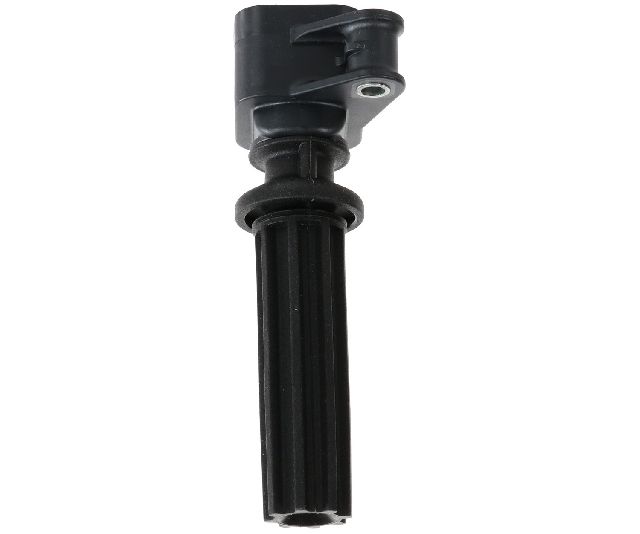
- Faulty Ignition Coil 🔴 High Probability → Shop Ignition Coil Coil-on-plug systems are a common failure point on many modern engines as they age. Heat and vibration cause the internal windings to fail. This is a very frequent cause of single-cylinder misfires on the Focus.
How to confirm: Swap the ignition coil from cylinder 4 with another cylinder (e.g., cylinder 3). Clear the codes and drive the vehicle. If the code changes to P0303, the ignition coil is faulty. This is the standard DIY diagnostic procedure confirmed by numerous owner experiences.
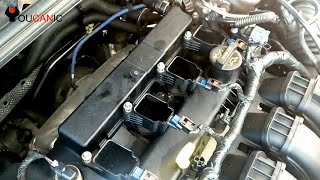
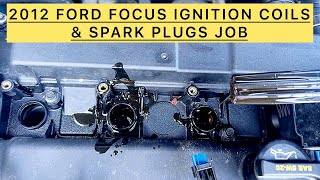
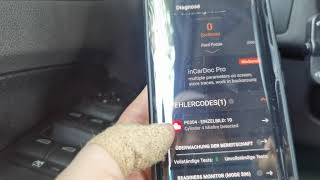
Typical fix: Replace the failed ignition coil. Many owners choose to replace all four if they are original and have high mileage to prevent future failures. 🎬 Watch: Step-by-step guide to replacing coils and spark plugs.
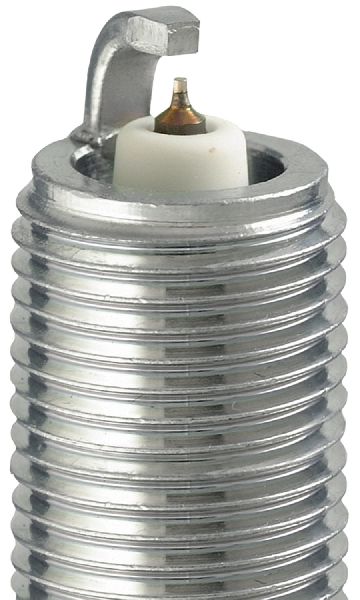
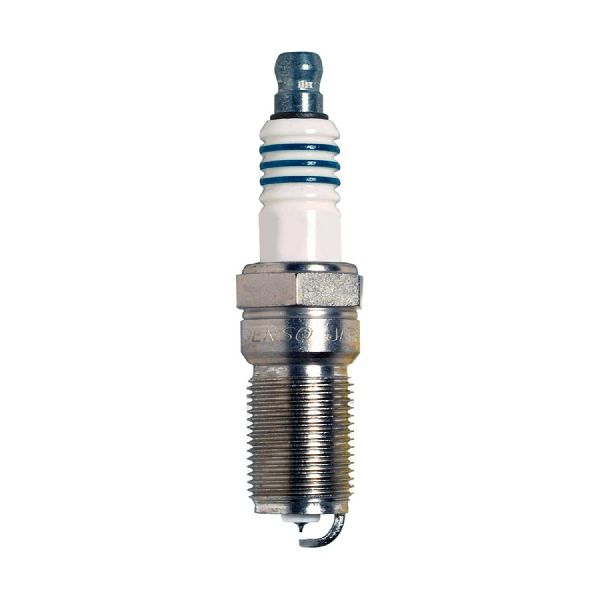
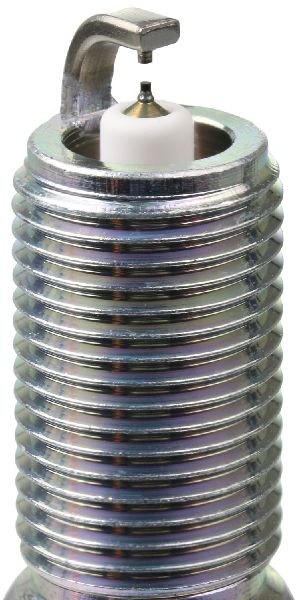
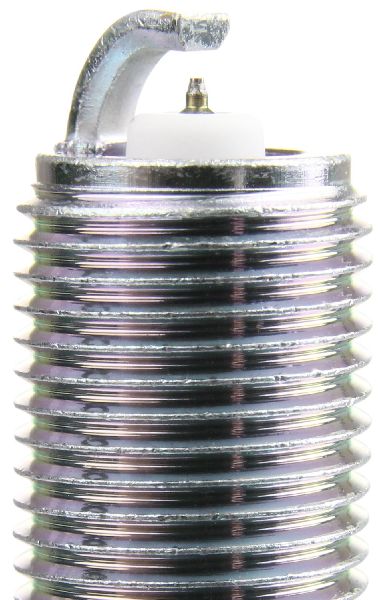
Est. part cost: $30-$60 per coil - Worn or Fouled Spark Plug 🔴 High Probability → Shop Spark Plug The 2.0L GDI engine is sensitive to spark plug condition and gap. Worn electrodes, an incorrect gap, or carbon/oil fouling can prevent a strong spark, leading to a misfire. Plugs should be replaced at regular intervals, often cited around 100,000 miles.
How to confirm: After confirming the coil is good, remove the spark plug from cylinder 4. Inspect it for wear, damage, or heavy black soot (carbon) or oily deposits. The correct gap for the OEM Motorcraft plugs is between 0.034 - 0.036 inches (0.85 - 0.95 mm). You can also swap the plug with another cylinder to see if the misfire follows.
Typical fix: Replace the spark plug. It is strongly recommended to replace all four spark plugs at the same time with the correct OEM-spec iridium plugs to ensure consistent performance.
Est. part cost: $40-$80 for a set of four Iridium plugs - Clogged or Faulty Fuel Injector 🟡 Medium Probability → Shop Fuel Injector As a Gasoline Direct Injection (GDI) engine, the injector tips are located inside the combustion chamber and are susceptible to carbon buildup over time, which can disrupt the fuel spray pattern and cause a lean misfire. This is a known characteristic of GDI engines as they lack the cleaning effect of fuel washing over the intake valves.
How to confirm: This is more difficult to diagnose. A professional can perform a fuel injector balance test. A DIY method is to listen to the injector with a mechanic's stethoscope; it should have a consistent, rhythmic clicking sound compared to the other injectors.
Typical fix: Professional fuel system cleaning may help, but if the injector is clogged or has failed electrically, it must be replaced. This is a more involved and expensive job than plugs or coils.
Est. part cost: $70-$150 per injector
Rare But Worth Checking
- Low Engine Compression: This indicates a serious internal engine problem, such as worn piston rings, a leaking head gasket, or valve train issues. A compression test is the definitive way to confirm this. White smoke from the oil fill cap or dipstick can be a sign of blow-by from bad rings.
- Vacuum Leak: A vacuum leak near cylinder 4's intake runner could lean out the mixture enough to cause a misfire. This would often be accompanied by other codes (like P0171) and a hissing sound from the engine bay.
- Faulty Canister Purge Valve: While this part (subject to recall 18S32) usually causes random misfires (P0300) or EVAP codes (like P1450), a severe malfunction could potentially contribute to a single-cylinder misfire in some cases. Symptoms often include rough idle or stalling after refueling. 🎬 Watch: How to replace a faulty canister purge valve.
Technical Service Bulletins (TSBs) & Recalls
- Bulletin #SSM 46539: This manufacturer bulletin notes that vehicles may exhibit a Malfunction Indicator Lamp (MIL) with a perceived misfire after a cold start. Diagnostic Trouble Codes may include P0300, P0301, P0302, P0303, P0304, and P0316.
Diagnosis Steps
- Read the codes with an OBD-II scanner and note any other codes present, such as P0300 or P0316.
- Check for a flashing check engine light. If it's flashing, the misfire is severe 🎬 See how to troubleshoot and diagnose a cylinder 4 misfire. and driving should be avoided to prevent catalytic converter damage.
- Locate cylinder 4. On the 2.0L I4, the cylinders are numbered 1-2-3-4 from left to right (left is the transmission side, right is the belt/pulley side) as you face the engine from the front of the car. The firing order is 1-3-4-2.
- Swap the ignition coil from cylinder 4 to cylinder 3. Clear the codes and run the engine to see if the misfire code changes to P0303. If it does, the coil is bad. This is the most common and effective first step.
- If the misfire remains on cylinder 4 (P0304 returns), swap the spark plug from cylinder 4 to cylinder 2. Clear codes and re-test. If the code changes to P0302, the spark plug is bad.
- If the misfire still stays on cylinder 4, inspect the wiring and connector for the cylinder 4 ignition coil and fuel injector for any visible damage, corrosion, or loose connections.
- Listen to the fuel injector on cylinder 4 with a stethoscope or long screwdriver. It should have a steady, rhythmic clicking sound similar to the other injectors.
- If the above steps do not identify the cause, the problem is likely more complex, such as a clogged fuel injector, a vacuum leak, or a mechanical issue like low compression.
- A mechanical compression test should be performed to check for internal engine issues like bad rings or valve problems.
Parts You'll Likely Need
- Ignition Coil
(OEM #CM5Z-12029-F (replaces CM5Z-12029-A and CM5G-12029-F))— This is one of the most common failure items to cause a single-cylinder misfire.
Trusted brands: Motorcraft, NGK, Bosch, Delphi
OEM price range: $50-$90
Aftermarket price range: $30-$60 - Spark Plugs
(OEM #CYFS-12Y-PC (also sold as SP-535 or SP-535-X))— Worn or fouled spark plugs are a very common cause of misfires and are a routine maintenance item. The GDI engine is sensitive to plug condition.
Trusted brands: Motorcraft, NGK, Bosch
OEM price range: $8-$17 per plug
Aftermarket price range: $5-$12 per plug
Related Codes That Often Appear With This One
- P0300 — If the misfire is intermittent or starting to affect other cylinders, a P0300 (Random Misfire) may appear alongside P0304.
- P0301, P0302, P0303 — If other cylinder-specific misfire codes are present, it points to a common problem like a vacuum leak, fuel delivery issue, or a failing canister purge valve, rather than a single component on cylinder 4.
- P0316 — Indicates a misfire was detected within the first 1,000 engine revolutions on startup. This often points to issues that are more pronounced when the engine is cold.
Platform-Specific Known Issues
- Recall 18S32 / NHTSA 18V-735: While not a direct cause of a single-cylinder misfire, Ford issued a recall for a malfunctioning Canister Purge Valve (CPV) on 2012-2018 Focus models with the 2.0L GDI engine. A stuck-open valve can cause excessive vacuum in the fuel system, leading to stalling, rough idle, and potential fuel tank deformation. The remedy involves a PCM reprogram and, if necessary, replacement of the valve and other fuel system components. Owners were advised to keep the fuel tank at least half full until the repair was performed.
Mechanic-Grade Diagnostic Values
- High-Pressure Fuel System (GDI) — expected: 2,000 to 2,800 PSI, depending on engine load.. Failure: Significantly lower pressure, especially under load, may indicate a failing high-pressure fuel pump (HPFP) and can cause codes like P0087 alongside a misfire.
- Fuel Injector Pulse Width (at idle) — expected: Typically 1.5ms to 3.0ms when the engine is warm and in closed-loop control.. Failure: A significantly longer pulse width on one cylinder could indicate the PCM is trying to compensate for a lean condition (like a vacuum leak or clogged injector), while a very short or zero pulse width could mean an electrical issue with the injector circuit.
- Engine Compression Ratio (Static) — expected: The 2.0L GDI has a 12.0:1 compression ratio. A compression test should yield consistent readings across all cylinders, typically within 10-15% of each other.. Failure: A reading on cylinder 4 that is significantly lower than the others indicates a mechanical engine problem like bad piston rings, a burnt valve, or a head gasket leak.
- Ignition Coil Primary Circuit Voltage — expected: The center wire on the 3-pin connector should show 12V+ with the key in the ON position.. Failure: No voltage indicates a problem with the power supply from the fuse box (Power Distribution Box).
Hidden / Shadow Codes Worth Checking
- Mode 6, Test ID $A2-$A7: This test monitors misfire counts for each individual cylinder during the last 10 driving cycles. For a 4-cylinder, Test ID $A2 corresponds to Cylinder 1, $A3 to Cylinder 2, $A4 to Cylinder 3, and $A5 to Cylinder 4. (see via Use a capable scan tool like FORScan or a professional-grade scanner to access OBD-II Mode $06 data. This allows you to see if cylinder 4 has a high misfire count even if the misfire isn't severe enough to keep the check engine light on continuously.)
Scan Tool Commands That Help
- Ford IDS / FORScan: Power Balance Test — This is a powerful diagnostic tool that graphically displays the RPM contribution of each cylinder. It can quickly confirm that cylinder 4 is the one underperforming without needing to swap any parts. It's an effective way to verify the location of the misfire before beginning hands-on diagnosis.
- FORScan: Misfire Monitor Neutral Profile Correction — This relearn procedure is typically used after replacing a flywheel, clutch, or crankshaft position sensor to clear codes like P0315, but it can be relevant if misfire detection seems erratic after major engine work. It recalibrates the crankshaft position sensor's profile for accurate misfire detection.
Wiring & Ground Locations
- G104 / G105 — Located on the left side of the engine compartment, on the chassis frame rail.. These are primary engine bay ground points. A corroded or loose connection here can cause a host of intermittent electrical issues, including weak spark or erratic sensor readings that could lead to a misfire.
- G202 — Located in the passenger cabin, in the right-side kick panel area.. This ground serves various interior modules. While less likely to cause a single-cylinder misfire, it's part of the overall electrical health of the vehicle.
- C90 Connector — Located in the main engine bay fuse box (Power Distribution Box), linking the engine wiring harness to the main vehicle power.. This is a critical junction. The power for the fuel injectors runs through this connector. Corrosion or a loose pin here could disrupt power to one or more injectors.
- S137 Splice — Located in the engine control sensor & fuel charge wiring harness, in the breakout leading to the #2 ignition coil.. While this specific splice is near cylinder 2, it highlights that the harness contains splices that distribute power or ground. A failure at a similar splice for the cylinder 4 coil could cause a targeted misfire.
Real Owner Repair Stories
- NHTSA ODI #11716439 — An owner reported that misfires occurred and upon pulling the plugs, the spark plugs in position 1 and position 4 were completely worn out. Codes P0304 and P0301 were present, and the vehicle ran well after replacement.
- Reddit r/MechanicAdvice (Unknown Year Ford Focus) — Check engine light with code P0304.
❌ Tried (didn't work) Replaced ignition coil on cylinder 4., Replaced spark plug on cylinder 4., Mechanic replaced the same ignition coil a second time, claiming the first replacement was faulty.
✅ What actually fixed it The user was advised that since spark and coil were replaced multiple times, the next logical steps were to check the fuel injector on cylinder 4 or perform a compression test to look for a mechanical engine issue. The story highlights that repeated failure of the same part may point to a different root cause. - Reddit r/FocusST (2014 Ford Focus ST, 91k miles) — P0304, P0316. Violent shaking, loss of power, flashing CEL, white smoke from oil dipstick/cap.
❌ Tried (didn't work) Replaced all spark plugs.
✅ What actually fixed it The cylinder 4 spark plug was found to be fouled with black soot and possibly oil. The combination of a severe single-cylinder misfire, fouled plug, and white smoke from the crankcase strongly suggested a serious mechanical issue, such as failed piston rings or a valve seal problem, rather than a simple ignition or fuel component failure. The owner was taking it to the dealer under warranty for diagnosis.
OEM Part Supersession History
CM5G-12029-F→CM5Z-12029-F— Part revision and update by the manufacturer.
Heads up: The new part number is a direct replacement for the old one.
Model Year Variations Within This Range
- 2012-2014 (Pre-facelift) vs 2015-2018 (Facelift): Ford facelifted the Focus for the 2015 model year, which included updated styling, a retuned suspension, and different infotainment options. However, the core 2.0L GDI engine and its primary components related to a P0304 code (ignition system, fuel system) remained largely the same throughout the 2012-2018 generation. Some early 2012 models had a 159-hp PZEV version of the engine in certain states, but the fundamental design is the same.
Diagnostic Flowchart
Other Known Issues on This Vehicle
Issues unrelated to this code that are worth knowing about as an owner of this generation:
- DPS6 'PowerShift' Automatic Transmission Failure 🔴 High — Extremely common across 2012-2016 models, less so on 2017-2018 but still present. Problems include shuddering, hesitation, delayed shifts, and complete failure. (Ref: Multiple lawsuits and warranty extensions were issued, but no single recall fixed the fundamental design flaw.)
- Faulty Canister Purge Valve (CPV) 🔴 High — Very common across all 2012-2018 models with the 2.0L engine. Causes stalling, rough idle, difficulty starting after refueling, and fuel tank deformation. (Ref: Ford Recall 18S32 / NHTSA 18V-735)
- Electric Power Steering Rack Failure 🔴 High — A common failure point, especially on 2012-2014 models. Results in a sudden loss of power steering assist, making the vehicle very difficult to steer. (Ref: Fault codes often include U3000. No recall, but a well-documented problem requiring expensive rack replacement.)
- Failed Passenger Side Engine Mount 🟠 Medium — The hydraulic passenger-side engine mount frequently fails, causing severe vibration and noise in the cabin, especially at idle. (Ref: No recall, but it is a very common repair item for this generation.)
Used vs. New Parts: Buying Guide for This Vehicle
When a used part is the smart pick: For this repair, buying used parts is generally not recommended. Ignition coils and spark plugs are wear items and are inexpensive enough new that the risk of getting a used part near the end of its life is not worth the small savings. A used fuel injector could be an option if it is sourced from a very low-mileage donor vehicle and professionally cleaned and tested before installation.
Donor-vehicle mileage cap: roughly under 40000 miles for the part to have meaningful remaining life.
What to inspect on the donor part:
- For a fuel injector, check for any physical damage to the body or electrical connector.
- Ensure there is no heavy rust or corrosion on the part.
- Ask for the donor vehicle's VIN to verify mileage and check for accident history.
OEM-only on this vehicle (don't cheap out):
- High-Pressure Fuel Pump (HPFP): While aftermarket options exist, the OEM pump (Bosch) is recommended for reliability and correct pressure calibration.
- Sensors (Crankshaft, Camshaft): OEM or high-quality OE-supplier brands are critical for accurate timing signals to prevent chasing phantom misfires.
Aftermarket brands forum-validated for this vehicle:
- Ignition Coils: NGK, Bosch, Delphi are reputable OE suppliers.
- Spark Plugs: Motorcraft (OEM), NGK, and Bosch Iridium plugs are consistently recommended.
Brands owners have reported issues with on this vehicle:
- Unbranded, no-name ignition coils and injectors from online marketplaces. These often have high failure rates and may not meet the specific resistance or flow requirements, causing persistent issues.
Real Owner Stories
Aggregated from forums and TSBs cited above. Mileages and costs reflect what owners reported in those sources.
2012-2018 Ford Focus 2.0L GDI
Symptoms: The owner experienced hesitation and a rough idle accompanied by a P0304 code.
What fixed it: Replacing the ignition coil resolved the issue, even though the previous coil had only been in service for two years.
Source hint: reddit.com/r/Cartalk - Thread 'p0304 code.'
2014 Ford Focus ST
Symptoms: Violent shaking, P0304, P0316, and P26DE codes, with smoke coming from the oil dipstick and a spark plug fouled with black soot.
What fixed it: The symptoms pointed toward a potential internal engine issue rather than a simple plug or coil failure.
Source hint: reddit.com/r/FocusST - Thread 'Cylinder 4 Misfire - Major or Minor?'
Related OBD-II Codes
Frequently Asked Questions
Is there a recall for the 2012-2018 Ford Focus 2.0L GDI that causes rough idle and stalling?
How do I know which cylinder is #4 on my Focus 2.0L engine?
What is the correct spark plug gap for the 2012-2018 Ford Focus 2.0L GDI?
My Focus is shaking and the check engine light is flashing. Should I keep driving?
Why does my Focus 2.0L GDI engine sound like a Subaru when it misfires?
Does the 2.0L GDI engine have specific issues with fuel injectors?
Helpful Videos




We Have This Part in Stock


The information in this article is provided for general reference and educational purposes only. Vehicle specifications, procedures, and part compatibility can vary by production date, trim level, and region. Always consult your vehicle's factory service manual and verify part numbers before purchasing or performing repairs. Safety-critical components such as airbags, seat belts, and braking systems should be installed by a qualified professional.
- Ford Focus:
- 🧭 Diagnostic Flowchart
- 🎬 Helpful Videos
- 🛍️ Shop This Part
- What's Unique About the 2012-2018 Ford Focus
- Symptoms You May Notice
- Most Likely Causes
- Rare But Worth Checking
- Technical Service Bulletins (TSBs) & Recalls
- Diagnosis Steps
- Parts You'll Likely Need
- Related Codes That Often Appear With This One
- Platform-Specific Known Issues
- Mechanic-Grade Diagnostic Values
- Hidden / Shadow Codes Worth Checking
- Scan Tool Commands That Help
- Wiring & Ground Locations
- Real Owner Repair Stories
- OEM Part Supersession History
- Model Year Variations Within This Range
- Other Known Issues on This Vehicle
- Used vs. New Parts: Buying Guide for This Vehicle
- Real Owner Stories
- 2012-2018 Ford Focus 2.0L GDI
- 2014 Ford Focus ST
- Related OBD-II Codes
- Frequently Asked Questions
- 🎟️ Get 5% Off