

P0304 on 2013-2018 Ford Focus ST: Cylinder 4 Misfire Causes and Fixes
On a 2013-2018 Focus ST, code P0304 is almost always caused by a worn spark plug or a failed ignition coil on cylinder 4. Start by replacing the spark plugs, ensuring the correct gap (OEM spec or ~0.026" for tuned cars), as this is the most likely and affordable fix. A set of four OEM-spec plugs costs around $40-$60. If that fails, swap the ignition coil from cylinder 4 to another cylinder to diagnose a bad coil.
- P0304 on a Focus ST is most likely an ignition problem in cylinder 4.
- Always check the spark plug gap before installing new plugs; 0.026" is a common recommendation for tuned cars.
- Use the 'coil swap' method to quickly and cheaply diagnose a bad ignition coil.
- Do not ignore a flashing check engine light, as it signals a severe misfire that can destroy your catalytic converter.
- If new plugs and coils don't fix the issue, the problem is more complex and may involve the fuel system or internal engine mechanics.
What's Unique About the 2013-2018 Ford Focus ST
The 2.0L EcoBoost engine in the Focus ST is a turbocharged, direct-injection platform known for being sensitive to ignition component health. Misfires are a frequent topic among owners, often linked to spark plug wear and, crucially, an incorrect spark plug gap. Tuned vehicles, which are very common in the ST community, require a smaller plug gap (often around 0.026 inches) to prevent the spark from being 'blown out' under high boost pressure, a very common cause of this code.
Symptoms You May Notice
- Rough or vibrating idle.
- Hesitation or stumbling during acceleration.
- Noticeable loss of engine power.
- Flashing or solid Check Engine Light.
- Smell of unburnt gasoline from the exhaust.
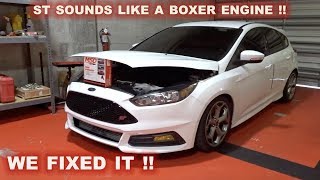
- Unusual gurgling or 'Subaru-like' sound from the exhaust.
- Replacing only the spark plug without checking the gap, especially on a tuned car.
- Replacing the O2 sensor, which is unlikely to cause a single-cylinder misfire.
- Assuming a rough idle is a transmission problem when it is actually an engine misfire.
Most Likely Causes
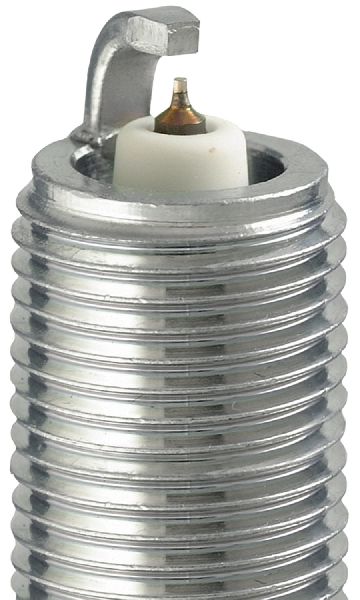
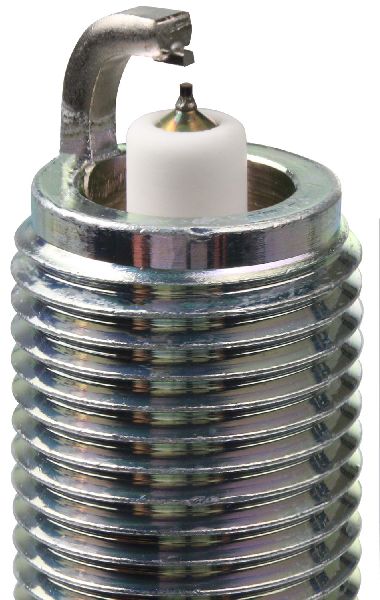
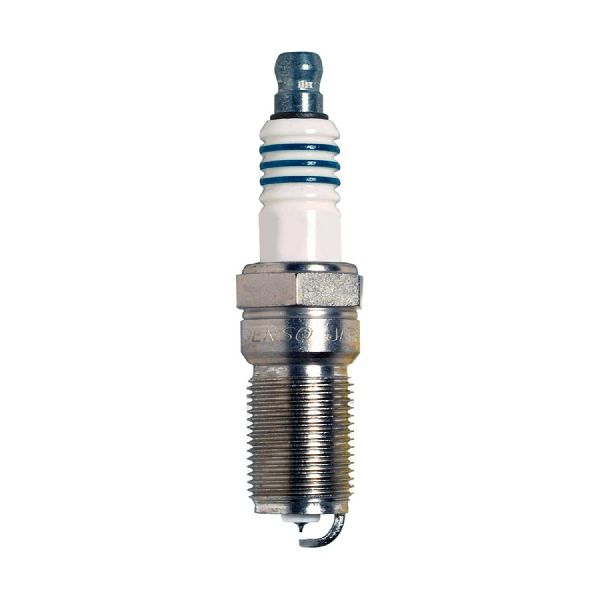
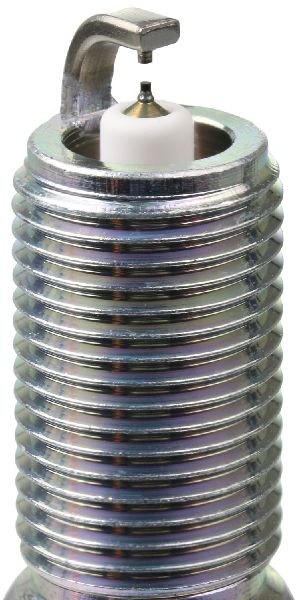
- Worn or Incorrectly Gapped Spark Plugs 🔴 High Probability → Shop Spark Plug The turbocharged EcoBoost engine is very sensitive to spark plug condition and gap. Wear increases the gap, and high cylinder pressures from the turbo can 'blow out' the spark, causing a misfire. This is the first and most important check.
How to confirm: Remove the spark plug from cylinder 4. Inspect it for wear, fouling (black, sooty deposits), oil, or damage to the electrode or ceramic insulator. Check the gap with a feeler gauge; it should match OEM spec (approx 0.8mm or 0.031") or the tuner's recommendation (often ~0.026" for tuned cars). A cracked ceramic insulator is a known failure mode.
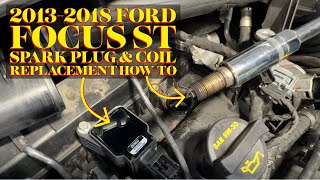
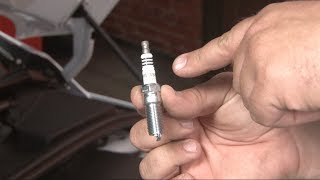
Typical fix: Replace all four spark plugs as a set. 🎬 Watch: Step-by-step guide to replacing your spark plugs and coils. Ensure the new plugs are gapped correctly before installation. Many owners use one-step-colder NGK plugs for tuned applications.
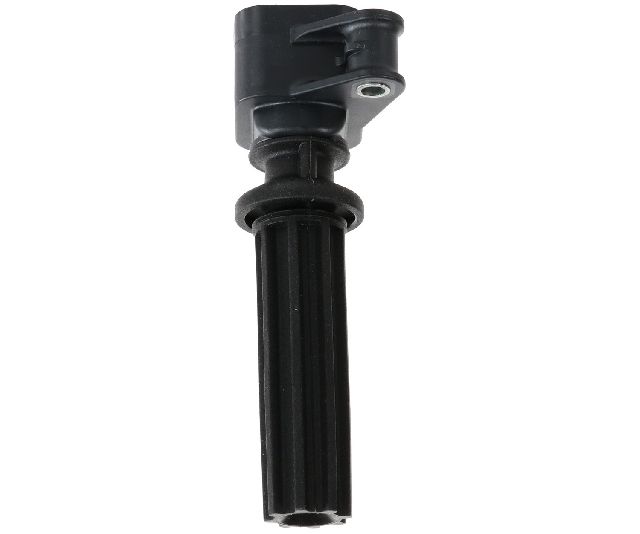
Est. part cost: $40-$80 - Failed Ignition Coil 🔴 High Probability → Shop Ignition Coil Ignition coils are a common failure item on most modern engines, and heat in the turbocharged engine bay can shorten their lifespan. It's the second most likely cause after spark plugs.
How to confirm: Swap the ignition coil from cylinder 4 with another cylinder (e.g., cylinder 3). Clear the codes with a scanner and drive the car. If the code changes to P0303 (Cylinder 3 Misfire), the coil is faulty.
Typical fix: Replace the single failed ignition coil. Many owners choose to replace all four as preventative maintenance.
Est. part cost: $30-$60 per coil - Faulty Canister Purge Valve 🟡 Medium Probability A sticking canister purge valve was the cause of Ford recall 18S32, which affects 2013-2018 Focus ST models. A stuck-open valve can create a vacuum leak, disrupting the air-fuel ratio and causing misfires, rough idle, and stalling, particularly after refueling.
How to confirm: Common symptoms include a rough idle, difficulty starting after getting gas, and an erratic fuel gauge. The recall involves a PCM software update and, if necessary, replacement of the valve and potentially the fuel tank if it has been deformed by excessive vacuum.
Typical fix: Replace the canister purge valve and ensure the recall work (including PCM reprogram) 🎬 See how to replace the purge valve yourself. has been completed.
Est. part cost: $40-$70
Rare But Worth Checking
- Clogged or Failed Fuel Injector: → Shop Fuel Injector As a direct-injection engine, the Focus ST can be prone to carbon buildup on injector tips, which can disrupt the fuel spray pattern and cause a misfire. This is less common than ignition issues but is a known possibility.
- Carbon Buildup on Intake Valves: Direct injection engines lack the fuel spray that cleans intake valves. Over time, carbon can build up, restrict airflow into the cylinder, and cause misfires, especially during cold starts. Walnut blasting the valves is a recommended maintenance item at higher mileage.
- Low Engine Compression (Cracked Head/Block): This is a worst-case scenario. Some 2.0L EcoBoost engines have a design flaw that can lead to coolant leaking into a cylinder, causing a persistent misfire. On the Focus ST, this can manifest as a crack in the cylinder head's integrated exhaust manifold. Symptoms include coolant loss, white exhaust smoke, and a spark plug fouled by coolant. A compression test and/or borescope inspection is required to diagnose this.
Diagnosis Steps
- Use an OBD-II scanner to confirm the P0304 code and check for any other stored codes like P0316 or P1450.
- Locate cylinder 4. On the 2.0L EcoBoost, the cylinders are numbered 1-2-3-4 from left to right as you face the engine from the front of the car.
- Inspect the spark plug in cylinder 4. Check for a cracked insulator, fouling, and verify the gap. A fouled plug is a key symptom. If in doubt, replace all four plugs with correctly gapped ones.
- If new plugs do not solve the issue, swap the ignition coil from cylinder 4 with the coil from cylinder 3. Clear the codes and drive the vehicle until the check engine light returns.
- Re-scan the codes. If the code is now P0303, the ignition coil is bad and needs to be replaced.
- If the code remains P0304, the issue is not a simple ignition component. Check for symptoms of a faulty purge valve (rough idle after fueling, P1450 code).
- If ignition and purge valve are ruled out, the problem may be with the fuel injector or a mechanical engine issue.
- At this stage, consider professional diagnosis. This may include a fuel injector test, checking for carbon buildup on intake valves, or performing a compression and leak-down test to check for internal engine health.
Parts You'll Likely Need
- Spark Plugs
(OEM #SP-550 (Motorcraft CYFS12Y2))— This is the most common failure point for misfires on the 2.0L EcoBoost engine due to wear and sensitivity to the correct gap. Many owners of tuned cars opt for one-step-colder NGK plugs (e.g., LTR7BHX). 🎬 Watch this walkthrough for installing NGK performance spark plugs.
Trusted brands: Motorcraft, NGK
OEM price range: $40-$60 (set of 4)
Aftermarket price range: $30-$50 (set of 4) - Ignition Coil
(OEM #Motorcraft DG-549 (Ford CM5Z-12029-F))— The second most likely cause of a single-cylinder misfire. They are easy to diagnose by swapping and simple to replace.
Trusted brands: Motorcraft, Bosch, Delphi, NGK
OEM price range: $50-$70 (per coil)
Aftermarket price range: $30-$60 (per coil)
Related Codes That Often Appear With This One
- P0316 — This code means 'Misfire Detected on Startup (First 1000 Revolutions)'. It often appears with a P030x code and indicates the misfire is present immediately when the engine is cold, which is common with spark plug or carbon buildup issues.
- P0300 — If the misfire is intermittent or begins to affect other cylinders, a P0300 'Random/Multiple Cylinder Misfire' code may appear alongside P0304.
- P1450 — 'Unable to Bleed Up Fuel Tank Vacuum.' This code is a strong indicator that the canister purge valve is stuck, a common issue covered by recall 18S32.
Technical Service Bulletins (TSBs) & Recalls
- TSB 19-2346 (related engine): Coolant intrusion into cylinders causing misfires.
- Recall 18S32: Sticking canister purge valve causing misfires.
Platform-Specific Known Issues
- Recall 18S32 / NHTSA 18V-735: A faulty canister purge valve can stick open, causing an EVAP system leak that leads to a rough idle, stalling after refueling, and misfires.
- TSB 19-2346: While not explicitly listing the Focus ST, this TSB documents a known engine block design flaw in the broader 2.0L EcoBoost family that can cause coolant to leak into cylinders, leading to persistent misfires (including P0304) and eventual engine failure. The Focus ST's engine is an earlier design but can suffer similar head/block cracking failures.
Documented NHTSA Reports
- NHTSA ODI #11702554 describes a 2.3L EcoBoost engine with codes P0302 and P0304 present where a borescope inspection in cylinders 2 and 4 found coolant intrusion.
- NHTSA ODI #11716439 reports a case where misfires occurred and the owner found the spark plugs in positions 1 and 4 were completely worn out, accompanied by a loss of coolant.
- NHTSA ODI #11642051 notes a situation where P0304 and P0302 were present and a dealer diagnosed engine failure due to a melted piston.
- NHTSA ODI #11718523 describes a vehicle where P0301, P0302, and P0304 were retrieved for misfires in those cylinders, resulting in the replacement of spark plugs and ignition coils.
- NHTSA ODI #11433129 reports a P0304 cylinder 4 misfire where a technician replaced all four spark plugs and used a cleaner to address the issue.
Mechanic-Grade Diagnostic Values
- Ignition Coil Primary Resistance — expected: 0.58 Ohms ±10%. Failure: A reading significantly outside this range indicates a faulty coil winding.
- Ignition Coil Secondary Resistance — expected: 7.3 kOhms ±10%. Failure: A reading significantly outside this range indicates a faulty secondary coil winding.
- High-Pressure Fuel Pump (HPFP) Operating Pressure — expected: Up to 20 MPa (200 Bar or ~2900 PSI) with stock sensor. Upgraded systems can run up to 24 MPa (240 Bar).. Failure: Inability to reach target fuel pressure under load, often logged with codes like P0088 (too high) or P0087 (too low), can cause misfires across all cylinders, but can sometimes manifest on one.
- Mode $06 Misfire Count (Cylinder 4) — expected: Value: 0. A low number of counts may be seen occasionally, but a rapidly increasing number confirms a misfire.. Failure: A non-zero, incrementing value for the cylinder 4 misfire monitor (often TID $A5, CID $04 on Ford vehicles) confirms the PCM is detecting misfire events, even if the CEL is not yet on.
Hidden / Shadow Codes Worth Checking
- Mode $06, TID $A2-$AF: Misfire monitor data for cylinders 1-14 (Ford uses a wide range). For a 4-cylinder, you will focus on the first four. For example, Test ID $A5, Component ID $04 often corresponds to the misfire count for cylinder 4. These are not 'codes' but raw data from the PCM's self-tests. (see via Advanced scan tools like FORScan or professional-grade scanners can access Mode $06 data. This allows a technician to see misfire counts per cylinder before they are frequent enough to set a P0304 code.)
Scan Tool Commands That Help
- FORScan: Cylinder Power Balance Test — This active test allows the user to shut off fuel to individual cylinders one by one. If shutting off cylinder 4 causes no change in engine RPM or smoothness, it confirms that cylinder was not contributing in the first place, pinpointing the misfire location.
- FORScan / IDS: View Misfire Counts (Live Data) — Instead of just waiting for a code, you can watch live misfire counts for each cylinder. This is invaluable for diagnosing intermittent misfires that happen under specific conditions (e.g., high load, cold start) and confirming if a repair was successful.
Wiring & Ground Locations
- G103 — Left side of the engine compartment, on the chassis frame rail.. This is a primary engine ground. A loose or corroded connection at G103 can cause insufficient voltage to the ignition coils, leading to weak spark and misfires that can be intermittent and hard to diagnose.
- G100 — Left front of the engine compartment, near the battery.. Another critical chassis ground point. All ignition system components rely on a solid ground path back to the battery. A poor connection here can cause a voltage drop across the entire system.
- Ignition Coil Connector (Cylinder 4) — On top of the valve cover, plugged into the fourth ignition coil from the left (timing belt side).. The middle pin (Black/Green wire on some diagrams) is the shared ground for the coil packs. The other two wires are power and the trigger signal from the PCM. Checking for 12V power and a good ground at this connector is a key diagnostic step.
- Engine Harness Splice S140 — Inside the main engine wiring harness, often near the battery box.. Ford issued a recall (14S17, which was expanded) for faulty wiring splices in the engine harness on some Focus and Escape models. A poor connection at this splice, which can affect sensor readings for the fuel system, has been identified by owners as a root cause of persistent, hard-to-diagnose misfires.
Real Owner Repair Stories
- Reddit r/FocusST user (2014 Focus ST, 91k miles, tuned) — Started with a slight gurgle, progressed to violent shaking, flashing CEL, and codes P0304, P0316. White smoke from oil dipstick tube.
❌ Tried (didn't work) Replacing spark plugs (though cylinder 4 plug was found heavily fouled with black soot).
✅ What actually fixed it The user did not post a final fix, but the combination of a single-cylinder misfire and smoke from the oil cap/dipstick (indicating excessive crankcase pressure/blow-by) strongly points to a serious mechanical failure like a cracked piston or damaged piston rings (ringland failure). Another user in the thread confirmed their identical symptoms were caused by ringland failure requiring a new long block. - focusst.org forum user (2013 Focus ST) — Persistent, random misfires under various conditions that were not solved by common fixes.
❌ Tried (didn't work) Spark plugs, Ignition coils, Purge valve, Sensors
✅ What actually fixed it The issue was finally resolved by performing the Ford wiring harness splice recall fix (related to recall 14S17). A poor factory splice in the harness that provides signals to the fuel pressure sensor was causing erratic readings and leading to misfires. The user cut out the factory splice and soldered the wires directly, which permanently solved the problem. - Reddit r/FocusST user (Focus ST, big turbo) — P0304 code after a 3rd gear pull, followed by a large puff of smoke from the exhaust and a 'Subaru-like' sound. Found oil in all spark plug wells.
✅ What actually fixed it The user did not report the final fix, but the symptoms described (misfire under high load, smoke, oil in plug wells) are classic signs of catastrophic engine failure, such as a cracked piston ring land, which is a known failure mode on highly modified engines.
OEM Part Supersession History
CM5G-12029-F→CM5Z-12029-F— Part revision and consolidation by Ford.
Heads up: The new part number (CM5Z-12029-F) is the correct service replacement for the original. While the part is also listed for other vehicles like the Fiesta, it is the correct coil for the 2.0L EcoBoost in the Focus ST.
Model Year Variations Within This Range
- 2015-2018 (Facelift): The 2015 model year introduced a significant facelift. While the core 2.0L EcoBoost engine and power output remained the same, the suspension and power steering systems were revised for sharper handling. The exterior and interior were also updated, with the most notable interior change being a new flat-bottom steering wheel. These changes do not directly affect the cause of a P0304 code but are important for sourcing correct body or chassis parts.
Diagnostic Flowchart
Other Known Issues on This Vehicle
Issues unrelated to this code that are worth knowing about as an owner of this generation:
- Passenger-Side Engine Mount Failure 🟠 Medium — Very common; the hydraulic mount is known to leak and fail, often noticed by fluid sprayed in the engine bay. Failure can occur as early as 50,000 miles.
- Manual Transmission Synchronizer Failure 🟠 Medium — The MMT6 transmission's synchronizers are a known weak point, leading to grinding shifts or gears popping out. This is more common on cars that are driven aggressively. Aftermarket carbon synchro sets are a common upgrade.
- Sticking Canister Purge Valve (CPV) 🔴 High — Extremely common failure. A stuck-open valve causes rough idle, stalling (especially after refueling), and potential fuel tank deformation. (Ref: Recall 18S32 / NHTSA 18V-735)
- Low-Speed Pre-Ignition (LSPI) 🔴 High — A risk inherent to small-displacement, turbocharged direct-injection engines. Lugging the engine (high gear, low RPM, high throttle) can cause a destructive pre-ignition event. Owners are advised to downshift before accelerating hard.
- Cracked Cylinder Head (Integrated Manifold) 🔴 High → Shop Engine Cylinder Head — Less common than other issues but a known catastrophic failure. The head can crack near the integrated exhaust manifold, leading to coolant loss, white smoke, and misfires.
Used vs. New Parts: Buying Guide for This Vehicle
When a used part is the smart pick: For this specific code, buying used parts is generally not recommended for the primary culprits. However, if a larger component like a cylinder head or engine block is needed due to mechanical failure, a verified low-mileage used part from a reputable salvage yard is a cost-effective alternative to a new part from Ford.
Donor-vehicle mileage cap: roughly under 60000 miles for the part to have meaningful remaining life.
What to inspect on the donor part:
- For an engine, check for signs of overheating (discolored metal).
- Ask for a vehicle history report to check for accidents or flood damage.
- If possible, get compression test numbers from the donor engine before purchase.
- Inspect for external corrosion, especially on aluminum parts if the donor was in a salt-belt region.
OEM-only on this vehicle (don't cheap out):
- Canister Purge Valve: Aftermarket versions can have high failure rates; stick with the OEM Motorcraft part to ensure compatibility with the recall software.
- Sensors (Fuel Pressure, Cam/Crank): While some aftermarket brands are reliable, critical engine sensors are best sourced from OEM to avoid chasing issues caused by incorrect readings from a cheap replacement.
Aftermarket brands forum-validated for this vehicle:
- Spark Plugs: NGK (specifically one-step-colder plugs like LTR7BHX for tuned cars) is the community standard.
- Ignition Coils: Motorcraft (OEM) is the safest bet. Some owners report success with performance brands like MSD, but cheap, unbranded coils should be avoided.
Brands owners have reported issues with on this vehicle:
- Unbranded 'eBay special' ignition coils and spark plugs.
- Generic sensors with no brand name or warranty.
Real Owner Stories
Aggregated from forums and TSBs cited above. Mileages and costs reflect what owners reported in those sources.
2013-2018 Ford Focus ST 2.0L EcoBoost
Symptoms: Severe misfire with violent shaking and a P0304 code.
What fixed it: The owner followed the diagnostic path of replacing spark plugs; the cylinder 4 plug was found to be fouled with black soot.
Source hint: Reddit r/FocusST - Cylinder 4 Misfire - Major or Minor?
Tuned Ford Focus ST 2.0L EcoBoost
Symptoms: P0304 4th Cylinder Misfire and P0316 code.
What fixed it: Adjusting the spark plug gap to a tighter specification (~0.026") to prevent misfires under load or during cold starts.
Source hint: Reddit r/FocusST - P0304 4th Cylinder Misfire and P0316 Code
Ford Owner Report (NHTSA ODI #11716439)
Symptoms: Misfires occurred and codes P0304 and P0301 were seen. The owner also reported being troubled by a loss of coolant with no visible leaks.
What fixed it: The car ran well after the spark plugs in positions 1 and 4, which were completely worn out, were replaced.
Ford Owner Report (NHTSA ODI #11433129)
Symptoms: Vehicle experienced a cylinder 4 misfire (P0304).
What fixed it: A dealer technician replaced all four spark plugs and used a specific cleaner to resolve the issue.
Related OBD-II Codes
Frequently Asked Questions
Does Recall 18S32 apply to my 2013-2018 Ford Focus ST?
What spark plug gap should I use for my tuned Focus ST to prevent P0304?
Could a P0304 code on my Focus ST be related to the coolant intrusion issue mentioned in TSB 19-2346?
Why does my Focus ST idle roughly and struggle to start only after I fill up the gas tank?
Is there a specific spark plug brand recommended for the Focus ST?
How do I identify which cylinder is #4 on my 2.0L EcoBoost engine?
Helpful Videos

We Have This Part in Stock


The information in this article is provided for general reference and educational purposes only. Vehicle specifications, procedures, and part compatibility can vary by production date, trim level, and region. Always consult your vehicle's factory service manual and verify part numbers before purchasing or performing repairs. Safety-critical components such as airbags, seat belts, and braking systems should be installed by a qualified professional.
- Ford Focus ST:
- 🧭 Diagnostic Flowchart
- 🎬 Helpful Videos
- 🛍️ Shop This Part
- What's Unique About the 2013-2018 Ford Focus ST
- Symptoms You May Notice
- Most Likely Causes
- Rare But Worth Checking
- Diagnosis Steps
- Parts You'll Likely Need
- Related Codes That Often Appear With This One
- Technical Service Bulletins (TSBs) & Recalls
- Platform-Specific Known Issues
- Documented NHTSA Reports
- Mechanic-Grade Diagnostic Values
- Hidden / Shadow Codes Worth Checking
- Scan Tool Commands That Help
- Wiring & Ground Locations
- Real Owner Repair Stories
- OEM Part Supersession History
- Model Year Variations Within This Range
- Other Known Issues on This Vehicle
- Used vs. New Parts: Buying Guide for This Vehicle
- Real Owner Stories
- 2013-2018 Ford Focus ST 2.0L EcoBoost
- Tuned Ford Focus ST 2.0L EcoBoost
- Ford Owner Report (NHTSA ODI #11716439)
- Ford Owner Report (NHTSA ODI #11433129)
- Related OBD-II Codes
- Frequently Asked Questions
- 🎟️ Get 5% Off