

P0304 on 2019 Ford Fusion Energi: Cylinder 4 Misfire Causes and Fixes
A P0304 code on a 2019 Fusion Energi indicates a misfire in cylinder 4. While this could be a simple spark plug or coil issue, it is a very strong warning sign for a known engine defect causing coolant to leak into the cylinder. This serious problem is documented in Ford TSBs and often requires a complete engine replacement to fix.
- P0304 on a 2019 Fusion Energi is a serious code that should be investigated immediately.
- The most likely cause is a major, known engine defect causing coolant to leak into cylinder 4.
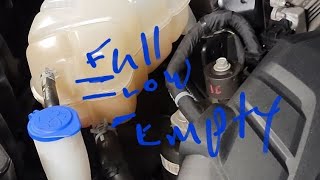
- Before replacing any parts, check your engine coolant level. If it's low with no visible leaks, suspect coolant intrusion.
- While a bad spark plug or ignition coil can cause P0304, these are often symptoms of the bigger coolant problem on this specific vehicle.
- The official Ford repair for coolant intrusion is a costly engine replacement, as documented in TSBs 22-2322 and 22-2229.
What's Unique About the 2019-2019 Ford FUSION ENERGI
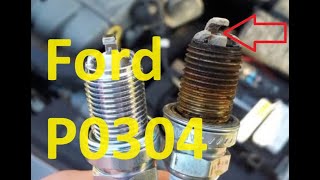
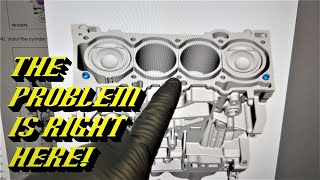
For the 2019 Ford Fusion Energi with the 2.0L engine, a P0304 code is a significant warning that often points to a severe, well-documented engine flaw. This engine family is known for a defect in the 'open-deck' block design, where a thin coolant channel between the cylinders creates a weak point. This can lead to a breach, allowing coolant to intrude into the cylinders. This issue is so prevalent that Ford has issued multiple Technical Service Bulletins (TSBs) about it, including TSB 22-2322 and TSB 22-2229. While standard ignition or fuel issues can cause a misfire, the high probability of coolant intrusion makes diagnosis on this specific vehicle different 🎬 Watch: Understanding the causes and fixes for Ford P0304 codes. from most others.
Diagnostic Flowchart
Tap your situation to follow the diagnostic path that matches what you're seeing on this vehicle.
Symptoms You May Notice
- Check Engine Light is on or flashing
- Rough or shaky engine idle, especially on a cold start, which may seem to clear up after a few moments
- Noticeable loss of power and acceleration
- Engine hesitates or stumbles
- Unpleasant, sweet smell of antifreeze from the exhaust
- White exhaust smoke, particularly on startup
- Gradual loss of engine coolant with no visible external leaks
- Engine temperature gauge running higher than normal or showing signs of overheating
- Repeatedly replacing spark plugs and ignition coils without checking for coolant intrusion. If the misfire returns on the same cylinder, it is likely a symptom of the larger engine problem.
- Mistaking the rough idle from a misfire for a transmission problem.
Most Likely Causes
- Engine Coolant Intrusion into Cylinder 🔴 High Probability A known design defect in the 2.0L engine's open-deck block can allow coolant to leak into the cylinders. Ford has acknowledged this issue in Technical Service Bulletins TSB 22-2322 and TSB 22-2229. The bulletins state this issue may cause DTCs P0301-P0304. This problem is widely discussed by owners online.
How to confirm: Check for a history of coolant loss in the reservoir with no visible external leaks. A technician can perform a cooling system pressure test; a loss of more than 4 PSI in 5 hours is a strong indicator. A chemical block tester can detect exhaust gases in the coolant. The definitive confirmation is using a borescope to visually inspect inside cylinder 4 for coolant, which may make the piston top appear unusually clean, as if it has been 'steam cleaned'.
Typical fix: The only permanent, manufacturer-recommended fix is to replace the engine long block assembly with an updated part that has a revised block design.
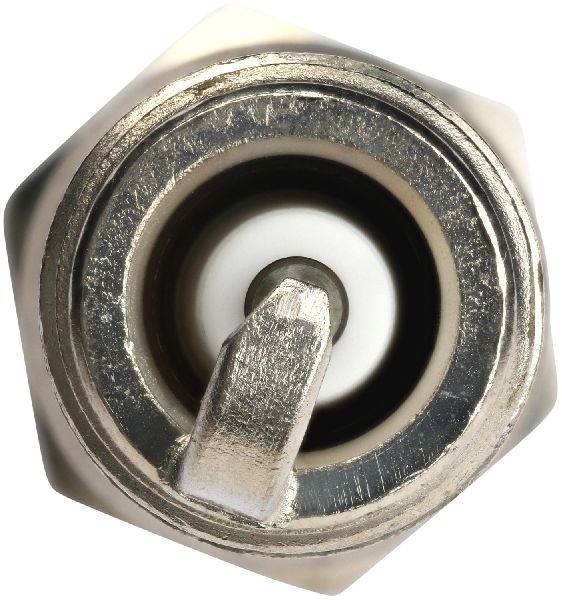
Est. part cost: $4000-$8000 - Fouled or Worn Spark Plug 🟡 Medium Probability → Shop Spark Plug If the primary issue is coolant intrusion, the coolant will quickly foul the spark plug in cylinder 4, causing the misfire. Even without a coolant leak, spark plugs are normal wear items that can fail over time.
How to confirm: Remove the spark plug from cylinder 4 and inspect it. Look for signs of coolant (wetness, sweet smell, white/greenish crusty deposits), oil fouling, or normal electrode wear.
Typical fix: Replace the spark plug. If it was fouled by coolant, the root cause must be addressed, or the new plug will fail again quickly.
Est. part cost: $15-$30 - Faulty Ignition Coil 🟡 Medium Probability → Shop Ignition Coil
How to confirm: Swap the ignition coil from cylinder 4 with another cylinder (e.g., cylinder 3). Clear the codes and drive the vehicle. If the code changes to P0303, the ignition coil is faulty.
Typical fix: Replace the faulty ignition coil.
Est. part cost: $50-$100 - Clogged or Faulty Fuel Injector ⚪ Low Probability → Shop Fuel Injector
How to confirm: This is less common but possible. A technician can perform a fuel injector balance test to check its flow rate or swap the injector with another cylinder to see if the misfire follows.
Typical fix: Replace the faulty fuel injector.
Est. part cost: $70-$150
Rare But Worth Checking
- Burnt Exhaust Valve:
- Wiring Harness Issue:
Diagnosis Steps
- Check the engine coolant reservoir. If it is low and you haven't seen any leaks on the ground, immediately suspect internal coolant intrusion.
- Scan the PCM for any other stored trouble codes. Note if P0300, P0316, P0217, P1285, or P1299 are present, as they strongly point towards the TSB-documented coolant issue.
- Swap the ignition coil from cylinder 4 with another cylinder (e.g., cylinder 3). Clear the codes, run the engine, and see if the misfire code moves to P0303. If it does, the coil is bad.
- If the coil is good, remove the spark plug from cylinder 4. Inspect it for wear, damage, or signs of being fouled by coolant (a wet, sweet-smelling, white/green deposit). A clean, worn plug can be replaced, but a coolant-fouled plug indicates a deeper problem.
- If ignition components are good, the next step is to confirm or rule out coolant intrusion. A professional should perform a cooling system pressure test. If the system loses pressure with no external leaks, an internal leak is likely.
- Use a borescope to look inside cylinder 4 for evidence of coolant. The piston top may look unusually clean, as if it has been 'steam-cleaned'.
- A chemical 'block tester' can be used to check for the presence of combustion gases in the cooling system, which would confirm a breach between the cylinder and coolant passages.
- If all other tests are inconclusive, a mechanical compression test should be performed on all cylinders to check for issues like a burnt valve or worn piston rings.
Parts You'll Likely Need
- Engine Long Block Assembly
(OEM #DS7Z-6006-U)— This is the official Ford-recommended repair for the common coolant intrusion issue that causes P0304 on this engine, as per TSBs like 19-2346 and 22-2229. It replaces the entire engine with an updated design.
Trusted brands: Motorcraft (Ford OEM)
OEM price range: $4500-$8000
Aftermarket price range: $3500-$6500 - Ignition Coil
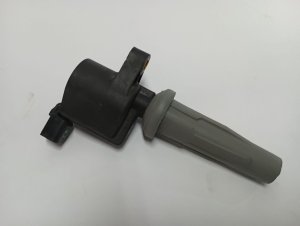
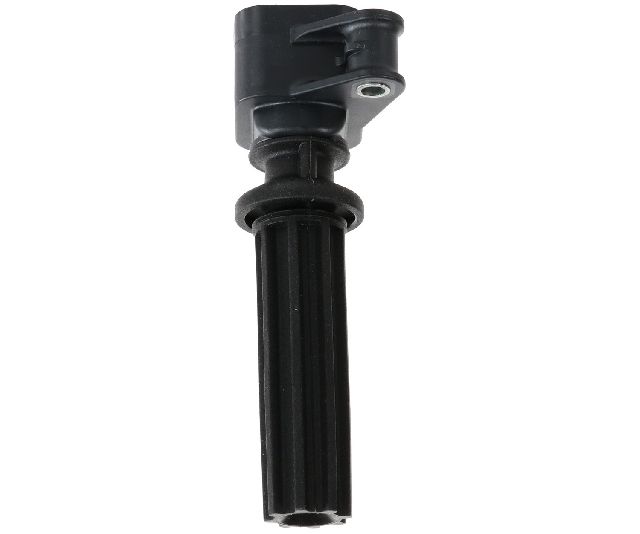
(OEM #CM5Z-12029-K)— A faulty ignition coil is a common cause for an isolated cylinder misfire on any vehicle.
Trusted brands: Motorcraft, NGK, Denso, Delphi
OEM price range: $70-$110
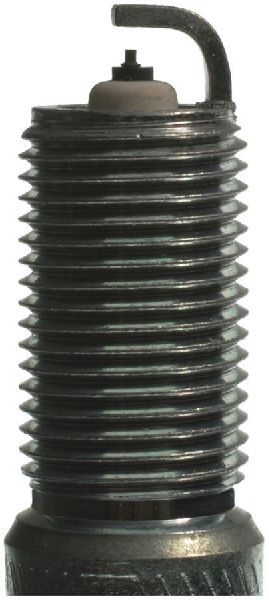
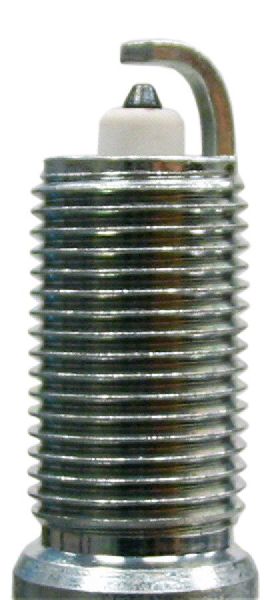
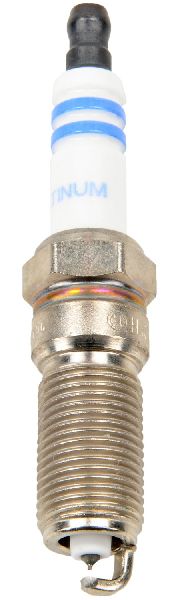
Aftermarket price range: $40-$80 - Iridium Spark Plug
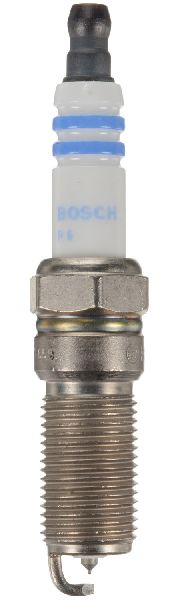
(OEM #CYFS-092-YPT)— A worn or (more likely) coolant-fouled spark plug will cause a misfire. It's a primary diagnostic component and a common replacement part.
Trusted brands: Motorcraft, NGK
OEM price range: $15-$25
Aftermarket price range: $10-$20
Related Codes That Often Appear With This One
- P0300 — This is a 'Random Misfire' code. It may appear with P0304 if the misfire is intermittent or starting to affect other cylinders as a coolant leak worsens.
- P0316 — Indicates a misfire detected within the first 1,000 engine revolutions. This is specifically mentioned in Ford's TSBs for coolant intrusion, as coolant pooled in the cylinder overnight causes a severe misfire on a cold start.
- P0217 — Indicates an 'Engine Overtemperature Condition'. This code is listed in Ford's TSBs for coolant intrusion, as the loss of coolant can easily lead to overheating.
- P1285 — Indicates 'Cylinder Head Over Temperature Sensed'. This code is also listed in the Ford TSBs for coolant intrusion, as the loss of coolant can easily lead to overheating.
- P1299 — Indicates 'Cylinder Head Overtemperature Protection Active'. Similar to P1285, this points to an overheating condition caused by coolant loss from the internal leak.
Technical Service Bulletins (TSBs) & Recalls
- TSB 22-2322: Addresses rough running conditions and misfire DTCs (P0300-P0304) due to coolant intrusion into the cylinder, recommending short block replacement in some cases.
- TSB 22-2229: Addresses the same coolant intrusion issue with similar DTCs and recommends replacing the long block engine assembly.
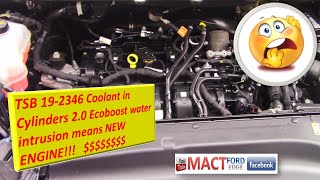
- TSB 19-2346: A critical bulletin for the related 2.0L EcoBoost engine in Fusions, Escapes, and MKZs built before mid-2019. It explicitly links P0301-P0304 codes to coolant intrusion and mandates a long block replacement.
Platform-Specific Known Issues
- Coolant Intrusion Due to Engine Block Defect: The 2.0L engine in the 2019 Fusion Energi is subject to a known design flaw where coolant can leak into the cylinders, causing misfires. Ford has issued TSBs 22-2322 and 22-2229 which detail this exact problem, listing P0301-P0304 as primary symptoms and recommending engine replacement as the solution. This issue is widely discussed in owner communities.
Mechanic-Grade Diagnostic Values
- Ignition Coil Primary Resistance — expected: 0.52 - 0.64 Ohms. Failure: A reading outside this range, or an open circuit (infinite resistance), indicates a faulty coil.
- Low-Pressure Fuel System — expected: 48-70 PSI. Failure: Pressure below this range could indicate a weak fuel pump or clogged filter, potentially causing a lean misfire.
- Mode $06 Misfire Counter (TID $A2-$AB, CID $01-$0C) — expected: 0 counts during a drive cycle.. Failure: Any count above zero for cylinder 4 (Test ID $A5 for most Fords) confirms the PCM is detecting misfire events, even if the CEL is not currently flashing.
- Fuel Trim (Short Term and Long Term) — expected: Between -5% and +5%. Failure: High positive values on the bank with cylinder 4 could indicate an unmetered air leak or a fuel delivery issue causing a lean misfire.
Hidden / Shadow Codes Worth Checking
- Mode $06, Test ID $A2-$AB: These are not traditional DTCs but onboard monitor test results. Test IDs $A2 through $AB typically correspond to misfire counts for each cylinder for the current and last ten driving cycles. For a 4-cylinder, TID $A5 would often correspond to Cylinder 4. (see via A professional scan tool or an advanced OBD-II app that can access Mode $06 (sometimes called Mode 6) data.)
Scan Tool Commands That Help
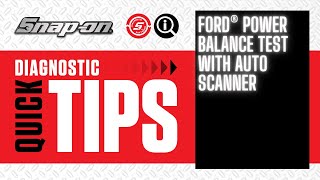
- Ford IDS (or high-level aftermarket scanner like Snap-on): Power Balance Test — This is a critical diagnostic step after checking for codes. The test graphically displays the power contribution of each cylinder by monitoring crankshaft speed. A cylinder that is misfiring will show a significant drop or deviation from the others. The tool can also be used to disable individual injectors to see how it affects the graph, helping to pinpoint the failing cylinder.
- Ford IDS: Relative Injector Flow Test — If a fuel injector is suspected, this test can help identify an injector with a flow rate that is different from the others, indicating it may be clogged or faulty.
Wiring & Ground Locations
- G103 — On top of the engine, near the intake manifold.. This is a primary ground for the engine harness. A TSB for the 2.0L GDI engine mentions that a poor connection here or harness chafing nearby can cause various drivability issues, including problems with the coil-on-plugs, injectors, and various sensors that could lead to a misfire.
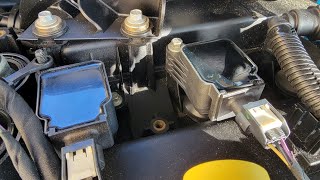
- Cylinder 4 Ignition Coil Connector — On top of the valve cover, connected to the ignition coil for the cylinder closest to the transmission/driver's side.. The connector or its wiring can become damaged from heat and vibration, leading to a poor connection and an isolated misfire on cylinder 4. The wires can be tested for 12V power, ground, and the trigger signal from the PCM.
Real Owner Repair Stories
- Reddit user in r/fordfusion (2017 Ford Fusion 2.0L, 34k miles) — Low coolant and misfire codes.
❌ Tried (didn't work) The user did not report trying other fixes, likely because the coolant intrusion issue is well-known.
✅ What actually fixed it The dealership diagnosed the known coolant intrusion problem and replaced the engine under the powertrain warranty. The user reported the car was 'perfect since'.
OEM Part Supersession History
CM5E-12A366-BB, CM5E-12A366-BC, CM5E-12A366-CA→CM5Z-12029-K— Standard part evolution and potential design improvements for reliability.
Heads up: While older part numbers may still function, it is always best practice to use the latest superseded part number (CM5Z-12029-K) when replacing an ignition coil to ensure you have the most current revision.
Helpful Videos
Used OEM Parts in Stock
New Aftermarket Parts Available

The information in this article is provided for general reference and educational purposes only. Vehicle specifications, procedures, and part compatibility can vary by production date, trim level, and region. Always consult your vehicle's factory service manual and verify part numbers before purchasing or performing repairs. Safety-critical components such as airbags, seat belts, and braking systems should be installed by a qualified professional.
- Ford FUSION ENERGI:
- 🧭 Diagnostic Flowchart
- 🎬 Helpful Videos
- 🛍️ Shop This Part
- What's Unique About the 2019-2019 Ford FUSION ENERGI
- Symptoms You May Notice
- Most Likely Causes
- Rare But Worth Checking
- Diagnosis Steps
- Parts You'll Likely Need
- Related Codes That Often Appear With This One
- Technical Service Bulletins (TSBs) & Recalls
- Platform-Specific Known Issues
- Mechanic-Grade Diagnostic Values
- Hidden / Shadow Codes Worth Checking
- Scan Tool Commands That Help
- Wiring & Ground Locations
- Real Owner Repair Stories
- OEM Part Supersession History
- 🎟️ Get 5% Off