

P0304 on 2017-2021 Ford GT: Cylinder 4 Misfire Causes and Fixes
P0304 on a Ford GT indicates a misfire in cylinder #4. The most common causes are a faulty ignition coil or a worn spark plug. Due to the vehicle's high-performance nature and value, professional diagnosis is strongly recommended. The issue may also be related to specific cold-start conditions as noted in Ford Technical Service Bulletins.
- P0304 signifies a misfire specifically in cylinder #4 of your Ford GT.
- The most probable causes are a bad ignition coil or a worn-out spark plug.
- Do not ignore a flashing check engine light, as it signals a severe misfire that could damage the catalytic converters.
- Ford has acknowledged issues with rough starts and misfires on this model, particularly after multiple cold starts, as noted in TSBs SSM 50616, 49536, and 49028.
- Due to the complexity and value of the Ford GT, seeking diagnosis and repair from a qualified professional technician is the safest course of action.
What's Unique About the 2017-2021 Ford GT
The 2017-2021 Ford GT uses a high-output, bespoke version of the 3.5L EcoBoost V6 engine, which is tuned for extreme performance. For the 2020 model year and later, power output was increased to 660 hp. This second-generation 3.5L EcoBoost features a dual-injection system (port and direct), larger turbochargers, unique camshafts, and a dry-sump lubrication system. While the root causes of a misfire are universal (spark, fuel, compression), this engine's high compression and boost levels make it particularly sensitive to the condition of its ignition components. Furthermore, Ford has issued several Technical Service Bulletins (TSBs) for this model range that mention misfire codes, including P0304, specifically in relation to rough running or hard starts after multiple cold engine cycles without reaching full operating temperature. This suggests a unique calibration sensitivity where fuel can accumulate and cause misfires on startup before the engine is fully warm.
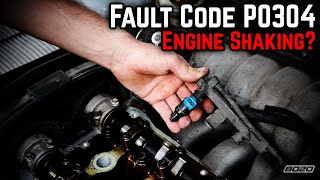
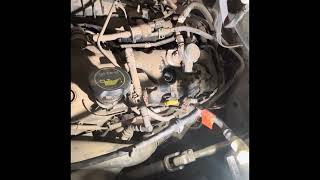
🎬 Watch: Diagnosing cold start misfires common in EcoBoost engines.Diagnostic Flowchart
Tap your situation to follow the diagnostic path that matches what you're seeing on this vehicle.
Symptoms You May Notice
- Flashing or solid Check Engine Light
- Rough or unstable idle
- Engine hesitation or stumbling during acceleration
- Noticeable loss of power
- Hard starting, particularly after multiple short trips (cold starts)
- Fuel smell from the exhaust
- Shuddering or jerking, especially under load
- Replacing oxygen sensors. While a misfire can affect O2 sensor readings, the sensors themselves are rarely the cause of a single-cylinder misfire code.
- Assuming a major engine failure without first performing basic ignition system diagnostics like swapping coils and plugs.
- Ignoring the TSBs related to cold start conditions and immediately replacing parts without considering the vehicle's recent operating history.
Most Likely Causes
- Faulty Ignition Coil 🔴 High Probability → Shop Ignition Coil Coil-on-plug systems are a common failure point on most modern engines, and the high-stress environment of a performance engine can shorten their lifespan. Heat and vibration can cause the internal windings to fail.
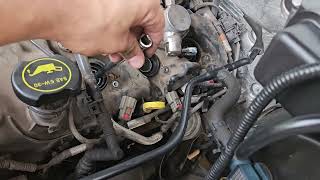
How to confirm: Swap the ignition coil from cylinder #4 with another cylinder (e.g., cylinder #5). Clear the codes and drive the vehicle. If the code changes to P0305, the ignition coil is faulty. This is a standard and effective diagnostic step. 🎬 See this breakdown on finding the real cause of P0304.
Typical fix: Replace the faulty ignition coil. It is often recommended to replace all six coils at the same time for preventative maintenance, especially on a high-performance vehicle to ensure consistent spark energy across all cylinders.
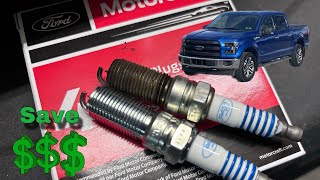
Est. part cost: $70-$150 per coil - Worn or Fouled Spark Plug 🔴 High Probability → Shop Spark Plug High-performance, turbocharged engines are demanding on spark plugs. Incorrect plug gap or fouling from carbon or oil can easily lead to a misfire under high boost. Plugs are a routine maintenance item with a finite life.
How to confirm: After confirming the coil is good, remove the spark plug from cylinder #4. Inspect it for wear, carbon fouling, oil, or damage to the electrode or ceramic insulator. Compare it to a plug from a known good cylinder. A worn electrode or incorrect gap is a clear indicator.
Typical fix: Replace the spark plug in cylinder #4. It is best practice to replace all six spark plugs at the same time with the correct OEM-spec plugs to ensure consistent performance. Ensure they are gapped correctly before installation.
Est. part cost: $20-$50 per plug - Faulty Fuel Injector 🟡 Medium Probability → Shop Fuel Injector The GT uses a dual-injection system (both port and direct injection). A clogged or failing injector, particularly the direct injector which operates under high pressure, can cause a lean misfire. Carbon buildup is a known issue on direct injection engines. A stuck-open injector can also cause a rich misfire and lead to low fuel rail pressure, potentially triggering a P0087 code alongside the misfire code.
How to confirm: This is more complex and best left to a professional. It involves using a scan tool to perform a power balance test, checking the injector's electrical resistance, and potentially performing a flow test to see if it's delivering the correct amount of fuel. Swapping injectors between cylinders is also possible but is much more labor-intensive than swapping coils.
Typical fix: Replace the faulty fuel injector. This is a more labor-intensive job, especially for the direct injectors located in the cylinder head.
Est. part cost: $150-$400 per injector
Rare But Worth Checking
- Vacuum Leak: A vacuum leak near the intake manifold runner for cylinder #4 could lean out the mixture and cause a misfire. While less common to affect only a single cylinder, it's not impossible if a gasket fails at a specific runner.
- Low Compression: Internal engine damage such as a bad valve, worn piston rings, or a damaged cylinder head gasket can cause a loss of compression, resulting in a persistent misfire. This is a worst-case scenario requiring a compression and leak-down test to confirm, followed by major engine work.
- Wiring or Connector Issue: Damage to the wiring harness or a loose/corroded connector for the ignition coil or fuel injector on cylinder #4 can interrupt the signal and cause a misfire. A visual inspection of the harness and checking for secure connections is a key diagnostic step.
- Crankshaft Position Sensor Relearn: In some Ford vehicles, after major service like a clutch or flywheel replacement, the crankshaft position sensor profile may need to be relearned using a diagnostic tool. If this is not done, the PCM can misinterpret crankshaft speed variations and falsely trigger misfire codes.
Diagnosis Steps
- Read the code with a high-quality OBD-II scanner and note any other codes present. Freeze frame data can show the engine conditions (RPM, load, temperature) when the misfire occurred. 🎬 Pro tip: Use Mode 6 data to identify hidden Ford misfires.
- Determine the location of cylinder #4. On the transverse 3.5L EcoBoost in the GT, the front bank of cylinders (closest to the rear bumper) are 4, 5, and 6, from passenger to driver side. Cylinder #4 is on the front bank, passenger side.
- Consider the TSBs (SSM 50616, 49536, 49028). Has the vehicle been started multiple times without reaching full operating temperature? If so, the recommended first step is to address this operating condition before replacing parts.
- Swap the ignition coil from cylinder #4 with cylinder #5. Clear the codes and perform a test drive to see if the misfire code moves to P0305. If it does, the ignition coil is the culprit.
- If the misfire remains on cylinder #4, swap the spark plug from cylinder #4 with cylinder #5. Clear codes and test again. If the code moves to P0305, the spark plug was the issue.
- If the misfire still remains on cylinder #4, carefully inspect the wiring and connector going to the ignition coil and fuel injector for cylinder #4. Look for any signs of damage, corrosion, or loose pins.
- If all ignition components and wiring appear to be in good order, the issue may be with the fuel injector or mechanical compression. At this point, professional diagnosis with tools like a power balance tester, fuel pressure gauge, compression tester, or leak-down tester is required.
Parts You'll Likely Need
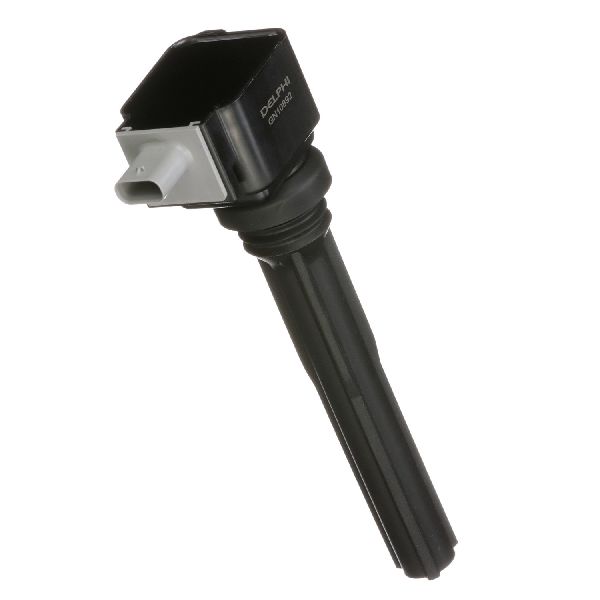
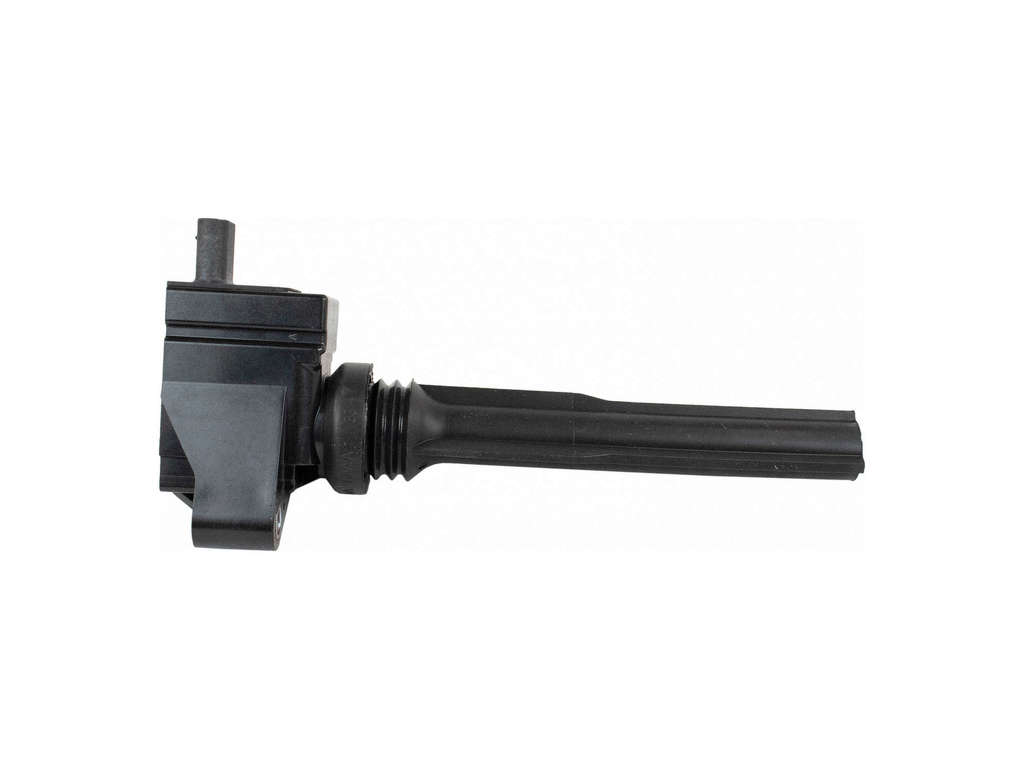
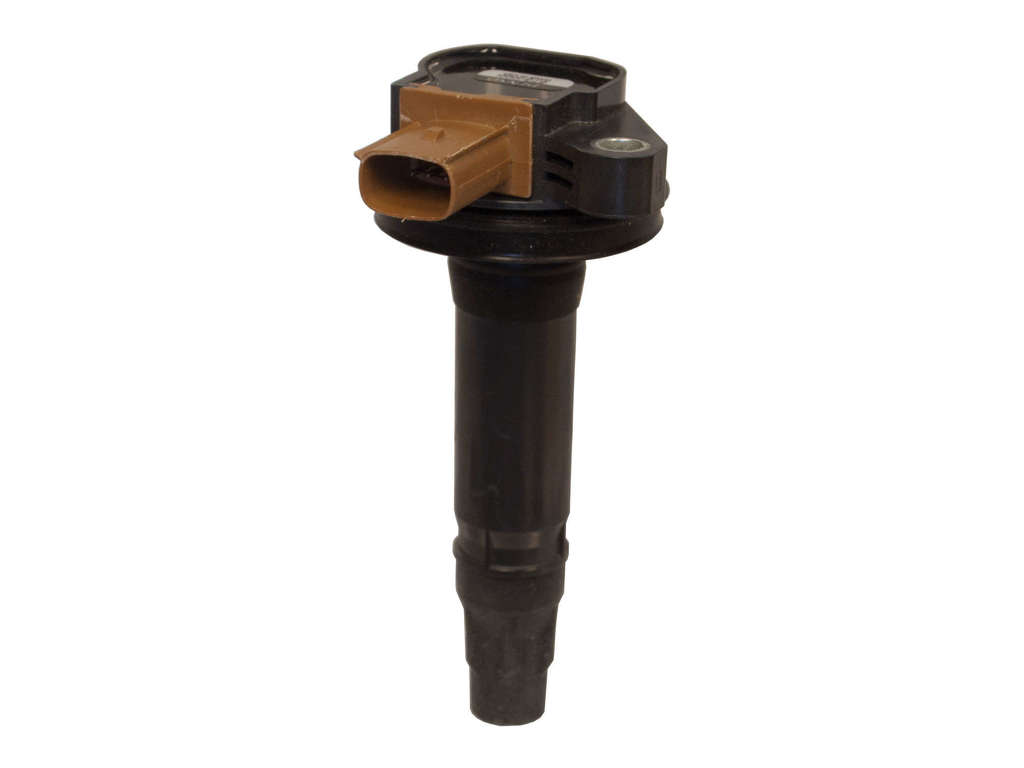
- Ignition Coil
(OEM #HG9Z-12029-B)— This is one of the most common failure points for a single-cylinder misfire. Heat and vibration cause the internal windings to fail over time. It is a primary suspect for any P030x code.
Trusted brands: Motorcraft
OEM price range: $90-$150
Aftermarket price range: $60-$100 - Spark Plug
(OEM #JG9Z-12405-A)— Spark plugs are a regular maintenance item and are critical for proper combustion in a high-output engine. Fouling or wear directly causes misfires. Given the engine's performance, using the exact OEM plug is highly recommended.
Trusted brands: Motorcraft, NGK
OEM price range: $30-$50
Aftermarket price range: $20-$40
Related Codes That Often Appear With This One
- P0300 — If the misfire is intermittent or affects multiple cylinders, a P0300 (Random/Multiple Misfire Detected) code may appear alongside P0304.
- P0316 — This code indicates a misfire was detected within the first 1,000 engine revolutions on startup. The cited TSBs specifically mention this code appearing with other P030x codes, reinforcing the cold-start sensitivity issue.
- P0301, P0302, P0303, P0305, P0306 — The provided TSBs indicate that it's common for multiple cylinder misfire codes to appear together under certain cold-start conditions, likely due to fuel loading.
Technical Service Bulletins (TSBs) & Recalls
- SSM 50616: "Some 2017-2022 Ford GT vehicles may exhibit a runs rough or hard start with or without an illuminated MIL with DTC P0300, P0301, P0302, P0303, P0304, P0305, P0306 and/or P0316."
- SSM 49536: "Some 2017-2021 Ford GT vehicles may exhibit a runs rough or hard start with or without an illuminated MIL with DTC P0300, P0301, P0302, P0303, P0304, P0305, P0306 and/or P0316."
- SSM 49028: "Some 2017-2020 Ford GT vehicles may exhibit a runs rough or hard start with or without an illuminated MIL with DTC P0300, P0301, P0302, P0303, P0304, P0305, P0306 and/or P0316."
Platform-Specific Known Issues
- Ford issued Technical Service Bulletins #SSM 50616, #SSM 49536, and #SSM 49028 regarding 2017-2022 Ford GTs. These bulletins note that vehicles may exhibit a rough run, hard start, and misfire DTCs (including P0304 and P0316). The bulletins advise technicians to first "determine if the vehicle operating conditions may have resulted in multiple cold engine [starts]" before beginning standard diagnostics. This strongly suggests a known software or fuel calibration sensitivity to repeated short trips where the engine does not reach full operating temperature, leading to fuel accumulation and startup misfires.
Mechanic-Grade Diagnostic Values
- Ignition Coil Primary Resistance — expected: 0.5 Ohms. Failure: A reading significantly higher or lower than 0.5 Ohms indicates a faulty coil.
- Ignition Coil Secondary Resistance — expected: 6.0K - 6.2K Ohms. Failure: A reading outside of this range suggests a failure in the secondary windings of the coil.
- High-Pressure Fuel Rail (Scan Tool, KOER at idle) — expected: Actual pressure should closely match desired pressure, typically 300-500 PSI.. Failure: Actual pressure is significantly lower than desired pressure, or actual pressure climbs uncontrollably while desired pressure remains stable.
- High-Pressure Fuel Rail (Scan Tool, under load) — expected: Actual pressure should track desired pressure and can exceed 2,000 PSI.. Failure: Actual pressure fails to rise with desired pressure during acceleration.
- Mode $06 Misfire Count (non-CAN) — expected: Test ID (TID) $53 is used for misfire monitoring on many pre-CAN Ford vehicles. Component ID (CID) $04 corresponds to cylinder 4.. Failure: The 'Actual' value for TID $53, CID $04 exceeding the 'Max' limit will trigger a P0304 DTC.
Scan Tool Commands That Help
- Ford IDS (Integrated Diagnostic System): Power Balance Test — To identify which cylinder is not contributing equally to engine power. The test graphically displays RPM drop for each cylinder, making it easy to pinpoint the misfiring cylinder (e.g., cylinder 4) without swapping parts.
- Ford IDS (Integrated Diagnostic System): Misfire Monitor Neutral Profile Correction — After clearing PCM memory or performing major engine work, this procedure relearns the crankshaft position sensor profile to correct for mechanical variations and prevent false misfire codes.
- Ford IDS (Integrated Diagnostic System): Fuel System Control — On the dual-injection 3.5L EcoBoost, IDS can command the engine to run on only the port injection system or only the direct injection (DI) system. This is invaluable for isolating whether a misfire is related to a specific injector or fuel rail.
Wiring & Ground Locations
- Engine Block Ground — On many 3.5L EcoBoost engines, there is a ground point on the front of the engine block that connects to the chassis near the passenger side front tire.. A poor engine ground can cause a host of electrical issues, including weak spark or erratic sensor signals that could lead to a misfire. Ensuring this connection is clean and tight is a fundamental electrical diagnostic step.
- Cylinder Head Ground — A ground wire is typically attached to a single bolt on the cylinder head, which then connects to the firewall of the vehicle.. The ignition coils are grounded through the engine. A compromised ground on the cylinder head could potentially affect the performance of the ignition coils for that bank of cylinders.
- Main Battery to Chassis Ground — The primary ground from the battery negative terminal connects to the chassis frame near the battery itself, on the passenger side.. This is the main ground for the entire vehicle's electrical system. Corrosion or a loose connection here can cause widespread, intermittent, and difficult-to-diagnose electrical problems, including misfires.
OEM Part Supersession History
HL3Z-12029-A→HG9Z-12029-B— This is a common supersession for ignition coils used on the 3.5L EcoBoost family. The newer part number represents a revised or updated design.
Heads up: While HL3Z-12029-A is listed for F-150s, the HG9Z-12029-B is the part number specified in the Pass 2 data for the GT. They are generally interchangeable within the 3.5L EcoBoost family, but using the specified part for the GT is critical.
Model Year Variations Within This Range
- 2020-2021: For the 2020 model year, the 3.5L EcoBoost V6 in the Ford GT received a power increase from 647 hp to 660 hp. This was achieved through revised engine calibration and potentially other minor hardware changes.
Helpful Videos
We Have This Part in Stock


The information in this article is provided for general reference and educational purposes only. Vehicle specifications, procedures, and part compatibility can vary by production date, trim level, and region. Always consult your vehicle's factory service manual and verify part numbers before purchasing or performing repairs. Safety-critical components such as airbags, seat belts, and braking systems should be installed by a qualified professional.
- Ford GT:
- 🧭 Diagnostic Flowchart
- 🎬 Helpful Videos
- 🛍️ Shop This Part
- What's Unique About the 2017-2021 Ford GT
- Symptoms You May Notice
- Most Likely Causes
- Rare But Worth Checking
- Diagnosis Steps
- Parts You'll Likely Need
- Related Codes That Often Appear With This One
- Technical Service Bulletins (TSBs) & Recalls
- Platform-Specific Known Issues
- Mechanic-Grade Diagnostic Values
- Scan Tool Commands That Help
- Wiring & Ground Locations
- OEM Part Supersession History
- Model Year Variations Within This Range
- 🎟️ Get 5% Off