

P0304 on 2019-2023 Genesis G70 3.3T: Cylinder 4 Misfire Causes and Fixes
On a 2019-2023 Genesis G70 3.3T, code P0304 is almost always caused by a bad ignition coil or a worn spark plug in cylinder 4. Since cylinder 4 is on the easily accessible driver's side of the engine, a DIY coil swap is the fastest way to diagnose. A new coil costs about $40-$80.
- P0304 on the G70 3.3T is a misfire on cylinder 4, the middle cylinder on the easily accessible driver's side.
- The most likely cause is a bad ignition coil, followed by a worn spark plug.
- Diagnose the issue for free by swapping the cylinder 4 ignition coil with another one on the same side (e.g., cylinder 2) and seeing if the code follows the part.
- Do not drive if the Check Engine Light is flashing to avoid expensive catalytic converter damage.
- This is a very manageable DIY repair for the average person, as it does not require removing the intake manifold.
What's Unique About the 2019-2023 Genesis G70
The Genesis G70's 3.3L twin-turbo V6 engine has a longitudinal (front-to-back) layout. This means the cylinder banks are on the passenger and driver sides. Cylinder 4 is the middle cylinder on the driver's side (Bank 2), along with cylinders 2 and 6. This is great news for DIY diagnosis, as the driver's side bank is easily accessible without removing the upper intake manifold—a difficult job required for the passenger side cylinders (1, 3, 5). The high-output, turbocharged nature of this engine also puts significant stress on ignition components, generating substantial heat that can shorten the life of coils and plugs, making them the most common failure points by a wide margin.
Symptoms You May Notice
- Rough or shaking idle
- Engine hesitation or stumbling during acceleration
- Noticeable loss of power
- Flashing or solid Check Engine Light
- Smell of raw fuel from the exhaust
- Decreased fuel economy
- Replacing fuel injectors before confirming the ignition coil and spark plug are good.
- Assuming the issue requires a dealer software update. The common misfire TSB (25-01-051G) and associated campaign (914G) are for the 2.5L 4-cylinder engine, NOT the 3.3L V6.
Most Likely Causes
- Faulty Ignition Coil 🔴 High Probability → Shop Ignition Coil The twin-turbo engine generates significant heat in the engine bay, which can shorten the life of ignition coils. Failures are a very common topic in owner forums for the G70 and the mechanically identical Kia Stinger. Early generation coils were reported to be particularly prone to failure.
How to confirm: Perform a 'swap test'. Cylinder 4 is the middle cylinder on the driver's side. Swap its ignition coil with the coil from cylinder 2 (front) or cylinder 6 (rear) on the same bank. Clear the codes and drive. If the code changes to P0302 or P0306, the coil is bad.
Typical fix: Replace the faulty ignition coil. It's wise to use dielectric grease on the new coil boot to ease future removal and prevent moisture intrusion. Many owners recommend replacing all three coils on the accessible driver's side bank at the same time.
Est. part cost: $40 - $80 - Worn or Fouled Spark Plug 🔴 High Probability → Shop Spark Plug Turbocharged, direct-injection engines are harder on spark plugs. The manufacturer-recommended replacement interval is only 42,000 miles, and misfires often begin to appear around this mileage if they are not replaced. Cracked ceramic insulators are also a known failure mode on this platform.
How to confirm: If the coil swap test does not move the misfire, perform the same test with the spark plug. Swap the plug from cylinder 4 with one from another cylinder. If the code follows the plug, it is faulty. Visually inspect the plug for a cracked porcelain insulator, heavy carbon fouling, or a worn-out electrode.
Typical fix: Replace the spark plug in cylinder 4. It is highly recommended to replace all six spark plugs as a set to ensure consistent performance and avoid future misfires. A Reddit user on r/GenesisG70 noted getting all six done in an hour.
Est. part cost: $100 - $180 for a set of six - Clogged or Faulty Fuel Injector ⚪ Low Probability → Shop Fuel Injector Gasoline Direct Injection (GDI) injectors operate under extremely high pressure and can be susceptible to clogging from fuel deposits or electronic failure over time. While less common than ignition issues, injector failures have been reported by owners on this platform.
How to confirm: This is more difficult to confirm. If the coil and plug swaps don't isolate the issue, a professional may need to perform an injector balance test or check the injector's electrical circuit. Listening to the injector with a mechanic's stethoscope for a consistent 'clicking' sound can be a rough indicator of operation. A scanner monitoring fuel trims for cylinder 4 can also help; high positive trim suggests the ECM is compensating for a lean condition caused by a clogged injector.
Typical fix: Replace the fuel injector for cylinder 4. This is a more involved job than a coil or plug.
Est. part cost: $100 - $200
Rare But Worth Checking
- Carbon Buildup on Intake Valves: A common issue on many GDI engines. Although the Lambda II 3.3T has both GDI and MPI injectors (the latter helping to wash valves), buildup can still occur after 60,000+ miles. Severe buildup can disrupt airflow into the cylinder and cause misfires, though it usually affects multiple cylinders and triggers a P0300 code.
- Low Cylinder Compression: This indicates a mechanical engine problem, such as a bad valve, worn piston rings, or a head gasket leak. It is very rare on a well-maintained, modern engine but would cause a persistent misfire that ignition and fuel parts cannot fix. A compression test is needed to diagnose this.
Diagnosis Steps
- Read the code with an OBD-II scanner to confirm P0304 is the primary code. Note any other codes present.
- Check the freeze frame data to see the engine conditions (RPM, load, temperature) when the misfire occurred.
- Perform Ignition Coil Swap Test: Locate cylinder 4 (middle cylinder, driver's side). Unplug and unbolt the ignition coil. Swap it with the coil from cylinder 2 (front cylinder, driver's side). Clear the codes, start the engine, and test drive. If the code returns as P0302, the ignition coil is bad.
- Perform Spark Plug Swap Test: If the code remains P0304, move the original coil back and swap the spark plugs between cylinder 4 and cylinder 2. Clear codes and re-test. If the code is now P0302, the spark plug is bad.
- Inspect Wiring: If the misfire remains on cylinder 4, carefully inspect the ignition coil's wiring harness and connector for any signs of damage, corrosion, or looseness.
- Further Diagnosis: If the steps above do not resolve the issue, the problem is likely a fuel injector or a mechanical engine issue, which may require professional diagnosis, including a compression test or fuel injector flow test.
Parts You'll Likely Need
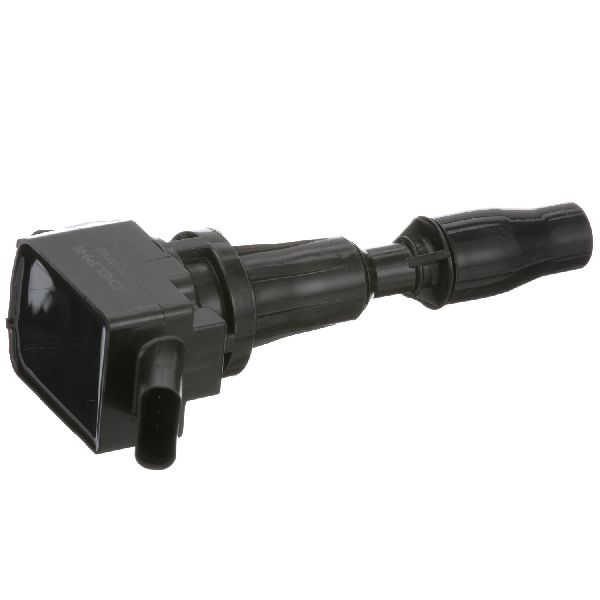
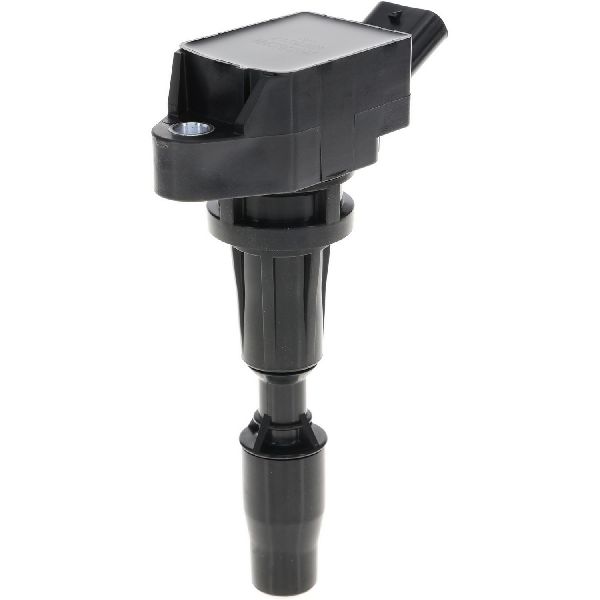
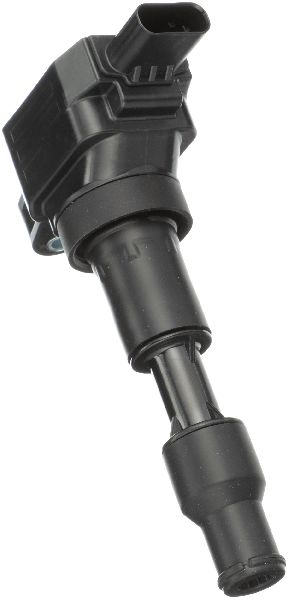
- Ignition Coil (Bank 2)
(OEM #27301-3L100)— This is the most common failure point for a P0304 code on the 3.3T engine due to high heat and electrical stress. Note: This engine uses different coils for the front (Bank 2) and rear (Bank 1) banks. They are not interchangeable.
Trusted brands: Hyundai/Genesis OE, Denso, NGK, Delphi
OEM price range: $60-$90
Aftermarket price range: $40-$70 - Spark Plug
(OEM #18852-09070)— A routine maintenance item with a 42,000-mile replacement interval that is often neglected, leading to misfires. The OEM plug is typically an NGK Iridium (SILZKR8E8G).
Trusted brands: NGK (OEM), Denso, HKS (Performance)
OEM price range: $20-$30 per plug
Aftermarket price range: $15-$25 per plug
Related Codes That Often Appear With This One
- P0300 — If the misfire is severe or intermittent, it may be logged as a 'Random/Multiple Cylinder Misfire' before or along with the specific P0304 code.
- P0302, P0306 — These codes for other cylinders on the same (driver's side) bank might appear if there's a systemic issue like a vacuum leak affecting that bank, or if multiple ignition components are failing simultaneously due to age. They are also used diagnostically when performing a coil or plug swap test.
- P0363 — This code for 'Misfire Detected – Fueling Disabled' may accompany a P0304 if the misfire is severe and persistent. The ECM cuts fuel to cylinder 4 to protect the catalytic converter from raw, unburned fuel.
Technical Service Bulletins (TSBs) & Recalls
- TSB 25-01-051G: This TSB is frequently mentioned online but is important to note it DOES NOT apply to the 3.3L V6. It addresses misfire detection logic on the 2.5L 4-cylinder engine found in other Genesis models.
Platform-Specific Known Issues
- The driver's side cylinder bank (2, 4, 6) is easily accessible for ignition service, while the passenger side bank (1, 3, 5) requires removing the upper intake manifold, making repairs significantly more difficult and costly.
- Some owners report that early-model-year ignition coils were more prone to failure and that an updated part was used on 2022+ models, which is backward compatible.
- Real Owner Forum Thread: A thread on r/GenesisG70 titled 'Just did spark plug service.' details a user replacing all six plugs in about an hour, noting the use of specific wobble extensions to access all cylinders without removing the intake manifold. URL: https://www.reddit.com/r/GenesisG70/comments/w5wzfc/just_did_spark_plug_service/
Mechanic-Grade Diagnostic Values
- Short/Long-Term Fuel Trim (STFT/LTFT) on Bank 2 — expected: -10% to +10% at idle and steady cruise.. Failure: A sustained positive fuel trim of +25% or higher on Bank 2 (the bank with cylinder 4) strongly suggests a lean condition. The ECM is adding excessive fuel to compensate for unmetered air (vacuum leak) or, more likely for a single-cylinder misfire, a clogged or failing fuel injector.
- High-Pressure Fuel System (GDI) — expected: Over 2,200 psi (150 Bar) under load.. Failure: Low pressure would typically cause random misfires (P0300) or fuel pressure codes, not an isolated P0304.
- Secondary Ignition Waveform (via Oscilloscope) — expected: A consistent, sharp firing line, spark line, and duration across all cylinders.. Failure: On the cylinder 4 waveform, an upward-sloping spark line (looks like a ramp or a 'U' shape) is a classic sign of a lean mixture, pointing away from ignition and toward a fuel delivery or vacuum leak issue.
Scan Tool Commands That Help
- Genesis GDS (or equivalent professional scanner): Misfire Counter (Live Data) — To watch for misfire events on specific cylinders in real-time. This is essential for confirming the misfire is active on cylinder 4 and for verifying that a repair has been successful without waiting for the ECU to set a code again.
- Genesis GDS (or equivalent professional scanner): Cylinder Power Balance Test — This bidirectional test electronically deactivates one cylinder at a time and measures the corresponding drop in engine RPM. If disabling cylinder 4 results in little or no RPM drop compared to other cylinders, it confirms that cylinder 4 was not contributing power, definitively isolating the problem cylinder.
- Genesis GDS (or equivalent professional scanner): Injector Activation Test — After ruling out spark plugs and coils, this test allows a technician to command a specific fuel injector to stop firing. If killing the cylinder 4 injector causes no change in how the engine runs, it points towards a problem with that injector or its circuit.
Real Owner Repair Stories
- YouTube channel 'Hyundai Tech' (2022 Genesis GV70 2.5L Turbo (Note: Different engine, but identical diagnostic logic and a documented P0304 fix beyond plugs/coils)) — Check Engine Light on, engine shaking.
❌ Tried (didn't work) Swapping the ignition coil from cylinder 4 to cylinder 1., Swapping the spark plug from cylinder 4 to cylinder 1.
✅ What actually fixed it The technician observed a high positive fuel trim (+29%) on the bank, indicating a lean condition. An oscilloscope on the injector circuit confirmed an issue. The final cause was a failed MPI (Multi-Port Injection) fuel injector for cylinder 4. Replacing the injector resolved the P0304 code.
OEM Part Supersession History
27301-3C000, 27301-3F100→27301-3L100— Standard part evolution for reliability and performance across various Hyundai/Kia V6 engines.
Heads up: CRITICAL: The 3.3T engine uses different ignition coils for the front and rear banks. 27301-3L100 is for Bank 2 (driver's side, cylinders 2, 4, 6). The rear bank (Bank 1, cylinders 1, 3, 5) uses a different part (e.g., 27310-3L000). They are physically different and not interchangeable.
Model Year Variations Within This Range
- 2022-2023: The 2022 facelift included a new variable sport exhaust system that increased horsepower slightly from 365 to 368. This has no impact on the P0304 diagnosis. Forum chatter suggests that 2022+ models may have received updated, more reliable ignition coils from the factory compared to 2019-2021 models.
Diagnostic Flowchart
Other Known Issues on This Vehicle
Issues unrelated to this code that are worth knowing about as an owner of this generation:
- Leaking Turbocharger Oil Feed Pipe (Bank 2) 🔴 High → Shop Turbocharger — Common enough to trigger a recall (NHTSA ID 24V209000) for 2019-2022 models. The driver's side pipe can crack and leak oil onto the hot exhaust manifold, creating a fire risk. (Ref: Recall 019G / TSB 24-01-032G)
- Failing Electronic Wastegate Actuator (EWGA) 🟠 Medium → Shop Turbocharger — A well-documented issue, often first noticed by a distinct squeak or rattle from the passenger side of the engine bay when shutting the car off. Leads to underboost code P0299 and loss of power.
- Carbon Buildup on Intake Valves 🟠 Medium — Inherent to all GDI engines. Becomes a potential issue after 60,000+ miles, causing reduced performance and potential misfires across multiple cylinders (P0300).
- High-Pressure Fuel Pump (HPFP) Failure 🟠 Medium → Shop Fuel Pump — Can fail and cause fuel starvation, long crank times, stalling, and loss of power. A recall (023G) was issued for some models to inspect for DTC P0088 and potentially replace the pump. (Ref: Recall 023G)
- Premature Brake Rotor Warping 🟡 Low — A very common complaint on both the G70 and Kia Stinger. Owners report brake shudder/vibration at relatively low mileage due to warped front rotors.
- Interior Rattles (Sunroof/Headliner) 🟡 Low — Many owners report persistent rattles from the panoramic sunroof assembly or headliner area, especially in changing temperatures. (Ref: TSB 21-BD-007G (addresses sun visor noise, but not all rattles))
Used vs. New Parts: Buying Guide for This Vehicle
When a used part is the smart pick: For this repair, using used parts is generally not recommended. Ignition coils are a known high-failure item due to engine heat, so a used coil has an unknown and likely short remaining lifespan. A used fuel injector is also risky due to the potential for internal clogging or electronic failure.
Donor-vehicle mileage cap: roughly under 30000 miles for the part to have meaningful remaining life.
What to inspect on the donor part:
- For an ignition coil, check for cracks in the plastic housing or epoxy.
- Ensure the connector pins are clean and free of corrosion.
- Ask for the mileage of the donor vehicle; anything over 30k miles is a significant gamble.
OEM-only on this vehicle (don't cheap out):
- High-Pressure Fuel Pump (HPFP)
- GDI Fuel Injectors (due to precision and high pressure)
Aftermarket brands forum-validated for this vehicle:
- Ignition Coils: NGK, Delphi, Denso are considered reliable OEM-quality alternatives.
- Spark Plugs: NGK (OEM supplier) and Denso are the standard recommendations. HKS offers a performance alternative for tuned vehicles.
- Performance Coils: Worms Racing and AFE are mentioned in forums as performance options, but stick to OEM-spec for a daily driver.
Brands owners have reported issues with on this vehicle:
- Unbranded, no-name ignition coils from online marketplaces. These often have poor internal windings, leading to weak spark, immediate failure, or ECU damage.
Real Owner Stories
Aggregated from forums and TSBs cited above. Mileages and costs reflect what owners reported in those sources.
2019-2023 Genesis G70 3.3L T-GDI V6
Symptoms: The owner performed a spark plug service to address maintenance/performance.
What fixed it: Replaced all six spark plugs using specific wobble extensions to access all cylinders without removing the intake manifold.
Source hint: Reddit r/GenesisG70 thread titled 'Just did spark plug service.' (https://www.reddit.com/r/GenesisG70/comments/w5wzfc/just_did_spark_plug_service/)
Related OBD-II Codes
Frequently Asked Questions
Does TSB 25-01-051G apply to my 3.3L V6 Genesis G70 if I have a P0304 code?
I'm at 45,000 miles and getting misfires. Is this common for the G70?
Which cylinder is cylinder 4 on the 3.3L T-GDI engine?
Is it true that the driver's side ignition components are easier to replace than the passenger side?
Are there updated ignition coils available for the G70?
Could my P0304 code be related to the recent fuel pump recall?
Helpful Videos


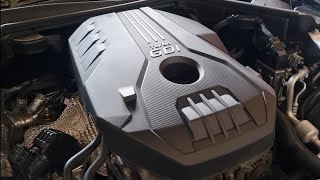
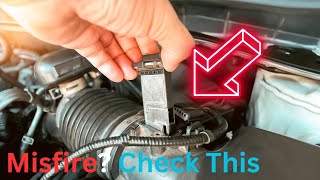
Used OEM Parts in Stock
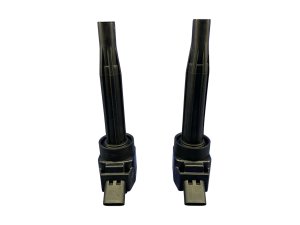
New Aftermarket Parts Available


The information in this article is provided for general reference and educational purposes only. Vehicle specifications, procedures, and part compatibility can vary by production date, trim level, and region. Always consult your vehicle's factory service manual and verify part numbers before purchasing or performing repairs. Safety-critical components such as airbags, seat belts, and braking systems should be installed by a qualified professional.
- Genesis G70:
- 🧭 Diagnostic Flowchart
- 🎬 Helpful Videos
- 🛍️ Shop This Part
- What's Unique About the 2019-2023 Genesis G70
- Symptoms You May Notice
- Most Likely Causes
- Rare But Worth Checking
- Diagnosis Steps
- Parts You'll Likely Need
- Related Codes That Often Appear With This One
- Technical Service Bulletins (TSBs) & Recalls
- Platform-Specific Known Issues
- Mechanic-Grade Diagnostic Values
- Scan Tool Commands That Help
- Real Owner Repair Stories
- OEM Part Supersession History
- Model Year Variations Within This Range
- Other Known Issues on This Vehicle
- Used vs. New Parts: Buying Guide for This Vehicle
- Real Owner Stories
- 2019-2023 Genesis G70 3.3L T-GDI V6
- Related OBD-II Codes
- Frequently Asked Questions
- 🎟️ Get 5% Off