

P0304 on 2017-2020 Genesis G80 3.8L: Cylinder 4 Misfire Causes and Fixes
P0304 on a 2017-2020 Genesis G80 3.8L means a misfire in cylinder 4. The most likely cause is a bad ignition coil, followed by a worn spark plug. Cylinder 4 is the middle cylinder on the driver's side and is relatively easy to access, making diagnosis simple. A new coil costs about $50-$100. If ignition parts don't solve it, carbon buildup on the intake valves is a known issue on these GDI engines at higher mileage.
- P0304 is a misfire on the middle cylinder on the driver's side.
- The most likely fix is replacing the ignition coil on cylinder 4, which is an easy DIY diagnosis and repair.
- If the Check Engine Light is flashing, pull over immediately to prevent expensive damage to the catalytic converter.
- If replacing the coil and spark plug doesn't fix the code, the next most likely cause on a higher-mileage G80 is carbon buildup on the intake valves, a known issue with GDI engines.
What's Unique About the 2017-2020 Genesis G80
The Lambda II 3.8L is a Gasoline Direct Injection (GDI) engine. While generally reliable, this design is inherently susceptible to carbon buildup on the intake valves over time, as fuel does not wash over them. While a bad ignition coil or spark plug is the most common cause for P0304, significant carbon deposits can be an underlying issue on higher-mileage vehicles (typically over 80,000 miles) that causes persistent misfires even after ignition parts are replaced. This is a well-documented characteristic of the Lambda GDI engine family.
Symptoms You May Notice
- Rough or shaking idle
- Hesitation or stumbling during acceleration
- Noticeable loss of engine power
- Flashing Check Engine Light (if the misfire is severe)
- Reduced fuel economy
- Unpleasant or fuel-like odor from the exhaust.
- Replacing the oxygen sensor. O2 sensors measure emissions but do not typically cause a single-cylinder misfire.
- Assuming a TSB for a different engine applies. TSBs for the 2.5T or 3.3T engines in newer or different Genesis models regarding misfires do NOT apply to this 3.8L V6 engine.
Most Likely Causes
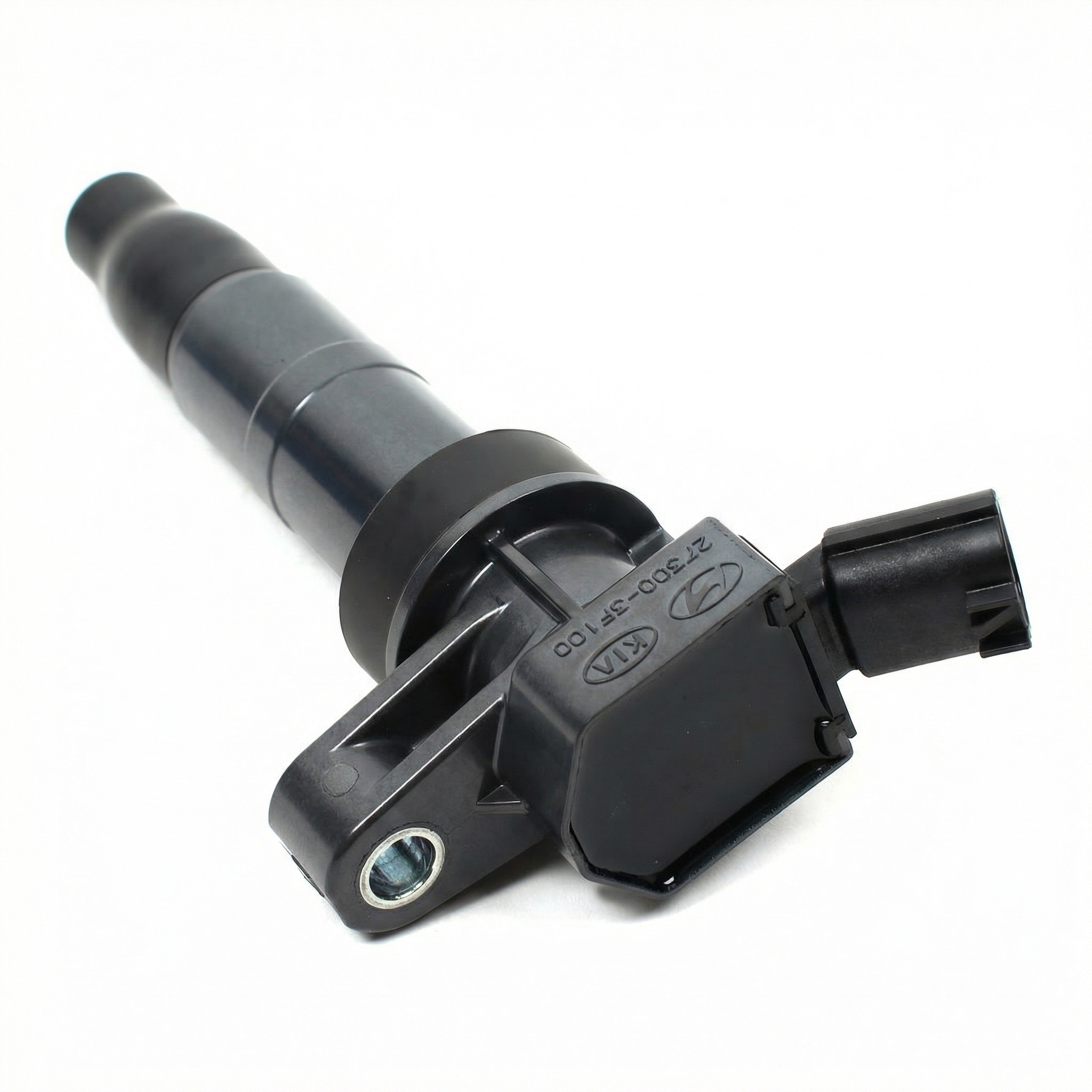
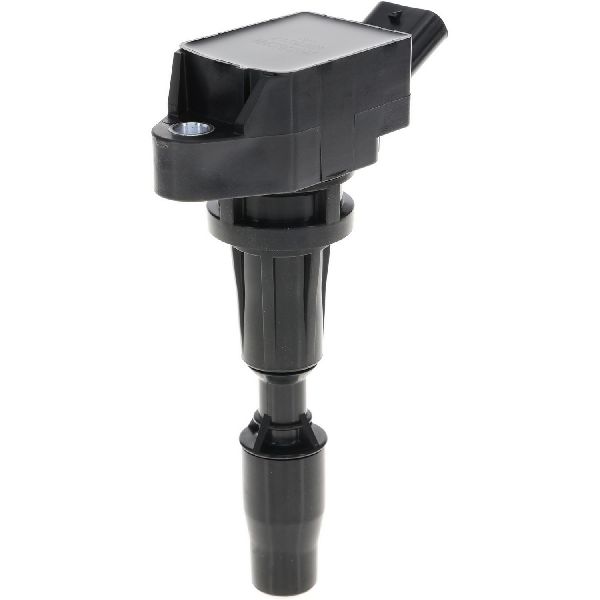
- Faulty Ignition Coil 🔴 High Probability → Shop Ignition Coil Ignition coils are a common wear item on most modern engines due to constant heat cycles. They are the most frequent point of failure leading to a single-cylinder misfire like P0304.
How to confirm: Swap the ignition coil from cylinder 4 (driver's side, middle) with the coil from cylinder 2 (driver's side, front). Clear the codes and drive. If the code changes to P0302, the ignition coil is faulty. This is a definitive and easy DIY test.
Typical fix: Replace the faulty ignition coil. It is often recommended to replace the spark plug at the same time. Given the accessibility of cylinder 4, this is a straightforward repair.
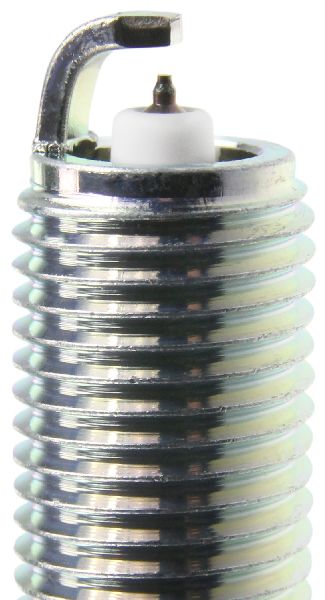
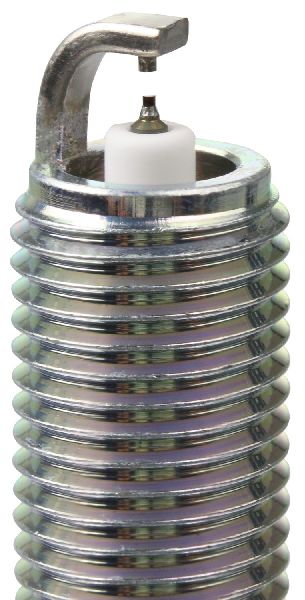
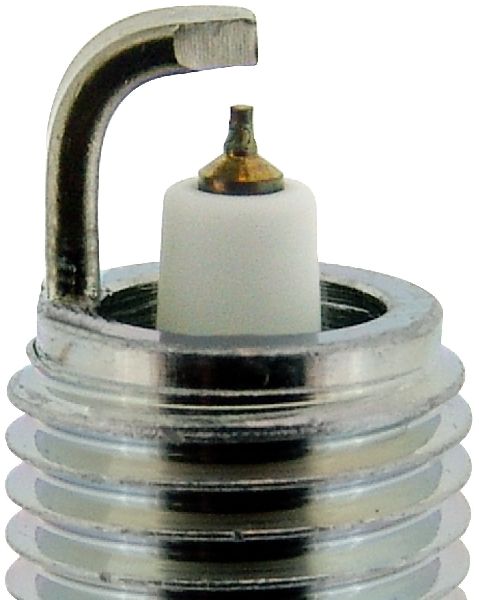
Est. part cost: $50-$110 - Worn or Fouled Spark Plug 🟡 Medium Probability → Shop Spark Plug Spark plugs are a routine maintenance item with a finite lifespan. The manufacturer recommends replacement at specific intervals. If they are past their service interval or have been fouled by oil or carbon, they can fail to produce a strong enough spark.
How to confirm: After ruling out the coil, remove the spark plug from cylinder 4. Inspect it for a worn electrode, cracks in the porcelain, or heavy carbon/oil deposits. Compare its condition to a plug from a known good cylinder. The correct OEM plugs are typically Iridium-tipped for longevity.
Typical fix: Replace the spark plug in cylinder 4. It is best practice to replace all six spark plugs as a set 🎬 See this walkthrough for changing spark plugs on the 3.8L. if they are near or past their recommended service interval of around 60,000 miles to ensure consistent performance.
Est. part cost: $15-$30 per plug - Carbon Buildup on Intake Valves ⚪ Low Probability As a GDI engine, fuel is injected directly into the cylinder, so it does not clean the back of the intake valves. Oil vapor from the PCV system can bake onto the valves, restricting airflow and causing misfires, especially on engines with higher mileage (80,000+ miles). This is a known characteristic of the Lambda II GDI engine family.
How to confirm: This is difficult to confirm without disassembly. A visual inspection using a borescope inserted into the intake runner for cylinder 4 is the most direct method. A persistent P0304 after replacing the coil and plug is a strong indicator.
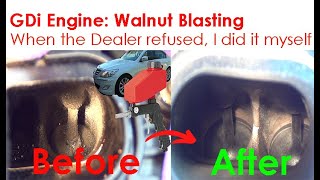
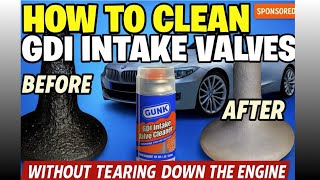
Typical fix: The intake manifold must be removed for physical cleaning. The most effective method is walnut shell blasting, which removes the baked-on carbon without damaging the valves or cylinder head. Chemical cleaning services are also available but may be less effective on heavy deposits. 🎬 Watch: How to clean GDI intake valves without engine disassembly. This service can cost between $600 and $1,200.
Est. part cost: $20-$50 for cleaning materials/media
Rare But Worth Checking
- Clogged Fuel Injector: → Shop Fuel Injector While less common than ignition issues, a GDI injector can become clogged with carbon, disrupting the fuel spray pattern and causing a misfire. Diagnosis typically requires professional tools to perform a flow test or an injector balance test.
- Low Compression: This indicates a mechanical engine problem in cylinder 4, such as a bad valve, worn piston rings, or a head gasket leak. A compression test is needed to confirm. This is the least likely and most serious potential cause.
- Vacuum Leak: A crack in a vacuum hose or a leaking intake manifold gasket can introduce unmetered air, leading to a lean condition and misfires. While often causing a random misfire code (P0300), a leak localized near cylinder 4's intake runner could trigger P0304.
Diagnosis Steps
- Read the codes with an OBD-II scanner to confirm P0304 is the primary code. Note if the Check Engine Light is steady or flashing. 🎬 Watch: Step-by-step guide to troubleshooting a P0304 cylinder misfire.
- Identify cylinder 4. On the longitudinally mounted 3.8L V6, the cylinders are numbered 1-3-5 on the passenger side (Bank 1) and 2-4-6 on the driver's side (Bank 2), from front to back. Cylinder 4 is the middle cylinder on the driver's side.
- Swap the ignition coil from cylinder 4 with the coil from cylinder 2 (the front cylinder on the same driver's side bank). This is the easiest diagnostic step.
- Clear the fault codes using the scanner. Start the engine and let it run for a few minutes, or take a short test drive.
- Re-scan for codes. If the code has changed to P0302 (Cylinder 2 Misfire), the ignition coil is the problem.
- If the code remains P0304, the coil is likely good. Turn off the engine and swap the spark plug from cylinder 4 with the one from cylinder 2.
- Repeat the process of clearing codes and test driving. If the code now reads P0302, the spark plug was the issue.
- If the code still persists as P0304 after swapping both the coil and plug, the problem is more complex. The next steps involve checking the fuel injector, inspecting for carbon buildup with a borescope, or performing a compression test to check for mechanical engine issues. At this point, professional diagnosis is recommended.
Parts You'll Likely Need
- Ignition Coil
(OEM #27301-3C000)— This is the most common failure part for a single-cylinder misfire on this engine. The part number 27301-3C000 is listed for the G80 3.8L and supersedes 27301-3C010.
Trusted brands: Hyundai/Kia (OEM), Denso, NGK, Delphi
OEM price range: $90-$120
Aftermarket price range: $50-$90 - Spark Plug
(OEM #18849-11070)— Spark plugs are a maintenance item and the second most likely cause of a misfire if the coil is good. This OEM part number is specified for the 2017-2020 G80 3.8L.
Trusted brands: NGK (ILZKAR7B11), Denso
OEM price range: $25-$35
Aftermarket price range: $15-$25
Related Codes That Often Appear With This One
- P0300 — If the misfire becomes more widespread due to a systemic issue like a vacuum leak or major carbon buildup, a P0300 (Random/Multiple Cylinder Misfire) code may appear alongside P0304.
- P0171 / P0174 — These 'System Too Lean' codes for Bank 1 and Bank 2 respectively may appear if the misfire is caused by a significant vacuum leak, which allows too much unmetered air into the engine.
Technical Service Bulletins (TSBs) & Recalls
- TSB 15-FL-005: While for the 2015 Genesis Sedan (DH), this TSB addresses rough idle and misfire codes (P0300, P0315) related to the crankshaft position sensor and wheel on the 3.8L engine, indicating a potential, though less common, area of investigation if ignition and fuel checks fail.
Platform-Specific Known Issues
- Carbon Buildup on GDI Intake Valves: As a GDI engine, the Lambda II 3.8L is known to accumulate carbon on the intake valves over 80,000-100,000 miles, which can cause persistent, hard-to-diagnose misfires. While P0304 is often a simple ignition issue, if it persists after replacing the coil and plug on a higher-mileage G80, carbon cleaning should be the next diagnostic consideration.
Mechanic-Grade Diagnostic Values
- Ignition Coil Primary Resistance — expected: ~0.68 Ohms. Failure: A reading that is significantly higher (open circuit) or lower (shorted) suggests a faulty coil.
- Ignition Coil Secondary Resistance — expected: ~7800 Ohms (7.8 kOhms). Failure: A reading significantly outside the expected range indicates a failure in the secondary winding.
- GDI Fuel Injector Resistance — expected: ~1.9 - 2.2 Ohms. Failure: A reading outside this range, or a notable difference between the cylinder 4 injector and others, points to a failing injector.
- Mode 6 Misfire Data — expected: Counter should be at or near zero for each cylinder.. Failure: A high number of registered misfire events for cylinder 4 confirms the fault, even if the check engine light is not on.
Hidden / Shadow Codes Worth Checking
- Mode 6, Test ID $53 (example): This is not a DTC, but a live data parameter accessible via Mode 6 on an OBD-II scanner. It provides raw misfire counts for each cylinder from the current and previous drive cycles. This allows a technician to see the exact number of misfire events, which can confirm a P0304 even if the misfire is intermittent. (see via An advanced OBD-II scan tool with Mode 6 functionality or the dealer-level Genesis GDS (Global Diagnostic System).)
Scan Tool Commands That Help
- Genesis GDS (Global Diagnostic System): Live Data / Current Data (Misfire Counter) — Use this to monitor the real-time misfire counter for each cylinder. This is the most direct way to confirm that cylinder 4 is the only one misfiring and to see if the misfire occurs under specific conditions like load or RPM.
- Genesis GDS (or equivalent professional scanner): Cylinder Power Balance Test — This active test deactivates each cylinder one by one and measures the corresponding drop in engine RPM. If deactivating cylinder 4 causes little or no RPM drop, it confirms that cylinder was not contributing power, pinpointing it as the source of the misfire.
- Genesis GDS (or equivalent professional scanner): Crankshaft Position Sensor (CKP) Variation Relearn — After replacing a crankshaft position sensor or if other diagnostics fail to find a cause, a CKP relearn procedure may be necessary. This function calibrates the ECM to the specific signal of the new sensor to ensure accurate misfire detection.
Wiring & Ground Locations
- 91880-D2010 — Engine bay, specific location varies but typically connects the engine block to the chassis.. This is the OEM part number for an engine ground strap. A corroded or loose ground strap can cause a weak spark or erratic sensor readings, potentially leading to misfire codes. While not a common cause, it's a critical check if ignition components test good.
Real Owner Repair Stories
- Reddit user on r/Hyundai (2007 Hyundai Tiburon 2.0L (different vehicle, but illustrates a common P0304 diagnostic path)) — P0304 code, rough running.
❌ Tried (didn't work) Replaced spark plugs and wires., Cleaned and then replaced all fuel injectors.
✅ What actually fixed it The user's post was a request for help and did not have a final resolution, but other users suggested performing a compression test or checking for a vacuum leak from a failed intake manifold gasket.
OEM Part Supersession History
27301-3C010→27301-3C000— Standard part revision by the manufacturer for improved reliability or sourcing.
Heads up: The parts are interchangeable; the newer 27301-3C000 is the correct replacement for the older part number.
Model Year Variations Within This Range
- 2017-2020: The Lambda II 3.8L GDI V6 engine remained mechanically consistent throughout the 2017-2020 G80 (DH) generation. No significant mid-cycle changes to the engine, ignition, or fuel systems were made that would alter the diagnosis of a P0304 code.
Diagnostic Flowchart
Other Known Issues on This Vehicle
Issues unrelated to this code that are worth knowing about as an owner of this generation:
- ABS Module Fire Risk 🔴 High — Widespread enough to trigger a major safety recall (NHTSA #21V160000, Hyundai Recall 201). (Ref: Recall 201 / 006G. Owners were advised to park outdoors until a replacement fuse was installed by a dealer.)
- Starter Solenoid Fire Risk 🔴 High — Affects 2017-2019 models, leading to a safety recall (NHTSA #24V098000, Hyundai Recall 254/018G). (Ref: Recall 254 / 018G. Water can enter the starter solenoid, causing a short circuit. The fix involves installing a remedy relay kit.)
- Potential for Oil Consumption at High Mileage 🟠 Medium — Anecdotal reports from owners and forum discussions suggest some engines may begin to consume oil past 100,000 miles. Not universal, but a known possibility for the Lambda engine family.
- Carbon Buildup on Intake Valves 🟠 Medium — Common on most GDI engines, including the Lambda II 3.8L. Typically becomes a noticeable issue requiring cleaning between 80,000 and 120,000 miles. (Ref: Hyundai has a general procedure TSB for combustion chamber cleaning (e.g., 23-EM-007H for other models) but no specific recall for the G80.)
Used vs. New Parts: Buying Guide for This Vehicle
When a used part is the smart pick: For this repair, buying a used part is generally not recommended. Ignition coils and spark plugs are wear items with a finite lifespan, and the cost savings of a used part are minimal compared to the risk of premature failure. A used fuel injector is also risky due to the potential for internal clogging that isn't visible.
Donor-vehicle mileage cap: roughly under 30000 miles for the part to have meaningful remaining life.
What to inspect on the donor part:
- For an ignition coil, check for any cracks in the plastic housing or corrosion on the electrical connector pins.
- Ensure the vehicle the part came from was not in a front-end collision, which could have damaged engine components.
- Ask for the donor vehicle's VIN to verify its mileage and history if possible.
OEM-only on this vehicle (don't cheap out):
- GDI Fuel Injector: Due to the high pressures and precise spray patterns required, OEM or a top-tier remanufactured unit (like GB Remanufacturing) is strongly advised. Cheap aftermarket injectors are a common source of persistent issues.
Aftermarket brands forum-validated for this vehicle:
- Ignition Coils: Delphi, Denso, NGK
- Spark Plugs: NGK, Denso
Brands owners have reported issues with on this vehicle:
- Unbranded, no-name ignition coils and injectors from online marketplaces. While cheap, they have a very high failure rate and often do not perform to OEM specifications, causing continued running issues.
Real Owner Stories
Aggregated from forums and TSBs cited above. Mileages and costs reflect what owners reported in those sources.
2018 Genesis G80 3.8L — 102000 miles
Symptoms: Significant oil consumption which can lead to spark plug fouling and misfires.
What fixed it: The owner reported the issue in the context of investigating burning oil as a contributor to engine health and potential carbon buildup.
Source hint: Reddit r/genesisg80 - 'Burning oil?' thread
2018 Genesis G80 3.8L — 90000 miles
Symptoms: Owner seeking DIY methods to address carbon buildup on the intake valves, a known maintenance concern for this mileage.
What fixed it: Physical cleaning of the intake valves (walnut shell blasting is the recommended professional fix).
Source hint: CarKiller Forum - 'Cleaning GDI carbon buildup without walnut blasting'
Related OBD-II Codes
Frequently Asked Questions
Where is cylinder 4 located on my 2017-2020 Genesis G80 3.8L V6?
Could TSB 15-FL-005 be the reason for my P0304 misfire code?
Is there a specific maintenance interval for spark plugs to prevent misfires on this engine?
My G80 has over 90,000 miles and a persistent P0304; could it be carbon buildup?
Are there any fire-related recalls I should be aware of while diagnosing my engine?
How much does it cost to fix the carbon buildup issue on the 3.8L GDI engine?
Helpful Videos

Used OEM Parts in Stock
New Aftermarket Parts Available


The information in this article is provided for general reference and educational purposes only. Vehicle specifications, procedures, and part compatibility can vary by production date, trim level, and region. Always consult your vehicle's factory service manual and verify part numbers before purchasing or performing repairs. Safety-critical components such as airbags, seat belts, and braking systems should be installed by a qualified professional.
- Genesis G80:
- 🧭 Diagnostic Flowchart
- 🎬 Helpful Videos
- 🛍️ Shop This Part
- What's Unique About the 2017-2020 Genesis G80
- Symptoms You May Notice
- Most Likely Causes
- Rare But Worth Checking
- Diagnosis Steps
- Parts You'll Likely Need
- Related Codes That Often Appear With This One
- Technical Service Bulletins (TSBs) & Recalls
- Platform-Specific Known Issues
- Mechanic-Grade Diagnostic Values
- Hidden / Shadow Codes Worth Checking
- Scan Tool Commands That Help
- Wiring & Ground Locations
- Real Owner Repair Stories
- OEM Part Supersession History
- Model Year Variations Within This Range
- Other Known Issues on This Vehicle
- Used vs. New Parts: Buying Guide for This Vehicle
- Real Owner Stories
- 2018 Genesis G80 3.8L — 102000 miles
- 2018 Genesis G80 3.8L — 90000 miles
- Related OBD-II Codes
- Frequently Asked Questions
- 🎟️ Get 5% Off