

P0304 on 2010-2013 GMC Sierra 1500 6.2L: Cylinder 4 Misfire Causes and Fixes
P0304 indicates a misfire on cylinder #4. The most likely causes are a bad spark plug or ignition coil. However, on this specific 6.2L V8, a failed Active Fuel Management (AFM) lifter is a very common and more serious cause, often signaled by a ticking noise and potentially leading to a major engine repair.
- P0304 is a misfire on cylinder 4, located on the passenger side, second from the front.
- While it could be a simple spark plug or ignition coil, you must listen for a ticking noise, which strongly points to a failed AFM lifter.
- A flashing check engine light means pull over immediately to prevent expensive catalytic converter damage.
- Diagnose by swapping the ignition coil first. If the misfire doesn't move to the other cylinder, and a ticking noise is present, a compression test is the next step to confirm mechanical failure.
What's Unique About the 2010-2013 GMC Sierra 1500
The 6.2L V8 engines (L9H/L94) in this generation of Sierra are equipped with Active Fuel Management (AFM). This system deactivates cylinders—including cylinder #4—to improve fuel economy. Unfortunately, the specialized AFM lifters are a known major failure point. They can collapse or get stuck, leading to a persistent P0304 misfire that a simple tune-up won't fix. This turns a common misfire code into a potentially serious mechanical issue specific to this engine family.
Symptoms You May Notice
- Rough idle or engine shaking, especially at low RPM
- Hesitation or loss of power during acceleration
- Flashing or solid Check Engine Light
- Reduced fuel economy
- Engine ticking, chirping, or squeaking noise, especially from the passenger side of the engine bay
- "Service StabiliTrak" message may appear on the dash along with the Check Engine Light
- Replacing only the spark plug and coil when a mechanical ticking noise is present. The noise is a key symptom of the more serious lifter failure, and a simple tune-up will not resolve the misfire.
Most Likely Causes
- Failed Active Fuel Management (AFM) Lifter 🔴 High Probability → Shop Engine Valve Lifter Cylinder 4 is one of the four cylinders deactivated by the AFM system (1, 4, 6, and 7). The complex hydraulic lifters for these cylinders are a well-documented weak point across the GM V8 lineup, prone to mechanical failure where they either collapse or get stuck. This is the most common cause of a persistent P0304 on this engine.
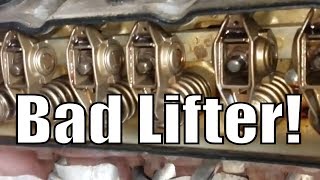
How to confirm: Listen for a persistent ticking or chirping noise from the engine that sounds like it's at half the speed of the crankshaft. 🎬 Watch: How to identify the sound of a bad lifter. A mechanic can confirm by removing the passenger-side valve cover and observing if the rocker arms for cylinder 4 are loose or not moving properly. A compression test showing low or zero compression on cylinder 4 is another strong indicator. The presence of code P3400 strongly suggests an AFM system fault.
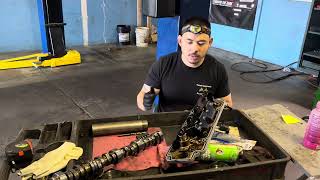
Typical fix: This is a major repair. It involves replacing the failed lifter (OEM Part: ACDelco 12680871). It is highly recommended to replace all AFM lifters (or all 16 lifters), the four lifter guides, and the Valve Lifter Oil Manifold (VLOM) at the same time. The camshaft is often damaged by the failed lifter's roller and must be inspected and frequently requires replacement as well. 🎬 See this 6.2L camshaft and lifter replacement walkthrough.
Est. part cost: $400-$1500 - Worn or Fouled Spark Plug 🟡 Medium Probability → Shop Spark Plug Standard wear and tear. Oil consumption issues, sometimes related to the AFM system and addressed in TSB 10-06-01-008H, can also foul the spark plug on cylinder 4, leading to a misfire.
How to confirm: Remove the spark plug from cylinder 4. Inspect it for wear on the electrode, carbon buildup, oil fouling, or physical damage. Compare it to a new plug.
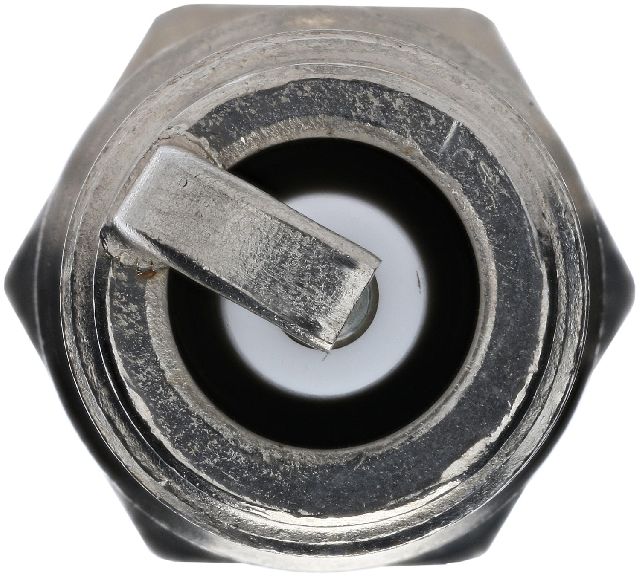
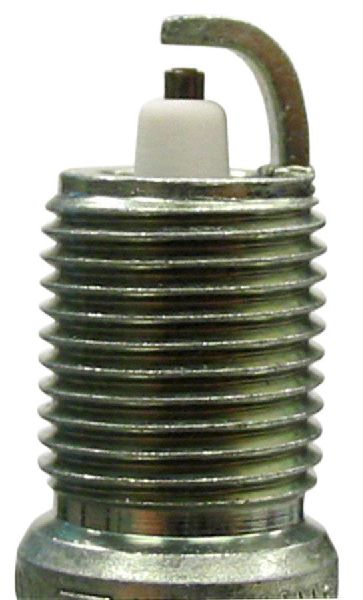
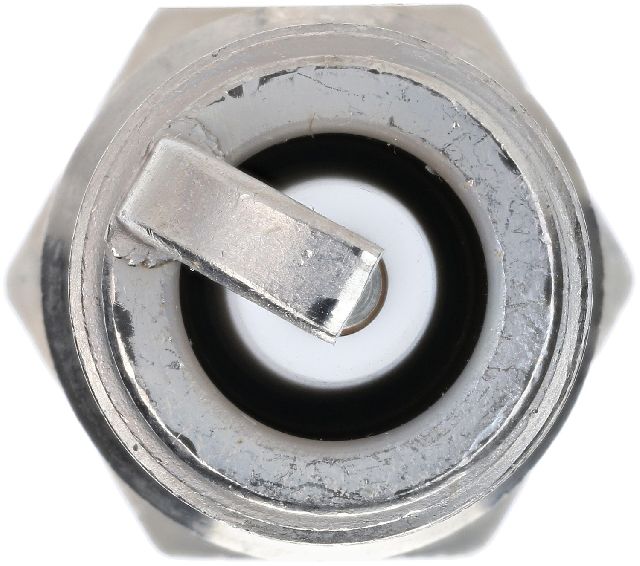
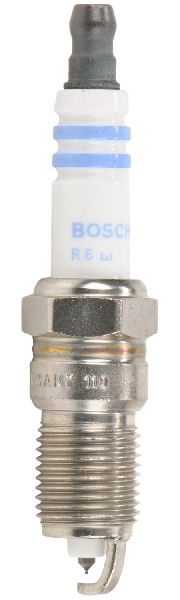
Typical fix: Replace the spark plug. It's best practice to replace all 8 plugs at the same time for consistent performance. The correct OEM plug is ACDelco 41-110.
Est. part cost: $10-$20 per plug - Faulty Ignition Coil 🟡 Medium Probability → Shop Ignition Coil
How to confirm: Swap the ignition coil from cylinder 4 with a coil from another cylinder (e.g., cylinder 2, the front-most on the passenger side). Clear the codes and drive the truck. If the misfire code changes to P0302, the ignition coil is faulty.
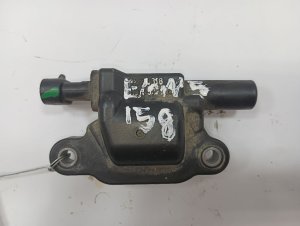
Typical fix: Replace the faulty ignition coil. The OEM part is ACDelco D510C.
Est. part cost: $35-$90 - Clogged or Faulty Fuel Injector ⚪ Low Probability → Shop Fuel Injector
How to confirm: A professional can perform a fuel injector balance test. A DIY method is to listen to the injector with a mechanic's stethoscope to ensure it's clicking. Swapping the injector with another cylinder is also possible but more involved than swapping a coil. One owner on a GM forum replaced the plug, wire, and coil for a P0304 with no success before finally replacing the injector, which also did not solve the problem, pointing towards a deeper mechanical issue.
Typical fix: Replace the faulty fuel injector.
Est. part cost: $50-$120
Rare But Worth Checking
- Worn Camshaft Lobe: → Shop Engine Camshaft This is almost always a direct result of a failed lifter roller. If you have a failed lifter, the camshaft must be inspected for damage. A damaged cam lobe will continue to cause misfires even with new lifters and will quickly destroy the new parts.
- Bent Pushrod: → Shop Engine Push Rod A collapsed or stuck lifter can cause the pushrod to bend. This will be discovered during lifter replacement and is a clear sign of internal mechanical failure.
- Loose Spark Plug Wire: → Shop Spark Plug According to TSB #PIP4819A, a misfire can be caused by a spark plug wire that is not fully seated on the coil or plug. Always check this simple connection first.
- Broken Valve Spring: A broken valve spring on cylinder 4 can cause a consistent or intermittent misfire and ticking noise. It may not be detected by a standard compression test if the spring pieces remain stacked. Visual inspection under the valve cover is often required.
Diagnosis Steps
- Read the code with an OBD-II scanner to confirm P0304 and check for any other codes, especially P0300 or P3400.
- Listen carefully to the engine at idle. Is there a distinct ticking, squeaking, or chirping sound? If yes, suspect a mechanical issue like an AFM lifter. This is a critical step.
- If no noise is present, start with simple checks. Per TSB #PIP4819A, ensure the spark plug wire for cylinder 4 is securely connected at both the coil and the plug.
- Perform a diagnostic swap. Switch the ignition coil from cylinder 4 (passenger side, second from front) with the coil from cylinder 2 (passenger side, first from front).
- Clear the codes and drive the vehicle. Scan for codes again. If the code is now P0302, the ignition coil is bad and needs replacement.
- If the code remains P0304, the coil is likely good. Proceed to inspect the spark plug for cylinder 4. Look for wear, damage, or fouling (carbon or oil). Replace if necessary.
- If the plug and coil are good but the P0304 persists, the next step is to check the fuel injector. This can be done by listening for a consistent clicking sound or by swapping it with another cylinder.
- If ignition and fuel seem okay, or if a ticking noise was present from the start, a mechanical issue is highly likely. Perform a compression test on cylinder 4. Very low or zero compression points directly to a problem like a collapsed AFM lifter or other valvetrain issue.
- At this point, diagnosis requires removing the valve cover to visually inspect the valvetrain components for cylinder 4. Look for a loose rocker arm, bent pushrod, or broken valve spring.
Parts You'll Likely Need
- Active Fuel Management (AFM) Lifter
(OEM #12680871)— This is the most probable cause for a persistent P0304, especially if accompanied by a ticking noise. Cylinder 4 is an AFM cylinder, making its lifter a primary suspect. It is sold individually but should be replaced in sets.
Trusted brands: ACDelco, General Motors
OEM price range: $30-$55 per lifter
Aftermarket price range: $20-$40 per lifter - Ignition Coil
(OEM #D510C)— A common failure item causing a single-cylinder misfire and is a key part of basic diagnosis.
Trusted brands: ACDelco, NGK, Delphi
OEM price range: $60-$85
Aftermarket price range: $35-$60 - Spark Plug
(OEM #41-110)— A fouled or worn spark plug is a simple and common cause of a misfire.
Trusted brands: ACDelco, NGK
OEM price range: $12-$18
Aftermarket price range: $8-$15
Related Codes That Often Appear With This One
- P0300 — If the AFM system has a systemic problem or if there are multiple failing components, the PCM may log a P0300 (Random/Multiple Cylinder Misfire) in addition to the specific P0304 code.
- P3400 — This code for 'Cylinder Deactivation System Bank 1' directly implicates the Active Fuel Management system. Its appearance with P0304 is a very strong indicator that the misfire is caused by a failed AFM component, such as the lifter for cylinder 4.
Technical Service Bulletins (TSBs) & Recalls
- 19-NA-219: Diagnostic Tip for Misfire, Chirp, Squeak, Squeal or Tick Noise, Malfunction Indicator Lamp (MIL) Illuminated - DTC P0300-P0308 Set.
- 15-06-01-002F: Describes en
- Bulletin #23-NA-043: Provides guidance to correct customer concerns regarding poor engine performance and engine misfires where DTC P0304 and other cylinder-specific misfire codes are set.
Platform-Specific Known Issues
- Active Fuel Management (AFM) system lifter failure is a well-documented and widespread problem for this engine. The lifters for cylinders 1, 4, 6, and 7 can collapse or become stuck, causing a misfire and often requiring replacement of the lifters and camshaft.
- GM issued Technical Service Bulletin 19-NA-219 which provides diagnostic tips for misfires (including P0304) related to collapsed AFM lifters, worn cam lobes, and other valvetrain issues. It guides technicians on how to diagnose engine noises associated with these failures.
- A user on GM-Trucks.com with a 5.3L (a similar AFM engine) described a P0304 code with a stumble at idle, and forum members immediately suspected an AFM-related failure, highlighting the community's awareness of the issue. Another user with a 5.3L found the #4 lifter stuck in the block after getting a misfire code.
Mechanic-Grade Diagnostic Values
- Ignition Coil Primary Resistance — expected: 0.4 - 2.0 Ohms. Failure: A reading of zero (short) or OL/infinity (open) indicates a bad primary winding.
- Ignition Coil Secondary Resistance — expected: 6,000 - 10,000 Ohms (6kΩ - 10kΩ). Failure: Readings significantly outside this range suggest a failure in the secondary windings.
- Fuel Injector Resistance — expected: 11 - 14 Ohms. Failure: A reading outside this range, or one that is significantly different from other injectors, points to a faulty injector coil.
- AFM (VLOM) Solenoid Resistance — expected: 11 - 18 Ohms. Failure: A reading outside this range indicates a failed solenoid within the Valve Lifter Oil Manifold.
- Fuel Pressure (Key On, Engine Off) — expected: 345-414 kPa (50-60 psi). Failure: Pressure significantly below this range can cause lean conditions and misfires.
- Fuel Injector Balance Test Pressure Drop — expected: All injectors should have a pressure drop within 20 kPa (3 psi) of the average.. Failure: An injector with a pressure drop significantly different from the others is either clogged or leaking.
Hidden / Shadow Codes Worth Checking
- Mode $06 Misfire Counters: This is not a DTC, but a data stream showing raw misfire counts for each cylinder before they are high enough to trigger a P030x code. It is extremely useful for confirming the misfire is isolated to cylinder 4. (see via Professional OBD-II scanner with Mode $06 data capability.)
Scan Tool Commands That Help
- Tech2 / GDS2: Fuel Injector Balance Test — To definitively test for a clogged or failing fuel injector. The tool pulses each injector and measures the corresponding drop in fuel rail pressure. An inconsistent drop on cylinder 4 points to an injector fault.
- Tech2 / GDS2: Cylinder Power Balance — To confirm a cylinder is not contributing power. The tool deactivates one cylinder at a time. If deactivating cylinder 4 causes no change in engine RPM or smoothness, it confirms that cylinder was already dead/misfiring.
- Tech2 / GDS2: Cylinder Deactivation System Test — To test the AFM system. This command allows a technician to manually activate and deactivate the AFM solenoids to see if the misfire is directly related to AFM operation, which would strongly point to a lifter or VLOM issue.
Real Owner Repair Stories
- GM-Trucks.com forum user (2009 Sierra (similar 6.0L V8 with AFM)) — Engine shaking, flashing check engine light, P0304 code. Shaking was worst at low RPM with low load.
❌ Tried (didn't work) Replaced all spark plugs, Confirmed spark with an inline tester, Replaced the fuel injector for cylinder 4
✅ What actually fixed it The user initially found zero compression on cylinder 4. After pulling the head and cleaning the valves, compression returned but the misfire persisted. The final resolution was not posted in the thread, but the symptoms and failed fixes strongly point to the common AFM lifter failure that was not addressed by the top-end cleaning.
"I Checked Everything" — The Actual Cause
- In cases where a smoke test for vacuum leaks and a cold compression test are both normal, a P0304 can be caused by a faulty AFM solenoid in the Valve Lifter Oil Manifold (VLOM). The solenoid can fail to properly regulate oil pressure to the lifter only when the engine is running, causing the valve to not open correctly. This dynamic, oil-pressure-related failure would not be caught by static tests.
Documented NHTSA Reports
- An owner reported a loud ticking noise and a miss on the number 4 cylinder accompanied by a P0304 DTC, which was attributed to an Active Fuel Management failure (NHTSA ODI #10971531).
- NHTSA ODI #11715507 describes a situation where the check engine light and traction control light came on, making the vehicle undriveable; the dealer diagnosed the P0304 code as requiring lifter replacement.
OEM Part Supersession History
12571595, 12619820, 12639516→12680871— GM has updated the AFM lifter design multiple times to improve reliability.
Heads up: The latest GM lifter for DFM engines (Gen V) is reportedly backward-compatible with older AFM (Gen IV) engines like the L94, but older AFM-only lifters cannot be used in newer DFM engines.12571609→12698755— Updated design for the Valve Lifter Oil Manifold (VLOM).
Model Year Variations Within This Range
- 2010-2013: The 2010-2013 6.2L is typically the L94 engine, which has Active Fuel Management (AFM). The preceding 2009 6.2L was the L9H, which is nearly identical but did NOT have AFM. Therefore, the high probability of P0304 being caused by a failed AFM lifter is specific to the L94 engine found in 2010+ models.
Diagnostic Flowchart
Other Known Issues on This Vehicle
Issues unrelated to this code that are worth knowing about as an owner of this generation:
- Cracked Dashboard 🟠 Medium — Very common, typically appears after 50,000-80,000 miles. Cracks often form near the passenger airbag and over the instrument cluster. (Ref: No recall issued, but it is the subject of class-action lawsuits.)
- Excessive Oil Consumption 🔴 High — Common issue on AFM-equipped engines. Owners report consuming 1-2 quarts of oil between changes. The cause is often attributed to the PCV system and piston rings related to AFM operation. (Ref: TSB 10-06-01-008H addresses oil consumption, suggesting fixes like installing an oil deflector.)
- 4WD Transfer Case Position Sensor/Selector Switch Failure 🟡 Low — A prevalent problem where the sensor or switch fails, causing a 'Service 4WD' message. Typically occurs around 147,000 miles.
- HVAC Blend Door Actuator Failure 🟡 Low — Actuators for temperature and mode control are known to fail, resulting in incorrect air temperature or direction. Failure is common around 126,000 miles.
Used vs. New Parts: Buying Guide for This Vehicle
When a used part is the smart pick: Used parts are generally only recommended for simple, non-wear, external components like an ignition coil if it can be tested. For a P0304 on this engine, most root causes involve significant wear items where new parts are critical.
Donor-vehicle mileage cap: roughly under 80000 miles for the part to have meaningful remaining life.
What to inspect on the donor part:
- For an ignition coil, check for cracks in the housing or corrosion on the electrical connector.
- Avoid any parts from a donor vehicle that shows signs of engine sludge or poor maintenance.
OEM-only on this vehicle (don't cheap out):
- Active Fuel Management (AFM) Lifters: Due to the extremely high failure rate and subsequent design updates, only new OEM (ACDelco) or high-quality aftermarket lifters from a reputable AFM-delete kit should be used. Used lifters are a major gamble and likely to fail again.
- Valve Lifter Oil Manifold (VLOM): This part contains solenoids and passages critical to the AFM system. Given the electronic components and potential for clogged screens, a new OEM part is the only reliable choice.
Aftermarket brands forum-validated for this vehicle:
- AFM Delete Kits: Texas Speed & Performance, Brian Tooley Racing (BTR), Michigan Motorsports, and AMS Racing are well-regarded brands in the LS/LT community for providing comprehensive kits to eliminate the problematic AFM system.
- Ignition Coils: NGK, Delphi, and ACDelco (OEM) are trusted brands.
- Spark Plugs: ACDelco (OEM) and NGK are the most recommended brands.
Brands owners have reported issues with on this vehicle:
- No-name/white-box AFM lifters: Many forum users and mechanics warn against using cheap, unbranded AFM lifters from online marketplaces, as they often have very high failure rates shortly after installation.
Real Owner Stories
Aggregated from forums and TSBs cited above. Mileages and costs reflect what owners reported in those sources.
2013 Cadillac Escalade 6.2L L94
Symptoms: Owner experienced a P0304 misfire and attempted to fix it by replacing the spark plug, coil, and fuel injector without success. Eventually, P0300 and P3400 codes appeared.
What fixed it: The symptoms and additional codes (P3400) pointed to an underlying AFM lifter failure.
Source hint: GM Forum thread titled 'Escalade misfire issue, help please...'
2010-2013 Chevrolet Silverado 1500 5.3L AFM
Symptoms: The owner reported a misfire code that led to the discovery of a mechanical failure in the valvetrain.
What fixed it: The #4 lifter was found stuck in the engine block and required removal/replacement.
Source hint: GM-Trucks.com thread titled 'Active Lifter (Cyl #4) stuck in block'
2010-2013 Chevrolet Silverado 1500 5.3L AFM
Symptoms: A stumble at idle and a P0304 code, even without an initial ticking noise.
What fixed it: Identified as an AFM-related failure by the community, requiring lifter replacement.
Source hint: GM-Trucks.com thread titled 'P0304 (cylinder 4 misfire)'
Related OBD-II Codes
Frequently Asked Questions
My 2010-2013 GMC Sierra 1500 has a P0304 and a ticking noise; which TSB should my mechanic look at?
Is cylinder 4 part of the Active Fuel Management (AFM) system on the 6.2L L94 engine?
I have a P0304 code and a 'Service StabiliTrak' message on my Sierra's dash. Are these related?
What is the recommended replacement spark plug for my 6.2L Sierra to rule out a P0304?
Could a loose spark plug wire cause the P0304 code on my GMC Sierra?
If I need to replace a failed AFM lifter on cylinder 4, what other parts are recommended?
Helpful Videos
Used OEM Parts in Stock
New Aftermarket Parts Available

The information in this article is provided for general reference and educational purposes only. Vehicle specifications, procedures, and part compatibility can vary by production date, trim level, and region. Always consult your vehicle's factory service manual and verify part numbers before purchasing or performing repairs. Safety-critical components such as airbags, seat belts, and braking systems should be installed by a qualified professional.
- GMC Sierra 1500:
- 🧭 Diagnostic Flowchart
- 🎬 Helpful Videos
- 🛍️ Shop This Part
- What's Unique About the 2010-2013 GMC Sierra 1500
- Symptoms You May Notice
- Most Likely Causes
- Rare But Worth Checking
- Diagnosis Steps
- Parts You'll Likely Need
- Related Codes That Often Appear With This One
- Technical Service Bulletins (TSBs) & Recalls
- Platform-Specific Known Issues
- Mechanic-Grade Diagnostic Values
- Hidden / Shadow Codes Worth Checking
- Scan Tool Commands That Help
- Real Owner Repair Stories
- "I Checked Everything" — The Actual Cause
- Documented NHTSA Reports
- OEM Part Supersession History
- Model Year Variations Within This Range
- Other Known Issues on This Vehicle
- Used vs. New Parts: Buying Guide for This Vehicle
- Real Owner Stories
- 2013 Cadillac Escalade 6.2L L94
- 2010-2013 Chevrolet Silverado 1500 5.3L AFM
- 2010-2013 Chevrolet Silverado 1500 5.3L AFM
- Related OBD-II Codes
- Frequently Asked Questions
- 🎟️ Get 5% Off