

P0304 on 2018-2021 GMC Yukon: Cylinder 4 Misfire Causes & Fixes
P0304 on a 2018-2021 Yukon indicates a misfire in cylinder 4. The cause can be a simple ignition issue like a bad spark plug or coil. However, on these V8 engines, it is frequently a sign of a more serious internal engine problem involving a failed valve lifter for the Active/Dynamic Fuel Management system, which is a significantly more expensive repair.
- P0304 is a misfire on cylinder 4, located second from the front on the passenger side.
- Always perform the simple diagnosis first: swap the ignition coil and inspect the spark plug.
- Be highly aware of the potential for a failed AFM/DFM lifter, a common and serious issue on these engines. A persistent ticking noise is a major red flag.
- A flashing check engine light means you should stop driving immediately to prevent expensive catalytic converter damage.
- Due to the high probability of a major mechanical issue, a professional diagnosis is recommended if simple ignition part swaps do not resolve the code.
What's Unique About the 2018-2021 Gmc YUKON
The GMC Yukon's 5.3L (L84) and 6.2L (L87) V8 engines from this era use Active Fuel Management (AFM) or Dynamic Fuel Management (DFM) to improve fuel economy by deactivating cylinders. Cylinder 4 is one of the cylinders that is deactivated in the AFM system. The specialized hydraulic lifters used in this system are a well-documented, high-failure part; they can collapse, get stuck, or break, leading to a persistent misfire that basic ignition or fuel part replacements won't fix. This makes diagnosing a P0304 on this platform more complex, as it's often a mechanical engine failure rather than a simple tune-up part.
Diagnostic Flowchart
Tap your situation to follow the diagnostic path that matches what you're seeing on this vehicle.
Generation note: This range covers the end of the 4th generation (2018-2020) and the start of the 5th generation (2021). Both generations use V8 engines with cylinder deactivation (AFM/DFM) systems that are known to have issues with valve lifters, a primary cause for this code across the entire year range. The 2019+ L84 5.3L engine introduced Dynamic Fuel Management (DFM), an evolution of AFM, which also suffers from lifter failures.
Symptoms You May Notice
- Rough or shaky idle.
- Hesitation or stumbling during acceleration.
- Noticeable loss of engine power.
- Flashing Check Engine Light, often accompanied by Stabilitrak/Traction Control warnings.
- Engine ticking or tapping noise, which is a classic symptom of a failed lifter.
- Smell of unburnt fuel from the exhaust
- Smoke from the exhaust if a lifter failure is severe.
- Repeatedly replacing spark plugs, wires, and ignition coils when the underlying problem is a mechanical lifter failure. Forum users often report this sequence of events before the true cause is found, sometimes even replacing fuel injectors before diagnosing the mechanical fault.
Most Likely Causes
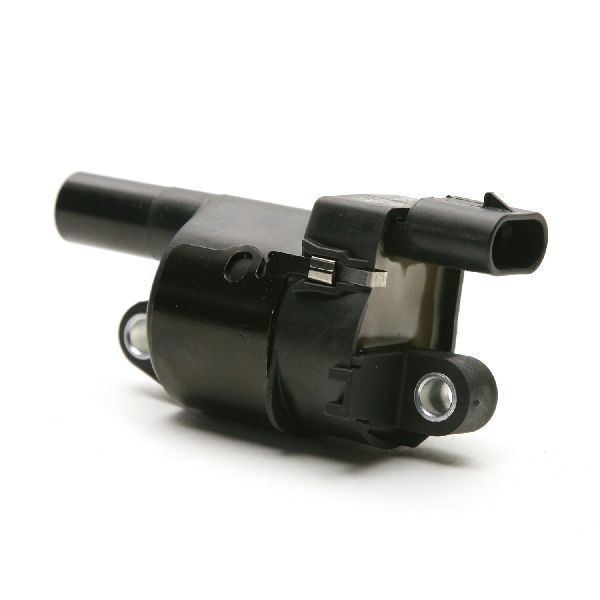
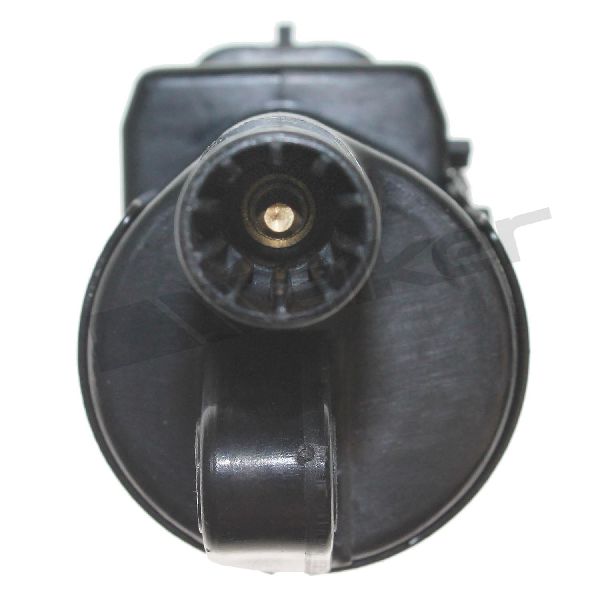
- Failed Ignition Coil 🔴 High Probability → Shop Ignition Coil
How to confirm: Swap the ignition coil from cylinder 4 with another cylinder (e.g., cylinder 2, the front passenger side cylinder). Clear the codes and drive. If the misfire code changes to P0302, the ignition coil is faulty.
Typical fix: Replace the failed ignition coil. It is often recommended to use a quality OEM brand like ACDelco.
Est. part cost: $50 - $120 - Worn or Fouled Spark Plug 🔴 High Probability → Shop Spark Plug
How to confirm: Remove the spark plug from cylinder 4 and inspect it for wear, carbon buildup, or oil fouling. You can also swap it with a plug from another cylinder to see if the misfire follows.
Typical fix: Replace the spark plug. It is best practice to replace all 8 spark plugs at the same time using the recommended Iridium plugs (e.g., ACDelco 41-110 or equivalent).
Est. part cost: $10 - $25 per plug - Collapsed or Stuck AFM/DFM Lifter 🔴 High Probability → Shop Engine Valve Lifter The AFM/DFM systems on the 5.3L and 6.2L engines are a known weak point. The lifters for the deactivating cylinders (including #4) are prone to failure due to issues like oil pressure, contamination, or inherent design flaws.
How to confirm: A persistent ticking or knocking noise is a strong indicator. Diagnosis requires removing the valve cover to inspect for a loose rocker arm or a bent pushrod, which are definitive signs. A compression test will often show low or zero compression on cylinder 4.
Typical fix: This is a major repair that involves replacing the failed lifter(s) and guide, head gasket, and often the camshaft if it is damaged. Per TSB #23-NA-043, GM has specific guidelines for replacing lifters on one or both banks depending on mileage. Many owners and independent shops recommend a full AFM/DFM delete, replacing all specialized lifters with standard ones and reprogramming the ECU to prevent future failures.
Est. part cost: $400 - $1500 for parts, with total repair costs often reaching $3,500-$6,000. - Faulty Fuel Injector ⚪ Low Probability → Shop Fuel Injector
How to confirm: Listen to the injector with a mechanic's stethoscope for a consistent clicking sound. An advanced scan tool can monitor fuel trims. Swapping the injector with another cylinder is also a valid, though more involved, diagnostic step.
Typical fix: Replace the faulty fuel injector.
Est. part cost: $70 - $180
Rare But Worth Checking
- Intake Manifold Gasket Leak: → Shop Engine Intake Manifold A vacuum leak near the intake runner for cylinder 4 can lean out the air/fuel mixture and cause a misfire. One owner reported this as the first repair attempt before a lifter failure was ultimately diagnosed.
- Loss of Compression: While often related to a failed lifter, low compression can also be caused by worn piston rings or a problem with the cylinder head valves, requiring a compression and leak-down test to diagnose.
- Damaged Camshaft Lobe: → Shop Engine Camshaft A failed lifter can quickly cause damage to the corresponding lobe on the camshaft, which will perpetuate a misfire even if the lifter itself is replaced. Inspection is required during lifter replacement.
Diagnosis Steps
- Check if the Check Engine Light is solid or flashing. A flashing light indicates a severe misfire that can damage the catalytic converter; driving should be stopped immediately.
- Use an OBD-II scanner to confirm P0304 and check for any other stored codes, such as P0300 or P3400.
- Locate cylinder #4 (second cylinder from the front on the passenger side).
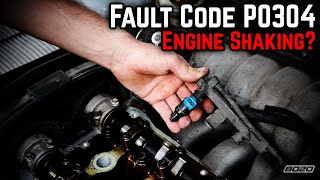
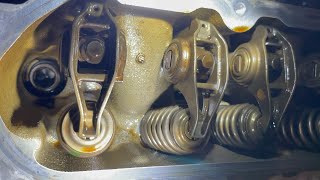
- Listen carefully for a distinct ticking or tapping sound from the passenger side of the engine, 🎬 See this video to help diagnose 5.3L AFM lifter noise. which strongly suggests a lifter problem.
- Swap the ignition coil from cylinder #4 with cylinder #2 (front passenger side). Clear the codes, run the engine, and see if the code changes to P0302. If it does, the coil is bad.
- If the code remains P0304, inspect the spark plug for wear, fouling, or damage. Replace if necessary.
- If ignition parts are good and a ticking noise is present, suspect a mechanical failure. Perform a compression test on cylinder #4. A low or zero reading is a strong indicator of a valvetrain issue.
- If compression is low, remove the passenger-side valve cover to visually inspect the valvetrain for cylinder #4. Look for a loose rocker arm and a bent pushrod, which are definitive signs of a collapsed or stuck lifter.
- If ignition and mechanical checks pass, investigate the fuel system by testing the fuel injector for cylinder #4. 🎬 Watch: This breakdown helps you find the real misfire cause fast.
Parts You'll Likely Need
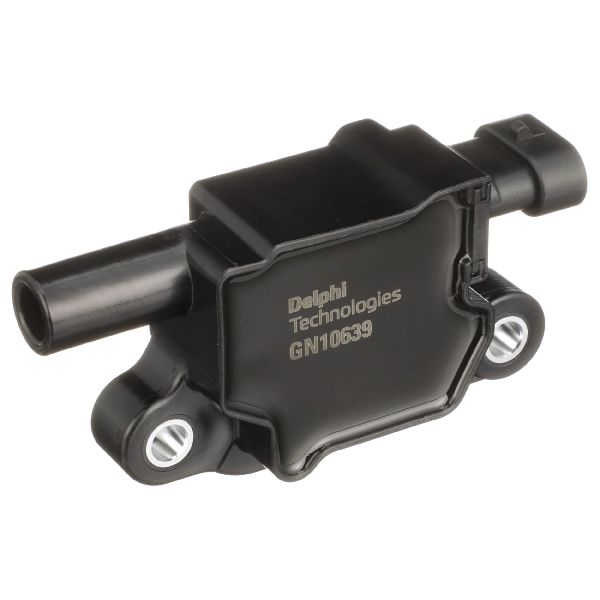
- Ignition Coil
(OEM #12674754 (ACDelco D521C))— This is one of the most common and easiest to replace causes of a single-cylinder misfire.
Trusted brands: ACDelco, Delphi
OEM price range: $70-$120
Aftermarket price range: $40-$80 - Spark Plug
(OEM #12622441 (ACDelco 41-110))— Spark plugs are a routine maintenance item and can become worn or fouled, leading to a misfire.
Trusted brands: ACDelco, NGK
OEM price range: $15-$25
Aftermarket price range: $8-$15 - Valve Lifter Kit (AFM/DFM)
(OEM #12699965 (Kit may vary))— This is the most common major mechanical failure on this platform causing a P0304. The repair typically involves replacing all lifters on the affected bank, plus the lifter guide (e.g., GM 12689035), gaskets, and bolts.
Trusted brands: GM Genuine, ACDelco, Michigan Motorsports
OEM price range: $300-$600
Aftermarket price range: $200-$450 - Camshaft
(OEM #12689035 (Non-AFM option))— Often required if a failed lifter has damaged the camshaft lobes. This part number is for a non-AFM camshaft often used in AFM-del
Related Codes That Often Appear With This One
- P0300 — If the condition causing the misfire is not isolated to one cylinder or if the single misfire is severe enough to affect engine stability, a P0300 (Random/Multiple Cylinder Misfire) code may appear as well.
- P050D — This code for 'Cold Start Rough Idle' can sometimes accompany misfire codes, especially if the root cause is mechanical, such as sticking lifters.
- P3400 — This code for 'Cylinder Deactivation System Bank 1' points directly to a problem with the AFM/DFM system and strongly suggests the P0304 misfire is caused by a failed lifter.
Technical Service Bulletins (TSBs) & Recalls
- Bulletin #23-NA-043: Addresses customer concerns of poor engine performance and misfire codes (P0300-P0308) due to internal lifter concerns, potentially requiring lifter and guide replacement on one or both banks.
- Bulletin #PIP4819A: Though for an older model, it establishes a history of misfire codes being caused by simple issues like loose spark plug wires, which should be checked before assuming a major mechanical failure.
Platform-Specific Known Issues
- A known high failure rate of Active/Dynamic Fuel Management (AFM/DFM) lifters is the most significant issue for these vehicles. TSB #23-NA-043 directly addresses engine misfires (P0300-P0308) caused by internal lifter concerns. The bulletin provides guidelines for replacement based on vehicle mileage, acknowledging the widespread nature of the problem.
- Owners frequently report repeat failures, even after dealer repairs where new AFM/DFM lifters are installed, leading many to opt for a permanent 'AFM Delete' kit.
Mechanic-Grade Diagnostic Values
- Fuel Injector Resistance — expected: 11-14 Ohms at room temperature.. Failure: A reading significantly lower or higher than the expected range. For example, a reading of 4.6 Ohms indicated a failed injector in one documented case.
Hidden / Shadow Codes Worth Checking
- Mode 6, Test ID $A2-$A7: Mode 6 data contains misfire counters for each cylinder for the current and last 10 driving cycles. A professional scan tool can access this data to see if cylinder 4 has a high number of recorded misfires, even if they aren't severe enough to keep the CEL flashing. This is crucial for diagnosing intermittent misfires. (see via A bidirectional scan tool with Mode 6 capability (e.g., GDS2, high-end Autel/Launch scanners).)
Scan Tool Commands That Help
- GDS2 / Tech2 or equivalent bidirectional scanner: Cylinder Power Balance / Fuel Injector Balance Test — This command allows the technician to disable each cylinder one by one and observe the RPM drop. If disabling cylinder 4 causes little to no change in RPM, it confirms that cylinder is not contributing power, helping to isolate the problem quickly.
- GDS2 / Tech2 or equivalent bidirectional scanner: Misfire History Data — To view historical misfire counts for each cylinder. High counts logged for cylinder 4, even if the misfire is not currently active, confirms an intermittent issue specific to that cylinder and helps justify further mechanical inspection.
Wiring & Ground Locations
- Engine Harness at ECM/TCM Bracket — On the driver's side of the engine bay, the main engine wiring harness may rub against the metal ECM/TCM bracket.. Vibration can cause the harness to chafe against the bracket, potentially shorting out an ignition coil or fuel injector circuit. While not specific to cylinder 4, it's a known issue on this platform that can cause random misfires and other electrical DTCs. A visual and tactile inspection of this area is warranted.
- Engine Harness at Upper Control Arm & Shock Tower — The engine harness on the driver's side can also make contact with the upper control arm and the shock tower bolts.. Similar to the ECM bracket, these are known chafe points that can damage wiring and lead to intermittent electrical faults, including misfires. GM has issued guidance to inspect and secure the harness in these locations.
Real Owner Repair Stories
- Tahoe Yukon Forum (GMC Yukon (year not specified, but consistent with 2018-2021 platform issues)) — Stumbling engine, flashing Check Engine Light (CEL), and Traction Control light on.
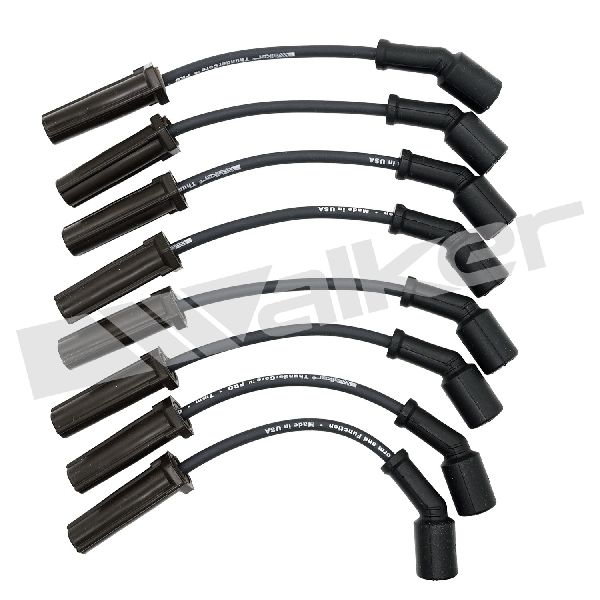
❌ Tried (didn't work) Replaced spark plug for cylinder 4, Replaced spark plug wire for cylinder 4, Swapped ignition coils to different cylinders
✅ What actually fixed it The user suspected a stuck lifter after the initial parts swaps failed and smoke started coming from the exhaust. The vehicle was towed to a dealer for what was presumed to be a lifter-related repair. - Tahoe Yukon Forum (GMC Yukon with 225k miles) — P0304 code, along with stabilitrak and traction control lights.
❌ Tried (didn't work) Installed new spark plugs, Installed new spark plug wires, Installed new ignition coils
✅ What actually fixed it After replacing all ignition components with no success, the owner concluded the next step was to inspect for a loose rocker arm, indicating a stuck DOD/AFM lifter, even without the typical ticking sound.
OEM Part Supersession History
Various older AFM lifters (e.g., 12571595, 12619820, 12639516)→Newer DFM-style lifter (Elgin HL-7025, GM equivalent)— GM released a revised lifter design for the newer Dynamic Fuel Management (DFM) engines.
Heads up: The new DFM lifter (HL-7025) is backward-compatible and can be used in older AFM engines. However, the original AFM-only lifter (Elgin HL-7011) will NOT work in newer DFM engines.
Model Year Variations Within This Range
- 2019-2021: Starting in 2019, GM began phasing in Dynamic Fuel Management (DFM) on the 5.3L and 6.2L engines, replacing Active Fuel Management (AFM). While AFM deactivates the same 4 cylinders every time, DFM can deactivate any number of cylinders in 17 different combinations. This introduces more complexity and different potential failure modes, though the root cause of P0304 often remains a failed deactivation lifter.
- 2021: Due to semiconductor shortages in 2021, GM produced a number of trucks and SUVs with the 5.3L V8 *without* AFM or DFM installed from the factory. These vehicles will have a specific RPO code (YK9) and were sold with a small MSRP credit. For these specific vehicles, a failed lifter is a much less likely cause for a P0304.
Helpful Videos
We Have This Part in Stock


The information in this article is provided for general reference and educational purposes only. Vehicle specifications, procedures, and part compatibility can vary by production date, trim level, and region. Always consult your vehicle's factory service manual and verify part numbers before purchasing or performing repairs. Safety-critical components such as airbags, seat belts, and braking systems should be installed by a qualified professional.
- Gmc YUKON:
- 🧭 Diagnostic Flowchart
- 🎬 Helpful Videos
- 🛍️ Shop This Part
- What's Unique About the 2018-2021 Gmc YUKON
- Symptoms You May Notice
- Most Likely Causes
- Rare But Worth Checking
- Diagnosis Steps
- Parts You'll Likely Need
- Related Codes That Often Appear With This One
- Technical Service Bulletins (TSBs) & Recalls
- Platform-Specific Known Issues
- Mechanic-Grade Diagnostic Values
- Hidden / Shadow Codes Worth Checking
- Scan Tool Commands That Help
- Wiring & Ground Locations
- Real Owner Repair Stories
- OEM Part Supersession History
- Model Year Variations Within This Range
- 🎟️ Get 5% Off