

P0304 on 2008-2015 Honda Accord: Cylinder 4 Misfire Causes and Fixes
On a 2008-2015 Honda Accord, P0304 most often means a bad ignition coil or a fouled spark plug in cylinder 4. For V6 models, this is frequently caused by an oil consumption issue related to the VCM system, covered by Honda's TSB A13-078. Expect a DIY cost of $20-$100 for plugs and coils.
- P0304 means a misfire on cylinder 4, the one closest to the driver's side on a 4-cylinder, and the front-most on the driver's side on a V6.
- The most common fixes are simple and DIY-friendly: replacing the spark plug or ignition coil for cylinder 4.
- If you have a V6 model (especially 2008-2012), this code is a strong indicator of the known oil consumption issue that fouls spark plugs, as detailed in Honda TSB A13-078.
- Do not ignore a flashing check engine light; it signals a severe misfire that can quickly damage your catalytic converter, a much more expensive repair.
- Always diagnose by swapping components (like ignition coils) before buying new parts to avoid unnecessary spending.
What's Unique About the 2008-2015 Honda ACCORD

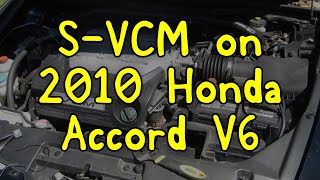
For the 2008-2012 V6 models in particular, this code is often a symptom of a well-documented engine issue. Honda's Variable Cylinder Management (VCM) system, designed to improve fuel economy by shutting down cylinders (including cylinder 4) during light-load conditions, could cause the piston rings on those cylinders to align, leading to increased oil consumption. This oil fouls the spark plugs, causing misfires. Honda acknowledged this with Technical Service Bulletin (TSB) A13-078 and a class-action lawsuit settlement, which extended the powertrain warranty for this specific issue.
Diagnostic Flowchart

Tap your situation to follow the diagnostic path that matches what you're seeing on this vehicle.
Generation note: This range covers the end of the 8th generation (2008-2012) and the start of the 9th generation (2013-2015) Accord. The V6 engine oil consumption issue leading to fouled plugs and misfires is most famously associated with the 8th generation V6 models with automatic transmissions, as detailed in TSB A13-078. However, the basic diagnostic principles for a misfire apply to all engines in this range.
Symptoms You May Notice

- Engine shaking or rough idling
- Flashing or solid Check Engine Light
- Hesitation or stumbling during acceleration
- Noticeable loss of engine power
- Reduced fuel economy
- Smell of unburned gasoline from the exhaust
- Vehicle enters 'limp mode' with severely limited acceleration
- Replacing the catalytic converter or oxygen sensors without first diagnosing the root cause of the misfire. The misfire is what damages these components; they are rarely the cause of a single-cylinder misfire code.
Most Likely Causes

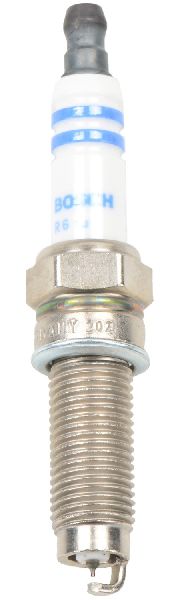
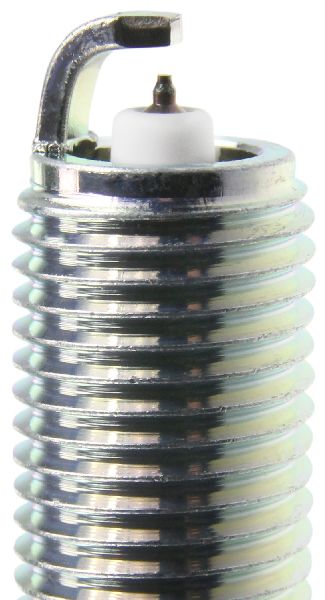
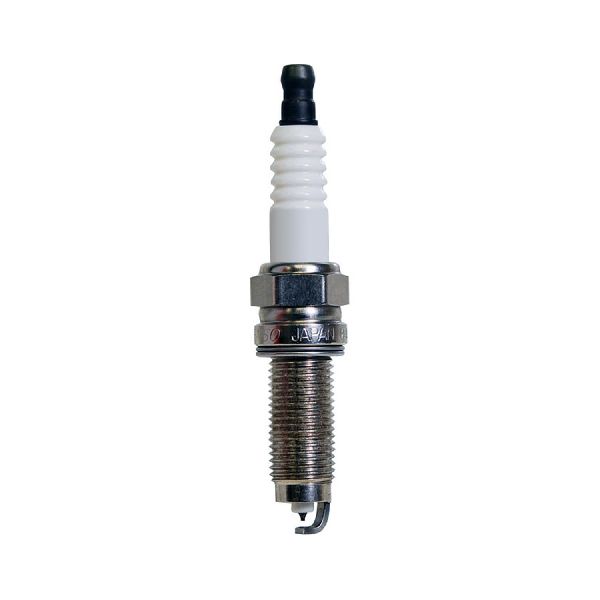
- Fouled or Worn Spark Plug 🔴 High Probability → Shop Spark Plug On V6 models, oil can foul the spark plugs due to the VCM/piston ring issue described in TSB A13-078. An owner of a 2008 Accord V6 reported this exact scenario, with oil-fouled plugs causing a recurring P0304. On all models, spark plugs are a normal wear item that can cause a misfire when the electrode is worn or the insulator is cracked.
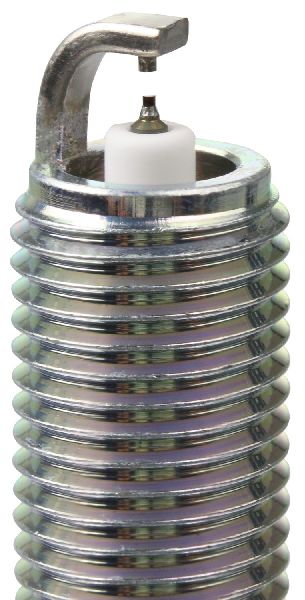
How to confirm: Visually inspect the spark plug from cylinder 4. Look for black, oily residue (oil fouling), white deposits (ash/coolant fouling), a worn-down electrode, or a cracked ceramic insulator.
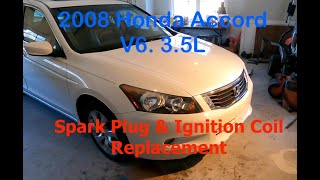
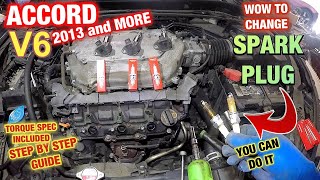
Typical fix: Replace the spark plug. 🎬 Watch: Step-by-step spark plug replacement for Honda V6 engines. If oil-fouled on a V6, all plugs on the affected bank (cylinders 1-4) should be replaced, and the underlying oil consumption issue may need to be addressed per TSB A13-078, which could involve new piston rings.
Est. part cost: $15-$30 per plug - Failed Ignition Coil 🔴 High Probability → Shop Ignition Coil Ignition coils are a common failure item on most modern vehicles due to heat and vibration. Age and mileage increase the likelihood of failure.
How to confirm: Swap the ignition coil from cylinder 4 with an adjacent cylinder (e.g., cylinder 3). Clear the codes and drive the car. If the code changes to P0303, the ignition coil is faulty. This is a very common and effective diagnostic step mentioned by many owners.
Typical fix: Replace the failed ignition coil. 🎬 See this walkthrough for replacing your Accord's ignition coils. It is often recommended to replace the corresponding spark plug at the same time, as a bad plug can stress a new coil and vice-versa.
Est. part cost: $50-$100 - Faulty Fuel Injector 🟡 Medium Probability → Shop Fuel Injector On direct-injected (DI) 2.4L engines (2013+), carbon buildup on injectors can be an issue. For all models, injectors can become clogged or fail electrically over time.
How to confirm: After ruling out the spark plug and coil, you can swap the fuel injector from cylinder 4 with another cylinder. If the misfire code follows the injector, the injector is the problem. This is a more involved diagnostic step. A professional can also perform an injector balance test.
Typical fix: Replace the faulty fuel injector. Sometimes, professional ultrasonic cleaning can restore function, but replacement is more common.
Est. part cost: $70-$150
Rare But Worth Checking
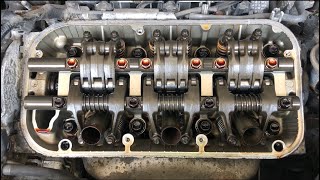
- Improper Valve Clearance: Honda engines require periodic valve adjustments. If the exhaust valves, in particular, become too 'tight' (not enough clearance), they may not close fully, leading to a loss of compression and a misfire, especially when the engine is cold. A technician on a forum noted this is a common Honda issue. A 2014 Accord owner had this exact problem where tight valves caused a persistent P0304 after plugs and coils were ruled out.
- Internal Engine Mechanical Problem: This is the worst-case scenario. Issues like low compression from a bad valve, worn piston rings, or a leaking head gasket can cause a persistent misfire that isn't resolved by replacing ignition or fuel components. A compression test and/or a cylinder leak-down test is needed to diagnose this.
- Vacuum Leak: A vacuum leak near cylinder 4's intake runner could lean out the air/fuel mixture enough to cause a misfire, though this would often be accompanied by other codes like P0171 or P0174.
Diagnosis Steps
- Read the code with an OBD-II scanner and note any other codes present. Note freeze frame data if available.
- Locate cylinder 4. On the 2.4L 4-cylinder, cylinders are numbered 1-2-3-4 from the pulley (passenger) side to the transmission (driver's) side. Cylinder 4 is on the far left when facing the engine. On the 3.5L V6, the front bank (closest to the radiator) contains cylinders 4-5-6 from passenger to driver side. Cylinder 4 is the front cylinder on the passenger side.
- Swap the ignition coil from cylinder 4 with another cylinder (e.g., cylinder 3 on the 4-cyl, or cylinder 5 on the V6).
- Clear the codes, drive the vehicle, and re-scan. If the code has moved to the other cylinder (e.g., P0303 or P0305), the ignition coil is bad.
- If the code remains P0304, remove the ignition coil and inspect the spark plug from cylinder 4.
- Examine the spark plug for signs of wear, damage, or fouling (especially oil fouling on V6 models). If it looks bad, replace it. Consider replacing all plugs if they are near their service interval.
- If the coil and plug appear good, the next likely culprit is the fuel injector. This is a more complex part to swap for diagnosis.
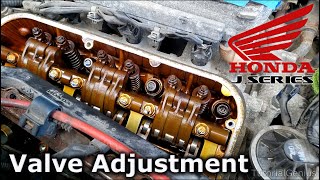
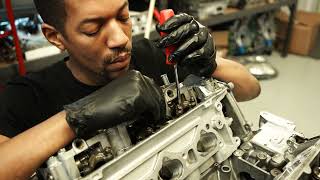
- If ignition and fuel components are ruled out, check valve clearances. 🎬 Watch: How to perform a valve clearance adjustment on Hondas. This is a known maintenance item on Hondas and tight valves can cause misfires.
- If all else fails, perform a compression test and/or cylinder leak-down test on cylinder 4 to check for mechanical engine problems like bad rings or valves.
Parts You'll Likely Need
- Ignition Coil
(OEM #3.5L V6: 30520-R70-A01 (Hitachi IGC0053). 2.4L: 30520-R40-007 (Hitachi IGC0072))— Ignition coils are a common failure point that directly cause misfires. It's one of the top two most likely causes.
Trusted brands: Hitachi (OEM), Denso, NGK
OEM price range: $90-$120
Aftermarket price range: $50-$100 - Spark Plug
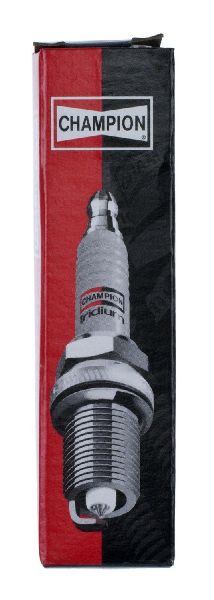
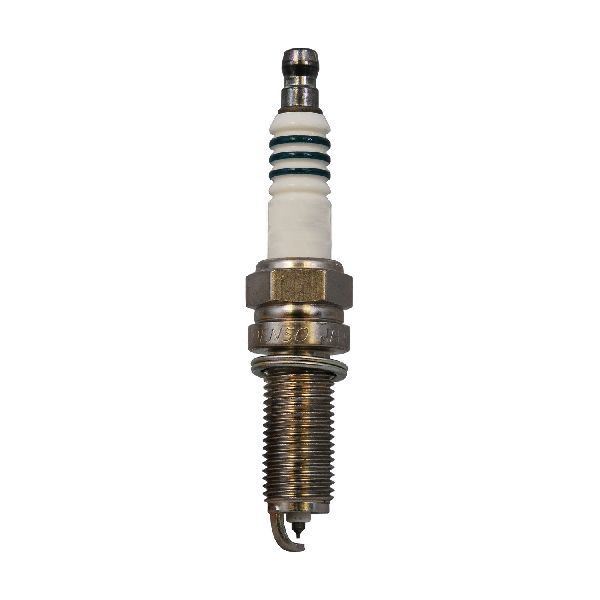
(OEM #3.5L V6: NGK ILZKR7B11 or Denso SXU22HCR11S. 2.4L (2008-12): NGK IZFR6K11 or Denso SKJ20DR-M11. 2.4L (2013-15): NGK DILKAR7G11GS.)— Spark plugs are a routine maintenance item and can become fouled, especially on V6 models with the known oil consumption issue.
Trusted brands: NGK (OEM), Denso (OEM)
OEM price range: $20-$30
Aftermarket price range: $15-$25
Related Codes That Often Appear With This One
- P0300 — If the misfire becomes more widespread or intermittent across multiple cylinders, a P0300 (Random Misfire) code may appear alongside P0304.
- P0301, P0302, P0303 — On V6 models with the VCM issue, it's common to see misfire codes for multiple cylinders on the front bank (1-4) as the spark plugs become fouled by oil.
Technical Service Bulletins (TSBs) & Recalls
- A13-078: Warranty Extension: MIL Comes On with DTCs P0301 thru P0304. This TSB addresses spark plug fouling on V6 models due to a piston ring issue.
- 12-087: Sticking Rings Resulting in Unusually High Engine Oil Consumption. This TSB addresses a similar oil consumption issue on 2008-2011 4-cylinder (L4) models, though it is not tied to VCM and is caused by different operating conditions.
Platform-Specific Known Issues
- On 2008-2012 V6 models with automatic transmissions, Honda issued TSB A13-078 due to a class-action lawsuit. The issue involves piston rings on VCM-active cylinders (1-4) rotating and aligning, which causes oil to enter the combustion chamber and foul the spark plugs, triggering misfire codes. The official fix is a two-step process: first, a PCM software update and spark plug replacement. If the issue returns, the second step involves cleaning pistons and replacing the piston rings on the affected cylinders.
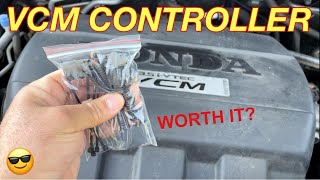
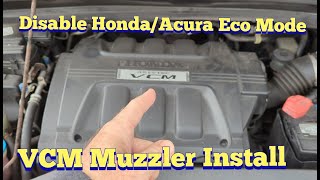
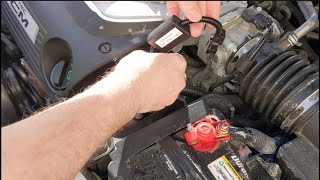
- Many V6 owners proactively disable the VCM system to prevent this issue from occurring. This is commonly done using an aftermarket wiring harness device, often called a 'VCM Muzzler' or 'VCMTuner,' which plugs into the engine coolant temperature sensor circuit to trick the computer into thinking the engine is not yet warm enough to activate VCM.
Mechanic-Grade Diagnostic Values
- Fuel Pressure (Port Injected Models) — expected: 38-45 PSI (2.6-3.1 bar) with vacuum hose to regulator disconnected.. Failure: Significantly lower pressure indicates a weak fuel pump or clogged filter. Significantly higher pressure could indicate a faulty regulator.
- Fuel Injector Resistance (Port Injected Models) — expected: Approximately 10-13 Ohms when cool. Note: specifications vary by year and specific injector model.. Failure: A reading of 0 ohms (short circuit) or infinite/OL (open circuit) indicates a failed injector. A reading significantly different from the other injectors also points to a problem.
- Ignition Coil Primary Resistance — expected: Typically 0.4 - 2.0 Ohms. (e.g., 0.6-0.8 Ohms on some models).. Failure: A reading outside the specification, or one that is wildly different from other coils on the engine, suggests a faulty coil. This test is less definitive on modern coils than swapping.
- Live Data: Total Fuel Trim (Short Term + Long Term) — expected: Close to 0%, typically within +/- 10%.. Failure: A high negative trim (e.g., -15% or more) indicates the PCM is removing fuel. On a single-cylinder misfire, this could point to a leaking fuel injector on that cylinder.
Hidden / Shadow Codes Worth Checking
- Mode $06, TID/CID for Misfire: The PCM continuously counts misfire events for each cylinder even if they don't cross the threshold to set a P030x code. Accessing Mode $06 data allows a technician to see the raw misfire count for cylinder 4 and compare it to others. A significantly higher count on cylinder 4 confirms it's the problem cylinder. (see via A professional-grade OBD-II scan tool with Mode $06 capability. The specific Test ID (TID) and Component ID (CID) for cylinder 4 misfire data must be selected.)
Scan Tool Commands That Help
- Honda Diagnostic System (HDS) or equivalent: DATA LIST -> CYL4 MISFIRE — This function allows for real-time monitoring of the misfire counter specifically for cylinder 4, which is crucial for confirming the fault during a test drive or while trying to replicate symptoms.
- Professional Scan Tool: Power Balance Test / Injector Kill Test — After confirming the misfire is on cylinder 4, this bidirectional test allows the user to deactivate one cylinder at a time. When cylinder 4 is deactivated, there should be little to no change in engine RPM, confirming it was not contributing properly. This helps isolate the issue to a specific cylinder's components.
Wiring & Ground Locations
- G101 — Typically located in the engine bay on the driver's side, often on the cylinder head or near the thermostat housing. It serves as a primary ground for the PCM and various engine sensors.. A poor connection at G101 can cause erratic behavior from the PCM, fuel injectors, and ignition system, potentially leading to misfire codes.
- Engine Block / Transmission Case Grounds — Multiple ground straps connecting the engine/transmission assembly to the vehicle's chassis.. The ignition system relies on a solid engine ground to complete the spark circuit. A loose or corroded ground strap can cause a weak spark, leading to misfires, especially under high load.
- S3 (Thermal Joint) — Described in a 2010 Accord wiring diagram as being at the 'rear of engine'.. This ground point is shared by components like the VTC oil control solenoid. While not directly tied to ignition, poor grounds in the engine harness can introduce electrical noise and affect multiple systems managed by the PCM.
Real Owner Repair Stories
- Honda Accord Type R Owners Club Forum (Honda Accord Type R (European model, but engine principles apply)) — Persistent cold start misfire with check engine light (codes for cylinder 1 and 3). Engine idled smoothly once warm.
❌ Tried (didn't work) Sniffer test for head gasket was negative, no coolant loss.
✅ What actually fixed it Owner performed a valve clearance adjustment and found two intake valves were extremely tight with 'zero lash'. After adjusting the valves to the correct specification, the cold start misfire was completely resolved. - YouTube Video - 'How To Fix p0304 Honda Accord' (2017 Honda Accord (9th Gen, Direct Injection)) — P0304 misfire code, especially under load around 35-40 mph.
❌ Tried (didn't work) Swapping the ignition coil from cylinder 4 to cylinder 1; swapping the spark plug. The misfire remained on cylinder 4.
✅ What actually fixed it The fuel injector for cylinder 4 was removed and professionally cleaned. After reinstalling the cleaned injector, the misfire was eliminated.
When the Usual Fixes Don't Work
- While spark plugs and ignition coils are the most common culprits, a significant number of owners, especially those with persistent cold-start misfires, have found the root cause to be tight valve clearances. A user on a Honda forum chased a misfire code for months, replacing ignition components with no success, until a valve adjustment revealed two intake valves with no clearance. Adjusting them permanently fixed the issue. This highlights the importance of not overlooking this crucial Honda maintenance item.
Model Year Variations Within This Range
- 2008-2012 (8th Generation): The 2.4L 4-cylinder is the K24Z series (K24Z2/K24Z3), which uses port fuel injection. The 3.5L V6 is the J35Z series, which is notorious for the VCM-related oil consumption issue that fouls spark plugs and causes misfires, particularly on cylinders 1-4. The V6 paired with a manual transmission (J35Z3) did not have VCM.
- 2013-2015 (9th Generation): The 2.4L 4-cylinder is the K24W 'Earth Dreams' engine, which features direct fuel injection. This makes it more susceptible to carbon buildup on intake valves and injectors as a cause for misfires. The 3.5L V6 is the J35Y series, which also features direct injection and a different implementation of VCM.
Helpful Videos
We Have This Part in Stock

The information in this article is provided for general reference and educational purposes only. Vehicle specifications, procedures, and part compatibility can vary by production date, trim level, and region. Always consult your vehicle's factory service manual and verify part numbers before purchasing or performing repairs. Safety-critical components such as airbags, seat belts, and braking systems should be installed by a qualified professional.
- Honda ACCORD:
- 🧭 Diagnostic Flowchart
- 🎬 Helpful Videos
- 🛍️ Shop This Part
- What's Unique About the 2008-2015 Honda ACCORD
- Symptoms You May Notice
- Most Likely Causes
- Rare But Worth Checking
- Diagnosis Steps
- Parts You'll Likely Need
- Related Codes That Often Appear With This One
- Technical Service Bulletins (TSBs) & Recalls
- Platform-Specific Known Issues
- Mechanic-Grade Diagnostic Values
- Hidden / Shadow Codes Worth Checking
- Scan Tool Commands That Help
- Wiring & Ground Locations
- Real Owner Repair Stories
- When the Usual Fixes Don't Work
- Model Year Variations Within This Range
- 🎟️ Get 5% Off