

P0304 on 2017-2018 Honda CR-V 1.5T: Cylinder 4 Misfire Causes and Fixes
P0304 on a 2017-2018 CR-V with the 1.5L Turbo engine is most often caused by a known issue with fuel diluting the engine oil, particularly in cold climates with short-trip driving patterns. The primary fix usually requires a dealer-installed software update and may include replacing the fuel injectors. Honda has issued multiple warranty extensions for these components, so it is critical to check with a dealer for VIN-specific coverage before paying for repairs.
- P0304 on this CR-V is rarely a simple spark plug issue; it's a symptom of a well-documented fuel dilution problem with the 1.5L Turbo engine.
- Your first step should be to contact a Honda dealer with your VIN to check for open warranty extensions (like 19-032) that may cover the repair for free.
- The primary fix is a software update to the engine and A/C control modules, which changes how the engine warms up.
- If the software update doesn't resolve the issue, the most likely failed parts are the fuel injectors, followed by the spark plugs.
- Regularly check your oil for a high level or gasoline smell, especially if you take frequent short trips in a cold climate.
What's Unique About the 2017-2018 Honda CR-V

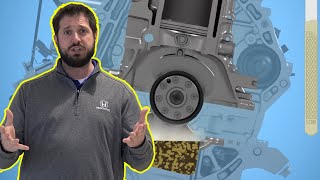
The 2017-2018 Honda CR-V with the 1.5L Turbo (L15B7) engine is known for a specific issue causing misfires: fuel dilution of the engine oil. This problem is especially common in colder climates or with frequent short trips, where the direct-injection engine doesn't reach a high enough operating temperature to vaporize unburned gasoline. This unburned fuel seeps past the piston rings and mixes with the oil, thinning its viscosity and reducing its ability to lubricate. 🎬 Watch: A detailed explanation of the Honda oil dilution issue. This can lead to fouled spark plugs, faulty or clogged fuel injectors, and in some cases, premature wear on internal engine components like camshafts. Honda has acknowledged this by issuing Technical Service Bulletins (TSBs) and warranty extensions to address the problem with software updates and component replacements.
Diagnostic Flowchart

Tap your situation to follow the diagnostic path that matches what you're seeing on this vehicle.
Symptoms You May Notice

- Flashing or steady Check Engine Light
- Rough or shaking idle
- Hesitation or stumbling during acceleration
- Noticeable loss of engine power.
- Fuel smell from the engine oil on the dipstick.
- Unusually high oil level on the dipstick.
- Whirling noise from the engine compartment.
- Smell of unburned fuel from the exhaust.
- Replacing only the spark plug or ignition coil without addressing the underlying fuel dilution issue. The new parts will likely foul and the misfire will return.
- Assuming the problem is a standard ignition or spark issue without first checking for the widely known TSBs and warranty extensions related to fuel dilution.
Most Likely Causes

- Engine Control Unit (ECU) Software Needs Update 🔴 High Probability The original ECU software settings contribute to the fuel dilution problem, especially in cold weather. Honda developed updates to change engine and transmission control logic to help the engine warm up faster, reducing the chance of fuel getting into the oil. The update also involves the A/C control unit, possibly to increase engine load to aid warmup.
How to confirm: A Honda dealership can check your vehicle's VIN to see if it's eligible for the software update covered under warranty extension 19-032 or TSB A19-037. This is the first and most important check to perform.
Typical fix: A Honda dealer performs a software update to the PGM-FI (Programmed Fuel Injection) module and the A/C control unit. This is often done in conjunction with an oil change.
Est. part cost: $0 (if covered by warranty extension) - Faulty or Clogged Fuel Injector 🔴 High Probability → Shop Fuel Injector The fuel dilution issue can cause injectors to fail or clog. This is a very common failure point for P0304 on this engine, as confirmed by numerous owner complaints. Honda has issued a specific warranty extension for fuel injectors (A21-010) on some models for up to 10 years/150,000 miles due to this problem.
How to confirm: A technician can perform a fuel injector balance test. A DIY method is to swap the cylinder 4 injector with another cylinder's injector and see if the misfire code follows (e.g., changes to P0301, P0302, etc.). A negative fuel trim value (e.g., -17.9%) on a scan tool can also indicate a rich condition caused by a leaking injector. 🎬 See how to diagnose P0172 and P0304 codes on this engine.
Typical fix: Replace the faulty fuel injector. Honda recommends replacing all four injectors as a set, along with the fuel joint pipe. It is highly recommended to use OEM injectors. 🎬 Watch: Step-by-step tutorial on replacing clogged fuel injectors.
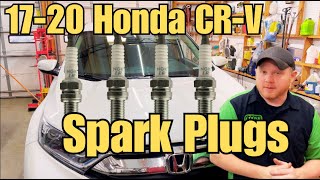
Est. part cost: $50-$150 per aftermarket injector, but OEM sets can be significantly more expensive. - Fouled or Worn Spark Plugs 🟡 Medium Probability → Shop Spark Plug The rich fuel condition and oil dilution can cause spark plugs to foul with carbon or fuel, preventing a strong spark. The warranty extension for the oil dilution issue (19-032) also covers spark plugs. Inspection may reveal black, sooty deposits or wetness from fuel.
How to confirm: Remove the spark plug from cylinder 4 and inspect it. Look for a black, sooty appearance, wetness from fuel, or excessive wear on the electrode. Compare it to a plug from a non-misfiring cylinder.
Typical fix: Replace the spark plug. It is best practice to replace all four spark plugs at the same time.
Est. part cost: $10-$25 per plug - Faulty Ignition Coil ⚪ Low Probability → Shop Ignition Coil While less common than injector or plug issues for this specific problem, an ignition coil can fail like on any vehicle. It is often misdiagnosed as the primary culprit when the root cause is fuel-related.
How to confirm: Swap the ignition coil from cylinder 4 with another cylinder (e.g., cylinder 3). Clear the codes and drive the vehicle. If the code changes to P0303, the ignition coil is the culprit. This is a common and effective diagnostic step.
Typical fix: Replace the faulty ignition coil.
Est. part cost: $40-$100
Rare But Worth Checking
- Internal Engine Mechanical Failure: In severe cases, prolonged oil dilution can lead to increased engine wear, including damage to camshafts or rocker arms. TSB A19-037 and the associated warranty extension cover these components. A compression test or leak-down test can help diagnose this, but it's a rare outcome.
- Leaking Head Gasket: While not as common as fuel system issues, some 1.5T engines have experienced head gasket failures, which can allow coolant to enter the cylinder and cause a misfire. This is a more serious and expensive repair.
Diagnosis Steps
- Check your vehicle's VIN with a Honda dealer to see if warranty extension 19-032, A19-037, or A21-010 (for fuel injectors) is open for your car. This should be your absolute first step, as the fix may be covered free of charge.
- Scan for all stored OBD-II codes. Note if P0172 or other misfire codes (P0300, P0301, etc.) are present, as this strongly points to the common fuel dilution issue.
- Check the engine oil level and smell the dipstick for a strong gasoline odor. An oil level that is over the full mark is a strong indicator of fuel dilution.
- Listen for a 'whirling noise' from the engine compartment, as this is a specific symptom mentioned in TSB A19-037.
- Inspect the spark plug from cylinder 4. A black, sooty, or fuel-soaked plug points towards a rich condition or oil fouling.
- Swap the ignition coil from cylinder 4 to another cylinder (e.g., cylinder 1). Clear the codes. If the misfire moves to P0301, the coil is bad. If it stays on P0304, the coil is good.
- If the misfire remains on cylinder 4, swap the fuel injector from cylinder 4 to another cylinder. Clear codes. If the misfire moves, the injector is the confirmed problem. This is more labor-intensive but definitive.
- If the software update has not been performed, this is the most critical step. The issue will likely recur without it.
- If all else fails, perform a cylinder compression and leak-down test to rule out mechanical engine damage like worn piston rings or a bad head gasket.
Parts You'll Likely Need
- Fuel Injector
(OEM #16010-5PA-305 (Set of 4), 16450-5PA-A01 (Individual - verify application))— Often the primary component failure due to the fuel dilution issue. Honda has warranty extensions covering these parts for this reason. Honda Master Techs recommend replacing as a set.
Trusted brands: Honda OE
OEM price range: $120-$180 (per injector), $500-$700 (set)
Aftermarket price range: $50-$100 (per injector) - Spark Plug
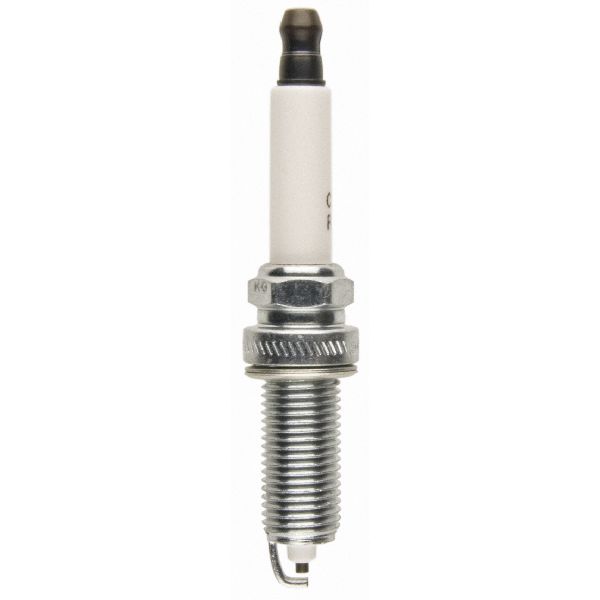
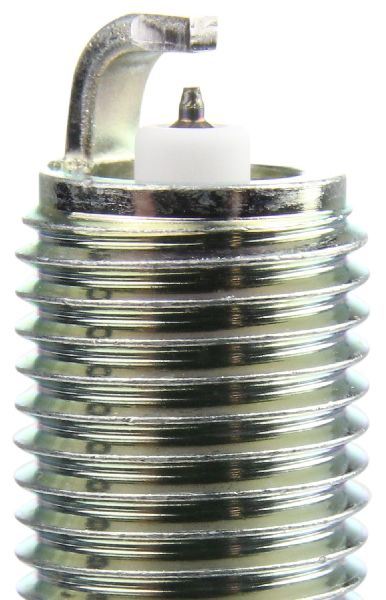
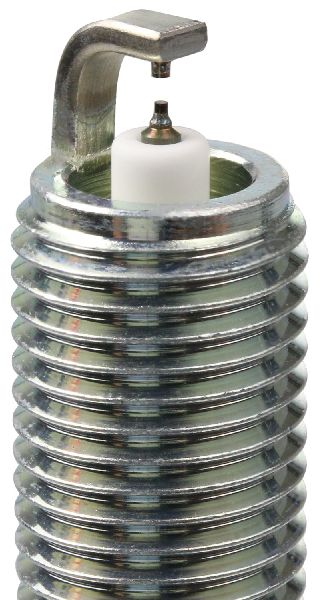
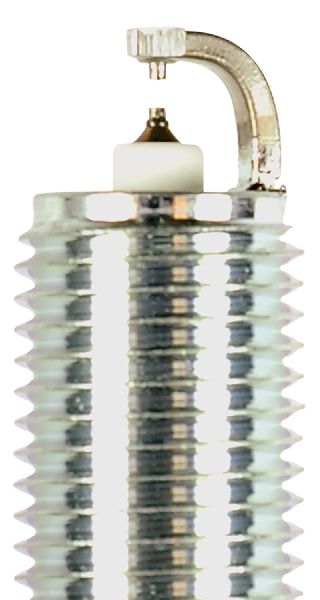
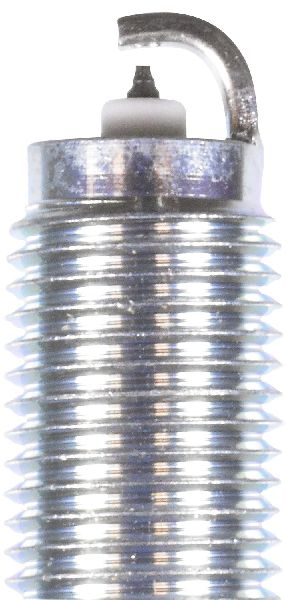
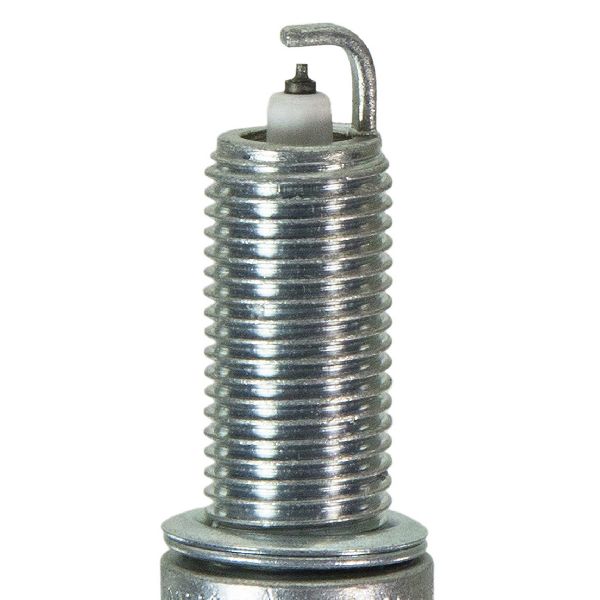
(OEM #NGK DILKAR8P8SY)— Frequently fouls due to the rich condition caused by oil dilution. A common replacement item when addressing this misfire. Covered under warranty extension 19-032.
Trusted brands: NGK, Denso
OEM price range: $20-$30
Aftermarket price range: $10-$20 - Ignition Coil
(OEM #30520-59B-013)— A standard potential cause for any misfire, though less specific to the CR-V's platform issue than injectors or plugs. Easy to diagnose via swapping.
Trusted brands: Denso, NGK, Honda OE
Related Codes That Often Appear With This One
- P0172 — This code means "Fuel System Too Rich" and is frequently stored alongside misfire codes on this vehicle, as it points to the root cause of excess fuel entering the system. It is explicitly mentioned in TSBs A19-037 and 19-032.
- P0300 — This code for "Random/Multiple Cylinder Misfire" may appear if the fuel dilution issue is affecting more than just cylinder 4. It is also listed in the relevant TSBs.
- P0301, P0302, P0303 — These are misfire codes for cylinders 1, 2, and 3, respectively. They can accompany P0304 if the underlying issue is severe enough to affect multiple cylinders, as seen in owner complaints.
Technical Service Bulletins (TSBs) & Recalls

- A19-037: Addresses misfire codes (P0300-P0304) and P0172 (Fuel System Too Rich) or a whirling noise from the engine. Outlines inspection and potential replacement of spark plugs, camshafts, and rocker arms under an extended warranty.
- 19-032: The primary TSB for the software update to the ECU and A/C control unit to combat fuel dilution. Also details the 6-year/unlimited mile warranty extension.
- A21-010: A warranty extension covering fuel injectors for 10 years or 150,000 miles if the vehicle presents with misfire codes (P030x) among others.
- A18-147: An earlier TSB that was superseded by 19-032. It addressed the same set of issues.
Platform-Specific Known Issues
- Fuel Dilution of Engine Oil: The most significant issue for this vehicle and engine. Short drives in cold weather prevent the engine from reaching optimal temperature, allowing unburned direct-injected fuel to mix with the oil. This degrades the oil's lubricating properties and causes misfires. Honda addressed this with TSBs and a warranty extension (19-032) that includes software updates for the engine and A/C control unit, and sometimes an oil change.
- Warranty Extensions: Honda has issued multiple critical warranty extensions. It is crucial to check with a dealer for eligibility. * 19-032 / A19-037: Extends warranty to 6 years/unlimited miles for camshafts, rocker arms, and spark plugs related to the oil dilution issue. Also covers the software update. * A21-010: Extends the warranty for fuel injectors to 10 years/150,000 miles for certain vehicles experiencing misfires or other related DTCs.
Mechanic-Grade Diagnostic Values
- Ignition Coil Primary Winding Resistance — expected: 0.5 to 1.5 ohms. Failure: A reading outside this range indicates a faulty coil.
- Ignition Coil Secondary Winding Resistance — expected: 5.0k to 15.0k ohms (for canister style coils). Failure: A reading outside this range suggests the coil's secondary winding is compromised.
- Short-Term Fuel Trim (STFT) at Idle — expected: Hovering between -10% and +10%. Failure: A consistently high negative number (e.g., -25%) indicates the PCM is constantly removing fuel, which can be caused by a leaking injector.
- Cylinder Compression — expected: 120 to 150 PSI, with minimal variation between cylinders.. Failure: Significantly lower pressure in cylinder 4 points to a mechanical issue like worn rings or a bad valve.
Hidden / Shadow Codes Worth Checking
- Mode $06 Misfire Data: This is not a 'code' but a diagnostic mode accessible with many OBD-II scanners. It provides raw data from the ECU's self-tests, including specific misfire counts for each cylinder before they are high enough to trigger a P030x trouble code. (see via Use an OBD-II scan tool that supports Mode $06 test results. The data will be listed under specific Test IDs (TID) and Component IDs (CID) which correspond to misfire counters for each cylinder.)
Scan Tool Commands That Help
- Honda HDS (Honda Diagnostic System): Injector Test — To individually disable fuel injectors one by one to see if there is a change in engine RPM. If disabling the cylinder 4 injector causes no change in idle, it confirms that cylinder was not contributing, pointing to a bad injector or ignition issue on that cylinder.
- Honda HDS (Honda Diagnostic System): Reset PCM — After replacing components like fuel injectors or performing a software update, a PCM reset is required to clear learned fuel trim values and force the system to relearn based on the new components.
- Honda HDS (Honda Diagnostic System): PCM Idle Learn Procedure — After a PCM reset or throttle body service, this procedure must be performed to establish a stable idle. TSB A19-037 specifically calls for this after its corrective actions are completed.
Wiring & Ground Locations
- G503 — Located on the transmission housing, often under the air intake box assembly.. This is a primary ground point for the powertrain system. Corrosion or a loose connection at this point can cause erratic behavior from sensors and actuators, including ignition coils and fuel injectors, potentially leading to intermittent misfires. Owners have noted these grounds can become rusty or corroded.
- Cylinder 4 Ignition Coil Connector — The electrical connector on the ignition coil for the fourth cylinder (typically the right-most cylinder when facing the engine).. The wiring to this connector can be checked for voltage and ground signals from the PCM. A wiring diagram is needed to identify the specific pin for the trigger signal, power, and ground to diagnose wiring harness issues.
- Cylinder 4 Fuel Injector Connector — The electrical connector on the fuel injector for the fourth cylinder, located on the fuel rail, often under the intake manifold.. Similar to the coil, this connector's wiring can be tested for the pulse signal from the PCM. Damage to these wires, such as from rodents, could cause the injector to fail to fire, leading to a misfire.
Real Owner Repair Stories
- Reddit user in r/MechanicAdvice (2017 Honda CR-V, 128k km) — Check engine light with code P0304.
❌ Tried (didn't work) Replaced spark plugs., Replaced ignition coil for cylinder 4., Used fuel injector cleaner.
✅ What actually fixed it The final advice from a self-identified Honda Master Tech was that the fuel injectors were the most likely cause, and that they should be replaced as a set along with the fuel joint pipe using OEM parts, as this is a common failure on direct injection systems. - Reddit user in r/AskMechanics (2017 Honda CR-V EX-L, 1.5L Turbo, 56k miles) — P0304 and P0172 codes, especially in cold weather with short trips. Oil level was 1 inch over full mark and smelled of gas.
❌ Tried (didn't work) Using Techron fuel system cleaner., Clearing codes (they returned).
✅ What actually fixed it The dealer, after initial missteps, performed the software update and replaced the fuel injectors under warranty, which is the standard procedure for the known fuel dilution issue that causes these codes. The owner's detailed account confirms the link between the codes, symptoms (oil dilution), and the specific driving conditions (cold weather, short trips).
OEM Part Supersession History
16010-5PA-305→06160-5PA-305— This part is a kit that includes all four fuel injectors and the fuel feed pipe. The original part number was discontinued and replaced by the new kit number. This change likely reflects Honda's recommendation to replace the injectors as a complete set.
Heads up: The new part number 06160-5PA-305 is the correct and current replacement for the original set. Attempting to source the old part number will likely result in order cancellations or finding it discontinued.
Model Year Variations Within This Range
- 2017-2019: The 1.5L Turbo engine was optional on the 2017-2019 CR-V (standard on EX and above trims), while the base LX trim used a 2.4L naturally aspirated engine which does not share the same fuel dilution issues. For the 2020 model year, the 1.5L Turbo became the standard engine across all non-hybrid trims.
- 2017-2018: The 2017-2018 models with the 1.5T engine produce 190 hp and 179 lb-ft of torque. While the engine carried over, the primary focus of the fuel dilution TSBs and warranty extensions are on these specific model years, suggesting later software or minor hardware changes may have mitigated the issue.
Helpful Videos


We Have This Part in Stock

The information in this article is provided for general reference and educational purposes only. Vehicle specifications, procedures, and part compatibility can vary by production date, trim level, and region. Always consult your vehicle's factory service manual and verify part numbers before purchasing or performing repairs. Safety-critical components such as airbags, seat belts, and braking systems should be installed by a qualified professional.
- Honda CR-V:
- 🧭 Diagnostic Flowchart
- 🎬 Helpful Videos
- 🛍️ Shop This Part
- What's Unique About the 2017-2018 Honda CR-V
- Symptoms You May Notice
- Most Likely Causes
- Rare But Worth Checking
- Diagnosis Steps
- Parts You'll Likely Need
- Related Codes That Often Appear With This One
- Technical Service Bulletins (TSBs) & Recalls
- Platform-Specific Known Issues
- Mechanic-Grade Diagnostic Values
- Hidden / Shadow Codes Worth Checking
- Scan Tool Commands That Help
- Wiring & Ground Locations
- Real Owner Repair Stories
- OEM Part Supersession History
- Model Year Variations Within This Range
- 🎟️ Get 5% Off