

P0304 on 2016-2017 Honda Odyssey: Cylinder 4 Misfire Causes and Fixes
P0304 on a 2016-2017 Honda Odyssey indicates a misfire in cylinder 4. This is most often caused by a spark plug fouled with engine oil due to the VCM system's effect on piston rings. The most common fix involves replacing the spark plugs and potentially an ignition coil, but a long-term solution may require addressing the underlying oil consumption issue, which could involve piston ring replacement under a new warranty extension.
- P0304 on a 2016-2017 Odyssey is a misfire in cylinder 4, the front-most cylinder on the passenger side.
- The most likely cause is a spark plug fouled by engine oil, a known side effect of the vehicle's VCM system causing piston ring issues.
- A simple first diagnostic step is to swap the ignition coil from cylinder 4 to cylinder 5 to see if the misfire code follows.
- If the spark plug in cylinder 4 is oil-fouled, replacing it is a necessary step, but the misfire may return if the underlying oil consumption problem isn't addressed.
- For long-term prevention, many owners recommend installing an aftermarket VCM deactivation device.
What's Unique About the 2016-2017 Honda ODYSSEY
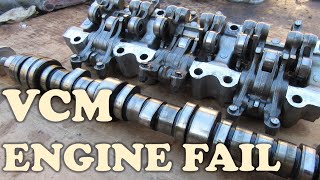
The 3.5L V6 engine (J35Y6) in this generation of Odyssey is equipped with Honda's Variable Cylinder Management (VCM) system. 🎬 Watch: How Honda's VCM system works and why it fails. While designed to improve fuel economy, this system is widely linked to a specific pattern of failure that causes P0304 and other misfire codes (P0301-P0303). The VCM system deactivates cylinders to save fuel, but this can lead to uneven temperatures and carbon buildup in the piston ring grooves of the deactivated cylinders. This causes the rings to stick or wear, allowing oil to seep into the combustion chamber, which then fouls the spark plugs and triggers a misfire. This issue was the subject of a class-action lawsuit for earlier models and has led to subsequent warranty extensions.
Diagnostic Flowchart
Tap your situation to follow the diagnostic path that matches what you're seeing on this vehicle.
Symptoms You May Notice
- Check Engine Light (CEL) is on or flashing
- Rough engine idle
- Engine hesitation or stumbling during acceleration
- Noticeable loss of power
- Reduced fuel economy
- An unusual smell of unburned gasoline from the exhaust
- Vibration, especially when the VCM system engages
- Replacing only the ignition coil without inspecting the spark plug. A new coil will not fix a misfire caused by a severely oil-fouled plug.
- Replacing only the spark plugs without addressing the root cause. If the piston rings are allowing oil into the cylinder, the new plug will eventually foul again, and the code will return.
- Assuming the issue is a simple tune-up when it is related to the VCM system. Many owners report replacing plugs and coils multiple times before the underlying piston ring issue is diagnosed.
Most Likely Causes
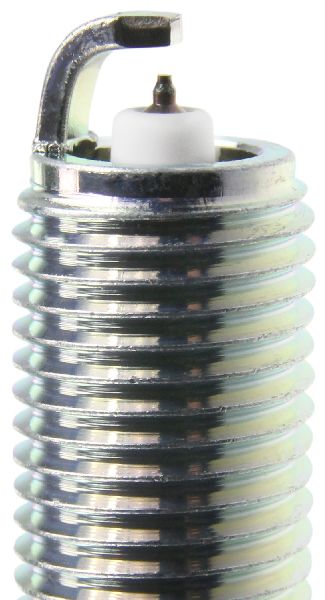
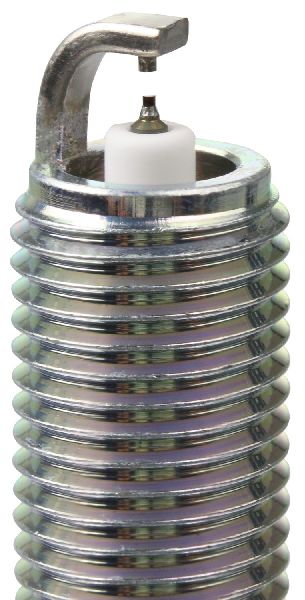
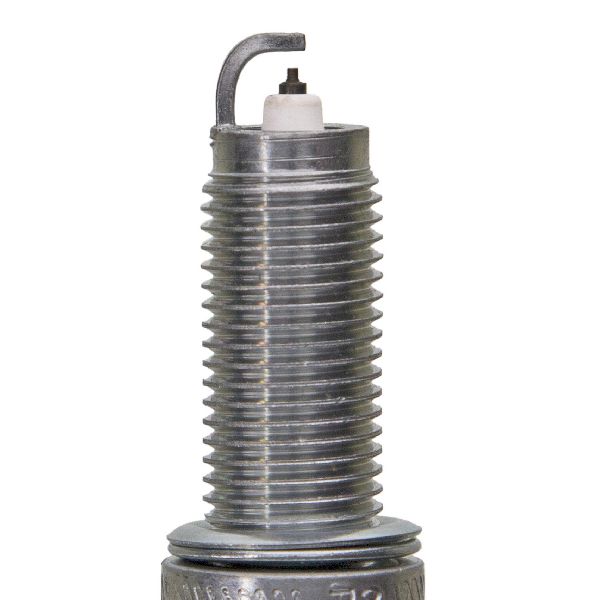
- Fouled Spark Plug 🔴 High Probability → Shop Spark Plug Oil consumption related to the VCM system and piston rings frequently causes spark plugs, particularly in cylinders 1-4, to become fouled with oil and carbon. This is the most common and direct cause of the P0304 misfire code and is a well-documented issue acknowledged by Honda.
How to confirm: Remove the spark plug from cylinder 4 (front bank, passenger side) and inspect it. Look for black, oily, wet deposits or heavy carbon buildup on the electrode and insulator.
Typical fix: Replace the fouled spark plug. 🎬 Watch this step-by-step guide to replacing your Odyssey's spark plugs. It is highly recommended to replace all six spark plugs at the same time using OEM-spec plugs. This is often a temporary fix if the underlying oil consumption from the piston rings is not addressed.
Est. part cost: $60-$150 for a set of 6 OEM-quality plugs - Worn Piston Rings / Stuck Rings 🔴 High Probability This is the root cause of the persistent P0304 code. As documented in NHTSA complaints, a class-action lawsuit, and Honda's own Technical Service Bulletins, the VCM system can cause the piston rings on the frequently deactivated cylinders (1-4) to become stuck with carbon deposits. This allows oil to enter the combustion chamber, fouling the spark plug. Honda has extended the warranty to cover this specific repair.
How to confirm: This is a complex diagnosis. It typically starts with observing a repeatedly fouled spark plug in cylinder 4. A cylinder compression test and a leak-down test are required to confirm poor ring seal. Dealers may also use a borescope to inspect the cylinder walls.
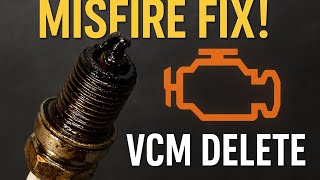
Typical fix: The official Honda repair involves disassembling the engine's top end to clean the pistons and replace the piston rings on the affected bank of cylinders (1-4). This is a labor-intensive job covered under a specific warranty extension. Many owners also install a VCM deactivation device ('VCM Muzzler') to prevent recurrence. 🎬 See how to install a VCM Muzzler to stop misfires.
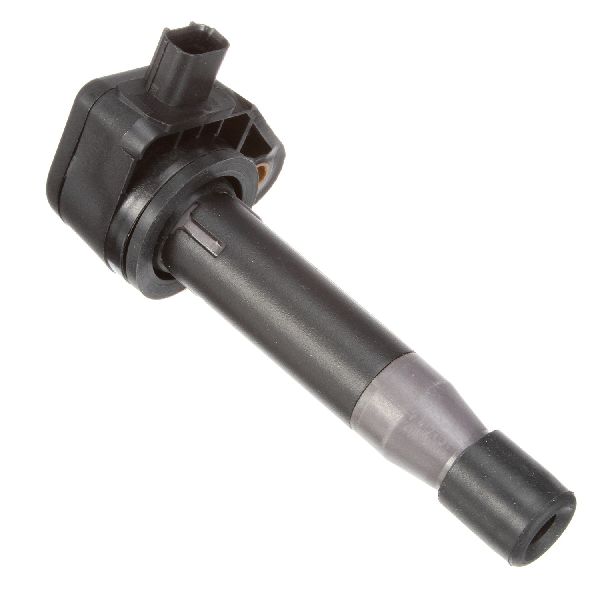
Est. part cost: $200-$500 for rings and gaskets (labor is the major cost if not under warranty) - Faulty Ignition Coil 🟡 Medium Probability → Shop Ignition Coil Ignition coils are a common failure item on most modern vehicles as they age. While not specific to the VCM issue, a coil failure will cause a single-cylinder misfire like P0304.
How to confirm: Swap the ignition coil from cylinder 4 with another cylinder (e.g., cylinder 5). Clear the codes and drive the vehicle. If the code changes to P0305, the ignition coil is faulty. This is a classic and effective diagnostic step.
Typical fix: Replace the faulty ignition coil. It is best practice to use a quality OEM or brand-name replacement like Denso or Hitachi.
Est. part cost: $50-$100 per coil - Clogged or Faulty Fuel Injector ⚪ Low Probability → Shop Fuel Injector While less common than ignition or oil-related issues, a fuel injector can become clogged with debris or fail electronically, preventing it from delivering the correct amount of fuel to cylinder 4.
How to confirm: This is more difficult to diagnose. It involves swapping the fuel injector from cylinder 4 to another cylinder to see if the misfire follows. This is more labor-intensive than swapping a coil and is usually performed after ruling out spark and ignition.
Typical fix: Replace the faulty fuel injector. It's often recommended to replace the seals on adjacent injectors if the fuel rail is removed.
Est. part cost: $70-$200 per injector
Diagnosis Steps
- Read the code with an OBD-II scanner. Note any other codes present, especially P0300, P0301, P0302, or P0303.
- Check for Warranty Coverage: Contact a Honda dealer with your VIN. A warranty extension for this specific issue (codes P0301-P0304) on 2013-2017 Odysseys was announced, covering the piston ring repair for 8 years with unlimited mileage. This should be your first step.
- Locate cylinder 4. On the Honda J35 V6, the cylinders are numbered 1-2-3 on the rear bank (near the firewall) and 4-5-6 on the front bank (near the radiator), from passenger to driver side. Cylinder 4 is on the front bank, closest to the passenger side (right side of the engine bay when facing the car).
- Swap the ignition coil from cylinder 4 with the coil from cylinder 5 (the middle one on the front bank).
- Clear the codes and drive the vehicle until the check engine light returns.
- Re-scan for codes. If the code is now P0305, the ignition coil is the problem. Replace it.
- If the code remains P0304, the coil is likely good. Proceed to inspect the spark plug.
- Remove the ignition coil from cylinder 4 again and then remove the spark plug. Inspect its tip. If it is wet with oil or covered in black, sooty deposits, this is strong evidence of the VCM piston ring issue.
- If the spark plug is fouled, replace it (and preferably all six). If the plug was oil-fouled, the misfire will likely return. The vehicle should be taken to a dealer for the warranty-covered piston ring repair.
- For advanced DIY diagnosis, a compression test and cylinder leak-down test can definitively confirm internal engine problems like bad piston rings, which would show lower compression or higher leak-down rates in cylinder 4 compared to cylinders 5 and 6.
Parts You'll Likely Need
- Spark Plug
(OEM #12290-R70-A01)— This is the most common failure point, as oil fouling from VCM-related issues directly causes the misfire. The OEM equivalent is NGK ILZKR7B11.
Trusted brands: NGK, Denso
OEM price range: $24-$33 per plug
Aftermarket price range: $10-$20 per plug - Ignition Coil
(OEM #30520-R70-A01)— A common and simple-to-diagnose cause of a single-cylinder misfire. The original part is often superseded by part number 30520-R70-S01.
Trusted brands: Hitachi (OEM supplier), Denso, NGK
OEM price range: $90-$125
Aftermarket price range: $40-$70 - Piston Ring Set
(OEM #13021-5J6-A01 (Example part number, confirm with dealer))— For persistent misfires where spark plugs are repeatedly fouled with oil, worn or stuck piston rings are the underlying cause. This is a major repair, but should be covered by Honda's warranty extension.
Trusted brands: Honda Genuine, Allied Ring (OEM supplier)
OEM price range: $150-$250 (parts only)
Aftermarket price range: $100-$200 (parts only)
Related Codes That Often Appear With This One
- P0300 — If the misfire is intermittent or affects multiple cylinders, a P0300 (Random Misfire) code may be stored alongside P0304.
- P0301, P0302, P0303 — The underlying VCM and piston ring issue can affect cylinders 1-4, leading to multiple misfire codes being stored simultaneously. Honda's TSBs and warranty extensions explicitly cover codes P0301 through P0304 as a group.
Technical Service Bulletins (TSBs) & Recalls
- A26-001: Notes that DTCs P0301 through P0304 can be set due to misfires.
- AEBM06172025901: Links oil sludge build-up to spark plug fouling and misfires that trigger codes P0301 through P0304.
- Honda TSB 13-081: Although for earlier 2011-2013 models, this TSB details the full diagnosis and repair procedure for the VCM-induced misfires, including piston cleaning and ring replacement, which is the same fundamental repair for the 2016-2017 models.
- Honda TSB 25-061: Specifically addresses the warranty extension for 2013-2016 Odyssey models with DTCs P0301-P0304, released in June 2025.
Platform-Specific Known Issues
- Variable Cylinder Management (VCM) System: This system is the primary driver of issues leading to P0304. Owner complaints filed with the NHTSA explicitly mention the VCM system causing "premature piston ring wear, leading to oil consumption, spark plug fouling, and misfires (P0301-P0304)". Another complaint mentions repairs for engine misfire due to piston ring deterioration that triggers the same codes.
Mechanic-Grade Diagnostic Values
- Fuel Injector Resistance — expected: 5 to 7 Ohms (for high-impedance injectors). Some sources suggest a wider range of 10-15 Ohms for typical gasoline engines.. Failure: A reading significantly higher (open circuit) or lower (short circuit) than the other injectors indicates a faulty injector.
- Ignition Coil Primary Resistance — expected: 0.49 - 0.57 Ohms. Failure: A reading outside of this specific range suggests the coil's primary winding is faulty.
- Ignition Coil Secondary Resistance — expected: 9.5 - 11.1 kOhms (kilo-ohms). Failure: A reading outside this range, or an 'OL' (Overload/Open Loop) reading on a multimeter, indicates a break in the secondary winding.
- Valve Lash Clearance (Intake) — expected: 0.20 - 0.24 mm (0.008 - 0.009 in.) when engine is cold.. Failure: Excessive clearance can cause a ticking noise; insufficient clearance (tight valves) can cause misfires, especially when the engine is hot.
- Valve Lash Clearance (Exhaust) — expected: 0.28 - 0.32 mm (0.011 - 0.013 in.) when engine is cold.. Failure: Exhaust valves on J-series engines have a tendency to tighten over time, which can lead to a partially open valve and cause misfires.
Hidden / Shadow Codes Worth Checking
- Mode $06, TID $53, CID $01-$0C: Mode $06 data can show misfire counts for each cylinder before they are high enough to trigger a Check Engine Light. On Honda systems, Test ID (TID) $53 often corresponds to misfire monitoring. The Component ID (CID) from $01 through $0C (1-12) will show the counts for each cylinder. This allows a technician to see if cylinder 4 has a higher count than others, even if the light isn't on yet. (see via A professional scan tool or an advanced OBD-II reader with Mode $06 capabilities.)
Scan Tool Commands That Help
- Honda Diagnostic System (HDS) or i-HDS: DTC Check / Clear DTCs — The HDS/i-HDS provides more detailed trouble code information than generic scanners, including freeze frame data and on-board snapshots to see engine conditions at the moment the misfire was first detected.
- Honda Diagnostic System (HDS) or i-HDS: CKP Pattern Clear/Learn — The Crankshaft Position (CKP) pattern learn procedure is required after certain repairs to ensure the PCM can accurately detect misfires. The 'CKP Pattern Clear' command is specifically used for repairs involving a misfire or the CKP sensor itself.
- Advanced Scan Tool (e.g., OBDeleven): Misfire Counter Live Data — Monitoring real-time misfire counts per cylinder is crucial for diagnosis. A technician can observe if misfires on cylinder 4 increase under specific conditions (idle, acceleration, high load) to help pinpoint the cause.
Wiring & Ground Locations
- Cylinder 4 Ignition Coil Connector — Front bank of the engine (closest to the radiator), on the passenger side. It is a 3-wire connector that plugs directly into the top of the ignition coil.. This is the direct electrical connection for the ignition coil on the misfiring cylinder. Damage to the connector or its wiring (e.g., from heat, oil, or rodent damage) can cause a loss of power or signal to the coil, resulting in a P0304 code. The connector has 3 pins: Pin 1 (Power - Black/Yellow wire), Pin 2 (Ground - Black wire), and Pin 3 (Signal from PCM - color may vary).
Real Owner Repair Stories
- Reddit user in r/HondaOdyssey (2016 Honda Odyssey, ~67,000 miles) — Blinking check engine light, rough running engine, traction control light also came on.
❌ Tried (didn't work) The user was quoted $6,000 for piston ring replacement on cylinders 1-3.
✅ What actually fixed it The user negotiated with Honda, who agreed to cover 80% of the piston ring replacement cost under a 'goodwill assistance' program. After the repair, the owner planned to install a VCM tuner to prevent the issue from recurring. - Reddit user in r/HondaOdyssey (2014 Honda Odyssey) — VCM-related misfires (P0301-P0304).
❌ Tried (didn't work) The user received a warranty extension letter from Honda for the piston ring issue.
✅ What actually fixed it The user had already installed a VCM disabling device ('VCM muzzler') three years prior, which resolved the misfires. After receiving the warranty extension, the overwhelming advice from the community was to not perform the invasive engine repair and to continue using the VCM muzzler, as it had already proven to be a successful long-term fix.
OEM Part Supersession History
30520-R70-A01→30520-R70-S01— Standard part revision and update by the manufacturer. The new part is a direct replacement with likely minor internal improvements for reliability or performance.
Model Year Variations Within This Range
- 2016-2017: There are no significant mechanical differences between the 2016 and 2017 Honda Odyssey models regarding the 3.5L V6 (J35Y6) engine or the Variable Cylinder Management (VCM) system that would alter the causes or diagnosis of a P0304 code. Both model years share the same engine specifications, including horsepower and torque, and are subject to the same VCM-related piston ring and spark plug fouling issues.
Helpful Videos
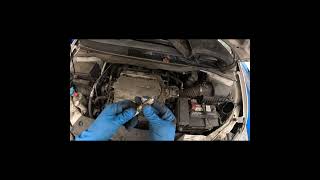
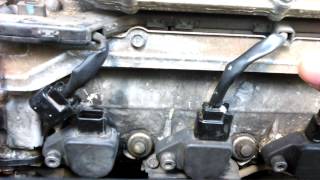
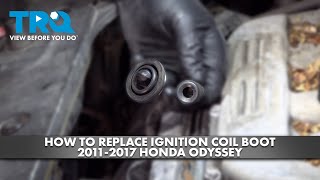
We Have This Part in Stock
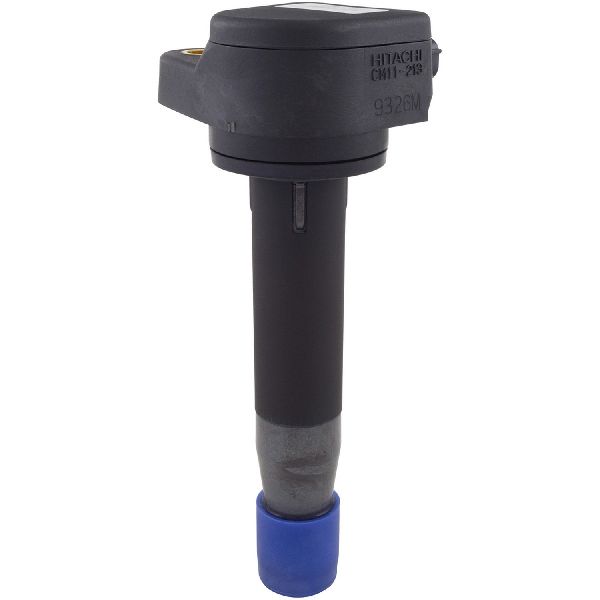

The information in this article is provided for general reference and educational purposes only. Vehicle specifications, procedures, and part compatibility can vary by production date, trim level, and region. Always consult your vehicle's factory service manual and verify part numbers before purchasing or performing repairs. Safety-critical components such as airbags, seat belts, and braking systems should be installed by a qualified professional.
- Honda ODYSSEY:
- 🧭 Diagnostic Flowchart
- 🎬 Helpful Videos
- 🛍️ Shop This Part
- What's Unique About the 2016-2017 Honda ODYSSEY
- Symptoms You May Notice
- Most Likely Causes
- Diagnosis Steps
- Parts You'll Likely Need
- Related Codes That Often Appear With This One
- Technical Service Bulletins (TSBs) & Recalls
- Platform-Specific Known Issues
- Mechanic-Grade Diagnostic Values
- Hidden / Shadow Codes Worth Checking
- Scan Tool Commands That Help
- Wiring & Ground Locations
- Real Owner Repair Stories
- OEM Part Supersession History
- Model Year Variations Within This Range
- 🎟️ Get 5% Off