

P0304 on 2009-2015 Jaguar XF: Cylinder 4 Misfire Causes and Fixes
P0304 on a 2009-2015 Jaguar XF indicates a misfire in cylinder 4. The most common causes are a faulty ignition coil or spark plug. However, Jaguar-specific issues like a faulty high-pressure fuel pump or the need for an ECM software update are also notable possibilities, especially on the direct-injected 5.0L V8 and 3.0L V6 engines.
- P0304 is a misfire on cylinder 4. The most likely causes are a bad ignition coil or spark plug.
- Always use the coil-swapping method to diagnose a bad ignition coil before buying parts.
- Be aware of Jaguar-specific issues. The problem could be a faulty high-pressure fuel pump or require an ECM software update, as outlined in official TSBs.
- If the check engine light is flashing, stop driving immediately to prevent catalytic converter damage.
- When replacing spark plugs, it's best to replace the full set to ensure balanced engine performance.
What's Unique About the 2009-2015 Jaguar XF
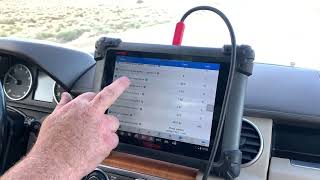
For the 2009-2015 Jaguar XF, particularly models with the 5.0L V8 and 3.0L V6 engines, a P0304 code goes beyond 🎬 Watch: Understanding the common causes of a P0304 misfire code. the usual suspects of plugs and coils. Jaguar has issued Technical Service Bulletins (TSBs) indicating that this misfire code can be caused by an internal fault with the high-pressure fuel pump's metering valve (TSB JTB00410NAS1) or may require an Engine Control Module (ECM) reprogram to protect the engine (TSB JTB00445NAS1). Furthermore, the direct injection (DI) nature of these engines makes them susceptible to carbon buildup on intake valves, which can restrict airflow and cause misfires. Another known issue is vacuum leaks from brittle plastic hoses and aged PCV valve diaphragms, which are common failure points. A less common but documented issue is a cracked plastic intake manifold, which can cause lean conditions and misfires.
Diagnostic Flowchart
Tap your situation to follow the diagnostic path that matches what you're seeing on this vehicle.
Generation note: The 2009-2015 year range covers the first generation (X250) of the Jaguar XF, but it includes a major facelift for the 2012 model year which introduced new engines, including the 3.0L supercharged V6 and the 2.0L GTDi (Ford EcoBoost). While the causes are similar, the location of components and specific part numbers will vary between the 5.0L V8, 3.0L V6, and 2.0L 4-cylinder engines. Cylinder numbering, in particular, can be confusing and varies by engine.
Symptoms You May Notice
- Rough or vibrating idle
- Hesitation or stumbling during acceleration
- Noticeable loss of engine power
- Flashing or solid Check Engine Light
- Increased fuel consumption
- Unpleasant odor from the exhaust or smell of raw fuel.
- Engine stalling at stops.
- Replacing only the spark plug when the ignition coil is the actual problem.
- Replacing ignition and fuel parts when the underlying issue is a required ECM software update as per TSB JTB00445NAS1.
- Assuming the cause is a simple ignition component without considering the possibility of the high-pressure fuel pump fault mentioned in TSB JTB00410NAS1.
- Overlooking a vacuum leak from a brittle PCV hose or diaphragm, which are common and inexpensive parts to fail.
Most Likely Causes
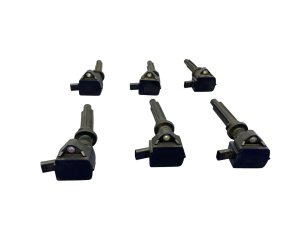
- Faulty Ignition Coil 🔴 High Probability → Shop Ignition Coil Ignition coils are a common wear item on many modern engines, including the Jaguar AJ133 V8 and AJ126 V6, due to the high-heat and high-voltage environment they operate in. Oil leaks from the valve cover gaskets can also pool in the spark plug wells and damage the coil boots.
How to confirm: Swap the ignition coil from cylinder 4 with another cylinder (e.g., cylinder 2). Clear the codes and run the engine. If the code changes to P0302, the ignition coil is faulty. A multimeter can be used to test the primary resistance, which should be around 0.75 ohms, though this test is not always conclusive.
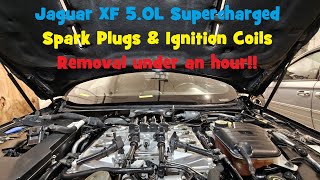
Typical fix: Replace the faulty ignition coil. It is often recommended to replace all coils if they are original and the vehicle has high mileage, as they tend to fail around the same time.
Est. part cost: $40-$90 - Worn or Fouled Spark Plug 🔴 High Probability → Shop Spark Plug
How to confirm: After ruling out the ignition coil, inspect the spark plug for cylinder 4. Look for wear on the electrode, carbon buildup, or oil/fuel fouling. You can also swap the spark plug with another cylinder to see if the misfire follows.
Typical fix: Replace the spark plug. It is best practice to replace all spark plugs at the same time to ensure even performance. The recommended interval is typically around 100,000 miles, but can be shorter under severe conditions.
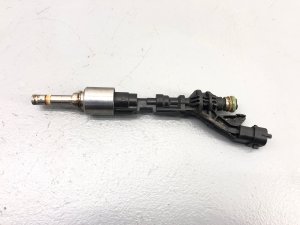
Est. part cost: $15-$30 - Faulty Fuel Injector 🟡 Medium Probability → Shop Fuel Injector The direct injection (DI) fuel injectors on the 5.0L and 3.0L engines operate under very high pressure and can become clogged or fail electronically. TSB #JTB-00241-NAS1 and SSM-63697 mention clogged injectors from poor fuel quality as a cause for misfires. Some owners have experienced failures across an entire bank of injectors.
How to confirm: This is more difficult for a DIYer. A professional can perform an injector balance test to measure flow rates. A simpler, less definitive test is to listen for a consistent clicking sound from the injector with a mechanic's stethoscope. Swapping injectors is a much more involved job than swapping coils.
Typical fix: Replace the faulty fuel injector. This is a costly repair, especially at a dealership, with some owners being quoted over $4,000 for the job. Due to the labor involved, some recommend replacing all injectors on the affected bank at the same time.
Est. part cost: $100-$250 - Faulty High-Pressure Fuel Pump 🟡 Medium Probability → Shop Fuel Pump TSB #JTB00410NAS1 specifically identifies an internal fault with the metering valve in the high-pressure fuel pump (HPFP) as a potential cause for misfire codes, including P0304, on the 5.0L V8 engine.
How to confirm: This requires professional diagnosis, including monitoring fuel pressure with a scan tool that can read Jaguar-specific data. The technician will check fuel rail pressure against desired pressure under various load conditions. For direct injection engines, high-pressure side fuel pressure should range from around 500 psi at idle to over 2,000 psi under load.
Typical fix: Replacement of the high-pressure fuel pump.
Est. part cost: $400-$800 - Needs ECM Reprogramming ⚪ Low Probability TSB #JTB00445NAS1 states that for certain misfire conditions on the 5.0L engine, the ECM needs to be reprogrammed to protect the engine from damaging combustion events. This is not a fix for a mechanical fault but a software update to improve misfire detection and response.
How to confirm: A Jaguar dealership or a qualified independent shop with access to Jaguar's SDD/Pathfinder diagnostic software can check if this TSB applies to your vehicle's VIN and if the software is up to date.
Typical fix: Reprogram the Engine Control Module (ECM) with the latest software.
Est. part cost: $0-$200 (Labor cost for programming)
Rare But Worth Checking
- Vacuum Leak: A vacuum leak near cylinder 4's intake runner can lean out the air-fuel mixture and cause a misfire. Common sources on the XF include deteriorated PCV valve diaphragms, cracked plastic vacuum lines (especially small 1/8" hoses that become brittle), and intake manifold gaskets. On the V6 and V8 engines, the plastic intake manifolds themselves can develop hairline cracks over time, leading to elusive vacuum leaks.
- Intake Valve Carbon Buildup: Because the 5.0L V8 and 3.0L V6 are direct injection, fuel does not wash over the intake valves. This allows oil vapor from the PCV system to bake onto the valves, forming hard carbon deposits that can restrict airflow and cause misfires, especially on cold starts. Cleaning requires removal of the intake manifold and media blasting (walnut blasting) or manual scrubbing.
- Poor Fuel Quality: TSB #SSM-63697 mentions that poor fuel quality or contaminants can lead to misfire codes by clogging injectors. This is more likely if the problem appeared shortly after refueling.
- Low Engine Compression: A mechanical issue such as a burnt valve, worn piston rings, or a leaking head gasket can cause a loss of compression in cylinder 4. On the 5.0L engine, timing chain tensioner and guide failure is a known issue that can lead to jumped timing and subsequent engine damage, causing misfires. This is the least likely and most expensive cause to fix.
Diagnosis Steps
- Read the code with an OBD-II scanner and note any other codes present. Freeze frame data can provide clues about engine conditions when the misfire occurred.
- Determine the cylinder numbering for your specific engine. For Jaguar V8s (AJ133), cylinder 4 is the second cylinder from the front on the left (US driver's side) bank. For the V6 (AJ126), it is also the second cylinder on the left bank. The banks are numbered 1 (right/passenger) and 2 (left/driver), with cylinders 1-3-5 on bank 1 and 2-4-6 on bank 2, front to back.
- Swap the ignition coil from cylinder 4 with a coil from another cylinder (e.g., cylinder 2).
- Clear the codes, start the engine, and see if the misfire code moves to the new cylinder (e.g., P0302). If it does, the ignition coil is bad.
- If the code remains P0304, swap the spark plug from cylinder 4 with another cylinder. If the code moves, the spark plug is bad.
- If the code still remains P0304, inspect the wiring and connector for the ignition coil and fuel injector on cylinder 4 for any damage or corrosion.
- Listen to the fuel injector on cylinder 4 with a mechanic's stethoscope to ensure it is clicking. Compare the sound to an adjacent injector.
- Perform a smoke test to check for vacuum leaks. Pay close attention to the PCV valve diaphragms on the valve covers and all small plastic hoses, which can become brittle with age.
- If ignition and vacuum systems seem okay, consider the vehicle-specific issues. Check with a dealer if TSBs JTB00410NAS1 (fuel pump) or JTB00445NAS1 (ECM reprogram) apply to your vehicle's VIN.
- As a final step for advanced diagnosis, perform a compression test on cylinder 4 to rule out mechanical engine problems.
Parts You'll Likely Need
- Ignition Coil
(OEM #LR010787 / C2D28240 (For 5.0L & 3.0L engines))— This is the most frequent cause of a single-cylinder misfire on the Jaguar XF.
Trusted brands: Bosch, Delphi, NGK
OEM price range: $80-$150
Aftermarket price range: $40-$90 - Spark Plug
(OEM #C2Z28434 (NGK SILZKAR7E8S) (For 5.0L & 3.0L engines))— A worn or fouled spark plug is another highly common cause and is part of routine maintenance.
Trusted brands: NGK, Bosch
OEM price range: $25-$40
Aftermarket price range: $15-$30 - Fuel Injector
(OEM #LR105439 / C2D24386 (Bosch 0261500298) (For 5.0L & 3.0L engines))— A clogged or failed injector will prevent the correct amount of fuel from entering the cylinder, causing a misfire. Can be very expensive to replace.
Trusted brands: Bosch
OEM price range: $150-$300
Aftermarket price range: $80-$150 - PCV Valve/Diaphragm
(OEM #C2D51523 (For 5.0L V8))— The rubber diaphragm inside the PCV valve tears, creating a significant vacuum leak that can cause lean codes and misfires.
Trusted brands: Jaguar (OEM)
OEM price range: $50-$100
Aftermarket price range: $20-$40
Related Codes That Often Appear With This One
- P0300 — If the misfire is intermittent or affects multiple cylinders, a P0300 (Random/Multiple Cylinder Misfire Detected) may be stored alongside P0304.
- P0301, P0302, P0303, etc. — Codes for other cylinders may appear if the root cause, such as a faulty fuel pump, vacuum leak, or failing VVT solenoid, is affecting the entire engine bank.
- P1315 — As noted in TSBs JTB00445NAS1 and JTB00410NAS1, this Jaguar-specific code for a persistent misfire is often stored with the P030x codes.
- P0316 — TSB JTB00533NAS1 links this code, which means Misfire Detected on Startup (First 1000 Revolutions), with the standard P030x misfire codes.
- P0171/P0174 — These codes for 'System Too Lean' on Bank 1 and Bank 2 often accompany misfire codes when the root cause is a significant vacuum leak.
Technical Service Bulletins (TSBs) & Recalls
- JTB00533NAS1: Mentions P0304 in a list of misfire codes that can appear with P0316 (misfire on startup).
- JTB00445NAS1: Recommends an ECM reprogram for certain misfire conditions, including P0304.
- JTB00410NAS1: Links misfire codes like P0304 to a potential internal fault in the high-pressure fuel pump.
- SSM-63697: Cites poor fuel quality or contaminants as a cause for misfire codes.
Platform-Specific Known Issues
- Cylinder Numbering Confusion: Jaguar uses a specific cylinder numbering system that can be confusing. For the V8 and V6 engines in the XF, Bank 1 is the right (US Passenger) side and Bank 2 is the left (US Driver) side. Cylinders are numbered front-to-back, odd on Bank 1 (1, 3, 5) and even on Bank 2 (2, 4, 6). Therefore, Cylinder 4 (P0304) is the middle cylinder on the driver's side.
- PCV Valve Diaphragm Failure: → Shop PCV Valve A very common issue on the 5.0L V8 is the tearing of the two rubber PCV diaphragms located on top of the valve covers. This creates a large, unmetered air leak (vacuum leak) that often causes lean codes (P0171/P0174) and can lead to rough idling and misfires. The diaphragms are replaceable separately from the entire valve cover.
- Intake Valve Carbon Deposits: As these are direct-injection engines, fuel is sprayed directly into the cylinder, not onto the intake valves. This allows oil and contaminants from the PCV system to bake onto the hot intake valves, forming thick carbon deposits. Over time, this can restrict airflow into the cylinder enough to cause a misfire. Owners who have the intake manifold off for other repairs often perform a manual cleaning (walnut blasting or scrubbing) of the valves.
Mechanic-Grade Diagnostic Values
- High-Pressure Fuel Rail Pressure (5.0L & 3.0L DI engines) — expected: Approximately 500 psi at idle, rising to over 2,000 psi under load. One source states the range is 500-2100 psi.. Failure: Pressure that is significantly lower than expected or does not increase with engine load, which could trigger low-pressure codes and misfires.
- Low-Pressure Fuel Pump Pressure (feed to HPFP) — expected: Should be under 65 psi.. Failure: Low or inconsistent pressure from the in-tank pump can starve the high-pressure pump, causing misfires under load.
- Ignition Coil Primary Resistance — expected: Approximately 0.75 ohms.. Failure: A reading of 'open' (infinite resistance) indicates a failed coil. However, a coil can still be faulty even if its resistance is within spec.
- Engine Ground Voltage Drop — expected: Well under 0.5V (500mV) when cranking the engine.. Failure: A voltage reading higher than 0.5V indicates a poor ground connection, which can cause a variety of electrical issues, including misfires.
Scan Tool Commands That Help
- Jaguar SDD (Symptom Driven Diagnostics): Symptom Selection & Guided Diagnostics — When basic code reading isn't enough. SDD guides the technician through a flowchart-based diagnostic process based on reported symptoms (like misfires), analyzing codes and suggesting specific tests and solutions. It can also identify if an ECM reprogram (per TSB JTB00445NAS1) is needed.
- Jaguar SDD (Symptom Driven Diagnostics): Live Data Monitoring (Misfire Counters) — To confirm which cylinder is actively misfiring in real-time. This is useful for verifying if swapping a coil or plug has moved the misfire to a different cylinder.
Wiring & Ground Locations
- Main Engine Grounding Strap — On the right side (US passenger side) of the vehicle, located directly under the starter, connecting the lower frame to a transmission bolt.. A poor engine ground can cause erratic behavior in sensors and ignition components, leading to misfires. Cleaning the contact points for this strap is a key troubleshooting step for persistent electrical issues.
- EMS LH Ground Stud — Located on the left front inner fender/wing area.. This is a primary grounding point for the Engine Management System (EMS), also known as the ECM/PCM. A poor connection here can directly impact ECM function and cause misfire codes.
- Bulkhead Electrical Box/Stud — Behind the right side (US passenger side) wheel arch liner is a box containing an electrical stud where the alternator cable passes through the bulkhead.. This area is prone to collecting road grime and salt, which can become conductive and cause short-to-ground issues, affecting the entire electrical system's stability and potentially causing misfires.
Real Owner Repair Stories
- Jaguar Forums user (2011 Jaguar XF 5.0L NA) — Lean running codes (P0171 & P0174) and misfires.
❌ Tried (didn't work) Initial diagnosis pointed towards common vacuum leak sources.
✅ What actually fixed it After a smoke test, a crack was discovered in the plastic intake manifold itself. The user noted the manifold is made from PA66 nylon and planned to repair it, but the final fix was replacing the cracked manifold. - YouTube channel BoostedRicky (Jaguar with 5.0L Supercharged AJ133 engine) — Persistent misfire on one bank that occurred after the engine warmed up.
❌ Tried (didn't work) Replacing spark plugs multiple times., Replacing ignition coils multiple times., Replacing fuel injectors multiple times.
✅ What actually fixed it The internal intercooler (heat exchanger) inside the supercharger was leaking coolant directly into the cylinders, causing the misfire. The problem was diagnosed by disconnecting the coolant lines to the supercharger, draining the fluid, and running the engine, which no longer misfired.
"I Checked Everything" — The Actual Cause
- In some cases with the 5.0L supercharged engine, a persistent misfire that seems like a vacuum leak (but passes a smoke test) can actually be caused by a leaking internal supercharger intercooler. Coolant leaks into the intake tract and cylinders, causing a misfire, especially once the engine is warm.
Model Year Variations Within This Range
- 2012-2013: For the 2013 model year, Jaguar introduced a major engine lineup change. The base 5.0L naturally aspirated V8 was replaced by a 2.0L turbocharged I4 and a new 3.0L supercharged V6. The 5.0L V8 remained available in higher trims. This means diagnostic procedures and component locations for a base model 2012 XF (5.0L V8) will differ significantly from a base model 2013 XF (2.0L or 3.0L). All engines also received an 8-speed automatic transmission starting in 2013.
Helpful Videos

We Have This Part in Stock

The information in this article is provided for general reference and educational purposes only. Vehicle specifications, procedures, and part compatibility can vary by production date, trim level, and region. Always consult your vehicle's factory service manual and verify part numbers before purchasing or performing repairs. Safety-critical components such as airbags, seat belts, and braking systems should be installed by a qualified professional.
- Jaguar XF:
- 🧭 Diagnostic Flowchart
- 🎬 Helpful Videos
- 🛍️ Shop This Part
- What's Unique About the 2009-2015 Jaguar XF
- Symptoms You May Notice
- Most Likely Causes
- Rare But Worth Checking
- Diagnosis Steps
- Parts You'll Likely Need
- Related Codes That Often Appear With This One
- Technical Service Bulletins (TSBs) & Recalls
- Platform-Specific Known Issues
- Mechanic-Grade Diagnostic Values
- Scan Tool Commands That Help
- Wiring & Ground Locations
- Real Owner Repair Stories
- "I Checked Everything" — The Actual Cause
- Model Year Variations Within This Range
- 🎟️ Get 5% Off