

P0304 on 2013-2015 Land Rover LR2: Cylinder 4 Misfire Causes and Fixes
P0304 on a 2013-2015 LR2 is a cylinder 4 misfire. The most common fixes are replacing the ignition coil or spark plug, which are DIY-friendly. However, this Ford EcoBoost-derived engine is subject to Land Rover TSBs that point to failing fuel injectors and high-pressure fuel pumps as known issues, which are more complex and costly repairs.
- P0304 means cylinder 4 is misfiring. Do not ignore it, especially if the check engine light is flashing, to avoid catalytic converter damage.
- Start your diagnosis with the simplest and most common causes: swap the ignition coil, then the spark plug, to see if the misfire moves to another cylinder.
- For this specific Land Rover, be aware of TSBs pointing to more serious fuel system issues like faulty fuel injectors and high-pressure fuel pumps.
- Always use the correct Iridium spark plugs for the 2.0L Turbo engine.
- If P1315 is also present, it indicates a severe misfire and reinforces the need for immediate diagnosis.
What's Unique About the 2013-2015 Land Rover LR2
The 2013-2015 LR2 uses a 2.0L turbocharged direct-injection engine, which is a Land Rover-modified version of the Ford 2.0L EcoBoost. This engine replaced the prior 3.2L I6. While standard ignition issues are common, this specific platform is subject to several Technical Service Bulletins (TSBs) that point directly to failures in the sophisticated direct injection fuel system. Specifically, faulty fuel injectors (TSB #SSM71894) and high-pressure fuel pump (HPFP) metering valves (TSB #LTB00730NAS1) are documented causes for misfires. Furthermore, as a direct-injection engine, it can be prone to carbon buildup on the intake valves over time, which can restrict airflow to a specific cylinder and cause a misfire that ignition or fuel part swaps won't fix.
Diagnostic Flowchart
Tap your situation to follow the diagnostic path that matches what you're seeing on this vehicle.
Symptoms You May Notice
- Check Engine Light (CEL) on or flashing
- Rough idle or engine vibration, especially when in gear at a stop
- Engine hesitation or stuttering during acceleration
- Noticeable loss of power
- Poor or hard starting [TSB #LTB01101NAS4, TSB #LTB00730NAS1]
- Smell of unburnt fuel from the exhaust
- Reduced fuel economy
- Replacing oxygen sensors. A persistent misfire will dump unburnt fuel and air into the exhaust, which can confuse the O2 sensors and trigger codes. The O2 sensor is reporting the problem, not causing it.
Most Likely Causes
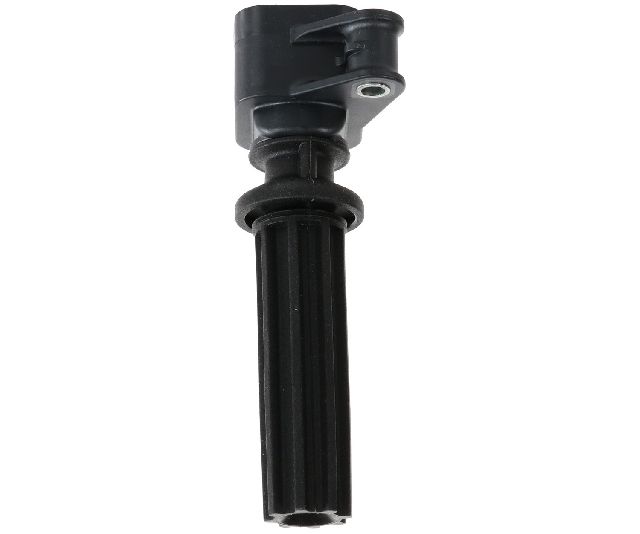
- Faulty Ignition Coil 🔴 High Probability → Shop Ignition Coil Coil-on-plug systems are common failure points on many modern engines due to constant heat and vibration. It's the most frequent first point of failure for a single-cylinder misfire and a well-documented issue on the 2.0T engine.
How to confirm: Swap the ignition coil from cylinder 4 with another cylinder (e.g., cylinder 3). The cylinders are numbered 4-3-2-1 from left to right (passenger to driver side in the US). Clear the codes and drive the vehicle. If the code changes to P0303, the ignition coil is faulty.
Typical fix: Replace the faulty ignition coil. It is often recommended to replace all four coils and spark plugs at the same time for preventative maintenance, especially on higher-mileage vehicles.
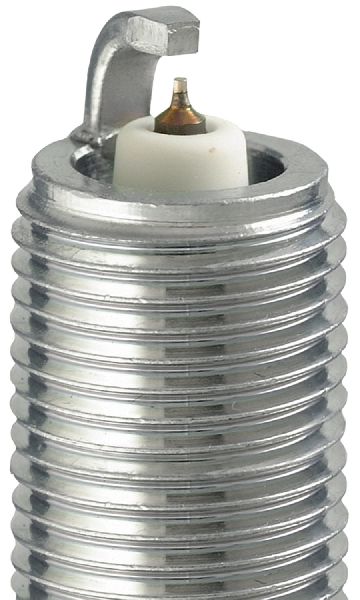
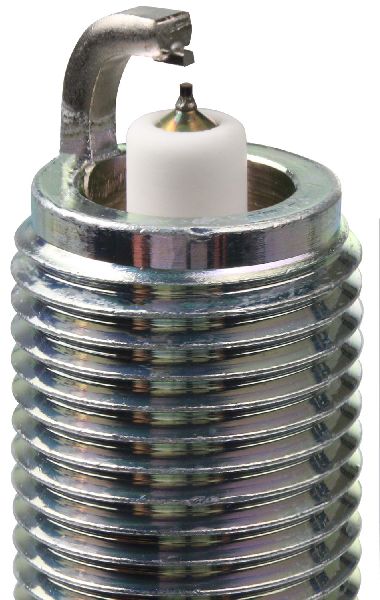
Est. part cost: $40-$90 per coil - Worn or Fouled Spark Plug 🔴 High Probability → Shop Spark Plug The 2.0L turbo engine requires specific iridium spark plugs which have a long but finite life. They can become worn, fouled with carbon or oil, or the ceramic insulator can crack, preventing a strong spark.
How to confirm: After ruling out the coil, remove and inspect the spark plug from cylinder 4. Look for a worn-down electrode, heavy carbon deposits, oil fouling, or cracks in the white ceramic. Compare it to a plug from a healthy cylinder.
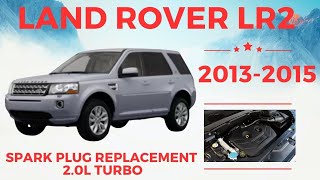
Typical fix: Replace the spark plug. It is best practice to replace all four spark plugs as a set 🎬 Watch: Step-by-step spark plug replacement for the 2.0L engine. to ensure even performance. These plugs should be pre-gapped, but verifying the gap is recommended.
Est. part cost: $15-$25 per plug - Failing Fuel Injector 🟡 Medium Probability → Shop Fuel Injector Land Rover issued TSB #SSM71894 specifically to investigate fuel injector failures causing misfires (including P0304) on 2013 models. Direct injectors operate under very high pressure and are susceptible to clogging from fuel deposits or electronic failure.
How to confirm: This is more complex. A professional can perform an injector balance test with a high-level scan tool. An experienced DIYer can swap injectors between cylinders, but this requires partially disassembling the fuel rail and is more involved than a coil/plug swap.
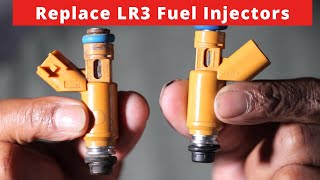
Typical fix: Replace the faulty fuel injector. This is an advanced DIY job due to the high-pressure fuel system, which must be depressurized before service. 🎬 See this walkthrough on how to swap fuel injectors. It's often recommended to replace the injector seals at the same time.
Est. part cost: $80-$160 per injector
Rare But Worth Checking
- High-Pressure Fuel Pump (HPFP) Fault: → Shop Fuel Pump While less likely to cause a single-cylinder misfire, TSB #LTB00730NAS1 explicitly links a faulty metering valve in the HPFP to misfire codes, including P0304. This issue often affects multiple cylinders and is typically accompanied by other codes like P0087 (low fuel rail pressure), P00C6, or P1315.
- Low Engine Compression: Internal engine issues like a burnt exhaust valve, worn piston rings, or a leaking head gasket can cause a loss of compression in cylinder 4, leading to a persistent misfire that does not resolve with ignition or fuel part swaps. A compression test is needed to diagnose this. One forum user reported a P0304 after a head gasket job with a slight compression difference between cylinders.
- Carbon Buildup on Intake Valves: As a gasoline direct injection (GDI) engine, the intake valves are not cleaned by fuel spray. Over time, oil vapor from the PCV system can bake onto the valves, restricting airflow. If the buildup is worse on the runner for cylinder 4, it can cause a lean misfire. This typically occurs at higher mileage and may require walnut blasting to clean.
- Vacuum Leak: A vacuum leak from a cracked PCV hose or a failed intake manifold gasket near cylinder 4 could lean out the air/fuel mixture enough to cause a misfire. This is less common for a single-cylinder code but possible.
Diagnosis Steps
- Read all trouble codes with an OBD-II scanner. Note P0304 and any other codes 🎬 Watch: A simple explanation of the P0304 cylinder 4 misfire. like P0300, P1315, or fuel pressure codes.
- Observe the Check Engine Light. If it is flashing, the misfire is severe and currently active. Avoid heavy acceleration.
- Identify Cylinder 4. On the 2.0L Turbo engine, the cylinders are numbered 4-3-2-1, starting from the passenger side (left) and moving to the driver side (right) in a US-spec vehicle.
- Swap the ignition coil from cylinder 4 with the coil from cylinder 3. Clear the codes and drive the vehicle until the check engine light returns. If the code is now P0303, you have a bad ignition coil.
- If the code remains P0304, move the coil back to its original position. Now, swap the spark plug from cylinder 4 with cylinder 3. Clear codes and drive. If the code moves to P0303, the spark plug is the issue.
- If the misfire is still on cylinder 4, carefully inspect the wiring and connector for the ignition coil and fuel injector of cylinder 4. Look for any chafed wires, loose pins, or signs of damage.
- If ignition components and wiring are good, the cause is likely a faulty fuel injector or a mechanical issue. Fuel injector diagnosis may require professional tools. A compression test can be performed to check for mechanical engine health (worn rings, bad valves).
Parts You'll Likely Need
- Ignition Coil
(OEM #LR084889)— This is the most common and easiest-to-diagnose cause of a single-cylinder misfire.
Trusted brands: Bosch, NGK, Delphi
OEM price range: $70-$100
Aftermarket price range: $40-$75 - Spark Plug
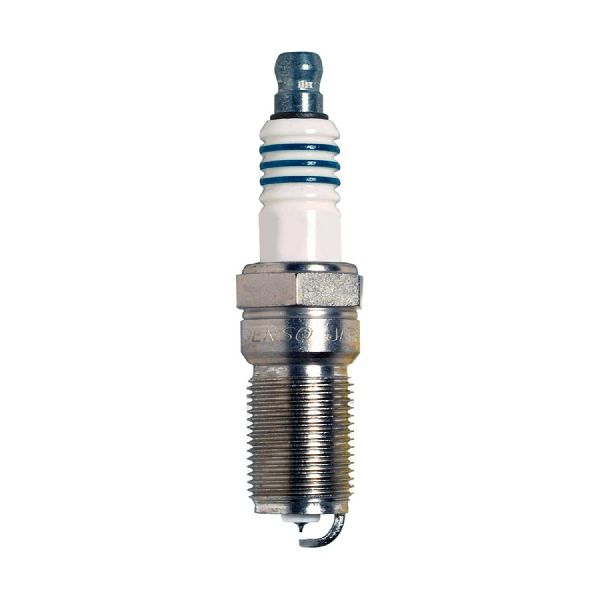
(OEM #LR123892)— As a routine maintenance item, spark plugs wear out and are a frequent cause of misfires. The 2.0L Turbo engine requires specific iridium plugs.
Trusted brands: NGK, Motorcraft
OEM price range: $20-$30
Aftermarket price range: $15-$25 - Fuel Injector
(OEM #LR079542)— A known issue documented in TSB #SSM71894 for causing misfires on this platform. Part number LR079542 is a superseded number for the original injectors.
Trusted brands: Bosch
OEM price range: $140-$180
Aftermarket price range: $80-$150
Related Codes That Often Appear With This One
- P0300 — If the misfire becomes more widespread or intermittent across cylinders, a P0300 (Random/Multiple Cylinder Misfire) code may appear.
- P0301, P0302, P0303 — These codes indicate misfires in other cylinders. Seeing them with P0304 points towards a systemic issue like the high-pressure fuel pump, a major vacuum leak, or poor fuel quality.
- P1315 — This is a Land Rover-specific code for 'Persistent Misfire'. It indicates a misfire severe enough to potentially damage the catalytic converter and is frequently mentioned alongside P030x codes in official TSBs like LTB01101NAS4 and SSM71894.
Technical Service Bulletins (TSBs) & Recalls
- LTB01101NAS4, LTB01101NAS3, LTB01101NAS2: Note that the Malfunction Indicator Lamp (MIL) may be on with P0304 and other misfire codes due to poor starting.
- SSM71894: Mentions P0304 in relation to intermittent rough running and states an investigation
Platform-Specific Known Issues
- TSB #SSM71894: Land Rover acknowledged an issue with fuel injector failures on 2013 models causing rough running and storing misfire codes, including P0304. The TSB was issued to gather data on the failures.
- TSB #LTB00730NAS1: This bulletin details how an internal fault in the high-pressure fuel pump's metering valve can cause a range of symptoms including rough idle, hard starting, and multiple misfire codes (P0300-P0304).
- TSB #LTB00916NAS5: While not directly for P0304, this TSB addresses a rattle noise and other codes (P0016, P0017) caused by a failing intake VCT (Variable Cam Timing) actuator. A severe timing issue could potentially lead to misfires.
Mechanic-Grade Diagnostic Values
- High-Pressure Fuel Rail Pressure (at idle) — expected: 3.0-8.0 MPa (approx. 435-1160 PSI). Failure: Pressure will be stuck low, around 700-900 KPa (101-130 PSI), and will not increase with engine speed. This points to a faulty high-pressure fuel pump as per TSB LTB00730NAS1.
- Low-Pressure Fuel System Pressure — expected: ~550 kPa (approx. 80 PSI). Failure: Pressure does not reach or hold near the target value within a few seconds of turning the ignition on. This could indicate a weak in-tank fuel pump.
- Ignition Coil Primary Resistance — expected: ~1.0 ohm. Failure: A reading that is significantly higher (open circuit) or lower (short) than the baseline suggests a faulty coil.
- Ignition Coil Secondary Resistance — expected: ~13.0 kOhms (13,000 ohms). Failure: A reading that is significantly outside the expected range indicates a failure in the secondary windings of the coil.
Scan Tool Commands That Help
- JLR SDD (Symptom Driven Diagnostics): Read All Stored and Accumulated DTCs — To check for underlying or manufacturer-specific codes that a generic OBD-II scanner might miss.
- JLR SDD (Symptom Driven Diagnostics): Live Data Logger (e.g., Fuel Rail Pressure, Injector Pulse Width) — To monitor real-time engine parameters for cylinder 4 compared to other cylinders to spot anomalies that could indicate the root cause of the misfire.
- JLR SDD (Symptom Driven Diagnostics): Actuator Activation / Component Test — To command specific components, like the fuel injector for cylinder 4, to operate, helping to confirm if the component itself or its control circuit is faulty without having to physically swap it.
Wiring & Ground Locations
- Engine Control Module (ECM) — Located in the engine compartment on the top, center of the firewall.. This is the central computer controlling the ignition and fuel systems. Its location is critical for any circuit testing related to injectors or coils, and ensuring its ground connection is clean and tight is a key diagnostic step for persistent electronic issues.
- Main Engine-to-Chassis Ground — Typically a braided strap connecting the engine block to the vehicle's frame/chassis, often near the starter or transmission.. A poor engine ground can cause a weak or inconsistent spark across all cylinders, potentially leading to intermittent misfires that are hard to diagnose. It can also cause issues with sensor readings.
Real Owner Repair Stories
- Reddit user r/Cartalk (2013 Land Rover LR2 w/ 2.0L EcoBoost engine) — Initially a P0304 code with rough idle and stumbling on hard acceleration. After part swaps, the code disappeared but the rough idle and stumbling remained.
❌ Tried (didn't work) Swapping ignition coils, Replacing all spark plugs, Replacing all fuel injectors, Replacing PCV valve, Cleaning intake valves and throttle body
✅ What actually fixed it The user performed a compression test and found all cylinders were consistent, but the thread ended without a final resolution posted. This highlights that even after replacing all common ignition and fuel components for cylinder 4, the issue can persist, pointing towards a deeper mechanical or electrical issue.
OEM Part Supersession History
LR079542→LR105439— Standard part revision by the manufacturer for the fuel injector.
Heads up: LR105439 is the current OEM replacement for LR079542.LR025599→LR030860— Part revision for the high-pressure fuel pump (HPFP).
Heads up: These part numbers are associated with the HPFP linked to misfire TSBs.
Model Year Variations Within This Range
- 2013-2014 vs 2015: The 2013 and 2014 models use a 6-speed automatic transmission. For the 2015 model year, the LR2 was upgraded to a 9-speed automatic transmission. While this does not directly affect the cause of a P0304 misfire, it is a significant powertrain difference to be aware of when sourcing parts or service information.
Helpful Videos


We Have This Part in Stock


The information in this article is provided for general reference and educational purposes only. Vehicle specifications, procedures, and part compatibility can vary by production date, trim level, and region. Always consult your vehicle's factory service manual and verify part numbers before purchasing or performing repairs. Safety-critical components such as airbags, seat belts, and braking systems should be installed by a qualified professional.
- Land Rover LR2:
- 🧭 Diagnostic Flowchart
- 🎬 Helpful Videos
- 🛍️ Shop This Part
- What's Unique About the 2013-2015 Land Rover LR2
- Symptoms You May Notice
- Most Likely Causes
- Rare But Worth Checking
- Diagnosis Steps
- Parts You'll Likely Need
- Related Codes That Often Appear With This One
- Technical Service Bulletins (TSBs) & Recalls
- Platform-Specific Known Issues
- Mechanic-Grade Diagnostic Values
- Scan Tool Commands That Help
- Wiring & Ground Locations
- Real Owner Repair Stories
- OEM Part Supersession History
- Model Year Variations Within This Range
- 🎟️ Get 5% Off