

P0304 on 2006-2015 Lexus IS350: Cylinder 4 Misfire Causes and Fixes
P0304 on a Lexus IS350 indicates a misfire in cylinder 4. The most common cause is a failed ignition coil or a worn spark plug. A simple DIY fix is to swap the coil with a neighboring cylinder to see if the code moves. Expect to pay $50-$90 for an OEM Denso coil and around $15 for a Denso Iridium spark plug.
- P0304 is a misfire on cylinder 4, the middle cylinder on the driver's side.
- The most likely cause is a bad ignition coil, followed by a worn spark plug.
- Diagnose by swapping the coil from cylinder 4 with another cylinder (like 6) to see if the misfire code follows the coil.
- Unlike the IS250, significant carbon buildup is NOT a common cause of misfires on the IS350 due to its superior D-4S fuel injection system.
- Do not drive if the check engine light is flashing to avoid damaging the catalytic converters.
What's Unique About the 2006-2015 Lexus IS350
Unlike its IS250 sibling which is plagued by carbon buildup on intake valves due to its direct-injection-only fuel system, the IS350's 2GR-FSE engine is far less susceptible. The IS350 features the Toyota D-4S system, which uses both direct injectors and port injectors. The port injectors spray fuel onto the intake valves, effectively cleaning them and preventing the heavy carbon deposits that commonly cause misfires on the IS250. Therefore, while carbon buildup is a top suspect for P0304 on an IS250, it is a much less likely cause on an IS350.
Generation note: The 2006-2015 year range covers the entire second generation (XE20) of the Lexus IS. The 2GR-FSE engine was used throughout this generation for the IS350 model, so the information in this guide is applicable to all vehicles in this range.
Symptoms You May Notice
- Rough or shaky idle, sometimes feeling like the car is about to stall.
- Hesitation or stumbling during acceleration.
- Flashing or solid Check Engine Light.
- Noticeable loss of engine power.
- Smell of unburned fuel from the exhaust.
- Engine vibration that can be felt in the cabin.
- A change in the engine's sound; an unbalanced or "creaking" noise.
- Assuming carbon buildup is the primary cause. While a major issue on the IS250, the IS350's D-4S fuel injection system with port injectors makes severe, misfire-causing carbon buildup much less common.
- Replacing parts without diagnosis. The coil and plug swap diagnostic method is crucial. Owners who replace the spark plug and coil on cylinder 4 without testing may find the code returns, indicating a different root cause.
Most Likely Causes
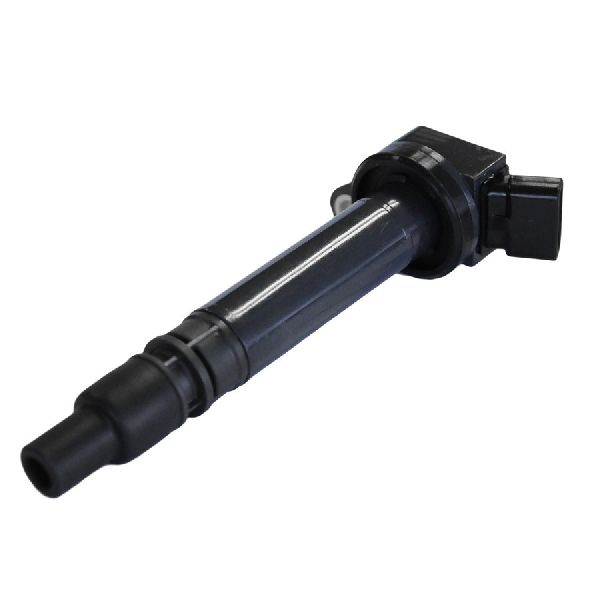
- Faulty Ignition Coil 🔴 High Probability → Shop Ignition Coil Ignition coils are a common wear item on most modern engines, especially with high mileage. The coil-on-plug design means there is one coil per cylinder that can fail independently. On the 2GR-FSE, they are known to fail without warning.
How to confirm: Swap the ignition coil from cylinder 4 (middle, driver's side) with the coil from cylinder 6 (rear, driver's side). Clear the codes and drive. If the code changes to P0306, the coil is bad. This is the most common and effective DIY diagnostic step. 🎬 Watch: Step-by-step guide to diagnosing and fixing Lexus IS misfire codes.
Typical fix: Replace the faulty ignition coil. Many owners choose to replace all three on the same bank (Bank 2) at once due to the labor involved in accessing them under the intake manifold. Some owners with high mileage (e.g., 232k miles) opt to replace all six.
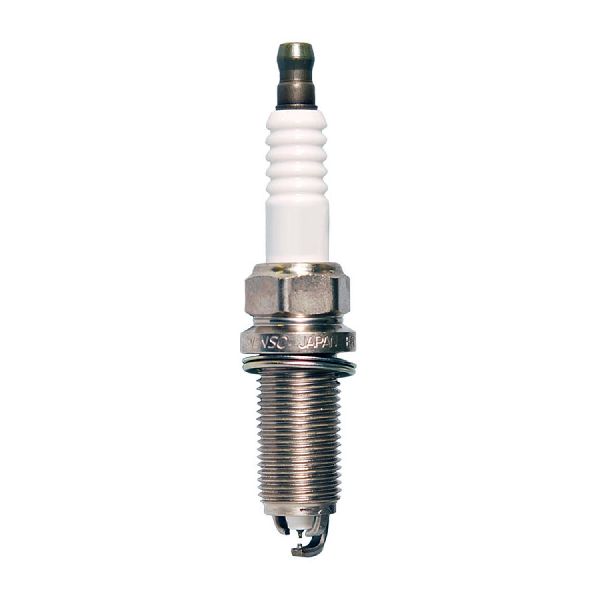
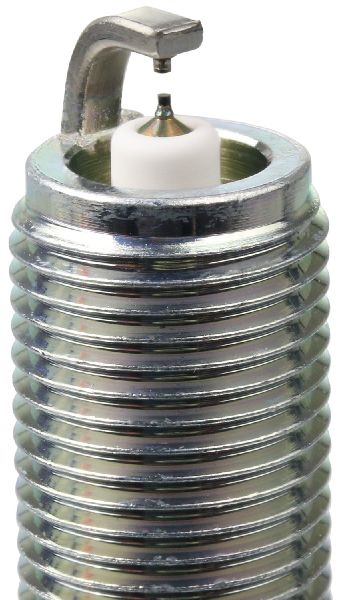
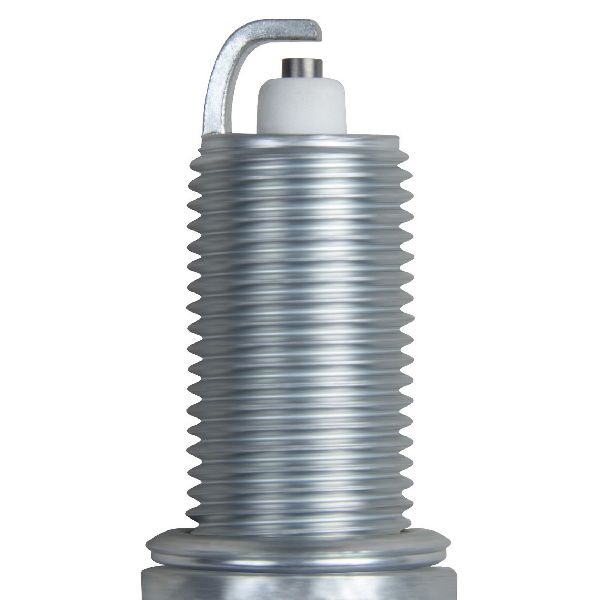
Est. part cost: $50-$90 - Worn or Fouled Spark Plug 🟡 Medium Probability → Shop Spark Plug Spark plugs are a maintenance item with a typical replacement interval of 60,000 miles. An overdue plug, a plug that has fouled from oil, or even a new but defective plug can fail to produce a strong spark. Occasionally, a plug can work itself loose, causing a misfire.
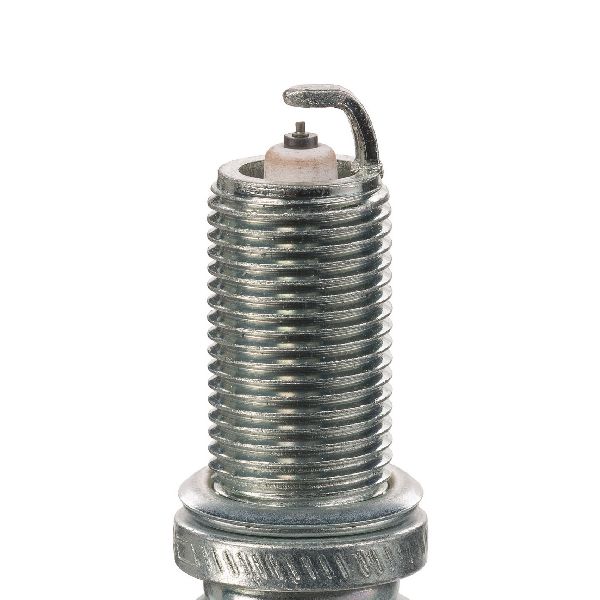
How to confirm: After ruling out the ignition coil, swap the spark plug from cylinder 4 with another cylinder (e.g., cylinder 6). If the code moves, the spark plug is the issue. Visually inspect the removed plug for wear, carbon tracking, oil fouling, or damage to the ceramic insulator.
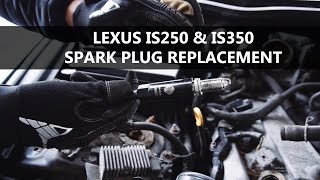
Typical fix: Replace the faulty spark plug. It is best practice to replace all six spark plugs at the same time to maintain consistent performance and avoid future misfires. Use the correct Iridium long-life plugs. 🎬 Watch: How to replace spark plugs on a 2006-2015 Lexus IS350.
Est. part cost: $12-$25 - Faulty Fuel Injector ⚪ Low Probability → Shop Fuel Injector While reliable, fuel injectors can become clogged or fail electronically over time, leading to insufficient fuel delivery. The 2GR-FSE has both port and direct injectors, adding complexity. A failure in either can cause a misfire.
How to confirm: This is diagnosed after ignition components have been ruled out. A professional can perform a fuel injector balance test. A DIY method involves listening to the injector with a mechanic's stethoscope for a consistent clicking sound. An inconsistent or silent injector is suspect.
Typical fix: Replace the faulty fuel injector. This is more labor-intensive than an ignition coil or spark plug, especially for the direct injectors.
Est. part cost: $100-$200
Rare But Worth Checking
- Vacuum Leak: A vacuum leak near the intake manifold runner for cylinder 4 could lean out the mixture and cause a misfire. Check hoses (especially PCV hoses) and gaskets around the intake manifold.
- Low Cylinder Compression: If ignition and fuel system checks do not reveal the cause, a mechanical issue like a worn piston ring, a poorly sealing valve, or even a head gasket leak could be the culprit. A compression test and/or a leak-down test is needed to diagnose this.
- Wiring Harness Issue: The wiring connector or harness leading to the ignition coil or fuel injector for cylinder 4 could be damaged, loose, or corroded. This can cause an intermittent connection and trigger a misfire code.
Diagnosis Steps
- Confirm the P0304 code using an OBD-II scanner. Note any other codes present, such as P0300 or P0354.
- Identify cylinder 4. It is the middle cylinder on the driver's side (Bank 2). The cylinders on this bank are numbered 2, 4, 6 from front to back. Accessing this bank requires removing the plastic engine cover and potentially the air intake assembly.
- Swap the ignition coil from cylinder 4 with the coil from cylinder 6 (the rearmost cylinder on the same bank). This is the most effective first step.
- Clear the codes, start the engine, and drive until the check engine light returns. A short drive with varied RPMs should be sufficient.
- Re-scan the codes. If the code is now P0306, the ignition coil you moved is faulty and needs to be replaced.
- If the code remains P0304, the coil is likely good. Move the coil back to its original position and swap the spark plug from cylinder 4 with the one from cylinder 6.
- Clear the codes and drive again. If the code changes to P0306, the spark plug is faulty. It is recommended to replace all six plugs as a set.
- If the code remains P0304 after swapping both the coil and plug, the issue is likely with the fuel injector, wiring harness, or a mechanical engine problem (compression). Inspect the wiring and connector to the coil and injector for cylinder 4 for any visible damage. Further professional diagnosis may be required.
Parts You'll Likely Need
- Ignition Coil
(OEM #90919-A2005)— This is the most common failure part for a single-cylinder misfire on the IS350.
Trusted brands: Denso (OEM), NGK
OEM price range: $70-$100
Aftermarket price range: $40-$70 - Iridium Spark Plug
(OEM #90919-01249)— Spark plugs are a routine maintenance item and the second most likely cause of a misfire after the ignition coil.
Trusted brands: Denso (OEM), NGK
OEM price range: $18-$25
Aftermarket price range: $12-$20
Related Codes That Often Appear With This One
- P0300 — If multiple cylinders are misfiring randomly, a P0300 will be stored alongside the specific cylinder codes. This could point to a more systemic issue like a vacuum leak or low fuel pressure affecting the entire engine.
- P0302, P0306 — Misfires on other cylinders on the same bank (Bank 2) could indicate a shared problem, such as a failing catalytic converter for that bank or a vacuum leak affecting all cylinders on that side.
- P0354 — This code indicates a malfunction in the ignition coil 'D' (Cylinder 4) primary or secondary circuit. If you see this along with P0304, it strongly points to a problem with the ignition coil itself or its wiring/connector, rather than a spark plug or injector.
Platform-Specific Known Issues
- Owner Experience: Intermittent P0304 that cleared itself, then returned: An owner on ClubLexus reported getting a P0304 code that would appear and then clear on its own for two weeks before finally staying on. The spark plugs had been recently changed. The community advised swapping the coil pack first. The owner, with 232,000 miles on the vehicle, decided to replace all the coil packs as a preventative measure.
- Owner Experience: P0304 returned after spark plug change: → Shop Spark Plug A ClubLexus member experienced a P0304 with rough running. They changed the spark plugs, and the car ran fine for a day before the code returned. They then changed the coil pack on cylinder 4, with the same result. This highlights the importance of swapping components to diagnose, rather than just replacing them, as the issue could be something else like an injector or wiring.
Mechanic-Grade Diagnostic Values
- Direct Fuel Injector Resistance — expected: 11.6 to 12.4 Ω at 20°C (68°F). Failure: Resistance outside of the specified range indicates a faulty injector.
- Port Fuel Injector Resistance — expected: 13.4 to 14.2 Ω at 20°C (68°F). Failure: Resistance outside of this range suggests a faulty port injector.
- High-Pressure Fuel System Pressure — expected: 4 to 13 MPa (580 to 1,885 psi), varies with engine load.. Failure: Pressure that is consistently low or does not increase under load may indicate a failing high-pressure fuel pump.
- Low-Pressure Fuel System Pressure — expected: Approximately 400 kPa (58 psi).. Failure: Low or erratic pressure can indicate a weak in-tank fuel pump.
- Cylinder Compression Pressure (Standard) — expected: 1.4 MPa (14.3 kgf/cm², 199 psi). Failure: Significantly lower pressure indicates mechanical engine issues.
- Cylinder Compression Pressure (Minimum) — expected: 0.98 MPa (10.0 kgf/cm², 142 psi). Failure: Pressure below this minimum warrants further mechanical diagnosis.
- Cylinder-to-Cylinder Compression Difference — expected: 0.1 MPa (1.0 kgf/cm², 15 psi) or less. Failure: A large variance between cylinder 4 and others points to a localized mechanical problem.
Hidden / Shadow Codes Worth Checking
- Mode $06, TID $A5, CID $04: This refers to the raw misfire count data for Cylinder 4 within the ECM's diagnostic memory. It can show misfires that are occurring but haven't yet reached the threshold to trigger a P0304 code. (see via An advanced scan tool with Mode $06 capabilities, such as Toyota's Techstream software.)
Scan Tool Commands That Help
- Toyota Techstream: Active Test: Control the Injector — This function allows a technician to individually command each fuel injector to operate, helping to isolate a non-responsive or clogged injector without having to remove it. It can be used to confirm if the injector for cylinder 4 is functioning electronically.
- Toyota Techstream: Active Test: Control the Fuel Pump Speed — This test can verify the health of the low-pressure in-tank fuel pump. If random misfires (P0300) are also present, this can help rule out a systemic fuel delivery issue.
- Toyota Techstream: Data List: Misfire Count (Cylinder #4) — To monitor live misfire counts on cylinder 4 while driving under various load conditions. This helps confirm the misfire is actively occurring and can be used to verify a fix has been successful.
Wiring & Ground Locations
- A1, A2, A3 — Located at the left rear of the engine compartment.. These are primary ground points for the engine control system. A loose or corroded connection at these points could cause erratic behavior in sensors and actuators, including the ignition coils and injectors.
- B1 — Located at the right front of the engine compartment.. Another key engine bay ground point. Verifying it is clean and tight is a crucial step in diagnosing electrical faults that could lead to a misfire.
- C1 — Located at the front of the engine.. This ground is specifically related to the engine block and components mounted on it. An issue here could affect the ground path for the ignition coils or injectors.
Real Owner Repair Stories
- ClubLexus user 'timmy0tool' (Toyota Tacoma with high mileage (240k miles), relevant due to similar engine architecture principles.) — Persistent misfire on a single cylinder.
❌ Tried (didn't work) Replacing the spark plug on the affected cylinder., Replacing the ignition coil on the affected cylinder.
✅ What actually fixed it A leak-down test revealed low compression due to a poor valve seat, requiring cylinder head repair. This highlights that if ignition component swaps don't solve the P030x code, the next step is mechanical testing. - Reddit user 'davidnwc' (Lexus IS350 (year not specified)) — Random misfires appearing on different cylinders at different times.
❌ Tried (didn't work) Moving coil packs around to diagnose a specific bad coil.
✅ What actually fixed it The problem was a leaking valve cover gasket, which allowed oil to seep into the spark plug wells, fouling the plugs and causing misfires. The fix was to replace the valve cover gasket.
OEM Part Supersession History
90919-02250, 90919-02255, 90919-02256, 90919-A2003→90919-A2005— Standard part evolution for improved reliability or manufacturing changes.
Model Year Variations Within This Range
- 2009-2015: According to forum discussions, engines from 2009 onwards received factory updates to pistons, rings, and valve springs. This may address potential oil consumption and reduce the already low chance of certain mechanical failures on later models within this generation.
- 2014-2015: For the 2014 model year refresh, the rear-wheel-drive IS350 received a new 8-speed automatic transmission, replacing the previous 6-speed. While the 2GR-FSE engine itself remained, powertrain control software and vehicle weight changed, which can affect diagnostic feel but not the root causes of P0304.
Diagnostic Flowchart
Other Known Issues on This Vehicle
Issues unrelated to this code that are worth knowing about as an owner of this generation:
- Cracked or Melting Dashboard and Door Panels 🟠 Medium — Extremely common, especially in vehicles exposed to heat and humidity. Affects most 2006-2008 models. (Ref: Lexus Warranty Enhancement Program (ZLD & ZLZ). This program had an expiration date and is likely no longer available for most owners.)
- Water Pump Failure 🔴 High — A well-known weak point on the 2GR-FE/FSE engines. Can fail prematurely (under 100k miles), often starting as a grinding noise or a slow coolant leak. Sudden failure can cause rapid overheating.
- Front Timing Cover Oil Leak 🟠 Medium — A common oil leak that develops over time. The repair is very labor-intensive (often requiring engine removal on transverse applications) for a relatively inexpensive gasket.
- Brake Actuator Failure 🔴 High — Less common than other issues but very serious. Can result in a stiff brake pedal, various warning lights (ABS, VSC, Brake), and a sudden loss of braking assistance. (Ref: There have been warranty extensions for some models, but it varies.)
Used vs. New Parts: Buying Guide for This Vehicle
When a used part is the smart pick: For this repair, using a used OEM ignition coil from a low-mileage donor vehicle is a reasonable cost-saving measure. Since they fail independently, a used coil can be a good temporary or long-term fix. Other electronic components like sensors could also be sourced used, but mechanical engine parts are riskier.
Donor-vehicle mileage cap: roughly under 80000 miles for the part to have meaningful remaining life.
What to inspect on the donor part:
- For ignition coils, check for any cracks in the plastic housing or corrosion on the electrical connector pins.
- Ensure the rubber boot is pliable and not brittle, cracked, or swollen from oil exposure.
- Ask for the VIN of the donor car to verify its mileage and check for any reported accident history that could have damaged engine components.
OEM-only on this vehicle (don't cheap out):
- Fuel Injectors (Direct Injectors): Due to the high pressures and precision involved in the D-4S system, using new OEM (Denso) injectors is highly recommended to avoid performance issues and leaks.
- Engine Control Unit (ECU): Never buy a used ECU unless you have access to dealer-level tools to reprogram the immobilizer and vehicle-specific settings. It is not a plug-and-play part.
Aftermarket brands forum-validated for this vehicle:
- Denso (for ignition coils, spark plugs, injectors - they are the OEM supplier)
- NGK (for ignition coils and spark plugs)
Brands owners have reported issues with on this vehicle:
- Unbranded, no-name ignition coils from online marketplaces. While cheap, they have a very high failure rate and often cause more diagnostic headaches than they solve.
Real Owner Stories
Aggregated from forums and TSBs cited above. Mileages and costs reflect what owners reported in those sources.
2006 Lexus IS350 2GR-FSE — 232000 miles
Symptoms: The P0304 code appeared intermittently and cleared itself for two weeks before finally staying on. The spark plugs had been recently changed.
What fixed it: The owner decided to replace all the coil packs as a preventative measure after the community recommended swapping them to confirm failure.
Source hint: ClubLexus.com - 2006 IS350 P0304 Cylinder 4 Misfire [Thread ID: 983171]
Lexus IS350 2GR-FSE
Symptoms: Rough running and a P0304 code. The owner changed spark plugs and the car ran fine for one day before the code returned. Replacing the coil pack on cylinder 4 also did not resolve the recurring code.
What fixed it: The source indicates that in cases where plugs and coils fail to fix the issue, the cause is often a fuel injector, wiring, or a mechanical issue like a head gasket leak.
Source hint: ClubLexus.com - P0304 keeps coming back [Thread ID: 850116]
Lexus IS250 (Similar Platform)
Symptoms: The vehicle experienced P0304 and P0354 codes occurring together.
What fixed it: This combination points strongly to a coil or wiring circuit fault; diagnostic steps involved checking the wiring harness back to the ECM.
Source hint: ClubLexus.com - Cylinder misfire, codes: P0304, P0354 [Thread ID: 890479]
Related OBD-II Codes
Frequently Asked Questions
Where is cylinder 4 located on my Lexus IS350 2GR-FSE engine?
Which spark plugs should I use for my IS350 to prevent P0304 misfires?
Is there a specific brand of ignition coil recommended for the 2GR-FSE?
Why do some owners replace all three coils on Bank 2 when only cylinder 4 is misfiring?
Can I diagnose a P0304 at home without buying new parts first?
Does the 2GR-FSE engine have both port and direct injectors?
Helpful Videos
We Have This Part in Stock


The information in this article is provided for general reference and educational purposes only. Vehicle specifications, procedures, and part compatibility can vary by production date, trim level, and region. Always consult your vehicle's factory service manual and verify part numbers before purchasing or performing repairs. Safety-critical components such as airbags, seat belts, and braking systems should be installed by a qualified professional.
- Lexus IS350:
- 🧭 Diagnostic Flowchart
- 🎬 Helpful Videos
- 🛍️ Shop This Part
- What's Unique About the 2006-2015 Lexus IS350
- Symptoms You May Notice
- Most Likely Causes
- Rare But Worth Checking
- Diagnosis Steps
- Parts You'll Likely Need
- Related Codes That Often Appear With This One
- Platform-Specific Known Issues
- Mechanic-Grade Diagnostic Values
- Hidden / Shadow Codes Worth Checking
- Scan Tool Commands That Help
- Wiring & Ground Locations
- Real Owner Repair Stories
- OEM Part Supersession History
- Model Year Variations Within This Range
- Other Known Issues on This Vehicle
- Used vs. New Parts: Buying Guide for This Vehicle
- Real Owner Stories
- 2006 Lexus IS350 2GR-FSE — 232000 miles
- Lexus IS350 2GR-FSE
- Lexus IS250 (Similar Platform)
- Related OBD-II Codes
- Frequently Asked Questions
- 🎟️ Get 5% Off