

P0304 on 2011-2015 Lexus RX HYBRID: Cylinder 4 Misfire Causes and Fixes
P0304 on a Lexus RX 450h most often points to a failed ignition coil or a worn-out spark plug on cylinder 4. Swapping the coil with an adjacent cylinder is a quick, no-cost diagnostic step. Cylinder 4 is the middle, front-facing cylinder, making it easy to access. A new OEM ignition coil costs around $95-$130, while a set of iridium spark plugs is about $85.
- P0304 indicates a misfire in cylinder 4, which is the middle cylinder on the engine bank closer to the radiator.
- The most probable cause is a bad ignition coil or a worn spark plug.
- A simple DIY diagnostic is to swap the cylinder 4 ignition coil with another cylinder's coil to see if the misfire code follows it.
- Do not ignore a flashing check engine light, as this signals a severe misfire that can quickly damage your catalytic converter.
- Be aware of the TSB regarding cold-start misfires; if the problem only occurs after the car has been sitting for hours, a dealer visit for a potential software update may be necessary.
What's Unique About the 2011-2015 Lexus RX HYBRID
For the 2011-2015 RX 450h, which uses the 2GR-FXE engine, a P0304 code can be straightforward, but it's also linked to a specific known issue. 🎬 Watch: Common causes and fixes for the P0304 misfire code. Lexus issued a Technical Service Bulletin (TSB L-SB-0045-12 Rev) for rough running and misfire codes (including P0304) that occur on initial startup after the vehicle has been sitting, a condition known as a 'cold soak'. The TSB repair procedure may involve replacing fuel injectors and/or an ECM software update, indicating that the cause can go beyond typical ignition components.
Diagnostic Flowchart
Tap your situation to follow the diagnostic path that matches what you're seeing on this vehicle.
Symptoms You May Notice
- Rough running, especially on a cold start
- Engine hesitation or stumbling during acceleration
- Noticeable shaking or vibration, especially at idle
- Solid or flashing Check Engine Light
- Reduced fuel economy
- Smell of unburned fuel from the exhaust
- Replacing oxygen sensors. O2 sensors report on the results of combustion; they do not typically cause a single-cylinder misfire.
- Replacing the catalytic converter. A misfire can destroy a catalytic converter, but a bad converter does not cause a P0304 code.
Most Likely Causes
- Failed Ignition Coil 🔴 High Probability → Shop Ignition Coil Coil-on-plug systems are common failure points on many modern engines as they age. Heat cycles and vibration eventually cause the internal windings to fail. Owners on forums frequently report this as the first part to fail when a misfire code appears. A failing coil can be intermittent at first before it fails completely.
How to confirm: Swap the ignition coil from cylinder 4 with the coil from another cylinder on the same bank (e.g., cylinder 2 or 6). Clear the codes and drive the vehicle. If the code changes to P0302 or P0306, the coil is faulty. Cylinder 4 is the middle cylinder on the front bank (Bank 2), which is closest to the radiator, making this swap relatively easy.
Typical fix: Replace the faulty ignition coil. It is often recommended to replace the corresponding spark plug at the same time. Many owners choose to replace all coils on the front bank for peace of mind.
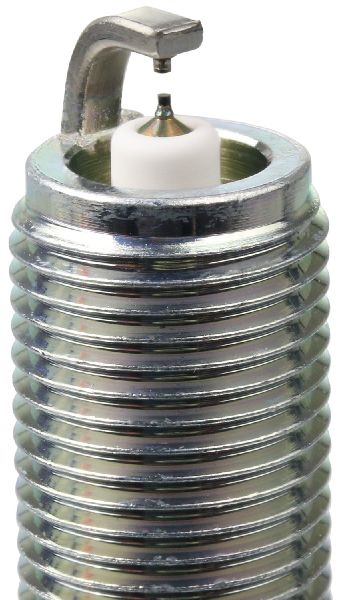
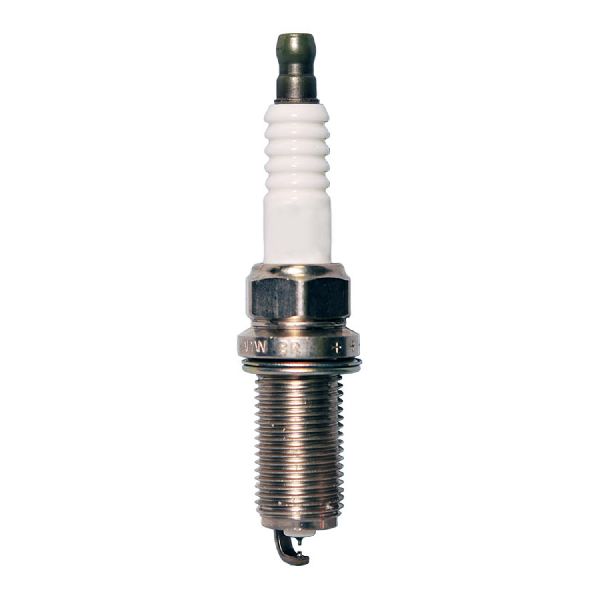
Est. part cost: $50-$130 - Worn or Fouled Spark Plug 🔴 High Probability → Shop Spark Plug Spark plugs are a regular maintenance item with a service life of around 100,000-120,000 miles. If they are past their service life, the electrode can wear down, increasing the gap and leading to a weak or inconsistent spark.
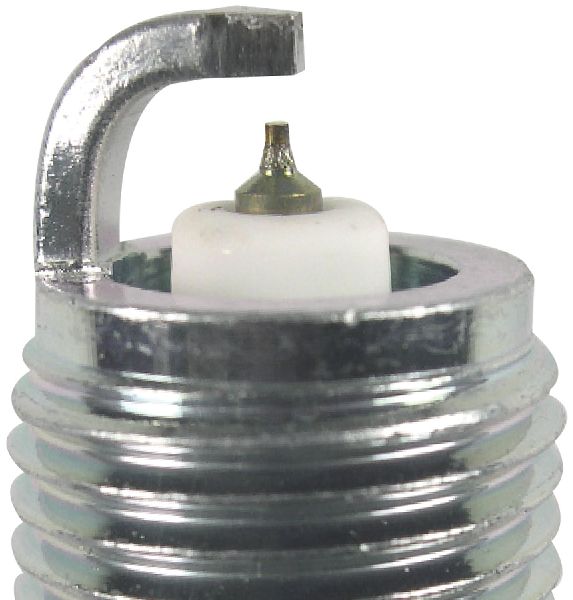
How to confirm: After ruling out the ignition coil, remove the spark plug from cylinder 4. Inspect it for wear (rounded electrode), carbon fouling, or oil deposits. A healthy iridium plug should have a sharp center electrode and a light tan color on the insulator.
Typical fix: Replace the spark plug. It is best practice to replace all six spark plugs at once to ensure even performance. Note that replacing the rear three plugs (Bank 1) is significantly more labor-intensive, requiring removal of the wiper cowl and intake manifold.
Est. part cost: $15-$25 per plug - Faulty Fuel Injector 🟡 Medium Probability → Shop Fuel Injector
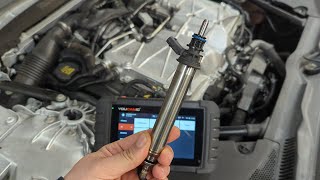
How to confirm: This is more difficult to diagnose for a DIYer. A professional can perform a fuel injector balance test. You can also listen to the injector with a mechanic's stethoscope; it should make a consistent clicking sound. The cold-soak TSB (L-SB-0045-12 Rev) specifically points to fuel injectors as a potential cause for cold-start misfires.
Typical fix: Replace the faulty fuel injector. This is often done as a set for the affected bank if related to the TSB.
Est. part cost: $100-$250
Rare But Worth Checking
- ECM Software Calibration: As noted in TSB L-SB-0045-12 Rev, misfires on cold starts can be related to the engine control software. A related TSB for a newer model (L-SB-0044-19) explicitly calls for an ECM reprogram along with coil replacement, showing a precedent for software-based fixes.
- Vacuum Leak: A leak in the intake manifold gasket near cylinder 4 can lean out the air/fuel mixture and cause a misfire. This is less common for a single-cylinder misfire but possible. A smoke test is the most effective way to diagnose this.
- Low Engine Compression: This is a serious mechanical issue, such as a burnt valve, worn piston rings, or a leaking head gasket. A compression test is needed to confirm this. This is the least likely cause on a well-maintained 2GR-FXE.
Diagnosis Steps
- Read the code with an OBD-II scanner and check for any other pending or stored codes. Note the freeze-frame data.
- Locate cylinder 4. On the transversely mounted 2GR-FXE engine, the bank closer to the firewall is Bank 1 (cylinders 1, 3, 5, from passenger to driver side). The bank closer to the radiator is Bank 2 (cylinders 2, 4, 6, from passenger to driver side). Cylinder 4 is the middle cylinder on the front bank (Bank 2).
- Swap the ignition coil from cylinder 4 with the coil from cylinder 2 (the cylinder on the passenger side of the front bank). Clear the codes.
- Drive the vehicle and re-scan. If code P0302 appears, the ignition coil is bad and needs replacement.
- If code P0304 returns, the next step is the spark plug. Before replacing, inspect the wiring and connector to the coil for any damage.
- Replace the spark plug in cylinder 4. It's recommended to replace all six, but be aware the rear bank is a difficult job requiring removal of the cowl and intake assembly. SAFETY NOTE: When working on the ignition system, it is recommended to follow the manufacturer's procedure for disabling the high-voltage hybrid system by removing the service plug.
- If the misfire persists after a new coil and plug, the issue is likely a fuel injector or, less commonly, a mechanical problem. At this point, professional diagnosis may be required, referencing TSB L-SB-0045-12 Rev if the issue occurs on cold starts.
Parts You'll Likely Need
- Ignition Coil
(OEM #90919-A2007, superseded by 90919-A2013)— This is the most common cause of a single-cylinder misfire and is a relatively simple part to replace or test by swapping.
Trusted brands: Denso (OEM), NGK, Delphi
OEM price range: $95-$130
Aftermarket price range: $40-$80 - Iridium Spark Plug
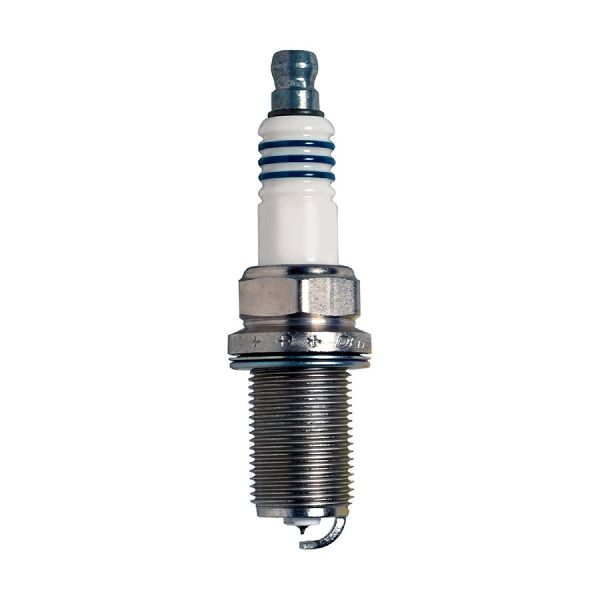
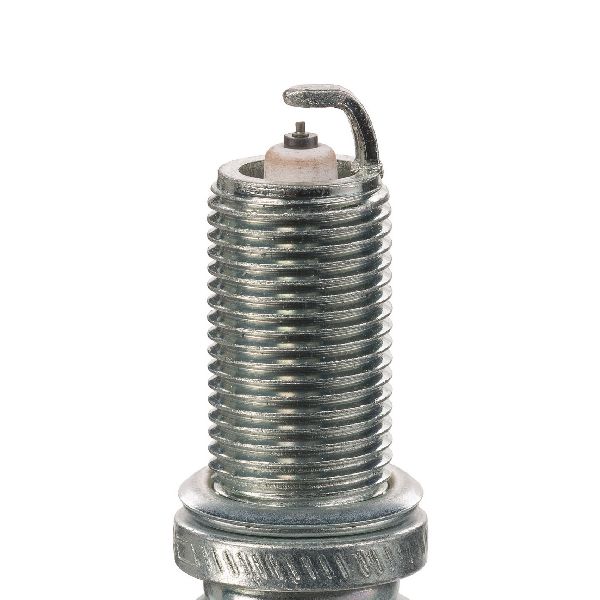
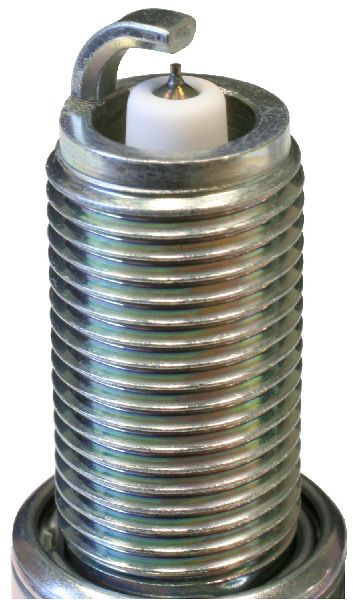
(OEM #90919-01247 (Denso FK20HR11))— Spark plugs are a maintenance item and the second most likely cause of a misfire. Worn plugs can't create a strong enough spark for proper combustion.
Trusted brands: Denso (OEM), NGK
OEM price range: $15-$20
Aftermarket price range: $8-$15
Related Codes That Often Appear With This One
- P0300 — This is a 'Random/Multiple Cylinder Misfire' code. It may appear alongside P0304 if the misfire is intermittent or beginning to affect other cylinders, or if the cause is systemic like the cold-soak TSB issue.
- P0301, P0302, P0303, P0305, P0306 — If other cylinder-specific misfire codes are present, it points towards a more systemic problem like a vacuum leak, low fuel pressure, or the cold-soak TSB issue which affects all cylinders.
- P0354 — This code means 'Ignition Coil 'D' Primary/Secondary Circuit Malfunction'. It specifically points to an electrical fault within the ignition coil or its circuit for cylinder 4, rather than just a performance-based misfire. If you see this code, the coil is almost certainly the problem.
Technical Service Bulletins (TSBs) & Recalls
- L-SB-0045-12 Rev: Addresses MIL 'ON' with DTCs P0300-P0306 and/or rough running on initial start-up after a cold soak for 2010-2017 RX 450h vehicles. The repair procedure may involve replacing fuel injectors.
Platform-Specific Known Issues
- A known issue documented in Lexus TSB L-SB-0045-12 Rev describes misfire codes (P0300-P0306) and rough running specifically after a cold start. The fix involves a specific repair procedure outlined by the manufacturer, which may include ECM software updates and/or fuel injector replacement.
Mechanic-Grade Diagnostic Values
- Ignition Coil Resistance (Primary) — expected: 0.49 - 0.57 Ω. Failure: A reading outside of this range indicates a faulty primary winding in the coil.
- Ignition Coil Resistance (Secondary) — expected: 9.5 - 11.1 kΩ. Failure: A reading outside of this range indicates a faulty secondary winding in the coil.
Hidden / Shadow Codes Worth Checking
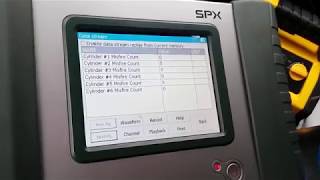
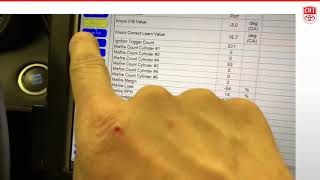
- Misfire Monitor Data (Not a DTC): Techstream provides detailed misfire counts that may not have reached the threshold to set a CEL. It shows 'Misfire Rate' for current misfires and 'EWMA' (Exponentially Weighted Moving Average) for historical misfires over the last 10 drive cycles. This allows a technician to see which cylinder is misfiring intermittently even without a stored P0304 code. (see via Toyota Techstream software, under the 'Monitor' screen, with 'Details' selected for the Misfire monitor.)
Scan Tool Commands That Help
- Techstream: Misfire Monitor — To diagnose intermittent misfires that are not consistently setting a trouble code. It provides live and historical counts per cylinder to pinpoint the source.
- Techstream: Active Test: Check the Cylinder Compression — To perform a relative compression test by measuring cranking speed variations. This can quickly rule out or confirm a base mechanical engine problem (like a bad valve or piston rings) without using a manual compression gauge.
- Techstream: Active Test: Control the Fuel Pump / Speed — To verify fuel pump operation independently of the engine running, helping to diagnose if a fuel delivery issue is contributing to the misfire.
- Techstream: Snapshot Recording (All Data) — To capture all engine data parameters during a specific event, such as a cold start or a specific RPM range, to duplicate and analyze an intermittent misfire condition as recommended by Lexus Tech-Tip L-TT-0093-12.
Wiring & Ground Locations
- Engine Harness Grounds to Chassis — There are typically two main grounding wires from the valve covers to the chassis frame, often near the strut towers.. A poor ground connection can cause erratic behavior in sensors and ignition components, leading to spurious misfire codes. Ensuring these are clean and tight is a crucial step in diagnosing electrical issues.
- ECM/Sensor Ground Bundle — A bundle of ground wires for the engine computer and various sensors often attaches directly to a boss on the side of the front cylinder head or valve cover.. This is the reference ground for the ignition coils and injectors. A loose or corroded connection here can directly cause misfires on one or more cylinders.
- Starter/Transmission Ground — A large gauge wire typically runs from a bolt on the top of the transmission case to the chassis near a motor mount.. While primarily for the starter, this ground is part of the engine's overall grounding scheme. A poor connection can force starter current to find other paths, potentially damaging more sensitive electronic components.
Real Owner Repair Stories
- ClubLexus Forum (Lexus RX (3rd Gen)) — P0304 code appeared, was cleared, and then reappeared about a week later. The vehicle ran great with good acceleration, but fuel consumption was slightly high. No harsh running or rough idle was immediately noticeable.
❌ Tried (didn't work) Clearing the code (it returned).
✅ What actually fixed it The discussion strongly indicated a deteriorating ignition coil that had not yet failed completely. The confirmed diagnostic path was to swap the cylinder 4 coil with another cylinder's coil to see if the fault code followed the part, which is the standard procedure for confirming a bad coil.
When the Usual Fixes Don't Work
- While the most common fix for P0304 is an ignition coil or spark plug, owners should be aware of the official Lexus TSB L-SB-0045-12 Rev. This bulletin applies if the misfire occurs primarily on a cold start after the vehicle has been sitting. In these specific cases, simply replacing ignition components may not solve the problem. The actual fix, per Lexus, could be faulty fuel injectors or require an ECM software update, representing a much more complex and expensive repair than a simple tune-up part. A forum user with a 2010 model experienced this, replacing coils and plugs for cold-start misfires with no success, which points directly to this TSB as the likely cause.
OEM Part Supersession History
90919-A2007→90919-A2013— Standard part evolution for improved reliability or manufacturing changes. The new part is specified in later TSBs for misfire issues, indicating it is the preferred replacement.
Heads up: None. 90919-A2013 is the direct, backward-compatible replacement for 90919-A2007 and several older part numbers including 90919-02251, 90919-A2002, and 90919-A2004.
Model Year Variations Within This Range
- 2013-2015: These models received a significant facelift. While the core 2GR-FXE engine remained the same, a 'Drive Mode Select' system (Eco, Normal, Sport) was added. Sport mode alters throttle response and steering feel. This introduces different electronic control logic for the powertrain compared to the 2011-2012 models, though it is not known to directly alter the root causes of P0304.
- 2011-2015: The 2GR-FXE engine used in this generation of the RX450h features port fuel injection, not the more complex D-4S system (combined port and direct injection) that was introduced on other Lexus models around the same time. This makes it less susceptible to intake valve carbon buildup issues seen on direct-injection-only engines.
Helpful Videos

We Have This Part in Stock

The information in this article is provided for general reference and educational purposes only. Vehicle specifications, procedures, and part compatibility can vary by production date, trim level, and region. Always consult your vehicle's factory service manual and verify part numbers before purchasing or performing repairs. Safety-critical components such as airbags, seat belts, and braking systems should be installed by a qualified professional.
- Lexus RX HYBRID:
- 🧭 Diagnostic Flowchart
- 🎬 Helpful Videos
- 🛍️ Shop This Part
- What's Unique About the 2011-2015 Lexus RX HYBRID
- Symptoms You May Notice
- Most Likely Causes
- Rare But Worth Checking
- Diagnosis Steps
- Parts You'll Likely Need
- Related Codes That Often Appear With This One
- Technical Service Bulletins (TSBs) & Recalls
- Platform-Specific Known Issues
- Mechanic-Grade Diagnostic Values
- Hidden / Shadow Codes Worth Checking
- Scan Tool Commands That Help
- Wiring & Ground Locations
- Real Owner Repair Stories
- When the Usual Fixes Don't Work
- OEM Part Supersession History
- Model Year Variations Within This Range
- 🎟️ Get 5% Off