

P0304 on 2017 Lincoln Continental: Cylinder 4 Misfire Causes and Fixes
P0304 indicates a misfire on cylinder 4. While this can be a simple fix like a bad ignition coil or spark plug (~$100-$250), on the 2017 Continental with the 2.7L or 3.0L V6 built between April 2016 and January 2017, it is a strong indicator of a serious internal engine problem with the cylinder heads, as documented in manufacturer TSBs. This could lead to a repair costing several thousand dollars.
- P0304 on a 2017 Continental is not a typical misfire code and must be taken seriously.
- Before replacing any parts, check for excessive oil consumption or blue/white exhaust smoke, which are key symptoms of the known cylinder head defect.
- The presence of codes P0524 or P06DD alongside P0304 is a strong confirmation of the severe engine issue described in Lincoln's service bulletins.
- While the cause could be a simple ignition coil or spark plug, the high probability of a major engine repair warrants a thorough diagnosis, likely by a professional.
- Do not ignore a flashing Check Engine Light, as this can lead to rapid and expensive catalytic converter failure.
What's Unique About the 2017-2017 Lincoln CONTINENTAL
For most vehicles, a P0304 code points to a routine tune-up part. However, on the 2017 Lincoln Continental equipped with a 2.7L or 3.0L EcoBoost engine built between April 1, 2016, and January 1, 2017, this code is a significant red flag. Lincoln has issued technical service bulletins (TSBs), most notably 19-2243, acknowledging that misfire codes are often symptoms of a manufacturing defect in the cylinder head valve guides. This defect allows engine oil to leak into the combustion chamber, causing excessive oil consumption, fouling the spark plug, and ultimately requiring a complete cylinder head replacement—a far more complex and expensive repair. Another known issue on EcoBoost engines is the buildup of condensation and oil residue in the intercooler, which can be ingested by the engine and cause a misfire, particularly on cylinder #4 as it's often the first in the intake path.
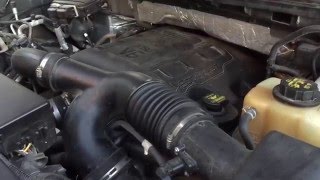
🎬 Watch: How to remove and inspect your EcoBoost intercooler.Diagnostic Flowchart
Tap your situation to follow the diagnostic path that matches what you're seeing on this vehicle.
Symptoms You May Notice
- Rough idle, especially in Neutral or Park
- Engine stumbling or hesitation during acceleration
- Flashing or solid Check Engine Light
- Loss of power
- White or blue smoke from the exhaust, especially after a hot restart
- Excessive oil consumption (1 quart in less than 3,000 miles)
- Smell of unburned fuel from the exhaust
- Replacing only the spark plug and ignition coil without investigating for excessive oil consumption or checking the vehicle's build date against TSB 19-2243. This may temporarily resolve the misfire, but the new parts will quickly become oil-fouled and fail if the underlying cylinder head issue is present.
Most Likely Causes
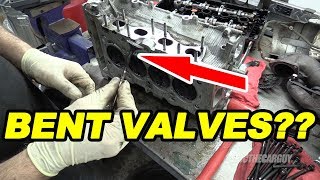
- Faulty Cylinder Head(s) 🔴 High Probability → Shop Engine Cylinder Head TSB 19-2243 confirms a known issue with defective valve guides in the cylinder heads on 2.7L/3.0L engines built from April 2016 to January 2017, leading to oil leaking into the cylinders, causing consumption and misfires. This is a well-documented manufacturing flaw.
How to confirm: A compression test and/or cylinder leak-down test showing poor results for cylinder 4. Also, monitor for excessive oil consumption and blue/white smoke from the exhaust. The presence of codes P0524 (Engine Oil Pressure Too Low) and/or P06DD (Engine Oil Pressure Control Circuit Stuck Off) alongside the misfire code strongly points to this issue, as the oil level may have dropped low enough to affect pressure.
Typical fix: Replacement of both left and right cylinder heads as per the procedure in TSB 19-2243. This is a major repair requiring significant engine disassembly.
Est. part cost: $1800-$2600 (for two OEM heads) - Faulty Ignition Coil 🟡 Medium Probability → Shop Ignition Coil Coil-on-plug systems are a common failure point on modern engines due to heat and vibration. The high cylinder pressures and heat from the turbochargers on EcoBoost engines can also contribute to a shorter lifespan for ignition components.
How to confirm: Swap the ignition coil from cylinder 4 with another cylinder (e.g., cylinder 5). Clear the codes and drive. If the code changes to P0305, the ignition coil is faulty.
Typical fix: Replace the failed ignition coil. It is often recommended to replace all six coils and spark plugs at the same time for preventative maintenance.
Est. part cost: $65-$105 (per OEM coil) - Worn or Fouled Spark Plug 🟡 Medium Probability → Shop Spark Plug Spark plugs are a regular maintenance item. If the cylinder head issue is causing oil to enter the cylinder, it will quickly foul the spark plug, causing a misfire even if the plug is new. Additionally, oil and water condensation from the PCV system can build up in the intercooler and be ingested by the engine, fouling plugs.
How to confirm: After confirming the coil is good, inspect the spark plug from cylinder 4. Look for wear on the electrode, heavy carbon fouling, or an oily/wet appearance which indicates contamination from the known cylinder head issue.
Typical fix: Replace the spark plug. Use high-quality Iridium plugs from brands like Motorcraft or NGK. Ensure the gap is correct. 🎬 See this easy walkthrough for replacing EcoBoost spark plugs. This may only be a temporary fix if oil intrusion is the root cause.
Est. part cost: $15-$30 - Faulty Fuel Injector ⚪ Low Probability → Shop Fuel Injector
How to confirm: If ignition components are good, the fuel injector is a suspect. A professional can perform a fuel injector balance test. A DIY method is to listen for a consistent clicking sound from the injector with a mechanic's stethoscope. You can also swap injectors between cylinders, but this is more labor-intensive.
Typical fix: Replace the fuel injector for cylinder 4.
Est. part cost: $70-$150
Rare But Worth Checking
- Vacuum Leak: A vacuum leak near the intake manifold runner for cylinder 4 could lean out the air/fuel mixture and cause a misfire on just that cylinder. This is a general cause for misfires but less specific to this platform's known issues.
- Low Compression (Piston/Ring issue): If the cylinder head TSB doesn't apply or has been addressed, a base engine mechanical problem like worn piston rings could be the cause. This can be caused by excessive blow-by pressure common in turbocharged engines. A compression test would confirm this.
- Failing High-Pressure Fuel Pump (HPFP): → Shop Fuel Pump While a failing HPFP typically affects all cylinders and may set a P0087 code, it can sometimes manifest as a single-cylinder misfire under load before progressing. This is because the fuel demand isn't met during acceleration, causing a lean misfire.
- Carbon Buildup on Intake Valves: As a direct-injection (GDI) engine, the 2.7L/3.0L EcoBoost is prone to carbon buildup on the back of the intake valves. This is because fuel is injected directly into the cylinder, so it doesn't wash over and clean the valves. This buildup can disrupt airflow into the cylinder, causing a misfire, especially when the engine is cold.
Diagnosis Steps
- Check the vehicle's build date (on the driver's door jamb sticker). If it is between April 2016 and January 2017, be highly suspicious of the TSB-related cylinder head issue.
- Scan the PCM for any other stored trouble codes. Note if P0524 or P06DD are present, as this points to a serious issue per TSBs. Also look for P0087, which could indicate a high-pressure fuel pump problem.
- Locate cylinder 4. On the transverse-mounted 2.7L/3.0L V6 engines, the bank against the firewall (rear bank) contains cylinders 1-2-3 (passenger to driver side), and the bank against the radiator (front bank) contains 4-5-6 (passenger to driver side). Cylinder 4 is the front-most cylinder on the passenger side.
- Swap the ignition coil from cylinder 4 with cylinder 5. Clear the codes and drive. If the code changes to P0305, the coil is bad.
- If the code remains P0304, remove and inspect the spark plug from cylinder 4. Check for heavy carbon or oil fouling, damage, or an incorrect gap. Replace if necessary.
- Check engine oil level and condition. Note any significant oil consumption (e.g., more than 1 quart in 3,000 miles) as this is a key symptom of the cylinder head defect.
- If ignition parts are good and oil consumption is high, a professional should perform a cylinder compression test and/or a leak-down test. Low results on cylinder 4 strongly indicate a mechanical engine problem consistent with the TSB.
- If compression is good and ignition is ruled out, the fuel injector on cylinder 4 may be at fault. This can be tested by a professional.
Parts You'll Likely Need
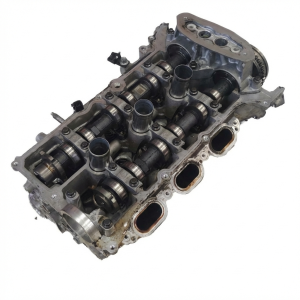
- Cylinder Head Assembly (3.0L)
(OEM #GB8Z-6049-G (Left), GB8Z-6049-F (Right))— This is the official fix prescribed by Lincoln's TSB 19-2243 for the known valve guide defect causing oil consumption and misfires on some 2017 3.0L engines. Both heads must be replaced.
Trusted brands: Motorcraft
OEM price range: $900-$1270 (per head, plus $250 core charge)
Aftermarket price range: $1500-$2200 (for a pair) - Cylinder Head Assembly (2.7L)
(OEM #FT4Z-6049-E (Left), FT4Z-6049-F (Right))— This is the official fix prescribed by TSB 19-2243 for the known valve guide defect on the 2.7L engine variant. Both heads must be replaced.
Trusted brands: Motorcraft
OEM price range: $800-$1100 (per head)
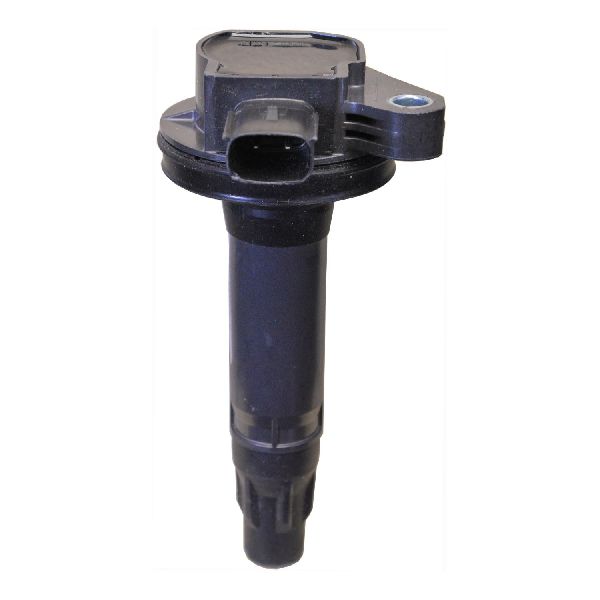
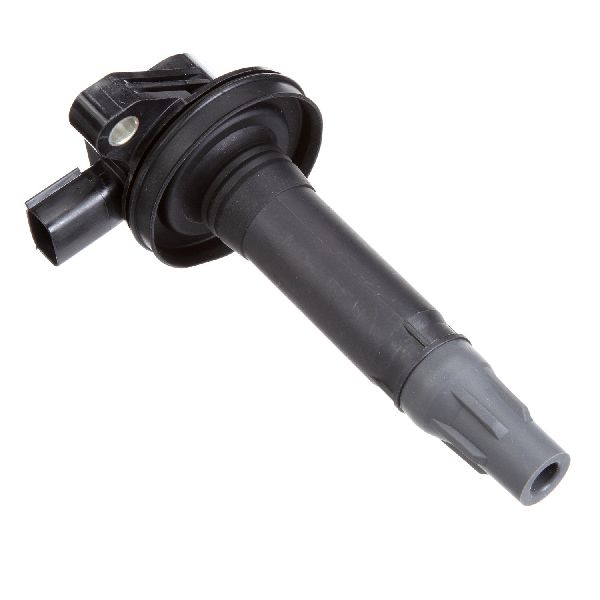
Aftermarket price range: $1400-$2000 (for a pair) - Ignition Coil
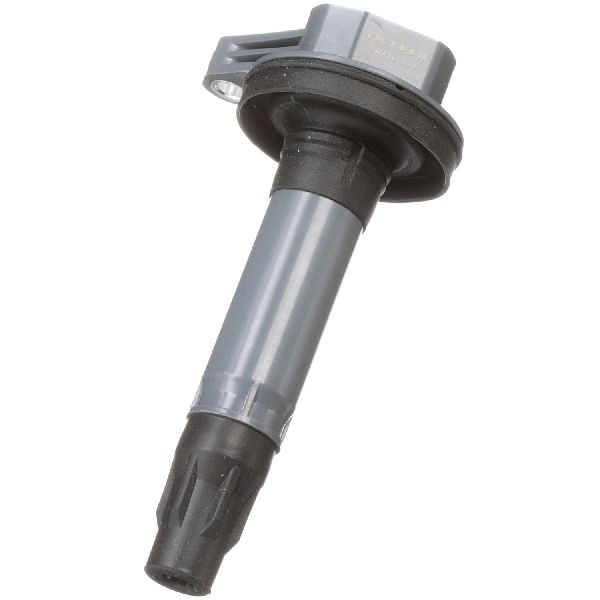
(OEM #FT4Z-12029-A (Motorcraft DG-555))— A common failure item causing a single-cylinder misfire. It's a primary suspect before considering internal engine issues.
Trusted brands: Motorcraft, Denso
OEM price range: $65-$105
Aftermarket price range: $40-$80
Related Codes That Often Appear With This One
- P0300 — Indicates a random, multiple-cylinder misfire. If the cylinder head valve guide issue is progressing, it will start affecting other cylinders, leading to a P0300 code.
- P0301, P0302, P0303, P0305, P0306 — These are misfire codes for other cylinders. Their presence alongside P0304 strengthens the diagnosis of a systemic problem like the known cylinder head issue, which affects the entire engine.
- P0524 — Engine Oil Pressure Too Low. TSBs 19-2243 and 19-2384 specifically mention this code appears in conjunction with misfires when excessive oil consumption from the faulty heads has caused the oil level to drop dangerously low.
- P06DD — Engine Oil Pressure Control Circuit Stuck Off. Similar to P0524, this code's presence with a misfire points towards the serious engine problems described in the TSBs, often triggered by a low oil level.
- P0430 — Catalyst System Efficiency Below Threshold (Bank 2). A chronic misfire on cylinder 4 (part of Bank 2) will dump unburned fuel and/or oil into the exhaust, damaging the catalytic converter and triggering this code.
Technical Service Bulletins (TSBs) & Recalls
- 19-2243: Supersedes 17-2235. Details the oil consumption, misfire, and cylinder head replacement procedure for 2.7L/3.0L engines in the Edge, MKX, Continental, Fusion, and MKZ for builds between April 1, 2016 and Jan 1, 2017.
- SSM 46364: An early Special Service Message identifying the cylinder heads as the suspect cause for misfires (P0300-P0306) and oil consumption on 2017 models.
- 19-2384: Specifically for the 2.7L F-150, but describes the identical issue of oil consumption, rough idle, and misfires due to cylinder head valve guides, corroborating the engine defect within the same build dates.
- SSM 54504: A later TSB from 2026 confirming the continued relevance of the issue, linking misfire DTCs with oil consumption and codes P0524/P06DD.
Platform-Specific Known Issues
- TSB SSM 46364 and TSB 19-2243 (which supersedes earlier versions) specifically address an issue on some 2017 Continentals with the 2.7L and 3.0L engines where faulty cylinder heads cause excessive oil consumption, blue/white exhaust smoke, and misfire codes (P0300-P0306). The prescribed fix is cylinder head replacement.
Mechanic-Grade Diagnostic Values
- Mode $06, Test ID $53, Component ID $03 — expected: A low count. The value represents the raw misfire count for cylinder 4 for the last 10 drive cycles.. Failure: A high or rapidly increasing count confirms that cylinder 4 is the source of the misfire events.
- High-Pressure Fuel Pump (HPFP) Pressure at Idle — expected: Approximately 290-450 PSI. Failure: Pressure that is erratic, significantly lower than spec, or drops out under load can indicate a failing HPFP, which may cause misfires.
- High-Pressure Fuel Pump (HPFP) Pressure Under Load — expected: Can exceed 2,000 PSI. Failure: Inability to reach or maintain high pressure during acceleration can cause lean misfires and hesitation.
- Engine Ground Voltage Drop — expected: Less than 0.1 Volts DC. Failure: A reading higher than 0.1V between the engine block and the negative battery terminal indicates a poor ground, which can cause erratic sensor readings and misfires.
Scan Tool Commands That Help
- Ford IDS (Integrated Diagnostic System): Power Balance Test — This function graphically displays the power contribution of each cylinder in real-time. A significant drop or erratic line for cylinder 4 visually confirms the misfire and helps determine if it's constant or intermittent, and under what conditions (idle, load) it occurs.
- Ford IDS (or equivalent high-level scanner): Misfire Counter (Mode $06, TID $53) — Use this to view the raw, non-CEL-triggering misfire counts for each cylinder. This can confirm the misfire is isolated to cylinder 4, even if it's not severe enough to constantly flash the check engine light.
Wiring & Ground Locations
- Engine Block to Body Ground Strap — Typically a braided strap connecting the engine block (often near the back) to the vehicle's firewall or chassis frame rail.. A corroded or loose main engine ground can cause a voltage drop, affecting the performance of the ignition coils and PCM. This can lead to weak spark and intermittent misfires that are difficult to diagnose.
- Cylinder 4 Ignition Coil Connector — On the front bank of the engine (closest to the radiator), on the passenger side cylinder. The connector has 2 or 3 wires.. Testing for 12V power and a pulsing ground signal from the PCM at this connector can determine if the coil is receiving the correct inputs. A damaged wire or corroded pin can mimic a failed coil.
Real Owner Repair Stories
- Ford F150 Forum (2018 F-150 2.7L EcoBoost with 62k miles) — Huge hesitation and bucking going up a hill under load, initially thought to be the transmission. Idled fine. Codes for misfire and low fuel pressure.
❌ Tried (didn't work) Replaced spark plugs and boots.
✅ What actually fixed it The dealer diagnosed and replaced a bad high-pressure fuel pump (HPFP). The user noted the fuel rail pressure was jumping erratically from 800 to 1600 PSI. - Ford F150 Forum (2016 F-150 2.7L EcoBoost) — P0304 misfire code. A/C would cut out.
❌ Tried (didn't work) Clearing the code (it returned quickly)., Dealer initially replaced only the #4 coil and plug.
✅ What actually fixed it After replacing the coil and plug, the dealer found the truck still ran poorly and then discovered a loss of compression in cylinder #4, requiring an engine teardown. This aligns with the known TSB for cylinder head issues. - Ford F150 Forum (2nd Gen 2.7L EcoBoost (2018+)) — Recurring P0304 misfire on cylinder #4, particularly under medium boost at highway speeds.
❌ Tried (didn't work) New spark plugs (fixed it temporarily)., Gapping plugs down to 0.028" (fixed it temporarily)., Replacing the ignition coil.
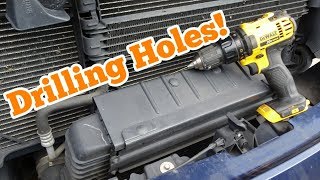
✅ What actually fixed it The owner drilled a 1/16" 'weep hole' in the bottom of the intercooler. This allowed built-up oil and water condensation to drain out instead of being ingested by the engine and fouling the #4 spark plug. The misfire did not return.
Model Year Variations Within This Range
- 2017 models with build dates from April 1, 2016, to January 1, 2017: These models are specifically called out in TSBs (like 19-2243) as being prone to a manufacturing defect in the cylinder head valve guides, making P0304 a strong indicator of a potential need for cylinder head replacement, not just a simple tune-up part.
Helpful Videos

Used OEM Parts in Stock
New Aftermarket Parts Available


The information in this article is provided for general reference and educational purposes only. Vehicle specifications, procedures, and part compatibility can vary by production date, trim level, and region. Always consult your vehicle's factory service manual and verify part numbers before purchasing or performing repairs. Safety-critical components such as airbags, seat belts, and braking systems should be installed by a qualified professional.
- Lincoln CONTINENTAL:
- 🧭 Diagnostic Flowchart
- 🎬 Helpful Videos
- 🛍️ Shop This Part
- What's Unique About the 2017-2017 Lincoln CONTINENTAL
- Symptoms You May Notice
- Most Likely Causes
- Rare But Worth Checking
- Diagnosis Steps
- Parts You'll Likely Need
- Related Codes That Often Appear With This One
- Technical Service Bulletins (TSBs) & Recalls
- Platform-Specific Known Issues
- Mechanic-Grade Diagnostic Values
- Scan Tool Commands That Help
- Wiring & Ground Locations
- Real Owner Repair Stories
- Model Year Variations Within This Range
- 🎟️ Get 5% Off