

P0304 on 2012-2013 Mazda 3 2.0L Skyactiv: Cylinder 4 Misfire Causes and Fixes
On a 2012-2013 Mazda 3 with the 2.0L Skyactiv-G engine, a P0304 code is most often caused by a faulty ignition coil on cylinder 4. This is a known issue related to a specific supplier, YUMEBISHI, as documented in a Mazda TSB. A single coil replacement costs about $40-$120 and is a very easy DIY fix. If the coil and spark plug are confirmed good, the next most likely causes are carbon buildup on the intake valves or a leaking fuel injector.
- The most likely cause of P0304 on your Mazda 3 is a bad ignition coil on cylinder 4; perform a 'swap test' to confirm before buying parts.
- Due to a known issue, if you find one faulty ignition coil, inspect the others for the same 4-digit lot number and consider replacing them as a set to prevent future misfires.
- Do NOT drive if the check engine light is flashing, as this indicates a severe misfire that can quickly damage your catalytic converter.
- If the coil and spark plug are good, the next most common causes are carbon buildup on the intake valves or a leaking fuel injector, both common issues for GDI engines.
What's Unique About the 2012-2013 Mazda 3
The 2012-2013 Mazda 3 was one of the first models to feature the new 2.0L Skyactiv-G engine. A very common cause for misfires on these early Skyactiv engines is a faulty ignition coil from a specific supplier, YUMEBISHI. Mazda acknowledged this in a Technical Service Bulletin (TSB 01-014/16), noting the coils can fail due to large temperature swings. The TSB explains how to identify the faulty YUMEBISHI coils (4-digit lot number) versus the more reliable MITSUBISHI coils (5-digit lot number). Additionally, as a Gasoline Direct Injection (GDI) engine, it is more susceptible to carbon buildup on intake valves, which can also cause misfires over time as fuel does not wash over the valves. This is a known issue addressed by Mazda TSB #01-012/19.
Symptoms You May Notice
- Rough or shaky idle
- Hesitation or stumbling during acceleration, especially under load at lower RPM.
- Noticeable loss of engine power
- Flashing or solid Check Engine Light
- Increased fuel consumption
- Unpleasant, fuel-like smell from the exhaust
- Vehicle may enter 'limp mode', limiting engine RPM.
- Replacing only the spark plugs when the underlying issue is a faulty ignition coil. The 'swap test' is crucial to avoid this.
- Replacing the PCM before thoroughly testing the ignition coil, spark plug, fuel injector, and wiring harness.
- Replacing all four ignition coils per a dealer recommendation based on the TSB, when only one has failed and the others are not the faulty YUMEBISHI type.
Most Likely Causes
- Faulty Ignition Coil 🔴 High Probability → Shop Ignition Coil Mazda TSB #01-014/16 identifies a high failure rate for ignition coils made by the supplier YUMEBISHI, which are identifiable by a 4-digit lot number. These coils were used in early Skyactiv engines and are known to fail due to internal fractures caused by large temperature swings. The TSB recommends replacing them with the MITSUBISHI-produced part, which has a 5-digit lot number.
How to confirm: Swap the ignition coil from cylinder 4 with another cylinder (e.g., cylinder 3). Clear the codes and run the engine. If the code changes to P0303, the ignition coil is confirmed to be faulty. While the coil is removed, inspect it for the 4-digit YUMEBISHI lot number to confirm it is the failure-prone type.
Typical fix: Replace the faulty ignition coil on cylinder 4. The updated OEM part number is PE20-18-100A. Many owners and the TSB suggest replacing all four coils if they are the failure-prone YUMEBISHI type, especially any made before lot number 6328 (March 28, 2016).
Est. part cost: $40-$120 - Worn or Fouled Spark Plug 🟡 Medium Probability → Shop Spark Plug Spark plugs are a routine maintenance item. A worn plug requires more voltage to fire, putting extra strain on the ignition coil, which can accelerate coil failure.
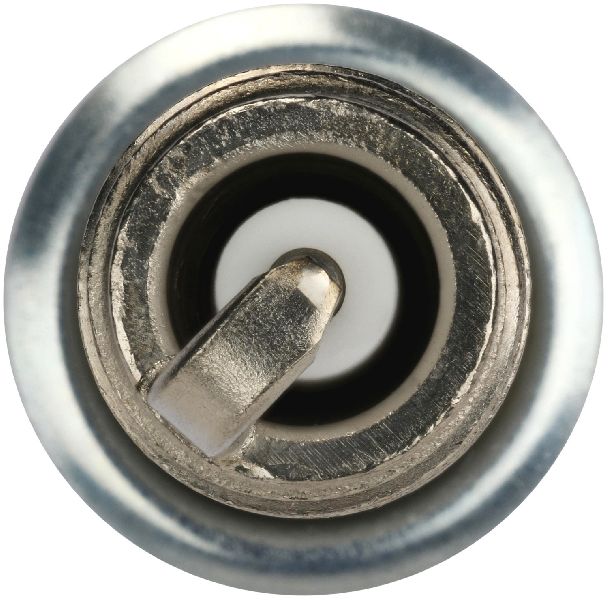
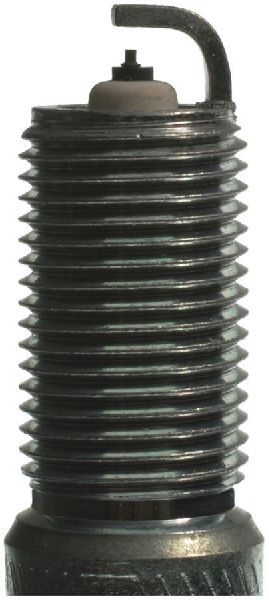
How to confirm: After ruling out the ignition coil, remove the spark plug from cylinder 4. Inspect it for wear (worn electrode), oil fouling (wet and black), or carbon tracking. A wet, fuel-smelling plug could point to a leaking injector. You can also swap the spark plug with another cylinder to see if the misfire follows.
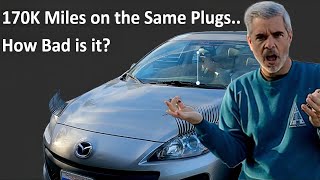
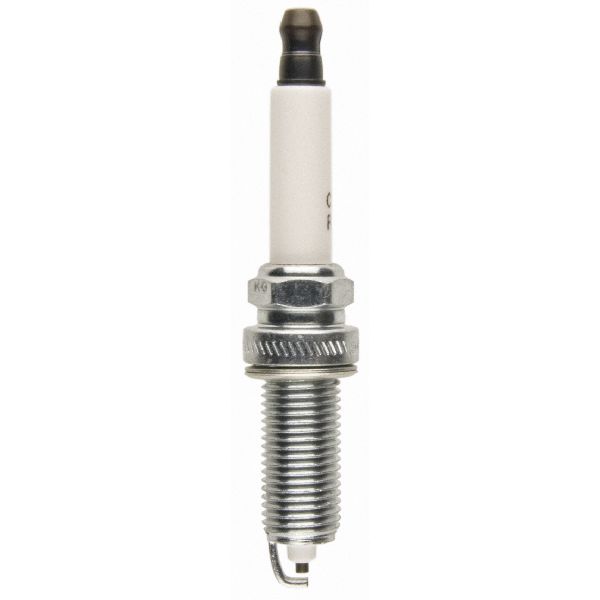
Typical fix: Replace the spark plug. It is recommended to replace 🎬 Watch: A step-by-step guide to replacing spark plugs and coils. all four spark plugs at the same time for consistent performance. The recommended OEM-spec plug is an NGK Iridium, part number ILKAR7L11.
Est. part cost: $15-$25 per plug - Carbon Buildup on Intake Valves 🟡 Medium Probability The Skyactiv-G is a direct injection engine. Fuel is injected directly into the cylinder, so it never washes over the intake valves. Oil vapor from the PCV system can bake onto the hot valves, forming carbon deposits that disrupt airflow and can cause misfires, especially on cold starts or under load. This is a known issue addressed by Mazda TSB #01-012/19.
How to confirm: This requires a visual inspection of the intake valves, which involves removing the intake manifold. A borescope can be used to inspect the valves. This is typically diagnosed after ignition and fuel delivery issues have been ruled out. A Reddit user reported that a top engine cleaning temporarily solved their P0304, suggesting carbon buildup was the cause.
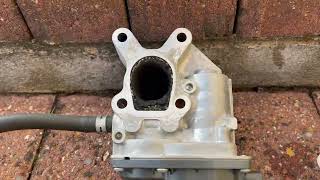
Typical fix: The intake valves need to be cleaned. This can be done via walnut blasting (a professional service) or by using specific GDI 🎬 See how to perform a DIY carbon cleaning at home. intake valve cleaning aerosol products, though the latter is less aggressive and may only provide temporary relief.
Est. part cost: $20-$30 for cleaning solvents, $300-$600 for professional walnut blasting service. - Leaking Fuel Injector ⚪ Low Probability → Shop Fuel Injector Direct injectors operate under very high pressure and can fail, leaking excess fuel into the cylinder. This washes away lubricating oil from the cylinder walls and creates a rich condition that leads to misfires.
How to confirm: A leaking injector will often cause the spark plug in the affected cylinder to be wet and smell strongly of fuel. It can also trigger a P0172 (System Too Rich) code alongside the P0304. An advanced scan tool can monitor short-term and long-term fuel trims; a leaking injector will cause trims to be very negative (e.g., -20%).
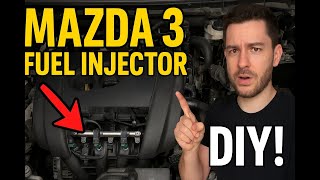
Typical fix: Replace the faulty fuel injector. This is more involved than a coil or plug swap, as it requires removing the intake manifold. It is often 🎬 Watch: This walkthrough shows you how to replace fuel injectors. recommended to replace all four as a set if they are high-mileage originals.
Est. part cost: $70-$150 per injector
Rare But Worth Checking
- Low Engine Compression: If ignition and fuel system checks do not reveal the problem, a mechanical issue like a burnt valve, worn piston rings, or a failed head gasket could be the cause. A compression test and a leak-down test are needed to verify the mechanical health of cylinder 4.
- Faulty Powertrain Control Module (PCM): → Shop Engine Control Module (ECM) In very rare cases, the PCM itself can be the issue, failing to correctly fire the ignition coil. This should only be considered after all other possibilities have been exhaustively ruled out. One forum user reported a dealer replacing the PCM for $1150, only for the P0304 code to return, indicating it was a misdiagnosis.
- Restricted Exhaust Flow: Manufacturer service bulletins #01-007-19-3541 and #01-006-18-3429 note that misfire codes P0300-P0304 may be caused by frozen water accumulated in the main silencer, which restricts exhaust flow.
Diagnosis Steps
- Read the code with an OBD-II scanner to confirm P0304. Note if the check engine light is flashing; if so, do not drive the vehicle to prevent catalytic converter damage.
- Perform an ignition coil 'swap test'. Label and swap the ignition coil from cylinder 4 with the coil from cylinder 3.
- While the coil is out, inspect it. Look for a 4-digit lot number (YUMEBISHI, prone to failure) or a 5-digit lot number (MITSUBISHI, good).
- Clear the codes and drive the vehicle until the check engine light returns.
- If the code is now P0303, the ignition coil is bad and needs replacement. Replace with OEM part PE20-18-100A.
- If the code remains P0304, the coil is likely good. Proceed to inspect the spark plug in cylinder 4. Look for wear, damage, or fouling. A wet, fuel-smelling plug points to an injector issue. Replace if necessary.
- Inspect the wiring and connector for the cylinder 4 ignition coil and fuel injector for any damage, corrosion, or loose connections.
- If the problem persists, the next steps are to investigate a leaking fuel injector or carbon buildup. A professional diagnosis may be needed, which could include a fuel pressure test, injector flow test, or a borescope inspection of the intake valves.
- As a final step for persistent issues, a mechanical compression test should be performed to rule out internal engine problems.
Parts You'll Likely Need
- Ignition Coil
(OEM #PE20-18-100A)— This is the most common failure point for a P0304 code on this specific vehicle, as documented by Mazda TSB #01-014/16. The original YUMEBISHI-supplied coils are prone to failure. PE20-18-100A is the updated, more reliable part number that supersedes PE01-18-100 and others.
Trusted brands: Mazda OE, NGK, Denso
OEM price range: $100-$140
Aftermarket price range: $40-$80 - Iridium Spark Plug
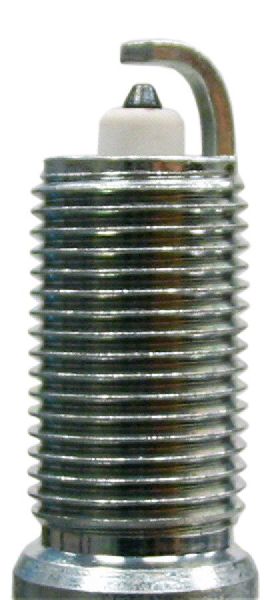
(OEM #PE5R-18-110)— A basic but essential ignition system component that wears out over time. A worn plug can cause a misfire and should be checked after the ignition coil. The OEM plug is typically an NGK Iridium.
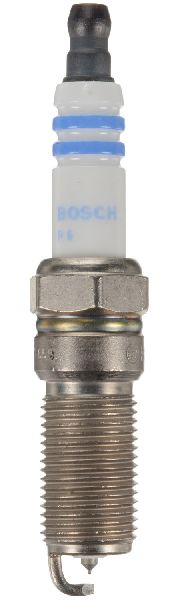
Trusted brands: NGK (ILKAR7L11), Bosch (9683)
OEM price range: $20-$30
Aftermarket price range: $15-$25
Related Codes That Often Appear With This One
- P0300 — If the misfire is intermittent or affects multiple cylinders, a P0300 (Random Misfire) code may appear before or along with the P0304.
- P0301, P0302, P0303 — If multiple ignition coils are failing, you may see misfire codes for other cylinders as well.
- P0172 — This 'System Too Rich' code can appear with P0304 if the cause is a leaking fuel injector dumping excess fuel into cylinder 4.
Technical Service Bulletins (TSBs) & Recalls
- 01-014/16: Addresses misfire codes P0300-P0304 caused by internal failure of YUMEBISHI-produced ignition coils due to large temperature swings. Advises checking lot numbers and replacing with MITSUBISHI-produced or updated YUMEBISHI coils (lot #6328 or newer).
- 01-012/19: Addresses misfire codes on Skyactiv models caused by carbon deposition around the intake valves.
- SSB 01-007/16: For Skyactiv models in cold climates, addresses misfires (P0300-P0304) with increased oil level due to fuel dilution. Requires PCM reprogramming.
- Bulletin #01-001-23a: Notes that customers may complain of poor acceleration, rough idling, or a check engine light with DTC P0304:00 on turbo engines.
- Bulletin #SA-022-19: Addresses complaints of lack of power, rough idle, or engine noise with stored DTC P0304:00.
- Bulletin #01-007-19-3541 & #01-006-18-3429: Identifies that P0304 may be caused by frozen water accumulated in the main silencer, restricting exhaust flow.
Platform-Specific Known Issues
- A known high failure rate of original ignition coils supplied by YUMEBISHI, as noted in Mazda TSB #01-014/16. These can be identified by a 4-digit lot number on the coil and are known to fail from temperature fluctuations.
- As an early generation GDI engine, carbon accumulation on intake valves is a common long-term maintenance issue that can lead to misfires, as noted in Mazda TSB #01-012/19.
- In cold climates, TSB #SSB 01-007/16 notes that misfires can occur due to PCM logic causing fuel to dilute engine oil on short trips. This requires a PCM reprogram.
Mechanic-Grade Diagnostic Values
- High-Pressure Fuel Rail Pressure (Direct Injection) — expected: Up to 2,900 - 3,000 psi under load. Failure: Significantly lower pressure indicates a weak high-pressure fuel pump (HPFP) or a leak.
- Ignition Coil Primary Winding Resistance — expected: Approximately 0.49 - 0.57 ohms. Failure: A reading outside this range suggests an internal coil failure.
- Engine Compression (Static) — expected: Approximately 145-155 psi per cylinder, with minimal variation between cylinders.. Failure: A Reddit user reported these values, with the 10 psi variance considered acceptable wear. A significantly lower reading in cylinder 4 (e.g., below 120 psi or more than 15% lower than others) would indicate a mechanical problem.
Scan Tool Commands That Help
- Mazda M-MDS (or equivalent high-level scanner): Power Balance Test — This bidirectional function allows a technician to selectively disable individual cylinders to see the corresponding drop in RPM. If disabling cylinder 4 causes little or no change in engine speed, it confirms that cylinder 4 is not contributing power, pinpointing the misfire without having to swap parts first. The TSB for the faulty coils mentions using the M-MDS to verify the misfire DTC.
Wiring & Ground Locations
- Engine Ground Strap — Commonly found connecting the engine block or transmission case to the chassis. One key ground is on the transmission bell housing. Another is often located near the passenger side motor mount.. A poor engine ground can cause a weak or inconsistent spark across all cylinders, but can sometimes manifest as an intermittent misfire on a single cylinder due to electrical noise or voltage drop affecting the most sensitive coil.
- PCM/TCM Grounds — The main Powertrain Control Module (PCM) has multiple ground wires in its connectors. A video checking a 2012 Mazda 3 TCM (which is often integrated with or near the PCM) identified two black ground wires in the main connector.. The PCM controls the firing of the ignition coils. A faulty ground at the PCM itself can cause it to misfire a specific cylinder's coil driver. This is a rare fault but should be considered if the coil, plug, and wiring to the coil have all been verified as good.
- Ignition Coil Connector — The 4-pin connector on top of the ignition coil for cylinder 4.. This is the direct connection for power, ground, and the trigger signal from the PCM. A visual inspection for corrosion, backed-out pins, or damaged wires is a critical step. One user reported getting 12v at the connector, but this doesn't test the trigger signal, which requires a noid light or oscilloscope.
Real Owner Repair Stories
- Reddit user on r/AskAMechanic (2012 Mazda 3 Skyactiv i touring) — Persistent P0304 cylinder 4 misfire.
❌ Tried (didn't work) Swapping spark plug and coil to another cylinder (misfire stayed on cylinder 4)., Engine compression test (passed)., Fuel injector test (passed)., Top engine clean to remove carbon deposits (worked temporarily for a few months, then the code returned).
✅ What actually fixed it The user's story ends with the mechanic suggesting pulling the cylinder head as the next step, implying the issue was likely a deeper mechanical problem (e.g., valve seat issue) not detectable by a standard compression test. The temporary fix from carbon cleaning suggests the problem was exacerbated by, but not solely caused by, carbon buildup. The final resolution was not posted, but the diagnostic path points away from common ignition/fuel faults. - Reddit user on r/mazda3 (2012 Mazda 3 Skyactiv-G 2.0, 160k miles) — Rough idle, hesitation at low RPM, throws P0304 and enters limp mode after highway driving.
❌ Tried (didn't work) Replaced all spark plugs., Swapped ignition coils (misfire did not move)., Compression test was done (145-155-145-155 psi)., Checked for 12v at coil connectors.
✅ What actually fixed it The initial problem was a bad MAF sensor which caused the car to stall and run rich. After replacing the MAF, the P0304 persisted. The user suspected a faulty fuel injector, as the previous owner had all four replaced by a shop, possibly with cheap aftermarket parts. The thread suggests the next logical step is to inspect or swap the fuel injectors, which requires removing the intake manifold. The story highlights that after common fixes fail, a faulty (and possibly recently replaced) fuel injector is a strong suspect. - NHTSA ODI #11675874 — An owner reported that after various lights and messages were activated, a scan revealed P0300 and P0304. The owner noted there was a recall on the particular vehicle make and model, though their specific vehicle was out of the coverage range.
OEM Part Supersession History
PE01-18-100 (and others with 4-digit lot numbers)→PE20-18-100A— The original YUMEBISHI-supplied ignition coils were prone to internal failure due to temperature fluctuations, as identified in TSB 01-014/16.
Model Year Variations Within This Range
- 2012-2013: The 2012 model year was the first to introduce the 2.0L Skyactiv-G engine (155 hp) as an option in the Mazda 3, alongside the base 2.0L MZR engine (148 hp). It is critical to ensure the vehicle is equipped with the Skyactiv engine (identifiable by a blue engine cover) for this guide to be applicable, as the ignition and fuel systems are completely different from the base MZR engine.
Diagnostic Flowchart
Real Owner Stories
Aggregated from forums and TSBs cited above. Mileages and costs reflect what owners reported in those sources.
2012 Mazda 3
Symptoms: Experienced a persistent P0304 code that would not clear.
What fixed it: Replaced the ignition coil and then the PCM at a dealer, but the code returned, highlighting the risk of misdiagnosing a faulty PCM.
Cost: $1150
Source hint: mazdaforum.com: '2012 Mazda 3 P0304 code wont clear'
2012 Mazda 3 Skyactiv-G 2.0L — 160000 miles
Symptoms: P0304 triggered after highway driving. Coil and plug swaps did not fix the issue, and engine compression tested okay.
What fixed it: Suspected a faulty fuel injector, noting that the previous owner had all four replaced, possibly with cheap aftermarket parts.
Source hint: reddit.com/r/mazda3: 'P0304 Cylinder 4 Misfire on Skyactiv G 2.0'
2012 Mazda 3 Skyactiv
Symptoms: Cylinder 4 misfire.
What fixed it: A mechanic performed a top engine clean to remove carbon deposits, which made the problem disappear for a few months before returning, strongly suggesting carbon buildup was the root cause.
Source hint: reddit.com/r/AskAMechanic: 'Cylinder 4 misfire on 2012 Mazda 3 Skyactiv'
2013 Mazda CX-5 2.0L (platform mate)
Symptoms: P0304 misfire under load.
What fixed it: Tried replacing plugs and all four coils per dealer advice based on the TSB, but the misfire persisted. Eventually diagnosed a faulty front Air-Fuel Ratio Sensor as the root cause.
Source hint: mazdas247.com: 'CX-5 2.0L P0304 P0171 help needed please'
Related OBD-II Codes
Frequently Asked Questions
How do I know if my 2012-2013 Mazda 3 has the defective ignition coils mentioned in the TSB?
Is carbon buildup a common reason for a cylinder 4 misfire on the 2.0L Skyactiv-G?
I live in a cold climate and take short trips. Could this cause my P0304 code?
What are the exact OEM part numbers for the ignition coil and spark plug on this engine?
Can a leaking fuel injector cause a P0304 on my Mazda 3?
Helpful Videos


We Have This Part in Stock

The information in this article is provided for general reference and educational purposes only. Vehicle specifications, procedures, and part compatibility can vary by production date, trim level, and region. Always consult your vehicle's factory service manual and verify part numbers before purchasing or performing repairs. Safety-critical components such as airbags, seat belts, and braking systems should be installed by a qualified professional.
- Mazda 3:
- 🧭 Diagnostic Flowchart
- 🎬 Helpful Videos
- 🛍️ Shop This Part
- What's Unique About the 2012-2013 Mazda 3
- Symptoms You May Notice
- Most Likely Causes
- Rare But Worth Checking
- Diagnosis Steps
- Parts You'll Likely Need
- Related Codes That Often Appear With This One
- Technical Service Bulletins (TSBs) & Recalls
- Platform-Specific Known Issues
- Mechanic-Grade Diagnostic Values
- Scan Tool Commands That Help
- Wiring & Ground Locations
- Real Owner Repair Stories
- OEM Part Supersession History
- Model Year Variations Within This Range
- Real Owner Stories
- 2012 Mazda 3
- 2012 Mazda 3 Skyactiv-G 2.0L — 160000 miles
- 2012 Mazda 3 Skyactiv
- 2013 Mazda CX-5 2.0L (platform mate)
- Related OBD-II Codes
- Frequently Asked Questions
- 🎟️ Get 5% Off