

P0304 on 2019-2021 Mazda 3 Turbo: Cylinder 4 Misfire Causes and Fixes
P0304 on a 2019-2021 Mazda 3 2.5L Turbo indicates a cylinder 4 misfire. While it could be a simple spark plug or ignition coil issue, a significant number of these vehicles are affected by a serious TSB (#01-001-23a) for an internal engine problem requiring cylinder head replacement. Diagnosis should start with ignition components but escalate to a compression test if the issue persists, as this is a well-documented failure mode for this specific engine.
- P0304 is a cylinder 4 misfire. On the 2.5L Turbo engine, this can be much more serious than a simple tune-up part.
- Always perform basic ignition diagnostics first (swap coil, check plug), as these are still the most common culprits.
- Be aware of TSB #01-001-23a. If basic diagnostics don't solve the misfire on an affected model, a compression test is mandatory to check for the known cylinder head failure.
- A flashing check engine light signals a severe misfire that can cause expensive catalytic converter damage; do not continue driving.
What's Unique About the 2019-2021 Mazda 3
For the 2019-2021 Mazda 3 with the 2.5L Turbo engine, a P0304 code carries a unique and serious risk beyond typical ignition faults. Mazda issued a Technical Service Bulletin (TSB #01-001-23a) for this engine, which explains that a variable valve in the integrated exhaust manifold can seize. This seizure causes excessive heat in the exhaust port, leading to uneven wear on the exhaust valve seat, a loss of compression, and persistent misfires. This known design issue, affecting specific VIN ranges, means a P0304 code on this engine warrants a more thorough diagnosis than on other vehicles, as the fix is an extensive engine repair involving a new cylinder head and manifold. Manufacturer Bulletin #01-001-23a notes that while P0304 is a primary indicator, customers may specifically complain of poor acceleration and rough idling alongside the check engine light.
Symptoms You May Notice
- Check engine light is on (steady or flashing)
- Rough idle or engine vibration, especially at cold start
- Hesitation or stumbling during acceleration
- Noticeable loss of engine power
- Reduced fuel economy
- Vehicle may enter 'limp mode', limiting speed
- Smoke from the exhaust if the cause is a leaking fuel injector
- Replacing only spark plugs and coils when the root cause is the internal cylinder head issue described in TSB #01-001-23a.
- Attributing a persistent misfire to a fuel injector when a compression test has not yet been performed to rule out the more common TSB-related mechanical failure.
Most Likely Causes
- Faulty Ignition Coil 🔴 High Probability → Shop Ignition Coil Ignition coils are common failure points on most modern engines that lead to misfires. They are subjected to high heat and vibration.
How to confirm: Swap the ignition coil from cylinder 4 with another cylinder (e.g., cylinder 3). Clear the codes and drive the vehicle. If the code changes to P0303, the ignition coil is faulty. This is a standard diagnostic step confirmed by owners on forums.
Typical fix: Replace the faulty ignition coil. It is often recommended to replace all four coils at the same time for preventative maintenance.
Est. part cost: $40-$120 per coil - Worn or Fouled Spark Plug 🔴 High Probability → Shop Spark Plug Spark plugs are a regular maintenance item. For the turbo engine, the recommended replacement interval is every 40,000 miles. Exceeding this interval increases misfire risk.
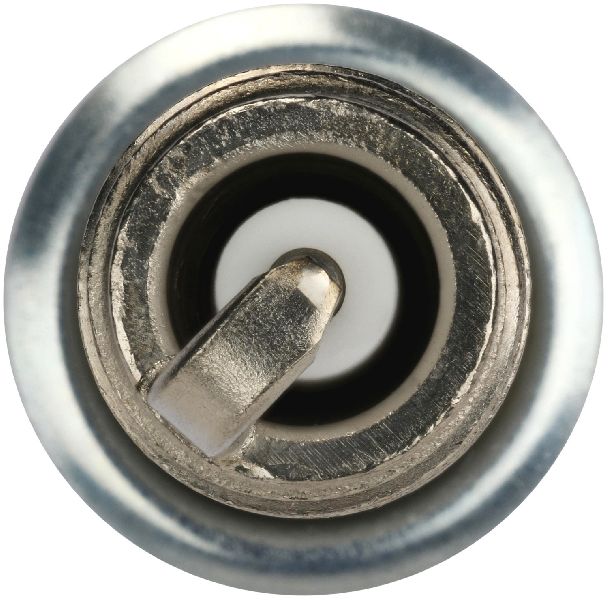
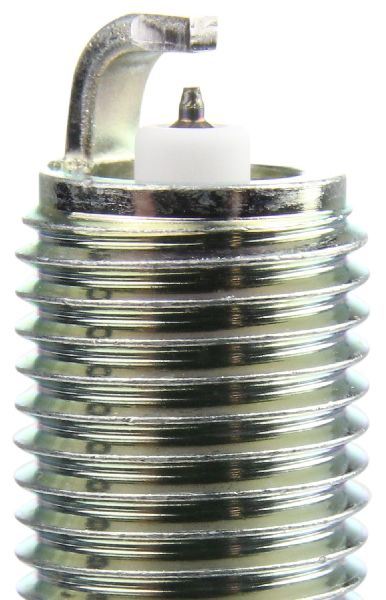
How to confirm: After confirming the coil is good, remove the spark plug from cylinder 4. Inspect it for signs of wear (worn electrode), damage, carbon buildup, or fouling from oil or fuel. A plug that is wet with fuel may indicate a leaking injector.
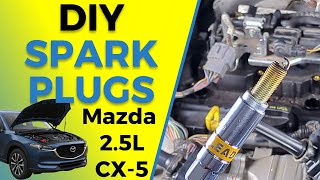
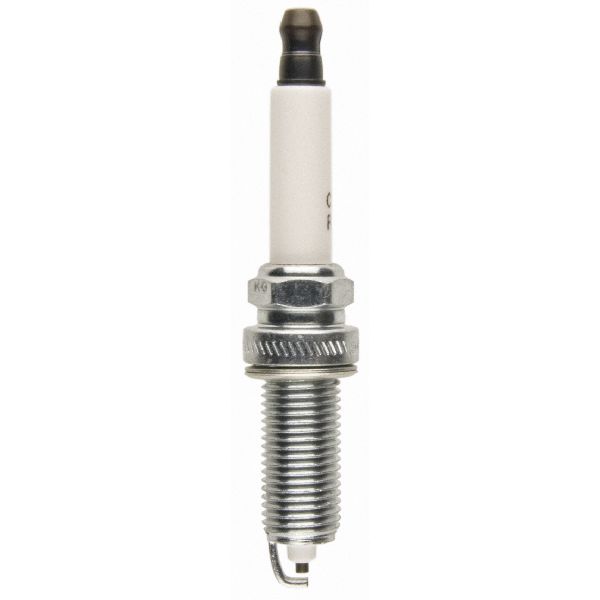
Typical fix: Replace the spark plug. It is best practice to replace all four spark plugs at the same time with the specified Iridium plugs to ensure 🎬 See this step-by-step guide for changing your Mazda spark plugs. balanced performance.
Est. part cost: $15-$25 per plug - Internal Cylinder Head Failure (TSB #01-001-23a) 🟡 Medium Probability → Shop Engine Cylinder Head A specific design issue where a valve in the integrated exhaust manifold seizes, causing overheating of the exhaust port, valve seat wear, and subsequent loss of compression. This TSB applies to 2020-2021 Mazda3 (Mexico built 2.5T) with VINS lower than 3MZBP**205173 and (Japan built 2.5T) with VINS lower than JM1BP**300247.
How to confirm: If new spark plugs and known-good ignition coils do not resolve the P0304 code, a professional compression test is required. A low compression reading in cylinder 4 would confirm this mechanical failure. A leak-down test can provide further confirmation.
Typical fix: This is a major repair that involves replacing the cylinder head and exhaust manifold with modified parts as per the TSB. The updated cylinder head part number is PYY1-10-SJ0C and the updated exhaust manifold is PY8V-13-450K. This should be performed by a Mazda dealership.
Est. part cost: $2500+ - Leaking or Clogged Fuel Injector ⚪ Low Probability → Shop Fuel Injector Direct injection (DI) fuel injectors operate under high pressure and can be susceptible to clogging or electronic failure, causing either a lean or rich condition in the cylinder.
How to confirm: A technician can use a scan tool to monitor fuel trims; a strong negative fuel trim (e.g., -20%) suggests the computer is trying to correct a rich condition from a leaking injector. A fuel-smelling or wet spark plug is also a strong indicator.
Typical fix: Replace the faulty fuel injector. It's often recommended to replace all injectors as a set.
Est. part cost: $100-$200 per injector - Exhaust Flow Restriction (Frozen Silencer) ⚪ Low Probability In extremely cold climates, frozen water can accumulate in the main silencer. Manufacturer Bulletin #01-007-19-3541 and Bulletin #01-006-18-3429 describe how this restriction can trigger misfire codes including P0304.
Rare But Worth Checking
- PCM Internal Failure:
- Valvetrain Noise/Lack of Power: Manufacturer Bulletin #SA-022-19 suggests that if P0304 is accompanied by engine noise or a lack of power, specific valvetrain inspections may be necessary.
Diagnosis Steps
- Read the trouble codes with an OBD-II scanner. Note any other codes present, such as P0300 or P0172.
- Check for a flashing vs. steady Check Engine Light. A flashing light indicates a severe misfire requiring immediate attention to prevent catalytic converter damage.
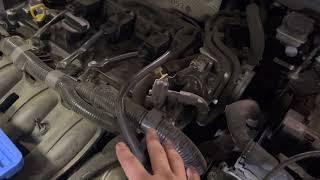
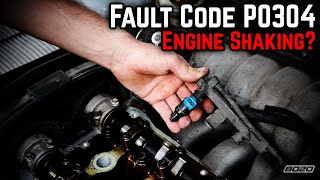
- Swap the ignition coil from cylinder 4 with another cylinder (e.g., cylinder 3). Clear the codes and test drive. If the code changes to P0303, the coil is bad. 🎬 Watch: A quick breakdown on finding the real misfire cause. Replace it.
- If the code remains P0304, inspect the spark plug in cylinder 4. Look for wear, damage, or fouling (especially wetness from fuel). Replace if necessary (it's best to replace all four, especially if near the 40,000-mile interval).
- If the ignition system is confirmed to be good, the vehicle should be taken to a professional for a compression and/or leak-down test. This is a critical step to check for the serious internal engine issue described in TSB #01-001-23a.
- If compression is good, further diagnosis should focus on the fuel system. Inspect the fuel injector for cylinder 4. Check fuel trims with a scan tool for signs of a rich or lean condition.
- If all else fails, inspect the wiring harness for the coil and injector on cylinder 4, and consider the rare possibility of a PCM driver failure.
Parts You'll Likely Need
- Ignition Coil
(OEM #PY8W-18-100)— A common cause of misfires on all modern engines. It's a primary wear component of the ignition system.
Trusted brands: Mazda (OEM), NGK, Denso, Delphi
OEM price range: $90-$120
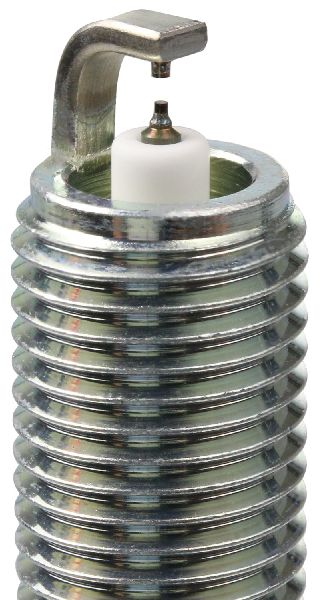
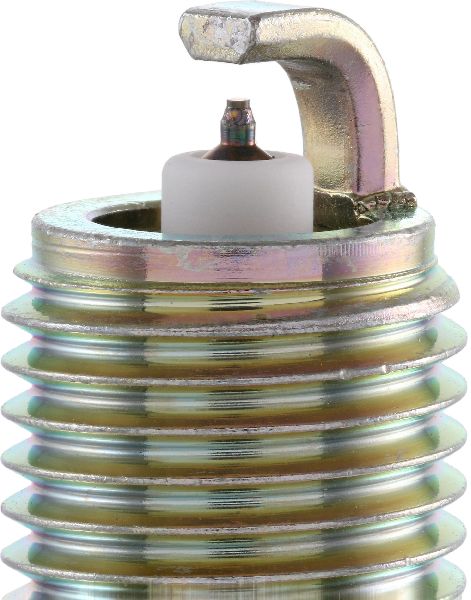
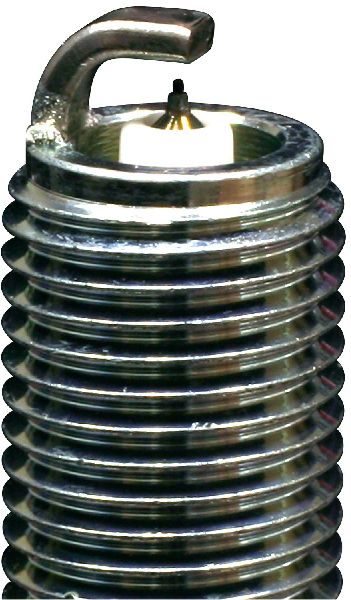
Aftermarket price range: $40-$80 - Iridium Spark Plug
(OEM #PE5R-18-110A (supersedes PE5S-18-110))— A critical maintenance item that directly causes misfires when worn or fouled. The service interval is 40,000 miles on turbo models.
Trusted brands: NGK (ILKAR7L11), Denso
OEM price range: $25-$35
Aftermarket price range: $15-$25 - Cylinder Head Assembly (Updated)
(OEM #PYY1-10-SJ0C)— Required to fix the specific mechanical failure outlined in Mazda TSB #01-001-23a for the 2.5L Turbo engine. This is the updated part.
Trusted brands: Mazda (OEM)
OEM price range: $2500+ - Exhaust Manifold (Updated)
(OEM #PY8V-13-450K)— Must be replaced along with the cylinder head as per TSB #01-001-23a, as it contains the seizing valve that causes the failure.
Trusted brands: Mazda (OEM)
OEM price range: $800-$1200
Related Codes That Often Appear With This One
- P0300 — If the cylinder head issue is beginning to affect multiple cylinders, or if there's a systemic fuel delivery problem, a Random/Multiple Cylinder Misfire code may be present.
- P0172 — A 'System Too Rich' code can appear if a fuel injector is stuck open or leaking, causing excess fuel to enter cylinder 4. One owner documented this exact combination 🎬 Watch: How to diagnose a leaking injector and P0172 code. leading to an injector replacement.
- P0204 — A 'Fuel Injector Circuit/Open Cylinder 4' code points directly to an electrical issue with the injector or its wiring, or in rare cases, the PCM itself.
Technical Service Bulletins (TSBs) & Recalls
- 01-001-23a: Addresses misfire codes (P030x) on 2.5L Turbo engines due to a seized exhaust manifold valve causing compression loss. The fix is cylinder head and manifold replacement.
- 01-013/21: Describes a separate issue on 2.5T engines where cracks can form on the cylinder head near the exhaust manifold, causing coolant leaks. This also requires cylinder head replacement.
- 01-003-23: Relates to excessive oil consumption on 2021 2.5T models due to faulty valve stem seals, which led to a class-action settlement. While not a direct cause of P0304, severe oil fouling could potentially contribute to misfires.
- SA-022-19: Provides diagnostic guidance for P0304 when accompanied by rough idle or engine noise.
- 01-007-19-3541: Notes that frozen water in the main silencer can restrict exhaust flow and trigger P0304.
Platform-Specific Known Issues
- Mazda TSB #01-001-23a documents a potential failure where a seized valve in the exhaust manifold leads to compression loss and misfires on 2.5L Turbo engines. The repair requires replacing the cylinder head and manifold with redesigned parts.
- NHTSA ODI complaint #11656416 for a 2021 Mazda3 docu
Mechanic-Grade Diagnostic Values
- Ignition Coil Primary Winding Resistance — expected: 0.49—0.57 ohms @ 20°C (68°F). Failure: A reading outside this range indicates a faulty coil.
- Ignition Coil Secondary Winding Resistance — expected: 9.5—11.1 kilohms. Failure: A reading outside this range indicates a faulty coil.
- Fuel Trim (Short-Term and Long-Term) — expected: Typically between -5% and +5% at idle.. Failure: High negative values (e.g., -15% or more) can indicate a leaking fuel injector on cylinder 4, causing a rich condition that the PCM is trying to correct. High positive values suggest a vacuum leak or clogged injector causing a lean misfire.
- Engine Compression (PY-VPTS 2.5L Turbo) — expected: Standard: 1,450 kPa (210 psi). Minimum: 1,160 kPa (168 psi). Maximum difference between cylinders: 190 kPa (28 psi).. Failure: A reading in cylinder 4 significantly below the minimum, or more than 28 psi lower than other cylinders, confirms a mechanical engine problem, likely related to the TSB.
Hidden / Shadow Codes Worth Checking
- Mode $06 Data: This is not a DTC but a diagnostic function. It provides access to raw data from the PCM's self-tests. For misfires, it contains a counter for each cylinder (e.g., Test ID $53, Component ID $01-$04 for each cylinder). A technician can see the exact number of misfire events logged for cylinder 4, even if the count isn't high enough to trigger a P0304 code yet. This is invaluable for diagnosing intermittent misfires. (see via An advanced scan tool or software like FORScan connected to the vehicle's OBD-II port.)
Scan Tool Commands That Help
- Mazda IDS / FORScan: Power Balance Test — This bidirectional command allows a technician to disable individual fuel injectors one by one while the engine is running. When cylinder 4's injector is disabled, if there is little to no change in engine RPM drop compared to other cylinders, it confirms that cylinder 4 was not contributing properly to begin with. This helps isolate the misfire without swapping parts.
- Mazda IDS / MDARS: Relative Compression Test — This is an electronic compression test that uses the crankshaft position sensor to measure the speed of each compression stroke. It's a quick way to check for a cylinder with low compression without physically removing spark plugs for a manual test. A low reading for cylinder 4 would point towards the mechanical failure described in TSB #01-001-23a.
Wiring & Ground Locations
- Engine Block Ground — Typically a large gauge wire from the negative battery terminal or chassis to a bolt on the engine block or transmission housing.. A poor engine ground can cause intermittent and hard-to-diagnose electrical issues, including weak spark from ignition coils or erratic signals from sensors, leading to misfires.
- Cylinder Head Ground — Often a smaller ground strap from the cylinder head or valve cover to the chassis/firewall.. The ignition coils bolt directly to the valve cover/cylinder head. A dedicated ground ensures the coils have a solid path to ground for a strong spark. A corroded or loose ground here can directly cause a misfire on one or more cylinders.
- Ignition Coil Connector (C-04) — The 4-pin electrical connector on top of the ignition coil for cylinder 4.. Inspect the pins within this connector for corrosion or damage and the wiring harness leading to it for any signs of chafing or breaks. A poor connection here will prevent the coil from receiving the signal or power needed to fire.
OEM Part Supersession History
PY8W-10-100, PYY1-10-SJ0A, PYY1-10-SJ0B→PYY1-10-SJ0C— This is the updated cylinder head assembly designed to resolve the valve seat wear issue described in TSB #01-001-23a. The older part numbers are susceptible to the failure.
Heads up: Installing an older revision head (e.g., from a salvage yard) will re-introduce the original design flaw and likely lead to a repeat failure. Only the 'SJ0C' or a later revision should be used for this repair.
Model Year Variations Within This Range
- 2019-2020: Early production 2.5T engines had a PCV valve design integrated into the valve cover that was more prone to issues leading to higher oil consumption and potentially oil-fouled spark plugs. Later models have a revised PCV system design that is more robust.
Diagnostic Flowchart
Other Known Issues on This Vehicle
Issues unrelated to this code that are worth knowing about as an owner of this generation:
- Excessive Oil Consumption (Valve Stem Seals) 🔴 High — Common enough to trigger a class-action lawsuit and settlement for 2021 models. Appears as a low oil light between scheduled changes. (Ref: TSB #01-003-23. A settlement extends the powertrain warranty for affected vehicles.)
- Phantom Braking (Smart Brake Support Malfunction) 🟠 Medium — Reported by numerous owners of 2019+ models, where the automatic emergency braking system activates without an obstacle, especially in certain light or weather conditions. (Ref: Software updates were released to address sensitivity, but no formal recall was issued.)
- Infotainment System Glitches 🟡 Low — Owners of 2019-2021 models report random reboots, freezing, or black screens, sometimes triggered by connecting a phone. (Ref: Dealer software updates can often resolve these issues.)
- Low Battery Warnings 🟡 Low → Shop Vehicle Battery — A common complaint where the vehicle gives a low battery warning after only a few minutes of accessory use (e.g., doors open). Dealers often state this is normal behavior.
- Cylinder Head Coolant Leaks 🔴 High → Shop Engine Cylinder Head — Some 2.5T engines may develop external coolant leaks from cracks in the cylinder head near the exhaust manifold. (Ref: TSB #01-013/21 addresses this issue, which requires cylinder head replacement.)
- Fragile Wheels on 18-inch Rims 🟠 Medium — Owners report that the 18-inch alloy wheels are prone to bending or cracking from impacts with potholes that would not damage wheels on other vehicles.
Used vs. New Parts: Buying Guide for This Vehicle
When a used part is the smart pick: For this specific vehicle and code, used parts are generally limited to simple, easily-verified components. A used ignition coil or fuel injector from a low-mileage (under 40k miles) donor vehicle can be a cost-effective diagnostic tool or temporary fix. A complete used engine is a high-risk option unless its VIN is confirmed to be outside the TSB range and its maintenance history is known.
Donor-vehicle mileage cap: roughly under 40000 miles for the part to have meaningful remaining life.
What to inspect on the donor part:
- For ignition coils, check for cracks in the plastic housing or corrosion on the connector pins.
- For fuel injectors, ensure the tip is clean and free of carbon, and the O-rings are intact.
- NEVER buy a used cylinder head or exhaust manifold for this engine due to the high probability of it having the TSB-related defect.
OEM-only on this vehicle (don't cheap out):
- Cylinder Head Assembly
- Exhaust Manifold
- PCV Valve (Aftermarket quality can be inconsistent)
Aftermarket brands forum-validated for this vehicle:
- NGK or Denso for spark plugs and ignition coils are widely considered equivalent or superior to OEM.
Brands owners have reported issues with on this vehicle:
- Unbranded, 'white box' ignition coils and fuel injectors from online marketplaces often have high failure rates and should be avoided for a permanent repair.
Real Owner Stories
Aggregated from forums and TSBs cited above. Mileages and costs reflect what owners reported in those sources.
2020 Mazda CX-5 2.5T
Symptoms: Engine check light with error code P0304; replacing spark plugs did not resolve the issue.
What fixed it: Cylinder head replacement (Part PYY1-10-SJ0C) and exhaust manifold replacement (Part PY8V-13-450K) per TSB 01-001-23a.
Source hint: Reddit r/CX5 (2024) thread titled 'Engine check with error code P0304'
2018 Mazda 6 Turbo — 117000 miles
Symptoms: Persistent misfire; replacing a fuel injector failed to solve the problem.
What fixed it: Repair for compression loss per TSB 01-001/23.
Cost: $2000-$6000
Source hint: Mazdas247.com (2024) thread titled 'Mazda TSB 01-001-23-valve in exhaust manifold overheating'
2015 Mazda 3 2.0L
Symptoms: P0304 code remained on cylinder 4 even after swapping plugs and coils.
What fixed it: Diagnostic path identified it as a fuel or mechanical issue rather than ignition.
Source hint: Reddit r/mazda3 (2022) thread titled 'Cylinder 4 misfire p0304'
2019 Mazda CX-5
Symptoms: An owner reported that multiple warning lights and messages were activated. A scan revealed P0300 and P0304 codes.
What fixed it: The owner noted a recall existed for the vehicle make and model, though their specific vehicle was out of the coverage range.
Source hint: NHTSA ODI #11675874
Related OBD-II Codes
Frequently Asked Questions
Does TSB #01-001-23a apply to my 2021 Mazda 3 Turbo?
What is the recommended spark plug replacement interval for the 2.5L Skyactiv-G Turbo engine?
If I have a P0304 code and swapping coils doesn't work, what is the next major concern for this specific Mazda engine?
What specific parts are used to fix the cylinder head issue mentioned in the Mazda TSB?
Can high oil consumption cause a P0304 misfire on my 2021 Mazda 3?
Is there a risk of coolant leaks associated with the cylinder head on this engine?
Helpful Videos
We Have This Part in Stock

The information in this article is provided for general reference and educational purposes only. Vehicle specifications, procedures, and part compatibility can vary by production date, trim level, and region. Always consult your vehicle's factory service manual and verify part numbers before purchasing or performing repairs. Safety-critical components such as airbags, seat belts, and braking systems should be installed by a qualified professional.
- Mazda 3:
- 🧭 Diagnostic Flowchart
- 🎬 Helpful Videos
- 🛍️ Shop This Part
- What's Unique About the 2019-2021 Mazda 3
- Symptoms You May Notice
- Most Likely Causes
- Rare But Worth Checking
- Diagnosis Steps
- Parts You'll Likely Need
- Related Codes That Often Appear With This One
- Technical Service Bulletins (TSBs) & Recalls
- Platform-Specific Known Issues
- Mechanic-Grade Diagnostic Values
- Hidden / Shadow Codes Worth Checking
- Scan Tool Commands That Help
- Wiring & Ground Locations
- OEM Part Supersession History
- Model Year Variations Within This Range
- Other Known Issues on This Vehicle
- Used vs. New Parts: Buying Guide for This Vehicle
- Real Owner Stories
- 2020 Mazda CX-5 2.5T
- 2018 Mazda 6 Turbo — 117000 miles
- 2015 Mazda 3 2.0L
- 2019 Mazda CX-5
- Related OBD-II Codes
- Frequently Asked Questions
- 🎟️ Get 5% Off