

P0304 on 2019-2024 Mazda CX-5 2.5L Turbo: Cylinder 4 Misfire Causes and Fixes
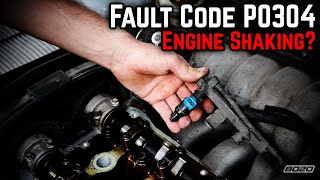
P0304 on a 2019-2024 Mazda CX-5 2.5L Turbo is a cylinder 4 misfire, most often caused by a bad ignition coil or worn spark plug. However, be aware of a serious TSB (01-001-23a) for some 2019-2021 models that points to internal engine damage (compression loss) requiring a cylinder head and exhaust manifold replacement.
- Start diagnosis by swapping the ignition coil from cylinder 4 to another cylinder; this is the most common fix and is an easy test.
- If the check engine light is flashing, pull over immediately and have the vehicle towed to prevent expensive catalytic converter damage.
- Always use the specified Iridium spark plugs (e.g., NGK or Denso) as the Skyactiv engine is sensitive to plug type.
- For 2019-2020 models, if ignition parts don't solve the P0304, be aware of the TSB regarding internal engine damage and consider a professional compression test.
- If P0172 (System Too Rich) is also present, a leaking fuel injector is a strong possibility.
What's Unique About the 2017-2024 Mazda CX-5
While ignition components are the usual suspects for a P0304, the 2.5L Turbo (PY-VPTS) engine in 2019-2021 CX-5s has a critical, model-specific issue. A Mazda Technical Service Bulletin (TSB 01-001-23a, superseding earlier versions) describes how a seized variable valve in the exhaust manifold can lead to excessive heat, worn exhaust valve seats, and a loss of compression that triggers misfires. This makes it crucial to perform a compression test if swapping plugs and coils doesn't resolve the problem, as it could indicate a much more serious internal engine fault requiring major repair. Some owners have reported repair costs of $6,000 or more for this issue, though some have received assistance from Mazda even when out of warranty.
Generation note: This guide covers the second generation (KF) Mazda CX-5, but specifically for models equipped with the 2.5L Turbo engine, which was introduced for the 2019 model year. Information here applies to 2019, 2020, 2021, 2022, 2023, and 2024 model years. The most severe mechanical issue (TSB 01-001-23a) primarily affects 2019-2021 models.
Symptoms You May Notice
- Flashing or solid Check Engine Light
- Rough or vibrating idle
- Engine hesitation or stumbling during acceleration
- Noticeable loss of power
- Poor fuel economy
- Smell of unburned gasoline from the exhaust
- Shaking or violent vibration when slowly accelerating from a stop
- Replacing only the spark plugs when the underlying issue is a faulty ignition coil or a leaking fuel injector.
- Ignoring a flashing check engine light, assuming it's a minor issue, which can lead to catalytic converter failure.
- Continuing to replace ignition parts on a 2019-2021 model when the true cause is the internal engine issue described in TSB 01-001-23a, thus wasting money and time before the necessary compression test.
Most Likely Causes
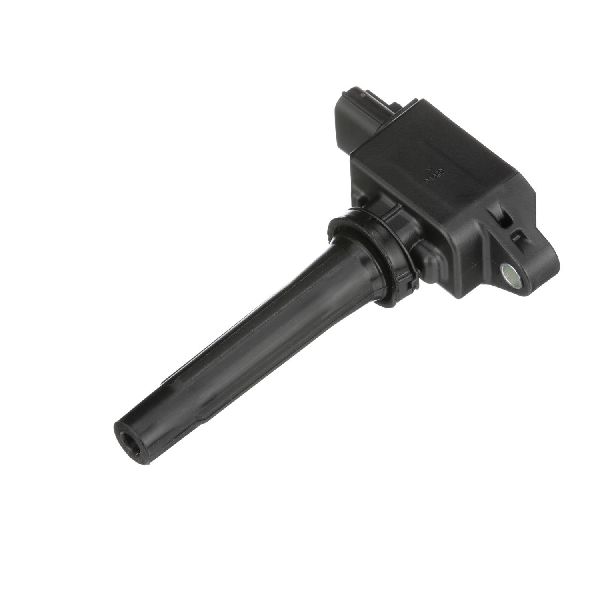
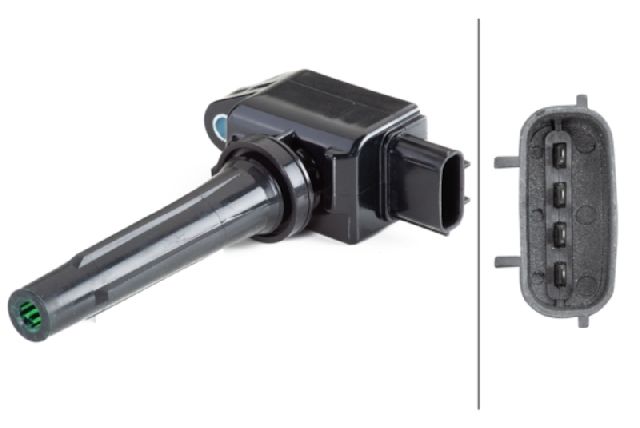
- Faulty Ignition Coil 🔴 High Probability → Shop Ignition Coil Ignition coils are a common wear item and the leading cause of single-cylinder misfires on most modern engines, including the Skyactiv-G.
How to confirm: Swap the ignition coil from cylinder 4 with another cylinder (e.g., cylinder 3). Clear the codes and drive the vehicle. If the code changes to P0303, the ignition coil is faulty and needs to be replaced. This is a standard and effective diagnostic step confirmed by many owners.
Typical fix: Replace the failed ignition coil. It is often recommended to replace all four coils and spark plugs if they are original and have high mileage (over 60,000 miles).
Est. part cost: $70-$120 - Worn or Fouled Spark Plug 🔴 High Probability → Shop Spark Plug
How to confirm: After confirming the ignition coil is good, inspect the spark plug in cylinder 4. Look for signs of wear (eroded electrode), fouling (black, oily, or white deposits), or incorrect gap. The service interval for turbo models is 40,000 miles. Oil fouling can be a symptom of the valve stem seal issue (TSB 01-011/22).
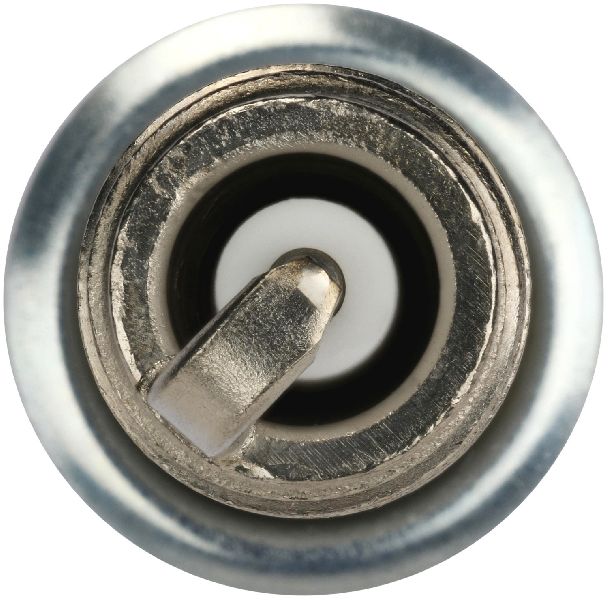
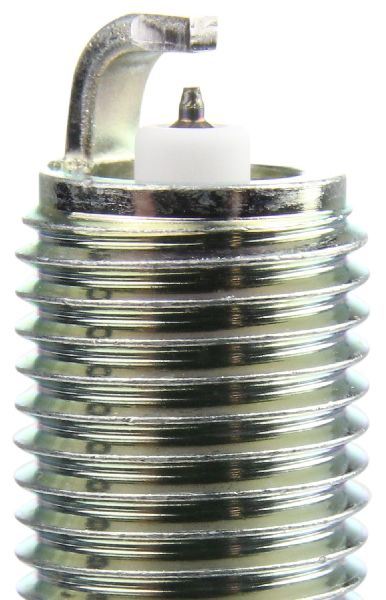
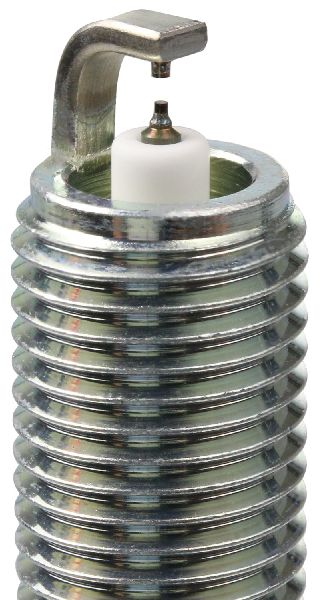
Typical fix: Replace the spark plug. It is best practice to replace all four spark plugs at the same time with high-quality Iridium plugs as specified by Mazda (NGK ILKAR7L11).
Est. part cost: $60-$100 for a set of four - Leaking or Clogged Fuel Injector 🟡 Medium Probability → Shop Fuel Injector As direct injection (GDI) engines, Skyactiv motors can be prone to fuel system issues. A leaking injector can foul the spark plug and cause a rich condition, while a clogged one can cause a lean misfire.
How to confirm: If the spark plug in cylinder 4 is wet with fuel, it points to a leaking injector. This is often accompanied by code P0172 (System Too Rich). A professional can perform a fuel injector balance test to confirm flow issues. A technician noted that these direct injectors have very small orifices and are prone to clogging.
Typical fix: Replace the faulty fuel injector. This is a more involved job as the intake manifold must be removed.
Est. part cost: $150-$300
Rare But Worth Checking
- Internal Engine Damage (Worn Valve Seat / Low Compression): This is a critical issue for 2019-2021 2.5T models, documented in Mazda TSB 01-001-23a. A seized variable valve in the exhaust manifold can cause the exhaust valve seat to wear, leading to compression loss and misfires. The fix is a cylinder head and exhaust manifold replacement. One owner reported this fix on their 2020 CX-5 after replacing plugs didn't work.
- Intake Valve Carbon Buildup: Direct injection engines can suffer from carbon buildup on intake valves, which can restrict airflow and cause misfires, especially on higher mileage vehicles or those used for frequent short trips. This typically requires professional cleaning (e.g., walnut blasting). One owner reported this service fixed their P0304 after other attempts failed.
- Failed Exhaust Valve Seals: Mazda TSB 01-011/22 (and the related class action lawsuit) addresses an oil consumption issue on some 2021 2.5T engines due to faulty exhaust valve seals. While this TSB is primarily for oil loss (P250F), excessive oil entering the combustion chamber can foul the spark plug and lead to misfires like P0304.
- Cracked Cylinder Head (Coolant Leak): → Shop Engine Cylinder Head Separate from the TSB for misfires, some 2.5T engines (primarily 2019-2020) have experienced cracked cylinder heads that cause an external or internal coolant leak. While this may not immediately present as a P0304, coolant entering the cylinder will eventually cause misfires and catastrophic engine damage. A class action lawsuit has been filed regarding this issue.
- Exhaust Flow Restriction (Frozen Silencer): Manufacturer TSB #01-007-19-3541 notes that misfire codes like P0304 can be caused by frozen water accumulating in the main silencer, which restricts exhaust flow and triggers the fault.
Diagnosis Steps
- Read the codes with an OBD-II scanner and note any other codes present. Freeze frame data can show the conditions under which the misfire occurred.
- Check if the Check Engine Light is flashing. If so, avoid driving the vehicle to prevent catalytic converter damage.
- Locate cylinder 4. On the transverse 2.5T engine, the cylinders are numbered 1-2-3-4 from the timing belt side (passenger side) to the transmission side (driver side). Cylinder 4 is closest to the driver's side.
- Swap the ignition coil from cylinder 4 with the coil from cylinder 3. This is a simple job requiring an 8mm socket. Clear the codes and drive the vehicle.
- If the code changes to P0303, the ignition coil is bad. Replace it.
- If the code remains P0304, move the spark plug from cylinder 4 to cylinder 2. Clear codes and drive.
- If the code changes to P0302, the spark plug is bad. Replace all four plugs with the correct OEM-spec Iridium plugs.
- If the code remains P0304, the issue is likely in the fuel or mechanical systems. Inspect the wiring connector for the fuel injector on cylinder 4 for damage or corrosion.
- CRITICAL STEP for 2019-2021 models: If ignition parts are ruled out, a compression test is now mandatory. If compression is significantly lower in cylinder 4, the cause is likely the internal engine failure described in TSB 01-001-23a. The vehicle will require cylinder head and exhaust manifold replacement.
- For higher mileage vehicles (80k+ miles), if compression is good, consider carbon buildup on the intake valves as a potential cause. This may require professional cleaning.
- If all else fails, a leaking fuel injector is the next likely culprit. This can be confirmed with a professional fuel injector balance test.
Parts You'll Likely Need
- Ignition Coil
(OEM #PE20-18-100B)— This is the most common cause of a single-cylinder misfire. The coil-on-plug design is a frequent failure point.
Trusted brands: Mazda (OEM), NGK, Denso
OEM price range: $100-$140
Aftermarket price range: $70-$100 - Iridium Spark Plug
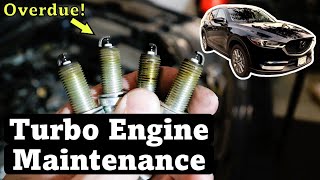
(OEM #PE5R-18-110A (supersedes PE5S-18-110))— Spark plugs are a regular maintenance item with a 40,000-mile interval on this engine and can cause misfires when worn or fouled.
Trusted brands: NGK (ILKAR7L11), Denso
OEM price range: $25-$35 per plug
Aftermarket price range: $15-$25 per plug - Cylinder Head Assembly (Updated) — Required to fix the compression loss issue described in TSB 01-001-23a for 2019-2021 models. This is a dealer-only, major repair.
Trusted brands: Mazda (OEM)
OEM price range: $2500+
Aftermarket price range: N/A - Main Silencer — Per TSB #01-007-19-3541, replacement may be necessary if condensation accumulation in the exhaust baffle leads to frozen restrictions and misfires.
Related Codes That Often Appear With This One
- P0300 — If the condition causing the P0304 is severe or intermittent, it may be logged as a P0300 (Random Misfire) before being isolated to cylinder 4. NHTSA ODI #11675874 describes a scenario where both P0300 and P0304 were activated simultaneously.
- P0172 — This code for 'System Too Rich' often appears with P0304 if a fuel injector is stuck open or leaking, dumping excess fuel into cylinder 4.
- P0303 — This code for 'Cylinder 3 Misfire' will appear if you swap a bad ignition coil or spark plug from cylinder 4 to cylinder 3 as a diagnostic test, confirming the swapped part is the problem.
- P250F — This code for 'Engine Oil Level Low' may accompany a P0304 if the misfire is caused by oil fouling on the spark plug due to the excessive oil consumption issue described in TSB 01-011/22.
- P0340, P3400, P349B, P3498 — Manufacturer TSB #SA-022-19 notes these codes may appear alongside P0304 when a customer complains of lack of power or engine noise.
Technical Service Bulletins (TSBs) & Recalls
- SSP122 / 01-001-23a: Poor acceleration and misfire codes (P0301-P0304) on 2.5T engines caused by a seized exhaust manifold valve leading to worn valve seats and compression loss, requiring cylinder head replacement.
- 01-011/22: Excessive oil consumption on 2021-2022 2.5T models due to faulty exhaust valve seals.
- 01-012/21: Initial bulletin identifying the oil consumption issue on 2021 2.5T models.
- 01-013/21: Describes the separate issue of cylinder heads cracking and leaking coolant on 2.5T engines.
- TSB #SA-022-19: Addresses customer complaints of lack of power, rough idle, and engine noise with stored DTCs including P0304.
- TSB #01-007-19-3541: Identifies that P0304 may be caused by frozen water in the main silencer restricting exhaust flow.
Platform-Specific Known Issues
- TSB 01-001-23a (supersedes SSP122): Affects some 2019-2021 2.5T models. A seized variable valve in the exhaust manifold can cause uneven wear on the exhaust valve seat, leading to compression loss and misfires (P0301-P0304). The official repair is to replace the cylinder head (PYY1-10-SJ0C) and exhaust manifold (PY8V-13-450K).
- TSB 01-011/22 & 01-012/21: Affects some 2021 2.5T models. Addresses high oil consumption due to faulty exhaust valve seals. This can lead to oil fouling on spark plugs, causing misfires. This issue led to a class-action lawsuit and settlement.
- Cracked Cylinder Head (Coolant Leak): Separate from the misfire TSB, a number of 2019-2021 2.5T engines have suffered from cracks in the cylinder head near the exhaust manifold, leading to coolant leaks and potential engine failure. This has also been the subject of a class-action lawsuit.
Mechanic-Grade Diagnostic Values
- High-Pressure Fuel System Pressure at Idle (Engine Warm) — expected: 424–572 psi (3.0–3.95 MPa). Failure: Significantly lower pressure, or pressure stuck around 60-70 PSI, indicates a failing High Pressure Fuel Pump (HPFP).
- High-Pressure Fuel System Pressure at Wide-Open Throttle (WOT) — expected: ~2900-3000 PSI. Failure: Inability to reach high pressure under load points to a failing HPFP.
- Low-Pressure Fuel System Pressure — expected: 79.1–100.0 psi (545–695 kPa). Failure: Pressure below this range indicates a weak in-tank low-pressure fuel pump (LPFP) or a restriction. This should be checked before condemning the HPFP.
- Ignition Coil Primary Winding Resistance — expected: 0.49—0.57 ohms. Failure: A reading outside this range indicates a faulty coil.
- Ignition Coil Connector Voltage (Pin C) — expected: Battery Positive Voltage (B+). Failure: No voltage indicates a problem with the power supply circuit to the coil.
- Mode $06 Misfire Counts — expected: Near zero counts for all cylinders.. Failure: A high number of misfire counts logged for cylinder 4, even without a persistent CEL, confirms the misfire is isolated to that cylinder.
Scan Tool Commands That Help
- FORScan / Mazda M-MDS: Power Balance Test — This function allows the user to disable individual fuel injectors one by one to observe the RPM drop. If disabling cylinder 4 causes little or no change in RPM, it confirms that cylinder 4 is not contributing power, definitively identifying the misfiring cylinder without having to swap parts.
- FORScan / Mazda M-MDS: Misfire Count Live Data (Mode $06) — Use this to monitor for intermittent misfires that may not be severe enough to trigger a constant Check Engine Light. It can help confirm that cylinder 4 is the sole problem before beginning repairs.
Wiring & Ground Locations
- Cylinder 4 Ignition Coil Connector — On the 2.5T engine, cylinder 4 is on the driver's side (transmission side). The connector is on top of the ignition coil, which is inserted into the valve cover.. This connector provides power, ground, and the trigger signal to the coil. A damaged connector, corroded pins, or broken wires can cause a misfire just as easily as a bad coil. Wiggle the connector with the engine running to check for intermittent connections.
- Ignition Coil Connector Pinout — On the 3-pin connector for the coil: Pin A is the trigger signal from the PCM, Pin B is the ground, and Pin C is the 12V+ power supply.. Allows for voltage testing. With the key on, engine off, you should have 12V+ at Pin C. A lack of voltage points to a fuse or wiring issue upstream, not a bad coil.
- Engine/Transmission Ground Strap — Primary ground strap connects the negative battery terminal to a bracket on top of the transmission housing.. A loose or corroded main ground can cause a host of electrical issues, including weak spark and intermittent misfires that can be difficult to diagnose. Ensure this connection is clean and tight.
Real Owner Repair Stories
- Mazdas247 Forum user 'mikesierra' (2018 Mazda 6 2.5L Turbo, 117k miles) — Check engine light with rough idling.
❌ Tried (didn't work) Replacing the fuel injector on cylinder 4, Carbon deposit cleaning
✅ What actually fixed it The issue was diagnosed as the known problem in TSB 01-001-23a (seized exhaust manifold valve causing compression loss). The fix required replacing the entire manifold assembly and other related parts. The total repair cost was around $6,000, but after negotiation with Mazda corporate and the dealer, the owner's portion was reduced to $2,000 plus tax. - Mazdas247 Forum user 'jthomp22' (2013 Mazda CX-5 2.0L, 130k miles) — P0304 and P0300, hesitation under load at low RPM.
❌ Tried (didn't work) Swapping ignition coils (no change), Replacing all 4 coils, Replacing front O2 sensor, Cleaning MAF sensor, Checking for vacuum leaks with carb cleaner
✅ What actually fixed it The user replaced the #4 fuel injector. While the intake manifold was off, significant carbon buildup was found on the intake valves, which was then cleaned. After the injector replacement and valve cleaning, the P0304 code was resolved (though a new P0171 code appeared, which was a separate issue). - NHTSA ODI #11451413 — An owner reported a dangerous situation while driving 65 mph on a highway due to a P0304 misfire. They cited TSB 01-007/19 which recommends replacing the main silencer because of condensation accumulation in the exhaust baffle.
- NHTSA ODI #11675874 — An owner reported that multiple lights and messages were activated on their vehicle; a scan revealed both P0300 and P0304 codes.
OEM Part Supersession History
PE20-18-100A→PE20-18-100B— Improvement in reliability/manufacturing process to address failures.PE5S-18-110→PE5R-18-110A— Minor revision to the spark plug design or heat range for optimal performance.
Model Year Variations Within This Range
- 2019-2021: These model years are primarily affected by TSB 01-001-23a, which details misfires caused by a seized valve in the original exhaust manifold design, leading to compression loss. Later models have a revised manifold.
- 2021+: Some 2021 models are affected by TSB 01-011/22 for excessive oil consumption due to faulty valve stem seals. This can lead to oil-fouled spark plugs, causing a P0304, which is a different root cause than the exhaust manifold TSB affecting earlier years.
- Varies by engine option: The ignition coil for the 2.5L Turbo (PY-VPTS) is part number PE20-18-100A/B. However, the non-turbo 2.5L engine *with* cylinder deactivation uses a different coil, part number PYFS-18-100. They are not interchangeable.
Diagnostic Flowchart
Other Known Issues on This Vehicle
Issues unrelated to this code that are worth knowing about as an owner of this generation:
- Cracked Cylinder Head (Coolant Leak) 🔴 High → Shop Engine Cylinder Head — Affects a small but significant number of 2019-2021 2.5T models. Can occur at various mileages, some as low as 35k. Symptoms include coolant loss and overheating. (Ref: Mazda issued an extended warranty (10yr/120k miles) for some VINs and has been subject to a class-action lawsuit.)
- Excessive Oil Consumption (Valve Stem Seals) 🟠 Medium — Primarily affects 2021 models with the 2.5T engine built before Sept 2021. Owners report the low oil light coming on well before the scheduled oil change interval. (Ref: TSB 01-011/22 and 01-012/21. A class-action lawsuit resulted in a settlement providing warranty extensions and reimbursements.)
- Infotainment System Lag/Rebooting 🟡 Low — Common complaint across many 2017+ models where the Mazda Connect system can be slow to start up or randomly reboot while driving. (Ref: Various software updates have been released by dealers to address stability.)
- Failing Fuel Pump 🔴 High → Shop Fuel Pump — Affects certain 2018-2019 models. Can cause engine stalling, sometimes while driving at highway speeds. (Ref: Subject to a recall (NHTSA Campaign 19V602000).)
- Carbon Buildup on Intake Valves 🟠 Medium — A common long-term issue for all Skyactiv direct-injection engines, not just the turbo. Becomes more prevalent after 60k-80k miles, causing hesitation and misfires.
Used vs. New Parts: Buying Guide for This Vehicle
When a used part is the smart pick: For standard, non-TSB related repairs, used parts can be a cost-effective option. A low-mileage ignition coil or fuel injector from a reputable salvage yard is generally a safe bet. Given the high cost of the HPFP, a used unit from a low-mileage donor vehicle is a common and viable repair strategy.
Donor-vehicle mileage cap: roughly under 60000 miles for the part to have meaningful remaining life.
What to inspect on the donor part:
- Verify the donor vehicle's mileage and check for signs of front-end collision (which is less likely to damage engine components) vs. engine-related failure.
- For ignition coils, look for OEM markings (e.g., 'FoMoCo' or Mazda logo) and avoid parts with cracks in the plastic housing or corrosion on the electrical connector.
- When buying a used HPFP, try to get it from a specialist dismantler who may offer a short-term warranty.
OEM-only on this vehicle (don't cheap out):
- Cylinder Head Assembly
- Exhaust Manifold (for TSB 01-001-23a)
- Internal engine components (pistons, valves, etc.)
Aftermarket brands forum-validated for this vehicle:
- NGK (for Ignition Coils and Spark Plugs)
- Denso (for Ignition Coils and Spark Plugs)
Brands owners have reported issues with on this vehicle:
- Unbranded, 'no-name' ignition coils and fuel injectors from online marketplaces. These often have a high failure rate and may not perform to OEM specifications, causing persistent issues.
Real Owner Stories
Aggregated from forums and TSBs cited above. Mileages and costs reflect what owners reported in those sources.
2020 Mazda CX-5 2.5T
Symptoms: Engine check light with error code P0304.
What fixed it: Cylinder head and exhaust manifold replacement per TSB 01-001-23a.
Source hint: Reddit r/CX5: Engine check with error code P0304
2018 Mazda 6 2.5T — 117000 miles
Symptoms: P0304 misfire and compression loss.
What fixed it: Repair for compression loss per TSB 01-001-23-valve in exhaust manifold overheating.
Cost: $2000-$6000
Source hint: Mazdas247: Mazda TSB 01-001-23-valve in exhaust manifold overheating
2019 Mazda CX-5 2.5T
Symptoms: Overheating and coolant leak issue diagnosed as a cracked cylinder head.
What fixed it: Cylinder head replacement; Mazda Canada offered to cover parts but not labor.
Cost: $6,000-$6,000
Source hint: Reddit r/CX5: Cracked Cylinder head- Coolant Leak
2023 Mazda CX-5 2.5T
Symptoms: P0304 misfire code; owner initially suspected plugs or coils.
What fixed it: Cylinder head replacement under warranty after dealer diagnosis revealed low compression.
Source hint: YouTube: Slow Six Fix: Mazda CX5 P0304 misfire code
Related OBD-II Codes
Frequently Asked Questions
Does TSB 01-001-23a apply to my 2020 Mazda CX-5 2.5T regarding the P0304 code?
What is the specific spark plug service interval for my CX-5 Turbo to prevent misfires?
Could my P0304 misfire be related to the high oil consumption issue on my 2021 CX-5?
Is there a known issue with the cylinder head cracking on the 2.5L Turbo engine?
How can I tell if my P0304 code is a simple ignition coil failure or the more serious TSB issue?
Will Mazda cover the cost of a cracked cylinder head if I am out of warranty?
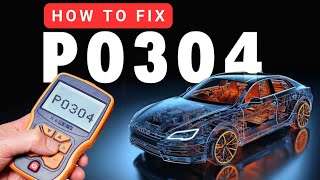
Helpful Videos

We Have This Part in Stock


The information in this article is provided for general reference and educational purposes only. Vehicle specifications, procedures, and part compatibility can vary by production date, trim level, and region. Always consult your vehicle's factory service manual and verify part numbers before purchasing or performing repairs. Safety-critical components such as airbags, seat belts, and braking systems should be installed by a qualified professional.
- Mazda CX-5:
- 🧭 Diagnostic Flowchart
- 🎬 Helpful Videos
- 🛍️ Shop This Part
- What's Unique About the 2017-2024 Mazda CX-5
- Symptoms You May Notice
- Most Likely Causes
- Rare But Worth Checking
- Diagnosis Steps
- Parts You'll Likely Need
- Related Codes That Often Appear With This One
- Technical Service Bulletins (TSBs) & Recalls
- Platform-Specific Known Issues
- Mechanic-Grade Diagnostic Values
- Scan Tool Commands That Help
- Wiring & Ground Locations
- Real Owner Repair Stories
- OEM Part Supersession History
- Model Year Variations Within This Range
- Other Known Issues on This Vehicle
- Used vs. New Parts: Buying Guide for This Vehicle
- Real Owner Stories
- 2020 Mazda CX-5 2.5T
- 2018 Mazda 6 2.5T — 117000 miles
- 2019 Mazda CX-5 2.5T
- 2023 Mazda CX-5 2.5T
- Related OBD-II Codes
- Frequently Asked Questions
- 🎟️ Get 5% Off