

P0304 on 2012-2016 Mercedes-Benz E-Class: Cylinder 4 Misfire Causes and Fixes
P0304 on a Mercedes M276 engine is most often caused by a failed ignition coil. Since the intake manifold must be removed for access, it's highly recommended to replace all six coils and spark plugs at the same time. Expect to pay $300-$600 for a full set of OEM-quality parts.
- P0304 on this Mercedes is almost always an ignition issue, with the ignition coil being the most likely culprit.
- Diagnosis is straightforward: swap the coil from cylinder 4 to another cylinder and see if the code follows.
- Due to the M276 engine's design, the intake manifold must be removed to access coils and plugs. This makes the job labor-intensive.
- To save on future labor costs, it is highly recommended to replace all six ignition coils and all six spark plugs at the same time.
- Do not ignore a flashing check engine light, as it can lead to very expensive catalytic converter damage.
What's Unique About the 2012-2016 Mercedes-Benz E-Class
The M276 V6 engine is known for intermittent ignition coil failures that can cause a misfire which temporarily resolves after restarting the car. A unique challenge with this engine is that replacing any ignition coil or spark plug requires the complete removal of the intake manifold, making the job significantly more labor-intensive than on many other vehicles. Because of this, mechanics and owner forums like MBWorld and Reddit strongly advise replacing all six ignition coils and spark plugs at once to avoid repeated, costly labor for subsequent coil failures. Some experienced DIYers have managed to perform the job without removing the manifold, but it is extremely difficult, especially for the rear cylinders.
🎬 See how to replace spark plugs without removing the manifold.Symptoms You May Notice
- Flashing or solid Check Engine Light
- Rough or shaky idle
- Engine hesitation or stumbling during acceleration
- Noticeable loss of power
- Reduced fuel economy
- In some cases, the misfire and symptoms may disappear after restarting the engine, only to return later
- Replacing only the single failed ignition coil or spark plug. While this fixes the immediate code, the labor-intensive nature of the job means it's inefficient, as other original coils are likely to fail soon after.
- Replacing camshaft or crankshaft sensors without diagnosing a timing-related code. While sensor issues can cause misfires, they typically affect multiple cylinders and set different codes (e.g., P0340, P0016).
- Assuming a fuel pump is bad for a single-cylinder misfire. While a failing high-pressure fuel pump (HPFP) is a known issue on the M276, it typically causes random misfires (P0300) or low fuel pressure codes (P0087), not an isolated P0304.
Most Likely Causes
- Faulty Ignition Coil 🔴 High Probability → Shop Ignition Coil Ignition coils are a very common failure item on the M276 engine, often failing intermittently before failing completely. The heat in the engine bay can cause the plastic housings to become brittle, sometimes leading to them breaking apart during removal.
How to confirm: The most effective diagnostic method is to swap the ignition coil from cylinder 4 with another cylinder (e.g., cylinder 5). Clear the codes and drive. If the code changes to P0305, the coil is confirmed to be faulty. This initial swap can be done without removing the intake manifold, but access is tight.
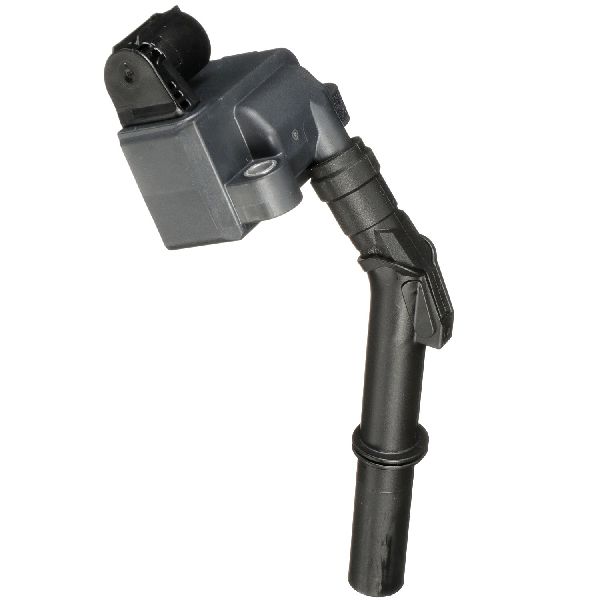
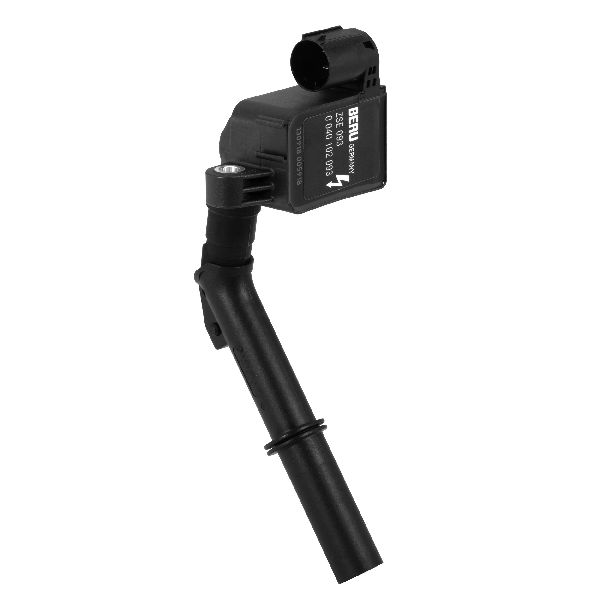
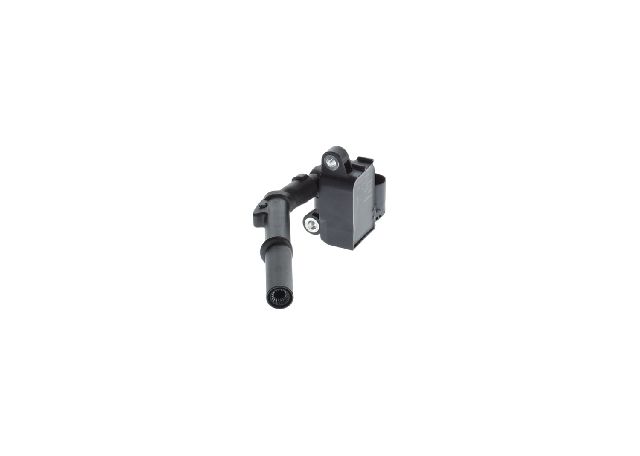
Typical fix: Replace the faulty ignition coil. It is strongly recommended to replace all six coils and spark plugs at the same time due to the labor involved in removing the intake manifold. Owners and OEM suppliers like Bosch and Beru are the most recommended replacements.
Est. part cost: $40-$115 per coil - Worn or Fouled Spark Plug 🟡 Medium Probability → Shop Spark Plug Spark plugs are a regular maintenance item. The recommended service interval is around 60,000 miles. If they are past their service interval, they can cause a weak spark and lead to misfires.
How to confirm: After swapping the coil with no change, swap the spark plug from cylinder 4 with another cylinder. If the misfire code follows the plug, the plug is the issue. Visually inspect the plug for wear, oil, or carbon fouling. This requires removing the intake manifold.
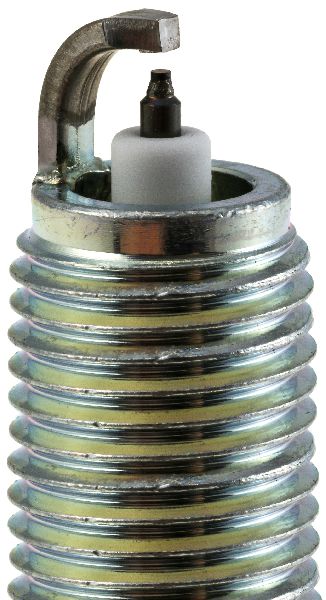
Typical fix: Replace the spark plug. As with the coils, it is best practice to replace all six spark plugs at the same time since the intake manifold must be removed for access. It is critical to use the correct plugs and torque them to 23 Nm to ensure they are properly 'indexed' or oriented in the cylinder, a requirement for this direct-injection engine.
Est. part cost: $15-$25 per plug - Faulty Fuel Injector ⚪ Low Probability → Shop Fuel Injector A Technical Service Bulletin (TSB LI07.08-P-059122) was issued for M276 engines regarding misfires shortly after a cold start, recommending the replacement of the affected fuel injector. Injectors can also become clogged or fail electronically, leading to misfire codes.
How to confirm: If swapping the coil and spark plug does not isolate the problem, the fuel injector is the next likely suspect. This can be tested by checking the injector's electrical signals or swapping it with another cylinder, though this is a more involved job than the coil or plug.
Typical fix: Replace the fuel injector for cylinder 4. The injector seal should also be replaced. This is a more complex DIY job than coils and plugs.
Est. part cost: $100-$200
Rare But Worth Checking
- Carbon Buildup on Intake Valves: As a direct-injection engine, the M276 is susceptible to carbon buildup on the back of the intake valves, as fuel is not sprayed over them to keep them clean. Severe buildup can restrict airflow or prevent the valves from seating properly, causing a misfire, especially at idle. The fix is a manual cleaning (walnut blasting) with the intake manifold removed. 🎬 Learn more about carbon buildup and other common M276 issues.
- Internal Engine Mechanical Failure: Though uncommon, a loss of compression from a bad valve, worn piston rings, or a leaking head gasket can cause a persistent P0304 code. A cylinder compression test and a leak-down test are required to diagnose this.
- Wiring Harness Issue: Damage or corrosion in the wiring or connector for the ignition coil or fuel injector on cylinder 4 can cause an intermittent or persistent misfire. A known issue on M276 engines involves oil wicking from leaking camshaft position sensors into the main engine harness, which can cause a variety of electrical faults, including misfires.
Diagnosis Steps
- Read the code using an OBD-II scanner and confirm P0304 is present. Note any other codes and freeze-frame data.
- Check freeze-frame data to understand the engine conditions (RPM, load, temperature) when the misfire occurred.
- Perform the 'coil swap' test: Swap the ignition coil from cylinder 4 (driver's side, front) with cylinder 5 (driver's side, middle). This requires removing the engine cover and airbox assembly. Access is tight but possible without removing the intake manifold.
- Clear the codes, drive the vehicle, and re-scan. If the code is now P0305, the ignition coil is faulty.
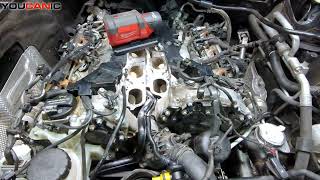
- If the code remains P0304, the next step requires removing the intake manifold. This is a 2.5-4 hour job for an experienced mechanic.
- With the intake manifold removed, swap the spark plug from cylinder 4 with another cylinder. Reassemble and test. If the code moves, the spark plug was the issue.
- While the manifold is off, inspect the intake ports for excessive carbon buildup, which is a known issue on direct-injection engines.
- If the code remains P0304, the issue is likely the fuel injector, wiring, or a mechanical problem.
- Inspect the wiring and connector for the cylinder 4 ignition coil and fuel injector for any signs of damage or corrosion.
- If all ignition and fuel delivery components check out, perform a cylinder compression test and a leak-down test to rule out mechanical engine damage.
Parts You'll Likely Need
- Ignition Coil
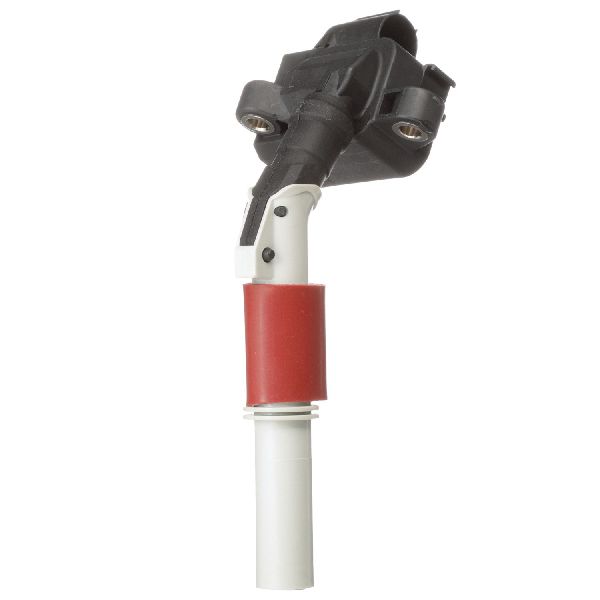
(OEM #A2769060501 (or superseding numbers like A2761500080))— This is the most common failure point for a P0304 code on the M276 engine.
Trusted brands: Bosch, Beru, Delphi
OEM price range: $80-$115
Aftermarket price range: $40-$70 - Spark Plug
(OEM #A0041598103)— A necessary replacement during an ignition service, especially since access requires significant labor. Worn plugs are a primary cause of misfires.
Trusted brands: Bosch (ZR6SII3320), NGK
OEM price range: $20-$30
Aftermarket price range: $15-$25 - Intake Manifold Gasket Kit
(OEM #A2761410180 (upper, 6 required))— These are single-use gaskets that must be replaced anytime the intake manifold is removed to service the coils or plugs.
Trusted brands: Victor Reinz, Elring
OEM price range: $10-$15 per gasket
Aftermarket price range: $5-$10 per gasket
Related Codes That Often Appear With This One
- P0300 — If the misfire is intermittent or affects multiple cylinders, a P0300 (Random/Multiple Cylinder Misfire) may be stored alongside P0304.
- P0305, P0306 — Misfire codes for other cylinders on the same bank (Bank 2: cylinders 4, 5, 6) might indicate a shared problem like a vacuum leak or fuel delivery issue affecting that side of the engine.
- P0087 — If the misfire is accompanied by a P0087 (Fuel Rail/System Pressure - Too Low), it could point towards a failing High-Pressure Fuel Pump (HPFP), a known but less common issue on the M276 engine.
Technical Service Bulletins (TSBs) & Recalls
- LI07.08-P-059122 — Addresses engine misfires that occur only during the first 120 seconds after a cold start. The prescribed fix is to replace the fuel injector of the cylinder logging the misfire code.
- LI05.10-P-056435 — Addresses a common startup rattle from the front of the engine. This is caused by timing chain tensioners losing oil pressure. The fix involves installing updated tensioners and check valves. While not directly related to P0304, it's a critical TSB for M276 owners to be aware of.
Platform-Specific Known Issues
- A known TSB (LI07.08-P-059122) addresses misfires on M276 engines that occur shortly after a cold start (under 120 seconds, coolant temp below 45°C). The remedy is to replace the fuel injector on the affected cylinder.
- Ignition coils on the M276 can fail intermittently, causing a misfire that disappears after an engine restart, making diagnosis difficult until the failure becomes permanent.
- The job of replacing coils/plugs requires removing the intake manifold, which is a signific
Mechanic-Grade Diagnostic Values
- High-Pressure Fuel System (Direct Injection) — expected: 120-200 bar (1740-2900 PSI), controlled by the ECU based on load.. Failure: Pressure significantly below 120 bar or erratic readings under load can indicate a failing High-Pressure Fuel Pump (HPFP).
- Low-Pressure Fuel System (In-tank pump) — expected: 4.5 to 6.7 bar (65 to 97 PSI).. Failure: Low pressure here will starve the HPFP, causing misfires and low-pressure codes like P0087.
- Piezo Fuel Injector Resistance — expected: 150 to 210 kilo-ohms between the two terminals.. Failure: A reading outside this range, or any continuity between a terminal and the injector casing (ground), indicates a faulty injector.
- Scan Tool Live Data - 'Smooth Operation of Cylinder' — expected: Values should be relatively close to zero and consistent across all cylinders at idle. A healthy cylinder might show a value between -0.5 and +0.5.. Failure: A cylinder showing a significantly higher positive value (e.g., 2.87 as seen in one case) is misfiring, and the ECU is attempting to compensate.
- Scan Tool Live Data - Fuel Injector Voltage (High) — expected: Around 160-165 volts during operation.. Failure: A significantly higher voltage on one injector (e.g., 176 volts) compared to others can indicate a wiring or ECU driver issue for that cylinder.
Hidden / Shadow Codes Worth Checking
- Misfire Event Counter: Mercedes' XENTRY software doesn't just show a P0304 code; it logs specific event data, including a counter for the number of misfires detected per cylinder. This helps determine the severity and frequency of the misfire, distinguishing between an intermittent and a hard fault. (see via Mercedes-Benz XENTRY/DAS (dealer-level diagnostic tool).)
Scan Tool Commands That Help
- XENTRY/DAS: Smooth Running Test — This function graphically displays the rotational consistency of each cylinder, making it easy to spot which one is lagging. It's a primary step in diagnosing a misfire to confirm the affected cylinder and see how the ECU is attempting to compensate.
- XENTRY/DAS: Relative Compression Test — If ignition and fuel issues are ruled out, this test can be performed without removing spark plugs. It measures the starter motor's current draw as it turns over each cylinder, comparing the relative speed between them. A cylinder with low compression will spin faster, indicating a potential mechanical issue.
- XENTRY/DAS: Injector Quantity Compensation — This allows a technician to view the adjustments the ECU is making to the fuel quantity for each injector to maintain a smooth idle. A large positive or negative compensation value for cylinder 4 could point to an injector or compression issue.
Wiring & Ground Locations
- W10 — The main battery ground post, typically located on the driver's side suspension strut tower in the engine bay.. A poor main ground connection can cause a host of intermittent and difficult-to-diagnose electrical issues, including weak spark or erratic sensor readings that could lead to a misfire.
- W11 — The ground point for the Engine Control Module (ECU/ECM) wiring assembly.. Corrosion or a loose connection at the ECU's own ground point can directly impact the signals to and from the ignition coils and fuel injectors, potentially causing a misfire on a single cylinder.
- W16/4 — A ground point located on the wheelhouse, under or near the battery tray.. This is a chassis ground point that services various components in the engine bay. Poor contact here can contribute to floating grounds and electrical noise.
- Cylinder 4 Ignition Coil Connector — On the front-most cylinder on the driver's side of the engine. The connector pinout is crucial for testing voltage supply and signal from the ECU.. Damage to the connector or wiring harness right at the coil is a common point of failure. A forum user traced a persistent misfire to a wiring issue between the ECU and the injector, highlighting the need to check continuity.
Real Owner Repair Stories
- MBWorld.org Forums user 'Westlotorn' (2013 E350 M276) — Persistent misfire on cylinder #1 (P0301, but same diagnostic principle as P0304) after extensive timing work. Scan tool showed abnormal injector voltage on the faulty cylinder.
❌ Tried (didn't work) Swapping spark plugs, Swapping ignition coils, Replacing the fuel injector on the misfiring cylinder
✅ What actually fixed it The final diagnosis pointed towards a wiring issue between the ECU and the fuel injector or a faulty ECU driver for that specific cylinder. The user was tracing the wiring harness for shorts or damage as the final step after all component swaps failed to move the misfire. - NHTSA ODI #11701543 — An owner reported codes P0300, P0301, and P0304. Upon professional inspection, a mechanic diagnosed the root cause of these misfires as a fuel or propulsion system failure.
- NHTSA ODI #11621516 — A report describes a vehicle where the OBD-based emissions test flagged multiple cylinder misfire codes, including P0304, P0300, P0305, P0303, and P0301, with the check engine light illuminated.
OEM Part Supersession History
A2769060501→A2769065400, A2761500080, and others.— Revisions by the manufacturer to improve reliability and address failure patterns.
Heads up: While multiple part numbers may be listed, it is crucial to use a part number confirmed to be compatible with the specific model year. Using an incorrect revision, even if it fits physically, may lead to performance issues. Always verify with a VIN-based parts catalog.
Model Year Variations Within This Range
- 2012-2016: The M276 engine replaced the previous M272 V6 starting in the 2012 model year for the E-Class. Early M276 engines (around 2012-2013) were noted for potential high-pressure fuel pump (HPFP) and timing chain tensioner issues more so than later years. Additionally, in early 2013, the M276 block manufacturing process switched from cast iron liners to a 'Nanoslide' cylinder wall coating, which may affect long-term wear characteristics.
Diagnostic Flowchart
Other Known Issues on This Vehicle
Issues unrelated to this code that are worth knowing about as an owner of this generation:
- Timing Chain Tensioner Rattle on Cold Start 🔴 High — Common on early production M276 engines (approx. before mid-2013). A rattle for 2-5 seconds on cold start is the primary symptom. (Ref: TSB LI05.10-P-056435)
- High-Pressure Fuel Pump (HPFP) Failure 🟠 Medium → Shop Fuel Pump — Becoming more common as vehicles age. Symptoms include long crank times, hesitation, and low fuel pressure codes (P0087).
- Oil Leaks from Camshaft Position Sensors into Wiring Harness 🔴 High → Shop Engine Camshaft Position Sensor — A well-documented issue where oil wicks through the sensor connector and travels through the engine harness, potentially damaging the ECU and other components.
- Oil Leaks from Front Timing Covers 🟠 Medium — The sealant on the upper front timing covers can degrade, causing oil to leak down onto the alternator, potentially causing alternator failure.
- Coolant Leaks from Plastic Components 🟡 Low — With higher mileage, plastic components in the cooling system, such as the thermostat housing and various flanges, can become brittle and leak.
Used vs. New Parts: Buying Guide for This Vehicle
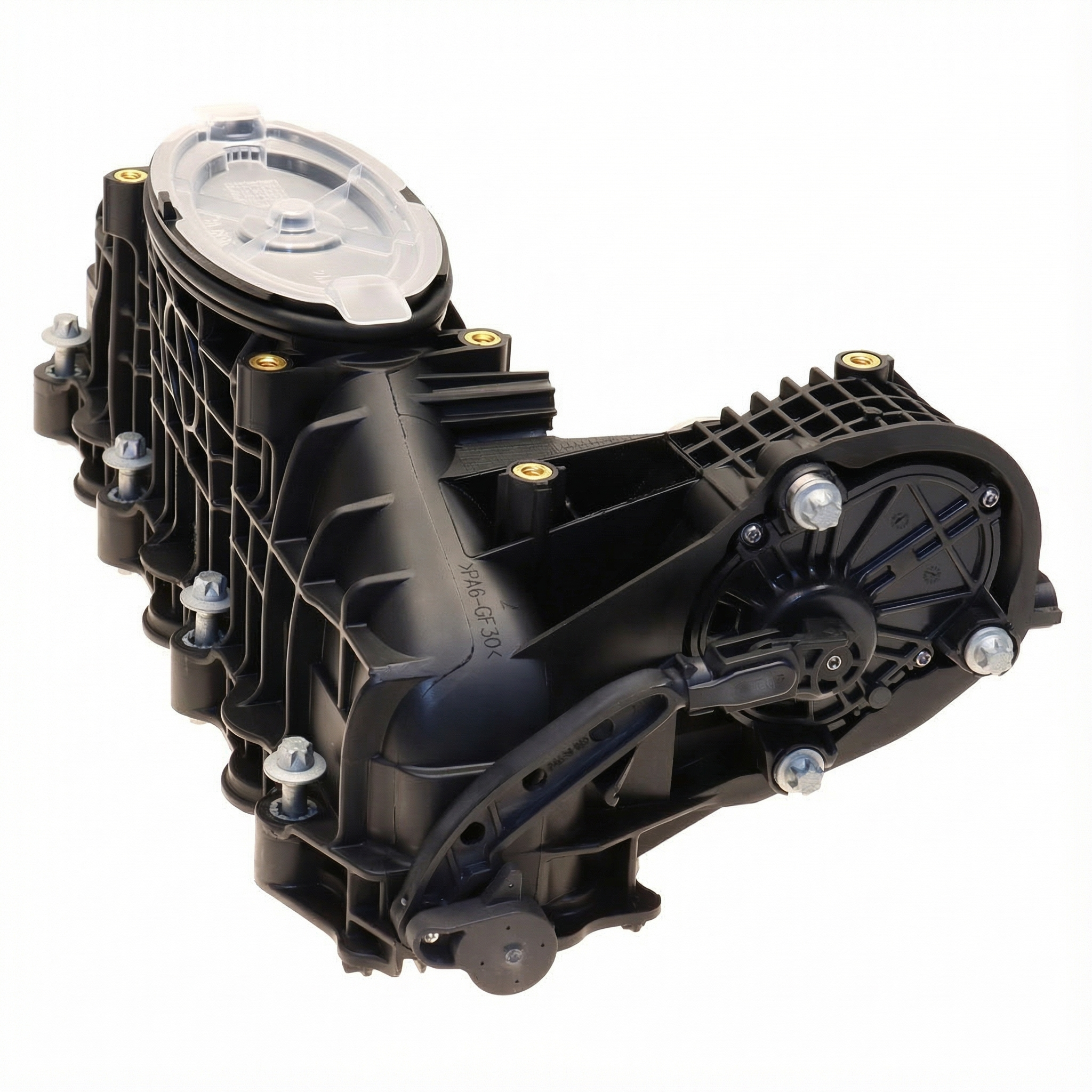
When a used part is the smart pick: For this repair, buying used parts is generally not recommended for the primary failure items. The only component where a used part might be considered is a complete intake manifold assembly if the original is physically cracked or damaged, as it is a non-wear item.
Donor-vehicle mileage cap: roughly under 60000 miles for the part to have meaningful remaining life.
What to inspect on the donor part:
- For an intake manifold, check for cracks, especially around mounting points and sensor ports.
- Ensure all vacuum nipples and connections are intact and not brittle.
- Avoid parts from engines that show signs of a major internal failure (e.g., metal shavings in ports).
OEM-only on this vehicle (don't cheap out):
- Fuel Injector: Piezo injectors are highly sensitive. Aftermarket versions can have incorrect spray patterns or flow rates, causing performance issues. Stick to OEM (Bosch is the original supplier).
- Sensors: Camshaft and crankshaft sensors are critical for engine timing. Using non-OEM brands is a common cause of repeat failures or new, unrelated codes.
Aftermarket brands forum-validated for this vehicle:
- Ignition Coils: Bosch, Delphi, Beru (often the Original Equipment Manufacturer).
- Spark Plugs: Bosch (specifically ZR6SII3320 for proper indexing), NGK.
- Gaskets: Victor Reinz, Elring.
Brands owners have reported issues with on this vehicle:
- Unbranded or 'white-box' ignition coils and fuel injectors from online marketplaces. The failure rate is extremely high, and given the labor to access them, the risk is not worth the initial savings.
Real Owner Stories
Aggregated from forums and TSBs cited above. Mileages and costs reflect what owners reported in those sources.
2012 E350 Coupe M276
Symptoms: Owner experienced a misfire and sought advice on replacing all coils and plugs at once due to the labor involved.
What fixed it: The discussion focused on replacing all six coils and spark plugs simultaneously using recommended OEM brands like Bosch or Beru.
Source hint: Reddit r/mercedes_benz - 2012 E350 Coupe (M276) – Spark plugs & Ignition coils advice
2012-2015 Mercedes-Benz C350 M276 — 55000 miles
Symptoms: Worn spark plugs were inspected; owner evaluated the difficulty of the replacement procedure.
What fixed it: Spark plug replacement; the owner noted the difficulty of accessing plugs without removing the intake manifold.
Source hint: BobIsTheOilGuy - MB M276 Spark Plugs at 55K miles
Related OBD-II Codes
Frequently Asked Questions
My M276 engine has a misfire only during the first two minutes after a cold start. Does TSB LI07.08-P-059122 apply?
Can I replace the spark plugs on my E350 without removing the intake manifold?
What is the correct torque spec for spark plugs on the M276 3.5L V6?
Why does my P0304 misfire code disappear after I restart the engine?
Which ignition coil brands are recommended for the 2012-2016 E-Class?
I hear a rattle for a few seconds when I start my E350; is this related to the P0304 code?
Helpful Videos

Used OEM Parts in Stock
New Aftermarket Parts Available

The information in this article is provided for general reference and educational purposes only. Vehicle specifications, procedures, and part compatibility can vary by production date, trim level, and region. Always consult your vehicle's factory service manual and verify part numbers before purchasing or performing repairs. Safety-critical components such as airbags, seat belts, and braking systems should be installed by a qualified professional.
- Mercedes-Benz E-Class:
- 🧭 Diagnostic Flowchart
- 🎬 Helpful Videos
- 🛍️ Shop This Part
- What's Unique About the 2012-2016 Mercedes-Benz E-Class
- Symptoms You May Notice
- Most Likely Causes
- Rare But Worth Checking
- Diagnosis Steps
- Parts You'll Likely Need
- Related Codes That Often Appear With This One
- Technical Service Bulletins (TSBs) & Recalls
- Platform-Specific Known Issues
- Mechanic-Grade Diagnostic Values
- Hidden / Shadow Codes Worth Checking
- Scan Tool Commands That Help
- Wiring & Ground Locations
- Real Owner Repair Stories
- OEM Part Supersession History
- Model Year Variations Within This Range
- Other Known Issues on This Vehicle
- Used vs. New Parts: Buying Guide for This Vehicle
- Real Owner Stories
- 2012 E350 Coupe M276
- 2012-2015 Mercedes-Benz C350 M276 — 55000 miles
- Related OBD-II Codes
- Frequently Asked Questions
- 🎟️ Get 5% Off