

P0304 on 2008-2015 Mitsubishi Lancer 4B11T: Cylinder 4 Misfire Causes and Fixes
P0304 on a Lancer with the 4B11T turbo engine indicates a misfire in cylinder 4. The most common causes are a failed ignition coil or a worn spark plug. Swapping the coil from cylinder 4 with another cylinder is the fastest way to diagnose a bad coil. If the issue persists, inspect the spark plug and then the fuel injector.
- P0304 means cylinder 4 is misfiring.
- The most likely cause on a 4B11T is a bad ignition coil or spark plug.
- Swap the coil from cylinder 4 to another cylinder to quickly diagnose a bad coil.
- If the check engine light is flashing, stop driving to prevent expensive catalytic converter damage.
What's Unique About the 2008-2015 Mitsubishi Lancer
The 2008-2015 Mitsubishi Lancer models with the 4B11T engine are the high-performance Ralliart and Evolution X variants. These turbocharged engines are sensitive to the condition of their ignition components and fuel delivery. While the causes for a misfire are typical (plugs, coils, fuel), the performance-oriented nature of this engine means owners often discover these issues under boost, and regular maintenance of spark plugs with the correct heat range is critical. The engine's all-aluminum construction was a significant change from the previous iron-block 4G63T, making it lighter but also introducing new considerations for durability and heat management.
Symptoms You May Notice
- Rough or shaking idle
- Hesitation or stumbling during acceleration, especially under boost
- Noticeable loss of engine power
- Flashing or solid Check Engine Light
- Smell of unburned fuel from the exhaust
- Popping or backfiring sounds from the exhaust
- Replacing only the spark plugs when the ignition coil is the actual culprit.
- Assuming a major engine problem before performing simple diagnostic swaps of the coil and plug.
- Replacing a single ignition coil when others are near the end of their service life, leading to another misfire code on a different cylinder shortly after.
Most Likely Causes
- Faulty Ignition Coil 🔴 High Probability → Shop Ignition Coil Coil-on-plug ignition systems are a common failure point on many modern engines, and the 4B11T is no exception. Heat and vibration from the high-performance engine can cause the coil to fail over time, leading to a weak or non-existent spark.
How to confirm: Swap the ignition coil from cylinder 4 with another cylinder (e.g., cylinder 1). Cylinder 4 is on the driver's side (transmission side). Clear the codes and drive the vehicle. If the code changes to P0301, the ignition coil is faulty and needs replacement. This is the most common and effective diagnostic step cited by owners.
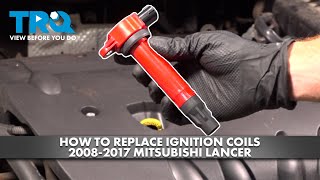
Typical fix: Replace the faulty ignition coil. 🎬 Watch: Step-by-step guide to replacing your ignition coils. It is often recommended to replace all four coils at the same time, especially on higher mileage vehicles or if they are original, to ensure reliability and prevent future misfires.
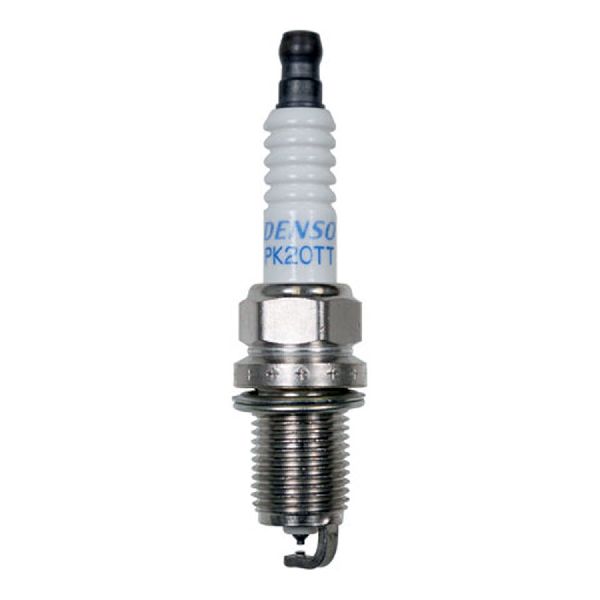
Est. part cost: $40-$80 per coil for aftermarket, $70-$100 for OEM. - Worn or Fouled Spark Plug 🔴 High Probability → Shop Spark Plug Turbocharged engines like the 4B11T are harder on spark plugs than naturally aspirated engines. The service interval is important, and using incorrect plugs (wrong heat range) or letting them wear out can easily cause a misfire, especially under boost. Incorrect spark plug gap is also a common cause of misfire on tuned vehicles.
How to confirm: Remove the spark plug from cylinder 4 and inspect it. Look for a worn electrode, carbon fouling, oil, or a cracked insulator. Compare it to the other plugs. You can also swap the plug with another cylinder to see if the misfire follows it.
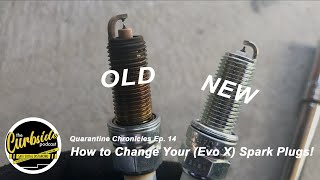
Typical fix: Replace the spark plug. It is mandatory to replace all four spark plugs as a set 🎬 See this tutorial on how to change Evo X plugs. to ensure consistent performance. Ensure the correct heat range plug is used for your model year and any modifications.
Est. part cost: $40-$70 for a set of four Iridium plugs - Clogged or Faulty Fuel Injector 🟡 Medium Probability → Shop Fuel Injector
How to confirm: After ruling out ignition issues, the fuel injector is the next likely cause. A professional can test the injector's flow rate and spray pattern. A DIY method is to listen for a consistent clicking sound from the injector using a mechanic's stethoscope. Swapping injectors between cylinders is also possible but is more labor-intensive than swapping coils. A user on EvolutionM.net noted that after swapping injectors between cylinders 3 and 4, their P0304 code changed to a random misfire P0300, pointing towards an injector issue.
Typical fix: Clean or replace the fuel injector for cylinder 4. Sometimes, running a quality fuel injector cleaner can resolve minor clogging.
Est. part cost: $100-$250 per injector
Rare But Worth Checking
- Low Engine Compression: If ignition and fuel system checks do not reveal the problem, a mechanical issue could be the cause. This can include worn piston rings, a burnt valve, or a leaking head gasket. A compression test followed by a cylinder leak-down test is needed to diagnose this. The 4B11T can have issues with piston rings under high loads.
- Vacuum Leak: A vacuum leak near the intake manifold runner for cylinder 4 could lean out the air/fuel mixture enough to cause a misfire. Check the injector seals and intake manifold gasket. A user on EvolutionM.net questioned if a bad injector gasket could be the cause.
- Faulty Fuel Pump Relay: → Shop Fuel Pump A failing fuel pump relay is a known issue on the Lancer Evolution X platform. While it typically causes random misfires (P0300) or a lean condition across all cylinders, a failing relay could intermittently affect fuel pressure and contribute to a single-cylinder misfire under certain conditions. The original black or gray relay is known to fail and should be replaced with the updated blue relay (Part No: 8627A024).
Diagnosis Steps
- Read the code with an OBD-II scanner and confirm P0304 is present. 🎬 Watch: How to quickly find the cause of a P0304 misfire. Note any other codes, especially P0300 or P0204.
- Check if the Check Engine Light is solid or flashing. A flashing light indicates a severe misfire that could damage the catalytic converter. Avoid driving if possible.
- Swap the ignition coil from cylinder 4 to another cylinder (e.g., cylinder 2). On the 4B11T engine, the cylinders are numbered 1-2-3-4 from the timing belt (passenger) side to the transmission (driver's) side. So, cylinder 4 is closest to the driver.
- Clear the codes and drive the car, trying to replicate the conditions under which the misfire occurs (e.g., idle, under boost) until the check engine light returns.
- If the code changes to P0302 (or whichever cylinder you moved the coil to), the ignition coil is bad and must be replaced.
- If the code remains P0304, the coil is likely good. Proceed to inspect the spark plug.
- Remove the spark plug from cylinder 4. Check for wear, damage, or fouling (black/sooty, white/ashy, or oily). If it looks bad, or if the plugs are due for replacement, replace all four spark plugs with the correct OEM-spec plugs for your model year.
- If the ignition system is confirmed to be working, the next step is to investigate the fuel injector on cylinder 4. This can be done by swapping it with another cylinder, which is more involved but follows the same logic as the coil swap.
- While the intake is accessible, inspect for vacuum leaks, particularly around the intake manifold gasket and injector seals for cylinder 4.
- If all ignition and fuel components for cylinder 4 check out, perform a compression test, followed by a leak-down test if compression is low, to rule out mechanical engine issues like bad rings, valves, or head gasket.
Parts You'll Likely Need
- Ignition Coil
(OEM #1832A025 (superseded by 1832A042))— This is one of the most frequent failure points for a single-cylinder misfire on the 4B11T engine. The part number 1832A042 is the widely recognized replacement.
Trusted brands: Denso, NGK, Hitachi, OEM Mitsubishi
OEM price range: $70-$100
Aftermarket price range: $40-$80 - Iridium Spark Plug
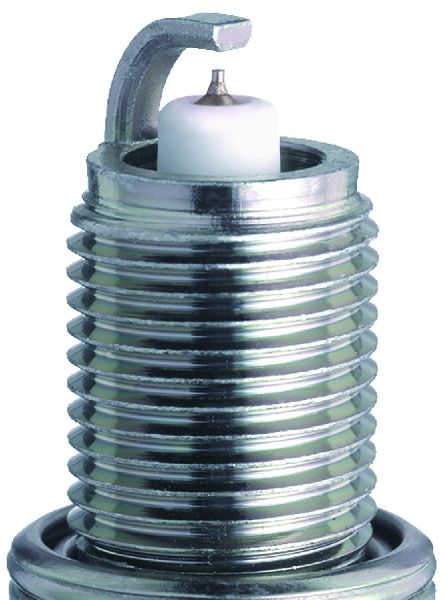
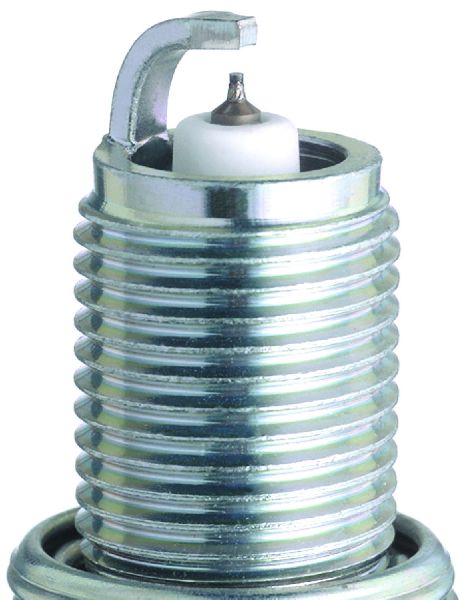
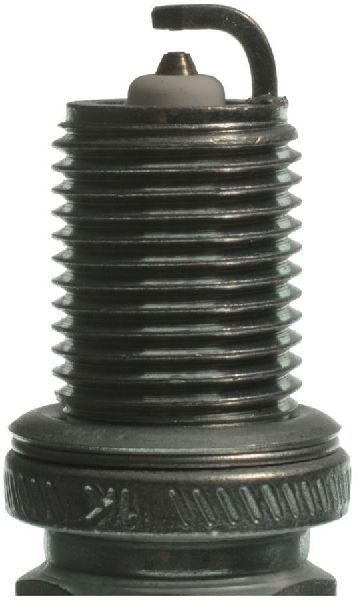
(OEM #NGK ILKR8E6 (Colder, for 2008-2010 models), NGK DILKR8B6 (Hotter, for 2011-2015 models))— Spark plugs are a regular maintenance item and a common cause of misfires as they wear out. Mitsubishi used a colder plug (ILKR8E6) for early models and a hotter plug for later models, but both will fit. Tuned cars often use one step colder plugs to prevent detonation.
Trusted brands: NGK
OEM price range: $15-$20 per plug
Aftermarket price range: $10-$15 per plug
Related Codes That Often Appear With This One
- P0300 — If multiple cylinders are misfiring randomly, a P0300 (Random/Multiple Cylinder Misfire Detected) may appear alongside or instead of P0304. This often points to a more systemic issue like a vacuum leak, low fuel pressure (potentially from a failing fuel pump relay), or a faulty mass airflow sensor.
- P0204 — This code means 'Injector Circuit/Open - Cylinder 4'. If this code appears with P0304, it strongly suggests the problem is with the fuel injector for cylinder 4 or its wiring, not the ignition system.
Technical Service Bulletins (TSBs) & Recalls
- TSB-13-13-001REV: Addresses false P0300 codes on non-turbo models due to sensitive misfire detection logic during certain conditions (clutch operation, CVT downshifts). Requires an ECM reprogram. While for P0300, it highlights the sensitivity of the monitoring system.
- NHTSA Recall 18V-063 (Mitsubishi SR-18-001): Affects 2009-2012 Lancers. The drive belt automatic tensioner flange can crack, leading to belt detachment, loss of power steering assist, and engine stalling.
Platform-Specific Known Issues
- A safety recall (SR-09-004) was issued for some 2008-2009 Lancer Evolution and 2009 Lancer Ralliart models for a fuel return pipe that could crack due to vibration. While not a direct cause of a misfire code, a fuel leak is a serious safety issue and could potentially affect fuel pressure.
- A recall was issued for the drive belt automatic tensioner flange, which could crack on 2009-2012 Lancers, potentially causing the drive belt to detach. This would lead to a loss of power steering and charging, but not directly cause a single cylinder misfire.
Mechanic-Grade Diagnostic Values
- Fuel Pressure at Curb Idle (Low-Pressure Side) — expected: Approximately 324 kPa (47 psi). Failure: Significantly lower pressure indicates a potential fuel pump, filter, or relay issue. Pressure should not drop for at least two minutes after the engine is stopped.
- OEM Fuel Injector Resistance — expected: Approximately 12-16 Ohms (General specification, not 4B11T-specific). Failure: A reading of 0 Ohms (short circuit), infinite Ohms (open circuit), or a value significantly different from the other three injectors indicates a faulty injector.
- ECU Misfire Detection Threshold — expected: Fewer than 1.5% to 2.0% misfires per 1,000 engine revolutions.. Failure: The P0304 code is set when the misfire rate on cylinder 4 exceeds this percentage threshold under specific operating conditions.
- ECU Misfire Monitoring - Operating Conditions — expected: Engine speed between 438 and 6,500 RPM, engine coolant temp above -10°C (14°F), and barometric pressure above 76 kPa (22.4 in.Hg).. Failure: The ECU actively monitors for misfires only when these conditions are met, excluding periods of fuel cut-off or sudden acceleration/deceleration.
Scan Tool Commands That Help
- Mitsubishi MUT-III: Live Data Monitoring (Misfire Count) — To watch the misfire counter for each cylinder in real-time. This can confirm if the misfire is constant, intermittent, or only occurs under specific loads or RPMs, which is more precise than waiting for a DTC to set.
- Mitsubishi MUT-III: Drive Recorder — This function can be used during a test drive to capture a snapshot of all engine sensor data at the exact moment the misfire occurs, helping to diagnose intermittent issues that are difficult to replicate in the shop.
- Mitsubishi MUT-III: Actuator Tests — While not explicitly detailed in search results for P0304, dealer tools like the MUT-III typically have actuator tests that can command specific components like fuel injectors to fire, helping to isolate a faulty component without having to swap it physically.
Real Owner Repair Stories
- EvolutionM.net forum user (Mitsubishi Lancer (assumed Ralliart or Evo X with 4B11T)) — Check engine light with P0304 code.
❌ Tried (didn't work) Swapping ignition coils between cylinders 2 and 4.
✅ What actually fixed it The P0304 code remained after the coil swap, but a new code, P0204 (Injector Circuit Open Cylinder 4), also appeared. This pinpointed the root cause to a faulty fuel injector or its wiring, not the ignition coil. - Reddit user @afterjohn (2005 Lancer ES (Note: Not a 4B11T, but the diagnostic lesson is valuable)) — P0304 misfire code, especially under throttle above 45 mph.
❌ Tried (didn't work) Replacing spark plugs, Replacing spark plug wires, Replacing ignition coil packs
✅ What actually fixed it After repeatedly replacing ignition components failed to solve the issue, the actual cause was found to be a clogged catalytic converter that was running extremely hot. Replacing the catalytic converter resolved the persistent P0304 code.
"I Checked Everything" — The Actual Cause
- In a case on a similar platform (2005 Lancer), a persistent P0304 that was not resolved by replacing plugs, coils, and wires was ultimately caused by a clogged catalytic converter. This type of failure would not be found by standard ignition/fuel diagnostics or a vacuum leak smoke test, and it highlights the importance of checking exhaust backpressure if common causes do not resolve the misfire.
OEM Part Supersession History
1832A025→1832A042— Revision and potential improvement of the ignition coil design by the manufacturer.
Heads up: Both part numbers are compatible, but 1832A042 is the current, recommended replacement part for service. It is advisable to replace all four coils with the same part number to ensure consistent performance.
Model Year Variations Within This Range
- 2008-2015: The 4B11T engine in the Lancer Ralliart is a detuned version compared to the Lancer Evolution X. It uses a smaller, quicker-spooling turbocharger and has a lower factory power output (approx. 240 hp vs. 291+ hp), which can affect the conditions under which a misfire is felt (e.g., lower boost threshold).
- 2011-2015: As noted in Pass 2, later models (2011+) switched to a hotter spark plug (NGK DILKR8B6) from the factory compared to the colder plug (NGK ILKR8E6) used in 2008-2010 models. This was likely to improve fouling resistance in stock vehicles during normal driving.
Diagnostic Flowchart
Other Known Issues on This Vehicle
Issues unrelated to this code that are worth knowing about as an owner of this generation:
- Active Yaw Control (AYC/ACD) Pump Failure 🔴 High — Very common across all model years. The pump is located behind the rear passenger wheel and is susceptible to corrosion from road salt and debris, causing it to fail.
- Timing Chain Stretch (Early Models) 🔴 High — Common on 2008-2010 models, often appearing under 50k miles. Can cause a P0012 code, rough idle, and power loss. Mitsubishi revised the timing chain in 2011 for the 2012+ model years to fix this.
- SST Transmission Problems (Ralliart/Evo MR) 🔴 High — The Getrag dual-clutch (SST) transmission can suffer from several issues, including shift fork magnets falling off, mechatronic unit failure, and premature clutch wear, especially if fluid changes are neglected.
- Fuel Pump Relay Failure 🟠 Medium → Shop Fuel Pump — The original gray or black fuel pump relay is known to fail, which can cause stalling or a lean condition, potentially leading to engine damage. It's a common preventative maintenance item to replace it with the updated blue relay (8627A024).
- Cracked Stock Exhaust Manifold 🟠 Medium — The factory cast exhaust manifold is prone to cracking, often on the runner for cylinder 3.
- Plastic Clutch Master Cylinder Failure (5-Speed Manual) 🟠 Medium — On manual transmission models (Evo GSR), the stock plastic clutch master cylinder can crack or fail, especially with an upgraded clutch, resulting in an inoperable clutch pedal.
Used vs. New Parts: Buying Guide for This Vehicle
When a used part is the smart pick: For this repair, obtaining a used OEM ignition coil or fuel injector from a reputable source (like a JDM importer or a verified low-mileage vehicle dismantler) can be a cost-effective option. These components are not high-wear items and a used OEM part is often more reliable than a cheap, new aftermarket part.
Donor-vehicle mileage cap: roughly under 70000 miles for the part to have meaningful remaining life.
What to inspect on the donor part:
- For ignition coils, check the plastic housing for cracks or signs of melting. Ensure the connector pins are clean and not corroded.
- For fuel injectors, inspect the plastic connector for cracks. Ensure the nozzle tip is clean and the O-rings are present and not brittle or torn.
- Ask the seller for the mileage and history of the donor vehicle if possible. Avoid parts from vehicles with flood or fire damage.
OEM-only on this vehicle (don't cheap out):
- Engine Control Module (ECM)
Aftermarket brands forum-validated for this vehicle:
- Denso (often the OEM supplier)
- NGK
- Hitachi
Brands owners have reported issues with on this vehicle:
- Unbranded, generic ignition coils and fuel injectors from online marketplaces often have high failure rates and may not meet OEM specifications for resistance and performance, leading to persistent or new issues.
Real Owner Stories
Aggregated from forums and TSBs cited above. Mileages and costs reflect what owners reported in those sources.
2009 Mitsubishi Lancer Ralliart 4B11T
Symptoms: The owner experienced a P0304 code that appeared and then seemingly went away on its own.
What fixed it: The community advised swapping coils and replacing spark plugs as the primary resolution steps.
Source hint: EvolutionM.net - 'P0304 help' (https://www.evolutionm.net/forums/09-ralliart-engine-turbo-drivetrain/661061-p0304-help.html)
Mitsubishi Lancer Evolution X 4B11T
Symptoms: A user with a modified Evo X experienced a P0304 misfire after a long drive.
What fixed it: Troubleshooting involved checking and swapping spark plugs and fuel injectors to isolate the failure.
Source hint: EvolutionM.net - 'p0304 - Misfire in Cylinder #4... HELP' (https://www.evolutionm.net/forums/ecuflash/450704-p0304-misfire-cylinder-4-help.html)
2008-2010 Mitsubishi Lancer 4B11T — ~45000 miles
Symptoms: Rough idle and noticeable loss of power.
What fixed it: While P0304 is often ignition-related, these symptoms on early models are frequently tied to timing chain stretch, which required the installation of a revised timing chain.
Source hint: Known Issues - Timing Chain Stretch (Early Models)
Mitsubishi Lancer Evolution 4B11T
Symptoms: The owner initially had a P0304 code. After swapping the fuel injectors between cylinders 3 and 4, the code changed.
What fixed it: The code changed to a random misfire P0300, confirming the issue was a faulty fuel injector.
Source hint: EvolutionM.net cited in Common Causes - Clogged or Faulty Fuel Injector
Related OBD-II Codes
Frequently Asked Questions
Where is cylinder 4 located on my 4B11T engine?
Does the TSB for false P0300 codes apply to my Lancer Evolution or Ralliart?
Is there a recall for the 2009 Lancer Ralliart that could affect my fuel system?
My 2010 Lancer has a rough idle and power loss; could it be the timing chain instead of just a misfire?
Should I replace just the cylinder 4 ignition coil or all of them?
What spark plugs should I use for my 4B11T to avoid P0304?
Helpful Videos
We Have This Part in Stock


The information in this article is provided for general reference and educational purposes only. Vehicle specifications, procedures, and part compatibility can vary by production date, trim level, and region. Always consult your vehicle's factory service manual and verify part numbers before purchasing or performing repairs. Safety-critical components such as airbags, seat belts, and braking systems should be installed by a qualified professional.
- Mitsubishi Lancer:
- 🧭 Diagnostic Flowchart
- 🎬 Helpful Videos
- 🛍️ Shop This Part
- What's Unique About the 2008-2015 Mitsubishi Lancer
- Symptoms You May Notice
- Most Likely Causes
- Rare But Worth Checking
- Diagnosis Steps
- Parts You'll Likely Need
- Related Codes That Often Appear With This One
- Technical Service Bulletins (TSBs) & Recalls
- Platform-Specific Known Issues
- Mechanic-Grade Diagnostic Values
- Scan Tool Commands That Help
- Real Owner Repair Stories
- "I Checked Everything" — The Actual Cause
- OEM Part Supersession History
- Model Year Variations Within This Range
- Other Known Issues on This Vehicle
- Used vs. New Parts: Buying Guide for This Vehicle
- Real Owner Stories
- 2009 Mitsubishi Lancer Ralliart 4B11T
- Mitsubishi Lancer Evolution X 4B11T
- 2008-2010 Mitsubishi Lancer 4B11T — ~45000 miles
- Mitsubishi Lancer Evolution 4B11T
- Related OBD-II Codes
- Frequently Asked Questions
- 🎟️ Get 5% Off