

P0304 on 2006-2010 Pontiac G6: Cylinder 4 Misfire Causes and Fixes
Code P0304 on a Pontiac G6 means cylinder 4 is misfiring. The most common causes are a bad spark plug or a failing ignition coil. For V6 engines, cylinder 4 is on the difficult-to-access rear bank. Replacing a spark plug is inexpensive, while an ignition coil can cost between $40 and $100 for the part.
- P0304 means your Pontiac G6 has a misfire in cylinder 4.
- Start your diagnosis with the cheapest and easiest fixes: inspect the spark plug and swap the ignition coil from cylinder 4 with another cylinder.
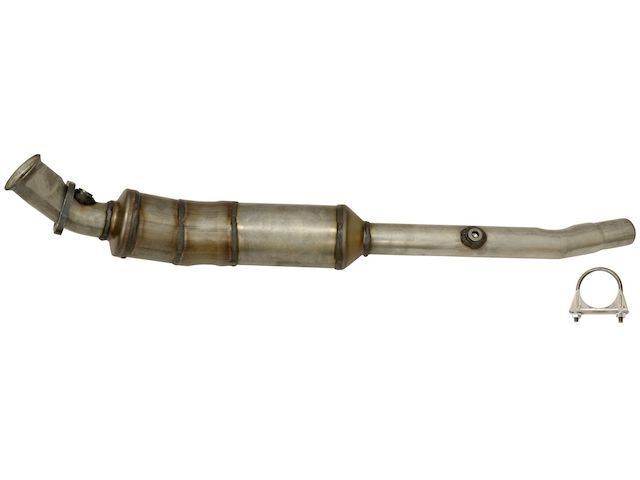
- If the check engine light is flashing, avoid driving to prevent expensive damage to your catalytic converter.
- For V6 engines, be aware that cylinder 4 is on the rear bank against the firewall, making it harder to access.
- If swapping the spark plug and ignition coil doesn't solve the problem, the next most likely culprits are the fuel injector or a vacuum leak, followed by a mechanical issue like low compression.
What's Unique About the 2006-2010 Pontiac G6
The Pontiac G6 was offered with multiple engines (2.4L I4, 3.5L V6, 3.6L V6, 3.9L V6), and the ignition systems differ. The 2.4L Ecotec engine uses a single ignition coil module (cassette) that houses all four coils, meaning a single failure often requires replacing the whole unit. The V6 engines use a more traditional Coil-on-Plug (COP) system where each cylinder has an individual, separately replaceable coil. For all V6 models, cylinder 4 is located on the rear bank (firewall side), making access for diagnosis and repair more difficult than the front cylinders. A GM Technical Service Bulletin (TSB) for the 2006 model year, #PIP3333C, mentions that intermittent misfires on codes like P0304 can be caused by fuel contamination in the returnless fuel rail, especially after making a sharp turn.
Diagnostic Flowchart
Tap your situation to follow the diagnostic path that matches what you're seeing on this vehicle.
Symptoms You May Notice
- Rough or shaky idle
- Hesitation or stumbling during acceleration
- Noticeable loss of engine power
- Flashing or solid Check Engine Light
- Smell of unburned fuel from the exhaust
- Reduced fuel economy
- Engine stalling at stops
- Replacing oxygen (O2) sensors. O2 sensor codes can sometimes appear alongside a misfire code, but they are often a symptom of the unburned fuel from the misfire, not the cause.
- Assuming a transmission shudder is a misfire. Some GM bulletins note that a 'fishbite' or shudder feeling from the transmission can be mistaken for an engine misfire. If no misfire is detected on scan tool data, this could be the cause.
Most Likely Causes
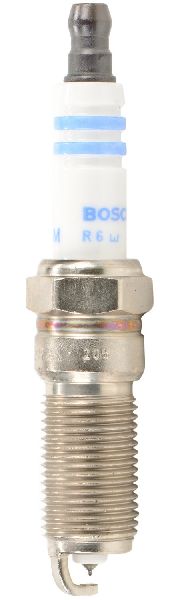
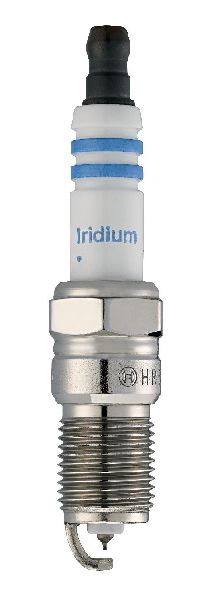
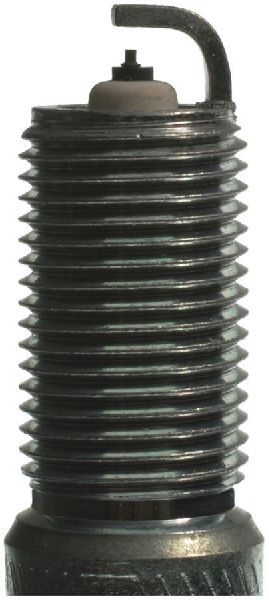
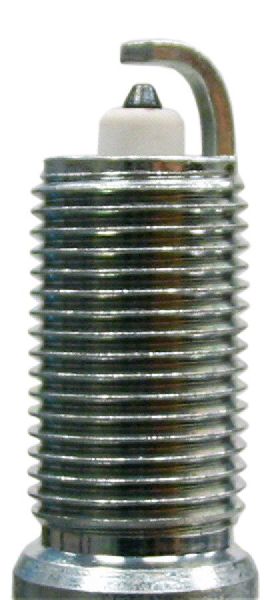
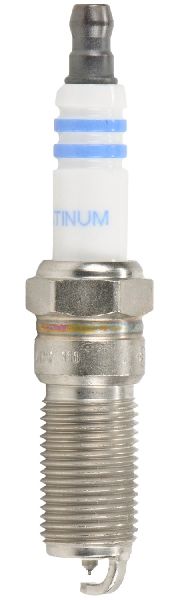
- Worn or Fouled Spark Plug 🔴 High Probability → Shop Spark Plug Spark plugs are a routine maintenance item. A worn electrode or carbon/oil fouling prevents a strong spark. The ACDelco Iridium plugs used in many G6 models are durable but can fail, especially if overdue for replacement.
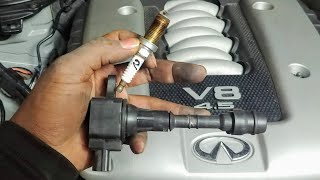
How to confirm: Remove the spark plug from cylinder 4 and inspect it for wear, oil, or 🎬 Learn what it means if you find oil on your coil carbon fouling. Compare it to a plug from another cylinder. A healthy plug should have a light tan color on the insulator.
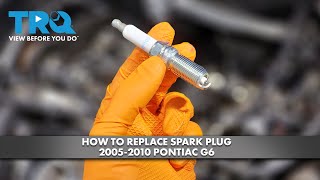
Typical fix: Replace the spark plug. It is recommended to replace all spark plugs at the same time. The OEM recommended plug for many G6 engines is the ACDelco 41-103 Iridium plug. 🎬 See this step-by-step spark plug replacement for the V6 engine
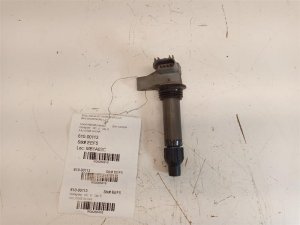
Est. part cost: $10-$25 per plug - Failed Ignition Coil 🔴 High Probability → Shop Ignition Coil Ignition coils are a common failure point due to heat cycles. The 2.4L uses a single cassette-style coil pack, while the V6s use individual coils.
How to confirm: Swap the ignition coil from cylinder 4 with one from another cylinder (e.g., cylinder 2 on a V6, or swap the entire cassette on a 2.4L if possible). Clear the codes and drive the vehicle. If the code changes to P0302, the coil is faulty.
Typical fix: Replace the failed ignition coil or coil assembly. For V6 engines, a common replacement is ACDelco D597A or equivalent.
Est. part cost: $40-$100 for a single coil, $100-$250 for a 2.4L coil cassette - Faulty Fuel Injector 🟡 Medium Probability → Shop Fuel Injector Injectors can become clogged with fuel deposits or fail electrically over time, preventing fuel from being delivered to cylinder 4.
How to confirm: After confirming spark is good, swap the fuel injector from cylinder 4 with another cylinder. If the misfire code follows the injector, the injector is the problem. You can also listen for a clicking sound from the injector with a mechanic's stethoscope to confirm it's operating.
Typical fix: Replace the faulty fuel injector. It's often recommended to replace them as a set if they are high mileage. A possible OEM part number for the 3.5L V6 is GM 12590701 (superceded by 12681658).
Est. part cost: $50-$150
Rare But Worth Checking
- Low Engine Compression: If ignition and fuel components are confirmed to be good, a mechanical issue could be the cause. Forum users have reported low compression in cylinder 4 on their G6s after exhausting other options. This can be due to worn piston rings, a leaking head gasket, or bad valves. One owner with a 2.4L noted a slow coolant loss and a compression test of 105 psi on cylinder 4 (vs. 120 on others), which pointed to a bad head gasket.
- Vacuum Leak: A vacuum leak near the intake manifold runner for cylinder 4 can lean out the air/fuel mixture and cause a misfire. This can sometimes be detected by spraying brake cleaner near the intake gasket and listening for a change in engine idle.
- Corroded ECM Ground Terminal (G103): A GM service document notes that for various models, an engine wiring harness ground terminal (G103), often attached to the cylinder head, can corrode. This poor ground can cause unexplained misfire codes, including P0304.
Diagnosis Steps
- Read the trouble codes with an OBD-II scanner and note any other codes present. Freeze frame data can show the conditions under which the misfire occurred.
- Determine the location of cylinder 4. For the 2.4L I4, it's the cylinder on the driver's side (from left to right: 1-2-3-4). For the 3.5L/3.9L V6, Bank 1 (front/radiator side) is cylinders 1-3-5 and Bank 2 (rear/firewall side) is cylinders 2-4-6. Cylinder 4 is the middle cylinder on the firewall side.
- Note the ignition system type. The 2.4L has a single coil cassette, while V6 models have individual coils.
- Swap the ignition coil from cylinder 4 with another cylinder on the same bank (e.g., cylinder 2). Clear the codes and see if the misfire moves to the new cylinder (P0302). If it does, the coil is bad.
- If the misfire remains on cylinder 4, inspect the spark plug in cylinder 4 for wear, damage, or fouling. If it's in poor condition, replace it. Consider replacing all plugs if they are near their service interval.
- If the spark and coil are good, inspect the wiring and connector for the ignition coil and fuel injector for any visible damage or corrosion.
- Swap the fuel injector from cylinder 4 with another cylinder. If the misfire follows the injector, it needs to be replaced.
- If the misfire still persists on cylinder 4, perform an engine compression test. A significant loss of compression (more than 15-20% lower than other cylinders) indicates a mechanical engine problem.
- Check for vacuum leaks around the intake manifold gasket for cylinder 4 using smoke or a combustible spray.
- Inspect engine ground G103 on the cylinder head for rust or corrosion.
Parts You'll Likely Need
- Ignition Coil
(OEM #ACDelco D597A (V6 Engines), ACDelco D599A (2.4L Engine Cassette))— Ignition coils are a common failure item that directly causes a misfire on a single cylinder.
Trusted brands: ACDelco, Delphi
OEM price range: $60-$120
Aftermarket price range: $40-$80 - Spark Plug
(OEM #ACDelco 41-103 (Iridium))— As a routine maintenance item, a worn or fouled spark plug is a primary and simple cause of a misfire.
Trusted brands: ACDelco, NGK
OEM price range: $10-$25
Aftermarket price range: $5-$15 - Fuel Injector
(OEM #GM 12590701 / 12681658 (3.5L V6))— A clogged or electrically failed fuel injector will prevent the proper amount of fuel from reaching the cylinder, causing a misfire.
Trusted brands: ACDelco, Bosch
OEM price range: $90-$180
Aftermarket price range: $50-$120
Related Codes That Often Appear With This One
- P0300 — This code for 'Random/Multiple Misfire' often appears with a specific cylinder misfire code if the problem is intermittent or beginning to affect other cylinders.
- P0301, P0302, P0303, etc. — If the cause is systemic (like low fuel pressure, a large vacuum leak, or a corroded ground), other cylinders may also log misfire codes.
Technical Service Bulletins (TSBs) & Recalls
- PIP3333C: Notes potential for intermittent engine misfire with DTC P0300, P0301, and/or P0304. The cause can be fuel contamination in the fuel rail. The bulletin advises inspecting the fuel rail and tank if standard diagnostics fail to find a cause.
- GM Document ID 1852011 (related to ground G103): While not a formal TSB for the G6 specifically, general GM guidance points to corroded ECM grounds (G103) as a cause for unexplained misfires on similar platforms.
- PIP6036C: Describes a shudder or 'fishbite' feeling from the transmission that can be mistaken for a single-cylinder misfire. If no misfire is actually being counted by the ECM, this could be related to transmission adapts.
Platform-Specific Known Issues
- A GM Technical Service Bulletin (#PIP3333C) notes that intermittent misfires on the 2006 G6 with codes P0300, P0301, and/or P0304 may be caused by fuel contamination sloshing in a returnless fuel rail, particularly after sharp turns.
- On V6 models, the location of cylinder 4 on the rear bank makes access significantly more challenging than the front bank, potentially increasing labor time for diagnosis and repair.
Mechanic-Grade Diagnostic Values
- Fuel Pressure (Key On, Engine Off) — expected: 50-60 PSI. Failure: Pressure below 50 PSI or failure to hold pressure indicates a weak fuel pump or leak.
- Ignition Coil Secondary Resistance (V6 models) — expected: 9.5 - 11.1 kilohms. Failure: A reading outside this range indicates a faulty coil winding.
- Fuel Injector Resistance (3.5L V6) — expected: Approximately 6.8 ohms. Failure: A significantly different reading, or an open/short circuit, points to a bad injector coil.
Hidden / Shadow Codes Worth Checking
- Mode $06, Test ID $A5: Provides raw misfire count data for cylinder 4. This allows a technician to see misfires that are occurring but are not yet frequent enough to set a P0304 trouble code. (see via A professional scan tool capable of displaying Mode $06 data. The specific Monitor ID (OBDMID) for cylinder 4 is typically $A5.)
Scan Tool Commands That Help
- Tech2 / GDS2: Cylinder Power Balance Test — This function allows the technician to disable one cylinder at a time to see the corresponding drop in engine RPM. If disabling cylinder 4 causes little or no change in RPM, it confirms that cylinder is not contributing power.
- Tech2 / GDS2: Fuel Injector Balance Test — This test fires each injector for a set amount of time and measures the corresponding drop in fuel pressure. It can identify a clogged or restricted injector on cylinder 4 if the pressure drop is less than on other cylinders. A technician used this test on a 2008 G6 to rule out leaky injectors.
Wiring & Ground Locations
- G103 — On the top of the left (driver's side) front strut tower in the engine compartment.. This is a major ground point for multiple components, including the Body Control Module (BCM) and the Data Link Connector (DLC). While not a direct ground for the ECM in all diagrams, poor grounding here can cause widespread electrical issues that may manifest as unexplained misfires.
- G105 / G106 — G105 is on the left rear of the engine compartment on an engine/transmission stud. G106 is on the left rear of the engine (2.4L) or front of the engine at a transmission stud (3.5L/3.6L).. These are primary engine-to-chassis grounds. Corrosion or looseness at these points can affect the ground path for the ignition coils and fuel injectors, which are grounded through the ECM to the engine block.
- Engine Harness Chafe Points — On 2.4L engines, the harness can chafe near the alternator. On V6 models, general GM bulletins note potential chafing on cylinder head corners or brackets.. A chafed wire in the ignition coil or fuel injector circuit for cylinder 4 can short to ground, causing an intermittent or constant misfire.
Real Owner Repair Stories
- GM Forum user (2006 Pontiac G6 2.4L with 244,000 miles) — P0304 misfire code, primarily at idle. Misfire was not constant but occurred about 10 times every 30 seconds. No misfires were detected above 1200 RPM. Slow coolant loss (1 cup/month).
❌ Tried (didn't work) Swapped spark plugs, Swapped ignition coils, Swapped fuel injectors, Sprayed brake cleaner around intake manifold to check for vacuum leaks (no change in idle)
✅ What actually fixed it The final diagnosis pointed to a mechanical issue. A compression test showed cylinder 4 at 105 PSI, while cylinders 1, 2, and 3 were all at 120 PSI. This 12.5% loss of compression, combined with the slow coolant loss, strongly indicated a failing head gasket was the root cause. - YouTube video by Steve's Auto Care Videos (2006 Pontiac G6 3.5L) — Misfire on cylinder #2 (P0302), but the diagnostic process is identical for P0304. Scan tool showed a fault on the injector #2 circuit.
❌ Tried (didn't work) Confirmed injector wiring from the main harness connector to the injector was good via an ohms test., Confirmed the injector itself was electrically sound (resistance was 6.8 ohms, matching other cylinders).
✅ What actually fixed it The Engine Control Module (ECM) was not sending the ground pulse to fire the injector. Using a noid light connected to the control wire at the ECM connector confirmed there was no signal being sent from the ECM. The final fix was replacing the faulty ECM.
Model Year Variations Within This Range
- 2006-2010: The 3.5L V6 engine came in two main versions: the LX9 (2005-2006) without VVT, and the LZ4 (2007-2009) and LZE (2009-2010, FlexFuel) which both included Variable Valve Timing. While the core architecture is similar, diagnostics involving cam timing (P0016/P0017) could be relevant on later models if seen with a P0304.
- 2006-2010: The 2.4L I4 engine also had several variants. The LE5 was the primary engine from 2006-2009. The LE9 (2009-2010) was an E85-compatible version of the LE5 with different fuel injectors and valve components to resist ethanol corrosion. Later model years (2010+) introduced direct injection versions (LAF/LEA) which are not part of this vehicle range but show the evolution. A misfire on a 2009+ 2.4L could have different fuel system causes than an earlier model.
Helpful Videos

Used OEM Parts in Stock
New Aftermarket Parts Available

The information in this article is provided for general reference and educational purposes only. Vehicle specifications, procedures, and part compatibility can vary by production date, trim level, and region. Always consult your vehicle's factory service manual and verify part numbers before purchasing or performing repairs. Safety-critical components such as airbags, seat belts, and braking systems should be installed by a qualified professional.
- Pontiac G6:
- 🧭 Diagnostic Flowchart
- 🎬 Helpful Videos
- 🛍️ Shop This Part
- What's Unique About the 2006-2010 Pontiac G6
- Symptoms You May Notice
- Most Likely Causes
- Rare But Worth Checking
- Diagnosis Steps
- Parts You'll Likely Need
- Related Codes That Often Appear With This One
- Technical Service Bulletins (TSBs) & Recalls
- Platform-Specific Known Issues
- Mechanic-Grade Diagnostic Values
- Hidden / Shadow Codes Worth Checking
- Scan Tool Commands That Help
- Wiring & Ground Locations
- Real Owner Repair Stories
- Model Year Variations Within This Range
- 🎟️ Get 5% Off