

P0304 on 2004-2008 Pontiac Grand Prix: Cylinder 4 Misfire Causes and Fixes
P0304 on a 2004-2008 Grand Prix indicates a misfire in cylinder #4. This is most commonly caused by a worn spark plug, a bad spark plug wire, or a failed ignition coil. In some cases, a faulty ignition control module or a leaking intake manifold gasket could be the culprit. Expect to spend $50-$150 on parts for a DIY ignition system refresh.
- P0304 is a misfire on cylinder 4, the middle cylinder on the front (radiator side) of the engine.
- The most likely culprits are a bad spark plug, spark plug wire, or ignition coil.
- A simple way to diagnose is to swap ignition components from cylinder 4 to another cylinder and see if the misfire code follows.
- Do not drive if the Check Engine Light is flashing, as this can cause expensive damage to the catalytic converter.
- Be aware of the separate, unrelated safety recall for the ignition switch on all 2004-2008 Grand Prix models.
What's Unique About the 2004-2008 Pontiac Grand Prix
The 2004-2008 Grand Prix primarily uses the GM 3.8L V6 engine (Series III), which has a well-documented history. Unlike modern Coil-on-Plug systems, this engine uses a 'waste spark' ignition system with three coil packs mounted on an Ignition Control Module (ICM). Each coil fires two cylinders simultaneously (one on its compression stroke, the other on its exhaust stroke). The coil for cylinder 4 is paired with cylinder 1. This means a single failing coil or a fault in the ICM can cause misfires on two cylinders, though often one will show the fault code first. Additionally, these engines are notorious for failures of the lower intake manifold (LIM) gaskets, which can cause coolant or vacuum leaks leading to misfires.
Symptoms You May Notice
- Check Engine Light is on or flashing
- Rough or shaking idle
- Hesitation or stumbling during acceleration
- Reduced engine power, especially under load or going uphill
- Poor fuel economy
- Smell of unburned gasoline from the exhaust
- Engine stalling
- Unusual engine noises like knocking or pinging
- Replacing only the spark plug without inspecting the wire or coil.
- Replacing the O2 sensors, which are unlikely to cause a single-cylinder misfire.
- Assuming a major engine failure before thoroughly testing the ignition and fuel systems.
- Repeatedly replacing ignition coils when the underlying problem is a failing Ignition Control Module (ICM).
Most Likely Causes
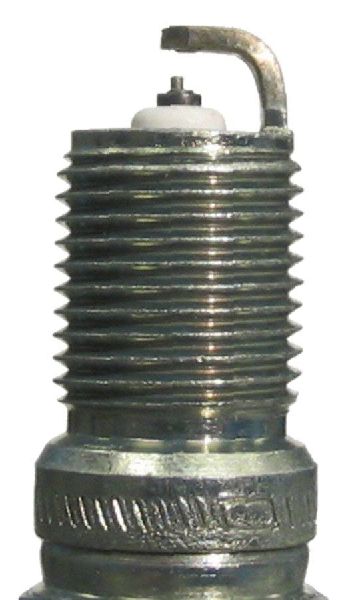
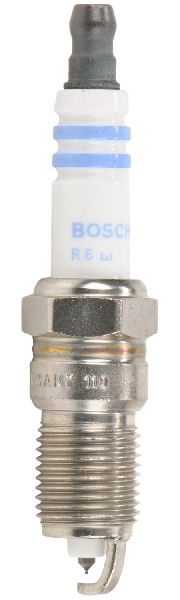
- Worn or Fouled Spark Plug 🔴 High Probability → Shop Spark Plug Spark plugs are a standard maintenance item and a very common failure point for misfires on any gasoline engine. The GM 3.8L is sensitive to correct plug gap and condition.
How to confirm: Remove the spark plug from cylinder 4. Inspect for a worn electrode, incorrect gap, carbon/oil fouling, or cracks in the porcelain. A healthy plug should be a light tan color. Compare it to a plug from a healthy cylinder.
Typical fix: Replace the spark plug. It is best practice to replace all six spark plugs at the same time to maintain consistent performance. 🎬 Watch: Step-by-step guide to replacing spark plugs on this engine.
Est. part cost: $5-$15 per plug - Bad Spark Plug Wire 🔴 High Probability → Shop Spark Plug
How to confirm: Visually inspect the wire for cylinder 4 for any cracks, brittleness, or burn marks near the exhaust manifold. With the engine running, you can carefully spray a fine mist of water on the wire and look for arcing (sparks jumping to the engine block). Alternatively, test the wire's resistance with a multimeter; it should be within the manufacturer's specification (typically a few thousand ohms per foot). A resistance of over 8,000 ohms per foot is often considered excessive.
Typical fix: Replace the spark plug wire. It is recommended to replace all wires as a set, as they tend to degrade at a similar rate.
Est. part cost: $40-$80 for a set - Failed Ignition Coil Pack 🟡 Medium Probability → Shop Ignition Coil The 3.8L V6 uses a waste spark system where one coil fires two cylinders (1 & 4, 2 & 5, 3 & 6). These coils are subjected to constant heat and can fail with age, causing a weak spark, especially under load.
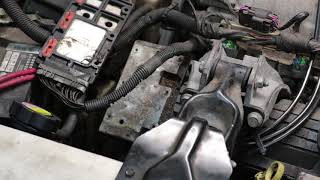
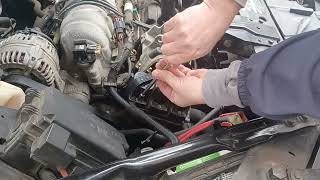
How to confirm: Swap the ignition coil responsible for cylinders 1 and 4 with another coil (e.g., the one for 2 and 5). Clear the codes and drive. If the misfire code changes to P0305 or P0302, the coil is faulty. This is a definitive diagnostic step. 🎬 See how to swap and replace your ignition coil packs.
Typical fix: Replace the faulty ignition coil. It's often wise to replace all three coils if they are original and have high mileage.
Est. part cost: $30-$70 per coil - Failed Ignition Control Module (ICM) 🟡 Medium Probability The ICM, which sits under the three coil packs, is a very common failure point on the 3.8L V6 engine. It controls when the coils fire and can fail from heat and age, causing misfires that seem like a bad coil.
How to confirm: If swapping coils does not move the misfire, the ICM is a strong suspect. Some auto parts stores can test the module. A common failure scenario is for the misfire to appear only when the engine is warm. If a new coil doesn't fix P0304, and the wires/plugs are good, the ICM is the next logical part to replace.
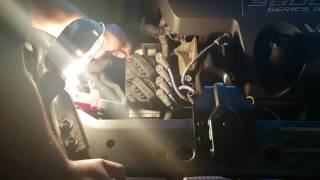
Typical fix: Replace the Ignition Control Module. It is critical to apply thermal paste to the back of the new module to ensure proper heat dissipation. 🎬 Watch: How to replace the Ignition Control Module (ICM).
Est. part cost: $70-$150 - Clogged or Faulty Fuel Injector ⚪ Low Probability → Shop Fuel Injector
How to confirm: Listen to the injector with a mechanic's stethoscope; you should hear a consistent clicking sound. You can also test its resistance with a multimeter. A more definitive test is to swap the cylinder 4 injector with one from another cylinder (e.g., cylinder 2) and see if the misfire code follows, changing to P0302.
Typical fix: Replace the faulty fuel injector. It's often recommended to clean or replace all injectors if the vehicle has high mileage.
Est. part cost: $50-$100
Rare But Worth Checking
- Leaking Lower Intake Manifold (LIM) Gasket: → Shop Engine Intake Manifold This is a very well-known issue on the GM 3.8L V6 engine. The original plastic-framed gaskets degrade, allowing coolant to leak into the intake port of a cylinder, which can foul the spark plug and cause a misfire. It can also cause a vacuum leak. Check for signs of coolant loss or milky-colored oil. The replacement gaskets are an improved metal-frame design.
- Low Engine Compression: If all ignition and fuel components check out, a mechanical issue like a bad valve, worn piston rings, or a failed head gasket could be the cause. A compression test will confirm this. A reading of 60 PSI, for example, indicates a severe mechanical problem.
- Vacuum Leak: A crack in a vacuum hose or a leaking gasket can introduce unmetered air into the engine, leaning out the air-fuel mixture and causing a misfire. While often causing a random misfire (P0300), a leak near the intake runner for cylinder 4 could cause a specific P0304.
Diagnosis Steps
- Retrieve the code P0304 with an OBD-II scanner. Note if the Check Engine Light is flashing, which indicates a severe, catalyst-damaging misfire.
- Identify Cylinder 4. On the 3.8L V6, the front bank (near the radiator) has cylinders 2, 4, and 6 from left to right (passenger to driver side). The rear bank is 1, 3, 5. Cylinder 4 is the middle cylinder on the front bank.
- Inspect the spark plug wire for cylinder 4 for damage, cracks, or corrosion. Ensure it is securely connected at both the coil and the plug.
- Remove and inspect the spark plug from cylinder 4. Look for excessive wear, carbon buildup, oil/coolant fouling, or an incorrect gap.
- To isolate the cause, swap components. First, swap the spark plug from cylinder 4 with cylinder 2. Clear codes and drive. If the code changes to P0302, the spark plug is bad.
- If the code remains P0304, swap the spark plug wire from cylinder 4 with cylinder 2. If the code moves to P0302, the wire is bad.
- If the code remains P0304, swap the ignition coil that fires cylinders 1 & 4 with the coil that fires 3 & 6. If the code changes to P0306 or P0303, the ignition coil is bad.
- If the misfire remains on cylinder 4 after swapping all ignition components, the problem is likely the Ignition Control Module (ICM), fuel system, or a mechanical issue.
- Check the fuel injector pulse with a noid light and listen for its operation with a stethoscope. Consider swapping the injector with another cylinder to see if the code follows.
- If all else fails, perform an engine compression test to rule out internal engine problems like bad valves or piston rings.
Parts You'll Likely Need
- Spark Plugs
(OEM #ACDelco 41-101 (Iridium))— This is the most common wear item that causes a single-cylinder misfire.
Trusted brands: ACDelco, NGK
OEM price range: $8-$15 per plug
Aftermarket price range: $5-$12 per plug - Spark Plug Wire Set
(OEM #ACDelco 9746DD)— Wires degrade over time, causing weak spark and misfires. They are often replaced with spark plugs.
Trusted brands: ACDelco, NGK/NTK, Delphi
OEM price range: $60-$90
Aftermarket price range: $40-$70 - Ignition Coil
(OEM #ACDelco D555)— The ignition coils are a common failure point after many heat cycles, leading to misfires, especially under load.
Trusted brands: ACDelco
Related Codes That Often Appear With This One
- P0300 — If the misfire becomes more frequent or other cylinders begin to misfire due to a shared cause like a vacuum leak or failing ICM, a P0300 (Random/Multiple Misfire) code may appear.
- P0301 — Because the ignition coil for cylinder 4 also fires cylinder 1, a failing coil can sometimes cause misfires on both cylinders, potentially logging a P0301 code as well.
Platform-Specific Known Issues
- There was a major recall for the ignition switch on 2004-2008 Grand Prix models. A faulty switch could move out of the 'run' position while driving, causing the engine to stall. While this doesn't directly cause a P0304 code, it's a critical safety issue for owners to be aware of.
- The plastic upper intake manifold (plenum) can warp or crack, causing vacuum leaks. More seriously, the lower intake manifold (LIM) gaskets are a notorious failure point, leading to coolant leaks that can cause misfires and catastrophic engine damage if coolant mixes with the oil.
Technical Service Bulletins (TSBs) & Recalls
- TSB Bulletin #PIP3333C: This manufacturer bulletin notes that technicians may find Diagnostic Trouble Codes P0300, P0301, and/or P0304 alongside an intermittent engine misfire and a Service Engine Soon Malfunction Indicator Lamp. The bulletin advises following published Service Information diagnostics first to isolate the cause.
Mechanic-Grade Diagnostic Values
- Fuel Pressure (Key On, Engine Off) — expected: 56 to 62 psi. Failure: Pressure below 56 psi may indicate a weak fuel pump or faulty regulator.
- Fuel Injector Resistance — expected: 11.8 to 12.6 Ohms. Failure: A reading significantly outside this range, or an open circuit (OL), indicates a failed injector coil.
- Spark Plug Wire Resistance — expected: Under 8,000 Ohms per foot. Failure: Resistance higher than 8,000 Ohms per foot is considered excessive and can cause a weak spark.
Hidden / Shadow Codes Worth Checking
- Mode $06 Misfire Counters: This is not a DTC but a function within a professional scan tool. It shows raw misfire counts for each cylinder before they reach the threshold to set a P030x code. This is invaluable for detecting intermittent misfires or identifying other cylinders that are misfiring occasionally but not enough to set their own code. (see via A professional scan tool like a GM Tech 2 or equivalent that can access Mode $06 data.)
Scan Tool Commands That Help
- GM Tech 2 (or equivalent pro-level scanner): Misfire Data / Misfire Graphic — Use this to watch live and historical misfire counts for each cylinder. It can confirm the misfire is isolated to cylinder 4 and see if other cylinders are contributing, which might point towards a P0300 condition.
- GM Tech 2 (or equivalent pro-level scanner): Cylinder Power Balance Test — This function allows the technician to disable individual fuel injectors one at a time to measure the RPM drop for each cylinder. If disabling cylinder 4 causes little or no change in RPM, it confirms that cylinder is not contributing, pinpointing the issue.
- GM Tech 2 (or equivalent pro-level scanner): Crankshaft Position (CKP) Variation Learn / CASE Relearn — After replacing a crankshaft position sensor, or if false misfires are suspected due to road shock or engine wear, performing this relearn procedure can improve the accuracy of misfire detection.
Wiring & Ground Locations
- G113 — Lower right front of the engine, on a transaxle stud, near the starter.. This is a primary engine and transmission ground. A poor connection here can cause a variety of electrical issues, including erratic sensor readings and weak ignition performance.
- G100 — Right side of the engine compartment, at the base of the battery.. This is a major chassis and engine bay ground point. Corrosion or looseness can affect the performance of the PCM and ignition system.
- PCM (Powertrain Control Module) — Left side of the engine compartment, located inside the air cleaner assembly.. This is the main engine computer. The injector control signal for cylinder #4 originates here. A damaged wire or faulty driver in the PCM itself is a rare but possible cause of the misfire.
- ICM (Ignition Control Module) Connector — Mounted under the three ignition coils on top of the engine.. The main electrical connector to the ICM can have bent or spread pins, causing intermittent or no-spark conditions. It's secured by a 7mm bolt and should be inspected for damage when diagnosing.
Real Owner Repair Stories
- Car Talk Community Forum User (2007 Pontiac Grand Prix, 177k miles) — P0304 misfire code, car does not start without giving it gas.
❌ Tried (didn't work) Replaced spark plugs, Replaced spark plug wires, Replaced ignition coils
✅ What actually fixed it The issue was diagnosed as a severe internal engine problem. A compression test on cylinder 4 showed only 60 PSI, indicating a worn-out engine (likely bad piston rings or valves). The recommendation was to either replace the engine or junk the car. - Reddit user in r/MechanicAdvice (GM 3800 Series II engine (common in Grand Prix)) — Persistent P0304 misfire on cylinder 4.
❌ Tried (didn't work) Replaced spark plugs, Replaced spark plug wires, Replaced ignition coil for cylinder 4, Replaced fuel injector for cylinder 4
✅ What actually fixed it The user did not post a final fix, but the community's primary recommendation after all parts were swapped was to perform a compression test, suspecting a mechanical failure like a bad valve or worn rings, or to consider a faulty Ignition Control Module (ICM) as the next logical step.
OEM Part Supersession History
GM OEM plastic-frame Lower Intake Manifold (LIM) gasket→Fel-Pro MS98014T (or equivalent metal-frame design)— The original GM gaskets used a plastic frame that would degrade from exposure to Dex-Cool coolant and heat, leading to coolant leaks into the intake ports and causing misfires.
Heads up: The Fel-Pro MS98014T is the widely accepted, superior replacement. It features a more durable aluminized steel carrier with molded rubber seals and torque limiters to prevent overtightening.
Model Year Variations Within This Range
- 2004 only: The 2004 model year had some one-year-only components, including the alternator, charging system, and Body Control Module (BCM). While not directly causing a P0304, a faulty charging system can lead to widespread electrical issues that could potentially manifest as a misfire.
- 2006-2007: For these model years, the trim levels were rearranged. The 'GT' trim received the Supercharged 3.8L V6, which was previously in the 'GTP' trim. The base engine remained the naturally aspirated 3.8L V6.
- 2008: The supercharged V6 engine option was discontinued for the final model year. Only the base 200hp 3.8L V6 and the GXP's 5.3L V8 were available.
Diagnostic Flowchart
Real Owner Stories
Aggregated from forums and TSBs cited above. Mileages and costs reflect what owners reported in those sources.
Pontiac Grand Prix
Symptoms: P0304 misfire persisted even after replacing spark plugs, wires, and ignition coils.
What fixed it: A compression test revealed low pressure (60 PSI), indicating a mechanical engine failure rather than an ignition or fuel issue.
Source hint: Car Talk Community - "Pontiac Grand Prix code P0304 misfire"
2004 Pontiac Grand Prix GTP
Symptoms: Cylinder 4 misfire.
What fixed it: Diagnosed the issue by swapping coil packs to see if the misfire moved to another cylinder.
Source hint: Reddit r/MechanicAdvice - "2004 Grand Prix GTP Cylinder 4 Misfire"
Buick LaCrosse (3.8L V6)
Symptoms: Misfire codes persisted even after replacing the ignition coil and spark plugs.
What fixed it: Identified the Ignition Control Module (ICM) as the failure point, which is a common issue on the shared 3.8L engine.
Source hint: Reddit - "Replaced ignition coil and spark plugs in my car, still getting p0300 code."
Related OBD-II Codes
Frequently Asked Questions
I have a P0304 code on my 3.8L Grand Prix and I'm losing coolant. Could this be related?
Does the ignition switch recall for the 2004-2008 Grand Prix cause the P0304 code?
I replaced the spark plugs, wires, and the coil pack for cylinders 1 and 4, but the P0304 code is still there. What else fails on this engine?
How can I test if the ignition coil is causing my cylinder 4 misfire?
Where is cylinder 4 located on my Grand Prix 3.8L V6?
Is there anything special I need to do when replacing the Ignition Control Module (ICM)?
Helpful Videos
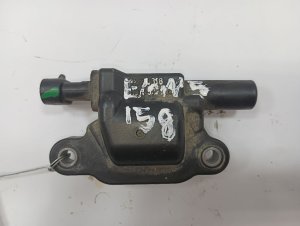
Used OEM Parts in Stock
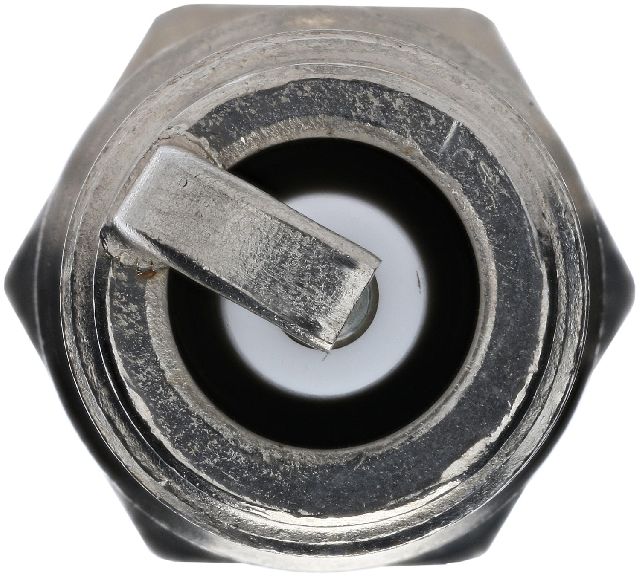
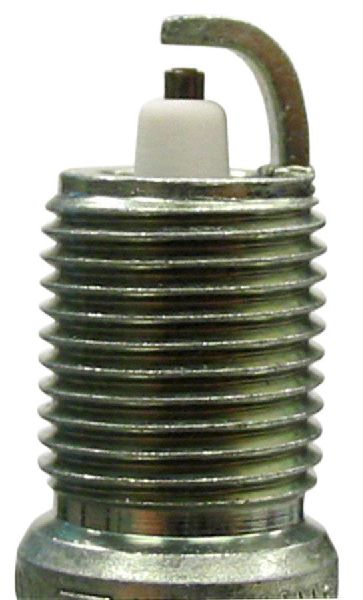
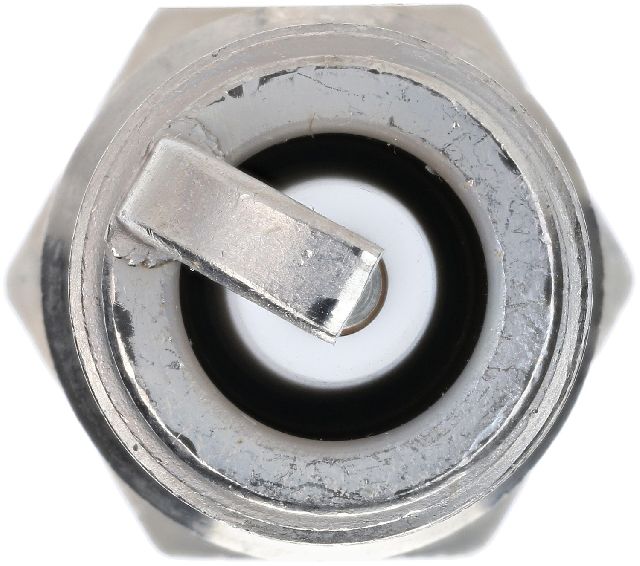
New Aftermarket Parts Available

The information in this article is provided for general reference and educational purposes only. Vehicle specifications, procedures, and part compatibility can vary by production date, trim level, and region. Always consult your vehicle's factory service manual and verify part numbers before purchasing or performing repairs. Safety-critical components such as airbags, seat belts, and braking systems should be installed by a qualified professional.
- Pontiac Grand Prix:
- 🧭 Diagnostic Flowchart
- 🎬 Helpful Videos
- 🛍️ Shop This Part
- What's Unique About the 2004-2008 Pontiac Grand Prix
- Symptoms You May Notice
- Most Likely Causes
- Rare But Worth Checking
- Diagnosis Steps
- Parts You'll Likely Need
- Related Codes That Often Appear With This One
- Platform-Specific Known Issues
- Technical Service Bulletins (TSBs) & Recalls
- Mechanic-Grade Diagnostic Values
- Hidden / Shadow Codes Worth Checking
- Scan Tool Commands That Help
- Wiring & Ground Locations
- Real Owner Repair Stories
- OEM Part Supersession History
- Model Year Variations Within This Range
- Real Owner Stories
- Pontiac Grand Prix
- 2004 Pontiac Grand Prix GTP
- Buick LaCrosse (3.8L V6)
- Related OBD-II Codes
- Frequently Asked Questions
- 🎟️ Get 5% Off