

P0304 on 2013-2020 Ram 1500: Cylinder 4 Misfire Causes and Fixes
P0304 indicates a misfire in cylinder 4. For most 2013-2020 Ram 1500s, this is commonly caused by a bad ignition coil or spark plug. However, it can also be a symptom of serious, known mechanical issues like lifter/camshaft failure in the 5.7L HEMI or cylinder head problems in early 3.6L Pentastar engines. These major issues often start as a single-cylinder misfire.
- P0304 is a misfire on cylinder 4. Always start diagnosis by swapping the ignition coil and then the spark plug with a neighboring cylinder to see if the misfire code follows.
- On the 5.7L HEMI, a persistent P0304 accompanied by a ticking sound is a strong indicator of the common camshaft/lifter failure, which is a major and expensive repair.
- On early 3.6L V6 models (especially 2013), P0304 could be caused by a known cylinder head defect covered by TSB 09-002-14.
- Do not ignore a flashing check engine light, as this signals a severe misfire that can quickly destroy your catalytic converter, adding significant cost to the repair.
What's Unique About the 2013-2020 Ram 1500

While ignition parts are a common cause, the 2013-2020 Ram 1500 is susceptible to specific, severe mechanical failures that also trigger a P0304 code. Early 3.6L Pentastar V6 engines (primarily 2013 models) were subject to a warranty extension (X56) for left-bank cylinder head failures causing this misfire. The 5.7L HEMI V8 is widely known for a design issue related to the Multi-Displacement System (MDS) lifters and camshaft lubrication, which can cause a lifter's roller bearing to fail and subsequently destroy the camshaft lobe. This failure often presents first as a single-cylinder misfire like P0304, accompanied by a distinct ticking sound. Owners should be aware that what seems like a simple tune-up issue could be an early warning of a major repair costing thousands.
Diagnostic Flowchart

Tap your situation to follow the diagnostic path that matches what you're seeing on this vehicle.
Generation note: This range covers the end of the fourth generation (2013-2018, DS) and the beginning of the fifth generation (2019-2020, DT). The 'Ram 1500 Classic' (DS) was also sold in 2019 and 2020. The most severe mechanical issues are more commonly associated with specific engine designs within this range rather than a single generation. For example, the 3.6L cylinder head issue primarily affects early fourth-generation models (TSB 09-002-14 REV. B). The 5.7L HEMI lifter/cam issue is a concern for both generations, with many forum reports on 2013-2015 models.
Symptoms You May Notice

- Rough idle, which may be more noticeable on a cold start. [Bulletin #09-011-25, 41]
- Flashing or solid Check Engine Light.
- Noticeable loss of engine power and acceleration.
- Engine hesitation or sputtering.
- Increased fuel consumption.
- Engine shaking or vibrating, especially when stopped or at idle.
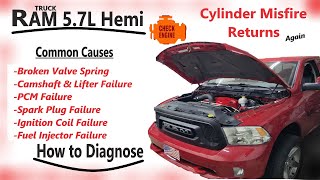
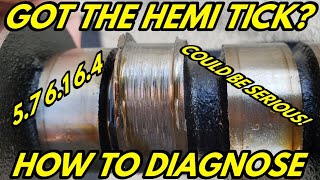
- A ticking, tapping, or chirping sound from the engine, especially on 5.7L HEMI models (known as 'Hemi tick'), which may be more prominent after the engine warms up. 🎬 See why Hemi lifters fail and how to prevent it.
- Replacing all spark plugs and coils without first swapping a single coil to confirm the diagnosis. This can be a waste of money if the cause is mechanical.
- Mistaking the ticking sound of an exhaust manifold leak for the 'Hemi tick' of a failing lifter. An exhaust leak is typically louder on a cold engine and may quiet down as it warms up, while lifter tick is often more persistent or gets worse as the engine warms and oil thins.
Most Likely Causes

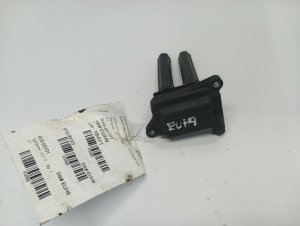
- Faulty Ignition Coil 🔴 High Probability → Shop Ignition Coil Heat and vibration in the engine bay cause ignition coils to fail over time. It is a common wear item.
How to confirm: Swap the ignition coil from cylinder 4 with another cylinder (e.g., cylinder 2, which is on the same bank in the 3.6L, or any other easily accessible cylinder). Clear the codes and drive the truck. If the code changes to P0302, the ignition coil is the culprit.
Typical fix: Replace the faulty ignition coil. It's often recommended to replace the spark plug at the same time.
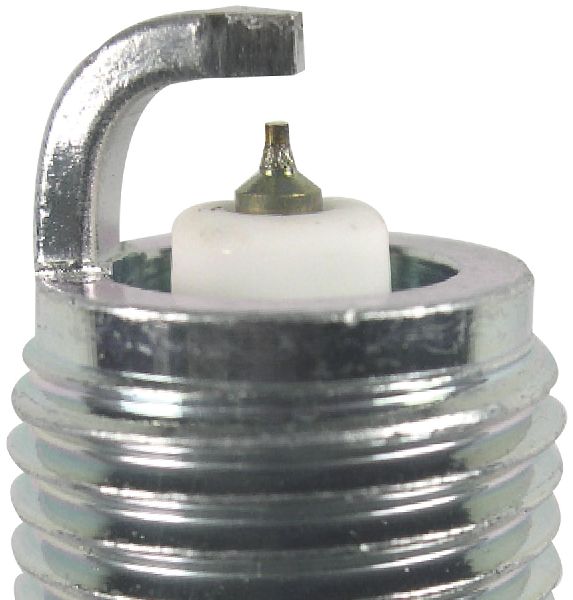
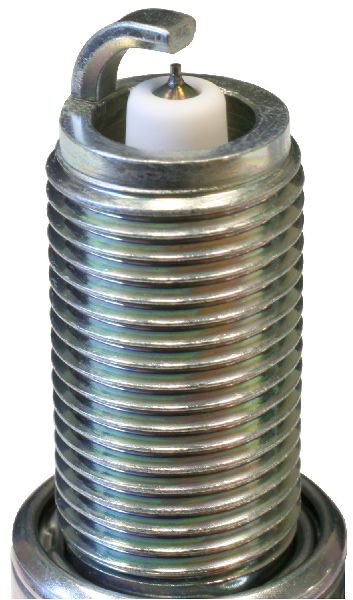
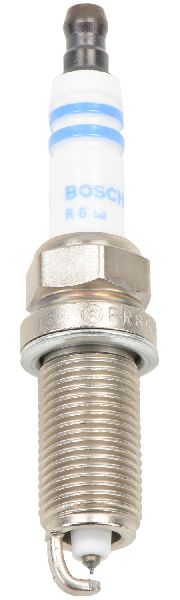
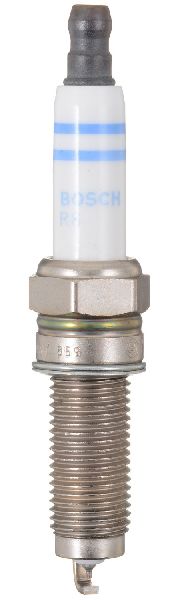
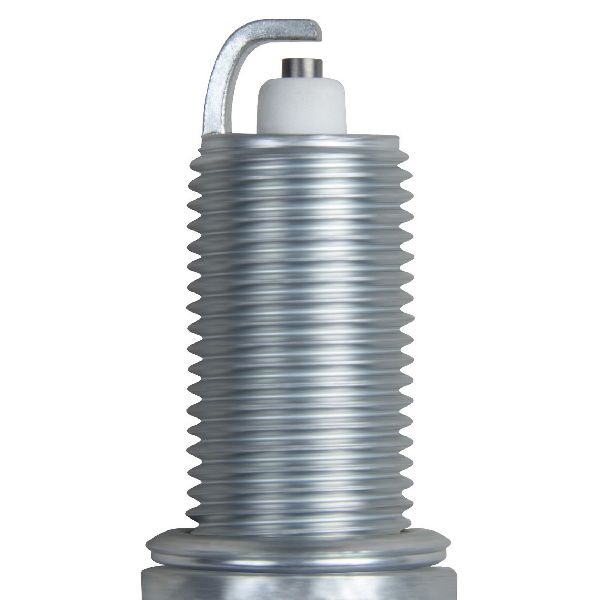
Est. part cost: $30-$75 - Worn or Fouled Spark Plug 🔴 High Probability → Shop Spark Plug Spark plugs are a regular maintenance item with a finite lifespan. The 5.7L HEMI uses two spark plugs per cylinder, increasing the chance of a failure.
How to confirm: After confirming the coil is good, remove and inspect the spark plug from cylinder 4. Look for signs of wear on the electrode, carbon buildup, oil fouling, or cracking. A worn plug can cause a weak spark.
Typical fix: Replace the spark plug(s) in cylinder 4. It is best practice to replace all spark plugs if they are near the end of their service life.
Est. part cost: $5-$25 per plug - Failed Camshaft Lifter / Worn Camshaft (5.7L HEMI) 🟡 Medium Probability → Shop Engine Camshaft The 5.7L HEMI has a well-documented design issue related to the lifters, particularly the MDS (Multi-Displacement System) lifters. Insufficient oiling at low RPMs/idle can cause the lifter's roller needle bearings to fail, which then grinds against the camshaft lobe, destroying both components. Cylinder 4 is an MDS cylinder.
How to confirm: Often accompanied by a distinct ticking noise ('Hemi tick'). If swapping ignition and fuel parts doesn't solve the misfire, a compression test is the next step. If compression is low, a physical inspection by removing the valve cover and potentially the cylinder head is necessary to check for a collapsed lifter or visible damage to the camshaft lobe.
Typical fix: This is a major and expensive repair requiring replacement of the camshaft, all 16 lifters (both MDS and standard), head gaskets, and other related components like timing chain and tensioner. Many owners opt to install non-MDS lifters during the repair. 🎬 Watch: Full Hemi camshaft replacement and MDS delete walkthrough.
Est. part cost: $1000-$2000 for a complete cam and lifter kit. - Faulty Fuel Injector ⚪ Low Probability → Shop Fuel Injector
How to confirm: If ignition components are good, swap the fuel injector from cylinder 4 with another cylinder. If the misfire code moves to the new cylinder, the injector is bad. This is more labor-intensive than an ignition coil swap, as it requires removing the fuel rail.
Typical fix: Replace the faulty fuel injector.
Est. part cost: $50-$120
Rare But Worth Checking
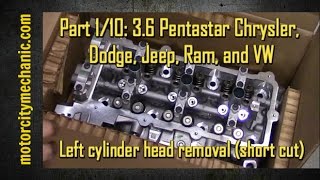
- Cylinder Head Failure (3.6L Pentastar): → Shop Engine Cylinder Head Primarily affects 2011-2013 models. TSB 09-002-14 REV. B was issued for this problem, which can cause misfires on the left bank (cylinders 2, 4, 6) due to excessive valve seat/guide wear leading to compression loss. A cylinder leak-down test is required for diagnosis; leakage of 25% or more confirms the issue. The fix is a replacement of the left cylinder head (Part No. RL141353AC).
- Broken Exhaust Manifold Bolts: Common on the 5.7L HEMI, this causes an exhaust leak and a ticking noise that is often misdiagnosed as lifter failure, especially when the engine is cold. While it doesn't typically cause a single-cylinder misfire directly, the leak can disrupt the O2 sensor readings and indirectly affect air-fuel mixture and performance.
- Wiring Harness or Connector Issue: The wiring to the ignition coil or fuel injector for cylinder 4 can become damaged, chafed, or loose, causing an intermittent connection and misfire. Visually inspect the harness where it might rub against the engine cover or brackets.
Diagnosis Steps
- Read the code with an OBD-II scanner and check for any other stored codes. Note the freeze-frame data.
- Start with the simplest ignition test: Swap the ignition coil from cylinder 4 with a known good cylinder (like cylinder 2). Clear the codes and drive. If the code changes to P0302, you have a bad coil.
- If the misfire remains on cylinder 4, perform the same swap test with the spark plug(s).
- Inspect the wiring and connector for the cylinder 4 ignition coil and fuel injector. Look for any signs of chafing, melting, or loose pins.
- For 5.7L HEMI engines, listen carefully for a persistent ticking sound at idle, especially when warm, which could indicate the common lifter/camshaft failure.
- If ignition and wiring are ruled out, perform a compression test on cylinder 4. Compare the reading to other cylinders. A significant drop (more than 15-20%) indicates a mechanical problem.
- If compression is low, perform a cylinder leak-down test. This will help determine if the leak is from intake valves, exhaust valves, piston rings, or a head gasket. For the 3.6L, leakage over 25% on cylinder 4 points towards the known cylinder head issue.
- If all else fails and the misfire persists, consider a fuel injector issue. Swapping the injector is the final step before assuming a major internal engine problem.
Parts You'll Likely Need
- Ignition Coil
(OEM #68238603AA (5.7L HEMI), 5149168AI (3.6L V6))— This is one of the most frequent failure points for a single-cylinder misfire and is the easiest to diagnose via swapping.
Trusted brands: Mopar, NGK, Denso
OEM price range: $50-$100
Aftermarket price range: $30-$75 - Spark Plug
(OEM #SP142510AC (5.7L HEMI), SP149125AE (3.6L V6))— As a standard wear item, a fouled or worn spark plug is a very common cause of misfires.
Trusted brands: NGK, Champion
OEM price range: $10-$20
Aftermarket price range: $5-$15 - Camshaft and Lifter Kit (5.7L HEMI) — Required for the common 'Hemi tick' failure, this job involves replacing the camshaft and all 16 lifters. It's a preventative measure for many owners who need to do any significant top-end engine work.
Trusted brands: Mopar, Comp Cams, AMS Racing
OEM price range: $1200-$2200
Aftermarket price range: $800-$1800 - Fuel Injector
(OEM #05184085AC (3.6L V6), 53032701AA (5.7L V8))— Less common than ignition parts, but a clogged or electrically failed injector will cause a persistent misfire on a single cylinder.
Trusted brands: Mopar, Bosch, Standard Motor Products
OEM price range: $80-$150
Aftermarket price range: $40-$90
Related Codes That Often Appear With This One
- P0300 — If the underlying issue, like a failing camshaft or fuel delivery problem, begins to affect other cylinders, a P0300 (Random/Multiple Cylinder Misfire) will often appear alongside P0304.
- P0302, P0306 — On 3.6L engines with the cylinder head issue, misfires on other cylinders on the same bank (2, 4, and 6) are common and are specifically mentioned in TSB 09-002-14.
- P3425 — On 5.7L HEMI engines, a failing MDS lifter on cylinder 4 can sometimes be accompanied by a P3425 (Cylinder 4 Deactivation Control Circuit) code, pointing directly to a problem in the MDS system for that cylinder.
Technical Service Bulletins (TSBs) & Recalls
- 09-002-14: Addresses MIL illumination for P0300, P0302, P0304, or P0306 on 2013 3.6L engines, involving checking for cylinder leakage and replacing the cylinder head if leakage is 25% or greater.
- 09-011-25: Mentions P0304 as a potential DTC when customers complain of a rough idle. [Bulletin #09-011-25]
- 18-002-23 & 1800821: Note P0304-00 as a cylinder 4 misfire that can occur in cold ambient temperatures. [Bulletin #18-002-23, Bulletin #1800821]
- 1802221: Lists P0304 as a potential DTC for engine misfires. [Bulletin #1802221]
Platform-Specific Known Issues
- HEMI Lifter Failure Experience: Multiple owners on forums like RamForum.com and Reddit describe a similar pattern: a persistent ticking noise ('Hemi tick') develops, followed by a single-cylinder misfire code like P0304. One owner noted their 2014 Ram with 148k miles had collapsed lifters on cylinders 7 & 8, requiring a $7,000 repair for a new camshaft, lifters, and heads. Another owner with a 2015 model at 114k miles noted the tapping was most prominent in the driver's side wheel well at hot idle before throwing a code.
- 3.6L Pentastar Cylinder Head Failure: → Shop Engine Cylinder Head For early models (2013), a P0304 is a strong indicator of the known left cylinder head issue covered by TSB 09-002-14. This is often not a sudden failure but a gradual loss of compression. An owner of a 2012 Jeep Grand Cherokee with the 3.6L engine reported a P0304 code that only appeared at idle. After replacing ignition parts with no success, a compression test revealed low compression on the left bank (cylinders 2, 4, 6), which was resolved by refurbishing the cylinder head.
- Cold Start Misfires: Several TSBs (18-002-23, 1800821) specifically mention P0304 occurring in cold ambient temperatures. This may be related to software that needs updating. One owner of a 2015 Ram 1500 noted a P0304 code appeared with a hesitant, rough start only after the truck sat for 8 hours or more.
- Wiring Harness Chafing: In some cases, the wiring harness leading to the ignition coil can rub against the engine cover or other components, causing a short and a persistent misfire on that cylinder. One user on Reddit mentioned seeing a P0304 caused by the coil wire being rubbed through on the engine cover because the harness was not secured in the correct spot. Another owner had a persistent misfire that was ultimately traced to a bad wiring harness, which required replacement.
Mechanic-Grade Diagnostic Values
- 5.7L HEMI Ignition Coil Primary Resistance — expected: 0.558 - 0.682 Ohms. Failure: A reading outside this range indicates a faulty coil.
- 3.6L Pentastar Fuel Injector Resistance — expected: Approximately 12 Ohms (spec is often cited as 12-16 Ohms).. Failure: A significantly higher reading (e.g., 24 Ohms) or an open circuit (infinite resistance) indicates a bad injector.
- Ignition Coil Control Circuit Resistance — expected: Below 5.0 Ohms. Failure: Resistance above 5.0 Ohms indicates an open or high resistance in the wiring between the PCM and the ignition coil connector.
- 5.7L HEMI Fuel Pressure — expected: 58 PSI +/- 2 PSI. Failure: Pressure significantly below this range indicates a weak fuel pump or a clogged filter. Note: 2012 and newer models lack a Schrader valve on the fuel rail and require a special adapter for testing.
- Mode 6 Misfire Counter — expected: Near zero for all cylinders during a drive cycle.. Failure: A count on cylinder 4 that is significantly higher than other cylinders confirms that the PCM is detecting misfire events, even if the threshold to set a CEL has not yet been met.
Hidden / Shadow Codes Worth Checking
- Mode 6, Test ID $A2 (and others): Mode 6 data provides access to raw test results from the PCM's onboard diagnostic monitors before a fault code is officially set. For misfires, it shows a raw count for each cylinder. The specific Test ID (TID) for cylinder 1 misfire is often $A2, with subsequent cylinders following (e.g., $A3 for cyl 2, $A4 for cyl 3, $A5 for cyl 4). A high value for TID $A5 would indicate cylinder 4 misfires. (see via A professional scan tool or an advanced consumer OBD-II scanner with Mode 6 capability. The dealer-level wiTECH tool presents this under a monitor named 'Which cylinder is misfiring'.)
Scan Tool Commands That Help
- wiTECH (or advanced aftermarket): Injector Kill / Cylinder Cutout Test — To isolate a misfire cause. By disabling the fuel injector for cylinder 4, a technician can listen for a change in engine RPM. If there is no change when the injector is disabled, it confirms that cylinder 4 was not contributing power, pointing towards an issue with that cylinder's fuel, spark, or compression.
- wiTECH (or advanced aftermarket): ASD Relay Actuation — To test the power supply circuit to the ignition coils and fuel injectors. The Auto Shutdown (ASD) relay provides power to these components. Manually actuating the relay with a scan tool helps verify if the relay itself and the main power feed are functioning correctly.
- wiTECH (or advanced aftermarket): MDS Solenoid Actuation (5.7L HEMI) — To test the function of the Multi-Displacement System solenoids. If a P0304 code is accompanied by an MDS-related code like P3425, this test can help determine if the solenoid for cylinder 4 is functioning electrically, which can help differentiate between a bad solenoid and a mechanical lifter failure.
Wiring & Ground Locations
- Engine to Firewall Ground Strap — Typically runs from the rear of a cylinder head to a stud on the vehicle's firewall. This is a common point of corrosion or breakage.. A poor engine ground can cause a host of electrical issues, including weak spark or erratic sensor readings, which can lead to misfire codes.
- Frame Ground — On the driver's side frame rail, often forward of the upper control arm.. This is a primary chassis ground point. Ensuring it is clean and tight is critical for overall vehicle electrical health.
- PCM Connector C1 (Cylinder 4 Coil Control) — The Powertrain Control Module (PCM) is located in the engine bay. It has multiple large connectors. The control wire for the cylinder 4 ignition coil will be a specific pin on one of these connectors (e.g., a 96-cavity connector).. When diagnosing a persistent misfire with good components, a technician must test for continuity and voltage at the PCM connector pin for the cylinder 4 coil to rule out a wiring break or a failed PCM driver.
Real Owner Repair Stories
- YouTube user 'Project Life' (2014 Ram 1500 5.7L HEMI) — Check engine light with a misfire code (P0305 in his case, but same diagnosis for P0304). Ticking noise from engine.
❌ Tried (didn't work) Swapping spark plugs and coils; the misfire stayed on the same cylinder.
✅ What actually fixed it A compression test showed zero compression on the misfiring cylinder. Teardown revealed a failed camshaft lobe and lifter. The final fix was a complete camshaft and lifter replacement. - 5thGenRams Forum user 'Sugar' (2020 Ram 1500 with 5,778 miles) — Check engine light with code P0304.
❌ Tried (didn't work) N/A, was taken to dealer.
✅ What actually fixed it The dealership diagnosed and replaced a single bad ignition coil pack. This highlights that even on new trucks, a simple component failure is a common cause. - RamForum.com user (Ram 1500 HEMI with 40,000 miles) — Flashing check engine light, serious idle misfire, engine would die without throttle.
❌ Tried (didn't work) Initial troubleshooting by the dealership.
✅ What actually fixed it The dealership found a cracked and failed intake valve spring on cylinder 5. This is a known, though less common, failure on HEMI engines that results in a complete loss of compression.
"I Checked Everything" — The Actual Cause
- A common cause of misfires that can be missed by a smoke test is a leaking intake manifold gasket. On V-shaped engines like the Pentastar and HEMI, the gasket seals the intake manifold to the cylinder heads. A failure can allow unmetered air to be sucked into the engine, leaning out the air-fuel mixture and causing misfires, often with codes P0171/P0174. This leak may only appear under specific temperature conditions (hot or cold) and can be subtle enough that a low-pressure smoke test doesn't reveal it. A tell-tale sign can be a faint whistling or hissing sound at idle.
OEM Part Supersession History
RL141353AC (Remanufactured)→68141353AC (New)— This is the left-side cylinder head for the 3.6L Pentastar engine, which was redesigned to fix the valve guide wear issue outlined in TSB 09-002-14. The remanufactured part was eventually replaced by a new part number.
Heads up: CRITICAL: When replacing the head, Mopar notes that new heads are shipped WITHOUT oil gallery bolts/plugs. Bolt/Plug Kit P/N 68154699AA MUST be installed, or trouble codes will be set.
Model Year Variations Within This Range
- 2019-2020: The 2019 model year was a split year. The outgoing 4th generation was sold as the 'Ram 1500 Classic' (DS platform), while the new 5th generation was introduced as the 'Ram 1500' (DT platform). While both used the 5.7L HEMI and 3.6L Pentastar, the new DT platform introduced the eTorque mild-hybrid system as standard on the 3.6L and optional on the 5.7L. The wiring, electronics, and chassis are completely different between a 2019 'Classic' and a 2019 'new body style' truck, which is critical for electrical diagnosis.
Helpful Videos
Used OEM Parts in Stock
New Aftermarket Parts Available

The information in this article is provided for general reference and educational purposes only. Vehicle specifications, procedures, and part compatibility can vary by production date, trim level, and region. Always consult your vehicle's factory service manual and verify part numbers before purchasing or performing repairs. Safety-critical components such as airbags, seat belts, and braking systems should be installed by a qualified professional.
- Ram 1500:
- 🧭 Diagnostic Flowchart
- 🎬 Helpful Videos
- 🛍️ Shop This Part
- What's Unique About the 2013-2020 Ram 1500
- Symptoms You May Notice
- Most Likely Causes
- Rare But Worth Checking
- Diagnosis Steps
- Parts You'll Likely Need
- Related Codes That Often Appear With This One
- Technical Service Bulletins (TSBs) & Recalls
- Platform-Specific Known Issues
- Mechanic-Grade Diagnostic Values
- Hidden / Shadow Codes Worth Checking
- Scan Tool Commands That Help
- Wiring & Ground Locations
- Real Owner Repair Stories
- "I Checked Everything" — The Actual Cause
- OEM Part Supersession History
- Model Year Variations Within This Range
- 🎟️ Get 5% Off