

P0304 on 2013 Scion FR-S: Cylinder 4 Misfire Causes and Fixes
P0304 on a 2013 Scion FR-S is a misfire on cylinder 4. The most common fixes are replacing the ignition coil or spark plug for that cylinder. However, be aware of manufacturer bulletins (TSBs) that link this code to out-of-spec camshaft position sensors, and consider the vehicle's history regarding the major valve spring recall.
- P0304 on your FR-S is a misfire in the rear, driver's-side cylinder.
- Always start diagnosis by swapping the ignition coil from cylinder 4 to cylinder 2 to see if the misfire follows the coil.
- If the coil is good, inspect and likely replace the spark plugs, especially if their service history is unknown.
- Unlike many other cars, be aware that official TSBs point to a potential camshaft position sensor issue as a root cause for this code on this specific car.
- Do not ignore a flashing check engine light, as this indicates a severe misfire that can quickly destroy your catalytic converter.
What's Unique About the 2013-2013 Scion FR-S
While a P0304 code on most cars points directly to a spark plug or ignition coil, the 2013 Scion FR-S (and its Subaru BRZ twin) has specific, documented issues. Manufacturer Technical Service Bulletins (TSBs) directly link misfire codes, including P0304, to the camshaft position sensor clearance being out of specification. Additionally, the 2013 model year was subject to a major engine valve spring recall; both the original defect and improper recall repairs have been known to cause misfires and catastrophic engine failure.
Diagnostic Flowchart
Tap your situation to follow the diagnostic path that matches what you're seeing on this vehicle.
Symptoms You May Notice
- Rough or erratic idle
- Hesitation or stumbling during acceleration
- Flashing or solid Check Engine Light
- Reduced engine power
- Smell of fuel from the exhaust
- Difficulty starting or extended cranking time
- Engine stalling, especially at idle
- Replacing the catalytic converter when it has been damaged by the misfire, but not fixing the root cause of the misfire itself.
- Replacing fuel pumps when the issue is isolated to a single cylinder's injector or ignition system.
- Assuming the engine is healthy after the valve spring recall was performed, without considering the possibility of a botched repair causing new issues.
Most Likely Causes
- Failed Ignition Coil 🔴 High Probability → Shop Ignition Coil Coil-on-plug systems are a common failure point. Owners on forums like ft86club.com frequently report coil pack failure as the cause for single-cylinder misfires. The original coils on 2013 models are known to have defects that were corrected in later model years. Failures can be intermittent, occurring only when hot or under load.
How to confirm: Swap the ignition coil from cylinder 4 with another cylinder (e.g., cylinder 2, the front cylinder on the driver's side). Clear the codes and drive. If the code changes to P0302, the coil is bad.
Typical fix: Replace the faulty ignition coil. It is often recommended to replace all four if they are original and high-mileage, preferably with OEM parts from a 2017+ model year to get the revised design.
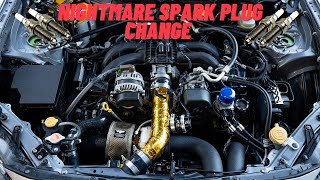
Est. part cost: $90-$125 - Worn or Fouled Spark Plug 🔴 High Probability → Shop Spark Plug Spark plugs are a regular maintenance item with a 60,000-mile service interval. The boxer engine design makes changing them more labor-intensive, so they are sometimes neglected.
How to confirm: After ruling out the coil, remove the spark plug from cylinder 4. Inspect for wear (worn electrode), carbon fouling, oil, or damage to the ceramic insulator. Compare it to a plug from a healthy cylinder.
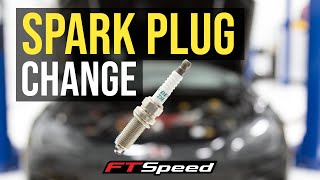
Typical fix: Replace the spark plug. It is best practice to replace all four at the same time with the correct OEM-spec Iridium plugs. 🎬 Watch this step-by-step guide to changing spark plugs on a BRZ.
Est. part cost: $20-$30 per plug - Camshaft Position Sensor Out of Specification 🟡 Medium Probability → Shop Engine Camshaft Position Sensor This is a known issue documented by Toyota in TSBs S-SB-0013-14 and S-SB-0033-13 Rev for early-production 2013 models. The equivalent Subaru TSB is 11-130-13R. It specifically calls out misfire codes P0301-P0304 as a potential symptom.
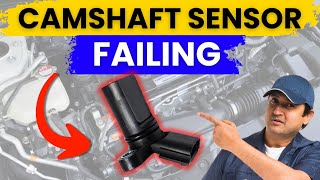
How to confirm: This requires following the diagnostic procedure outlined in the TSB, which involves measuring the air gap between the sensor and the camshaft reluctor wheel. An oscilloscope can also be used to check for an irregular waveform from the sensor. 🎬 Learn how to test and identify a bad camshaft position sensor. This is best performed by a qualified technician.
Typical fix: Adjusting the clearance by installing a specific thickness shim (e.g., 0.2mm) between the sensor and the timing cover as per the TSB instructions.
Est. part cost: $80-$150 for the sensor, shims are inexpensive but diagnosis is key. - Clogged or Faulty Fuel Injector ⚪ Low Probability → Shop Fuel Injector The FA20 engine uses a dual D-4S injection system (port and direct). While generally reliable, issues with the direct injectors have been reported by owners, sometimes leading to misfires. One owner on Reddit noted that running E85 can sometimes lead to gummed-up direct injectors over time.
How to confirm: A professional can perform a fuel injector balance test. A DIY method is to swap the injector with another cylinder, but this is significantly more involved than a coil swap. In one forum case, a dealer diagnosed a bad direct injector by observing the misfire only occurred when the DI system was active, not the port injection system. Resistance can be tested with a multimeter; a healthy injector should read between 5 and 20 ohms.
Typical fix: Clean or replace the faulty fuel injector. Direct injectors are more expensive and complex to replace than port injectors.
Est. part cost: $150-$250 for a direct injector
Rare But Worth Checking
- Internal Engine Mechanical Failure (Post-Recall): A major recall (NHTSA Campaign ID: 18V720000) was issued for the 2013 model year for engine valve springs that could fracture. Critically, many owners reported engine failures *after* the recall work was performed, allegedly due to improper application of sealant (RTV) by technicians, which then clogged oil passages and led to oil starvation. A P0304 accompanied by knocking noises 🎬 See an owner's experience with a successful valve spring recall repair. could be a symptom of this severe issue.
- Vacuum Leak: A vacuum leak near the intake manifold runner for cylinder 4 could lean out the mixture and cause a misfire. This is less common than ignition or fuel issues for a single-cylinder misfire.
- Damaged Engine Harness: Subaru has issued TSBs for engine harness issues on related models. A user on ft86club.com mentioned that if a coil and plug swap doesn't resolve the issue, the engine harness could be the next place to check, especially if the coil pack does not feel like it is seating correctly. A poor ECU ground, often located on the intake manifold, can also cause sporadic issues.
Diagnosis Steps
- Read the trouble codes with an OBD-II scanner and confirm P0304 is present. Note any other codes, especially P0300 or P0354.
- Using a capable scanner, check the freeze frame data to see the engine conditions (RPM, load, temperature) when the misfire occurred.
- Locate cylinder 4 (driver's side, rear position).
- Swap the ignition coil from cylinder 4 with the coil from cylinder 2 (driver's side, front).
- Clear the codes and drive the vehicle, attempting to replicate the conditions from the freeze frame data.
- If the code is now P0302, the ignition coil is faulty and needs replacement.
- If the code remains P0304, remove and inspect the spark plug from cylinder 4. Replace if it is worn, fouled, or damaged. It's recommended to replace all four plugs if they are near their service interval.
- If the coil and plug are good, investigate the fuel injector. This is more complex and may require a professional.
- Check the vehicle's service history for the valve spring recall. If performed, visually inspect the timing chain cover area for excessive amounts of black or grey RTV sealant, which could indicate a botched job.
- Consider the TSBs (S-SB-0013-14, S-SB-0033-13 Rev) regarding the camshaft position sensor. Diagnosis requires specialized tools to measure the sensor gap and may require a professional.
- A compression test can be performed on cylinder 4 to check for mechanical engine problems like bad valves, piston rings, or head gasket failure.
Parts You'll Likely Need
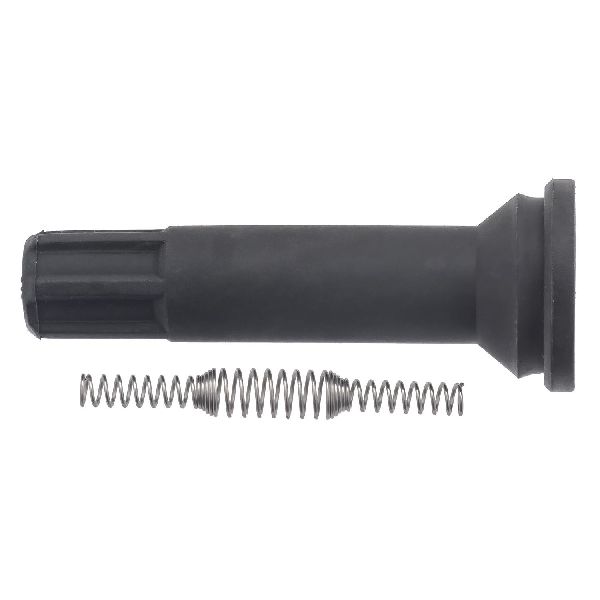
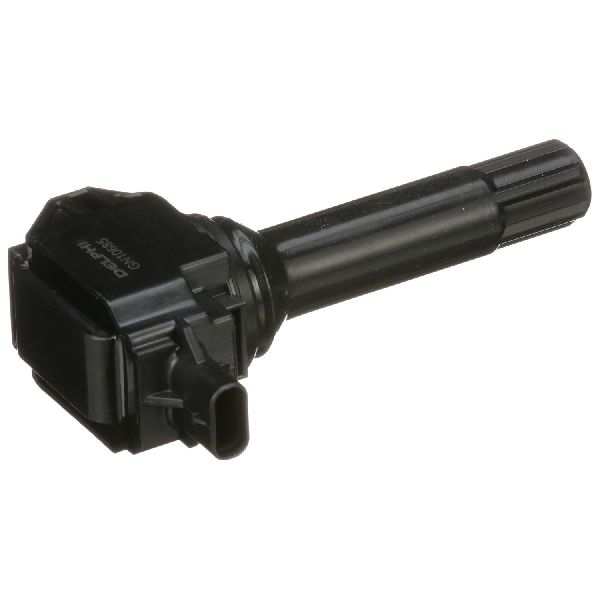
- Ignition Coil
(OEM #SU003-04713)— This is one of the most common failure items causing a single-cylinder misfire. Denso is the original equipment manufacturer for Toyota/Scion.
Trusted brands: Denso (OEM), NGK
OEM price range: $90-$125
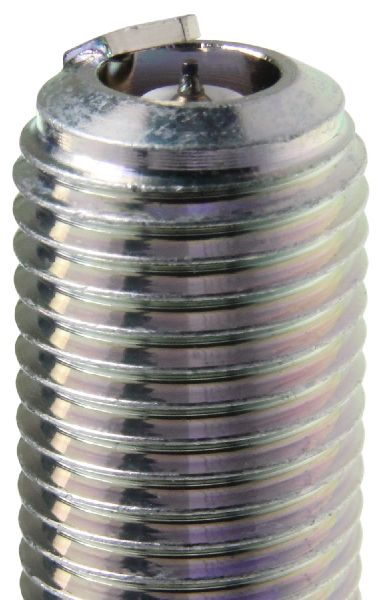
Aftermarket price range: $60-$90 - Iridium Spark Plug
(OEM #SU003-04931)— Spark plugs are a maintenance item and a frequent cause of misfires. The OEM plugs are Iridium for longevity and performance.
Trusted brands: Denso (OEM), NGK
OEM price range: $20-$30
Aftermarket price range: $15-$25
Related Codes That Often Appear With This One
- P0300 — If the misfire is intermittent or begins to affect other cylinders, a P0300 (Random/Multiple Cylinder Misfire) may be stored alongside P0304.
- P0301, P0302, P0303 — If other cylinder-specific misfire codes are present, it could point to a more systemic issue like a vacuum leak, fuel delivery problem, or the camshaft sensor issue described in the TSBs.
- P0354 — This code means "Ignition Coil 'D' Primary/Secondary Circuit Malfunction," pointing directly to an electrical fault with the ignition coil for cylinder 4. If you see P0354 alongside P0304, the ignition coil or its wiring is almost certainly the culprit.
- P034x, P036x, P039x — The manufacturer TSBs explicitly state that camshaft position sensor codes may appear along with misfire codes (P0301-P0304) due to the sensor clearance issue.
Technical Service Bulletins (TSBs) & Recalls
- S-SB-0013-14: Notes that misfire DTCs P0301-P0304 can be caused by camshaft position sensor clearance being out of spec.
- S-SB-0033-13 Rev: A revised bulletin also linking misfire DTCs P0301-P0304 to an out-of-spec camshaft position sensor.
- Subaru TSB 11-130-13R: The corresponding bulletin for the Subaru BRZ, covering the same camshaft sensor and misfire issue.
Platform-Specific Known Issues
- TSB S-SB-0013-14 and S-SB-0033-13 Rev were issued for 2013 FR-S models, indicating that misfire DTCs (including P0304) can be caused by the camshaft position sensor clearance being out of specification. This can also cause a rough idle or extended cranking.
- The 2013 model year was subject to a valve spring recall (NHTSA 18V720000) that could cause engine failure. Furthermore, the recall repair itself was controversially handled, with numerous reports of subsequent engine failure due to improper sealant application.
Mechanic-Grade Diagnostic Values
- Ignition Coil Primary Winding Resistance — expected: 0.4 to 2.0 ohms. Failure: A reading outside this range, or an open loop (OL), indicates a faulty coil.
- Ignition Coil Secondary Winding Resistance — expected: 6,000 to 10,000 ohms (6k-10k Ω). Failure: A reading outside this range suggests the coil's secondary winding has failed.
- Port Fuel Injector Resistance — expected: 12.3 ohms (High Impedance). Failure: A significantly different reading or an open circuit indicates a failed injector coil.
- Direct Fuel Injector Resistance — expected: 5 to 20 ohms. Failure: A reading outside this range indicates a potential injector fault.
- Low-Pressure Fuel System Pressure (at pump module) — expected: 58 PSI (4 bar). Failure: Significantly lower pressure could indicate a weak in-tank fuel pump.
- High-Pressure Fuel System Pressure (at idle) — expected: 500-700 PSI. Failure: Low pressure on the high side could point to a failing high-pressure fuel pump (HPFP), though this would likely cause multiple misfires.
Scan Tool Commands That Help
- Toyota Techstream: Misfire Count (Live Data) — To monitor misfire counts on individual cylinders in real-time, which can help confirm the issue is isolated to cylinder 4, especially if the Check Engine Light is not yet illuminated.
- Toyota Techstream: Active Test: Cylinder Cut — To manually disable the fuel injector for cylinder 4 and observe the change in engine RPM. If there is little or no change when cylinder 4 is cut, it confirms that cylinder is not contributing power.
- Toyota Techstream: High Pressure Fuel System Bleed — This is a required safety procedure before working on the high-pressure direct injection fuel lines, as the system can retain over 3000 PSI even when the engine is off.
Wiring & Ground Locations
- Main ECU Ground — On the back side of the driver's side intake manifold.. A poor or corroded main ECU ground can cause a wide range of erratic engine behavior, including misfires that are difficult to diagnose. The ECU relies on this ground for sensor readings and to fire the ignition coils correctly.
- Main Engine Ground — Typically a strap from the chassis to the top starter bolt on the transmission bell housing.. A weak main engine ground can cause electrical noise and voltage drops, affecting ignition system performance and potentially leading to misfires.
Real Owner Repair Stories
- Reddit user u/tixxtoon on r/AskMechanics (2014 Scion FR-S, Manual, ~70k miles on engine) — Misfiring under load, specifically chugging and bucking between 1500-1700 RPM. Also occasional misfire on cold idle. No Check Engine Light and no misfires showing on live data feed.
❌ Tried (didn't work) The user had already ruled out spark plugs, ignition coils, and injectors as the cause.
✅ What actually fixed it The user did not post a final resolution, but the symptoms point towards a complex issue not captured by standard OBD-II misfire detection, possibly related to engine harmonics, a failing sensor that's still within its normal operating range, or a mechanical issue not yet severe enough to trigger a persistent code. - FT86Club user gm5oh (2013 Scion FR-S) — Misfire under load, logged via OBD Fusion, but no Check Engine Light. Misfire count increased with throttle.
❌ Tried (didn't work) The user initially suspected spark plugs.
✅ What actually fixed it The issue was resolved by replacing the ignition coil on the misfiring cylinder (Cylinder 3 in this case). The user noted that worn spark plugs could have contributed to the coil pack's failure. This case demonstrates that a failing coil can cause noticeable misfires without triggering a CEL.
OEM Part Supersession History
SU003-04713 (Ignition Coil for 2013-2016 models)→22433AA652 (Subaru part number for 2017+ models)— The original ignition coils on early models were known for premature failure. The part was revised for the 2017 model year for improved reliability.
Heads up: The newer part is a direct replacement and is recommended even for older models to prevent future failures.
Model Year Variations Within This Range
- 2013 (Early Production): Early 2013 models are specifically called out in TSBs S-SB-0013-14 and S-SB-0033-13 Rev for having potential misfire codes (P0301-P0304) due to incorrect camshaft position sensor clearance, which may only require adding a shim rather than replacing the sensor.
Helpful Videos
We Have This Part in Stock


The information in this article is provided for general reference and educational purposes only. Vehicle specifications, procedures, and part compatibility can vary by production date, trim level, and region. Always consult your vehicle's factory service manual and verify part numbers before purchasing or performing repairs. Safety-critical components such as airbags, seat belts, and braking systems should be installed by a qualified professional.
- Scion FR-S:
- 🧭 Diagnostic Flowchart
- 🎬 Helpful Videos
- 🛍️ Shop This Part
- What's Unique About the 2013-2013 Scion FR-S
- Symptoms You May Notice
- Most Likely Causes
- Rare But Worth Checking
- Diagnosis Steps
- Parts You'll Likely Need
- Related Codes That Often Appear With This One
- Technical Service Bulletins (TSBs) & Recalls
- Platform-Specific Known Issues
- Mechanic-Grade Diagnostic Values
- Scan Tool Commands That Help
- Wiring & Ground Locations
- Real Owner Repair Stories
- OEM Part Supersession History
- Model Year Variations Within This Range
- 🎟️ Get 5% Off