

P0304 on 2008-2013 Toyota Highlander 3.5L V6: Cylinder 4 Misfire Causes and Fixes
P0304 on a 2008-2013 Highlander means cylinder 4 is misfiring. This is almost always a bad ignition coil or a worn spark plug. Since cylinder 4 is in the easy-to-access front bank, swapping the coil is a quick, no-cost diagnostic step. A new Denso or NGK coil costs about $40-$75.
- P0304 is a misfire on cylinder 4, which is the easily accessible middle cylinder on the front bank of the engine.
- The most likely cause is a bad ignition coil, followed by a worn spark plug. A coil swap is the definitive free diagnostic step.
- The ignition coil connectors are notoriously brittle; be prepared for them to break during service.
- If the coil and plug are good, the next likely culprits are the wiring/connector, or a faulty fuel injector.
- Owners of this vehicle should verify that the VVT-i oil line has been updated from the original rubber-and-metal design to the all-metal part to prevent catastrophic engine failure.
What's Unique About the 2008-2013 Toyota Highlander
On the 2GR-FE V6 engine, the cylinders are numbered with the odd bank (1, 3, 5) against the firewall and the even bank (2, 4, 6) at the front of the vehicle. This is great news for a P0304 code, as cylinder 4 is the middle cylinder on the easily accessible front bank. This makes diagnosing the most common causes, like a faulty ignition coil or spark plug, a simple DIY job that doesn't require removing the upper intake manifold, which is necessary to service the rear cylinders.
Symptoms You May Notice
- Rough or vibrating idle
- Hesitation or stumbling during acceleration
- Noticeable loss of engine power
- Solid or flashing Check Engine Light
- Smell of raw gasoline from the exhaust
- Decrease in fuel economy
- Replacing all six spark plugs and coils immediately. While this is good maintenance, it's unnecessary for diagnosis. The coil swap test is free and can pinpoint the exact faulty component, saving money.
Most Likely Causes
- Faulty Ignition Coil 🔴 High Probability → Shop Ignition Coil Ignition coils are a common failure item on most modern engines as they age due to constant heat cycles. The coil-on-plug design is reliable but individual coils can fail.
How to confirm: Swap the ignition coil from cylinder 4 with the coil from cylinder 2 (the front-most cylinder). Clear the codes and drive the vehicle. If the code changes to P0302, the ignition coil is confirmed to be faulty.
Typical fix: Replace the single faulty ignition coil. 🎬 See this walkthrough for replacing the ignition coil. It is held in by one 10mm bolt.
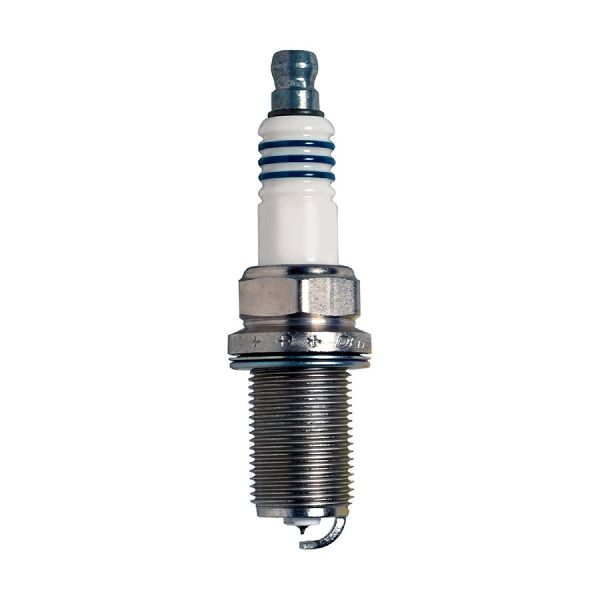
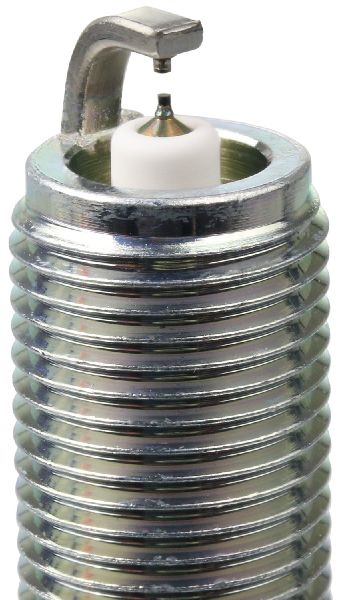
Est. part cost: $40-$95 - Worn or Fouled Spark Plug 🟡 Medium Probability → Shop Spark Plug Spark plugs are a regular maintenance item. The 2GR-FE uses long-life iridium plugs, but they eventually wear out, typically around 100,000-120,000 miles, leading to a weak spark.
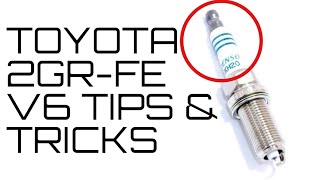
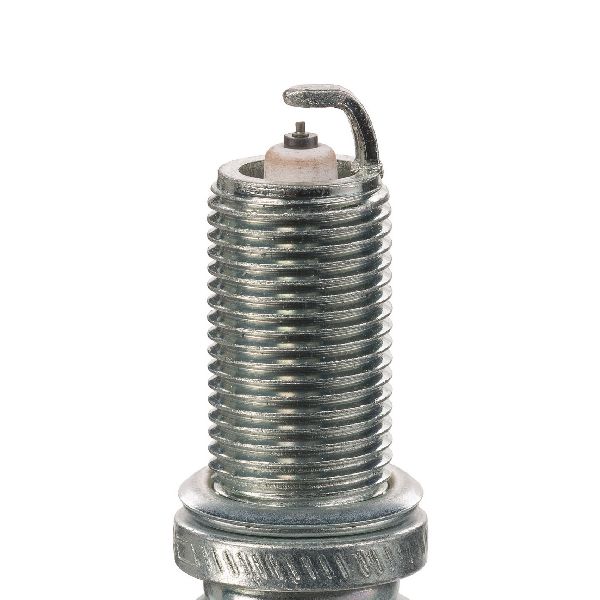
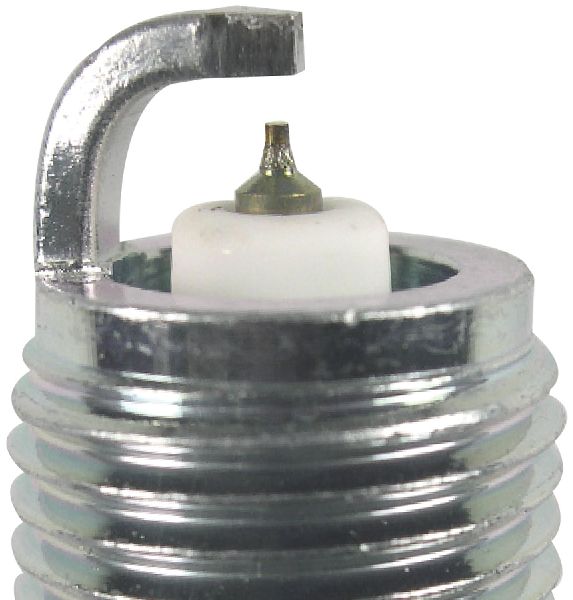
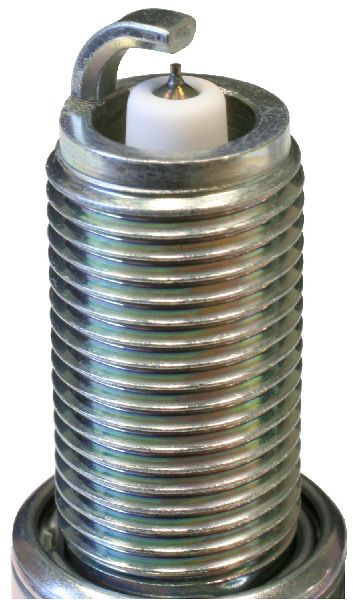
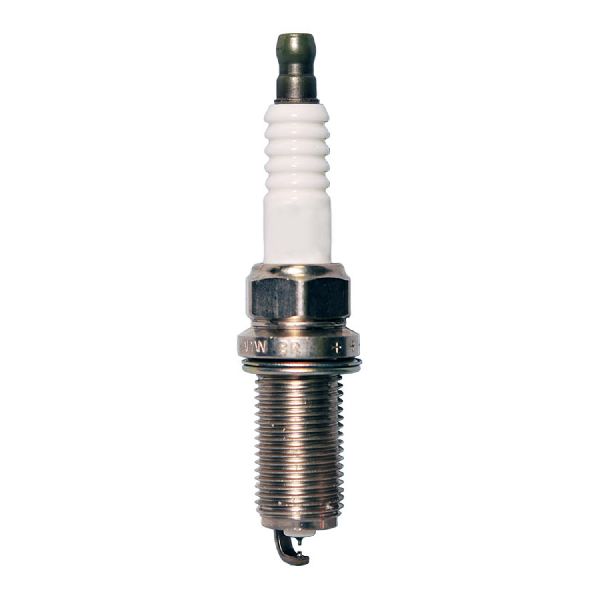
How to confirm: After confirming the ignition coil is good, remove the spark plug from cylinder 4. Inspect it for wear on the electrode, carbon fouling, or oil deposits. A worn plug will have a rounded center electrode. The correct gap for the Denso FK20HR11 is 0.043" (1.1mm).
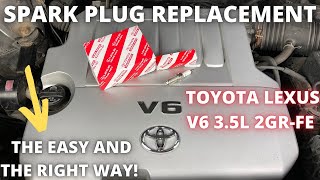
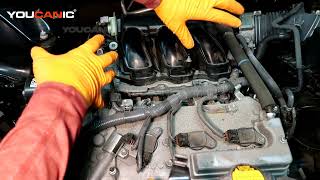
Typical fix: Replace the spark plug in cylinder 4. Torque for new plugs in the aluminum head is 15-22 lb-ft. It is highly recommended to replace all six spark plugs at the same time for even performance, but this requires removing the intake manifold for the rear three. 🎬 Watch: Step-by-step guide to changing all six spark plugs.
Est. part cost: $12-$20 per plug - Clogged or Faulty Fuel Injector ⚪ Low Probability → Shop Fuel Injector
How to confirm: If the coil and spark plug are good, the fuel injector is the next suspect. A professional can perform a fuel injector balance test. A more involved DIY test is to swap the cylinder 4 injector with another cylinder's injector to see if the misfire code follows. Resistance can also be checked and should be between 11.6-12.4 ohms for the 2GR-FE.
Typical fix: Replace the faulty fuel injector. This may also require replacing the injector seals.
Est. part cost: $100-$250
Rare But Worth Checking
- Vacuum Leak: While more common to cause a random misfire code (P0300), a leak in the intake manifold gasket specific to the runner for cylinder 4 can cause a single-cylinder misfire.
- Low Engine Compression: This indicates a serious internal engine issue like a bad valve, worn piston rings, or a leaking head gasket. A compression test is required to diagnose this.
- Damaged Wiring or Connector: The plastic clips on the ignition coil connectors become very brittle over time and can easily break. Inspect the wiring to the coil and injector for any signs of damage, including from rodents, which has been reported by owners.
Diagnosis Steps
- Read the code with an OBD-II scanner to confirm P0304. Note any other codes present.
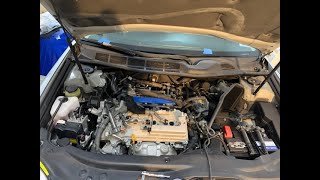
- Identify cylinder 4. It is the middle cylinder on the front bank (Bank 2), closest to the radiator. 🎬 Watch: Locate cylinder 4 and other engine top components.
- Swap the ignition coil from cylinder 4 with the coil from cylinder 2 (the cylinder to the left when facing the engine).
- Clear the trouble codes with the scanner.
- Start the engine and let it run for a few minutes. Drive it if necessary to get the Check Engine Light to reappear.
- Re-scan for codes. If the code is now P0302, the ignition coil is bad and must be replaced.
- If the code remains P0304, the coil is likely good. Proceed to inspect the spark plug in cylinder 4.
- Remove the coil again and use a 5/8" spark plug socket to remove the plug. Check for wear, fouling, or damage. The correct gap is 0.043" (1.1mm). Replace as needed, torquing the new plug to 15-22 lb-ft.
- If the coil and plug are confirmed good, inspect the wiring and connector for the coil and fuel injector for any damage or brittleness.
- If no visible issues are found, the problem may be the fuel injector, a vacuum leak, or a mechanical problem requiring professional diagnosis like a compression test.
Parts You'll Likely Need
- Ignition Coil
(OEM #90919-A2013 (may supersede 90919-A2006))— This is the most frequent cause of a single-cylinder misfire on the 2GR-FE engine.
Trusted brands: Denso, NGK
OEM price range: $90-$110
Aftermarket price range: $40-$75 - Iridium Spark Plug
(OEM #90919-01247)— Spark plugs are a common wear item and the second most likely cause of a misfire after the ignition coil.
Trusted brands: Denso (FK20HR11), NGK (ILFR6T11)
OEM price range: $14-$20
Aftermarket price range: $10-$15 - Ignition Coil Connector
(OEM #90980-11885)— The original connectors become extremely brittle from engine heat and often break when being disconnected. It's wise to have one on hand or be prepared to order one.
Trusted brands: Toyota (OEM), Various aftermarket pigtails
OEM price range: $10-$15 (connector housing only)
Aftermarket price range: $5-$20 (pigtail with wires)
Related Codes That Often Appear With This One
- P0300 — If the cause of the misfire (like a large vacuum leak, low fuel pressure, or water in the fuel) is affecting multiple cylinders, you may also get a 'Random/Multiple Cylinder Misfire' code.
- P0302, P0306 — These codes for other front-bank cylinders might appear during diagnosis if you swap a faulty ignition coil to one of those cylinders to confirm the failure.
- P0171, P0174 — A 'System Too Lean' code can sometimes accompany a misfire on the front bank if the root cause is a vacuum leak or fuel delivery issue. Manufacturer Bulletin #T-SB-0072-19 notes that P0304 can appear alongside P0171 in certain drivability concerns.
Technical Service Bulletins (TSBs) & Recalls
- While not directly for P0304, a notable TSB for this engine is for the VVT-i oil line. Early 2GR-FE engines had a rubber oil line that could rupture. Toyota issued a Limited Service Campaign to replace it with an all-metal part (15772-31030). Owners should verify this has been done.
- TSB #T-SB-0148-19: This bulletin provides specific repair procedures for when Diagnostic Trouble Codes P0301 through P0306 (including Cylinder 4 Misfire P0304) are detected.
- Bulletin #T-TT-0462-17: A manufacturer service bulletin notes that technicians have found P0304 and other misfire codes can be caused by corrosion and water in the A43 ECM connector, which may also result in low fuel pressure.
Platform-Specific Known Issues
- The plastic locking tabs on the ignition coil electrical connectors become extremely brittle with age and frequently break upon removal. Be prepared to replace the connector (Toyota P/N 90980-11885) if it crumbles. As a temporary measure, some owners have successfully secured a broken connector onto the coil with a well-placed zip tie.
Mechanic-Grade Diagnostic Values
- Fuel Pressure — expected: 304 to 343 kPa (44.1 to 49.7 psi) at idle.. Failure: Pressure below spec can indicate a weak fuel pump or clogged filter; pressure above spec can indicate a faulty fuel pressure regulator.
- Fuel Injector Resistance — expected: 11.6 to 12.4 Ω at 20°C (68°F).. Failure: Resistance outside of this range indicates a faulty injector. An open circuit (infinite resistance) or short circuit (zero resistance) confirms failure.
- Ignition Coil Primary Resistance — expected: Approximately 0.3 to 3.0 Ω.. Failure: A reading outside the specified range suggests a faulty coil winding.
- Ignition Coil Secondary Resistance — expected: Approximately 5,000 to 20,000 Ω (5k to 20k Ω).. Failure: A reading outside this range indicates a breakdown in the secondary coil winding.
- Ignition Coil Power Supply Voltage — expected: 11 to 14 V with ignition switch ON (IG).. Failure: No voltage indicates a problem in the power supply circuit, not the coil itself.
- Short/Long Term Fuel Trim (Bank 2) — expected: Between -5% and +5% is considered normal.. Failure: High positive fuel trim on Bank 2 (e.g., > +10%) can indicate a vacuum leak affecting cylinder 4, causing a lean misfire.
Hidden / Shadow Codes Worth Checking
- Mode $06, TID $53, CID $04: Toyota uses Mode $06 data to store misfire counts for each cylinder, even before they are high enough to trigger a Check Engine Light. TID $53 is the Test ID for misfire monitoring, and CID $04 corresponds to the misfire count for cylinder #4. (see via An advanced scan tool or Toyota Techstream software is required to access Mode $06 data. This is invaluable for diagnosing intermittent misfires.)
Scan Tool Commands That Help
- Toyota Techstream: Active Test: Cylinder Power Balance — This function allows the technician to sequentially disable the fuel injector to each cylinder. When cylinder 4's injector is disabled, if there is no change in engine RPM or smoothness, it confirms that cylinder 4 was not contributing power, pinpointing the misfire location.
- Toyota Techstream: Monitor > Misfire — The standard data list may not accurately count misfires under load. The 'Monitor' screen provides a more accurate, though static, snapshot of current and historical misfire counts (EWMA) for each cylinder, which is superior for diagnosing intermittent issues.
- Toyota Techstream: Active Test: Check the Cylinder Compression — This test cranks the engine with fuel and spark disabled and measures the rotational speed contribution of each cylinder to provide a relative compression reading. While not a substitute for a mechanical gauge, it can quickly identify a cylinder with a major compression issue.
Wiring & Ground Locations
- ECM (Engine Control Module) — Located behind the right side of the dashboard / glove box area.. The ECM sends the trigger signal (IGT) to the ignition coil and the command signal to the fuel injector. A faulty driver circuit within the ECM, though rare, can cause a persistent misfire on a single cylinder. As noted in Bulletin #T-TT-0462-17, check for water or corrosion in the A43 connector.
- Ground Point E03 / E04 — Top left side of the engine.. These are primary engine ground points. A loose or corroded ground here can cause erratic behavior in the ignition system, leading to weak spark and misfires.
- Cylinder 4 Ignition Coil Connector — Front (radiator side) of the engine, middle cylinder. The connector has 4 pins: Pin 1 (+B - Power), Pin 2 (GND - Ground), Pin 3 (IGC - Ignition Confirmation), Pin 4 (IGT - Ignition Trigger).. This is the direct connection to the coil. Technicians will test for 12V at Pin 1 and check for the trigger signal from the ECM at Pin 4. The connector itself is notoriously brittle.
Real Owner Repair Stories
- YouTube video by 'The Car Care Nut' (2008-2013 Toyota Highlander (general model range)) — Rattling noise on cold start lasting up to 5 seconds.
❌ Tried (didn't work) Not applicable, this was a preventative/diagnostic tip.
✅ What actually fixed it This specific symptom on early (2008-2009) 2GR-FE engines points to failing VVT-i cam gears. If left unaddressed, the gears can fail completely, causing severe engine damage. This is a distinct issue from a typical ignition misfire.
OEM Part Supersession History
90919-A2006→90919-02260— Part has been updated by the manufacturer. The new part is a direct replacement.90919-A2005→Multiple numbers including 90919-02255, 90919-A2003— Various revisions and updates to the ignition coil design over the years.
Heads up: Always verify the correct part number for your specific VIN. While many coils look identical, internal resistance or dwell time characteristics can differ slightly between part numbers.
Model Year Variations Within This Range
- 2008-2010 (Highlander Hybrid): The Highlander Hybrid used the 3.3L 3MZ-FE V6 engine, not the 3.5L 2GR-FE. Diagnostics and parts for a P0304 on these models would be different.
- 2011-2013 (Highlander Hybrid): For the 2011 model year refresh, the Hybrid model was upgraded to a version of the 3.5L V6, the 2GR-FXE. While mechanically similar to the 2GR-FE, it operates on an Atkinson cycle and has different engine management.
- 2008-2009: Early 2GR-FE engines were more prone to a cold start VVT-i gear rattle, which can be a sign of impending gear failure.
Diagnostic Flowchart
Other Known Issues on This Vehicle
Issues unrelated to this code that are worth knowing about as an owner of this generation:
- VVT-i Oil Line Rupture 🔴 High — Common on earlier 2GR-FE engines (approx. 2005-2010). The original rubber hose section degrades and can burst, causing rapid and catastrophic oil loss, leading to engine seizure if not stopped immediately. (Ref: Toyota issued a Limited Service Campaign (LSC) to replace the rubber hose with an all-metal line (Part No. 15772-31030).)
- Timing Cover Oil Leak 🟠 Medium — A very common oil leak develops from the timing chain cover sealant over time. It is a slow, seeping leak but the repair is labor-intensive as it requires significant engine disassembly.
- Water Pump Failure 🟠 Medium — The water pump is a known failure point, often starting as a small coolant leak from the weep hole, identifiable by pink/white crusty residue on the passenger side of the engine block.
- Melting/Sticky Dashboard 🟡 Low — Common in hot climates, the dashboard material can degrade, becoming sticky, shiny, and prone to cracking. It is primarily a cosmetic issue. (Ref: Toyota initiated a Warranty Enhancement Program (ZE6) to address this for certain models and years.)
Used vs. New Parts: Buying Guide for This Vehicle
When a used part is the smart pick: Ignition coils are a good candidate for used parts, provided they come from a low-mileage, documented donor vehicle. Since they are easy to access and swap, the labor risk is low if a used part is faulty. Other simple mechanical components like brackets or engine covers are also ideal for used purchase.
Donor-vehicle mileage cap: roughly under 80000 miles for the part to have meaningful remaining life.
What to inspect on the donor part:
- For ignition coils, check for cracks in the plastic housing and ensure the rubber boot is pliable and not brittle.
- Look for a donor vehicle with a clean engine bay, suggesting good maintenance.
- Avoid parts from vehicles that show signs of flood damage (silt lines, rust in unusual places) or major front-end collisions.
OEM-only on this vehicle (don't cheap out):
- Engine Control Module (ECM): Aftermarket or improperly matched used ECMs can cause a host of electronic issues. A new or professionally refurbished OEM unit is the only reliable option.
- Fuel Injectors: While some aftermarket brands are reputable, the cost and labor to replace an injector make it a job you only want to do once. OEM Denso injectors are recommended for reliability.
Aftermarket brands forum-validated for this vehicle:
- Ignition Coils: Denso, NGK.
- Spark Plugs: Denso (FK20HR11), NGK (ILFR6T11).
Brands owners have reported issues with on this vehicle:
- Unbranded, 'white-box' ignition coils and sensors from online marketplaces. While cheap, they have a very high failure rate and can cause diagnostic headaches.
Real Owner Stories
Aggregated from forums and TSBs cited above. Mileages and costs reflect what owners reported in those sources.
2013 Toyota Highlander V6 Limited — 100000 miles
Symptoms: The entire vehicle shook upon starting and the check engine light came on.
What fixed it: The owner was advised to investigate the ignition coils and spark plugs, as these are common failure points around 100,000 miles.
Source hint: Reddit r/MechanicAdvice
2009 Lexus RX 350 2GR-FE
Symptoms: P0304 and misfire; symptoms persisted even after swapping coils and plugs.
What fixed it: Discovered rodent-chewed wires on the #4 fuel injector harness.
Source hint: ClubLexus - '09 RX350 p0304 and misfire (1/18/2021)
Toyota Highlander Hybrid
Symptoms: Multiple front-bank misfire codes (P0300, P0302, P0304) appearing simultaneously after a fuel fill-up.
What fixed it: Treating the fuel for water contamination with isopropyl alcohol. Manufacturer Bulletin #T-SB-0072-19 also mentions that some Highlander Hybrid vehicles may exhibit misfire codes like P0304 due to corrosion or water.
Source hint: Electric Vehicle Forums - 'Highlander Hybrid P0300 P0302 P0304' (9/2/2013)
Toyota 2GR-FE V6
Symptoms: Persistent P0304 misfire code after already replacing coils and plugs.
What fixed it: Replacing a bad fuel injector.
Source hint: Reddit (r/mechanic) - 'Code po304 misfire Toyota' (approx. 2021)
Related OBD-II Codes
Frequently Asked Questions
Where is cylinder 4 located on my 2008-2013 Highlander 3.5L V6?
Which spark plugs should I use for my 2GR-FE engine to fix a P0304?
Is there a TSB for the oil line issue on my early Highlander V6?
What is the torque specification for the spark plugs in the aluminum head?
My ignition coil connector broke while I was checking the misfire; what part do I need?
What is the acceptable resistance range for the fuel injectors on this vehicle?
Helpful Videos
We Have This Part in Stock

The information in this article is provided for general reference and educational purposes only. Vehicle specifications, procedures, and part compatibility can vary by production date, trim level, and region. Always consult your vehicle's factory service manual and verify part numbers before purchasing or performing repairs. Safety-critical components such as airbags, seat belts, and braking systems should be installed by a qualified professional.
- Toyota Highlander:
- 🧭 Diagnostic Flowchart
- 🎬 Helpful Videos
- 🛍️ Shop This Part
- What's Unique About the 2008-2013 Toyota Highlander
- Symptoms You May Notice
- Most Likely Causes
- Rare But Worth Checking
- Diagnosis Steps
- Parts You'll Likely Need
- Related Codes That Often Appear With This One
- Technical Service Bulletins (TSBs) & Recalls
- Platform-Specific Known Issues
- Mechanic-Grade Diagnostic Values
- Hidden / Shadow Codes Worth Checking
- Scan Tool Commands That Help
- Wiring & Ground Locations
- Real Owner Repair Stories
- OEM Part Supersession History
- Model Year Variations Within This Range
- Other Known Issues on This Vehicle
- Used vs. New Parts: Buying Guide for This Vehicle
- Real Owner Stories
- 2013 Toyota Highlander V6 Limited — 100000 miles
- 2009 Lexus RX 350 2GR-FE
- Toyota Highlander Hybrid
- Toyota 2GR-FE V6
- Related OBD-II Codes
- Frequently Asked Questions
- 🎟️ Get 5% Off