

P0304 on 2010-2015 Toyota Prius: Cylinder 4 Misfire Causes and Fixes
On a 2010-2015 Prius, P0304 is most often caused by a clogged EGR system and carbon-fouled intake manifold. While a bad spark plug or ignition coil is possible, the EGR issue is a well-known platform weakness. Cleaning the entire EGR circuit (cooler, valve, pipe, and manifold) is the most common fix, costing several hundred dollars in labor or a weekend for an experienced DIYer. A violent cold-start rattle can point to either the EGR issue or a failing head gasket, another common problem.
- P0304 on a Gen 3 Prius is rarely a simple fix. Suspect a clogged EGR system and intake manifold before anything else.
- Always perform basic diagnostics first: swap the ignition coil from cylinder 4 to another cylinder to rule it out.
- Check for signs of a failing head gasket: unexplained coolant loss and a distinct engine rattle or shake on cold starts are critical clues.
- If you or a mechanic removes the intake manifold to clean it, it is essential to also clean the EGR cooler, EGR valve, and EGR pipe at the same time to fully address the root cause.
- Ignoring misfires can lead to very expensive damage to the catalytic converter and may accelerate head gasket failure.
What's Unique About the 2010-2015 Toyota Prius
Unlike many cars where a P0304 code points directly to a bad spark plug or coil, the Gen 3 Prius has two very common, platform-specific issues that cause misfires. The primary culprit is a design flaw in the Exhaust Gas Recirculation (EGR) system that causes heavy carbon buildup in the intake manifold, often clogging the passages for cylinders 1 and 4 first. This is acknowledged in Toyota TSB T-SB-0116-15. Secondly, these 2ZR-FXE engines are known for head gasket failures at higher mileage (150,000+ miles), which frequently starts as a cold-start misfire as coolant leaks into the combustion chamber overnight, causing a violent rattle or shake for a few seconds.
Symptoms You May Notice
- Rough or shaky idle, especially on a cold start.
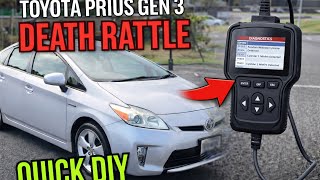
- A violent rattling, shaking, or knocking sound from the engine for a few seconds on a cold start, sometimes called the 'death rattle'.
- Flashing or solid Check Engine Light.
- Noticeable loss of power and poor acceleration.
- Reduced fuel economy.
- Smell of unburnt fuel or rotten eggs from the exhaust.
- Replacing only the spark plugs and ignition coils without investigating the much more common EGR system clogging or checking for signs of head gasket failure. Many owners waste money on ignition parts when the root cause is carbon buildup.
Most Likely Causes
- Clogged EGR Passages and Intake Manifold 🔴 High Probability → Shop Engine Intake Manifold The 2ZR-FXE engine's EGR system is known for creating heavy carbon deposits. The design of the intake manifold causes this carbon to block the small EGR ports for each cylinder, with cylinders 1 and 4 often being the first and most severely affected. This imbalance of recirculated gas disrupts the air-fuel ratio and causes misfires. The issue is officially recognized by Toyota in Technical Service Bulletin T-SB-0116-15.
How to confirm: Remove the intake manifold and visually inspect the EGR ports. They will be visibly restricted with thick, black carbon deposits. The passages leading to cylinders 1 and 4 are often the most clogged.
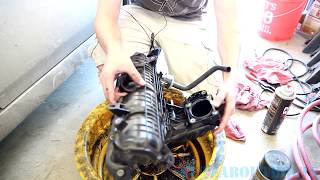
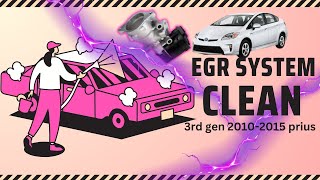
Typical fix: Thoroughly clean the entire EGR circuit: the EGR cooler, EGR valve, EGR pipe, and the intake manifold itself. 🎬 See the science behind cleaning your entire EGR system. Many owners on forums like PriusChat report success by soaking the metal components in solutions like Oxi-Clean, Simple Green, or HVAC coil cleaner (like Nu-Calgon Nu-Brite) followed by scrubbing and rinsing. Toyota's official fix is to replace the intake manifold with an updated part (17120-37054).
Est. part cost: $15-$50 for gaskets and cleaning supplies, or $250-$400 for a new OEM intake manifold. - Failing Head Gasket 🟡 Medium Probability This is a widely documented failure on high-mileage (typically 150,000+ miles) 2ZR-FXE engines. It is believed that chronic EGR clogging leads to higher combustion temperatures, which stresses the head gasket over time, causing it to fail between a coolant passage and the cylinder.
How to confirm: Check for unexplained coolant loss in the reservoir. A key symptom is a loud engine rattle or shake for a few seconds only on cold starts, as coolant that has leaked into the cylinder is burned off. A chemical block tester can detect exhaust gases in the coolant. Removing the spark plug from cylinder 4 may reveal it is unusually 'steam-cleaned' or wet with coolant.
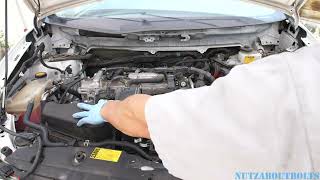
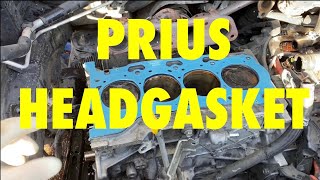
Typical fix: This is a major repair that involves removing the cylinder head to replace the head gasket. It is critical to have the cylinder head checked for warpage and resurfaced by a machine shop. While performing this repair, it is essential to also clean the entire EGR system to address the likely root cause. 🎬 Follow this step-by-step guide for a complete head gasket replacement.
Est. part cost: $150-$300 for a head gasket set and new head bolts. - Faulty Ignition Coil 🟡 Medium Probability → Shop Ignition Coil
How to confirm: Swap the ignition coil from cylinder 4 with another cylinder (e.g., cylinder 2). Clear the codes with a scanner and drive the vehicle. If the code changes to P0302, the ignition coil is bad.
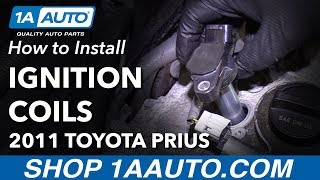
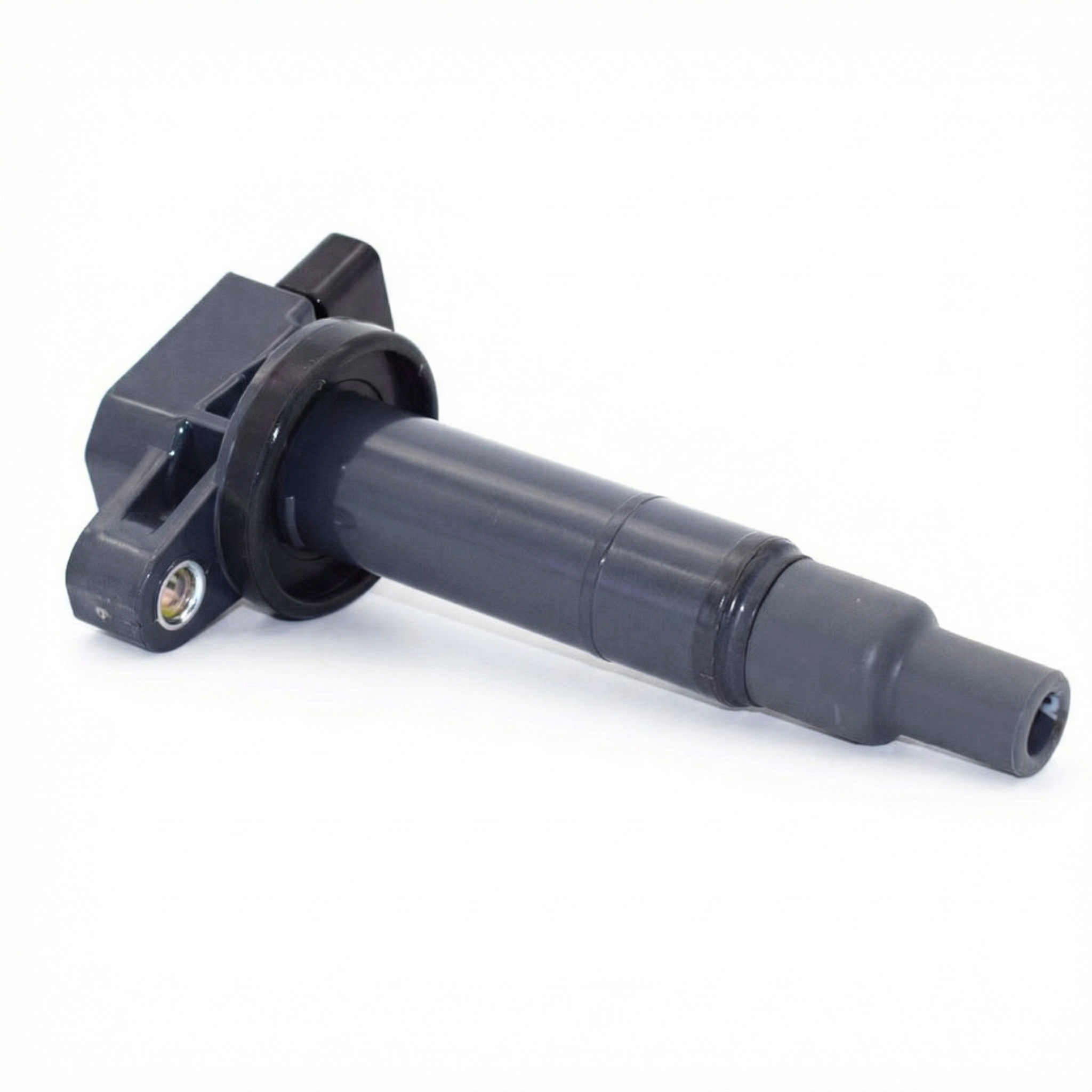
Typical fix: Replace the faulty ignition coil. It is good practice to replace all four if they are original and have high mileage. Use a quality OEM brand like Denso.
Est. part cost: $40-$90 per coil for a quality brand like Denso (OEM Part No. 90919-02258). - Worn or Fouled Spark Plugs 🟡 Medium Probability → Shop Spark Plug
How to confirm: Remove the spark plug from cylinder 4. Inspect it for wear (worn electrode), carbon fouling, oil fouling, or coolant contamination (which would point to a head gasket leak).
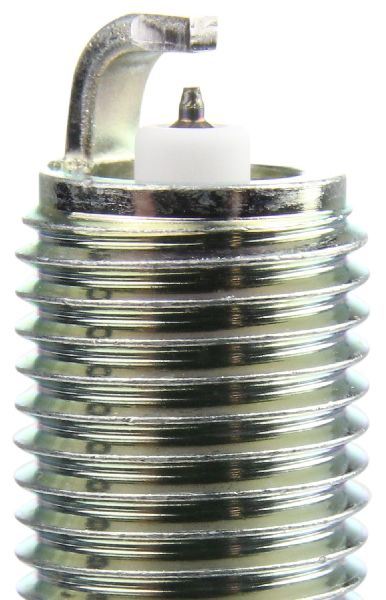
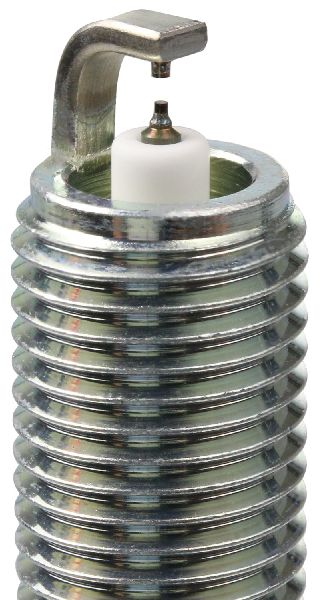
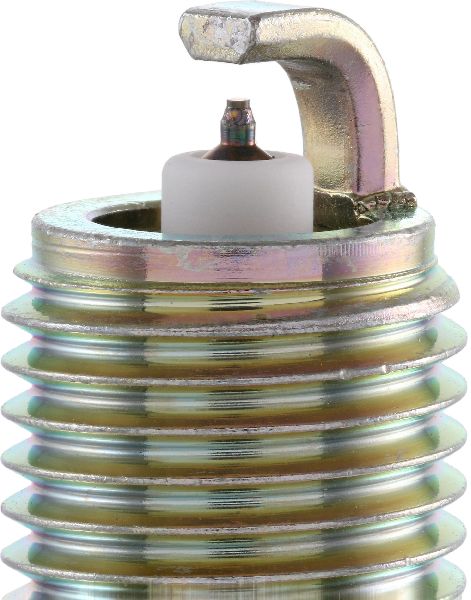
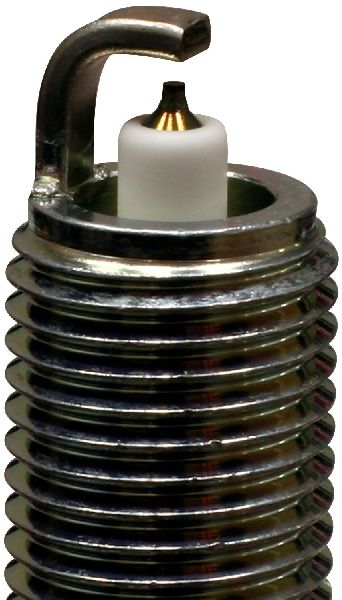
Typical fix: Replace all four spark plugs. Use the correct Iridium-tipped plugs specified for this engine, such as those from NGK or Denso.
Est. part cost: $8-$20 per plug. - Clogged or Faulty Fuel Injector ⚪ Low Probability → Shop Fuel Injector
How to confirm: After ruling out spark and coil issues, you can swap the fuel injector from cylinder 4 with another cylinder. This is more labor-intensive than a coil swap. If the misfire code follows the injector, the injector is the problem. Some owners have reported success clearing a clogged injector by using a potent in-tank fuel system cleaner like Seafoam.
Typical fix: Replace the faulty fuel injector. It's sometimes recommended to have all injectors professionally cleaned and tested at the same time.
Est. part cost: $50-$150 per injector.
Rare But Worth Checking
- Low Engine Compression: If all ignition and fuel components are good, a mechanical issue like a burnt valve or worn piston rings could be the cause. This requires a compression test to diagnose.
- Outdated ECM Software: For some 2013-2016 models, Toyota issued TSB T-SB-0147-16 which addresses a rough idle and misfire codes on cold starts with a software update for the Engine Control Module (ECM).
Diagnosis Steps
- Read all codes with an OBD-II scanner. Note if P0401 or other misfire codes (P0300, P0301, etc.) are present.
- Check the engine coolant level in the reservoir. A low level without visible leaks is a major clue for a head gasket issue.
- On a cold engine (after sitting overnight), start the car and listen for a loud rattle or violent shaking that lasts for a few seconds. This is a classic symptom of a head gasket leak on this engine.
- Swap the ignition coil from cylinder 4 to a different cylinder (e.g., cylinder 2). Clear the codes and drive. If the misfire moves to P0302, the coil is bad.
- If the code remains P0304, swap the spark plug from cylinder 4 to another cylinder. If the code moves, the plug is bad. Inspect the plug for fouling (carbon, oil, or coolant). A 'steam cleaned' plug indicates a head gasket leak.
- If ignition components are good, the next step is to inspect the EGR system. This involves removing the intake manifold to check for carbon blockage in the EGR ports. This is the most likely cause if head gasket symptoms are absent.
- While the intake manifold is off, it is highly recommended to clean the EGR valve, EGR cooler, and the connecting pipe, as they are all part of the same problematic system.
- If symptoms of head gasket failure are present (coolant loss, cold start rattle), perform a chemical block test or a cooling system pressure test to confirm exhaust gases are in the coolant.
Parts You'll Likely Need
- Intake Manifold Gasket
(OEM #Fel-Pro MS 97214 (Set))— Required when removing the intake manifold for cleaning, which is the most common cause of P0304. Aftermarket brands like Fel-Pro are popular and readily available.
Trusted brands: Fel-Pro, Mahle, Toyota OE
OEM price range: $15-$25
Aftermarket price range: $10-$20 - Ignition Coil
(OEM #90919-02258)— A common failure item on any vehicle that can cause a single-cylinder misfire. The OEM part is made by Denso.
Trusted brands: Denso, NGK
OEM price range: $90-$120
Aftermarket price range: $40-$90 - Iridium Spark Plug — A standard maintenance item and a potential cause of misfire. Should be replace
Related Codes That Often Appear With This One
- P0300 — This is a 'Random/Multiple Cylinder Misfire' code. It often appears with P0304 if the underlying issue, like a clogged intake or failing head gasket, is starting to affect other cylinders.
- P0301, P0302, P0303 — Seeing other specific cylinder misfire codes points to a systemic problem affecting the whole engine, such as the EGR system, head gasket, or a fuel delivery issue, rather than a single bad coil or plug.
- P0401 — This code means 'EGR Flow Insufficient'. It is a strong indicator that the same carbon buildup causing the P0304 misfire has also restricted the main EGR valve or passages.
Technical Service Bulletins (TSBs) & Recalls
- T-SB-0116-15: Addresses a 'runs rough' condition with P030x misfire codes during light acceleration due to the EGR system; recommends replacing the intake manifold assembly.
- T-SB-0027-16: Mentions a rough idle or tapping noise at cold start, which can be associated with misfire codes and EGR issues.
- T-SB-0075-13: Pertains to code P0401 (EGR Flow Insufficient), which is commonly caused by the same carbon buildup that triggers misfires.
Platform-Specific Known Issues
- EGR System Clogging: The primary issue for the 2010-2015 Prius. Carbon from the exhaust gas clogs the EGR cooler, valve, and intake manifold passages, leading to misfires, often starting with cylinders 1 and 4. Toyota TSB T-SB-0116-15 addresses this.
- Head Gasket Failure: A significant and expensive problem for higher mileage 2ZR-FXE engines. It often manifests first as a cold-start misfire and engine rattle as coolant that has leaked into a cylinder is expelled.
- Excessive Oil Consumption: Some 2ZR-FXE engines can suffer from excessive oil consumption due to piston ring design. While not a direct cause of P0304, it's a related known issue for this engine.
Mechanic-Grade Diagnostic Values
- Fuel Injector Resistance — expected: 11.6 to 12.4 Ω at 20°C (68°F). Failure: A resistance reading outside of this range indicates a faulty injector.
- Ignition Coil Primary/Secondary Resistance — expected: Toyota does not provide official resistance specifications for these coil-on-plug units.. Failure: Diagnosis is performed by swapping the coil with a known-good cylinder and seeing if the misfire code follows. Comparing resistance readings between all four coils may show an outlier, but this is not a definitive test.
- Short-Term and Long-Term Fuel Trims — expected: Typically between -5% and +5% at idle on a warm engine.. Failure: High positive fuel trims (e.g., > +10%) can indicate unmetered air from a vacuum leak, while high negative trims can suggest a leaking injector. However, a clogged EGR passage can also disrupt trims on affected cylinders.
Hidden / Shadow Codes Worth Checking
- Mode $06, TID $53: This is not a DTC, but a specific monitor within the OBD-II system's Mode $06 data that tracks misfire counts for each cylinder. A technician can view the raw misfire count for cylinder 4 (and all others) to see if the misfires are happening in real-time, even before the count is high enough to trigger a P0304. (see via A professional scan tool capable of displaying Mode $06 data, such as Toyota Techstream.)
Scan Tool Commands That Help
- Toyota Techstream: Active Test: Control the Select Cylinder Fuel Cut — This is a power balance test. A technician can use this to command the fuel injector for cylinder 4 to stop firing. If there is no change in engine RPM or smoothness, it confirms cylinder 4 was not contributing power, verifying the misfire location.
- Toyota Techstream: Data List: Misfire Count (Cylinder 1-4) — To monitor real-time misfire events on each cylinder during a test drive. This is crucial for confirming that the P0304 is active and to see the conditions under which it occurs (e.g., cold start, light acceleration, idle).
- Toyota Techstream: Active Test: Control the EGR Step Position — To manually command the EGR valve to open at idle. If the engine stumbles or stalls, the valve itself is likely functioning. If there's no change in engine operation, it suggests the valve is stuck closed or the passages are completely blocked with carbon.
Wiring & Ground Locations
- EA (Ground Point) — On the left side of the cylinder head, near the intake manifold.. This is a primary ground point for the engine control system, including the circuits for the ignition coils and fuel injectors. A loose or corroded ground here could cause intermittent and hard-to-diagnose electrical issues, including misfires.
Real Owner Repair Stories
- PriusChat Forum User (2010 Prius, 171k miles) — P0304 code, low coolant, slow acceleration.
❌ Tried (didn't work) Initial diagnosis was inconclusive, pointing towards potential battery issues.
✅ What actually fixed it A combination of replacing overdue spark plugs and a thorough cleaning of the entire EGR system (valve, pipe, cooler) and the intake manifold resolved the misfire. A compression test was good, ruling out a head gasket at that time. - Reddit user r/prius (2011 Prius, 214k miles) — Persistent P0304 misfire.
❌ Tried (didn't work) Replaced head gasket, Replaced timing chain, Replaced ignition coils and spark plugs, Replaced fuel injectors, Replaced PCV valve and water pump, Cleaned EGR cooler
✅ What actually fixed it The user did not post a final resolution after trying an exhaustive list of common fixes. This highlights that even after addressing all major known issues (head gasket, EGR, ignition, fuel), the problem can persist, possibly due to a deeper mechanical or electrical issue that was overlooked.
"I Checked Everything" — The Actual Cause
- A common scenario for the P0304 code on a Gen 3 Prius is passing a smoke test (no vacuum leaks) yet still having a misfire. The cause is often internal to the engine. For example, coolant from a small head gasket leak can seep into the cylinder overnight, fouling the spark plug on a cold start and causing a misfire that may clear up as the engine warms. This would not be detected by a smoke test.
OEM Part Supersession History
17120-37050, 17120-37051, 17120-37052, 17120-37053→17120-37054— The original intake manifold design had an EGR passage that was prone to uneven distribution of exhaust gases and carbon buildup, particularly affecting cylinders 1 and 4. The updated part has a revised internal design to improve flow and reduce clogging.
Heads up: Some forum discussions mention a later part number (17120-37091) related to a different TSB for cold-start issues, which may also require an ECM recalibration. However, 17120-37054 is the widely accepted updated part for the clogging and misfire issue.13101-37120 (Piston), 13011-37110 (Piston Ring Set)→13101-37240 (Piston), 13011-37260 (Piston Ring Set)— To address excessive oil consumption issues. The original low-tension piston rings were prone to getting stuck with carbon, allowing oil to bypass into the combustion chamber. The updated parts have a revised design.
Model Year Variations Within This Range
- 2010-2013: These earlier models were built with piston rings that are more prone to causing excessive oil consumption. Toyota updated the piston and ring design starting in the 2014 model year to mitigate this issue.
- 2010-2011 vs 2012-2015: A minor facelift occurred in 2012. While the core engine (2ZR-FXE) and its main problems (EGR clogging, head gasket) remained the same, some sources suggest the EGR valve itself was redesigned around this time. However, forum consensus indicates the redesign did little to prevent the overall system from clogging.
Diagnostic Flowchart
Real Owner Stories
Aggregated from forums and TSBs cited above. Mileages and costs reflect what owners reported in those sources.
2010-2015 Toyota Prius 2ZR-FXE 1.8L
Symptoms: Experienced misfire codes P0301 and P0303 along with rough running symptoms.
What fixed it: Thoroughly cleaned the entire EGR circuit, which resolved the misfires and resulted in a significant improvement in fuel economy.
Source hint: PriusChat thread titled 'Cleaning egr fixed misfire'
2010-2015 Toyota Prius 2ZR-FXE 1.8L — ~205000 miles
Symptoms: Vehicle exhibited a shaking, rattling engine on cold starts along with multi-cylinder misfire codes P0302 and P0304.
What fixed it: Diagnosed as a leaking head gasket after a borescope inspection revealed water inside the cylinder.
Source hint: PriusChat thread titled 'Shaking rattling engine codes p0302 p0304 multi cyl.'
2010-2015 Toyota Prius 2ZR-FXE 1.8L
Symptoms: Developed a P0304 cylinder 4 misfire immediately after having the EGR valve and EGR cooler replaced.
What fixed it: Determined to be caused by either the intake manifold not being cleaned during the EGR service, or debris dislodged during the repair clogging a fuel injector.
Source hint: Reddit r/prius thread titled '0304 cylinder 4 misfire after EGR valve and cooler replacement'
Related OBD-II Codes
Frequently Asked Questions
Is there a Technical Service Bulletin (TSB) for the P0304 code on my 2010-2015 Prius?
Why does my Prius engine violently shake and rattle on a cold start?
I have a P0304 code and my coolant reservoir is low, but I don't see any leaks. What does this mean?
Can a clogged EGR system specifically cause a cylinder 4 misfire?
Should I replace the intake manifold or just clean it to fix P0304?
I just replaced my EGR valve and cooler, but now I have a P0304 code. Why?
Helpful Videos
Used OEM Parts in Stock
New Aftermarket Parts Available


The information in this article is provided for general reference and educational purposes only. Vehicle specifications, procedures, and part compatibility can vary by production date, trim level, and region. Always consult your vehicle's factory service manual and verify part numbers before purchasing or performing repairs. Safety-critical components such as airbags, seat belts, and braking systems should be installed by a qualified professional.
- Toyota Prius:
- 🧭 Diagnostic Flowchart
- 🎬 Helpful Videos
- 🛍️ Shop This Part
- What's Unique About the 2010-2015 Toyota Prius
- Symptoms You May Notice
- Most Likely Causes
- Rare But Worth Checking
- Diagnosis Steps
- Parts You'll Likely Need
- Related Codes That Often Appear With This One
- Technical Service Bulletins (TSBs) & Recalls
- Platform-Specific Known Issues
- Mechanic-Grade Diagnostic Values
- Hidden / Shadow Codes Worth Checking
- Scan Tool Commands That Help
- Wiring & Ground Locations
- Real Owner Repair Stories
- "I Checked Everything" — The Actual Cause
- OEM Part Supersession History
- Model Year Variations Within This Range
- Real Owner Stories
- 2010-2015 Toyota Prius 2ZR-FXE 1.8L
- 2010-2015 Toyota Prius 2ZR-FXE 1.8L — ~205000 miles
- 2010-2015 Toyota Prius 2ZR-FXE 1.8L
- Related OBD-II Codes
- Frequently Asked Questions
- 🎟️ Get 5% Off