

P0304 on 2012-2018 Volkswagen Beetle: Cylinder 4 Misfire Causes and Fixes
P0304 on a 2012-2018 VW Beetle means cylinder 4 is misfiring. The most common fix is replacing the ignition coil and spark plug for that cylinder. This is a relatively simple DIY job, with parts costing between $50 and $150. On 2.0T TSI engines, carbon buildup on the intake valves is another frequent cause.
- P0304 means your Beetle's cylinder 4 is misfiring, which requires prompt attention to avoid damaging the catalytic converter.
- The most likely cause is a bad ignition coil, followed closely by a worn spark plug. Start your diagnosis by swapping the coil from cylinder 4 with another cylinder.
- If your Beetle has a TSI engine, carbon buildup on the intake valves is a significant and common cause of misfires that should not be overlooked.
- After a repair, you may need to clear the engine fault codes three times in a row to reset the engine's misfire detection adaptations.
What's Unique About the 2012-2018 Volkswagen BEETLE
For the 2012-2018 (A5 generation) Beetle, particularly those with the 2.0T TSI direct-injection engine, P0304 is a very common code. While ignition components are the usual suspects, these engines are also highly susceptible to carbon buildup on the intake valves, which can restrict airflow and cause misfires, especially on cold starts. Additionally, a cracked diaphragm in the PCV (Positive Crankcase Ventilation) valve is a frequent cause of vacuum leaks that lead to misfires. Volkswagen has also issued a technical tip (01-17-03TT) noting that after a repair, the ECM may falsely report misfires until the crankshaft sensor profile is relearned by clearing fault codes multiple times.
Diagnostic Flowchart
Tap your situation to follow the diagnostic path that matches what you're seeing on this vehicle.
Symptoms You May Notice
- Rough or shaking idle
- Hesitation or stumbling during acceleration
- Noticeable loss of engine power
- Flashing or solid Check Engine Light
- Reduced fuel economy
- Unpleasant or fuel-like smell from the exhaust
- Engine stalling, especially at idle
- Replacing only the spark plug when the ignition coil is the actual culprit.
- Replacing fuel system components before thoroughly checking the ignition system and for vacuum leaks from the PCV system.
- Assuming a major mechanical failure before ruling out carbon buildup, especially on TSI engines with over 60,000 miles.
Most Likely Causes
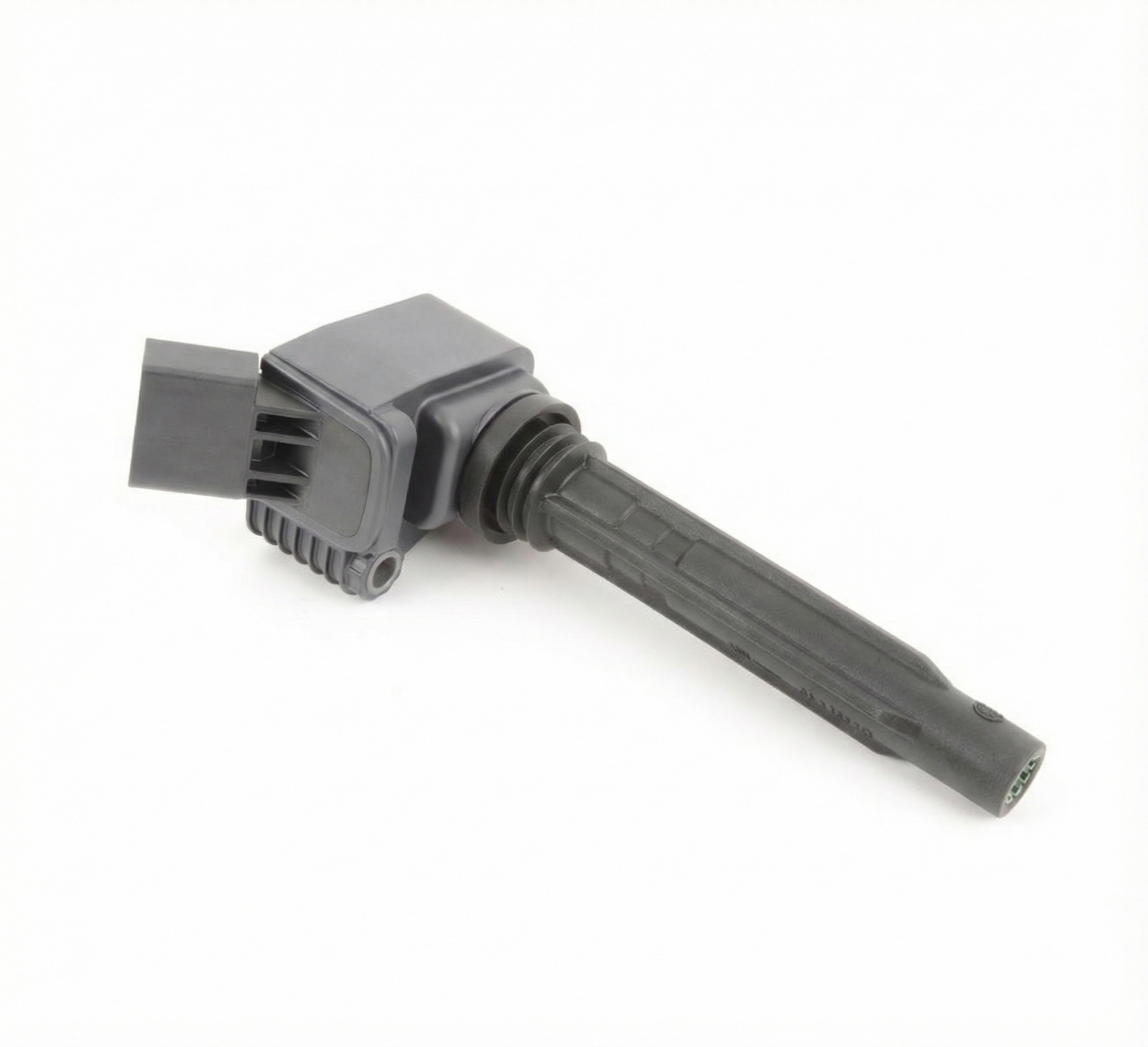
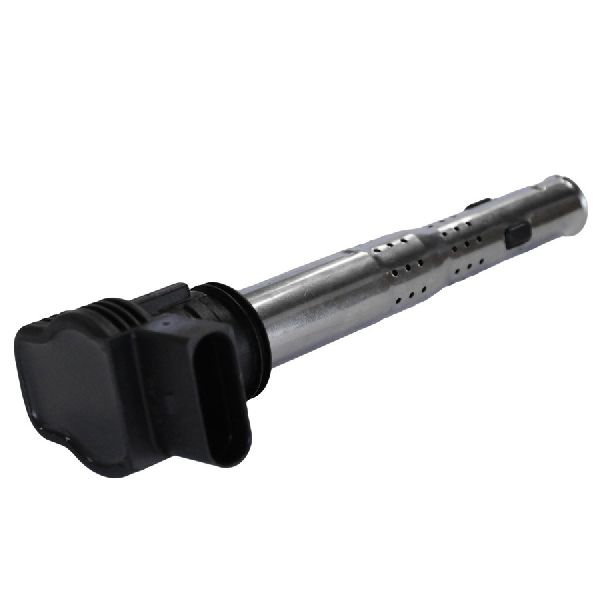
- Faulty Ignition Coil 🔴 High Probability → Shop Ignition Coil Ignition coils are a very common failure item on VW engines of this era, including the 2.0T TSI and 2.5L. They are subjected to high heat and vibration, causing the internal windings to fail over time.
How to confirm: Swap the ignition coil from cylinder 4 with another cylinder (e.g., cylinder 3). Clear the codes with a scanner and drive the car. If the code changes to P0303, the ignition coil is bad. This is the most definitive DIY diagnostic step.
Typical fix: Replace the faulty ignition coil. It is often recommended to replace all four (or five on the 2.5L) coils at the same time, as the others may fail soon after the first one.
Est. part cost: $30-$70 per coil - Worn or Fouled Spark Plug 🔴 High Probability → Shop Spark Plug
How to confirm: Remove the spark plug from cylinder 4 and inspect it. Look for a worn electrode, heavy black carbon deposits, white ash, or oil fouling. Compare it to the other plugs. The correct spark plug gap is critical for proper ignition.
Typical fix: Replace the spark plug. It is best practice to replace all spark plugs as a set at the manufacturer's recommended service interval (typically 40,000-60,000 miles).
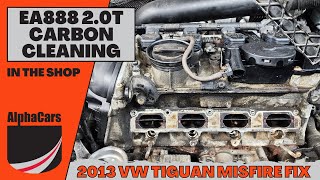
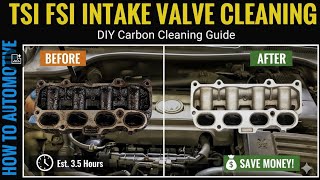
Est. part cost: $15-$30 per plug - Carbon Buildup on Intake Valves 🟡 Medium Probability The direct-injection (TSI) engines in these Beetles spray fuel directly into the cylinder, so fuel detergents don't wash over and clean the intake valves. Oil vapors from the PCV system bake onto the hot valves, causing carbon deposits that restrict airflow and cause misfires, often worse on cold starts.
How to confirm: This is difficult to confirm without some disassembly. Symptoms are often worse on cold starts or at idle. A borescope inspection of the intake ports with the intake manifold removed is the definitive way to check. Shops can perform this inspection relatively easily.
Typical fix: The intake valves must be manually cleaned. This is typically done by 'walnut blasting,' a process where crushed walnut shells are used to safely blast the carbon off the valves. This service can cost between $400 (independent specialist) and $900+ (dealership).
Est. part cost: $20-$50 for walnut media (if DIY) - Faulty Fuel Injector ⚪ Low Probability → Shop Fuel Injector
How to confirm: This is more complex to diagnose. A professional can perform a fuel injector balance test. A DIY method involves swapping the injector with another cylinder, but this is much more labor-intensive than swapping a coil and requires new seals.
Typical fix: Replace the faulty fuel injector. This is often a job for a professional due to the high-pressure fuel system and the need for special tools and new seals.
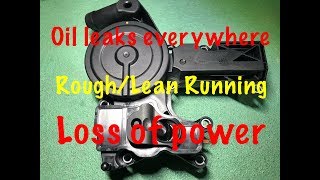
Est. part cost: $50-$150 - Failed PCV Valve 🟡 Medium Probability → Shop PCV Valve The diaphragm inside the PCV valve on the 2.0T TSI engine is known to tear, creating a significant unmetered vacuum leak. This lean condition can cause rough idling and trigger misfire codes across one or multiple cylinders.
How to confirm: A loud whistling or sucking noise from the engine bay at idle is a strong indicator. Another test is to try to remove the oil cap while the engine is running. If the cap is held on by strong vacuum and is difficult to remove, the PCV valve has likely failed.
Typical fix: Replace the entire PCV valve assembly. It is a relatively accessible part on top of the engine. Aftermarket repair kits for just the diaphragm are available but replacing the whole unit is recommended.
Est. part cost: $100-$180 for an OEM PCV assembly
Rare But Worth Checking
- ECM Software Issue: Volkswagen has issued TSBs for other models with similar engines where erroneous misfire faults could be set due to software logic. An ECM update may be required. Another tech tip (01-17-03TT) notes that false misfires can be indicated until adaptations are reset by clearing codes three times.
- Low Engine Compression: A mechanical issue like a worn piston ring, a leaking head gasket, or a problem with the valves (bent or poor seating) can cause a loss of compression in cylinder 4, leading to a persistent misfire. This is the least likely and most expensive cause to fix, confirmed with a compression test.
Diagnosis Steps
- Read the fault codes with an OBD-II scanner to confirm P0304 and check for any other codes like P0300 or P0171.
- Note if the Check Engine Light is steady or flashing. A flashing light indicates a severe misfire that can damage the catalytic converter.
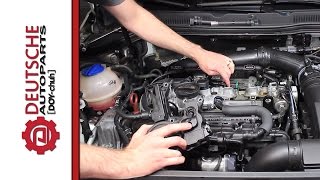
- For the 2.0T TSI, check for a failed PCV valve. Listen for a loud whistle at idle or check for strong vacuum at the oil cap with the engine running.
- Swap the ignition coil from cylinder 4 to cylinder 3. A coil puller tool is helpful but not required. Clear the codes and drive the vehicle. Scan again. If the code is now P0303, the coil is faulty.
- If the code remains P0304, move the coil back and swap the spark plug from cylinder 4 to cylinder 3. This requires a 5/8" spark plug socket and extension. Clear codes and re-test. If the code moves to P0303, the spark plug was the issue.
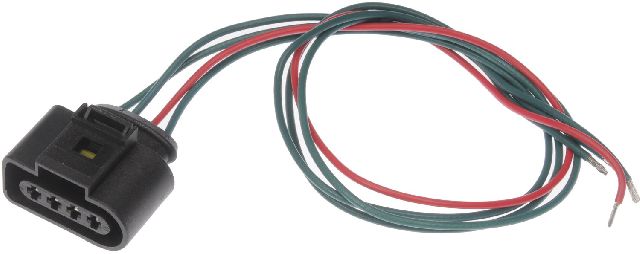
- Inspect the ignition coil connector and wiring for any damage or corrosion.
- If ignition components are good, the next likely cause on TSI engines is carbon buildup. This usually requires professional diagnosis with a borescope.
- If carbon is not the issue, investigate the fuel injector for cylinder 4. This may require professional diagnostic tools to measure fuel trims or perform an injector balance test.
- As a final step, a compression test can be performed on all cylinders to check for mechanical engine problems like bad rings or valves.
Parts You'll Likely Need
- Ignition Coil (2.0T TSI)
(OEM #06H905115B (superseded by 07K905715G on some models))— This is the most frequent cause of a single-cylinder misfire on the 2.0T TSI engine.
Trusted brands: Bosch, NGK, Eldor
OEM price range: $50-$80
Aftermarket price range: $30-$60 - Ignition Coil (2.5L I5)
(OEM #07K905715G)— The most common failure part for misfires on the 5-cylinder engine.
Trusted brands: Bosch, Eldor, NGK
OEM price range: $50-$80
Aftermarket price range: $30-$60 - Spark Plug (2.0T TSI)
(OEM #06H905601A (NGK PFR7S8EG))— Spark plugs are a routine maintenance item and can foul or wear out, causing a misfire.
Trusted brands: NGK, Bosch
OEM price range: $20-$30
Aftermarket price range: $15-$25 - PCV Valve Assembly (2.0T TSI)
(OEM #06H103495AH (or later revision))— A very common failure point on the TSI engine leading to vacuum leaks and misfires.
Trusted brands: VW/Audi Genuine, Vaico
OEM price range: $150-$200
Aftermarket price range: $80-$120
Related Codes That Often Appear With This One
- P0300 — If the misfire is intermittent or affects multiple cylinders, a P0300 (Random/Multiple Cylinder Misfire) code may appear alongside P0304. This often points to a common issue like a vacuum leak (PCV valve) or fuel pressure problem.
- P0301, P0302, P0303 — If other cylinder-specific misfire codes are present, it points towards a common problem like a vacuum leak, fuel pressure issue, or significant carbon buildup affecting all cylinders.
- P0171 — System Too Lean (Bank 1). This code is often triggered along with misfire codes when there is a major vacuum leak, such as a failed PCV valve.
- P0087 — Fuel Rail/System Pressure - Too Low. This can appear with misfires if the high-pressure fuel pump (HPFP) or low-pressure fuel pump (LPFP) is failing, starving the engine of fuel under load.
Technical Service Bulletins (TSBs) & Recalls
- VIN-4-A-PIN-2018: Mentions MIL-on with P0300-P0304 in the ECM AFTER software level 0003.
- VIN4APIN20211026: Notes customer complaints of MIL-on with a combination of codes including P0300-P0304.
- VIN4APIN20220118: Repeats the information from the previous TSB, linking P0300-P0304 with other codes.
- 01-17-03TT: A VW Tech Tip explaining false misfire indication on 2.0L engines (CCTA/CBFA) used in the Beetle. It details the procedure to force the crankshaft sensor profile to relearn by clearing fault codes three times in a row to resolve phantom misfire counts after a repair.
Platform-Specific Known Issues
- Carbon Buildup: As mentioned, the 2.0TSI engine is a direct-injection design, making it prone to heavy carbon deposits on the intake valves, which is a well-documented cause of misfires that won't be solved by ignition parts.
- False Misfire Detection: A VW Technical Tip (TT 01-17-03) explains that the ECM can sometimes incorrectly detect misfires after a repair has been made. The fix is to connect a diagnostic tool (like ODIS) and clear all OBD DTCs three consecutive times with the ignition on and engine off. This forces the crankshaft position sensor to relearn its adaptations.
- PCV Valve Failure: The rubber diaphragm in the PCV valve is a known weak point on the 2.0T TSI engine. When it tears, it creates a large vacuum leak that the ECM cannot compensate for, leading to lean codes (P0171) and random misfires (P0300, P0304, etc.).
Mechanic-Grade Diagnostic Values
- High-Pressure Fuel Rail Pressure (2.0T TSI) — expected: 25.0 to 110.0 bar, increasing with engine speed.. Failure: Pressure that is consistently low (e.g., below 40 bar at idle) or does not rise under acceleration can indicate a failing High-Pressure Fuel Pump (HPFP).
- Low-Pressure Fuel Pump (In-tank) — expected: Approximately 80-90 PSI.. Failure: Readings below 50 PSI suggest a weak in-tank fuel pump or a failing fuel pump driver module, which can starve the HPFP and cause misfires.
- Ignition Coil Secondary Resistance (2.0T TSI) — expected: Typically between 6.0 kΩ and 10.0 kΩ, though values vary by manufacturer.. Failure: A reading far outside the expected range for the specific brand of coil indicates an internal failure.
- Ignition Coil Primary Resistance (2.0T TSI) — expected: Typically between 0.4 Ω and 2.0 Ω.. Failure: A reading outside this range suggests the coil's primary winding is faulty.
Scan Tool Commands That Help
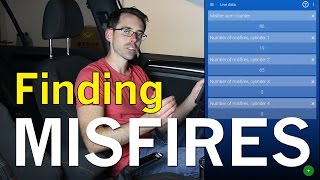
- VCDS (VAG-COM): Measuring Value Blocks (MVB) for Misfire Recognition — Use Groups 014, 015, and 016 to view live misfire counters for each individual cylinder. This is crucial for confirming if the misfire is actively occurring and on which cylinder, even if a fault code is not immediately set. A rising count on cylinder 4 confirms the issue is current.
- VCDS (VAG-COM): Crankshaft Position/Speed Sensor Adaptive Learn — After some repairs, particularly those involving the timing system or flywheel, the ECM may need to relearn the crankshaft's rotational profile to accurately detect misfires. A VW Technical Tip (01-17-03TT) notes that clearing fault codes three consecutive times can force this relearn process and eliminate false misfire codes.
Wiring & Ground Locations
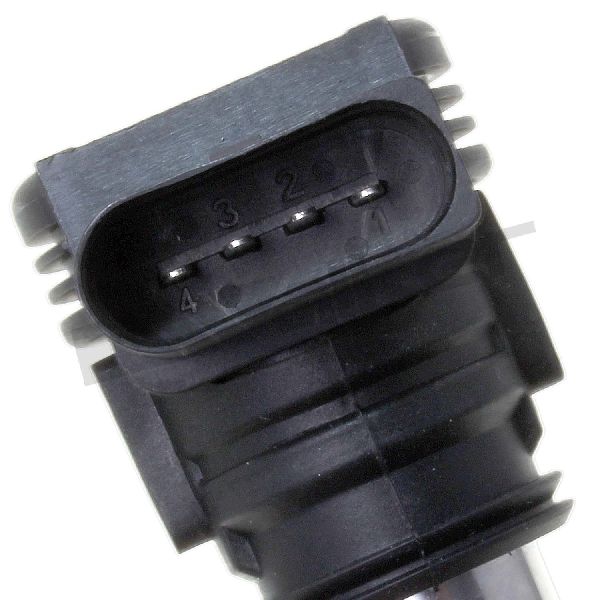
- Ignition Coil Connector (Cylinder 4) — On top of the engine, plugged directly into the ignition coil for cylinder 4.. The plastic locking tab on these connectors becomes brittle from engine heat and frequently breaks during spark plug or coil replacement. A loose or damaged connector can cause an intermittent connection, leading to a P0304 misfire. The connector has four pins: power, ground, and two signal wires.
- Engine Block Ground Strap — Typically a braided strap connecting the engine block to the chassis frame rail, often near the driver's side motor mount.. A corroded or loose main engine ground can cause a variety of electrical issues, including weak spark. While it would usually cause multiple/random misfires (P0300), it can sometimes manifest as a single-cylinder misfire if that cylinder's ignition circuit is most affected by the poor ground path.
Real Owner Repair Stories
- YouTube - ShopDAP.com (VW with 2.0T TSI EA888 engine, 142,000 miles) — Rough running and misfires.
❌ Tried (didn't work) Replacing the PCV valve assembly.
✅ What actually fixed it The intake valves were found to be extremely caked with carbon. A manual carbon cleaning (walnut blasting) of the intake valves and cleaning the fuel injector tips resolved the misfire issue.
OEM Part Supersession History
06H905115B→Multiple revisions, often leading to 07K905715F or 07K905715G.— Revisions by VW/Audi to improve reliability and performance of ignition coils, which are a known failure point.
Heads up: While many coils are physically interchangeable, it is best practice to replace them as a set with the same part number and brand to ensure consistent performance. Mixing different revisions can sometimes lead to subtle differences in dwell time or energy output.06J127025J (HPFP for early EA888)→06J127025K, 06J127025L— Internal improvements to the high-pressure fuel pump to increase reliability.
Heads up: It is critical to use the correct HPFP for the specific engine generation (Gen1/2 vs Gen3), as the design and operation differ. Installing the wrong pump can lead to fuel pressure issues.
Model Year Variations Within This Range
- 2012-2013 (Early Production): Early 2013 Beetle Turbos may have the EA888 Gen 1 2.0T engine (TFSI, grey engine cover). Mid-2013 and later models switched to the more reliable EA888 Gen 3 (TSI, black engine cover). The Gen 1 engines are more prone to timing chain tensioner and oil consumption issues, which can indirectly lead to misfires.
- 2014-2017: These years primarily used the 2.5L 5-cylinder or the 1.8T/2.0T EA888 Gen 3 engine. The 2.0T Gen 3 features an integrated exhaust manifold in the cylinder head and dual injection (on some variants), which helps reduce carbon buildup compared to Gen 1/2 engines, though it is still a known issue.
- 2018: For the 2018 model year, the 1.8T engine was replaced by a de-tuned version of the 2.0T EA888 Gen3B engine, which operates on the Budack cycle for improved efficiency. This engine has slightly different power/torque figures and fuel economy ratings.
Helpful Videos



Used OEM Parts in Stock
New Aftermarket Parts Available


The information in this article is provided for general reference and educational purposes only. Vehicle specifications, procedures, and part compatibility can vary by production date, trim level, and region. Always consult your vehicle's factory service manual and verify part numbers before purchasing or performing repairs. Safety-critical components such as airbags, seat belts, and braking systems should be installed by a qualified professional.
- Volkswagen BEETLE:
- 🧭 Diagnostic Flowchart
- 🎬 Helpful Videos
- 🛍️ Shop This Part
- What's Unique About the 2012-2018 Volkswagen BEETLE
- Symptoms You May Notice
- Most Likely Causes
- Rare But Worth Checking
- Diagnosis Steps
- Parts You'll Likely Need
- Related Codes That Often Appear With This One
- Technical Service Bulletins (TSBs) & Recalls
- Platform-Specific Known Issues
- Mechanic-Grade Diagnostic Values
- Scan Tool Commands That Help
- Wiring & Ground Locations
- Real Owner Repair Stories
- OEM Part Supersession History
- Model Year Variations Within This Range
- 🎟️ Get 5% Off