

P0304 on 2013-2017 VW Beetle Convertible: Cylinder 4 Misfire Causes & Fixes
P0304 on a VW Beetle most often means a bad ignition coil or spark plug on cylinder 4. On transverse VW engines, cylinder 4 is typically the cylinder closest to the driver's side (transmission side). A DIY replacement of a single coil and plug is under $100, while a shop repair can range from $178 to $267 for a coil.
- P0304 means cylinder 4 is misfiring.
- The most likely cause is a faulty ignition coil or spark plug.
- On TSI engines (1.8T, 2.0T), carbon buildup on intake valves is a very common cause for persistent misfires.
- The 2.5L engine is not prone to valve carbon buildup but can have vacuum leaks causing the same code.
- Always swap the coil to another cylinder to confirm if it's faulty before buying parts.
What's Unique About the 2013-2017 Volkswagen BEETLE CONVERTIBLE
For the 2013-2017 Beetle, this code is extremely common and frequently traced back to failing ignition coils, a known weak point on many VW/Audi engines of this era. Additionally, the direct-injection turbocharged (TSI) engines are prone to carbon buildup on the intake valves, as fuel is injected past the valves, allowing oil vapors to bake on and disrupt airflow. This can cause misfires that don't respond to typical ignition part replacements. The port-injected 2.5L I5 engine is not susceptible to this specific type of carbon buildup. Finally, a specific Technical Service Bulletin (TSB) notes that P0304 can appear after a certain ECM software update, indicating a potential software-related issue. [VIN-4-A-PIN-2018]
Diagnostic Flowchart
Tap your situation to follow the diagnostic path that matches what you're seeing on this vehicle.
Symptoms You May Notice
- Rough or shaky idle
- Hesitation or stumbling during acceleration
- Noticeable loss of engine power
- Solid or flashing Check Engine Light
- Reduced fuel economy
- Unusual exhaust odor or smell of gasoline
- Replacing only the spark plugs when the ignition coil is the actual culprit.
- Replacing ignition components repeatedly on a TSI engine when the underlying cause is carbon buildup on the intake valves.
- Assuming a vacuum leak is from a hose when a failed PCV valve has caused a rear main seal leak on a TSI engine.
Most Likely Causes
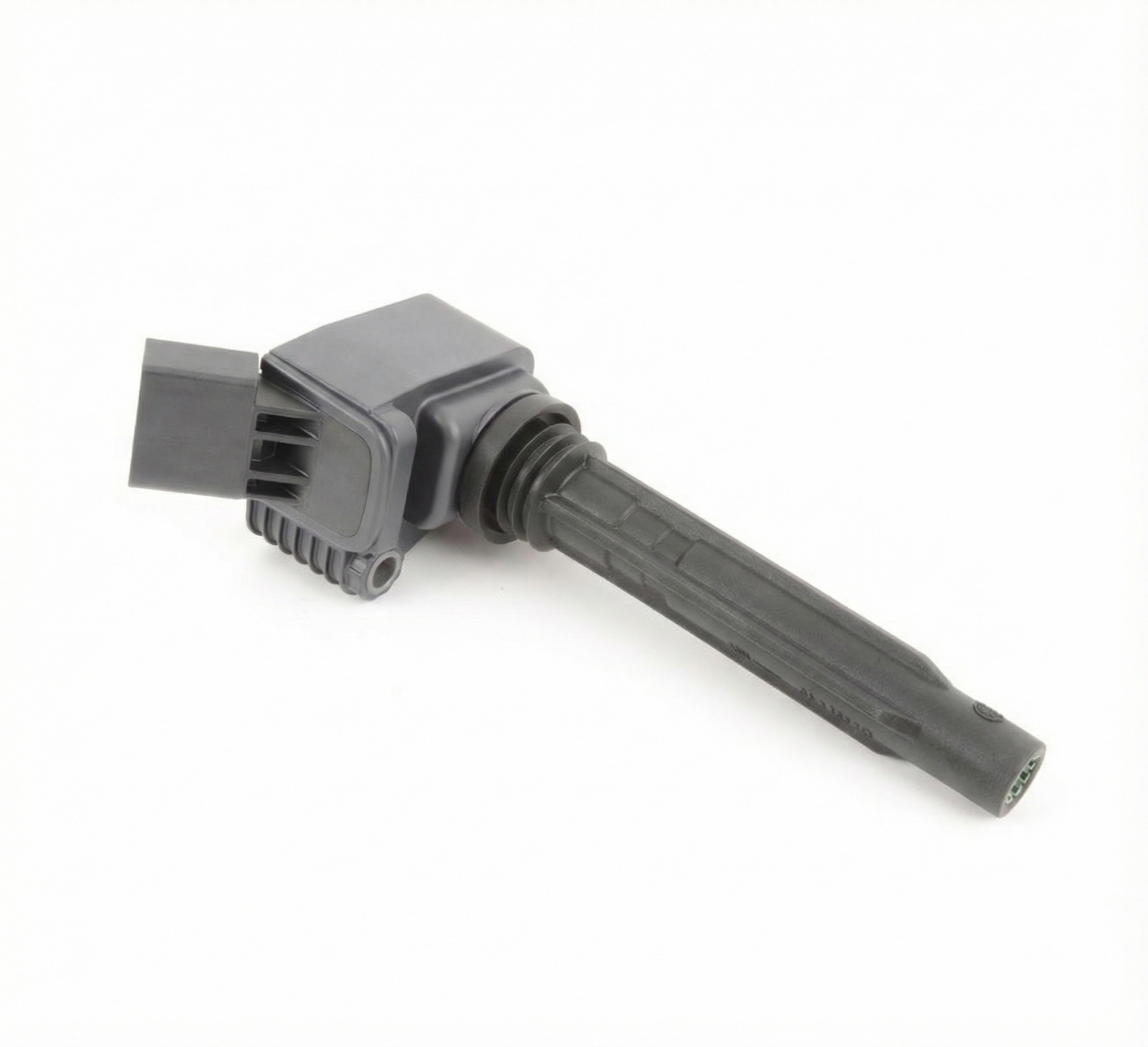
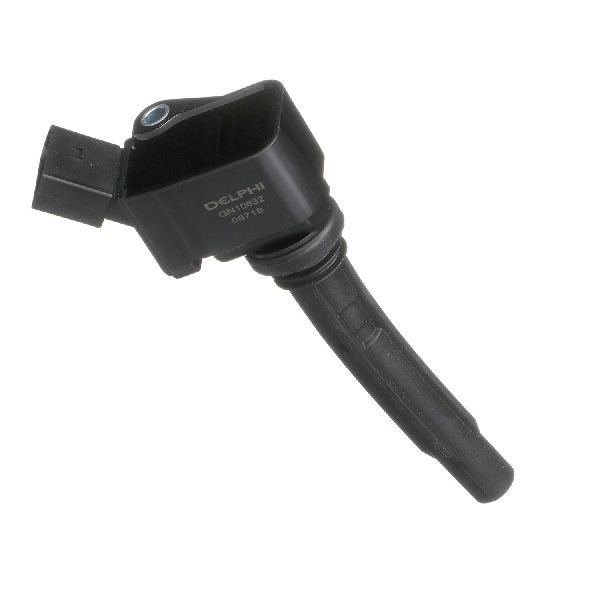
- Faulty Ignition Coil 🔴 High Probability → Shop Ignition Coil Ignition coils are a very common failure item on VW/Audi engines from this period, often failing without warning.
How to confirm: Swap the ignition coil from cylinder 4 with another cylinder (e.g., cylinder 3). Clear the codes and drive the vehicle. If the code changes to P0303, the ignition coil is faulty. 🎬 Watch: How to check for bad ignition coils on a 2.0T engine. Cylinder 4 is on the driver's side of the engine bay. A multimeter can also be used; for the 2.5L engine coil, expect a primary resistance of ~0.62 Ω and secondary resistance of ~9.2 kΩ.
Typical fix: Replace the faulty ignition coil. Many owners and shops recommend replacing all coils at the same time to prevent future failures, as they tend to fail around the same mileage.
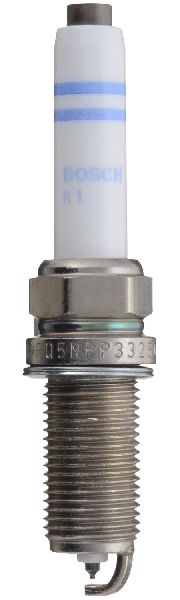
Est. part cost: $35-$75 - Worn or Fouled Spark Plug 🔴 High Probability → Shop Spark Plug
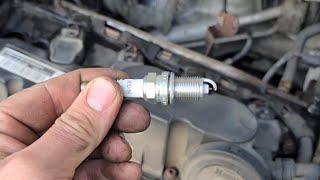
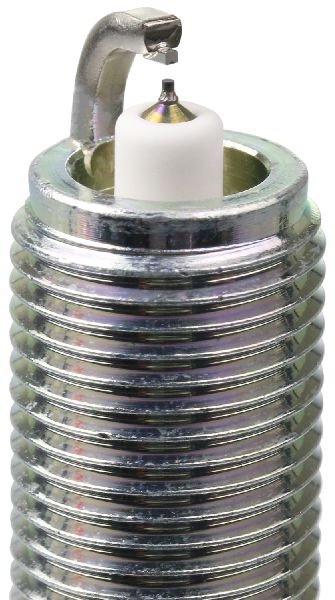
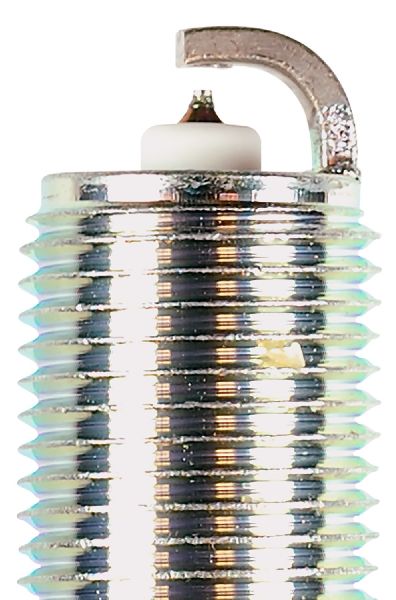
How to confirm: After confirming the coil is good, remove the spark plug from cylinder 4. Inspect it for wear (worn electrode), carbon fouling, oil deposits, or a cracked insulator. Oil in the spark plug well indicates a leaking valve cover gasket, which can also cause misfires.
Typical fix: Replace the spark plug. It is best practice to replace all spark plugs at the same time to ensure consistent performance and maintain the recommended service interval.
Est. part cost: $10-$25 per plug - Carbon Buildup on Intake Valves (TSI Engines Only) 🟡 Medium Probability This is a well-documented issue on direct-injection engines like the 1.8T and 2.0T TSI, as fuel is injected directly into the cylinder, bypassing the intake valves and allowing oil vapors from the PCV system to bake onto them. This does not affect the 2.5L I5 engine, which uses port injection that naturally cleans the valves.
How to confirm: This requires a visual inspection, usually with a borescope inserted into the intake port after removing the intake manifold. Symptoms often include misfires that are more pronounced during cold starts and at idle, which may improve as the engine warms.
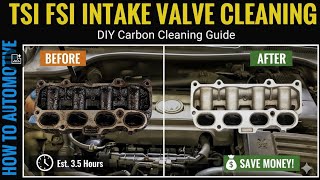
Typical fix: The intake manifold must be removed and the valves cleaned. The most effective method is walnut shell blasting. 🎬 See how to clean intake valves on a TSI direct injection engine. Chemical cleaning is less effective. This is a labor-intensive job. Costs reported by owners range from $500 at an independent shop to over $900 at a dealership.
Est. part cost: $20-$40 for gaskets - Faulty Fuel Injector ⚪ Low Probability → Shop Fuel Injector
How to confirm: This is more complex. A professional can perform a fuel injector balance test. A DIY method involves swapping injectors between cylinders, but this is more labor-intensive than swapping coils and requires new seals upon reinstallation.
Typical fix: Replace the faulty fuel injector and its seals. It is often recommended to replace all injectors if they are high-mileage, especially on TSI engines.
Est. part cost: $50-$150
Rare But Worth Checking
- ECM Software Issue: A VW Technical Service Bulletin (VIN-4-A-PIN-2018) mentions that P0304 can appear after a specific software update (level 0003). If ignition and fuel components are confirmed good, a dealer may need to investigate the software version.
- Low Engine Compression: If all ignition and fuel-related causes are ruled out, a compression test should be performed to check for mechanical engine issues like a worn piston ring, a burnt valve, or a problem with the head gasket.
- Failed PCV Valve / Rear Main Seal (TSI Engines): → Shop PCV Valve On TSI engines, a failed PCV (Positive Crankcase Ventilation) valve can cause excessive crankcase pressure, leading to failure of the rear main seal. This can create a large vacuum leak, causing lean conditions and misfire codes, including P0304. Symptoms include a visible oil leak between the engine and transmission.
- Faulty VVT Solenoid (TSI Engines): On 1.8T and 2.0T TSI engines, a failing Variable Valve Timing (VVT) solenoid or electromagnet can cause incorrect camshaft timing, leading to rough running and multiple misfire codes, including P0304, often accompanied by timing-related codes like P0011 or P052A.
Diagnosis Steps
- Read the fault codes with an OBD-II scanner to confirm P0304 and any other related codes. Note if codes like P0300 or P0171 are also present.
- Identify the engine. Is it a 1.8T/2.0T TSI (Direct Injection) or a 2.5L I5 (Port Injection)? This will influence the diagnostic priority.
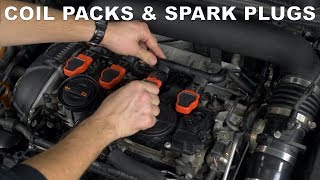
- Locate Cylinder 4. On these transverse engines, Cylinder 1 is on the passenger side (belt side), 🎬 Watch this walkthrough for replacing coils and plugs on the 2.5L engine. and Cylinder 4 is on the driver's side (transmission side).
- Swap the ignition coil from cylinder 4 to another cylinder (e.g., cylinder 3).
- Clear the codes and drive the car until the check engine light returns.
- Scan the codes again. If the code is now P0303, the ignition coil is the problem. Replace it.
- If the code remains P0304, inspect the spark plug from cylinder 4 for wear, fouling, or oil. If it looks bad, replace all plugs.
- If the issue persists on a TSI engine, especially with cold start roughness, suspect carbon buildup. A borescope inspection of the intake valves is the next step.
- If the issue persists on a 2.5L engine, check for vacuum leaks, particularly around the intake manifold and PCV system. A cracked intake manifold is a known issue.
- Inspect the fuel injector wiring and connector for cylinder 4. Consider professional diagnosis for fuel injector testing.
- If all else is ruled out, perform a cylinder compression test to check for mechanical engine health.
Parts You'll Likely Need
- Ignition Coil
(OEM #07K905715G (Latest Revision))— This is the most frequent cause of a single-cylinder misfire on this vehicle. The part has been revised multiple times; 07K905715F and G are common replacements for earlier versions.
Trusted brands: Bosch (OEM supplier), NGK, Delphi, Eldor (OEM)
OEM price range: $50-$80
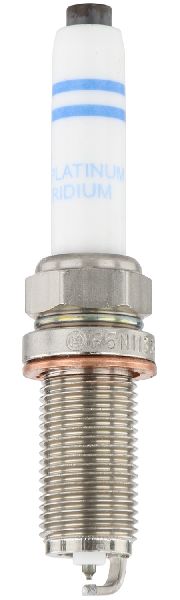
Aftermarket price range: $35-$60 - Spark Plug
(OEM #NGK PFR7S8EG (for 2.0T TSI), Bosch FR7KPP332 (for 2.5L I5))— The second most common cause, and a routine maintenance item that often fails or fouls.
Trusted brands: NGK, Bosch, Denso
OEM price range: $20-$30
Aftermarket price range: $10-$20
Related Codes That Often Appear With This One
- P0300 — If the misfire is intermittent or affects multiple cylinders, a P0300 (Random/Multiple Cylinder Misfire) may be stored alongside P0304. This can point towards a common cause like a vacuum leak, fuel delivery issue, or a failing VVT solenoid affecting all cylinders.
- P0301, P0302, P0303 — If other cylinder-specific misfire codes are present, it strengthens the case for a common cause like severe carbon buildup, a vacuum leak, or a fuel pressure problem.
- P0171 — This code for 'System Too Lean' can appear with P0304 if a major vacuum leak is present, such as from a failed PCV valve and rear main seal, which allows unmetered air into the engine, causing misfires.
Technical Service Bulletins (TSBs) & Recalls
- VIN-4-A-PIN-2018: Mentions MIL-on with P0300-P0304 in the ECM AFTER software level 0003.
- VIN4APIN20211026: Mentions MIL-on with any combination of P0300, P0301, P0302, P0303, P0304, P1D74 and/or P1D75 in the ECM.
Platform-Specific Known Issues
- TSB #VIN-4-A-PIN-2018 notes that P0300-P0304 codes can appear in the ECM after software level 0003 is installed. [VIN-4-A-PIN-2018]
- TSB #VIN4APIN20211026 lists P0304 among a combination of codes that may appear, suggesting it can be part of a pattern failure. [VIN4APIN20211026]
- Direct-injection TSI engines (1.8T, 2.0T) are known for carbon accumulation on intake valves, leading to misfires that are not fixed by replacing ignition parts. This is a significant long-term maintenance consideration.
- The 2.5L I5 engine, while not prone to valve carbon buildup, can develop vacuum leaks from a cracked intake manifold or a faulty PCV diaphragm integrated into the valve cover, leading to misfires.
Mechanic-Grade Diagnostic Values
- Ignition Coil Resistance (2.5L Engine) — expected: Primary: ~0.62 Ω (±10%), Secondary: ~9.2 kΩ (±10%). Failure: Readings significantly outside this range, or an open circuit (infinite resistance), indicate a failed coil.
- High-Pressure Fuel Rail Pressure at Idle (TSI Engines) — expected: Approximately 40 bar (580 PSI).. Failure: Pressure significantly below 25 bar or failing to increase with engine speed can indicate a failing High Pressure Fuel Pump (HPFP).
- Misfire Counter (Cylinder 4) — expected: 0 at idle and under load.. Failure: Any count that increases indicates a misfire event is being detected by the ECM on that cylinder.
- Upstream O2 Sensor Voltage — expected: Fluctuating rapidly between 0.1 and 0.9 volts.. Failure: A static voltage, or one that is consistently high or low, can indicate an air-fuel mixture problem contributing to misfires.
Scan Tool Commands That Help
- VCDS (VAG-COM): Measuring Blocks or Advanced Measuring Blocks — To view live misfire counters. For non-UDS controllers, use Measuring Block Group 015 to see counters for cylinders 4-6. For UDS controllers, use Advanced Measuring Blocks and select the specific misfire counter for cylinder 4. This allows a technician to see if misfires are happening in real-time, even if they aren't severe enough to immediately set a code.
- VCDS (VAG-COM): Measuring Value Block 140 — To check the high-pressure fuel rail pressure on TSI engines. This is critical for diagnosing fuel delivery issues that could cause misfires under load.
Wiring & Ground Locations
- Cylinder 4 Coil & Injector Harness — Runs from the Engine Control Module (ECM) to the top of the engine.. While specific ground points are not easily documented without factory manuals, a thorough diagnosis of a persistent P0304 that isn't solved by part swaps involves checking the integrity of the wiring harness. This includes checking for continuity on the signal and ground wires from the coil connector back to the ECM connector pins, and load testing the wires to ensure they aren't internally broken.
Real Owner Repair Stories
- Ross-Tech Forums User (2012 Jetta GLI 2.0T (similar EA888 engine and diagnostics)) — P0300 and P0304 codes, cylinder 4 spark plug was wet with fuel.
❌ Tried (didn't work) Swapped ignition coils (misfire stayed on cyl 4)., Swapped spark plugs (misfire stayed on cyl 4)., Verified power and ground to the coil connector., Verified signal wire continuity from coil to ECM (pin #6)., Load tested the signal wire., Performed a compression test (148 psi, good)., Verified fuel injector was not stuck open.
✅ What actually fixed it After using a noid light and confirming no signal was being sent from the ECM to fire the coil on cylinder 4, the final diagnosis was a faulty/corrupt ECM (bad coil driver). This is an advanced diagnosis after all common mechanical and electrical possibilities were exhausted.
OEM Part Supersession History
07K905715, 07K905715A, B, C, D, E, F→07K905715G— Revisions to improve reliability and performance.
Heads up: The 07K905715G coil is correct for the 2.5L I5 and earlier EA888 Gen1/2 engines. It may NOT be correct for the later EA888 Gen3 engines (1.8T/2.0T from ~2015+).Various→06L905110K— Newer coil design for EA888 Gen3/Gen4 engines.
Heads up: This is the correct coil for later model year Beetles with the EA888 Gen3 engine. It is reportedly backward compatible with older TSI engines, but the 07K... series is not forward compatible.
Model Year Variations Within This Range
- 2013-2014: The 2.5L 5-cylinder engine was the primary base engine. These engines are port-injected and are not subject to intake valve carbon buildup, but can have issues with cracked plastic intake manifolds.
- 2014-2017: During the 2014 model year, VW began phasing in the 1.8T TSI (EA888 Gen 3) engine to replace the 2.5L. These direct-injection engines are susceptible to carbon buildup on the intake valves as a primary cause for misfires, an issue not seen on the 2.5L.
Helpful Videos
Used OEM Parts in Stock
New Aftermarket Parts Available


The information in this article is provided for general reference and educational purposes only. Vehicle specifications, procedures, and part compatibility can vary by production date, trim level, and region. Always consult your vehicle's factory service manual and verify part numbers before purchasing or performing repairs. Safety-critical components such as airbags, seat belts, and braking systems should be installed by a qualified professional.
- Volkswagen BEETLE CONVERTIBLE:
- 🧭 Diagnostic Flowchart
- 🎬 Helpful Videos
- 🛍️ Shop This Part
- What's Unique About the 2013-2017 Volkswagen BEETLE CONVERTIBLE
- Symptoms You May Notice
- Most Likely Causes
- Rare But Worth Checking
- Diagnosis Steps
- Parts You'll Likely Need
- Related Codes That Often Appear With This One
- Technical Service Bulletins (TSBs) & Recalls
- Platform-Specific Known Issues
- Mechanic-Grade Diagnostic Values
- Scan Tool Commands That Help
- Wiring & Ground Locations
- Real Owner Repair Stories
- OEM Part Supersession History
- Model Year Variations Within This Range
- 🎟️ Get 5% Off