

P0304 on 2009-2016 Volkswagen Jetta: Cylinder 4 Misfire Causes and Fixes
P0304 on a 2009-2016 VW Jetta most often indicates a failed ignition coil on cylinder 4. A simple diagnostic is to swap the coil with another cylinder to see if the code follows. A new ignition coil typically costs $30-$80 and is a very common DIY repair that takes less than 15 minutes. For direct-injection TSI engines, carbon buildup on the intake valves is another leading cause.
- P0304 on a 2009-2016 Jetta means cylinder 4 is misfiring.
- The most likely cause is a bad ignition coil, which is an easy and inexpensive DIY fix.
- A simple way to confirm a bad coil is to swap it with one from another cylinder and see if the misfire code follows.
- If you have a TSI engine (1.4T, 1.8T, 2.0T), persistent misfires not solved by coils or plugs are often due to carbon buildup on the intake valves, which requires professional cleaning.
- Do not ignore a flashing check engine light, as it indicates a severe misfire that can quickly damage your catalytic converter.
What's Unique About the 2009-2016 Volkswagen JETTA

On this generation of Jettas, particularly those with TSI (turbocharged direct-injection) engines, two issues are very common causes for a P0304. Ignition coils are a frequent failure item, often requiring replacement well before 100,000 miles. Additionally, because TSI engines inject fuel directly into the cylinder, they are susceptible to carbon buildup on the intake valves, which can disrupt airflow and cause misfires that cleaning chemicals alone often can't fix. The port-injected 2.5L and 2.0L engines are not prone to this specific carbon issue as fuel washes over the valves.
Diagnostic Flowchart

Tap your situation to follow the diagnostic path that matches what you're seeing on this vehicle.
Generation note: This range covers the end of the Jetta Mk5 (2009-2010) and the majority of the Mk6 (2011-2016). While the most common causes like ignition coils and spark plugs are shared, the Mk6 models with direct-injection TSI engines (1.4T, 1.8T, 2.0T) are significantly more prone to misfires caused by carbon buildup on the intake valves than the port-injected 2.5L and 2.0L 'CBPA' engines. For the 1.4T engine, VW released a TSB (01-16-20) for overly sensitive misfire detection, requiring an ECM software update.
Symptoms You May Notice

- Flashing or solid Check Engine Light
- Rough or shaking idle
- Engine hesitation or stumbling during acceleration
- Noticeable loss of power, especially under load
- Reduced fuel economy
- Engine stalling at stops
- Exhaust smells like gasoline or rotten eggs
- Unusual engine noises, like popping or sputtering
- Replacing the oxygen (O2) sensors without diagnosing the root cause of the misfire.
- Replacing the catalytic converter when it has been damaged by a long-term misfire, instead of fixing the misfire first.
- On TSI engines, repeatedly replacing plugs and coils when the underlying issue is heavy carbon buildup on the intake valves.
Most Likely Causes

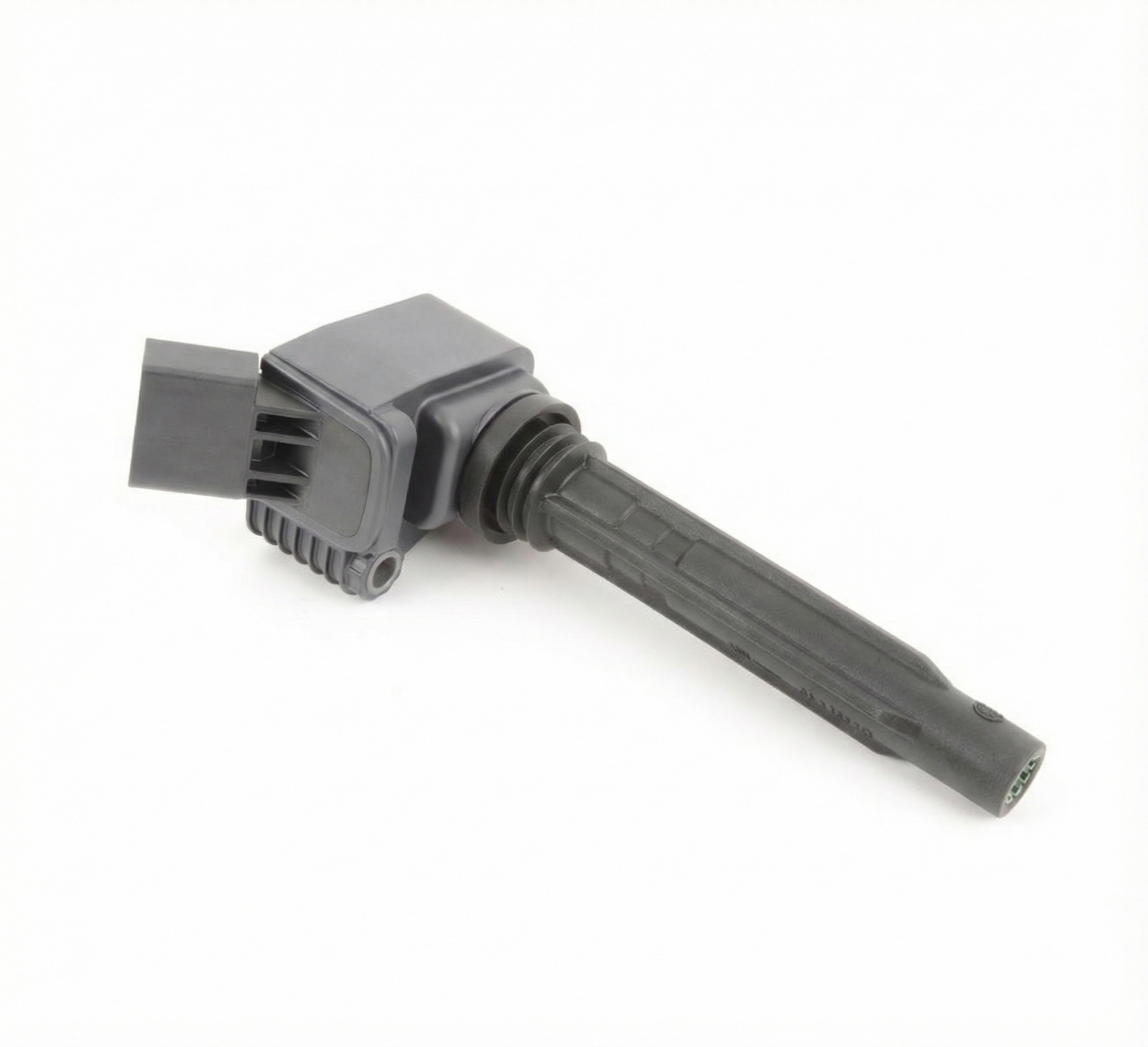
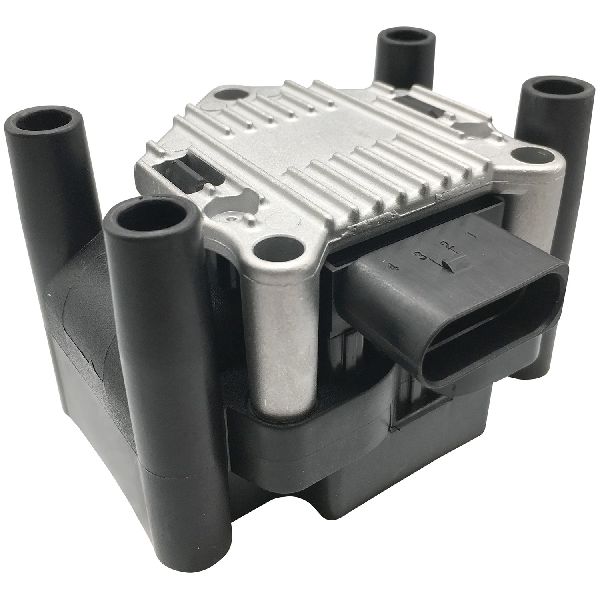
- Faulty Ignition Coil 🔴 High Probability → Shop Ignition Coil Ignition coils are a well-documented, frequent failure point on many VW engines from this era, including the 2.5L and TSI variants. They are often the first part to be replaced when a P030x code appears.
How to confirm: Swap the ignition coil from cylinder 4 with another cylinder (e.g., cylinder 3). Clear the codes and drive. If the code changes to P0303, the coil is bad. This is the most common and effective diagnostic step.
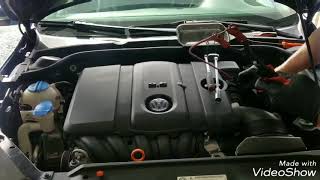
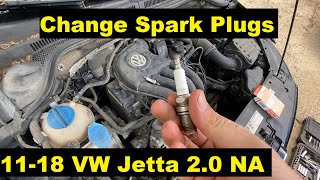
Typical fix: Replace the faulty ignition coil. It is often recommended to replace all coils at the same time 🎬 Watch: Step-by-step coil and spark plug replacement for 2.5L engines. as a preventative measure, as they tend to fail around the same age.
Est. part cost: $30 - $80 per coil - Worn or Fouled Spark Plug 🔴 High Probability → Shop Spark Plug
How to confirm: Remove the spark plug from cylinder 4 and inspect it for wear (worn electrode), carbon fouling, or oil contamination. Compare it to the other plugs. You can also swap it with another cylinder's plug to see if the misfire follows.
Typical fix: Replace the spark plug. It is best practice to replace all spark plugs as a set at the manufacturer's recommended service interval (typically 40k-60k miles).
Est. part cost: $10 - $25 per plug - Carbon Buildup on Intake Valves 🟡 Medium Probability This is specific to direct-injection (TSI) engines. Since fuel is injected directly into the cylinder, it doesn't wash over and clean the intake valves. Oil vapor from the PCV system bakes onto the hot valves, restricting airflow and causing misfires, especially on cold starts.
How to confirm: This requires visual inspection, typically by removing the intake manifold and looking at the valves with a borescope. Misfires that occur mostly on cold starts are a strong indicator.
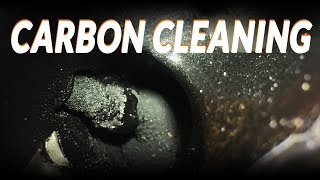
Typical fix: The carbon deposits must be mechanically cleaned, a process often called 'walnut blasting' where crushed walnut shells are used to scour the valves clean without damaging the metal. 🎬 See how a professional walnut blasting carbon cleaning is performed. Chemical cleaners are generally ineffective for heavy buildup.
Est. part cost: $20 - $50 for gaskets and seals (if doing walnut blasting) - Clogged or Faulty Fuel Injector ⚪ Low Probability → Shop Fuel Injector
How to confirm: After ruling out ignition issues, you can test the injector. A professional can perform a flow test. A DIY method involves listening for a clicking sound from the injector with a mechanic's stethoscope or swapping injectors between cylinders (a more involved job).
Typical fix: Replace the faulty fuel injector. On TSI engines, this is a more complex job than on port-injected engines and may require special tools.
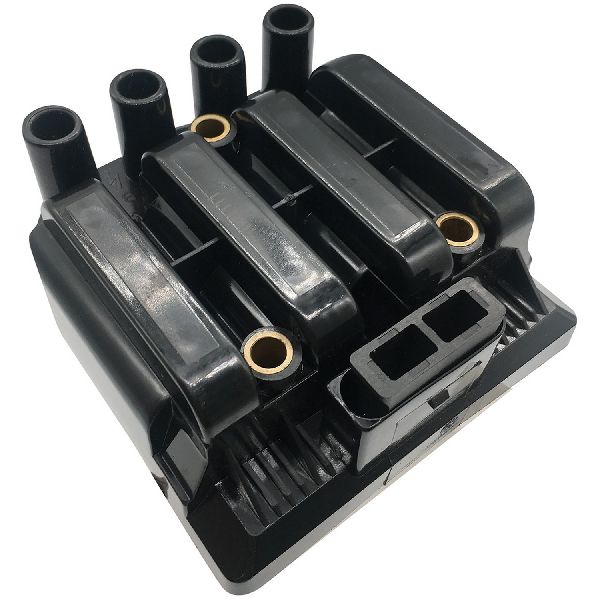
Est. part cost: $50 - $150 per injector - Faulty Ignition Plug Wire (2.0L Non-Turbo Only) 🟡 Medium Probability The base 2.0L non-turbo engine (engine code CBPA) uses traditional spark plug wires, unlike the coil-on-plug design of the 2.5L and TSI engines. These wires can fail internally, causing a misfire even if the coil and plug are good.
How to confirm: Inspect the wire for visible damage. An owner on a forum noted that removing the wires can cause unseen internal damage, so even a new-looking wire can be bad. Swapping wires between cylinders is a good diagnostic step.
Typical fix: Replace the spark plug wire set. It is recommended to replace them whenever the spark plugs are changed.
Est. part cost: $40 - $80 for a set
Rare But Worth Checking
- Vacuum Leak: A leak in a vacuum hose or the intake manifold gasket near cylinder 4 can lean out the air-fuel mixture, causing a misfire. On TSI engines, a failed PCV valve is a common source of a major vacuum leak.
- Low Engine Compression: A mechanical engine problem, such as a burnt exhaust valve, worn piston rings, or a leaking head gasket, can cause a loss of compression in cylinder 4. This is a serious issue requiring a compression test to diagnose. One owner on a forum reported a sudden 'pop' followed by a persistent P0304, which can indicate a mechanical failure like a broken valve.
- Faulty PCV Valve: → Shop PCV Valve A failing Positive Crankcase Ventilation (PCV) valve is common on these engines. If stuck open, it can create a large vacuum leak, leading to a lean condition and misfires. If stuck closed, it can cause pressure buildup and oil leaks. Symptoms can include a hissing noise, rough idle, and oil-fouled spark plugs.
Diagnosis Steps
- Read the trouble codes with an OBD-II scanner to confirm P0304 and check for any other codes. Note if the Check Engine Light is flashing.
- Identify cylinder 4. On Jetta 4-cylinder and 5-cylinder engines, cylinder 1 is on the passenger side (belt side) and the cylinder count increases towards the driver side (transmission side). Cylinder 4 is the second from the driver's side on a 5-cylinder, and the one on the driver's side on a 4-cylinder.
- Swap the ignition coil from cylinder 4 with the coil from cylinder 3. Clear the codes, run the engine, and rescan. If the code is now P0303, you have a bad ignition coil.
- If the code remains P0304, move the spark plug from cylinder 4 to cylinder 2. Clear codes and re-test. If the code becomes P0302, the spark plug is faulty.
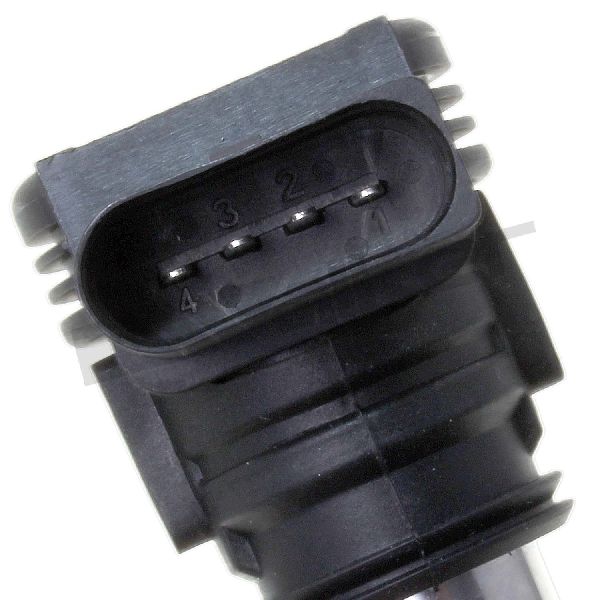
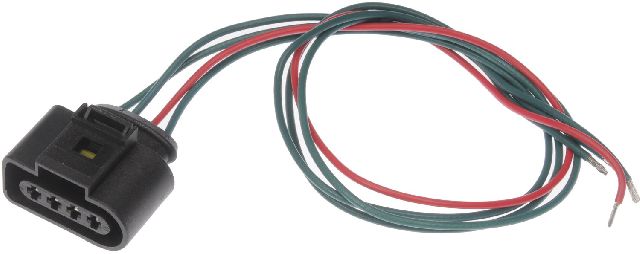
- Inspect the ignition coil's electrical connector for damage. A broken locking tab or corrosion inside the connector can cause a poor connection and misfires.
- For the 2.0L non-turbo engine, if coils and plugs don't solve the issue, replace the spark plug wires. They can fail internally without visible signs.
- If ignition components are confirmed good, listen to the fuel injector on cylinder 4 with a mechanic's stethoscope. It should have a steady, rhythmic clicking sound.
- For TSI engines, if ignition and fuel delivery seem okay, the next likely step is to inspect the intake valves for heavy carbon buildup using a borescope.
- If all else fails, perform an engine compression test to check for mechanical problems like bad valves or piston rings. A significant drop in pressure in cylinder 4 indicates a serious internal engine issue.
Parts You'll Likely Need
- Ignition Coil
(OEM #07K905715G (for 2.5L) or 06H905115B (common for 2.0T TSI, verify by VIN))— This is the most frequent cause of a single-cylinder misfire on this platform.
Trusted brands: Bosch, NGK, Eldor, Bremi
OEM price range: $50 - $80
Aftermarket price range: $30 - $60 - Spark Plug
(OEM #NGK PFR7S8EG (common for 2.0T TSI, verify by VIN))— Spark plugs are a routine maintenance item and can become worn or fouled, leading to a weak or non-existent spark.
Related Codes That Often Appear With This One
- P0300 — If the condition causing the P0304 is intermittent or beginning to affect other cylinders (like a vacuum leak or fuel pressure issue), a P0300 (Random/Multiple Cylinder Misfire) code may also be stored.
- P0301, P0302, P0303 — If other cylinders are also misfiring due to a common cause like widespread carbon buildup, low fuel pressure, or a software issue, their respective codes will appear.
- P0087 — As noted in TSB #VIN4APIN20220118, this code for 'Fuel Rail/System Pressure - Too Low' can appear with misfire codes, suggesting a fuel delivery issue could be the underlying cause.
- P130A — On some VW models, when a persistent misfire like P0304 is detected, the ECU may intentionally disable the fuel injector for that cylinder to protect the catalytic converter. This can trigger code P130A, 'Cylinder Disabling'.
Technical Service Bulletins (TSBs) & Recalls
- VIN4APIN20220118: A manufacturer technical service bulletin notes that P0304 can appear with other misfire codes and fuel system code P0087.
- 01-16-20 (NHTSA ID 10099908): For 2016-2017 Jettas with the 1.4T (CZTA) engine, this TSB addresses overly sensitive misfire detection software. The fix is to update the ECM software.
- 01-17-03TT (NHTSA ID 10097960): A Tech Tip for 2009-2017 2.0T engines addressing 'false misfires' after a repair. It recommends clearing DTCs three times in a row to force the crankshaft sensor profile to relearn.
Platform-Specific Known Issues
- On the 2.0L non-turbo engine (CBPA), owners report that replacing spark plugs without also replacing the ignition wires often leads to a misfire code shortly after, as the old wires are fragile and can be damaged upon removal.
- Direct-injection (TSI) models require intake valve carbon cleaning as a periodic maintenance item (often every 60-80k miles), which is frequently misdiagnosed as a bad coil or plug. Fuel additives cannot clean this type of baked-on deposit.
- After a repair, some VWs may show a 'false misfire' due to the ECM's crankshaft adaptation memory. TSB 01-17-03TT suggests clearing all DTCs three consecutive times with the engine off to force a relearn.
Mechanic-Grade Diagnostic Values
- Ignition Coil Primary Resistance (Coil-on-Plug) — expected: 0.4 - 2.0 ohms. Failure: A reading of 0 ohms indicates a short, while a significantly higher reading indicates an open circuit.
- Ignition Coil Secondary Resistance (Coil-on-Plug) — expected: 6,000 - 15,000 ohms (varies by manufacturer). Failure: A reading outside the manufacturer's specified range indicates a faulty coil.
- Spark Plug Wire Resistance (2.0L non-turbo) — expected: 4,600 - 7,400 ohms. Failure: Significantly higher resistance indicates a bad wire.
- Fuel Pressure (Low Pressure System - 2.5L Port Injected) — expected: Stable pressure around 3.0 to 4.0 Bar (43-58 PSI), depending on the specific regulator.. Failure: Pressure that is too low, too high, or bleeds off quickly after the pump primes can indicate a faulty pump or regulator.
- VCDS Live Data - Injection Quantity Deviation (Idle) — expected: Values close to 0 mg/str for all cylinders.. Failure: A cylinder showing a high positive value (e.g., +2.99 mg/str) is compensating for a mechanical issue or under-fueling, while a high negative value indicates over-fueling. This can point to compression issues or injector problems.
Hidden / Shadow Codes Worth Checking
- Mode 6, Test ID $A2-$A7: These Test IDs correspond to misfire counts for each cylinder (e.g., $A5 for Cylinder 4). A generic OBD-II scanner capable of reading Mode 6 data can show these raw misfire counts, even if they haven't reached the threshold to set a P0304 code. This is useful for diagnosing intermittent misfires. (see via Advanced OBD-II Scan Tool with Mode 6 capability.)
Scan Tool Commands That Help
- VCDS (VAG-COM): Advanced Measuring Values (Blocks 014, 015, 016) — To monitor live misfire counts per cylinder while driving or at idle. Block 015 will typically show the counter for cylinder 4. This allows a technician to see if misfires occur under specific conditions (load, temperature, RPM) to help pinpoint the cause.
Wiring & Ground Locations
- Engine Block to Chassis Ground Strap — Typically located on the driver's side of the engine bay, connecting the transmission case or engine block to the chassis frame rail near or under the battery tray.. A corroded or loose main engine ground can cause a host of electrical issues, including weak spark and erratic sensor readings, which can lead to misfire codes. Ensuring this connection is clean and tight is a crucial, often overlooked, diagnostic step.
- Ignition Coil Connector (Cylinder 4) — The electrical connector plugging into the ignition coil on cylinder 4.. The plastic locking tabs on these connectors become brittle and break, leading to a poor connection that can cause a P0304. A visual inspection is critical. A video shows a case where the entire inside of the connector was broken, causing the misfire.
- ECU Trigger Wire for Cylinder 4 — On some 1.8T engines, the signal wire for the cylinder 4 coil is located at Pin 9 of the 12-pin ignition harness connector. The wire color is often Black with a Purple tracer.. If diagnosing a persistent misfire with no apparent cause, a continuity test from this pin to the coil connector can rule out a break in the signal wire from the ECU.
Real Owner Repair Stories
- Reddit user 'Makemymove' (2014 Jetta 2.0L non-turbo (CBPA engine)) — Flashing check engine light and EPC light, knocking sound from engine, persistent P0304.
❌ Tried (didn't work) Replacing the ignition coil on cylinder 4, Replacing all spark plugs
✅ What actually fixed it Replacing the spark plug wires. The user noted that removing the old wires can cause unseen internal damage, and a new set of wires resolved the misfire and cleared the lights. - Ross-Tech Forums user (Sharan 1.9TDI (similar diagnostic principles)) — P0304 misfire detected, excessive grey smoke when cold.
❌ Tried (didn't work) Swapping the unit injector from another vehicle
✅ What actually fixed it The final diagnosis pointed to a bent connecting rod in cylinder 4, which caused low compression. This was identified by observing a very high injection quantity deviation (+2.99 mg/str) in VCDS Measuring Block 013 for that cylinder, indicating the ECU was trying to compensate for a mechanical issue. - YouTube channel 'kansascitytdi' (2014 Jetta 1.8T TSI) — P0304 misfire code, customer's friend had already swapped coils.
❌ Tried (didn't work) Swapping ignition coils
✅ What actually fixed it The diagnosis pointed to a severe internal engine problem. The spark plug in cylinder 4 was soaked in oil. The technician concluded that oil was leaking into the cylinder, possibly from a bad valve seal, loose valve guide, or a crack in the cylinder head, preventing spark. The final recommendation was to remove the cylinder head for inspection.
"I Checked Everything" — The Actual Cause
- In some cases, particularly on the 2.0L non-turbo engine, a persistent P0304 can occur after replacing spark plugs even with no vacuum leaks. The root cause was found to be internal damage to the old spark plug wires caused during their removal. A new set of ignition wires resolved the issue when coils and plugs did not.
OEM Part Supersession History
06H103495A, 06H103495E, 06H103495AC→06H103495AH (and others)— Revisions to the PCV valve (oil separator) for 2.0T TSI engines to improve reliability of the internal diaphragm, which is a common failure point leading to vacuum leaks and misfires.
Heads up: Multiple revisions exist. It is critical to verify the correct part number for your specific engine code (e.g., CCTA, CBFA) and model year before ordering, as designs changed.
Model Year Variations Within This Range
- 2009-2016: The base 2.0L non-turbo engine (code CBPA) uses a single coil pack with long spark plug wires, whereas the 2.5L and all TSI engines use a coil-on-plug design. This makes 'bad spark plug wires' a common cause of P0304 only on the base 2.0L model.
- 2011-2016 (Mk6): The High Pressure Fuel Pump (HPFP) on the 2.0T TSI engine is driven differently than the earlier FSI engine. While HPFP failure can still cause fuel pressure codes (P0087) and misfires, the common 'cam follower' wear issue from the Mk5 FSI engine does not apply to the Mk6 Jetta's TSI engine.
Helpful Videos
Used OEM Parts in Stock
New Aftermarket Parts Available


The information in this article is provided for general reference and educational purposes only. Vehicle specifications, procedures, and part compatibility can vary by production date, trim level, and region. Always consult your vehicle's factory service manual and verify part numbers before purchasing or performing repairs. Safety-critical components such as airbags, seat belts, and braking systems should be installed by a qualified professional.
- Volkswagen JETTA:
- 🧭 Diagnostic Flowchart
- 🎬 Helpful Videos
- 🛍️ Shop This Part
- What's Unique About the 2009-2016 Volkswagen JETTA
- Symptoms You May Notice
- Most Likely Causes
- Rare But Worth Checking
- Diagnosis Steps
- Parts You'll Likely Need
- Related Codes That Often Appear With This One
- Technical Service Bulletins (TSBs) & Recalls
- Platform-Specific Known Issues
- Mechanic-Grade Diagnostic Values
- Hidden / Shadow Codes Worth Checking
- Scan Tool Commands That Help
- Wiring & Ground Locations
- Real Owner Repair Stories
- "I Checked Everything" — The Actual Cause
- OEM Part Supersession History
- Model Year Variations Within This Range
- 🎟️ Get 5% Off