

P0304 on 2016-2021 Volkswagen Passat: Cylinder 4 Misfire Causes and Fixes
P0304 on a 2016-2021 VW Passat most often means a failed ignition coil on cylinder 4. A new coil is about $30-$60 for a quality aftermarket brand and is a very simple DIY fix. It's also wise to replace the spark plug at the same time. If coils and plugs don't fix it, the next steps are to check the fuel injector and for carbon buildup on the intake valves.
- P0304 means cylinder 4 is misfiring.
- The most likely cause is a bad ignition coil, which is an easy and affordable DIY replacement.
- A worn spark plug is the second most likely cause. It's best to replace both the coil and plug for cylinder 4, or all four sets if they are old.
- If the check engine light is flashing, stop driving immediately to prevent damage to the catalytic converter.
- When replacing the ignition coil, check for oil in the spark plug well, as this indicates a separate leak that must be fixed.
What's Unique About the 2016-2021 Volkswagen PASSAT
The 2016-2021 Passat uses VW's turbocharged direct-injection EA888 engine family (Gen3 and later the Gen3-B 'B-Cycle'). While efficient, these engines are known for a few common issues that can lead to a P0304 code. Ignition coil failure is a very frequent wear-and-tear item, with many owners upgrading to later OEM revisions or quality aftermarket brands like Eldor. Additionally, as direct-injection engines, they are prone to carbon buildup on the intake valves over time, which can disrupt airflow and cause misfires, especially on cold starts. This is typically not a concern until higher mileages, often beyond 60,000-80,000 miles. Lastly, the PCV system integrated into the valve cover is another known failure point that can create vacuum leaks and contribute to misfires.
Diagnostic Flowchart
Tap your situation to follow the diagnostic path that matches what you're seeing on this vehicle.
Generation note: This year range covers the North American NMS Passat (B7/A32 facelift and B8). The primary engine was the 1.8T TSI (EA888 Gen3) until mid-2017, after which it was replaced by an updated 2.0T TSI (EA888 Gen3-B / B-cycle). The causes for P0304 are largely the same for both engines, as they share the same fundamental architecture.
Symptoms You May Notice
- Rough or shaking engine idle
- Hesitation or stumbling during acceleration
- Noticeable loss of engine power
- Flashing or solid Check Engine Light
- Reduced fuel economy
- Unpleasant, strong fuel odor from the exhaust
- Engine stuttering that may initially be intermittent but becomes more constant
- Replacing only the spark plug when the ignition coil is the actual culprit.
- Replacing fuel system components like the fuel pump when the issue is isolated to a single cylinder's ignition or fuel injector.
- Assuming carbon buildup is the cause at low mileage without first ruling out coils and plugs.
Most Likely Causes
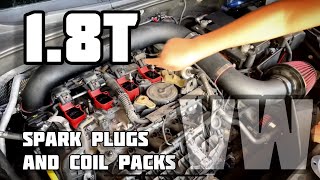
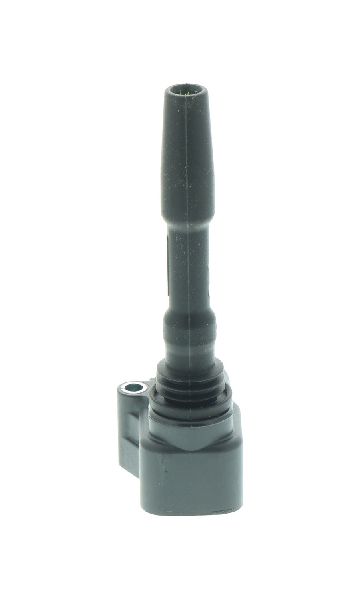
- Failed Ignition Coil 🔴 High Probability → Shop Ignition Coil Ignition coils are a common failure point on modern VW engines due to constant exposure to high heat and vibration. Multiple part revisions exist, indicating ongoing updates to improve reliability.
How to confirm: Swap the ignition coil from cylinder 4 with another cylinder (e.g., cylinder 3). Clear the codes and drive the car. If the code changes to P0303, the ignition coil is faulty. This is the standard DIY diagnostic step.
Typical fix: Replace the faulty ignition coil. It is often recommended to replace all four coils at the same time, especially if the vehicle has over 70,000 miles or if they are the original coils.
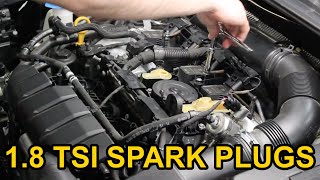
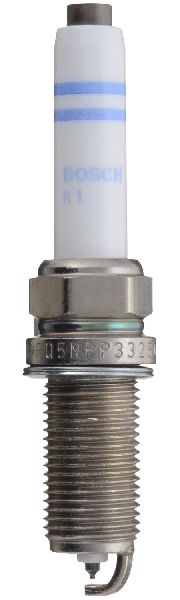
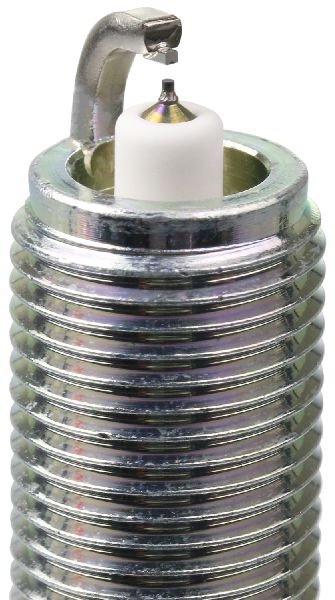
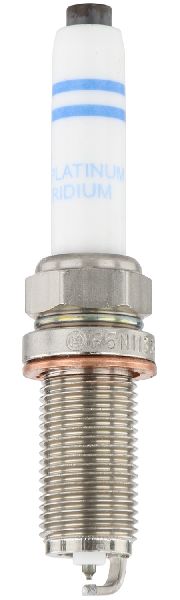
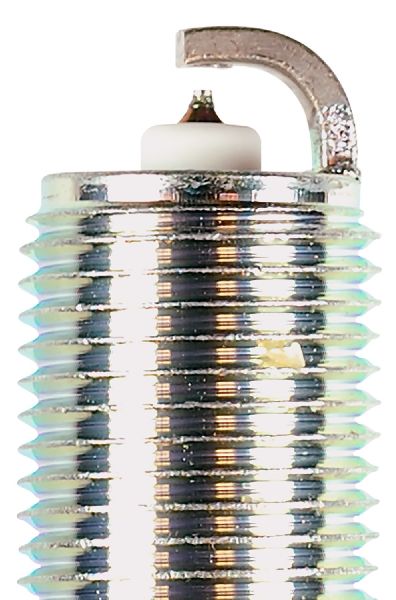
Est. part cost: $30-$70 per coil - Worn or Fouled Spark Plug 🔴 High Probability → Shop Spark Plug Spark plugs are a regular maintenance item with a typical replacement interval of 30,000-60,000 miles. An old, oil-fouled (from a valve cover leak), or incorrectly gapped plug can fail to produce a strong enough spark.
How to confirm: After ruling out the ignition coil, remove the spark plug from cylinder 4. Inspect it for wear, carbon deposits, oil fouling, or damage to the ceramic insulator. Compare it to a plug from a working cylinder.
Typical fix: Replace the spark plug in cylinder 4. It is best practice to replace all four spark plugs as a set to ensure even performance and avoid future misfires.
Est. part cost: $10-$25 per plug - Leaking or Clogged Fuel Injector 🟡 Medium Probability → Shop Fuel Injector Direct injection fuel injectors operate under very high pressure and can become clogged with carbon deposits over time. An electrical failure within the injector can also occur, though less common than clogging.
How to confirm: This is more difficult to diagnose. A professional may use a scan tool to monitor fuel trims or perform a fuel injector balance test. Swapping injectors between cylinders is a more involved job but can definitively isolate a bad injector.
Typical fix: Replace the faulty fuel injector. This is a more involved job than coils or plugs and may require special tools.
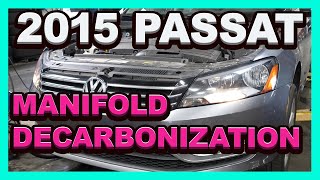
Est. part cost: $50-$150 per injector - Carbon Buildup on Intake Valves ⚪ Low Probability TSI engines are direct-injection, meaning fuel is sprayed directly into the cylinder. This design bypasses the intake valves, so they don't get cleaned by fuel detergents. Over many miles (typically 60k-100k), oil vapor from the PCV system can bake onto the valves, restricting airflow and causing misfires, especially on cold starts.
How to confirm: Requires a borescope inspection of the intake ports and valves, which usually involves removing the intake manifold. A rough idle on cold starts that smooths out when warm is a classic symptom.
Typical fix: The intake valves need to be manually cleaned, typically through walnut blasting. This is a labor-intensive job best left to a professional or experienced DIYer.
Est. part cost: $0 (if cleaning only), but labor is significant ($500+) 🎬 See a professional decarbonization service on a Passat engine.
Rare But Worth Checking
- Leaking Valve Cover Gasket: → Shop Engine Valve Cover A common issue on these engines is a leaking valve cover gasket or spark plug tube seals, which allows oil to fill the spark plug wells. This oil can saturate and destroy the ignition coil boot, causing a misfire. If you find oil on the ignition coil when you remove it, you must fix the leak before replacing the coil.
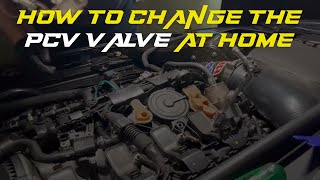
- Failed PCV Valve / Oil Separator: → Shop PCV Valve The Positive Crankcase Ventilation (PCV) valve is a very common failure point on the EA888 engine. When it fails, it creates a significant vacuum leak, which can cause lean conditions, a rough idle, and multiple misfire codes (P0300, P0301, etc.). A tell-tale sign is a loud whistling or sucking noise from the engine bay at idle, or extreme vacuum when trying to remove the oil cap with the engine running. 🎬 Watch: How to replace the PCV valve at home.
- Low Cylinder Compression: A mechanical engine problem, such as a worn piston ring, a burnt valve, or a jumped timing chain, can cause a loss of compression, leading to a misfire. This is uncommon but very serious. A compression test can confirm this.
Diagnosis Steps
- Read the fault codes with an OBD-II scanner to confirm P0304 and check for any other codes. A capable scanner (like VCDS or OBDeleven) can also show a misfire counter for each cylinder in live data.
- Identify cylinder 4. On VW's transverse four-cylinder engines, cylinder 1 is on the passenger side (belt side), and cylinder 4 is on the driver's side (transmission side).
- Swap the ignition coil from cylinder 4 with the coil from cylinder 3. Clear the codes, run the engine, and re-scan. If the code is now P0303, you have a bad ignition coil.
- If the code remains P0304, remove the ignition coil and inspect the spark plug well for oil. If oil is present, the valve cover gasket is leaking and must be replaced.
- If no oil is present, swap the spark plug from cylinder 4 with the one from cylinder 3. Clear codes and re-test. If the code moves to P0303, you have a bad spark plug.
- If the misfire still stays on cylinder 4, inspect the ignition coil connector and wiring for any damage or corrosion.
- At this point, the cause is likely a fuel injector or a mechanical issue. A professional diagnosis is recommended to test the fuel injector and perform a compression test.
Parts You'll Likely Need
- Ignition Coil
(OEM #06L905110K (supersedes 06L905110H, 06K905110K, 06H905115B). Always verify by VIN.)— This is the most frequent cause of a single-cylinder misfire on the 2016-2021 Passat. They are a common wear-and-tear item.
Trusted brands: VW (OEM), Bosch, NGK, Eldor
OEM price range: $50-$80
Aftermarket price range: $30-$60 - Spark Plug
(OEM #06K905601B / 06K905611C (verify by VIN).)— A worn or fouled spark plug is the second most likely cause. It's a standard maintenance part that wears out over time.
Trusted brands: NGK, Bosch, Denso
OEM price range: $20-$30
Aftermarket price range: $10-$20
Related Codes That Often Appear With This One
- P0300 — If the misfire is intermittent or affects multiple cylinders, a P0300 (Random/Multiple Cylinder Misfire) may be stored alongside P0304. This often points to a systemic issue like a vacuum leak (e.g., failed PCV), fuel delivery problem, or severe carbon buildup.
- P0301, P0302, P0303 — If other cylinders are also misfiring, their respective codes will appear. Seeing multiple specific cylinder misfires can point towards a failing batch of coils/plugs or widespread carbon buildup.
- P0171 — System Too Lean (Bank 1). This code can appear if the misfire is caused by a vacuum leak, such as a failed PCV valve or intake manifold gasket, which allows unmetered air into the engine.
Technical Service Bulletins (TSBs) & Recalls
- VIN4APIN20211116: Notes customer complaints of MIL-on with P0300-P0304 codes.
- VIN-4-A-PIN-2018: Also notes customer complaints of MIL-on with P0300-P0304 codes.
- 01-16-13 (VW-2033805): Provides a diagnostic flowchart for misfire faults, emphasizing isolating the single failed component.
Platform-Specific Known Issues
- The provided NHTSA Technical Service Bulletins (TSBs) VIN4APIN20211116 and VIN-4-A-PIN-2018 both list P0300-P0304 codes as a known customer complaint, confirming that VW is aware of misfire issues on these models, though the bulletins do not specify a single root cause.
- TSB 01-16-13 (VW-2033805) is a 'Misfire Diagnostic Aid' that instructs technicians not to replace multiple components for a single cylinder misfire
Mechanic-Grade Diagnostic Values
- Low-Side Fuel Pressure (engine off) — expected: Should not be 0.0 bar or 100 bar. Failure: A reading of 0.0 bar or 100 bar indicates a faulty low-pressure sensor.
- Low-Side Fuel Pressure (at idle) — expected: 5.0 bar +/- 0.5 bar. Failure: Pressure significantly outside this range indicates a problem with the low-pressure fuel pump or sensor.
- High-Side Fuel Pressure (at idle) — expected: ~50 bar. Failure: Significantly lower pressure can indicate a failing High-Pressure Fuel Pump (HPFP).
- High-Side Fuel Pressure (under acceleration) — expected: Up to 100-110 bar (can be up to 200 bar max). Failure: Inability to reach high pressure under load points to a weak HPFP or a leak.
Scan Tool Commands That Help
- VCDS (VAG-COM): Advanced Measuring Values (formerly Measuring Blocks) — Use this to view live misfire counters for each individual cylinder (e.g., in Groups 015 and 016 for non-UDS modules). This allows a technician to see if misfires are occurring in real-time, even if they aren't frequent enough to set a CEL, and to confirm a repair has been successful.
Wiring & Ground Locations
- Engine/Gearbox Ground Strap — A primary ground strap connects the engine/transmission assembly to the vehicle's chassis, often near an engine or transmission mount.. A corroded or loose main ground strap can cause a weak spark across all cylinders, leading to intermittent misfires that are difficult to diagnose. It can also cause various other electrical issues.
- Cylinder Head Ground — There is a dedicated ground connection point directly on the cylinder head.. The ignition coils are grounded through the cylinder head. A poor ground connection at this specific point can directly cause weak spark and misfires, potentially affecting one or more cylinders.
- Injector Wiring Harness — The fuel injector harness for cylinders 1-4 connects directly to each injector and routes back to the Engine Control Module (ECM).. Damage or corrosion on the specific wires leading to the cylinder 4 injector (N33) can prevent it from firing correctly, causing a P0304 code without any issue in the injector itself.
Real Owner Repair Stories
- YouTube user 'Uchanics' (VW Jetta/Golf/Passat with coil-on-plug ignition (applicable to Passat)) — Cylinder 4 misfire (P0304), confirmed no spark from the #4 output on the ignition coil pack.
❌ Tried (didn't work) Replacing the entire coil pack was the assumed next step.
✅ What actually fixed it The user identified a common failure mode where the #4 tower on the coil pack cracks and arcs to ground. As a temporary/hack fix, they insulated the base of the tower with super glue and baking soda to create a non-conductive barrier, which stopped the spark leak and resolved the misfire. - YouTube user 'idenis75' (2012 VW Passat TDI (Note: TDI, but demonstrates injector replacement process)) — P0304, P0300, and P1007 codes.
❌ Tried (didn't work) Initial diagnosis pointed towards an injector issue.
✅ What actually fixed it The video documents the process of replacing the fuel injector on cylinder 4. Although on a TDI model, it highlights that after exhausting ignition-related causes, the fuel injector is the next logical component to replace for a single-cylinder misfire. The video notes the injectors can sometimes be cleaned, but replacement is the definitive fix.
OEM Part Supersession History
06H905115B, 06K905110K, 06L905110H→06L905110K— Ongoing revisions by VW/Audi to improve reliability and prevent premature failure.
Heads up: The latest revision, 06L905110K, is generally backward compatible with the 1.8T and 2.0T EA888 Gen 3 engines. However, it is always best practice to replace coils as a full set with the same part number to ensure consistent performance.
Model Year Variations Within This Range
- 2016-2017: The primary engine was the 1.8T TSI (EA888 Gen3). This engine is known for its solid performance but shares the common EA888 issues like potential carbon buildup and PCV failure.
- 2018-2021: The engine was updated to the 2.0T TSI 'B-Cycle' (EA888 Gen3-B). This engine uses a modified combustion cycle (Budack cycle) for improved fuel efficiency at cruising speeds, which can make it feel more sluggish in normal driving compared to the earlier 1.8T. While the fundamental causes of P0304 remain the same (coils, plugs, injectors), the engine's characteristics and some internal components differ.
Helpful Videos
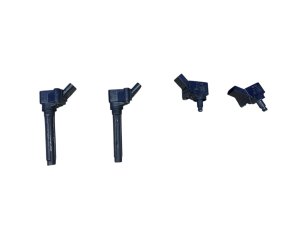
Used OEM Parts in Stock
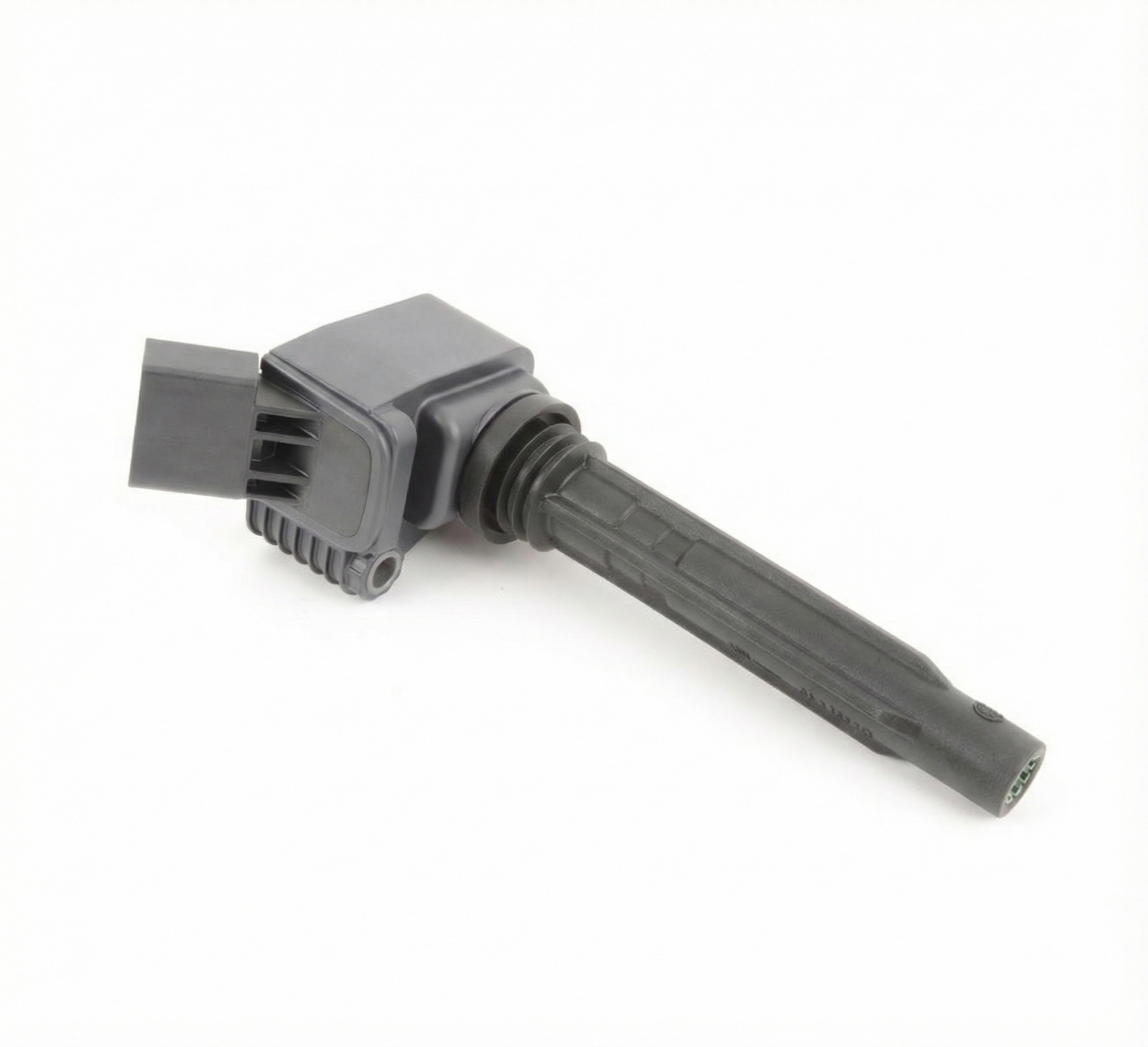
New Aftermarket Parts Available
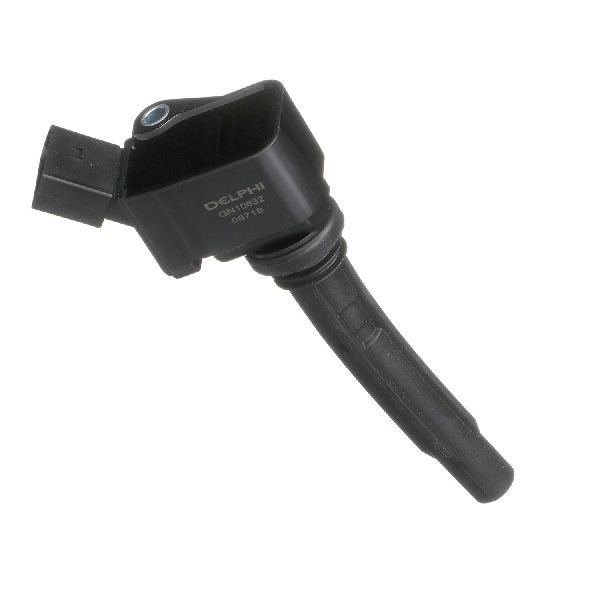

The information in this article is provided for general reference and educational purposes only. Vehicle specifications, procedures, and part compatibility can vary by production date, trim level, and region. Always consult your vehicle's factory service manual and verify part numbers before purchasing or performing repairs. Safety-critical components such as airbags, seat belts, and braking systems should be installed by a qualified professional.
- Volkswagen PASSAT:
- 🧭 Diagnostic Flowchart
- 🎬 Helpful Videos
- 🛍️ Shop This Part
- What's Unique About the 2016-2021 Volkswagen PASSAT
- Symptoms You May Notice
- Most Likely Causes
- Rare But Worth Checking
- Diagnosis Steps
- Parts You'll Likely Need
- Related Codes That Often Appear With This One
- Technical Service Bulletins (TSBs) & Recalls
- Platform-Specific Known Issues
- Mechanic-Grade Diagnostic Values
- Scan Tool Commands That Help
- Wiring & Ground Locations
- Real Owner Repair Stories
- OEM Part Supersession History
- Model Year Variations Within This Range
- 🎟️ Get 5% Off