

P0305 on 2012-2018 Audi A6 3.0T: Cylinder 5 Misfire Causes and Fixes
P0305 on a C7 Audi A6 3.0T almost always indicates a failed ignition coil or a worn-out spark plug in cylinder 5. Swapping the coil with an adjacent cylinder is the fastest way to confirm. Expect to pay $40-$80 for a new coil and $15-$25 for a spark plug. If these common fixes don't work, suspect a clogged fuel injector, carbon buildup, or a leaking supercharger intercooler.
- P0305 on your A6 3.0T is a misfire in the middle cylinder on the driver's side.
- Start your diagnosis with the cheapest and most likely culprits: the ignition coil and the spark plug. A simple coil swap can diagnose the problem in minutes.
- Do not ignore a flashing check engine light. It signals a severe misfire that can cause rapid and expensive damage to your catalytic converter.
- Be aware of platform-specific issues like carbon buildup and PCV valve failure, especially if new plugs and coils don't solve the problem.
- Check with an Audi dealer about potential software updates (TSBs) that can resolve overly sensitive misfire detection.
What's Unique About the 2012-2018 Audi A6
The 2012-2018 Audi A6 (C7 generation) uses the EA837 3.0L supercharged V6 engine. While misfires are common to all cars, this direct-injection engine is known for a few specific issues. Carbon buildup on the intake valves is a well-documented problem that can restrict airflow and cause misfires. A more unique failure on this platform is an internal leak from the supercharger's integrated intercoolers, which can drip coolant directly into the intake ports, causing persistent misfires. Additionally, the Positive Crankcase Ventilation (PCV) valve is a known failure point that can create a large vacuum leak, leading to misfires across multiple cylinders, sometimes including cylinder 5.
Symptoms You May Notice
- Rough or vibrating engine idle
- Hesitation or stumbling during acceleration
- Noticeable loss of engine power
- Solid or flashing Check Engine Light (CEL)
- EPC (Electronic Power Control) light may illuminate on the dash
- Increased fuel consumption
- Smell of unburnt fuel from the exhaust
- Clunking or thudding noises on acceleration or deceleration if related to failed engine mounts.
- Replacing only the spark plug when the ignition coil was the actual point of failure.
- Replacing fuel injectors before properly diagnosing the ignition system and checking for carbon buildup.
- Assuming a vacuum leak is from a cracked hose when it is the more common PCV valve failure.
- Chasing a misfire code when the root cause is a faulty engine mount sending bad electrical signals.
Most Likely Causes
- Faulty Ignition Coil 🔴 High Probability → Shop Ignition Coil Ignition coils are a very common wear item on modern VAG (Volkswagen Auto Group) engines due to high heat and electrical stress, with failures often occurring between 60,000-80,000 miles. Leaking valve cover gaskets can also cause oil to pool in the spark plug tubes, leading to premature coil failure.
How to confirm: Swap the ignition coil from cylinder 5 (middle cylinder, driver's side) with another cylinder (e.g., cylinder 4 or 6). Clear the codes and drive the vehicle. If the code changes to P0304 or P0306, the ignition coil is faulty. This is the universally recommended first diagnostic step. 🎬 Watch: How to diagnose a misfire on your 3.0T engine.
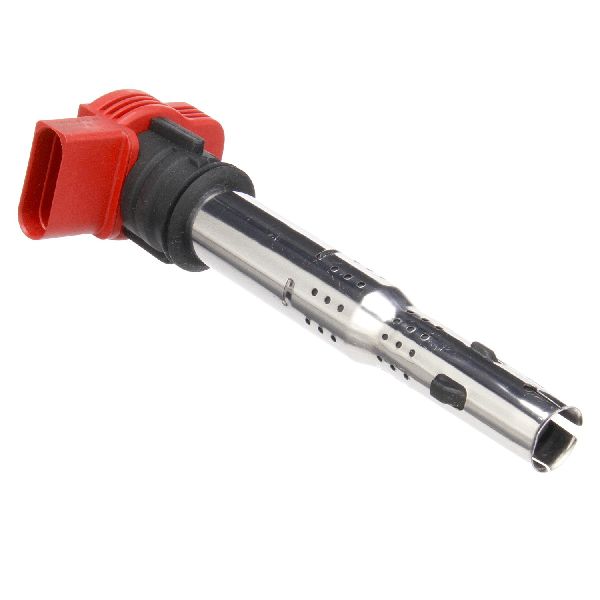
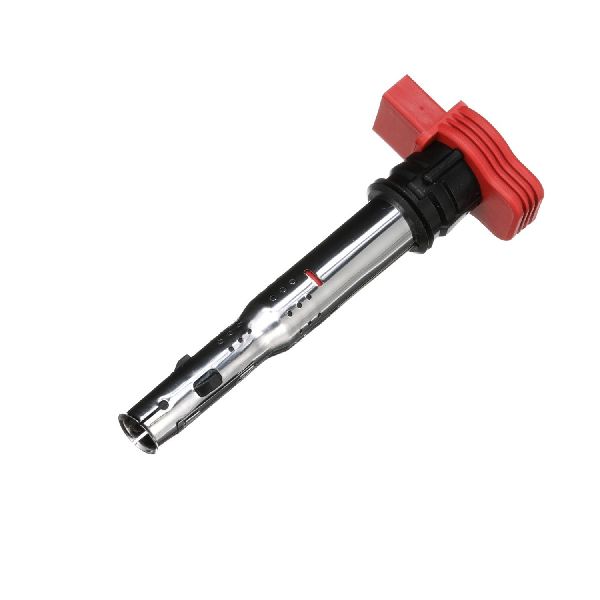
Typical fix: Replace the faulty ignition coil. It is highly recommended to replace all six coils at once, as they have experienced similar wear. Use OEM-quality brands like Bosch, NGK, or Eldor. The original part number 06E905115E has been superseded by versions ending in F and G.
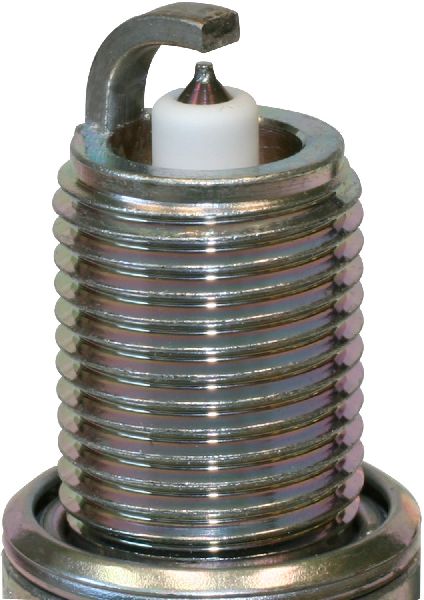
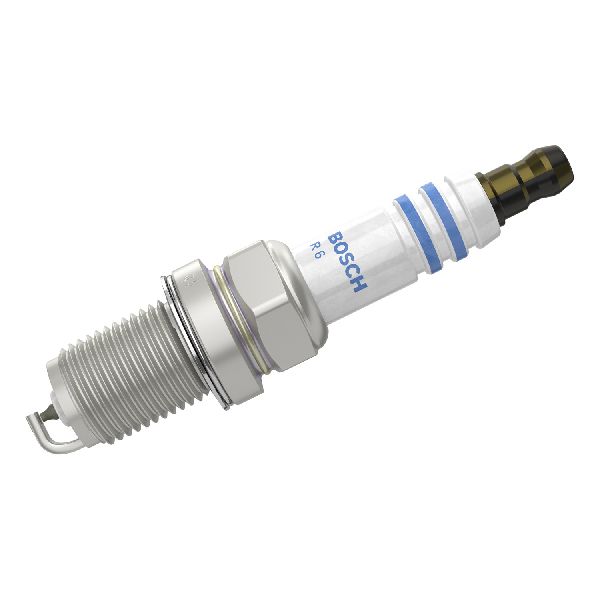
Est. part cost: $40-$80 per coil - Worn or Fouled Spark Plug 🔴 High Probability → Shop Spark Plug The 3.0T is a high-performance, direct-injection engine that is hard on spark plugs. The recommended service interval is between 40,000 to 55,000 miles, and extending this can easily lead to misfires.
How to confirm: After ruling out the ignition coil, swap the spark plug from cylinder 5 with another cylinder. If the misfire code follows the plug, the plug is the issue. Visually inspect the old plug for wear, carbon fouling, or oil contamination. A wet or fuel-smelling plug indicates a lack of spark, while a clean plug in a misfiring cylinder might suggest a fuel injector issue.
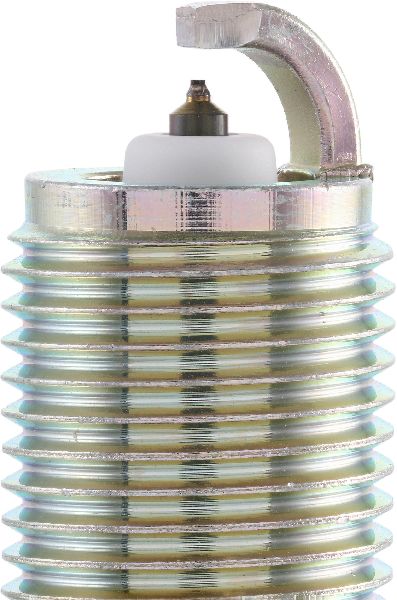
Typical fix: Replace the spark plug in cylinder 5. It is best practice to replace all six spark plugs at the same time with OEM-spec plugs like the NGK PFR8S8EG to ensure consistent performance. These plugs are typically pre-gapped, and adjustment is not usually required for a stock engine.
Est. part cost: $15-$25 per plug - Carbon Buildup on Intake Valves 🟡 Medium Probability As a direct-injection (TFSI) engine, fuel is sprayed directly into the cylinder, not over the intake valves. This means there's no fuel to clean the valves, and oil vapor from the PCV system bakes onto them, forming hard carbon deposits that restrict airflow and cause misfires. This issue is inherent to the engine design.
How to confirm: This requires a borescope inspection of the intake ports and valves, which usually means removing the supercharger. This is typically done by a professional. Symptoms often include misfires under heavy load. A TSB (2033768) notes that P030x codes appearing with P130A under heavy load are often due to severe carbon buildup.
Typical fix: The intake valves must be manually cleaned, a process known as 'walnut blasting'. This involves blasting crushed walnut shells into the intake ports to scrub the valves clean without damaging the metal. DIY kits are available, but it is a labor-intensive job. 🎬 See how to scrape and walnut blast your intake valves.
Est. part cost: $0 (service cost is labor, typically $750-$1900 at a shop). - Failed PCV Valve / Oil Separator 🟡 Medium Probability → Shop PCV Valve The diaphragm inside the PCV (Positive Crankcase Ventilation) valve is known to tear on the 3.0T engine, creating a massive unmetered vacuum leak. This is a common failure point, often occurring around 80,000-120,000 miles.
How to confirm: A classic sign is a loud whistling or sucking noise from the engine bay at idle. Another test is to try to remove the oil filler cap while the engine is running; a failed PCV will create a strong vacuum, making the cap very difficult to lift. A dedicated fault code, P052E, may also be present.
Typical fix: Replace the entire PCV valve assembly, which is located in the valley of the engine beneath the supercharger. Since the supercharger must be removed, it is common practice to service other items at the same time, such as the thermostat and intercoolers. 🎬 Follow this DIY guide to replacing your PCV valve.
Est. part cost: $150-$250
Rare But Worth Checking
- Clogged or Failed Fuel Injector: → Shop Fuel Injector While less common than ignition parts, a fuel injector can get clogged with carbon or fail electronically, preventing the correct amount of fuel from reaching cylinder 5. Diagnosis is more involved, often requiring a mechanic to check fuel trims or directly test the injector. An AudiWorld forum user with P0305 noted lean conditions (+20% STFT on Bank 2), pointing toward a fuel delivery issue rather than spark.
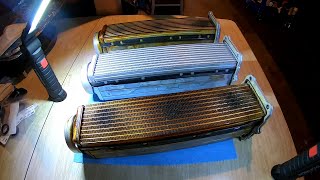
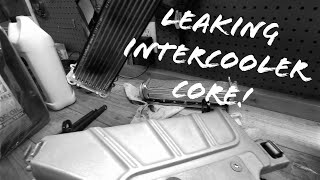
- Leaking Supercharger Intercooler: The 3.0T has two air-to-water intercoolers (one for each bank) housed inside the supercharger. These can develop internal leaks, dripping coolant directly into the intake ports and fouling combustion. This often presents as a persistent misfire that isn't fixed by plugs or coils, and is almost always accompanied by mysterious coolant loss with no visible external leaks. Cylinders 3 and 6 are most commonly affected, but cylinder 5 can also be impacted.
- Low Cylinder Compression: In rare cases, a persistent P0305 could be due to a mechanical engine problem like a burnt valve, damaged piston, or worn piston rings. A compression test is needed to confirm this. One owner on AudiWorld forums with a P0305 on an older 3.0L engine found coolant in the cylinder, confirming a blown head gasket.
- Failed Engine Mount: The electronically controlled engine mounts on the C7 A6 are a known failure item. In some cases, an electrical fault within the mount can send erratic signals to the ECU, which can be misinterpreted as a misfire, logging codes like P0305. One owner reported that replacing a failed active engine mount (which had its own fault code, P1573) resolved the misfire code.
Diagnosis Steps
- Read the code with an OBD-II scanner to confirm P0305 and check for any other stored codes like P0300 or P0304/P0306.
- Identify Cylinder 5: It is the middle cylinder on the driver's side (Bank 2). The cylinders are numbered 1-2-3 on the passenger side (front to back) and 4-5-6 on the driver's side (front to back).
- Perform an ignition coil swap. Move the ignition coil from cylinder 5 to cylinder 6. Clear the codes and drive the car until it misfires again. Re-scan the codes.
- If the code is now P0306, the ignition coil is bad and must be replaced.
- If the code remains P0305, the coil is likely good. Put it back on cylinder 5.
- Perform a spark plug swap. Move the spark plug from cylinder 5 to cylinder 6. Clear codes and drive. If the code changes to P0306, the spark plug is bad.
- If the code remains P0305, the issue is not a simple ignition component. Inspect the wiring and connector for the cylinder 5 coil and injector for damage or corrosion.
- Check for vacuum leaks. Listen for hissing noises. A common culprit is the PCV valve under the supercharger, which may cause a loud sucking sound or make the oil cap difficult to lift.
Parts You'll Likely Need
- Ignition Coil
(OEM #06E905115G)— This is the most common cause of a single-cylinder misfire on the 3.0T engine. The part number has been superseded multiple times from 06E905115E and 06E905115F. Reputable brands include Bosch, NGK, and Eldor. - Spark Plug
(OEM #NGK PFR8S8EG)— This is the second most common cause and a routine maintenance item. Using the correct OEM-spec plug is critical for performance. - PCV Valve / Oil Separator
(OEM #06E103547Q)— A known failure point on the EA837 engine that causes vacuum leaks and widespread misfires. The part number has several revisions; ensure you get the latest version.
Related Codes That Often Appear With This One
- P0300 — If the cause of the misfire is systemic (like a bad PCV valve, widespread carbon buildup, or a large vacuum leak), the ECU may log P0300 for 'Random/Multiple Cylinder Misfire' in addition to the specific cylinder code.
- P0304, P0306 — These codes indicate misfires in the other cylinders on the same bank (Bank 2, driver's side). Seeing them together with P0305 could point to a shared issue like a clogged catalytic converter for that bank, a problem with the Bank 2 camshaft adjuster, or carbon buildup affecting the entire bank.
- P130A — This Audi-specific code for 'Cylinder Disabling' can appear with misfire codes under heavy load. An AudiWorld user with misfires on cylinders 5 and 6 (P0305, P0306) also had a P130A code, which was ultimately traced to a clogged catalytic converter. A TSB also links this code with P030x codes to severe carbon buildup.
Technical Service Bulletins (TSBs) & Recalls
- TSB 2040491/1: Addresses a coolant pump mechanical malfunction warning (DTC P1B1C00) caused by a faulty thermostat in 2012-2013 models or a software issue. While not directly for P0305, it's highly relevant to thermostat failures on this platform.
- TSB Bulletin #A0124212069038_5: Provides information for when the MIL is illuminated with cylinder misfire codes, specifically including P0305.
- TSB Bulletin #A0123912069038_5: Notes that the Check Engine Light may be illuminated with DTCs P0300 through P0306 stored in the system.
- TSB Bulletin #A0123802069038_4: Outlines diagnostic information for cylinder misfires and the presence of DTC P0305.
- TSB Bulletin #A0123612069038_3: Provides guidance for instances where the MIL is on and DTC P0305 may be stored in the engine control module.
- TSB Bulletin #A0123352069038_2: Instructions for technicians when the MIL is illuminated and one or more misfire codes, including P0305, are present.
Platform-Specific Known Issues
- Audi has released Technical Service Bulletins (TSBs), such as TSB 2069038, which address misfire codes via an ECM software update. This suggests the original software can be overly sensitive and may log a misfire fault when no mechanical issue exists. It's worth checking with a dealer if your vehicle's software is up to date.
- An extended warranty was issued for some earlier 3.0T models (up to 10 years/120k miles) to cover the cost of carbon cleaning due to misfires under load (TSB 2033768/1). While this may not apply to all vehicles in the 2012-2018 range, it highlights how recognized the carbon buildup issue is.
Mechanic-Grade Diagnostic Values
- Low-Pressure Fuel System — expected: 3.0 to 6.0 bar (43 to 87 PSI).. Failure: Pressure dropping below this range, especially under load, will starve the High-Pressure Fuel Pump (HPFP).
- High-Pressure Fuel System (at rail) — expected: 30 to 125 bar (435 to 1813 PSI), can reach up to 200 bar (2900 PSI) on some systems.. Failure: Significantly lower pressure under load can indicate a failing HPFP. A failing pump may also struggle to hold pressure after shutdown during a heat soak test, often plateauing between 50-90 bar instead of rising to 110-120 bar.
- Fuel Injector Resistance — expected: Approximately 2 Ohms.. Failure: A significantly different resistance value on the cylinder 5 injector compared to others.
- VCDS Misfire Counter (Live Data) — expected: The counters for each cylinder should remain at or near zero at idle and under load.. Failure: A rapidly increasing count on cylinder 5 confirms the misfire location in real-time. This is useful for diagnosing intermittent issues that don't immediately set a hard code.
Hidden / Shadow Codes Worth Checking
- Misfire Counter Logs (via VCDS): This is not a traditional DTC but a live data value. The ECU tracks misfires per cylinder in Measuring Blocks (MB) or Advanced Measuring Values long before the count is high enough to trigger a P030x code. Viewing these counters can reveal intermittent misfires or misfires happening under specific load conditions. (see via Using a VAG-specific scan tool like VCDS, navigate to Engine (01) -> Measuring Blocks (08) -> Groups 015 and 016. For newer models, use Advanced Measuring Values and search for 'misfire'.)
- P052E: PCV Valve Malfunction. This code often appears when the PCV diaphragm has failed, causing a significant vacuum leak that can lead to misfires. Its presence strongly suggests the PCV is the root cause of misfire codes. (see via Standard OBD-II scanner or VCDS.)
Scan Tool Commands That Help
- VCDS (VAG-COM): Output Test - Fuel Injectors — After ruling out ignition issues, you can use this function to individually cycle each fuel injector. While the engine is off, you can listen for the audible click of the injector solenoid to confirm it's activating electronically. This helps differentiate between a dead injector and a clogged one.
- VCDS (VAG-COM): Advanced Measuring Values - Misfire Counters — Use this to monitor misfires on all cylinders in real-time while driving. This is crucial for confirming if a fix was successful or for diagnosing intermittent misfires that only occur under specific conditions (e.g., high RPM, high load).
Wiring & Ground Locations
- Engine-to-Body Ground Strap — Main earth strap connecting the engine block to the vehicle's chassis.. A corroded or loose main ground can cause all sorts of erratic electrical issues, including weak spark at the ignition coils. While it usually causes multiple/random misfires, it can sometimes manifest on a single cylinder. Check for integrity and cleanliness.
- Earth point, in engine compartment, left — On the driver's side of the engine bay, serves as a grounding point for various components in the engine harness.. The wiring harness for Bank 2 (cylinders 4-5-6) relies on clean grounds. A problem at this specific point could potentially affect the ignition coil or injector circuit for cylinder 5.
- Ignition Coil Ground Wires — Each ignition coil connector has a ground wire. On some VAG engines, these ground wires are bundled and attached to a single ground point on the cylinder head or engine block near the coils.. The small ground wire for the Bank 2 ignition coils can become brittle and break, especially during spark plug service. A broken ground to the coil harness can cause misfires on one or more cylinders on that bank.
Real Owner Repair Stories
- YouTube creator 'S4tify' (Audi C7 S4 3.0T (mechanically similar engine)) — Persistent single-cylinder misfire (Cylinder 3 in video) that was not resolved by common fixes.
❌ Tried (didn't work) Swapping ignition coils, Swapping spark plugs
✅ What actually fixed it The root cause was a leaking intercooler core inside the supercharger, dripping coolant into the cylinder. This was confirmed by observing coolant loss from the dedicated supercharger coolant reservoir. The fix was to replace the intercooler cores. - AudiForums.com user (Audi A6 (generation not specified, but relevant cause)) — Misfire codes P0300, P0305, P0306.
❌ Tried (didn't work) Replacing spark plugs
✅ What actually fixed it The problem was a severely clogged PCV valve. After removing and cleaning it, a large amount of carbon buildup was found and removed, which resolved the misfire codes. - AudiWorld Forums user (2013 Audi A6 3.0T, 148,643 km) — P052E (PCV Valve Malfunction) code stored, which is a common precursor to misfire codes.
❌ Tried (didn't work) User noted that others on forums had replaced the PCV valve for this code, only for the code to return.
✅ What actually fixed it The user planned to replace the PCV valve, thermostat, and water pump simultaneously since the supercharger had to be removed. Another user advised checking for carbon buildup on the intake valves at the same time, indicating this is a common 'while you're in there' job.
"I Checked Everything" — The Actual Cause
- In cases where a persistent single-cylinder misfire isn't solved by ignition or fuel parts, and a smoke test for vacuum leaks comes back clean, the cause can be an internal coolant leak from one of the supercharger's intercooler cores. This allows coolant directly into the cylinder's intake port, fouling combustion. This is not a vacuum leak and will not be found by a smoke test. The primary symptom, besides the misfire, is slow, unexplained coolant loss from the supercharger's separate cooling system.
When the Usual Fixes Don't Work
- While a coil or plug swap fixes the vast majority of P0305 codes, a notable number of owners on forums report that these steps did not work. In many of these cases, the ultimate culprit was a leaking supercharger intercooler dripping coolant into the cylinder, which requires removing the supercharger to fix. Another common resolution after plugs and coils fail to solve the issue is discovering a torn PCV valve diaphragm, which also requires supercharger removal. Therefore, if a simple ignition component swap doesn't resolve the misfire, the repair often escalates into a more labor-intensive job involving the removal of the supercharger.
OEM Part Supersession History
06E905115E→06E905115F, then 06E905115G.— Revisions were made to improve reliability and performance, addressing issues with premature failure in earlier versions.
Heads up: All revisions (E, F, G) are generally cross-compatible, but it is highly recommended to use the latest available revision (G) and to replace all six coils at once to ensure consistent performance. Some aftermarket versions are sold with a red top, mimicking Audi's high-performance coils.
Model Year Variations Within This Range
- 2016-2018 (C7.5 Facelift): The facelifted A6 3.0T (engine code CREC) introduced a dual-injection system, adding multi-port fuel injection (MPI) alongside the existing direct injection (GDI). This was done primarily to reduce carbon buildup on the intake valves, as the port injectors spray fuel over the valves, cleaning them. While this reduces the likelihood of carbon buildup being the cause of a misfire on later models, it does not eliminate it entirely.
- 2012-2015 (Pre-Facelift): These earlier C7 models (engine codes CGXB, CGWD, etc.) use direct injection only, making them more susceptible to heavy carbon buildup on the intake valves as a cause for misfires.
Diagnostic Flowchart
Other Known Issues on This Vehicle
Issues unrelated to this code that are worth knowing about as an owner of this generation:
- Premature Water Pump & Thermostat Failure 🔴 High — Very common. Water pumps can fail as early as 60,000-80,000 miles. Thermostats often fail stuck closed, leading to overheating. The thermostat is located under the supercharger, making replacement labor-intensive. (Ref: A class-action settlement extended the warranty on water pumps for some vehicles. TSB 2040491/1 addresses thermostat issues on 2012-2013 models.)
- Timing Chain Tensioner Rattle on Startup 🟠 Medium — More common on earlier (pre-2013) models. A brief rattle (1-3 seconds) on a cold start indicates oil pressure has bled off from the hydraulic tensioners. While often not immediately catastrophic, if it worsens it requires a very expensive, engine-out service to replace the rear-mounted timing components.
- Failed Electronic Engine Mounts 🟠 Medium — Commonly fail around 50,000-100,000 miles. Symptoms include excessive engine vibration at idle (especially in Drive), and a clunking/thudding sound on acceleration or deceleration.
- Leaking Supercharger Intercoolers 🔴 High — A well-known but less frequent failure. It causes mysterious coolant loss with no external drips, often leading to persistent misfires as coolant enters the cylinders. Requires supercharger removal to replace the internal cores.
- Clogged Secondary Air Injection (SAI) Ports 🟡 Low — Can occur at higher mileage, causing a check engine light for 'Insufficient Flow'. This does not typically affect engine performance but will cause an emissions test failure. Cleaning the ports is labor-intensive as it requires removing the supercharger. (Ref: Some models had a warranty extension covering the cleaning of these ports.)
Used vs. New Parts: Buying Guide for This Vehicle
When a used part is the smart pick: For high-cost, non-wear items like the supercharger assembly (if an intercooler is leaking internally) or an engine wiring harness, a used part from a low-mileage donor car can be a cost-effective option. A used engine mount could also be considered if its condition can be verified.
Donor-vehicle mileage cap: roughly under 60000 miles for the part to have meaningful remaining life.
What to inspect on the donor part:
- For a supercharger: Check for any play in the snout's pulley, look into the intake ports for signs of coolant residue (a chalky white or pink film), and ensure the bypass valve actuator moves freely.
- For wiring harnesses: Inspect for any cut wires, brittle insulation, or broken connector tabs. Avoid harnesses from vehicles in salt-belt regions due to higher corrosion risk.
- For engine mounts: Look for cracks in the rubber and any signs of leaking hydraulic fluid.
OEM-only on this vehicle (don't cheap out):
- PCV Valve / Oil Separator: Aftermarket versions are available, but many forum users report premature failure. Given the labor required to access it (supercharger removal), using a Genuine Audi part is strongly recommended to avoid repeat repairs.
- Sensors (Crankshaft, Camshaft): The ECU is sensitive to the signals from these sensors. Using OEM or OEM-supplier (Bosch) parts is critical to avoid persistent issues.
- Catalytic Converter: Aftermarket catalytic converters for this platform are known to fail emissions tests or trigger efficiency codes (P0430) shortly after installation.
Aftermarket brands forum-validated for this vehicle:
- Ignition Coils: Bosch, NGK, Eldor (often the OEM supplier).
- Spark Plugs: NGK (PFR8S8EG), Bosch.
- Fuel Injectors: Bosch (OEM supplier).
Brands owners have reported issues with on this vehicle:
- Unnamed / white-box ignition coils and sensors from online marketplaces. These frequently have a high failure rate and can cause more diagnostic headaches than they solve.
Real Owner Stories
Aggregated from forums and TSBs cited above. Mileages and costs reflect what owners reported in those sources.
2012-2018 Audi A6 3.0T — ~70000 miles
Symptoms: Misfire codes P0305 and P0306 appearing alongside P130A under heavy load.
What fixed it: Manual cleaning of the intake valves using walnut blasting to remove hard carbon deposits.
Source hint: Audizine forum thread 'P0305, P0306 and P130A'
2012-2018 Audi A6 3.0T — ~80000 miles
Symptoms: Loud whistling/sucking noise from the engine bay at idle and the oil filler cap was very difficult to remove while the engine was running.
What fixed it: Replacement of the PCV valve assembly located in the engine valley beneath the supercharger.
Source hint: Article Context - Common Causes
Related OBD-II Codes
Frequently Asked Questions
Where is cylinder 5 located on my 2012-2018 Audi A6 3.0T?
Is there a software update for misfire codes on the A6 3.0T?
Could my P0305 code be covered under an extended warranty for carbon buildup?
What specific spark plugs should I use for my 3.0T Supercharged V6?
I have a P0305 and a loud whistling noise at idle; what is the likely cause?
Should I replace just the one faulty ignition coil on cylinder 5?
Helpful Videos
We Have This Part in Stock


The information in this article is provided for general reference and educational purposes only. Vehicle specifications, procedures, and part compatibility can vary by production date, trim level, and region. Always consult your vehicle's factory service manual and verify part numbers before purchasing or performing repairs. Safety-critical components such as airbags, seat belts, and braking systems should be installed by a qualified professional.
- Audi A6:
- 🧭 Diagnostic Flowchart
- 🎬 Helpful Videos
- 🛍️ Shop This Part
- What's Unique About the 2012-2018 Audi A6
- Symptoms You May Notice
- Most Likely Causes
- Rare But Worth Checking
- Diagnosis Steps
- Parts You'll Likely Need
- Related Codes That Often Appear With This One
- Technical Service Bulletins (TSBs) & Recalls
- Platform-Specific Known Issues
- Mechanic-Grade Diagnostic Values
- Hidden / Shadow Codes Worth Checking
- Scan Tool Commands That Help
- Wiring & Ground Locations
- Real Owner Repair Stories
- "I Checked Everything" — The Actual Cause
- When the Usual Fixes Don't Work
- OEM Part Supersession History
- Model Year Variations Within This Range
- Other Known Issues on This Vehicle
- Used vs. New Parts: Buying Guide for This Vehicle
- Real Owner Stories
- 2012-2018 Audi A6 3.0T — ~70000 miles
- 2012-2018 Audi A6 3.0T — ~80000 miles
- Related OBD-II Codes
- Frequently Asked Questions
- 🎟️ Get 5% Off