

P0305 on 2008-2017 Buick Enclave: Cylinder 5 Misfire Causes and Fixes
P0305 on a Buick Enclave 3.6L V6 means cylinder 5 is misfiring. This is most often caused by a bad ignition coil or a worn-out spark plug. Since cylinder 5 is on the hard-to-reach rear bank against the firewall, expect a significantly higher labor cost for repairs, as the intake manifold must be removed for access.
- P0305 on a Buick Enclave is a misfire on cylinder 5, which is on the difficult-to-access rear bank of the engine.
- The most likely causes are a bad ignition coil or a worn spark plug.
- Due to the high labor involved in removing the intake manifold, it is strongly recommended to replace all three rear ignition coils, all six spark plugs, and the intake gaskets at the same time.
- Do not drive if the check engine light is flashing, as this can cause rapid and expensive damage to your catalytic converter.
- If basic ignition parts don't solve the issue, consider carbon buildup on the intake valves, a known issue with this direct-injection engine.
What's Unique About the 2008-2017 Buick Enclave
On the Buick Enclave's transversely mounted 3.6L V6, cylinder 5 is located on the rear bank, against the firewall. This makes it significantly harder to access than the front cylinders (2, 4, 6). Any repair involving cylinder 5, such as changing an ignition coil or spark plug, requires removing the upper intake manifold 🎬 Watch this walkthrough on removing the manifold and replacing coils., which adds considerable labor time and cost compared to the same job on a front cylinder. Because of this, many technicians and experienced owners recommend replacing all three rear coils (1, 3, 5), all six spark plugs, and the intake manifold gaskets at the same time to prevent repeat labor costs.
Symptoms You May Notice
- Flashing or solid Check Engine Light
- Rough or shaky idle
- Engine hesitation or stumbling during acceleration
- Noticeable loss of power
- Poor fuel economy
- A smell of gasoline from the exhaust
- Replacing only the spark plug when the ignition coil was the actual failure.
- Replacing ignition or fuel components when the root cause is excessive carbon buildup on the intake valves.
- Replacing a catalytic converter due to a P0420/P0430 code, when the converter failure was caused by a long-ignored P0305 misfire.
Most Likely Causes
- Failed Ignition Coil 🔴 High Probability → Shop Ignition Coil Ignition coils are a common failure item on many modern engines, including the GM 3.6L V6. The rear bank coils (1, 3, 5) are exposed to more heat, which can contribute to a higher failure rate.
How to confirm: The easiest way to confirm a bad coil is to swap the ignition coil from cylinder 5 with one from another cylinder on the same bank (e.g., cylinder 3). This requires removing the intake manifold. Clear the codes and drive the vehicle. If the misfire code changes to P0303, the coil is faulty.
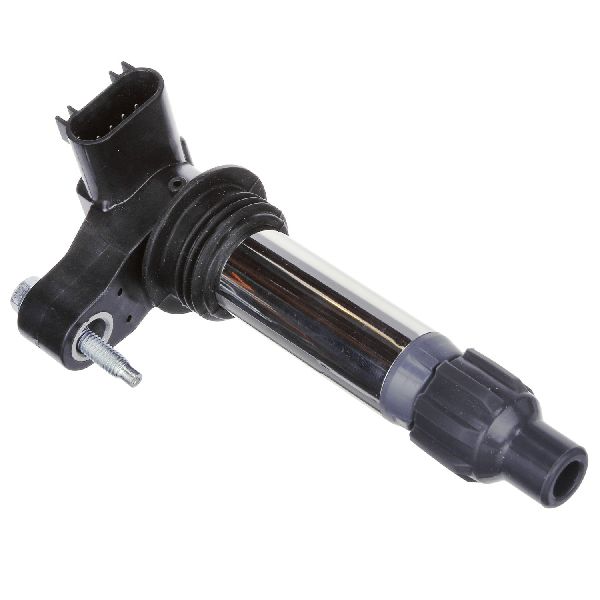
Typical fix: Replace the failed ignition coil. Since cylinder 5 is on the rear bank, it is highly recommended to replace all three rear coils (1, 3, 5) and all six spark plugs at the same time to avoid future labor. The OEM part number is typically 12632479 (also listed as D515C).
Est. part cost: $30-$80 per coil - Worn or Fouled Spark Plug 🔴 High Probability → Shop Spark Plug
How to confirm: After confirming the ignition coil is good, inspect the spark plug from cylinder 5. Look for wear on the electrode, heavy carbon deposits, oil fouling, or a cracked insulator. Compare it to a plug from a cylinder that is not misfiring. Access requires intake manifold removal.
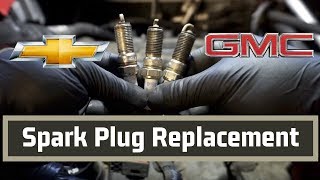
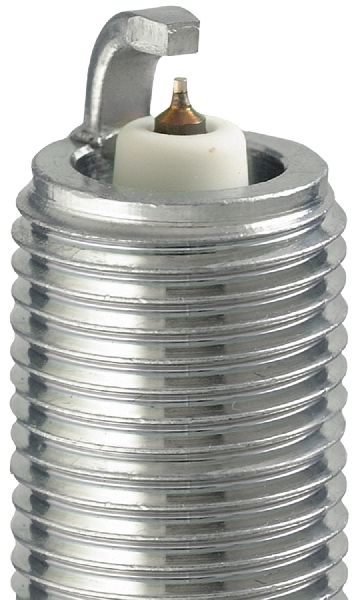
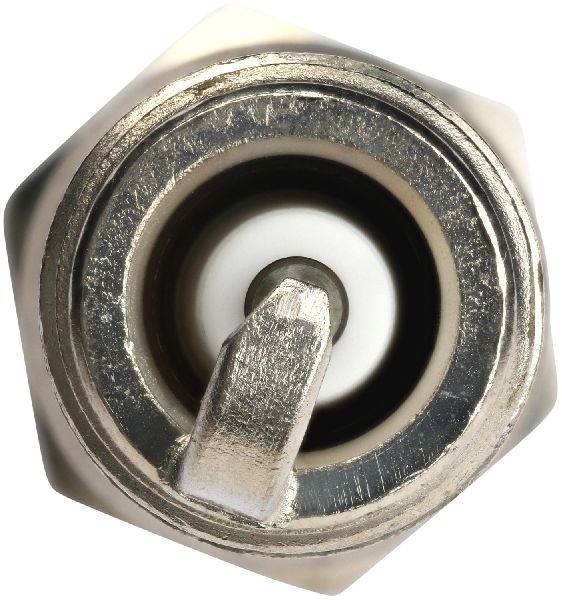
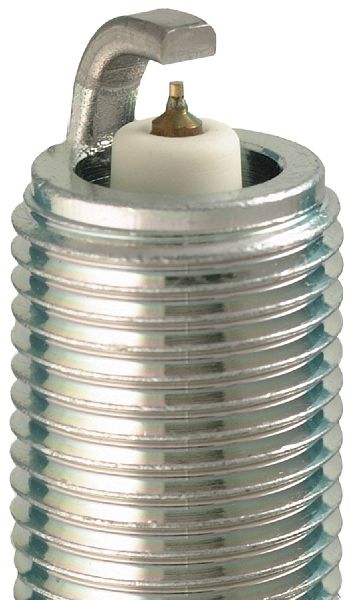
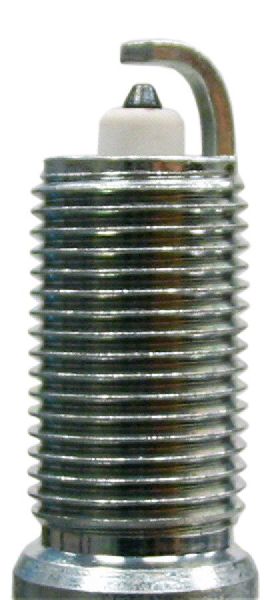
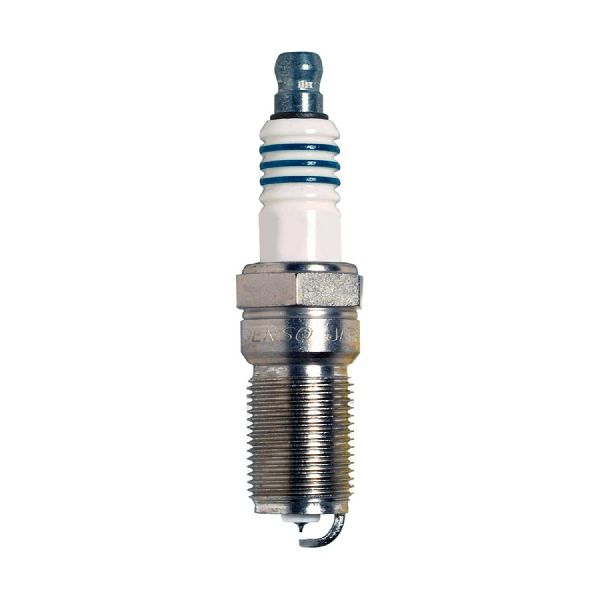
Typical fix: Replace the spark plug. Spark plugs are typically replaced as a full set. Given the labor to access the rear bank, it is strongly advised to replace all six spark plugs if they are due. The recommended OEM Iridium plug is ACDelco 41-109. 🎬 Watch a mechanic replace the spark plugs and coil packs.
Est. part cost: $8-$20 per plug - Clogged or Faulty Fuel Injector 🟡 Medium Probability → Shop Fuel Injector Direct injection engines can be susceptible to injector issues. Additionally, a GM Technical Service Bulletin (PIP4924D) notes that the injector wiring harness can chafe and cause electrical issues.
How to confirm: Listen for a consistent clicking sound from the injector with a mechanic's stethoscope. Check the wiring harness for any visible damage or chafing, especially where it might rub against the engine. A definitive test is to swap the injector with another cylinder, but this is a very labor-intensive job requiring intake manifold and fuel rail removal.
Typical fix: If the injector is faulty, it will need to be replaced. This requires removing the upper intake manifold and fuel rail. It's wise to replace the intake gaskets and consider replacing all three rear bank injectors at the same time.
Est. part cost: $70-$150 per injector - Intake Valve Carbon Buildup 🟡 Medium Probability The LLT and LFX are direct-injection (DI) engines. Fuel is sprayed directly into the cylinder, so it doesn't wash over the intake valves. This allows oil and combustion byproducts from the PCV system to bake onto the valves, restricting airflow and causing misfires, especially on cold starts. GM has acknowledged this issue in TSBs like PIP5029E.
How to confirm: This requires a borescope to visually inspect the intake valves, which involves removing the intake manifold. Symptoms are often worse during cold starts.
Typical fix: The intake valves need to be manually or media-blasted (walnut blasting) to remove the carbon deposits. This is a professional-level service. Chemical cleaning methods performed through the throttle body are also available but may be less effective on heavy deposits.
Est. part cost: $0 (service cost is labor)
Rare But Worth Checking
- Stretched Timing Chains: This is a more significant issue, primarily affecting the earlier LLT engines (2008-2012). A stretched chain can cause camshaft timing to be off, leading to misfires. This often presents with other codes like P0008, P0017, or P0300. GM issued a special coverage adjustment (#11340C) for this issue on some 2009 models.
- Low Engine Compression: If ignition and fuel system checks don't reveal the problem, a compression test should be performed on cylinder 5. Low compression can indicate serious internal engine problems like a bad valve, worn piston rings, or a head gasket issue.
- Vacuum Leak: A leak in the intake manifold gasket near the runner for cylinder 5 could lean out the mixture enough to cause a misfire. This would often be accompanied by a lean code like P0171 or P0174.
Diagnosis Steps
- Verify P0305 is the active code 🎬 See these quick DIY methods for fixing a P0305 code. using an OBD-II scanner. Check for any other codes, especially P0300, P0008, or P0017.
- Note the Check Engine Light behavior. Is it solid or flashing? A flashing light indicates a severe, catalyst-damaging misfire.
- To test the ignition coil, you must remove the upper intake manifold. Once accessed, swap the coil from cylinder 5 with the coil from cylinder 3. Reassemble enough to run the engine, clear the codes, and see if the misfire moves to cylinder 3 (P0303). If it does, the coil is bad.
- If the misfire remains on cylinder 5, inspect the spark plug. While the intake is off, remove the plug and check for wear, damage, or deposits. It is best practice to replace all six plugs if they are near their service interval.
- While the intake manifold is off, inspect the wiring harness for the cylinder 5 fuel injector for any signs of chafing or damage, as noted in TSB PIP4924D.
- Use a borescope to inspect the intake valves for carbon buildup, a very common issue on these engines.
- If the coil, plug, and wiring appear good and carbon is not excessive, the next likely culprit is the fuel injector.
- A compression test on cylinder 5 is recommended to rule out any mechanical engine issues before replacing more parts.
Parts You'll Likely Need
- Ignition Coil
(OEM #12632479)— This is the most common cause of a single-cylinder misfire on the 3.6L V6.
Trusted brands: ACDelco, Delphi, NGK
OEM price range: $60-$90
Aftermarket price range: $30-$60 - Iridium Spark Plug
(OEM #41-109)— Spark plugs are a routine maintenance item and a primary cause of misfires. They should be replaced if they are worn or if accessing them for another repair.
Trusted brands: ACDelco, NGK
OEM price range: $12-$18
Aftermarket price range: $8-$15 - Upper Intake Manifold Gasket Set
(OEM #12607443 (Fel-Pro MS96994 is a popular aftermarket))— These gaskets must be replaced anytime the intake manifold is removed for a repair on the rear cylinder bank. Reusing old gaskets will cause vacuum leaks.
Trusted brands: ACDelco, Fel-Pro, Mahle
OEM price range: $40-$70
Aftermarket price range: $20-$40
Related Codes That Often Appear With This One
- P0300 — If the misfire becomes more widespread due to a systemic issue like a vacuum leak, failing fuel pump, or timing chain problem, a P0300 (Random/Multiple Cylinder Misfire) may appear alongside P0305.
- P0205 — This code indicates an electrical fault in the cylinder 5 injector circuit. If you see P0205 with P0305, the problem is almost certainly the fuel injector for cylinder 5 or its wiring.
- P0420 / P0430 — These codes indicate catalyst inefficiency. They often appear as a result of driving for too long with a P0305 misfire, which allows unburnt fuel to damage the catalytic converter.
- P0008 / P0017 — These codes indicate a timing correlation issue between the crankshaft and camshafts. Seeing these with a P0305, especially on an LLT engine, is a strong indicator of stretched timing chains.
Technical Service Bulletins (TSBs) & Recalls
- PIP4924D: Notes potential for fuel injector wiring harness to chafe.
- 11340C: Special Coverage Adjustment for premature timing chain wear on 2009 models.
- PIP5029E: Discusses engine misfires due to heavy carbon deposits on intake valves.
Platform-Specific Known Issues
- Intake Manifold Removal for Rear Bank Access: → Shop Engine Intake Manifold The most significant vehicle-specific issue for a P0305 is that cylinder 5 is on the rear bank, under the intake manifold. This turns a simple spark plug or coil replacement into a 2-4 hour job, requiring new intake gaskets and significantly increasing labor costs.
Mechanic-Grade Diagnostic Values
- Fuel Injector Resistance (2013-2017 LFX Engine) — expected: 1.2 - 1.8 Ohms. Failure: A reading of 0 ohms (short), infinity/OL (open), or being outside this narrow range indicates a failed injector.
- Fuel Injector Resistance (2008-2012 LLT Engine) — expected: 10 - 16 Ohms (or 150k - 210k Ohms for Piezo type). Failure: A reading outside the specified range. It is critical to know which injector type is installed, as the resistance values are drastically different.
- Ignition Coil Primary Resistance — expected: 0.4 - 2.0 Ohms. Failure: A reading of zero (short) or infinity (open) indicates a failed coil. Note that coils can sometimes test good when cold but fail under heat and load.
- Ignition Coil Secondary Resistance — expected: 6,000 - 10,000 Ohms (6kΩ - 10kΩ). Failure: A reading significantly outside this range points to a failure in the coil's secondary winding.
- High-Pressure Fuel System (at idle) — expected: 508 - 798 psi (3.5 - 5.5 MPa). Failure: Pressure that fails to meet the desired value on a scan tool can indicate an issue with the high-pressure fuel pump (HPFP), though this would likely cause multiple misfires.
- VVT Camshaft Actuator Solenoid Resistance — expected: 8 - 13 Ohms. Failure: A reading outside this range, or an unstable reading, indicates a faulty solenoid. A failed solenoid can cause timing to be off, leading to misfires.
Hidden / Shadow Codes Worth Checking
- Mode $06, MIDs $A2-$A7: Accessing Mode $06 data on a professional scan tool reveals the raw misfire counts for each cylinder (Cylinder 1 is $A2, Cylinder 2 is $A3, etc.). This allows a technician to see which cylinders are misfiring and how often, even if the misfires aren't frequent enough to set a specific P030x code. For P0305, checking the counts for MID $A6 (Cylinder 5) can confirm the issue is isolated. (see via Any professional-grade OBD-II scanner with Mode $06 functionality. The data is presented as Monitor IDs (MID) and Test IDs (TID).)
Scan Tool Commands That Help
- GDS2 / Tech2: Cylinder Power Balance Test — This bidirectional test allows the technician to disable individual cylinders one by one to observe the drop in RPM. A cylinder that shows little or no RPM drop when disabled is not contributing power, confirming the location of the misfire.
- GDS2 / Tech2: Fuel Trim Reset — This function should be performed after replacing a fuel injector. It clears the long-term fuel trim values that the ECM learned with the old, faulty injector, allowing it to adapt to the new component more quickly.
Wiring & Ground Locations
- Injector Harness Chafe Point — The fuel injector wiring harness, particularly for the rear bank, is known to rub against the edge of the cylinder head, valve cover, or fuel lines.. As documented in TSB PIP4924D, this chafing can cause a short or open in the cylinder 5 injector circuit, leading to a P0305 and/or P0205 code. This should be inspected before replacing the injector.
- G103 / G104 — These are primary engine grounds typically located on the cylinder heads or on the cowl in the engine compartment.. A loose or corroded ground at these points can cause erratic signals for the ignition and injection systems, potentially leading to misfires. Ensuring these are clean and tight is a critical step in diagnosing any electrical-related misfire.
- G110 — Located on the right front of the engine, mounted to the cylinder head.. Provides a ground path for various engine components. A fault here can cause difficult-to-diagnose electrical issues, including misfires.
- G113 — Located on the left side of the engine, at an engine-to-transmission stud.. This is another critical engine ground point. A poor connection here can affect the ECM and its ability to properly control the engine.
Real Owner Repair Stories
- GM Forum user (GM vehicle with 3.5L engine, experiencing P0305) — Engine misfire on cylinder 5.
❌ Tried (didn't work) Swapping ignition coils between cylinders (the misfire did not move).
✅ What actually fixed it The user listened to the fuel injectors with a mechanic's stethoscope and noted cylinder 5 was not clicking like the others. Replacing the fuel injector for cylinder 5 resolved the P0305 code.
"I Checked Everything" — The Actual Cause
- A common scenario for a P0305 on the 3.6L V6 is that a technician will perform a smoke test to check for vacuum leaks and find nothing. The standard diagnostic path may seem clear, but the actual cause is often not a vacuum leak. The two most prevalent 'hidden' causes are severe carbon buildup on the intake valves (as detailed in TSB PIP5029) or a stretched timing chain. Carbon buildup restricts airflow into cylinder 5, leaning out the mixture and causing a misfire that is often worse on cold starts. A stretched timing chain causes incorrect cam/crank correlation, leading to misfires that may appear randomly or on a specific bank. Neither of these conditions would be revealed by a smoke test.
When the Usual Fixes Don't Work
- While an ignition coil is the most common cause, do not assume it is the only cause. In a documented case, a user swapped the ignition coil from the misfiring cylinder 5 to another cylinder, and the misfire code did not follow the coil. The problem persisted on cylinder 5. The final fix was a faulty fuel injector, which was diagnosed by listening for its operation with a stethoscope. This demonstrates that if the coil swap test fails to move the misfire, the next logical step is to investigate the fuel injector and its wiring before assuming a more complex mechanical issue.
OEM Part Supersession History
12590990, 12610626, 12618542→12632479 (ACDelco D515C)— Standard part evolution for improved durability, winding protection, and corrosion resistance.
Model Year Variations Within This Range
- 2008-2012 (LLT Engine) vs. 2013-2017 (LFX Engine): The fuel injectors are a critical point of difference and a major diagnostic trap. The 2013-2017 LFX engine uses low-impedance solenoid injectors requiring a resistance of 1.2-1.8 Ohms. The earlier 2008-2012 LLT engine may use different types, including high-impedance injectors with a resistance of 10-16 Ohms, or even Piezo-style injectors with a resistance over 150,000 Ohms. Using the wrong resistance specification during testing will lead to an incorrect diagnosis. The ECMs (Bosch vs. Delphi) and intake manifold materials (Aluminum vs. Composite) also differ between these engine versions.
Diagnostic Flowchart
Real Owner Stories
Aggregated from forums and TSBs cited above. Mileages and costs reflect what owners reported in those sources.
2009 Buick Enclave 3.6L V6
Symptoms: Diagnosed a P0305 misfire code that persisted even after swapping ignition coils.
What fixed it: Replaced a bad fuel injector after confirming the ignition coil was not the culprit.
Source hint: https://www.gmforum.com/buick-173/dtc-p0305-cylinder-5-misfire-282368/ - A 2009 thread
2008-2017 Buick Enclave 3.6L V6
Symptoms: Needed to perform spark plug and coil pack maintenance to resolve misfires.
What fixed it: Removed the upper intake manifold to access and replace the rear bank spark plugs and coil packs.
Source hint: https://www.youtube.com/watch?v=R__n-gOqxpA - Video titled 'How To: 2008-2017 Buick Enclave Sparkplug and Coil Pack Maintenance'
Related OBD-II Codes
Frequently Asked Questions
Why is replacing the ignition coil for cylinder 5 so expensive on my Buick Enclave?
Does TSB PIP5029E apply to my P0305 code?
I have a 2009 Enclave with P0305 and some other codes. Could it be the timing chain?
What spark plugs and coils should I use for my 3.6L V6?
Could a wiring issue cause my cylinder 5 misfire?
Helpful Videos
![How to Fix P0305 Engine Code in 3 Minutes [2 DIY Methods / Only $4.53]](https://img.youtube.com/vi/iu7X5E-N1II/mqdefault.jpg)
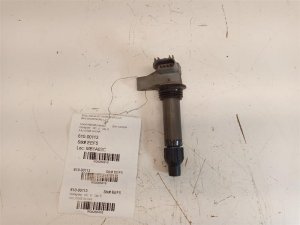
Used OEM Parts in Stock
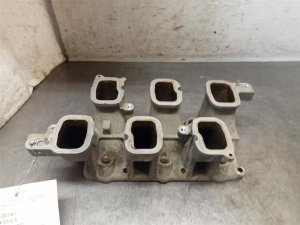
New Aftermarket Parts Available

The information in this article is provided for general reference and educational purposes only. Vehicle specifications, procedures, and part compatibility can vary by production date, trim level, and region. Always consult your vehicle's factory service manual and verify part numbers before purchasing or performing repairs. Safety-critical components such as airbags, seat belts, and braking systems should be installed by a qualified professional.
- Buick Enclave:
- 🧭 Diagnostic Flowchart
- 🎬 Helpful Videos
- 🛍️ Shop This Part
- What's Unique About the 2008-2017 Buick Enclave
- Symptoms You May Notice
- Most Likely Causes
- Rare But Worth Checking
- Diagnosis Steps
- Parts You'll Likely Need
- Related Codes That Often Appear With This One
- Technical Service Bulletins (TSBs) & Recalls
- Platform-Specific Known Issues
- Mechanic-Grade Diagnostic Values
- Hidden / Shadow Codes Worth Checking
- Scan Tool Commands That Help
- Wiring & Ground Locations
- Real Owner Repair Stories
- "I Checked Everything" — The Actual Cause
- When the Usual Fixes Don't Work
- OEM Part Supersession History
- Model Year Variations Within This Range
- Real Owner Stories
- 2009 Buick Enclave 3.6L V6
- 2008-2017 Buick Enclave 3.6L V6
- Related OBD-II Codes
- Frequently Asked Questions
- 🎟️ Get 5% Off