

P0305 on 2016-2020 Cadillac CT6: Cylinder 5 Misfire Causes and Fixes
P0305 indicates a misfire in cylinder 5. On the Cadillac CT6 with a V6 engine, this is often caused by a faulty ignition coil or spark plug. A vehicle-specific issue is a failing Active Fuel Management (AFM) Oil Control Valve (OCV) solenoid, as noted in GM Technical Service Bulletin #21-NA-036, which can lead to cylinder deactivation.
- P0305 is a misfire on cylinder 5, which is the rear-most cylinder on the passenger side of the engine.
- The most common fixes are simple: a new ignition coil or spark plug.
- A platform-specific cause for the CT6 is a faulty AFM Oil Control Valve (OCV) solenoid, as detailed in TSB 21-NA-036. This should be checked before more complex diagnostics if coils and plugs are good.
What's Unique About the 2016-2020 Cadillac CT6
For the 2016-2020 Cadillac CT6 equipped with the 3.0L (LGW) and 3.6L (LGX) V6 engines, a P0305 code has a specific documented cause beyond the usual spark plugs and coils. General Motors issued a technical service bulletin (TSB #21-NA-036) pointing to a potentially damaged Active Fuel Management (AFM) Oil Control Valve (OCV) solenoid. This component, located in the camshaft cover, can fail or leak, causing improper oil pressure. This loss of pressure deactivates cylinder 5 (one of the AFM cylinders), leading to a persistent misfire that logs the P0305 code. Another TSB, PIP5493, also suggests that for a first-time P0305, the Rocker Arm Oil Control Valve should be a primary suspect.
Diagnostic Flowchart
Tap your situation to follow the diagnostic path that matches what you're seeing on this vehicle.
Symptoms You May Notice
- Flashing or solid Check Engine Light
- Rough or vibrating idle
- Engine hesitation or stumbling during acceleration
- Noticeable loss of power
- Reduced fuel economy
- Possible fuel smell from the exhaust
- Engine may make a ticking, chirping, or squealing noise.
- Replacing oxygen sensors. O2 sensors will report the effects of a misfire (unburnt fuel), but they are rarely the cause of a single-cylinder misfire code.
Most Likely Causes
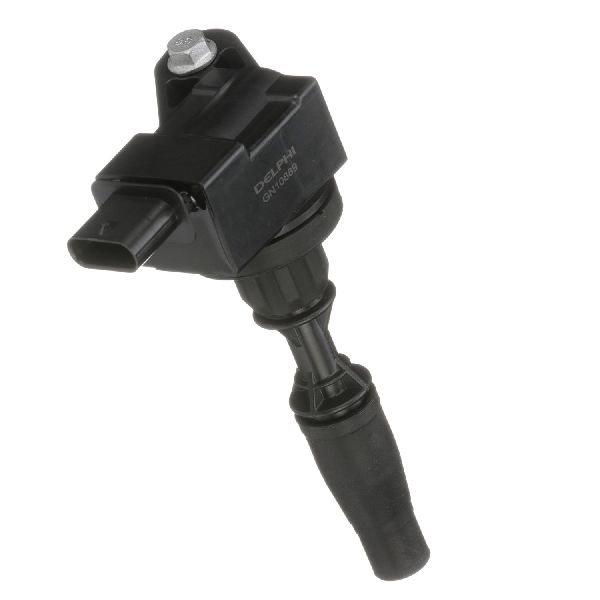
- Faulty Ignition Coil 🔴 High Probability → Shop Ignition Coil Coil-on-plug ignition systems are common points of failure over time due to constant exposure to high temperatures and vibration.
How to confirm: Swap the ignition coil from cylinder 5 with another cylinder (e.g., cylinder 3). Clear the codes and drive the vehicle. If the code changes to P0303, the ignition coil is the faulty part. This is a standard diagnostic step confirmed in many user forums.
Typical fix: Replace the failed ignition coil. It is often recommended to replace the corresponding spark plug at the same time.
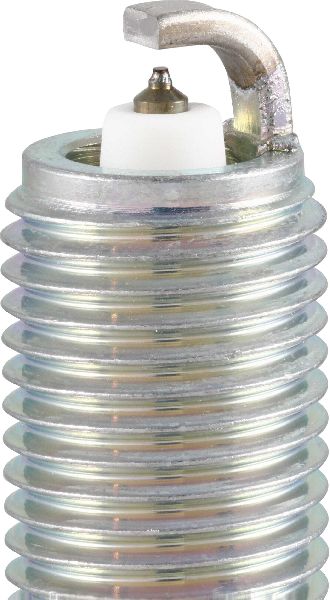
Est. part cost: $40-$90 - Worn or Fouled Spark Plug 🔴 High Probability → Shop Spark Plug Spark plugs are a regular maintenance item. On direct injection engines like the LGW and LGX, they are critical for proper combustion and can become fouled by carbon deposits over time.
How to confirm: After confirming the coil is good, remove the spark plug from cylinder 5. Inspect it for wear on the electrode, carbon or oil fouling, or cracks in the porcelain. The recommended gap is typically around 0.035".
Typical fix: Replace the spark plug. It is best practice to replace all spark plugs as a set 🎬 See this walkthrough for changing spark plugs on the 3.6L to ensure even performance.
Est. part cost: $50-$150 for a set - Damaged AFM Oil Control Valve (OCV) Solenoid 🟡 Medium Probability → Shop Engine Variable Valve Timing (VVT) Oil Control Valve TSB #21-NA-036 specifically identifies this as a cause for P0305 on these engines, as cylinder 5 is an AFM cylinder. The solenoid can break or leak, leading to oil pressure loss that deactivates the cylinder.
How to confirm: Visually inspect the OCV solenoid, located in the camshaft cover, for oil leaks or physical damage. The TSB notes that the end of the solenoid can break off and remain in the bore. This requires removing the solenoid to inspect it and its bore properly. Resistance can be tested; expect a reading between 8-30 Ohms.
Typical fix: Replace the damaged OCV solenoid and its O-rings. Ensure any broken pieces are removed from the camshaft cover bore. The part is also referred to as the Rocker Arm Oil Control Valve.
Est. part cost: $50-$120 - Clogged or Faulty Fuel Injector ⚪ Low Probability → Shop Fuel Injector Direct injection injectors operate under high pressure and can be susceptible to clogging from fuel deposits, although it's less common than ignition issues.
How to confirm: If ignition issues are ruled out, a mechanic can perform a fuel injector balance test using a scan tool like the GM GDS2. A DIY method is to measure resistance across the injector terminals, which should be around 1.5-2.2 Ohms. Swapping the injector with another cylinder is also possible but is labor-intensive.
Typical fix: Clean or replace the faulty fuel injector. In one forum, a dealer diagnosed an injector issue and replaced it to resolve a misfire code.
Est. part cost: $70-$200
Rare But Worth Checking
- Internal Engine Mechanical Issues: This is the least likely cause and should be investigated last. TSBs #21-NA-036 and #19-NA-219 mention that if other causes are ruled out, the issue could be broken rocker arms (SRFFs), worn camshaft lobes, or sticking valves. A compression test is the first step to diagnosing this. TSB #21-NA-278 also provides a diagnostic strategy for engine noises accompanied by misfire codes.
- Leaking Spark Plug Tube: → Shop Spark Plug According to TSB #21-NA-147, porosity in the cylinder head can cause oil or coolant to leak into the spark plug tube, shorting out the coil and plug. The bulletin states the tubes are permanently sealed and not replaceable, requiring cylinder head replacement if a leak is confirmed to be coming from the tube itself and not from above.
Diagnosis Steps
- Read the code with an OBD-II scanner and confirm P0305 is present. Note any 🎬 Watch: A simple guide to understanding the P0305 misfire code other codes, like P0300 or P0302.
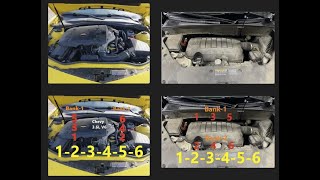
- Identify cylinder 5. On the V6 engines 🎬 Watch: How to locate Bank 1 and cylinder firing order (LGW/LGX), the passenger's side bank is cylinders 1, 3, and 5 (front to back). The driver's side is 2, 4, 6.
- Swap the ignition coil from cylinder 5 with the coil from cylinder 3. Clear the codes and run the engine. If the code changes to P0303, the coil is bad.
- If the code remains P0305, swap the spark plug from cylinder 5 with the one from cylinder 3. If the code changes to P0303, the spark plug was the issue.
- If the misfire remains on cylinder 5, inspect the wiring and connector for the ignition coil and fuel injector for any damage or corrosion.
- Following TSB #21-NA-036, inspect the AFM Oil Control Valve (OCV) solenoid on the cylinder 5 bank. Remove the solenoid and check for physical damage, especially a broken end piece, and inspect the bore in the camshaft cover for obstructions.
- If no external cause is found, perform a compression test and a cylinder leakage test on cylinder 5 to check for mechanical engine problems like worn valves, piston rings, or head gasket issues.
- If compression is good, the issue may be a faulty fuel injector, which can be confirmed with a balance test or by swapping it with another cylinder.
Parts You'll Likely Need
- Ignition Coil
(OEM #12674754)— This is one of the most common failure points for a single-cylinder misfire.
Trusted brands: ACDelco, Delphi, NGK
OEM price range: $60-$100
Aftermarket price range: $40-$80 - Spark Plug
(OEM #12688675)— Spark plugs are a maintenance item and can cause misfires when worn or fouled.
Trusted brands: ACDelco, NGK
OEM price range: $15-$25
Aftermarket price range: $8-$18 - AFM Oil Control Valve (OCV) Solenoid
(OEM #12690985)— A known issue documented in TSB #21-NA-036 for causing a P0305 misfire on this specific vehicle.
Trusted brands: ACDelco
OEM price range: $70-$120
Aftermarket price range: $50-$90
Related Codes That Often Appear With This One
- P0300 — If the condition causing the P0305 is intermittent or beginning to affect other cylinders, a P0300 (Random Misfire Detected) code may also be stored. TSB #21-NA-036 explicitly lists P0300 alongside P0305 as a possible code set by a faulty OCV solenoid.
- P0302 — TSB #21-NA-036 also lists P0302 (Cylinder 2 Misfire) as a related code, because cylinder 2 is also an AFM cylinder and can be affected by the same OCV solenoid issues.
Technical Service Bulletins (TSBs) & Recalls
- 21-NA-036: Information on Malfunction Indicator Lamp (MIL) Illuminated – DTCs P0300, P0302 and/or P0305 Set. This TSB points to a faulty AFM Oil Control Valve or rocker arm issues as a specific cause for misfires on AFM cylinders.
Platform-Specific Known Issues
- TSB #21-NA-036: Details a condition where the AFM Oil Control Valve (OCV) solenoid for cylinder 5 (or 2) can be damaged or leak, causing inadequate oil pressure that deactivates the cylinder and logs a P0305 or P0302 code. The bulletin advises inspecting the solenoid and its bore in the camshaft cover for damage or blockages, as the tip can break off.
- TSB #PIP5493: An earlier bulletin that also points to the Rocker Arm Oil Control Valve (OCV) as a likely cause for a first-time P0305 misfire, recommending its replacement before extensive diagnostics.
- TSB #21-NA-147: Describes a rare condition of cylinder head porosity that can cause oil or coolant to seep into the spark plug tube, fouling the plug and coil. This requires cylinder head replacement to fix.
Mechanic-Grade Diagnostic Values
- Fuel Injector Resistance — expected: 1.5 - 2.2 Ohms. Failure: A reading significantly outside this range, or an open/short circuit, indicates a faulty injector coil.
- AFM/VVT Oil Control Solenoid Resistance — expected: 8 - 30 Ohms. Failure: A reading outside this range suggests a faulty solenoid.
- Ignition Coil Primary/Secondary Resistance — expected: While no specific OEM value is published, all coils should have nearly identical resistance readings when tested.. Failure: A coil with a resistance value that is significantly different from the others is likely faulty.
- Low-Side Fuel Pressure (Key On, Engine Off) — expected: 50 - 60 PSI. Failure: Pressure below 50 PSI, or pressure that bleeds off quickly, points to a weak in-tank fuel pump or a leak in the low-pressure system.
Hidden / Shadow Codes Worth Checking
- Misfire Counter History (per cylinder): The ECM maintains a running count of misfire events for each cylinder, even if the count is not high enough to set a P030x trouble code. This data can reveal intermittent misfires that are not yet a hard fault. (see via A dealer-level scan tool like the GM GDS2 is required to access the 'Misfire History' data PIDs within the ECM.)
- Mode 6, Test ID $A5: Mode 6 data provides raw test results from the vehicle's self-diagnostics. Test ID $A5 corresponds to the misfire count for cylinder 5. Viewing this data can show misfire counts before they cross the threshold to trigger a CEL. (see via Most advanced OBD-II scanners (not just basic code readers) have a Mode 6 function.)
Scan Tool Commands That Help
- GM GDS2: Active Fuel Injector Test (AFIT) — Use this function when a fuel injector is suspected. It performs an automated test that measures pressure drop and flow rate for each injector to identify a clogged or leaking injector without having to remove it.
- GM GDS2: Cylinder Power Balance — This test helps identify a weak cylinder by sequentially deactivating each one and measuring the corresponding drop in engine RPM. If deactivating cylinder 5 causes little or no change in RPM, it confirms it was not contributing properly.
- GM GDS2: Oil Pump Pressure Control — After replacing a faulty AFM Oil Control Valve (OCV), this command can be used to cycle the oil pump to its high-pressure mode to verify the repair and ensure the AFM system is functioning correctly, as suggested by TSB PIP5493.
Wiring & Ground Locations
- G102 — Typically located on the left (driver's side) rear of the engine block or cylinder head.. This is a primary ground point for the ignition coils. A loose or corroded connection at G102 can cause insufficient voltage to the coils, leading to a weak spark and misfires on one or more cylinders.
- G103 / G104 — Located on the front or rear of the passenger's side (Bank 1) cylinder head.. These grounds serve the ECM and various engine sensors. A poor connection can cause erratic sensor readings or incorrect ignition/fuel commands from the ECM, potentially leading to a misfire.
- Ignition Coil Connector (Cylinder 5) — The electrical connector on top of the ignition coil for cylinder 5 (passenger side, rearmost cylinder).. The terminals inside this connector can become corroded or lose tension, causing a poor connection. The wiring leading to it can also chafe or break. This would interrupt power or the trigger signal to the coil, causing a misfire only on cylinder 5.
Real Owner Repair Stories
- YouTube video from a professional mechanic (Cadillac, 37,000 miles (model appears to be a CT5/CT6 or similar with a V6)) — Check Engine Light with code P0305, Cylinder 5 Misfire.
❌ Tried (didn't work) Initial diagnosis pointed directly to cylinder 5.
✅ What actually fixed it Upon removing the ignition coil for cylinder 5, the mechanic discovered the spark plug tube was full of a water and oil mixture. The tube was cleaned and dried out with compressed air, and the coil and plug were reinstalled. This resolved the misfire. The cause was suspected to be from a recent pressure wash of the engine bay.
"I Checked Everything" — The Actual Cause
- A common diagnostic path for misfires is to perform a smoke test to check for vacuum leaks. However, on the LGW and LGX direct injection engines, a significant cause of misfires can be heavy carbon buildup on the intake valves. Since the fuel is injected directly into the cylinder, it never washes over the back of the valves, allowing oil deposits from the PCV system to bake on over time. This buildup can disrupt airflow into the cylinder, causing a misfire that a smoke test will not detect. Diagnosis often requires a compression test and, ultimately, a visual inspection with a borescope.
OEM Part Supersession History
12674754→12726023 (and others)— Part revision and consolidation by GM.
Heads up: While many aftermarket coils (like UF-742, C1819) are listed as replacements, using genuine ACDelco or Delphi parts is often recommended to avoid compatibility or premature failure issues.
Model Year Variations Within This Range
- 2016-2020: The 3.6L LGX engine, introduced in 2016, was a significant redesign from the previous 3.6L LFX/LLT engines. It features different Active Fuel Management (AFM) components, fuel systems, and engine management. Therefore, diagnostic information and common failure points from older GM 3.6L engines may not be applicable to the CT6.
Helpful Videos


We Have This Part in Stock


The information in this article is provided for general reference and educational purposes only. Vehicle specifications, procedures, and part compatibility can vary by production date, trim level, and region. Always consult your vehicle's factory service manual and verify part numbers before purchasing or performing repairs. Safety-critical components such as airbags, seat belts, and braking systems should be installed by a qualified professional.
- Cadillac CT6:
- 🧭 Diagnostic Flowchart
- 🎬 Helpful Videos
- 🛍️ Shop This Part
- What's Unique About the 2016-2020 Cadillac CT6
- Symptoms You May Notice
- Most Likely Causes
- Rare But Worth Checking
- Diagnosis Steps
- Parts You'll Likely Need
- Related Codes That Often Appear With This One
- Technical Service Bulletins (TSBs) & Recalls
- Platform-Specific Known Issues
- Mechanic-Grade Diagnostic Values
- Hidden / Shadow Codes Worth Checking
- Scan Tool Commands That Help
- Wiring & Ground Locations
- Real Owner Repair Stories
- "I Checked Everything" — The Actual Cause
- OEM Part Supersession History
- Model Year Variations Within This Range
- 🎟️ Get 5% Off