

P0305 on 2008-2015 Cadillac CTS: Cylinder 5 Misfire Causes and Fixes
P0305 on a Cadillac CTS most often means a bad ignition coil or a worn-out spark plug on cylinder #5. A DIY fix involves swapping the coil to another cylinder to confirm the fault. Expect to pay $40-$100 for a new OEM coil and spark plug. On 3.6L V6 engines, accessing cylinder #5 requires removing the intake manifold, and persistent misfires are often due to carbon buildup on the intake valves, a common issue with these direct-injection engines.
- P0305 on a CTS is almost always a bad ignition coil or spark plug for cylinder #5.
- The easiest way to diagnose a bad coil is to swap it with one from another cylinder and see if the misfire code follows.
- On V6 engines, cylinder #5 is on the passenger side against the firewall, and replacing it requires removing the upper intake manifold.
- If new plugs and coils don't fix the problem, the next most likely cause is carbon buildup on the intake valves, a known issue with the 3.6L direct-injection engine.
- If your check engine light is flashing, stop driving to prevent catastrophic damage to your catalytic converter.
What's Unique About the 2008-2015 Cadillac CTS
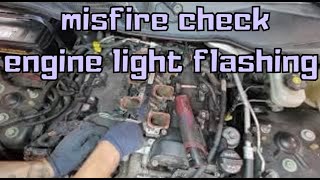
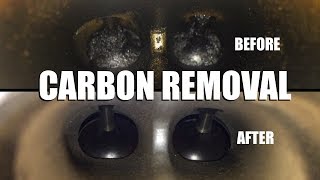
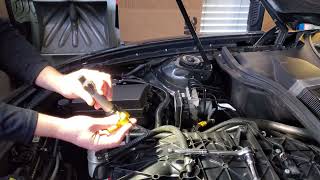
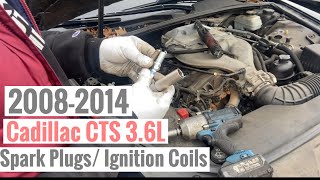
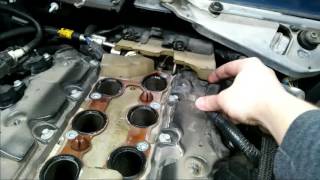
While ignition faults are common on any vehicle, the V6 engines in the 2008-2015 CTS have two platform-specific issues. First, accessing cylinder #5 (passenger side, rear-most cylinder) requires removing the upper intake manifold 🎬 Watch: Step-by-step spark plug and coil replacement walkthrough., making the repair more complex than on other cars. Second, the direct-injection 3.6L V6 engines (LLT and LFX) are known to develop significant carbon buildup on the intake valves, which can cause persistent misfires after ignition parts have been replaced. This happens because fuel is injected directly into the cylinder, so it never washes over the valves to clean them. 🎬 See how to clean carbon buildup from intake ports. Finally, the earlier 3.6L LLT V6 engines were also susceptible to stretched timing chains, which can cause misfires across an entire bank of cylinders (P0301, P0303, P0305).
Diagnostic Flowchart
Tap your situation to follow the diagnostic path that matches what you're seeing on this vehicle.
Generation note: This range covers the second generation (2008-2013) and the early third generation (2014-2015) of the Cadillac CTS. The primary V6 engines evolved from the 3.6L LLT to the LFX, but both are direct-injection and share the same common causes for P0305, including the potential for carbon buildup. The earlier LLT engine is more frequently cited for timing chain issues that can lead to misfire codes.
Symptoms You May Notice
- Engine shaking or vibrating, especially at idle.
- Flashing or solid Check Engine Light.
- Noticeable loss of power and sluggish acceleration.
- Rough, unstable idle.
- Increased fuel consumption.
- A smell of gasoline from the exhaust.
- Stabilitrak warning light may illuminate, as the system is often disabled by the ECU during a misfire event.
- Replacing oxygen (O2) sensors. A misfire can cause erratic O2 sensor readings, but the sensor is rarely the cause of a single-cylinder misfire code.
- Replacing the Mass Airflow (MAF) sensor. A faulty MAF sensor typically affects all cylinders and would be more likely to cause a P0300 random misfire code.
Most Likely Causes
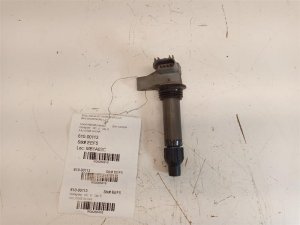
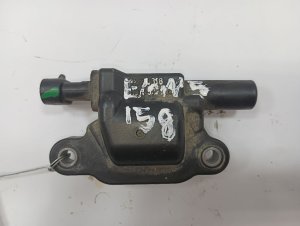
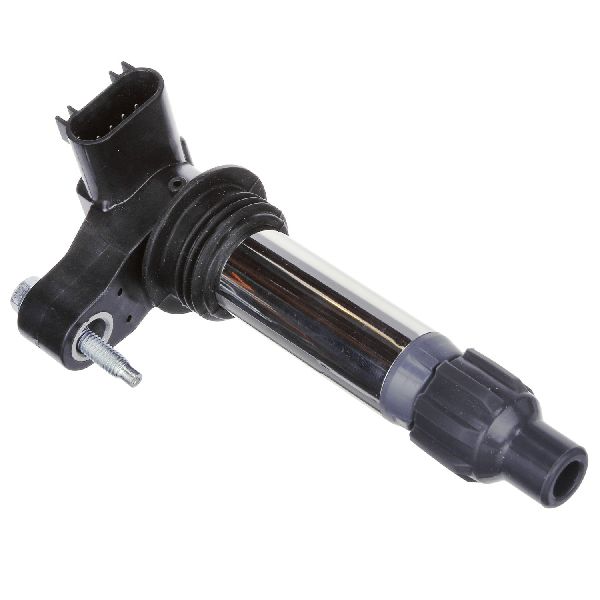
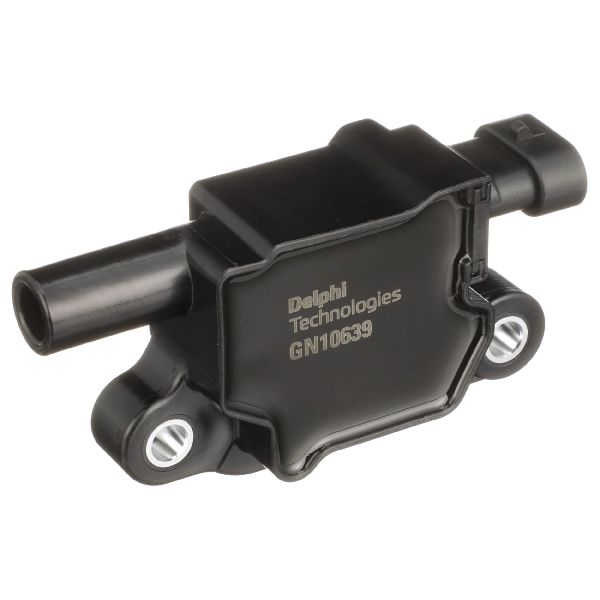
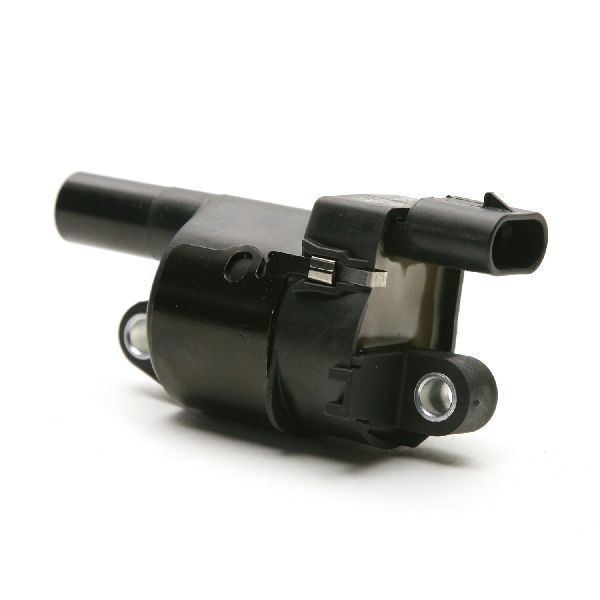
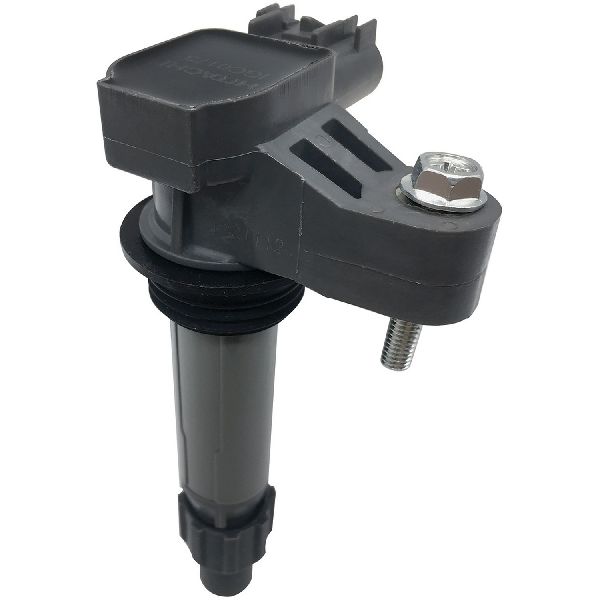
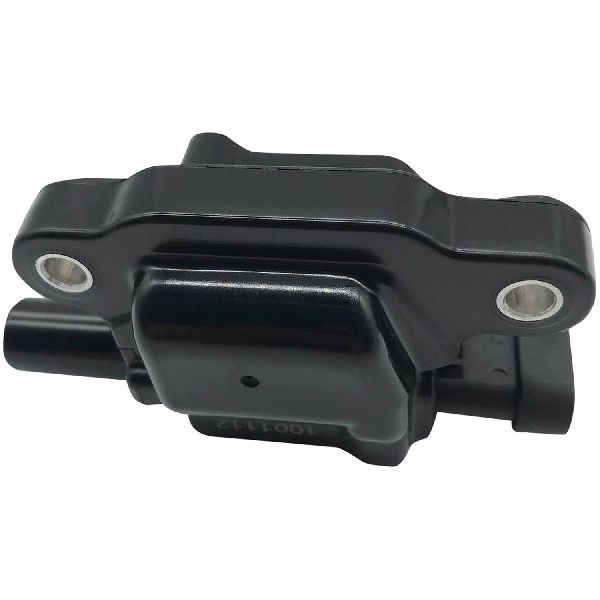
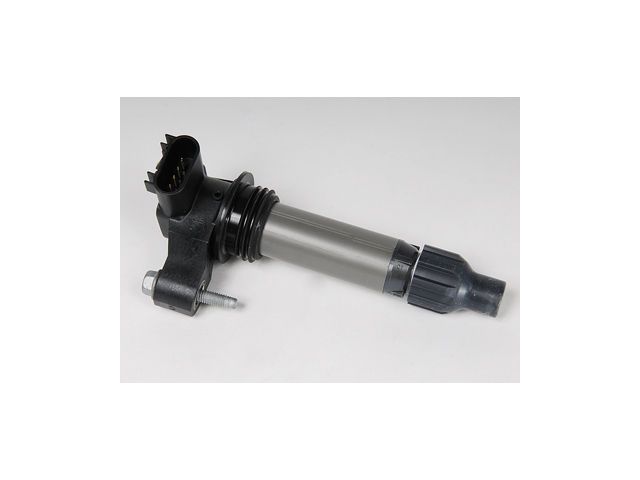
- Failed Ignition Coil 🔴 High Probability → Shop Ignition Coil Coil-on-plug systems are a common failure point. Oil leaks from the valve cover gasket can also seep into the spark plug tubes and destroy the coil. TSB #PIP5038B also points to loose or corroded ignition coil ground connections as a potential cause for misfires on the CTS.
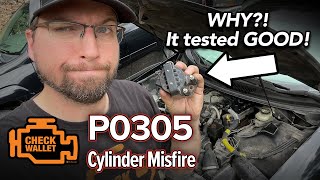
How to confirm: Swap the ignition coil from cylinder #5 with another cylinder (e.g., cylinder #3). Clear the codes and drive the car. If the code changes to P0303, the ignition coil is faulty. Cylinder #5 is on the passenger side (Bank 1), closest to the firewall. A visual inspection of the old coil may reveal cracks in the housing.
Typical fix: Replace the failed ignition coil. It is often recommended to replace the corresponding spark plug at the same time. Per TSB #PIP5038B, if the vehicle was built after Dec 2008, only the affected coil and plug need replacement for a single-cylinder misfire.
Est. part cost: $50-$90 for one OEM coil - Worn or Fouled Spark Plug 🔴 High Probability → Shop Spark Plug These engines use long-life iridium plugs, but they can still fail, especially with extended oil change intervals or other engine issues. The factory replacement interval is up to 100,000 miles. Carbon fouling is a common sight.
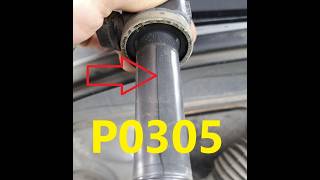
How to confirm: After confirming the coil is good, remove the spark plug from cylinder #5. Inspect it for wear (rounded electrode), oil fouling, carbon tracking (a black line down the ceramic), or an incorrect gap.
Typical fix: Replace the spark plug. It is best practice to replace all six (or eight) spark plugs as a set to ensure even performance.
Est. part cost: $10-$20 for one iridium plug - Intake Valve Carbon Buildup 🟡 Medium Probability The 3.6L V6 engines use direct injection (GDI), which sprays fuel directly into the cylinder. This means gasoline doesn't wash over the intake valves, allowing oil and carbon deposits from the PCV system to bake onto them, restricting airflow and causing misfires, especially when the engine is cold. TSB #PIP5029B specifically addresses this issue across many GM direct-injection engines, including the LLT and LFX.
How to confirm: This is difficult to confirm without a borescope to visually inspect the valves. It's typically diagnosed after new plugs and coils do not resolve the misfire. The misfire may be worse at idle and improve with higher RPM.
Typical fix: The intake valves need to be professionally cleaned, either through a chemical process or, more effectively, through 'walnut blasting,' which requires removing the intake manifold.
Est. part cost: $50 for DIY chemical cleaners, while a professional walnut blasting service can cost $400-$800. - Clogged Fuel Injector ⚪ Low Probability → Shop Fuel Injector
How to confirm: After ruling out ignition issues, a professional can perform a fuel injector balance test. A DIY method is to swap the fuel injector from cylinder #5 with another cylinder, but this is a much more involved job than swapping a coil as it requires removing the fuel rail.
Typical fix: Replace the faulty fuel injector. It's recommended to replace the seals for the surrounding injectors if the fuel rail is removed. This repair can be costly, with shop estimates often exceeding $1,000.
Est. part cost: $70-$150 for one injector
Rare But Worth Checking
- Stretched Timing Chain: A known issue on the 3.6L LLT V6, a stretched timing chain can cause the camshaft timing to be off, leading to misfires on an entire bank (e.g., P0301, P0303, P0305 all at once). This is a major repair and often presents with a P0008/P0009 code as well. Diagnosis involves checking cam/crank correlation with a scan tool or physical inspection.
- Loose Spark Plug Wire/Boot: → Shop Spark Plug TSB #PIP4819A specifically calls out inspecting and replacing loose spark plug wires (boots) for P030x codes on 2013 models. The connection between the coil and plug can degrade over time, causing intermittent spark.
- Intake Manifold Gasket Leak: → Shop Engine Intake Manifold A vacuum leak near the intake runner for cylinder #5 can lean out the air/fuel mixture and cause a misfire on just that cylinder. Since the manifold must be removed to access cylinder #5 on V6 models, replacing these gaskets during a plug/coil job is preventative maintenance.
- Low Cylinder Compression: A mechanical engine problem, such as a worn piston ring, bad valve, or damaged lifter can cause a loss of compression and a persistent misfire. This is the worst-case scenario and should be investigated with a compression test if all else fails.
Diagnosis Steps
- Confirm the P0305 code is present using an OBD-II scanner. Check for a flashing Check Engine Light, which indicates a severe, catalyst-damaging misfire.
- Identify cylinder #5. On the V6 engines, it is on the passenger side (Bank 1), at the rear of the engine closest to the firewall.
- Swap the ignition coil from cylinder #5 with the coil from cylinder #3 (middle cylinder, same bank). Clear the codes and test drive.
- If the code changes to P0303, the ignition coil is bad and must be replaced.
- If the code remains P0305, the coil is likely good. Proceed to inspect the spark plug.
- Remove the spark plug from cylinder #5. This will require removing the upper intake manifold on V6 models. Check the plug for excessive wear, damage, or fouling from oil or carbon. Replace if it is in poor condition. It is recommended to replace all plugs as a set.
- While the intake manifold is off, it is a good time to inspect the intake valves for carbon buildup, a very common issue on the 3.6L GDI engines.
- If the plug and coil are good, the issue may be fuel-related. Consider swapping the fuel injector from cylinder #5 to another cylinder, though this is an advanced step.
- Check for vacuum leaks around the intake manifold gasket, especially near the runner for cylinder #5.
- If the misfire continues, professional diagnosis is recommended. This includes a fuel injector balance test and a cylinder compression test to rule out internal engine damage or a timing chain issue.
Parts You'll Likely Need
- Ignition Coil
(OEM #12632479 (ACDelco D515C))— This is the most co
Related Codes That Often Appear With This One
- P0300 — If the misfire is intermittent or starting to affect other cylinders, a P0300 (Random/Multiple Cylinder Misfire) may appear alongside P0305. This can also point towards a shared cause like a vacuum leak, fuel pressure issue, or timing chain problem.
- P0301, P0303 — Misfires on other cylinders on the same engine bank (Bank 1, passenger side) can indicate a shared problem, like a vacuum leak from the intake manifold gasket on that side or a stretched timing chain affecting that bank's camshaft.
- P0008, P0009 — These codes indicate an engine timing issue between the crankshaft and camshafts. On the 3.6L LLT engine, they are a strong indicator of a stretched timing chain, which is a known cause of misfires on one or both banks.
Technical Service Bulletins (TSBs) & Recalls
- PIP5029B: Addresses engine misfires caused by major carbon deposits on the intake valves of direct-injected GM engines, including the 3.0L and 3.6L V6 in the CTS.
- PIP4819A: Notes that loose spark plug wires/boots can be a cause for P030x misfire codes on 2013 models.
- PIP5038B: Discusses misfire codes (including P0305) that can be caused by faulty ignition coils or, importantly, loose or corroded ignition coil ground connections. Provides torque specs for the ground bolts.
- 15-06-01-002K: While for the V-series LT4 engine, it details how internal engine issues like a collapsed AFM lifter can cause a P0300 random misfire, which could start as a single cylinder misfire.
Platform-Specific Known Issues
- Carbon Buildup on Intake Valves: A well-documented issue on the 3.6L direct-injection engines (LLT and LFX) that causes misfires which aren't resolved by new plugs or coils. Requires physical cleaning (walnut blasting).
- Timing Chain Stretch (LLT Engine): The earlier 3.6L LLT V6 is known for premature timing chain wear, leading to camshaft correlation codes (P0008/P0009) and misfires across an entire cylinder bank.
- Intake Manifold Removal for Access: Unlike many V-engines, accessing the rear cylinders (including #5) on the V6 CTS models requires removing the upper intake manifold, adding 1-2 hours of labor and requiring new gaskets.
Mechanic-Grade Diagnostic Values
- High-Pressure Fuel Rail Pressure (GDI System) — expected: 300-500 PSI at idle, up to 2,000+ PSI under load.. Failure: Significantly lower pressure than specified, or erratic readings that don't correspond to engine load.
- Low-Side Fuel Pressure (Lift Pump) — expected: 50-60 PSI, feeding the high-pressure pump.. Failure: Pressure below 45 PSI can starve the high-pressure pump and cause misfires under load.
- Misfire Counter (Live Data) — expected: 0 or very few counts on all cylinders at idle and under load.. Failure: A rapidly increasing count on cylinder 5 indicates an active misfire.
Scan Tool Commands That Help
- GDS2 / Tech2: Cylinder Power Balance Test — To graphically view the relative power contribution of each cylinder. A significant drop for cylinder #5 confirms it is not contributing correctly.
- GDS2 / Tech2: Fuel Injector Balance Test — After ruling out ignition problems, this test can identify a clogged or failing injector by measuring the pressure drop in the fuel rail as each injector is commanded to fire.
- GDS2 / Tech2: Misfire Graphic / Misfire History — To view current and historical misfire counts for each specific cylinder, confirming that P0305 is the primary issue and checking if other cylinders are also misfiring intermittently.
Wiring & Ground Locations
- G130 — On the rear of the right cylinder head (Bank 1, passenger side).. This is a primary ground point for components on Bank 1. A loose or corroded connection here can cause intermittent issues, including misfires, for cylinders 1, 3, and 5.
- G102 — Located at the left rear of the engine.. This ground is specified as grounding the ignition coils. A poor connection here could affect multiple coils and lead to random misfires, including on cylinder 5.
- Cylinder 5 Ignition Coil Connector — Top of the engine, on the passenger side (Bank 1), rearmost coil.. The ECM provides a control signal to this connector. Technicians test for a pulsed ground signal on the control wire to verify the ECM is commanding the coil to fire. A damaged wire or connector pin here will cause a P0305.
Real Owner Repair Stories
- LS1TECH forum user (Cadillac CTS-V (specific year not mentioned, but within the generation)) — P0305 code, rough idle, rich smell at startup, but feels fine under throttle.
❌ Tried (didn't work) Swapped injectors between cylinders 3 and 5., Swapped coils between cylinders 3 and 5., Swapped spark plugs between cylinders 3 and 5., Replaced spark plug wires., Performed a compression test (150 psi on #5)., Checked for vacuum leaks with propane and starter fluid., Inspected valve springs and pushrods.
✅ What actually fixed it The user's diagnostic journey was extensive and the final post did not state a definitive fix, but the thread pointed towards a potential mechanical issue like a piston or a very hard-to-find wiring problem, as all common swap diagnostics failed to isolate the cause.
OEM Part Supersession History
12613057, 12613051→12632479 (ACDelco D515C)— Improved design for durability and resistance to internal shorts and dielectric breakdown.Multiple, including 12622475, 12629934→12641740, 12677329 and others— Revisions to the high-pressure fuel pump to improve reliability on the GDI engines.
Heads up: It is critical to match the high-pressure fuel pump part number to the specific vehicle VIN and engine code (LLT or LFX) as there are differences.
Model Year Variations Within This Range
- 2008-2011: These years primarily used the 3.6L LLT V6 engine. This engine is noted as being more susceptible to premature timing chain stretch, which can cause misfire codes across one bank (P0301, P0303, P0305).
- 2012-2015: The 3.6L V6 was updated to the LFX design. The LFX features redesigned cylinder heads with integrated exhaust manifolds and is generally considered to have improvements regarding the timing chain issues of the earlier LLT. However, it is still a direct-injection engine and remains prone to carbon buildup on intake valves.
- 2008-2009: The base engine was a 3.6L port-injected LY7 V6 with 263 hp. This engine is NOT direct-injected and is therefore not prone to intake valve carbon buildup, a key difference in diagnosing misfires compared to the direct-injected LLT and LFX engines.
Helpful Videos

Used OEM Parts in Stock
New Aftermarket Parts Available

The information in this article is provided for general reference and educational purposes only. Vehicle specifications, procedures, and part compatibility can vary by production date, trim level, and region. Always consult your vehicle's factory service manual and verify part numbers before purchasing or performing repairs. Safety-critical components such as airbags, seat belts, and braking systems should be installed by a qualified professional.
- Cadillac CTS:
- 🧭 Diagnostic Flowchart
- 🎬 Helpful Videos
- 🛍️ Shop This Part
- What's Unique About the 2008-2015 Cadillac CTS
- Symptoms You May Notice
- Most Likely Causes
- Rare But Worth Checking
- Diagnosis Steps
- Parts You'll Likely Need
- Related Codes That Often Appear With This One
- Technical Service Bulletins (TSBs) & Recalls
- Platform-Specific Known Issues
- Mechanic-Grade Diagnostic Values
- Scan Tool Commands That Help
- Wiring & Ground Locations
- Real Owner Repair Stories
- OEM Part Supersession History
- Model Year Variations Within This Range
- 🎟️ Get 5% Off