

P0305 on 2016-2019 Cadillac CTS: Cylinder 5 Misfire Causes and Fixes
For a 2016-2019 Cadillac CTS, a P0305 code is most commonly caused by a failed ignition coil or a worn spark plug on cylinder 5. A less common but well-documented cause is a faulty Active Fuel Management (AFM) Oil Control Valve (OCV) solenoid, as noted in GM Technical Service Bulletin #21-NA-036, which specifically applies to cylinders 2 and 5. Start diagnosis by swapping the coil and plug from cylinder 5 to another cylinder.
- P0305 means cylinder 5 is misfiring.
- The most likely culprits are a bad ignition coil or a worn spark plug, which are simple to diagnose by swapping parts with another cylinder.
- A GM Technical Service Bulletin (#21-NA-036) points to a faulty Oil Control Valve (OCV) solenoid as a specific cause for this code on your CTS.
- Do not drive if the Check Engine Light is flashing, as this can cause expensive damage to your catalytic converter.
- Given the direct-injection engine, clogged fuel injectors and carbon buildup on intake valves are also possible causes if ignition components are good.
What's Unique About the 2016-2019 Cadillac CTS
The 2016-2019 Cadillac CTS uses advanced direct-injection engines (LGX, LF4, LT4). While this technology improves power and efficiency, it can make these engines prone to carbon buildup on intake valves, which can cause misfires. More specifically for the 3.6L LGX V6, General Motors issued Technical Service Bulletin #21-NA-036. It directly links a P0305 code to a potentially damaged Active Fuel Management (AFM) Oil Control Valve (OCV) solenoid. Cylinders 2 and 5 are the AFM cylinders, making them uniquely susceptible to this failure mode. The solenoid can leak or break apart, causing improper oil pressure for the AFM system, leading to a misfire.
Diagnostic Flowchart
Tap your situation to follow the diagnostic path that matches what you're seeing on this vehicle.
Symptoms You May Notice
- Flashing or solid Check Engine Light
- Rough or shaking engine idle
- Hesitation or stumbling during acceleration
- Noticeable loss of engine power
- Poor fuel economy
- Smell of unburnt fuel from the exhaust
- Engine feels like it's running over a bump strip during acceleration
- Stabilitrak light may illuminate, especially if the misfire occurs at idle
- Replacing oxygen sensors. While a faulty O2 sensor can cause performance issues, it will typically set its own specific codes and is unlikely to cause a single-cylinder misfire.
- Replacing the mass airflow (MAF) sensor. A bad MAF sensor usually affects all cylinders randomly and would be more likely to trigger a P0300 (random misfire) code, not a specific P0305.
Most Likely Causes
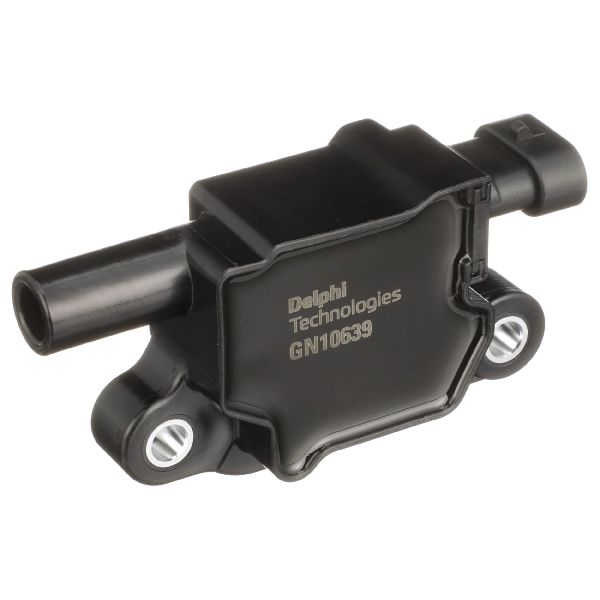
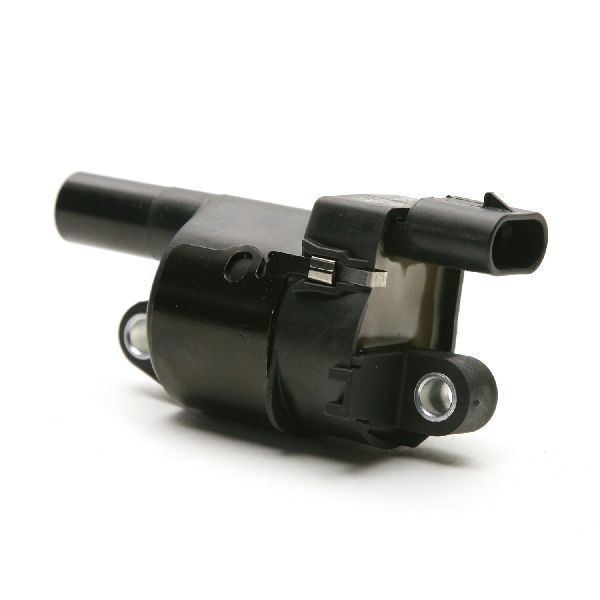
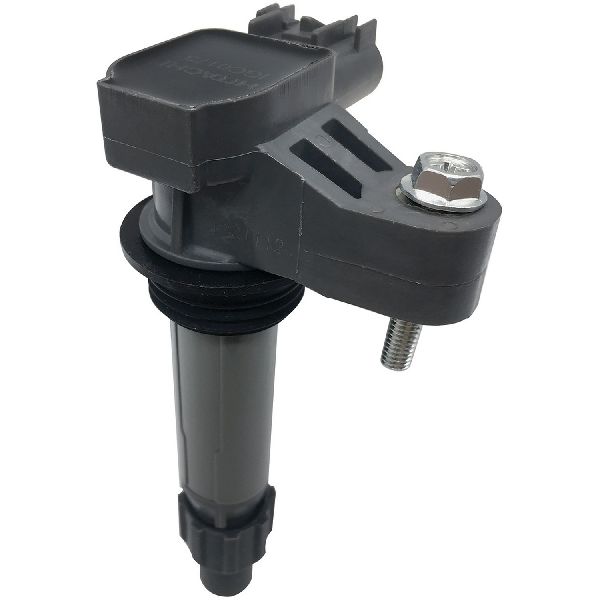
- Faulty Ignition Coil 🔴 High Probability → Shop Ignition Coil Coil-on-plug systems are a common failure point on most modern vehicles as they age. Heat cycles and vibration eventually lead to internal failure. Aftermarket coils have been reported to have a higher failure rate than OEM parts.
How to confirm: Swap the ignition coil from cylinder 5 with another cylinder (e.g., cylinder 3). Clear the codes and drive. If the code changes to P0303, the coil is bad. This is the most common and effective DIY diagnostic step.
Typical fix: Replace the faulty ignition coil. It is often recommended to replace the corresponding spark plug at the same time.
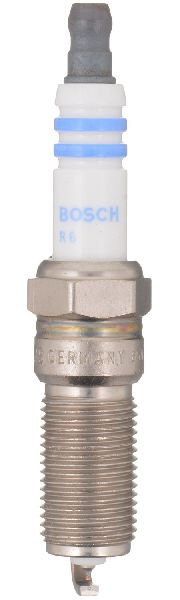
Est. part cost: $40-$90 - Worn or Fouled Spark Plug 🔴 High Probability → Shop Spark Plug Spark plugs are a regular maintenance item with a finite lifespan. The high-performance nature of Cadillac engines requires them to be in good condition for proper combustion. A worn electrode or carbon fouling can prevent a strong spark.
How to confirm: Remove the spark plug from cylinder 5 and inspect it for wear, carbon fouling, oil, or damage to the electrode or insulator. Compare it to a new plug or a plug from a healthy cylinder.
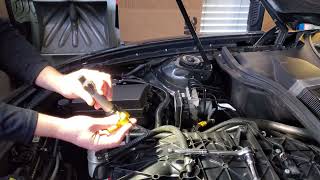
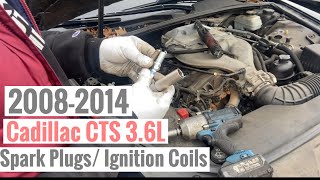
Typical fix: Replace the spark plug. It is best practice to replace all spark plugs at the same time to maintain consistent performance and avoid future misfires on other cylinders. 🎬 Watch: How to replace spark plugs and ignition coils.
Est. part cost: $10-$25 per plug - Damaged AFM Oil Control Valve (OCV) Solenoid 🟡 Medium Probability → Shop Engine Variable Valve Timing (VVT) Oil Control Valve A specific GM Technical Service Bulletin (#21-NA-036) identifies a damaged OCV solenoid as a cause for misfires specifically on cylinders 2 and 5 of the 3.6L LGX engine, which are the AFM cylinders. This is a known pattern failure.
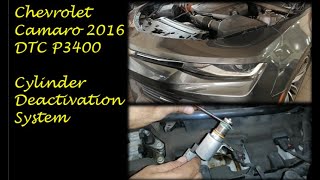
How to confirm: Visually inspect the OCV solenoid for signs of oil leakage or physical damage. Per the TSB, the solenoid may break apart upon removal, with the end getting stuck in the camshaft cover bore. A diagnostic test involves swapping the OCV solenoids from bank to bank to see if the misfire moves. 🎬 Watch this diagnostic walkthrough for a P0305 on the LGX engine.
Typical fix: Replace the damaged OCV solenoid. If the end is stuck in the bore, it can usually be removed with a pick tool.
Est. part cost: $50-$120 - Clogged or Faulty Fuel Injector 🟡 Medium Probability → Shop Fuel Injector Gasoline Direct Injection (GDI) systems operate at very high pressures, making the injectors susceptible to clogging from fuel deposits over time. An injector can also fail electronically.
How to confirm: This is a more advanced diagnosis. A professional can perform a fuel injector balance test. A DIY method is to listen for a consistent clicking sound from the injector using a mechanic's stethoscope. One can also swap injectors between cylinders, but this is more labor-intensive than swapping a coil or plug.
Typical fix: Clean or replace the faulty fuel injector. Due to the labor involved in accessing them, replacement is often the recommended repair.
Est. part cost: $70-$180
Rare But Worth Checking
- Carbon Buildup on Intake Valves: Common on GDI engines. Fuel is injected directly into the cylinder, so it doesn't wash over and clean the intake valves. Buildup can restrict airflow to cylinder 5, causing a misfire, especially on a cold start. A chemical cleaning process or walnut shell blasting is required to clean the valves. Installing an oil catch can is a common modification to reduce future buildup.
- Low Engine Compression: This indicates a more serious internal engine problem, such as a worn piston ring, a leaking valve, a bad head gasket, or a failing lifter related to the AFM system. A compression test is needed to confirm.
- Cylinder Head Porosity / Leaking Spark Plug Tube: → Shop Engine Cylinder Head A rare condition noted in GM TSB #21-NA-147 (an update to PIP5095G) where a tiny porous spot in the cylinder head allows coolant or oil to leak into the spark plug tube, shorting out the coil and plug. The fix requires cylinder head replacement as the tubes are not serviceable.
Diagnosis Steps
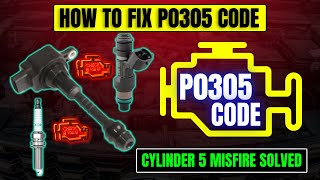
- Read the code with an OBD-II scanner and check for any other stored codes. Note the freeze frame data to see the engine conditions when the misfire occurred. 🎬 See a simple explanation of what causes a cylinder 5 misfire.
- Identify cylinder 5. On the 3.6L V6, it's the rear-most cylinder on the passenger side. On the 6.2L V8, it's the third cylinder back on the driver's side.
- Swap the ignition coil from cylinder 5 with an adjacent, easy-to-access cylinder (e.g., cylinder 3). Clear the codes and test drive. If the misfire code follows the coil (e.g., P0303), the coil is the problem.
- If the misfire remains on cylinder 5, swap the spark plug next. If the code follows the plug, the spark plug is faulty.
- If the misfire still persists on cylinder 5, inspect the fuel injector wiring and listen for its operation. A professional may be needed for further injector testing.
- For the 3.6L V6, investigate TSB #21-NA-036. Inspect the AFM Oil Control Valve (OCV) solenoid for leaks or damage. Consider swapping the left and right bank OCV solenoids to see if the misfire moves to cylinder 2.
- Inspect for vacuum leaks around the intake manifold, particularly near the runner for cylinder 5.
- If all else fails, perform an engine compression test on cylinder 5 to check for mechanical engine problems like valves, piston rings, or AFM lifters.
Parts You'll Likely Need
- Ignition Coil
(OEM #12674754)— This is one of the most common failure items causing a single-cylinder misfire. Electrical components fail over time due to heat and vibration.
Trusted brands: ACDelco (OEM), Delphi, NGK
OEM price range: $60-$100
Aftermarket price range: $40-$75 - Spark Plug
(OEM #12688035)— Spark plugs are a maintenance item that wears out, leading to a weak or inconsistent spark that causes misfires.
Trusted brands: ACDelco (Iridium), NGK (Laser Iridium)
OEM price range: $15-$25
Aftermarket price range: $10-$20 - Fuel Injector
(OEM #12679523)— Clogging or electronic failure of the injector prevents the correct amount of fuel from reaching cylinder 5, a known issue on GDI engines.
Trusted brands: ACDelco, Bosch
OEM price range: $120-$200
Aftermarket price range: $70-$150 - Engine Oil Control Valve (OCV) Solenoid
(OEM #12688784)— Specifically cited in GM TSB #21-NA-036 for causing oil leaks and misfires on cylinders 2 and 5 of the 3.6L LGX engine.
Trusted brands: ACDelco (OEM)
OEM price range: $70-$120
Aftermarket price range: $50-$90
Related Codes That Often Appear With This One
- P0300 — If the underlying issue, such as a vacuum leak or fuel pressure problem, begins to affect other cylinders, a P0300 (Random/Multiple Cylinder Misfire) may be stored alongside P0305.
- P0302 — TSB #21-NA-036 specifically calls out misfires on cylinders 2 and 5, as these are the two cylinders with Active Fuel Management (AFM). If the AFM system has a fault, it's possible to see codes for both cylinders.
Technical Service Bulletins (TSBs) & Recalls
- Bulletin #21-NA-036: Mentions a damaged AFM Oil Control Valve (OCV) solenoid that may cause an oil leak and misfire, illuminating the MIL and setting DTCs P0300, P0302 and/or P0305 on 3.6L LGX engines.
- Bulletin #21-NA-147: Addresses fluid (oil/coolant) found in spark plug tubes due to cylinder head porosity, which can cause misfires. This is a less common but severe issue requiring head replacement.
Platform-Specific Known Issues
- TSB #21-NA-036: Damaged AFM Oil Control Valve Solenoid: → Shop Engine Variable Valve Timing (VVT) Oil Control Valve For the 3.6L LGX V6, this bulletin is highly relevant. It notes that a damaged Active Fuel Management (AFM) Oil Control Valve (OCV) solenoid can cause an oil leak and misfires, specifically setting codes P0300, P0302, and/or P0305. This is because cylinders 2 and 5 are the AFM cylinders on this engine. The bulletin advises inspection and replacement of the solenoid if damage is found.
Mechanic-Grade Diagnostic Values
- Low-Side Fuel Pressure (Key ON, Engine OFF) — expected: 345-690 kPa (50-100 psi). Failure: Pressure below this range could indicate a weak in-tank fuel pump, while pressure that drops quickly could indicate a leak.
- High-Side Fuel Pressure (GDI Engines) — expected: Can exceed 2,000 PSI under load.. Failure: A scan tool showing high-side pressure that doesn't rise with engine RPM or reads significantly lower than commanded pressure can indicate a failing High-Pressure Fuel Pump (HPFP). Code P0087 often accompanies this.
- Engine Compression (3.6L HFV6) — expected: Average of 150-185 PSI, with no cylinder less than 140 PSI.. Failure: A reading on cylinder 5 that is significantly lower than the others indicates a mechanical engine problem (e.g., bad valve, piston ring, or head gasket).
Hidden / Shadow Codes Worth Checking
- Mode $06, Test ID $A2-$A7: These Test IDs correspond to misfire counts for cylinders 1 through 6. A technician can use a capable scan tool to view Mode $06 data and see the raw misfire count for cylinder 5 (Test ID $A6) during the current and last 10 driving cycles, even before the count is high enough to trigger a P0305 code. (see via A professional scan tool with Mode $06 functionality. The specific Test IDs ($A2-$A7 for Cyls 1-6) are common for GM vehicles using the GMLAN protocol.)
Scan Tool Commands That Help
- GDS2 (GM Global Diagnostic System 2): Cylinder Deactivation System Test — For the 3.6L LGX engine, if a faulty AFM lifter or solenoid is suspected, this bidirectional test allows a technician to command the AFM system on and off while monitoring engine data to see if the misfire on cylinder 5 appears or disappears, helping to isolate the fault to the AFM system.
- GDS2 (GM Global Diagnostic System 2): Fuel Injector Balance Test — This function commands the ECM to fire each injector for a set period while the technician monitors the corresponding drop in fuel rail pressure. If activating the cylinder 5 injector results in a smaller pressure drop compared to other cylinders, it indicates a clogged or failing injector.
Wiring & Ground Locations
- Ignition Coil/Fuel Injector Harness — Runs across the top of the engine, connecting to each coil and injector.. A documented case on an LS-powered CTS-V (which has a similar engine layout) with a persistent P0305 involved an abraded wire in the harness where it passed over a bolt on the front of the engine. Even though the wire didn't look fully broken, the damage was enough to cause an intermittent misfire. A visual and physical inspection of the entire harness for chafing is critical.
- Engine Block Grounds — Multiple locations on the engine block and cylinder heads, typically secured by bolts.. A weak or corroded ground connection for the cylinder head or the main engine harness can cause intermittent and hard-to-diagnose electrical issues, including misfires. The ignition coils and injectors rely on solid ground paths to function correctly.
Real Owner Repair Stories
- LS1TECH forum user (Cadillac CTS-V (similar V8 architecture)) — Persistent P0305 code, rough idle, rich smell at startup.
❌ Tried (didn't work) Swapped injectors between cylinders, Swapped coils between cylinders, Swapped spark plugs, Replaced spark plug wires, Swapped entire coil assemblies bank-to-bank, Performed compression test, Checked for vacuum leaks with propane and starter fluid, Monitored O2 sensors and fuel trims with a scan tool
✅ What actually fixed it The user found a spot in the wiring harness on the front left side that had rubbed against a bolt. Although the wire (brown with a white stripe) did not appear fully broken, this abrasion was the root cause of the misfire. The final resolution was implied to be repairing this section of the harness.
Model Year Variations Within This Range
- 2019: For the 2019 model year, the 3.6L V6 (LGX) engine was paired with a new 10-speed automatic transmission, replacing the 8-speed automatic used in 2016-2018 models. While this does not directly affect the cause of a P0305 misfire, it's a significant powertrain change within the specified vehicle range that can affect diagnostics related to drivability and load-based misfires.
Helpful Videos

We Have This Part in Stock


The information in this article is provided for general reference and educational purposes only. Vehicle specifications, procedures, and part compatibility can vary by production date, trim level, and region. Always consult your vehicle's factory service manual and verify part numbers before purchasing or performing repairs. Safety-critical components such as airbags, seat belts, and braking systems should be installed by a qualified professional.
- Cadillac CTS:
- 🧭 Diagnostic Flowchart
- 🎬 Helpful Videos
- 🛍️ Shop This Part
- What's Unique About the 2016-2019 Cadillac CTS
- Symptoms You May Notice
- Most Likely Causes
- Rare But Worth Checking
- Diagnosis Steps
- Parts You'll Likely Need
- Related Codes That Often Appear With This One
- Technical Service Bulletins (TSBs) & Recalls
- Platform-Specific Known Issues
- Mechanic-Grade Diagnostic Values
- Hidden / Shadow Codes Worth Checking
- Scan Tool Commands That Help
- Wiring & Ground Locations
- Real Owner Repair Stories
- Model Year Variations Within This Range
- 🎟️ Get 5% Off