

P0305 on 2008-2009 Cadillac STS: Cylinder 5 Misfire Causes and Fixes
P0305 on a 2008-2009 Cadillac STS indicates a misfire in cylinder 5. The most common cause is a faulty ignition coil, followed by a worn spark plug. A quick diagnosis is to swap the cylinder 5 coil with another cylinder to see if the code follows. For the 3.6L V6, carbon buildup on intake valves is also a notable cause.
- P0305 is a misfire on cylinder 5, most commonly caused by a bad ignition coil or spark plug.
- For the 3.6L V6, accessing cylinder 5 requires removing the intake manifold, increasing repair complexity.
- The 3.6L V6 is also prone to carbon buildup on intake valves and timing chain stretch, which are more complex but known causes of misfires on this platform.
- A flashing Check Engine Light indicates a severe misfire that can damage the catalytic converter; driving should be stopped immediately.
What's Unique About the 2008-2009 Cadillac STS
The 2008-2009 STS was available with either a 3.6L V6 (LLT) or a 4.6L Northstar V8 (LH2) engine. While the cause of a P0305 misfire is similar for both (typically ignition-related), the physical location of cylinder 5 and engine-specific issues differ. The 3.6L LLT V6 is a direct-injection engine known for two key issues that can cause misfires: premature timing chain stretch (especially in earlier models) and carbon buildup on the intake valves. A GM TSB (PIP5029C) specifically addresses engine misfires on the 2008 STS with the 3.6L LLT engine due to heavy carbon deposits on the valves. 🎬 See how to clean carbon buildup on direct injection valves Another TSB for the 2008 model year groups misfire codes (like P0305) with ignition coil circuit codes (P0351-P0356), strongly suggesting that coil and wiring issues are a known point of failure on this platform. [TSB #PIP5038B]
Diagnostic Flowchart
Tap your situation to follow the diagnostic path that matches what you're seeing on this vehicle.
Symptoms You May Notice
- Solid or flashing Check Engine Light
- Rough or vibrating idle
- Engine hesitation or stumbling during acceleration
- Noticeable loss of engine power
- Reduced fuel economy
- A smell of raw fuel from the exhaust
- Replacing the fuel pump when only a single cylinder is misfiring. A fuel pump issue would typically affect all cylinders and cause different codes.
- Replacing the catalytic converter. A misfire can damage the converter, but the converter itself does not cause the misfire code.
Most Likely Causes
- Faulty Ignition Coil 🔴 High Probability → Shop Ignition Coil A manufacturer TSB links misfire codes directly with ignition coil circuit faults, indicating a known weakness. [TSB #PIP5038B] Coil-on-plug units are a very common failure item on many vehicles from this era and are often the first component to check.
How to confirm: Swap the ignition coil from cylinder 5 with an adjacent cylinder (e.g., cylinder 3 on the V6). Clear the codes and drive. If the misfire code changes to the cylinder you moved the coil to (e.g., P0303), the coil is bad.
Typical fix: Replace the failed ignition coil. It is often recommended to replace the corresponding spark plug at the same time. Applying dielectric grease to the new coil boot can prevent moisture intrusion and ensure a good connection.
Est. part cost: $30-$115 - Worn or Fouled Spark Plug 🟡 Medium Probability → Shop Spark Plug Spark plugs are a regular maintenance item with a finite lifespan, often recommended for replacement around 100,000 miles. An incorrect gap, carbon fouling, or electrode wear can prevent a strong spark, causing a misfire.
How to confirm: After confirming the ignition coil is good, move the spark plug from cylinder 5 to another cylinder. If the misfire code follows the plug, the spark plug is the issue. Visually inspect the plug for wear, oil, or carbon fouling. A cracked porcelain insulator is a common, sometimes hard-to-see failure.
Typical fix: Replace the spark plug. It is best practice to replace all spark plugs as a set if they are near the end of their service life. For the 3.6L V6, the recommended OEM plug is an ACDelco Iridium plug (41-107 or similar), which comes pre-gapped.
Est. part cost: $8-$20 - Faulty Fuel Injector ⚪ Low Probability → Shop Fuel Injector Injectors can become clogged with deposits over time or fail electrically. The 3.6L LLT engine uses direct injection, which can make injectors more susceptible to clogging from carbon, though this is less common than valve deposits.
How to confirm: Listen for a clicking sound from the injector with a mechanic's stethoscope. If ignition components are confirmed good, you can swap the injector with another cylinder, but this is more labor-intensive, especially on the direct-injected V6. A dealer-level scan tool can perform a fuel injector balance test.
Typical fix: Replace the faulty fuel injector. The fuel rail may need to to be removed.
Est. part cost: $60-$150 - Mechanical Engine Failure ⚪ Low Probability While less common for a single-cylinder misfire, issues like low compression from a worn piston ring, a leaking valve, or a failing head gasket can cause P0305. The 3.6L LLT engine, in particular, is known for timing chain stretch, which can cause cam/crank correlation codes and misfires, though often on multiple cylinders.
How to confirm: Perform a compression test on cylinder 5 and compare the reading to the other cylinders. A significantly lower reading (more than 15-20% difference) indicates a mechanical problem. Checking for timing correlation codes (like P0008 or P0017) can also point to a timing chain issue.
Typical fix: This requires significant engine repair, such as rebuilding the cylinder head, replacing timing chains, or engine block work, depending on the specific failure.
Est. part cost: $500+
Rare But Worth Checking
- Carbon Buildup on Intake Valves (3.6L V6):
- Stretched Timing Chain (3.6L V6):
Diagnosis Steps
- Identify Cylinder 5: For the 3.6L V6, cylinder 5 is on the passenger side (Bank 1), closest to the firewall. For the 4.6L V8, cylinder 5 is on the passenger side (Bank 1), the third cylinder from the front.
- Scan for Codes: Use an OBD-II scanner to confirm P0305 and note any other codes, especially P0300, P0355, or timing codes like P0008/P0017.
- Swap the Ignition Coil: Swap the ignition coil from cylinder 5 with an adjacent, easily accessible cylinder (like cylinder 3 on the V6). Clear the codes, start the engine, and see if the misfire code moves to the new cylinder (e.g., P0303). If it does, the coil is faulty. Note: On the 3.6L V6, accessing the Bank 1 (passenger side) coils requires removing the intake manifold, 🎬 Watch: How to remove the intake manifold and spark plugs making this step more involved.
- Swap the Spark Plug: If the code remains P0305 after the coil swap, put the coils back in their original positions and swap the spark plugs between the same two cylinders. If the code now moves, the spark plug is the culprit. Inspect the old plug for fouling or wear.
- Inspect Fuel Injector & Wiring: If the misfire is still on cylinder 5, visually inspect the wiring and connector for the fuel injector and ignition coil. Listen for a steady clicking from the injector with the engine running.
- Check for Vacuum Leaks: With the engine running, carefully spray brake cleaner or starting fluid around the intake manifold base near cylinder 5. If the engine RPM changes, you have a vacuum leak.
- Perform a Compression Test: If ignition and fuel delivery seem okay, perform a compression test on cylinder 5 to rule out mechanical engine problems like bad rings or valves.
- Inspect for Carbon Buildup (3.6L V6): If all else fails and the engine is direct-injected, use a borescope to inspect the intake valves for heavy carbon deposits, which is a known issue.
Parts You'll Likely Need
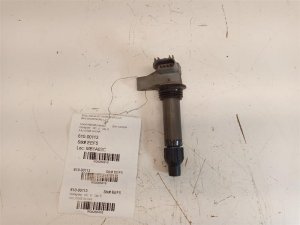
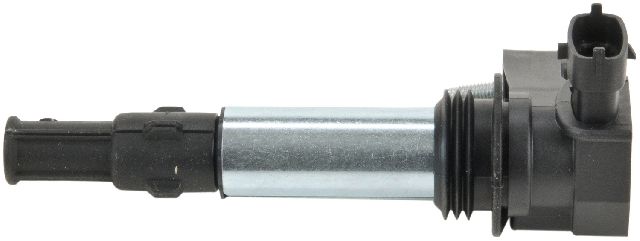
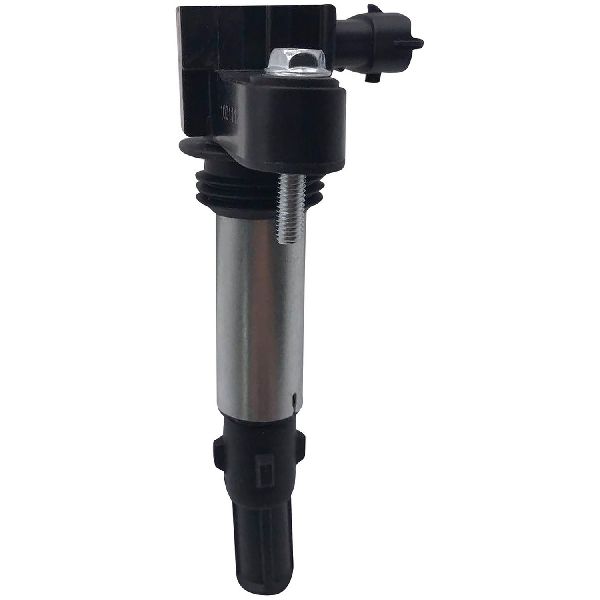
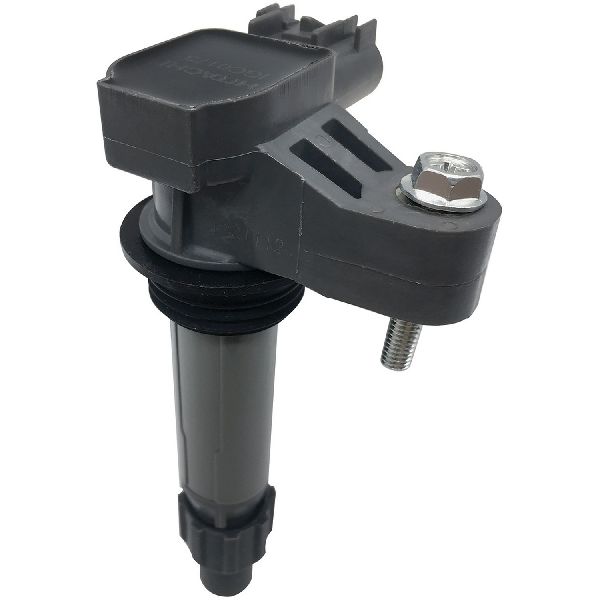
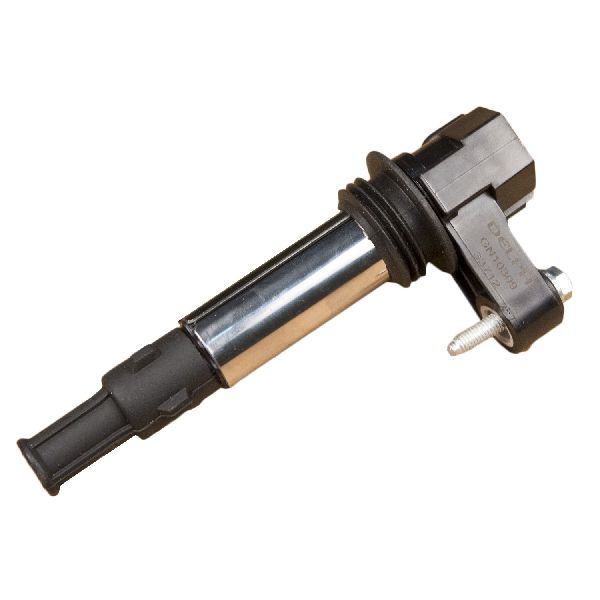
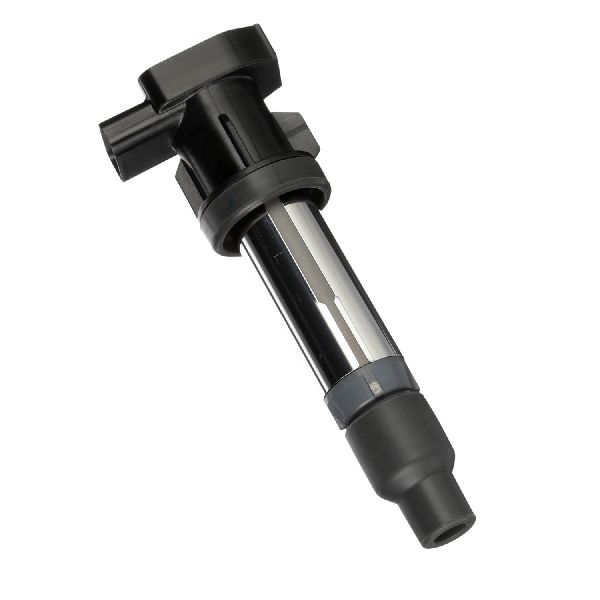
- Ignition Coil
(OEM #12632479 (ACDelco D515C) or D501C)— This is the most frequent cause of a single-cylinder misfire on this vehicle, supported by TSB evidence. [TSB #PIP5038B] The part number 12632479 has superseded several previous versions.
Related Codes That Often Appear With This One
- P0300 — If the misfire is intermittent or affects multiple cylinders, a P0300 (Random/Multiple Cylinder Misfire) may be stored alongside P0305.
- P0355 — This code indicates a fault in the ignition coil primary or secondary circuit for cylinder 5. It often appears with P0305 and points directly to a bad coil or wiring issue, as referenced in TSB #PIP5038B.
- P0008 / P0017 — On the 3.6L V6, these codes indicate an engine timing issue (crankshaft to camshaft correlation). If seen with P0305, it strongly suggests a stretched timing chain is 🎬 Watch: Diagnosing misfires caused by timing chain correlation issues the root cause of the misfire.
Technical Service Bulletins (TSBs) & Recalls
- PIP5038B: Addresses Service Engine Soon light with multiple DTCs including P0300-P0306 and P0351-P0356, pointing towards ignition system diagnostics for misfires.
- PIP5029C: Specifically addresses engine misfires on 2008-2014 Cadillac STS and CTS with the 3.6L (LLT) engine that may be caused by major carbon deposits on the intake and/or exhaust valves.
- 10-06-01-008F: While primarily for oil consumption issues on AFM engines, this TSB involves procedures like cleaning carbon from cylinders, which is relevant to misfire causes.
Platform-Specific Known Issues
- Intake Manifold Removal for Bank 1 Access (3.6L V6): → Shop Engine Intake Manifold On the 3.6L LLT V6 engine, cylinder 5 is on Bank 1 (passenger side), which is located underneath the upper intake manifold. To access the ignition coil and spark plug for this cylinder, the entire intake manifold must be removed. This significantly increases the labor time and difficulty compared to a misfire on Bank 2 (driver's side).
- Carbon Buildup on Intake Valves (3.6L V6): As a direct-injection engine, the 3.6L LLT is prone to carbon accumulation on the intake valves, which can cause misfires. GM issued TSB PIP5029C for the 2008 STS specifically for this issue. The fix is a manual cleaning (walnut blasting) of the valves.
- Timing Chain Stretch (3.6L V6): The 2008-2009 models with the LLT engine are susceptible to premature timing chain stretching, which can cause misfires and will set codes like P0008 and P0017. This was a widespread issue that GM addressed with special coverage programs and updated parts in later model years.
Mechanic-Grade Diagnostic Values
- Low-Pressure Fuel System Pressure (3.6L LLT) — expected: 380-410 kPa (55-60 psi) at idle.. Failure: Pressure significantly outside this range indicates a problem with the in-tank fuel pump or regulator.
- Injector Pulse Width (3.6L LLT, warm idle) — expected: 2.0 - 4.0 milliseconds (ms).. Failure: A value significantly different from other cylinders may indicate a problem. Note: On cold starts, pulse width may be double for 20-60 seconds, which is normal.
- Fuel Injector Resistance (3.6L LLT) — expected: Approx. 10-15 Ohms (High Impedance).. Failure: A reading significantly outside this range suggests a failed injector coil. Note: Some sources state a lower resistance of 1.5-1.6 ohms, which may apply to different but related engines.
- Ignition Coil Primary Resistance (General) — expected: 0.4 - 2.0 Ohms.. Failure: A reading outside this range, or an open circuit, indicates a faulty primary winding.
- Ignition Coil Secondary Resistance (General) — expected: 6,000 - 10,000 Ohms (6k - 10k Ω).. Failure: A reading outside this range, or an open circuit, indicates a faulty secondary winding.
Hidden / Shadow Codes Worth Checking
- Mode 6, Test ID $A2-$A7: Mode 6 data allows viewing of misfire counts for each individual cylinder (Cyl 1-6) before they reach the threshold to set a P030x trouble code. This can help identify an intermittent misfire that hasn't yet triggered the Check Engine Light. (see via An advanced OBD-II scan tool capable of displaying Mode 6 test results.)
Scan Tool Commands That Help
- GM Tech 2 / GDS2 or equivalent: Cylinder Power Balance Test — This is a primary diagnostic step to confirm which cylinder is misfiring. The tool deactivates each cylinder one by one and measures the RPM drop. If disabling cylinder 5 causes little or no RPM drop compared to others, it confirms cylinder 5 is not contributing power.
- GM Tech 2 / GDS2 or equivalent: Fuel Injector Balance Test — Use this test when the ignition system is confirmed to be working correctly. With the engine off, the tool pulses each injector and measures the corresponding fuel pressure drop. If cylinder 5's injector causes a significantly different pressure drop (outside a 3 PSI variance from the average), it is likely clogged or faulty.
Wiring & Ground Locations
- G107 — On the rear side of the right (Bank 1) cylinder head.. This is a primary ground point for the ignition coils on Bank 1 (cylinders 1, 3, 5). A loose or corroded connection here can cause weak spark and intermittent misfires on this entire bank, including cylinder 5.
- G102 — Located at the left rear of the engine (V8 models).. On V8 engines, this ground serves the ignition coils. A poor connection can lead to misfires.
- Main Engine-to-Frame Ground — Typically a large braided strap from the engine block (often near the transmission bellhousing or starter) to the vehicle's frame rail.. A compromised main engine ground can cause a host of electrical issues, including unstable voltage for the ECM and ignition system, potentially leading to misfires. This is a critical check for any electrical diagnosis.
Real Owner Repair Stories
- YouTube channel 'Pine Hollow Auto Diagnostics' (2008 Cadillac SRX 3.6L AWD (Same LLT engine)) — Multiple misfire codes (P0300, P0302, P0304, P0305) and timing correlation codes (P0008, P0017).
❌ Tried (didn't work) Replacing spark plugs and one ignition coil did not resolve the misfires.
✅ What actually fixed it The combination of multiple misfire codes with P0008 and P0017 strongly indicated a stretched timing chain, a known issue on this engine. The diagnosis was confirmed by observing cam/crank correlation data with a scan tool. The ultimate fix is timing chain replacement.
OEM Part Supersession History
12590990, 12610626, 12618542→12632479 (ACDelco D515C)— Revisions to improve durability, winding protection, and resistance to internal shorts and dielectric breakdown.
Model Year Variations Within This Range
- 2008: The 2008 model year was the first to feature the new 3.6L direct-injection (LLT) V6 engine, which produced 302 hp. As the first iteration of this engine in the STS platform, it is particularly noted for the timing chain stretch issue that can cause misfires. The 2009 model was largely a carryover with only minor changes.
Helpful Videos
Used OEM Parts in Stock
New Aftermarket Parts Available


The information in this article is provided for general reference and educational purposes only. Vehicle specifications, procedures, and part compatibility can vary by production date, trim level, and region. Always consult your vehicle's factory service manual and verify part numbers before purchasing or performing repairs. Safety-critical components such as airbags, seat belts, and braking systems should be installed by a qualified professional.
- Cadillac STS:
- 🧭 Diagnostic Flowchart
- 🎬 Helpful Videos
- 🛍️ Shop This Part
- What's Unique About the 2008-2009 Cadillac STS
- Symptoms You May Notice
- Most Likely Causes
- Rare But Worth Checking
- Diagnosis Steps
- Parts You'll Likely Need
- Related Codes That Often Appear With This One
- Technical Service Bulletins (TSBs) & Recalls
- Platform-Specific Known Issues
- Mechanic-Grade Diagnostic Values
- Hidden / Shadow Codes Worth Checking
- Scan Tool Commands That Help
- Wiring & Ground Locations
- Real Owner Repair Stories
- OEM Part Supersession History
- Model Year Variations Within This Range
- 🎟️ Get 5% Off