

P0305 on 2017-2022 Cadillac XT5 3.6L: Cylinder 5 Misfire Causes and Fixes
P0305 on a 2017-2022 Cadillac XT5 with the 3.6L V6 engine indicates a misfire in cylinder 5. While commonly caused by a bad ignition coil or spark plug, a well-documented issue for this engine is a faulty Active Fuel Management (AFM) Oil Control Valve (OCV) solenoid, as noted in GM Technical Service Bulletin 21-NA-036. A coil costs ~$35-$60, while the solenoid is about $45-$70.
- P0305 on a 2017-2022 XT5 only applies to the 3.6L V6 engine.
- Always perform the simple diagnostic steps first: swap the ignition coil, then the spark plug, to rule out the most common failures.
- Be aware of the high probability of a failed AFM Oil Control Valve (OCV) solenoid for cylinder 5, a known issue documented in GM service bulletins.
- A flashing check engine light indicates a severe misfire that can quickly damage your catalytic converter; stop driving immediately.
- Using OEM-spec parts, especially for the AFM solenoid (ACDelco P/N 12679721), is highly recommended for this repair.
What's Unique About the 2017-2022 Cadillac XT5

While any engine can suffer from a bad spark plug or coil, the 3.6L V6 (LGX) in the XT5 has a specific weakness documented by General Motors. Cylinders 2 and 5 are the designated Active Fuel Management (AFM) cylinders. Multiple Technical Service Bulletins (TSBs) confirm that a faulty AFM Oil Control Valve (OCV) solenoid for cylinder 5 can leak oil or break, causing an oil pressure drop. This pressure loss prevents the AFM system from functioning correctly, effectively deactivating the cylinder and leading to a persistent P0305 misfire that ignition or fuel system repairs won't solve.
Diagnostic Flowchart

Tap your situation to follow the diagnostic path that matches what you're seeing on this vehicle.
Symptoms You May Notice

- Rough or shaky engine idle
- Noticeable engine vibration, especially during acceleration
- Hesitation or stumbling when accelerating
- Loss of engine power
- Solid or flashing Check Engine Light
- A possible smell of fuel from the exhaust
- Replacing only spark plugs and coils when the underlying cause is the AFM OCV solenoid, leading to the code returning.
- Replacing a fuel injector before performing a simple ignition coil swap or inspecting the much more common AFM solenoid failure.
- Confusing the Variable Valve Timing (VVT) solenoids with the specific Active Fuel Management (AFM) Oil Control Valve solenoid mentioned in the TSBs. They are different parts.
Most Likely Causes

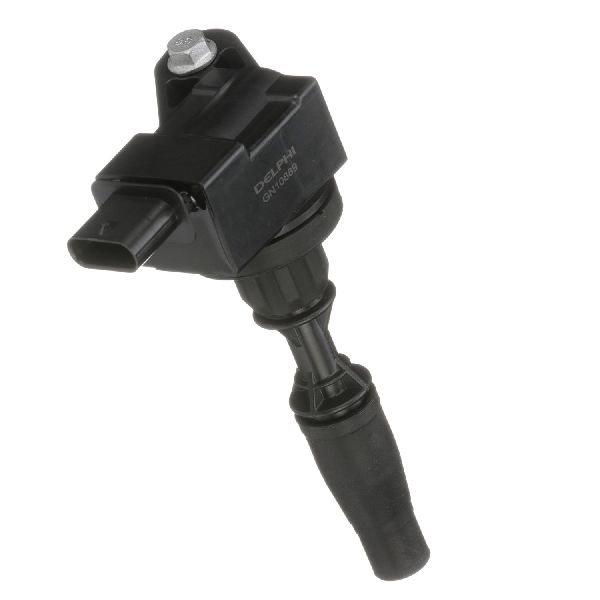
- Faulty Ignition Coil 🔴 High Probability → Shop Ignition Coil
How to confirm: Swap the ignition coil from cylinder 5 with another cylinder (e.g., cylinder 3). Clear the codes and drive the vehicle. If the code changes to P0303, the ignition coil is the culprit. This is a standard first diagnostic step.
Typical fix: Replace the faulty ignition coil. It is often recommended to replace the corresponding spark plug at the same time.
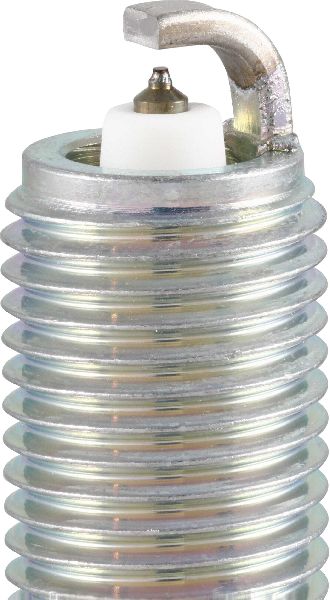
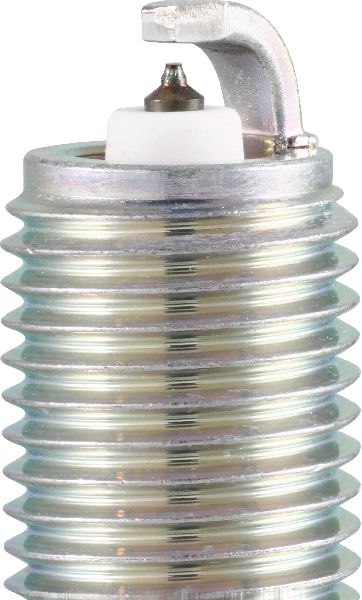
Est. part cost: $35-$60 - Worn or Fouled Spark Plug 🔴 High Probability → Shop Spark Plug
How to confirm: After confirming the coil is good, remove the spark plug from cylinder 5. Inspect it for wear (worn electrode), carbon fouling, or oil contamination. Compare it to a new plug.
Typical fix: Replace the spark plug. It is best practice to replace all six spark plugs at the same time for even performance.
Est. part cost: $10-$20 per plug - Faulty Active Fuel Management (AFM) Oil Control Valve (OCV) Solenoid 🔴 High Probability → Shop Engine Variable Valve Timing (VVT) Oil Control Valve This is a documented issue in GM Technical Service Bulletins #21-NA-036 and #PIP5493. The solenoid for cylinder 5 can fail or break, causing an oil pressure loss that deactivates the cylinder, resulting in a misfire. This is a very common failure point for P0305 on this specific engine.
How to confirm: Visually inspect the OCV solenoid for cylinder 5 for damage or oil leaks. The TSB notes that the end of the solenoid can break off. A professional scan tool (GDS2) can command the solenoid on and off to test its function. A Reddit user with a 2017 XT5 confirmed a 'sensor on the cylinder deactivation' was the ultimate fix after other shops were stumped.
Typical fix: Replace the AFM Oil Control Valve solenoid for cylinder 5. Ensure no broken pieces of the old solenoid are left behind in the engine. The part is relatively inexpensive.
Est. part cost: $45-$70 - Clogged or Failed Fuel Injector 🟡 Medium Probability → Shop Fuel Injector Direct injection engines like the LGX can be susceptible to fuel injector issues over time, though this is less common than the ignition or AFM solenoid issues for this specific code.
How to confirm: If ignition and OCV solenoid issues are ruled out, a professional can perform a fuel injector balance test with a scan tool. A DIY method is to swap the fuel injector from cylinder 5 with another cylinder, but this is a more involved job. In one owner's experience, the dealer replaced the injector to no avail before finding the true cause was the AFM system.
Typical fix: Replace the faulty fuel injector. It's also recommended to replace the injector seals.
Est. part cost: $50-$100
Rare But Worth Checking
- Failed AFM Lifter or Rocker Arm: → Shop Engine Valve Lifter TSB #21-NA-036 and PIP5493E mention that if the OCV solenoid is not the cause, the mechanical rocker arms or lifters for the AFM system on cylinder 5 may be broken or failing to latch. This is a significant mechanical repair requiring removal of the camshaft cover.
- Low Engine Compression: Internal engine damage, such as a worn piston ring or a valve that isn't sealing correctly, can cause a misfire. A compression test is needed to diagnose this.
- Cylinder Head Porosity / Coolant Leak: → Shop Engine Cylinder Head TSB #21-NA-147 and #18-NA-115 describe a condition where porous spots in the cylinder head can allow coolant to leak into the spark plug tubes, fouling the plug and coil and causing a misfire. This often presents as a cold-start misfire that may improve as the engine warms. Diagnosis requires a borescope inspection after adding dye to the coolant. If found, this requires cylinder head replacement.
Diagnosis Steps
- Read the codes with an OBD-II scanner to confirm P0305 and check for any other codes, especially P0300 or P0302.
- Locate cylinder 5 on the 3.6L V6 engine. It is on the passenger side (Bank 1), closest to the firewall.
- Swap the ignition coil from cylinder 5 with the coil from cylinder 3 (middle cylinder, same bank). Clear the codes and test drive. If the code changes to P0303, the coil is bad.
- If the misfire remains on cylinder 5, swap the spark plug from cylinder 5 with the one from cylinder 3. Clear codes and test drive. If the code changes to P0303, the spark plug was the issue.
- If the misfire still remains on cylinder 5, the next most probable cause is the AFM Oil Control Valve. Inspect the OCV solenoid for cylinder 5 as per TSB #21-NA-036. Check for visible damage, leaks, or broken parts. The solenoid is located in the camshaft cover.
- If the OCV solenoid appears fine, consider testing the fuel injector. This may require professional assistance or swapping the injector to another cylinder. A scan tool power balance test is the preferred method.
- If all else fails, the issue may be mechanical. Perform a compression test on cylinder 5 to check for issues like bad valves or piston rings. A professional may need to inspect the AFM rocker arms and lifters for damage as described in TSB 21-NA-036.
Parts You'll Likely Need
- Ignition Coil
(OEM #12707304)— A primary and common point of failure for ignition systems, causing a single-cylinder misfire.
Trusted brands: ACDelco, Delphi
OEM price range: $45-$60
Aftermarket price range: $30-$50 - Iridium Spark Plug
(OEM #41-130)— A regular wear item. A worn or fouled spark plug cannot create a strong enough spark for proper combustion.
Trusted brands: ACDelco, NGK
OEM price range: $15-$20
Aftermarket price range: $10-$15 - Active Fuel Management (AFM) Oil Control Valve Solenoid
(OEM #12679721)— A documented weak point on the 3.6L V6 engine that directly causes misfires on cylinder 5, as detailed in GM TSB #21-NA-036. This part number supersedes previous versions 12666545, 12672704, 12674162, and 12678182.
Trusted brands: ACDelco, GM Genuine Parts
OEM price range: $50-$70
Aftermarket price range: $40-$60
Related Codes That Often Appear With This One
- P0300 — If the misfire is intermittent or affects other cylinders, a P0300 (Random Misfire Detected) may be stored alongside P0305. TSB 21-NA-036 notes that P0300 can appear with P0305 due to the AFM issue.
- P0302 — Cylinder 2 is the other AFM-controlled cylinder on the LGX V6. TSB 21-NA-036 and PIP5493 explicitly list P0302 as a code that can appear for the exact same AFM OCV solenoid reason, just on the opposite bank.
Technical Service Bulletins (TSBs) & Recalls

- 21-NA-036: Addresses MIL on with DTCs P0300, P0302, and/or P0305, identifying a potential cause as a damaged AFM Oil Control Valve (OCV) solenoid or a mechanical rocker arm issue. This TSB applies to a wide range of GM vehicles with the 3.6L LGX engine.
- PIP5493: A preliminary bulletin for misfires on the 3.6L LGX engine, which also advises checking the Rocker Arm Oil Control Valve (OCV) for a P0305 misfire.
- 21-NA-147: Details a potential for oil or coolant to leak into spark plug tubes due to cylinder head porosity, causing misfires. This would require cylinder head replacement.
- 18-NA-115: Discusses cold start misfires (P0300) that can be caused by engine block porosity allowing coolant into a cylinder, which could manifest on a single cylinder like #5.
Platform-Specific Known Issues
- Per TSB #21-NA-036, the 3.6L V6 engine can experience a P0305 misfire due to a faulty AFM Oil Control Valve (OCV) solenoid. This solenoid can leak oil or break, causing insufficient oil pressure to the Active Fuel Management system for cylinder 5. This effectively deactivates the cylinder, causing a misfire that cannot be fixed by replacing ignition or fuel parts.
Mechanic-Grade Diagnostic Values
- Ignition Coil Primary Resistance — expected: 0.4 to 2.0 Ohms. Failure: A reading outside this range indicates a faulty coil winding.
- Ignition Coil Secondary Resistance — expected: 6,000 to 10,000 Ohms (6k-10k Ω). Failure: A reading significantly outside this range points to a failure in the secondary coil windings.
- AFM Oil Control Valve (OCV) Solenoid Resistance — expected: 8 to 12 Ohms. Failure: A reading outside this range, or an open/short circuit, indicates a faulty solenoid.
- Direct Fuel Injector Resistance — expected: 1.95 to 2.30 Ohms. Failure: A significant deviation from this range can indicate a faulty injector coil.
- Low-Side Fuel Pressure (Key-On, Engine-Off) — expected: 55-60 psi. Failure: Pressure significantly below this range indicates a problem with the in-tank fuel pump, not the high-pressure pump.
Hidden / Shadow Codes Worth Checking
- Misfire History Data / Mode 6: Provides a historical count of misfire events for each individual cylinder, which can identify an intermittently misfiring cylinder even if a P030x code is not currently set. (see via Accessible via a GM-specific scan tool (like GDS2 or Tech 2) under engine data, or on some advanced generic scanners through Mode 6 test results.)
Scan Tool Commands That Help
- GDS2 (GM Diagnostic Software): AFM Oil Control Valve Test — Use this bidirectional command to manually activate and deactivate the cylinder 5 OCV solenoid to confirm it is functioning electrically and mechanically. This directly tests the component identified in TSB 21-NA-036.
- Professional Bi-Directional Scanner: Cylinder Power Balance Test — After ruling out ignition components, use this test to isolate the faulty cylinder by sequentially disabling each fuel injector and observing the RPM drop. A cylinder that causes little or no RPM drop when disabled is not contributing power. This is the preferred method over disabling ignition coils to prevent catalytic converter damage.
- GDS2 (GM Diagnostic Software): Crankshaft Position (CKP) Variation Relearn — Perform this procedure if false misfires are suspected or after major engine repairs (e.g., timing chain, crankshaft sensor replacement) to ensure the ECM accurately detects misfires.
Wiring & Ground Locations
- Cylinder 5 — Bank 1 (passenger side of the engine), closest to the firewall.. This is the physical location for the ignition coil, spark plug, fuel injector, and AFM components related to the P0305 code.
- Ignition Coil Connector (Cyl 5) — The 4-pin connector directly on top of the ignition coil for cylinder 5.. A poor connection, corrosion, or damaged wire at this connector will cause a misfire. The typical pinout is Pin A (Ignition Voltage), Pin B (Control/Trigger from ECM), Pin C (Low Reference/Ground), Pin D (Fault Signal).
- Bank 1 Cylinder Head Ground — Bolted to the passenger side cylinder head.. A loose or corroded main ground for the cylinder head can cause a weak or intermittent spark for all cylinders on that bank (1, 3, and 5), potentially leading to a misfire code for any of them.
Real Owner Repair Stories
- Reddit user post in r/Cadillac (2017 Cadillac XT5 with 50,000 km (approx. 31,000 miles)) — Intermittent P0305 code, eventually leading to all dash warning lights illuminating and the car entering 'safe mode'.
❌ Tried (didn't work) Replacing the ignition coil on cylinder 5 (worked for 3 weeks then problem returned), Valve cleaning service (after which the car would not start)
✅ What actually fixed it A faulty 'sensor on the cylinder deactivation' system was replaced by the Cadillac dealer, which allowed the car to run again. This strongly points to the AFM Oil Control Valve (OCV) solenoid or a related component, as identified in the TSBs.
OEM Part Supersession History
12666545, 12672704, 12674162, 12678182→12679721— This is the part number for the AFM Oil Control Valve Solenoid. The supersessions reflect design updates and consolidations by GM for improved reliability.
Model Year Variations Within This Range
- 2017-2019 vs 2020-2022: The 2020 model year marked a significant refresh. For the 3.6L LGX engine, the 8-speed automatic transmission was replaced with a new 9-speed automatic. GM also implemented 'tuning and calibration changes' which could affect engine management and diagnostics. TSBs related to misfires sometimes advise checking for the latest ECM calibration, which could be particularly relevant for post-refresh models.
Helpful Videos
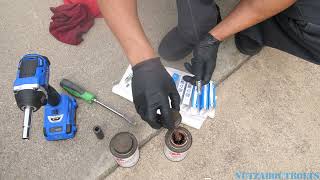
We Have This Part in Stock


The information in this article is provided for general reference and educational purposes only. Vehicle specifications, procedures, and part compatibility can vary by production date, trim level, and region. Always consult your vehicle's factory service manual and verify part numbers before purchasing or performing repairs. Safety-critical components such as airbags, seat belts, and braking systems should be installed by a qualified professional.
- Cadillac XT5:
- 🧭 Diagnostic Flowchart
- 🎬 Helpful Videos
- 🛍️ Shop This Part
- What's Unique About the 2017-2022 Cadillac XT5
- Symptoms You May Notice
- Most Likely Causes
- Rare But Worth Checking
- Diagnosis Steps
- Parts You'll Likely Need
- Related Codes That Often Appear With This One
- Technical Service Bulletins (TSBs) & Recalls
- Platform-Specific Known Issues
- Mechanic-Grade Diagnostic Values
- Hidden / Shadow Codes Worth Checking
- Scan Tool Commands That Help
- Wiring & Ground Locations
- Real Owner Repair Stories
- OEM Part Supersession History
- Model Year Variations Within This Range
- 🎟️ Get 5% Off