

P0305 on 1995-2000 Ford Contour 2.5L V6: Cylinder 5 Misfire Causes and Fixes
This code means cylinder #5 is misfiring. On the 2.5L Duratec V6, this is most often caused by a bad spark plug, spark plug wire, or a faulty ignition coil pack. A full set of plugs and wires is a common and effective fix, costing around $75-$150 for parts. However, be aware of aging vacuum hoses and brittle engine wiring harnesses which are common on this platform.
- P0305 means there is a misfire in cylinder 5, which is the middle cylinder on the bank closest to the radiator.
- The most likely cause is a worn-out spark plug or a bad spark plug wire. Replacing plugs and wires as a set is a good first step.
- If the Check Engine Light is flashing, pull over and stop the engine to prevent expensive damage to the catalytic converter.
- A logical diagnostic approach is to swap inexpensive ignition components (plug, wire) between cylinders to see if the misfire code follows the part.
- While rare, vacuum leaks from intake gaskets and mechanical engine problems can also cause this code.
What's Unique About the 1995-2000 Ford Contour
The 2.5L Duratec V6 in the Contour is a compact engine, which makes accessing certain components challenging. Cylinder 5 is located on the front bank of cylinders (closer to the radiator), making it easier to access than the rear bank (cylinders 1-2-3). These engines are well-known for vacuum leaks from aging plastic upper and lower intake manifold gaskets, which can be a root cause of misfires and often trigger lean codes (P0171/P0174) alongside a misfire code. Furthermore, the engine wiring harness insulation on this platform is notoriously prone to becoming brittle and flaking off, which can cause shorts leading to misfires or other electrical gremlins.
Symptoms You May Notice
- Rough or shaky idle
- Noticeable engine vibration or shudder, especially under load
- Hesitation or stumbling during acceleration
- Reduced engine power
- Flashing or solid Check Engine Light
- Decreased fuel economy
- A smell of raw fuel from the exhaust
- Sweet smell of coolant from exhaust if caused by a head gasket leak
- Replacing only the spark plug without checking the wire or coil pack.
- Replacing the O2 sensors, which are unlikely to cause a single-cylinder misfire code.
- Assuming a flashing CEL is just a minor issue; it indicates a severe misfire that can quickly damage the catalytic converter.
Most Likely Causes
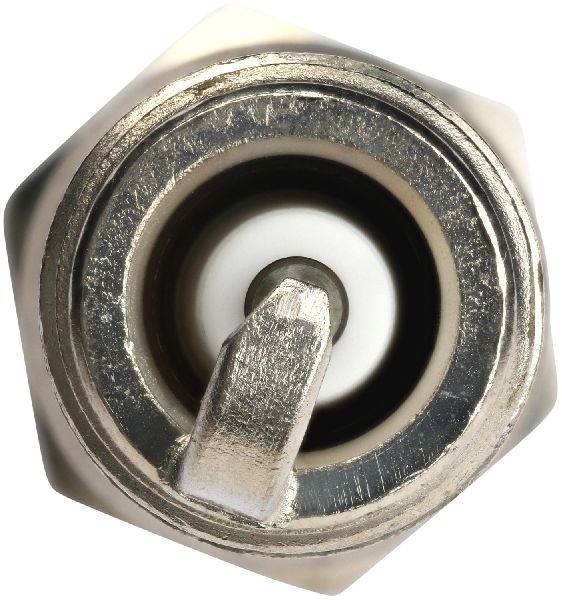
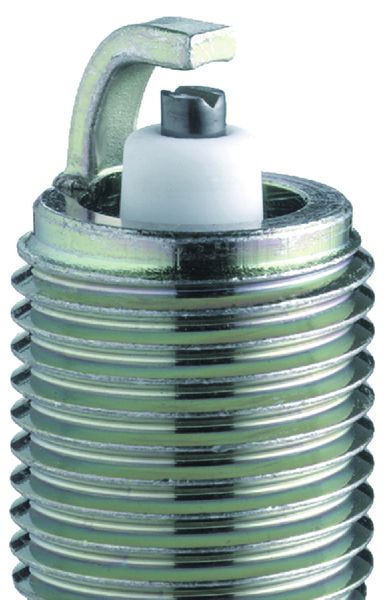
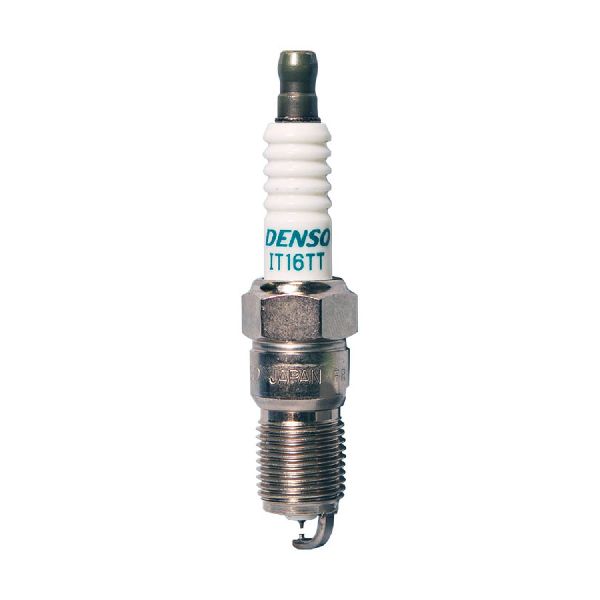
- Worn Spark Plugs or Faulty Spark Plug Wires 🔴 High Probability → Shop Spark Plug Spark plugs and wires are routine maintenance items that wear out. The Contour uses a waste-spark ignition system where the coil pack has three coils firing two plugs simultaneously (e.g., one on compression, one on exhaust). This doubles the number of sparks, leading to faster wear. This system requires double-platinum spark plugs for longevity.
How to confirm: Inspect the spark plug from cylinder 5 for wear, fouling, or an incorrect gap. Inspect the wire for cracks, corrosion, or damage. The easiest test is to swap the spark plug and/or wire from cylinder 5 with another cylinder (e.g., cylinder 4 or 6 on the same bank). If the code changes to P0304 or P0306, the plug or wire is bad.
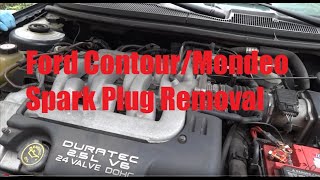
Typical fix: Replace all six spark plugs 🎬 Watch: A quick walkthrough of the spark plug removal process. and the full set of spark plug wires. It is best practice to replace them as a set.
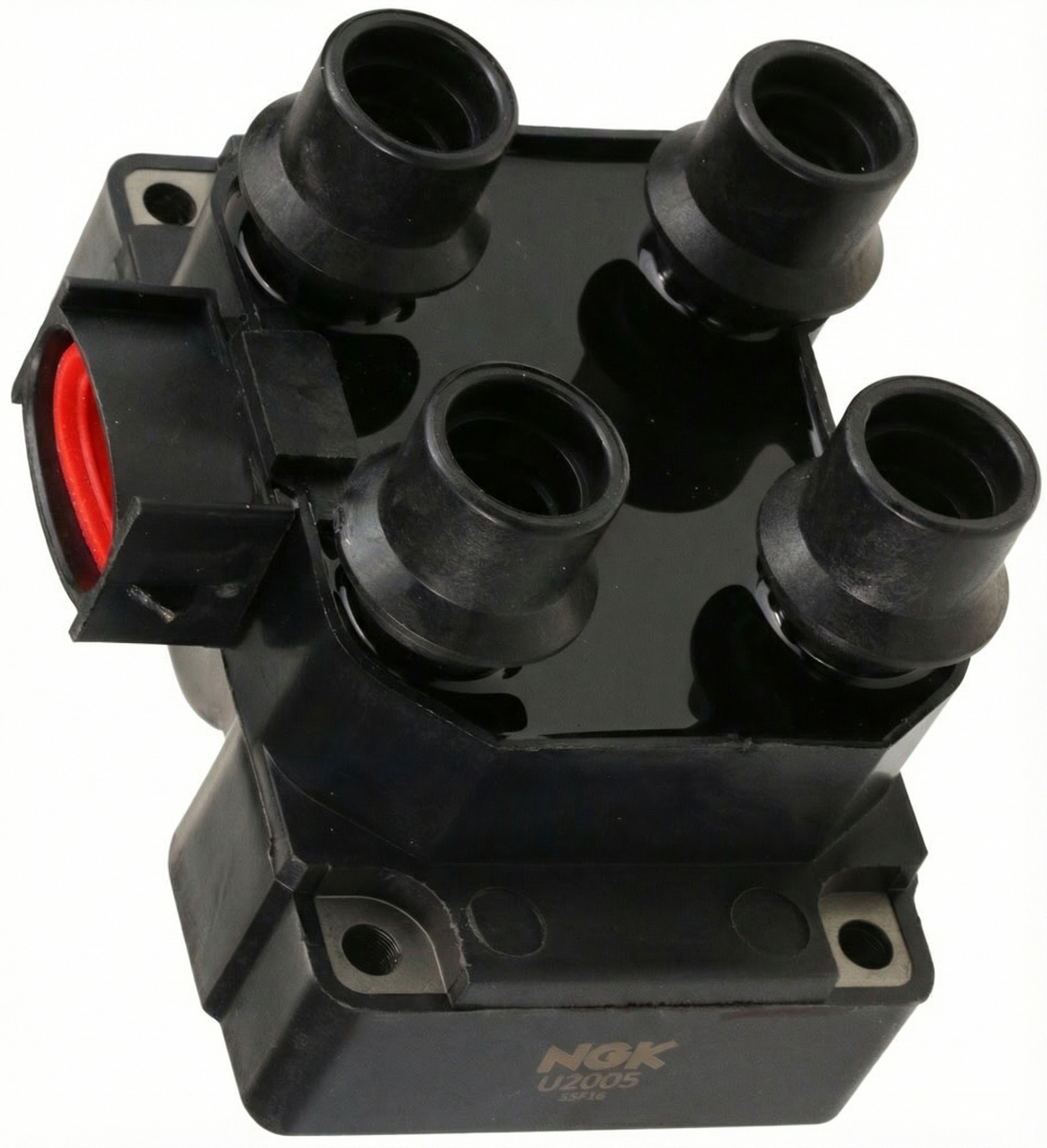
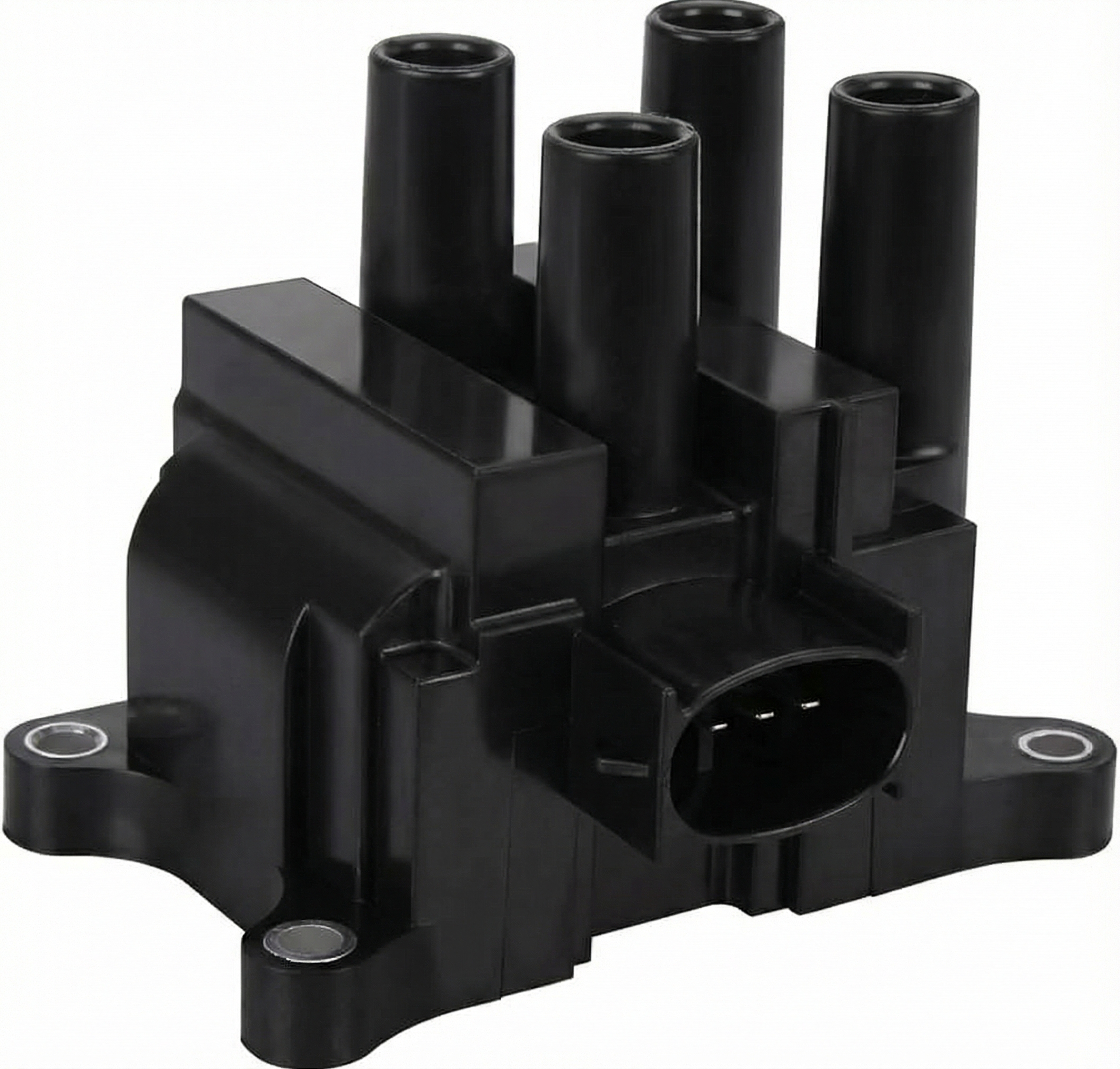
Est. part cost: $75-$150 - Faulty Ignition Coil Pack 🟡 Medium Probability → Shop Ignition Coil The coil pack provides spark for all six cylinders. Over time, heat and vibration can cause individual towers on the coil pack to fail, leading to a misfire in a single cylinder or a pair of cylinders.
How to confirm: After ruling out the plug and wire, the coil is the next suspect. You can test the resistance of the tower for cylinder 5 with a multimeter and compare it to other towers. A definitive test is to use an inline spark tester to confirm if spark is being delivered to the cylinder 5 wire.
Typical fix: Replace the entire ignition coil pack. The Motorcraft part number is DG535.
Est. part cost: $60-$120 - Clogged or Failed Fuel Injector 🟡 Medium Probability → Shop Fuel Injector With age, fuel injectors can become clogged with deposits or fail electrically, preventing the correct amount of fuel from reaching the cylinder. This is an increasingly common failure point on older vehicles.
How to confirm: Listen to the injector with a mechanic's stethoscope; it should make a consistent clicking sound. A more involved test is to swap the fuel injector from cylinder 5 with another cylinder. If the misfire code follows the injector, it is faulty.
Typical fix: Replace the faulty fuel injector. It's also recommended to replace the O-rings on the surrounding injectors to prevent leaks.
Est. part cost: $50-$100 - Vacuum Leak (Intake Manifold Gaskets) ⚪ Low Probability The upper and lower intake manifold gaskets on the Duratec V6 are made of plastic and rubber that can become brittle and crack over time, causing unmetered air to enter the intake and disrupt the air/fuel mixture. This is a very common issue on the platform, often presenting with P0171/P0174 lean codes.
How to confirm: With the engine running, spray brake cleaner or starting fluid around the intake manifold gaskets near cylinder 5. If the engine RPM changes, you have found a leak. A professional smoke test is the most effective way to find a leak.
Typical fix: Replace the upper and lower intake manifold gaskets. Fel-Pro is a common aftermarket brand for these gaskets.
Est. part cost: $40-$80
Rare But Worth Checking
- Low Engine Compression: This is a more serious mechanical issue. A forum user reported a P0305 caused by a leaking head gasket, identified by sweet-smelling white exhaust smoke. This could also be due to a worn piston ring or a burnt valve. A compression test is required to diagnose this.
- Faulty Powertrain Control Module (PCM): In very rare cases, the PCM itself can fail and incorrectly trigger a misfire code. This should only be considered after all other possibilities, including a damaged wiring harness, have been exhaustively ruled out.
- Degraded Engine Wiring Harness: A significant issue on this platform. The insulation on the wires for the ignition coil, fuel injectors, and other sensors can crack and fall off, causing intermittent shorts that can lead to a misfire code. Inspect the harness visually, especially where it is exposed to heat.
- Under-Torqued Crankshaft Pulley Bolt: While documented on different Ford platforms, Bulletin #SSM 46391 notes that an under-torqued crankshaft pulley bolt can lead to multiple misfire codes, including P0305.
- Spark Plug Fuel Fouling: → Shop Spark Plug Manufacturer Bulletin #tsb18-2188 notes that some Ford engines may exhibit misfire codes like P0305 due to spark plug fuel fouling during cold starts in temperatures below 50°F.
Diagnosis Steps
- Read the code with an OBD-II scanner and check for any other pending or stored codes, especially P0300, P0171, or P0174.
- Identify Cylinder 5. On the 2.5L Duratec V6, the cylinders closer to the radiator are the front bank, numbered 4, 5, and 6, from passenger side to driver side. Cylinder 5 is the middle cylinder on the front bank.
- Check for spark at cylinder 5 using an inline spark tester. If there is no spark, the problem is in the ignition system.
- Swap the spark plug from cylinder 5 with the one from cylinder 4. Clear the codes and drive the vehicle. If the code changes to P0304, the spark plug is bad.
- If the code remains P0305, swap the spark plug wire from cylinder 5 with the one from cylinder 6. Clear codes and drive. If the code changes to P0306, the wire is bad.
- If the misfire is still on cylinder 5, the ignition coil pack is the next likely ignition-related culprit. Inspect the coil tower for cylinder 5 for corrosion or damage.
- Visually inspect the engine wiring harness for any signs of cracked or missing insulation, particularly around the coil pack and fuel injector connectors.
- If spark is good, check the fuel system. Swap the fuel injector from cylinder 5 with the one from cylinder 4. Clear codes and drive. If the code changes to P0304, the injector is faulty.
- If the misfire persists on cylinder 5, check for vacuum leaks around the intake manifold, especially near the runner for cylinder 5. A smoke test is the most reliable method.
- If no vacuum leaks are found, perform a compression test on cylinder 5 and compare the reading to the other cylinders. A significantly lower reading (more than 15-20% difference) indicates a mechanical engine problem like a bad valve or head gasket.
Parts You'll Likely Need
- Spark Plugs
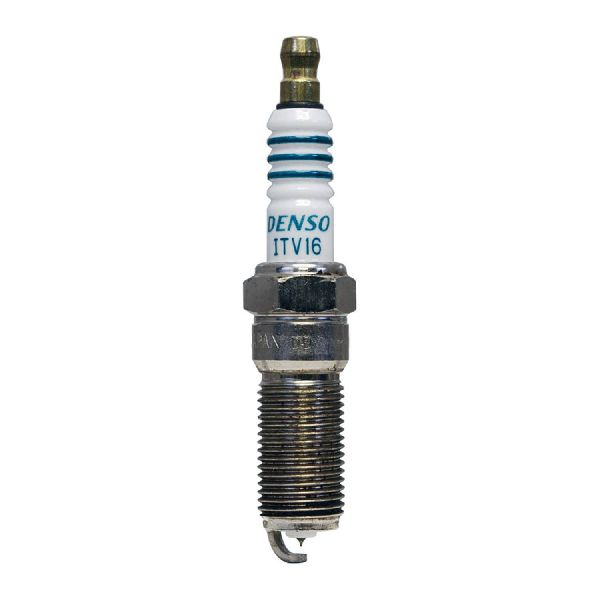
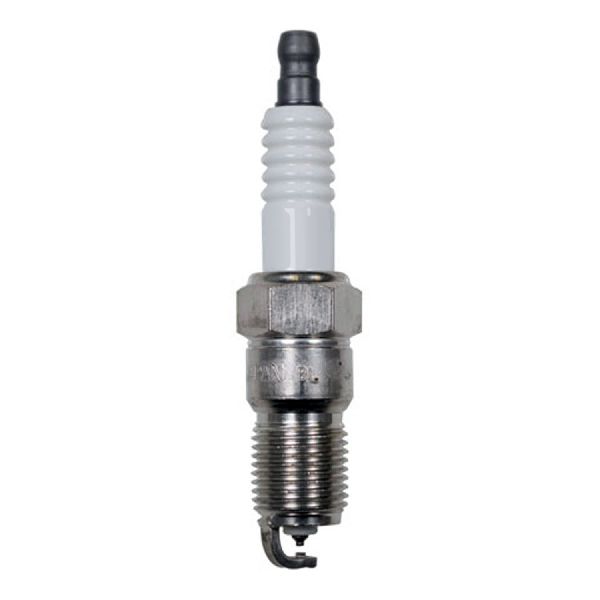
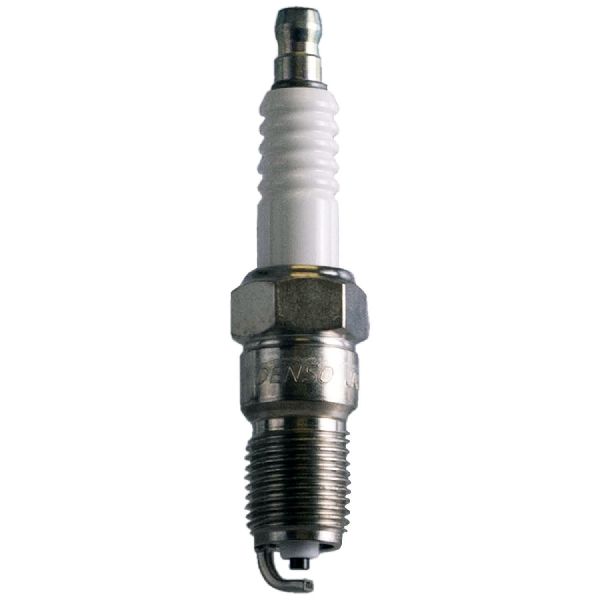
(OEM #Motorcraft AGSF32FM (or equivalent Double Platinum))— This is the most common failure point for a single-cylinder misfire and is a standard maintenance item. The waste-spark system requires robust plugs.
Trusted brands: Motorcraft, NGK, Denso
OEM price range: $40-$60
Aftermarket price range: $25-$50 - Spark Plug Wire Set
(OEM #Motorcraft WR-5984)— The wire connecting the coil pack to the spark plug can degrade over time, causing a weak or intermittent spark.
Trusted brands: Motorcraft, NGK
OEM price range: $60-$90
Aftermarket price range: $40-$70 - Ignition Coil Pack
(OEM #Motorcraft DG535)— The coil provides spark to all cylinders. A failure in the specific terminal for cylinder 5 will cause a P0305 code.
Trusted brands: Motorcraft, Standard Motor Products, Delphi
OEM price range: $100-$150
Aftermarket price range: $60-$120
Related Codes That Often Appear With This One
- P0300 — If the cause of the misfire (like a major vacuum leak or low fuel pressure) becomes severe enough to affect multiple cylinders, a P0300 (Random/Multiple Cylinder Misfire) may appear alongside P0305.
- P0301, P0302, P0303, P0304, P0306 — If other cylinder-specific misfire codes are present, it points towards a common problem affecting all cylinders, such as a bad coil pack, low fuel pressure, or a large vacuum leak, rather than a single component like one plug or injector.
- P0171, P0174 — These codes indicate a lean condition on Bank 1 and Bank 2, respectively. They frequently appear with misfire codes on this platform and strongly suggest a vacuum leak, most commonly from the intake manifold gaskets or associated vacuum hoses.
- P0316 — As noted in Bulletin #SSM 46363, this code for misfire on startup can sometimes accompany P0305.
Mechanic-Grade Diagnostic Values
- Fuel Injector Resistance — expected: 13.9 ohms for 1995-1997 models. 13.8 to 15.2 ohms for 1998-2000 non-SVT models.. Failure: A reading significantly outside of this range indicates a faulty injector coil.
- Fuel Pressure (Key On, Engine Off) — expected: 35-40 PSI for 1995-1997 models. 35-55 PSI for 1998-2000 models.. Failure: Pressure below the specified range can indicate a weak fuel pump or clogged filter, leading to lean misfires.
- Fuel Pressure at Idle — expected: 30-45 PSI.. Failure: Low or fluctuating pressure at idle points to a failing fuel pump or a faulty fuel pressure regulator.
- Mode $06 Misfire Counts — expected: Near zero counts for cylinder 5 (Test ID $A2-$A7, Component ID $05).. Failure: A high number of misfire counts confirms the misfire is actively occurring, even if the CEL is not flashing.
- Cylinder Compression — expected: 145-150 PSI. Failure: NHTSA ODI #11652376 describes a P0305 case where low compression was found on cylinder #5 (110 PSI) compared to others.
Scan Tool Commands That Help
- Ford IDS (Integrated Diagnostic System) or equivalent high-end scanner (Snap-on, Autel): Power Balance Test — This test graphically displays the power contribution of each cylinder by analyzing crankshaft speed variations. It is the most effective way to confirm a misfire on a specific cylinder in real-time. The graph for cylinder 5 will show a significant dip compared to the others if it is misfiring. The tool can also be used to disable individual injectors to see how it affects engine operation, helping to isolate the fault.
- Ford IDS: Misfire Monitor Neutral Profile Correction — This is a relearn procedure for the crankshaft position sensor profile. It should be performed after any major engine work or if you suspect the sensor is giving inaccurate readings, which could falsely trigger misfire codes. A user on a forum noted performing this procedure for a misfire on a similar Ford engine.
Wiring & Ground Locations
- Main Engine Ground — The main ground from the battery negative terminal runs down to a starter bolt.. A poor main ground can cause a host of electrical issues, including weak spark or erratic sensor readings that could lead to a misfire.
- Chassis/Transmission Ground — A ground strap runs from the top of the transmission to the inner fender, located under the air filter box.. This ground is critical for the PCM and various sensors. Corrosion or a loose connection here can cause intermittent electrical faults.
- Radiator Support Grounds — Harness grounds are mounted to the radiator support on the right (passenger) side of the car.. These grounds are for components in the front of the engine bay. Given the proximity to cylinder 5, checking these is prudent.
- Firewall Ground — A ground wire runs from the top rear of the engine back to the firewall.. Ensures a solid ground connection between the engine block and the vehicle's chassis, which is essential for the ignition system.
- Ignition Coil Connector — The 4-pin connector on the ignition coil pack.. The wiring harness to this connector is a known weak point. The insulation can become brittle and flake off, causing shorts between the wires and leading to coil codes and misfires.
Real Owner Repair Stories
- Ford Contour Enthusiasts Group Forums (Ford Contour with 2.5L V6) — Intermittent hesitation/misfire, bogging down, heavy smoke from the back of the engine, flashing CEL. Codes P0171, P0174, P0352 (Ignition Coil 'B' Primary/Secondary Circuit).
❌ Tried (didn't work) Replaced coil pack, Replaced spark plugs, Replaced EGR valve, Replaced IAC valve, Replaced TPS, Tried two different sets of spark plug wires
✅ What actually fixed it The user posted a picture showing a damaged ignition coil pack connector. Another forum member, identified as a Ford technician, pointed out that the connector was the likely problem and needed to be replaced and properly soldered in. - NHTSA ODI #11407153 — An owner reported that their engine started misfiring while stationary and in motion, triggering code P0305. Despite replacing the coils and spark plugs, the engine continued to misfire.
Technical Service Bulletins (TSBs) & Recalls
- Bulletin #SSM 46363 — This manufacturer bulletin notes that vehicles may exhibit an illuminated MIL with DTC P0305 and others, suggesting the cylinder heads or the long block as potential causes if accompanied by oil consumption or specific oil pressure codes.
- Bulletin #SSM 46391 — Notes that multiple misfire codes, including P0305, may be due to an under-torqued crankshaft pulley bolt.
- Bulletin #tsb18-2188 — Describes a crank/no start concern or misfire codes including P0305 that may be caused by spark plug fuel fouling during cold starts in low temperatures.
OEM Part Supersession History
Motorcraft DG-473→Motorcraft DG-535— Updated design for improved reliability and performance.
Heads up: DG-535 is the correct replacement for the original DG-473 and other earlier coil packs used on this engine.
Model Year Variations Within This Range
- 1995-1997: Used fuel injectors with a resistance of approximately 13.9 ohms. The standard V6 engine produced 170 hp.
- 1998-2000: A mid-cycle refresh occurred in 1998. Standard (non-SVT) models used fuel injectors with a resistance of 13.8 to 15.2 ohms. The high-performance SVT model was introduced with a 195 hp engine (upgraded to 200 hp in 1999).
- 1998-2000 SVT & FFV: SVT and Flex Fuel Vehicle (FFV) models used different green-topped fuel injectors (Part #XS2E-C5A) with a resistance of 13.8 to 15.2 ohms but a higher flow rate than the standard injectors.
Diagnostic Flowchart
Other Known Issues on This Vehicle
Issues unrelated to this code that are worth knowing about as an owner of this generation:
- CD4E Automatic Transmission Failure 🔴 High — Very common, especially on vehicles over 100,000 miles. Failure can be sudden. (Ref: No official recall, but a widely documented problem. Failures often involve a cracked forward clutch drum or a blown-out servo cover circlip.)
- Engine Wiring Harness Degradation 🔴 High — Extremely common across all model years. Insulation becomes brittle, cracks, and flakes off, causing shorts. (Ref: Ford issued recall 99M03 for 1995-1997 models, but owners of 1998-2000 models report the exact same issue without recall coverage.)
- Water Pump Failure 🔴 High — A well-known issue. Early models used a plastic impeller which was prone to failure. Later models with steel impellers are more reliable but the pump is driven by a small, hidden belt and can fail without warning, leading to rapid overheating.
- Leaking Intake Manifold Gaskets 🟠 Medium → Shop Engine Intake Manifold — Common on high-mileage engines. The plastic and rubber gaskets become brittle, causing vacuum leaks. (Ref: Ford TSB 03-16-1 was issued for the related Mercury Cougar, addressing these leaks which cause lean codes (P0171, P0174) and misfires.)
- Leaking Oil Pressure Switch 🟡 Low — A common oil leak point on the 2.5L V6. The switch itself fails and leaks oil. It is difficult to access, located behind the A/C compressor.
Used vs. New Parts: Buying Guide for This Vehicle
When a used part is the smart pick: For this vehicle, sourcing used parts can be a cost-effective strategy for major components that are not high-wear items. This includes the intake manifold assembly, engine wiring harness (if in excellent visual condition with no brittle insulation), and potentially the ignition coil pack or fuel injectors if they can be tested before purchase or come from a low-mileage donor.
Donor-vehicle mileage cap: roughly under 100000 miles for the part to have meaningful remaining life.
What to inspect on the donor part:
- For wiring harnesses, bend the wires in several places to check for cracking or flaking insulation. Avoid any harness that feels stiff or brittle.
- For ignition coils, check the towers for any signs of corrosion, carbon tracking, or cracks in the plastic housing.
- For fuel injectors, inspect the plastic bodies for cracks and ensure the O-rings are pliable, though they should be replaced regardless.
- Check the donor vehicle's dash for the mileage if possible. Lower is always better.
OEM-only on this vehicle (don't cheap out):
- Powertrain Control Module (PCM): Aftermarket or improperly matched used PCMs can cause a host of compatibility issues, including problems with the PATS anti-theft system on later models.
Aftermarket brands forum-validated for this vehicle:
- Spark Plugs: Motorcraft (OEM), NGK, Denso
- Ignition Coil/Wires: Motorcraft (OEM), Standard Motor Products (SMP), Delphi, NGK
- Intake Gaskets: Fel-Pro
Brands owners have reported issues with on this vehicle:
- Unbranded, 'white-box' ignition coils and fuel injectors from online marketplaces are frequently reported by mechanics to have high failure rates and may not meet OEM specifications for resistance and flow, causing persistent performance issues.
Real Owner Stories
Aggregated from forums and TSBs cited above. Mileages and costs reflect what owners reported in those sources.
2007 Ford Contour Enthusiasts Group (CEG) Member
Symptoms: The user diagnosed a P0305. After replacing the spark plugs and wires, the spark plug for cylinder 5 was still found to be wet with fuel. There was also white, sweet-smelling smoke coming from the exhaust.
What fixed it: The discussion identified a potential head gasket leak as the cause of the misfire and the sweet-smelling exhaust.
Source hint: https://www.contour.org/ceg-vb/threads/p0305-cylinder-5-misfire.29653/
1998 Ford Contour SVT 2.5L V6
Symptoms: The vehicle experienced a no-start condition and had visible issues with the wiring harness insulation being frayed and dry-rotted.
What fixed it: The owner identified the need to address the engine wiring harness insulation issues which extend beyond the original recall years.
Source hint: https://www.contour.org/ceg-vb/threads/98-csvt-wiring-harness-issues.82997/
Related OBD-II Codes
Frequently Asked Questions
Where is cylinder 5 located on my 2.5L Duratec V6 engine?
Why does my Ford Contour seem to wear out spark plugs faster than other cars?
I have a P0305 and a sweet smell from the exhaust; what does that mean for my Contour?
Can I just replace the single wire for cylinder 5 to fix the P0305?
Is there a specific replacement part number for the ignition coil pack on the 2.5L Duratec?
My 1998 Contour won't start and has frayed wires; is this related to the P0305?
Helpful Videos
Used OEM Parts in Stock
New Aftermarket Parts Available

The information in this article is provided for general reference and educational purposes only. Vehicle specifications, procedures, and part compatibility can vary by production date, trim level, and region. Always consult your vehicle's factory service manual and verify part numbers before purchasing or performing repairs. Safety-critical components such as airbags, seat belts, and braking systems should be installed by a qualified professional.
- Ford Contour:
- 🧭 Diagnostic Flowchart
- 🎬 Helpful Videos
- 🛍️ Shop This Part
- What's Unique About the 1995-2000 Ford Contour
- Symptoms You May Notice
- Most Likely Causes
- Rare But Worth Checking
- Diagnosis Steps
- Parts You'll Likely Need
- Related Codes That Often Appear With This One
- Mechanic-Grade Diagnostic Values
- Scan Tool Commands That Help
- Wiring & Ground Locations
- Real Owner Repair Stories
- Technical Service Bulletins (TSBs) & Recalls
- OEM Part Supersession History
- Model Year Variations Within This Range
- Other Known Issues on This Vehicle
- Used vs. New Parts: Buying Guide for This Vehicle
- Real Owner Stories
- 2007 Ford Contour Enthusiasts Group (CEG) Member
- 1998 Ford Contour SVT 2.5L V6
- Related OBD-II Codes
- Frequently Asked Questions
- 🎟️ Get 5% Off