

P0305 on 2016-2017 Ford Edge: Cylinder 5 Misfire Causes and Fixes
P0305 indicates a misfire in cylinder 5. The most common fix is replacing the spark plug and/or ignition coil for that cylinder. However, on the 2.7L EcoBoost engine, this code, especially when paired with oil consumption, can be a symptom of a more serious internal engine issue related to the cylinder heads, as documented in Ford Technical Service Bulletins TSB 17-2235 and 19-2384.
- P0305 on a 2016-2017 Ford Edge means cylinder 5 is misfiring.
- Always start diagnosis by checking the simplest, most common parts: the ignition coil and spark plug for cylinder 5.
- A simple 'swap test' (moving the coil from cylinder 5 to another cylinder) is the fastest way to confirm a bad ignition coil.
- Be aware that on the 2.7L EcoBoost engine, a persistent P0305 code, especially if paired with oil consumption, can be a symptom of a serious internal engine problem requiring professional repair, as documented by Ford TSBs.
- If the Check Engine Light is flashing, stop driving to prevent expensive damage to the catalytic converter.
What's Unique About the 2016-2017 Ford EDGE
For the 2016-2017 Ford Edge with the V6 engines, a P0305 code, while often a simple fix, can sometimes point to more significant, documented issues. Specifically for the 2.7L EcoBoost engine built between April 2016 and January 2017, Ford has issued Technical Service Bulletins (TSBs) like TSB 17-2235 that link misfire codes (P0300-P0306) with excessive oil consumption, rough idle, and white or blue exhaust smoke. The root cause is often faulty cylinder head valve guides, a major internal engine problem. This means that while you should always check the basics like spark plugs and coils first, a persistent P0305 on these engines, especially with oil loss, could indicate a deeper mechanical fault requiring professional diagnosis. Additionally, the 2.7L EcoBoost from this era is a direct-injection-only engine, making it prone to carbon buildup on intake valves over time, which can restrict airflow and lead to misfires.
Diagnostic Flowchart
Tap your situation to follow the diagnostic path that matches what you're seeing on this vehicle.
Symptoms You May Notice
- Rough or shaky idle
- Hesitation or stumbling during acceleration
- Noticeable loss of engine power
- Flashing or solid Check Engine Light
- Reduced fuel economy
- Smell of unburnt gasoline from the exhaust
- White or blue exhaust smoke, especially on 2.7L EcoBoost models after a hot restart
- On a 2.7L EcoBoost, repeatedly replacing only the spark plugs and ignition coils without monitoring for oil consumption. If the vehicle is losing oil, the new plug will eventually become oil-fouled again, and the misfire will return. The NHTSA complaint for a 2017 Edge (ODI #11407153) where replacing coils and plugs did not fix the misfire is a classic example of this scenario.
Most Likely Causes
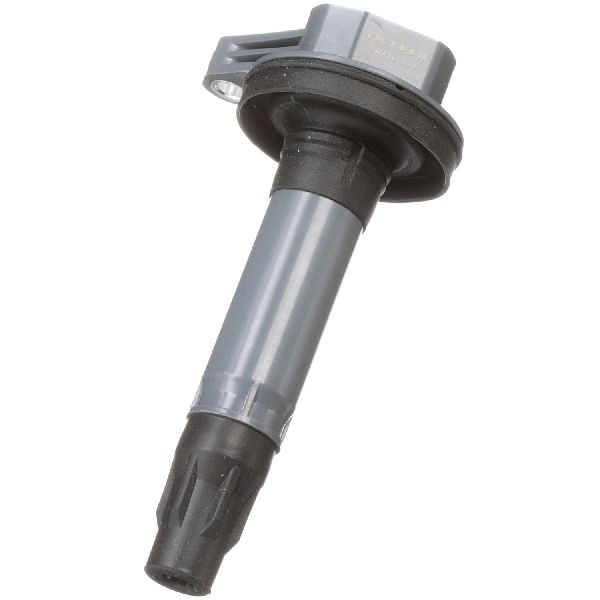
- Faulty Ignition Coil 🔴 High Probability → Shop Ignition Coil Coil-on-plug systems are common failure points on many modern engines as they age. The high heat environment of turbocharged engines like the 2.7L EcoBoost can accelerate wear on ignition components. A failing coil on some Ford V6 engines can also damage the PCM, leading to a persistent misfire even after replacement.
How to confirm: The easiest diagnostic step is to swap the ignition coil from cylinder 5 with one from another cylinder on the same bank (e.g., cylinder 4 or 6). Cylinder 5 is the middle cylinder on the rear bank (closest to the firewall). Clear the codes and drive the vehicle. If the misfire code changes to P0304 or P0306, the ignition coil is faulty.
Typical fix: Replace the faulty ignition coil. It is often recommended to replace the corresponding spark plug at the same time.
Est. part cost: $40-$90 - Worn or Fouled Spark Plug 🔴 High Probability → Shop Spark Plug Spark plugs are a regular maintenance item. Turbocharged EcoBoost engines are particularly sensitive to spark plug condition and gap. Oil or coolant contamination from other issues (like the TSB-related valve guide problem) can also foul the plug, preventing a proper spark.
How to confirm: Remove the spark plug from cylinder 5 and inspect it. Look for a worn electrode, cracked porcelain, incorrect gap, or heavy deposits of carbon, oil, or ash. A plug from a 2.7L with the valve guide issue may be visibly fouled with burnt oil.
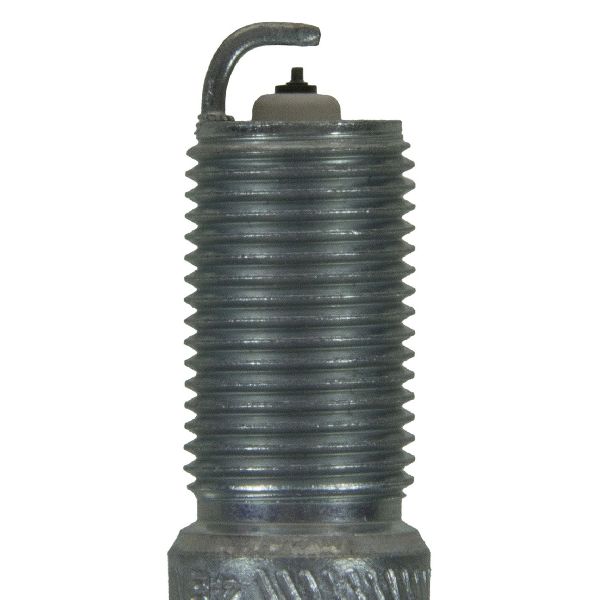
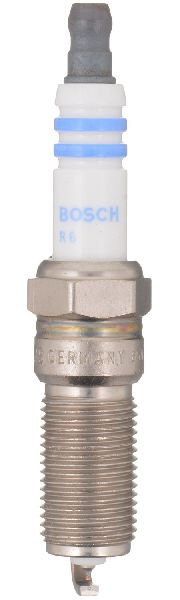
Typical fix: Replace the spark plug. For the 3.5L, the recommended spark plug gap is 0.049 - 0.053 inches. For the 2.7L, it is approximately 0.028 - 0.031 inches. It is best practice to replace all spark plugs as a set 🎬 See this walkthrough for replacing Edge spark plugs and coils. if they are near the end of their service life.
Est. part cost: $10-$25 per plug - Clogged or Faulty Fuel Injector 🟡 Medium Probability → Shop Fuel Injector Direct injection (DI) fuel injectors on the 2.7L EcoBoost operate under very high pressure and can become clogged or fail electronically. Carbon buildup is a known issue on DI engines and can affect injector performance.
How to confirm: After ruling out spark issues, listen to the injector with a mechanic's stethoscope; it should have a consistent clicking sound. You can also test the injector's electrical circuit with a multimeter or use a 'noid light' to see if it's receiving a pulse from the PCM. Swapping injectors between cylinders is also possible but is a more involved job than swapping coils.
Typical fix: Clean or replace the fuel injector for cylinder 5. In some forum cases, this was the ultimate fix after plugs and coils failed to solve the P0305.
Est. part cost: $70-$150
Rare But Worth Checking
- Internal Engine Damage (Cylinder Head Valve Guides): This is a known and significant issue specifically for the 2.7L EcoBoost engine in this year range, particularly those built from April 2016 to Jan 2017. Ford TSB 17-2235 and TSB 19-2384 directly link misfire codes (P0300-P0306) with excessive oil consumption (1 quart in < 3,000 miles) and blue/white smoke. The cause is faulty valve guides allowing oil into the cylinder, which fouls the spark plug and causes the misfire. The official fix is cylinder head replacement.
- Vacuum Leak: A leak in a vacuum hose, PCV system, or intake manifold gasket near cylinder 5 can lean out the air-fuel mixture for that cylinder, causing a misfire. A smoke test is the most effective way to diagnose this. On some Fords, a bad PCV elbow is a common culprit for lean codes and misfires.
- Damaged Powertrain Control Module (PCM): On some Ford V6 engines, a shorted ignition coil can send a voltage spike back to the PCM, damaging the driver circuit for that cylinder. If a misfire on cylinder 5 persists immediately after replacing the coil and plug with known-good parts, the PCM driver may be at fault. This is an uncommon but expensive failure. 🎬 Watch: What to check if new plugs and coils don't fix it.
Diagnosis Steps
- Read the trouble codes with an OBD-II scanner to confirm P0305 and any other related codes. Note any oil pressure (P0524, P06DD) or random misfire (P0300) codes.
- Check the freeze frame data to see the engine conditions (RPM, load, temp) when the misfire was detected.
- For a more advanced check, use a scanner with Mode $06 capabilities to view the raw misfire counts for each cylinder, confirming cylinder 5 is the primary offender. 🎬 Watch: A step-by-step guide to diagnosing a P0305 misfire.
- Locate Cylinder 5. On both the 2.7L and 3.5L transverse engines in the Edge, the rear bank of cylinders (near the firewall) is 4-5-6 from passenger to driver side. Cylinder 5 is the middle cylinder on the rear bank.
- Swap the ignition coil from cylinder 5 to cylinder 4. Clear the codes and test drive. If the code changes to P0304, the coil is bad.
- If the code does not move, swap the spark plug from cylinder 5 to cylinder 6. Clear codes and test drive. If the code moves to P0306, the spark plug was the issue.
- If the misfire remains on cylinder 5, inspect the wiring and connector for the ignition coil and fuel injector for any damage or corrosion.
- Listen to the fuel injector on cylinder 5 with a stethoscope; it should click rhythmically. Compare its sound to an adjacent injector.
- Perform a compression test on cylinder 5 to check for mechanical engine problems. Low compression could indicate a bad valve, worn piston rings, or the severe valve guide issue on the 2.7L.
- If the vehicle is a 2.7L EcoBoost, check the oil level and monitor for consumption. If it consumes more than 1 quart in 3,000 miles and exhibits other symptoms like blue smoke, refer to TSB 17-2235 and 19-2384 for the likely cylinder head issue.
Parts You'll Likely Need
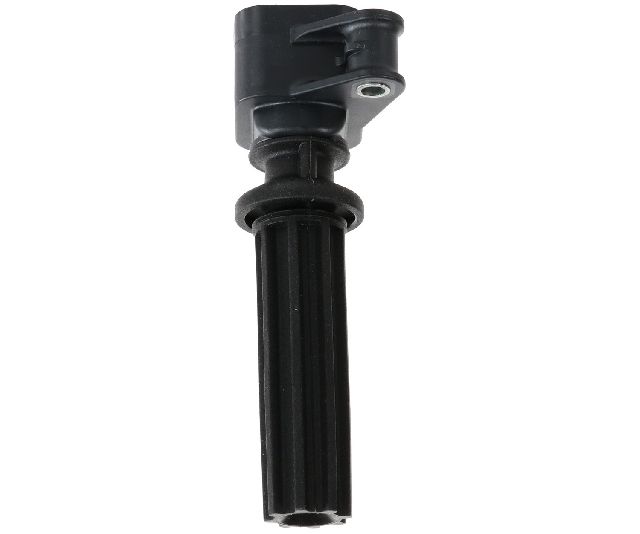
- Ignition Coil
(OEM #Motorcraft DG555 (2.7L) or DG549 (3.5L))— This is one of the most frequent causes of a single-cylinder misfire. It's a common wear item, especially on turbocharged engines.
Trusted brands: Motorcraft, Bosch, Denso, Delphi
OEM price range: $60-$100
Aftermarket price range: $40-$90 - Spark Plug
(OEM #Motorcraft SP-594 (replaces SP-578 for 2.7L) or Motorcraft SP-580 (replaces SP-542 for 3.5L))— A worn or fouled spark plug is another primary cause of misfires. It's a standard maintenance part that is inexpensive to replace.
Trusted brands: Motorcraft, NGK, Bosch
OEM price range: $15-$25
Aftermarket price range: $10-$20
Related Codes That Often Appear With This One
- P0300 — If the misfire condition is intermittent or affects multiple cylinders, a P0300 (Random Misfire) code may be stored alongside P0305.
- P0304, P0306 — Other cylinder-specific misfire codes for the same bank (Bank 2 is cylinders 4-5-6) may appear if the root cause (e.g., vacuum leak, timing issue) is affecting more than just cylinder 5.
- P0524, P06DD — These codes, related to low oil pressure, are specifically mentioned in Ford TSBs 17-2235 and 19-2384 alongside misfire codes for the 2.7L EcoBoost. Their presence strongly suggests the more serious internal engine issue related to oil consumption and cylinder heads.
- P0316 — This code indicates a misfire was detected within the first 1,000 engine revolutions after startup. It is often seen with other P030x codes and is also mentioned in the relevant TSBs for the 2.7L engine.
Technical Service Bulletins (TSBs) & Recalls
- TSB 17-2235: Links P030x misfire codes with excessive oil consumption, rough idle, blue/white smoke, and oil pressure DTCs (P0524/P06DD) on 2016-2017 Edge/MKX and 2017 Fusion/Continental/MKZ with 2.7L/3.0L engines. Points to internal engine failure requiring head or engine replacement.
- TSB 19-2384: A similar TSB specifically for the 2016-2017 F-150 with the 2.7L EcoBoost, also identifying cylinder head valve guides as the cause for oil consumption and misfires, corroborating the issue across platforms.
Platform-Specific Known Issues
- On 2016-2017 Edge models with the 2.7L EcoBoost engine (built Apr 2016 - Jan 2017), Ford issued TSB 17-2235. This bulletin states that misfire codes (including P0305) combined with excessive oil consumption (1 quart in < 3,000 miles), rough idle, and/or blue/white exhaust smoke may be due to faulty cylinder head valve guides. The prescribed fix is to replace the cylinder heads or the entire engine assembly. This is a significant and costly repair compared to typical misfire causes.
- An owner of a 2017 Ford Edge filed a complaint with the NHTSA (ODI #11407153) after experiencing a misfire with code P0305. The owner stated, 'WE REPLACED THE COILS AND SPARK PLUGS AND THE ENGINE CONTINUED TO MISFIRE.' This real-world example highlights that the problem can be more complex than the most common parts, pointing towards the underlying engine issue described in the TSBs.
Hidden / Shadow Codes Worth Checking
- Mode $06, Test ID $53 (newer models) or $51 (older models): Provides raw misfire counts for each individual cylinder over the last 1000 revolution cycle. This allows a technician to see which cylinder is misfiring, and by how much, even if the count is not yet high enough to trigger a P030x trouble code and illuminate the check engine light. (see via A professional scan tool or an advanced OBD-II app that can access Mode $06 data. The data is presented as a raw value that may need to be converted to a percentage.)
Scan Tool Commands That Help
- Ford IDS (Integrated Diagnostic System): Power Balance Test — This is a key diagnostic function used when a misfire is felt but the specific cylinder is not easily identified. The test graphically displays the power contribution of each cylinder in real-time by sequentially disabling the fuel injector to each one and measuring the corresponding drop in RPM. A cylinder with a smaller RPM drop is contributing less power, pinpointing the source of the misfire. This is extremely useful for confirming a P0305 and ruling out random misfires.
- Ford IDS (Integrated Diagnostic System): Misfire Profile Correction Reset / Relearn — After clearing KAM (Keep Alive Memory) or disconnecting the battery, the PCM's learned profile of the crankshaft reluctor wheel is lost. This profile is necessary for the misfire monitor to run accurately. If the monitor won't run, a relearn procedure (typically involving 3 coast-down decelerations from 60-40 mph without braking) must be performed.
Wiring & Ground Locations
- Cylinder 5 Ignition Coil and Fuel Injector Connectors — On the 2.7L and 3.5L V6 engines, Cylinder 5 is the middle cylinder on the rear bank, closest to the firewall. The connectors plug directly into the top of the ignition coil and the base of the fuel injector for that cylinder.. These connectors and their associated wiring are the primary electrical pathway for spark and fuel delivery to cylinder 5. Damage, corrosion, or looseness at these points can directly cause a P0305 code. The fuel injector connector is a 2-wire connector.
- PCM / Engine Grounds — Key engine and chassis grounds are critical for proper sensor and actuator function. While specific diagrams are needed for all locations, common grounds are found on the engine block, cylinder heads, and on the chassis rails in the engine bay, sometimes near the front bumper structure.. A poor ground connection for the PCM or the engine block can introduce electrical noise and voltage drops, potentially causing the PCM to misinterpret sensor data or fail to properly fire the ignition coil or fuel injector, leading to misfire codes.
- Powertrain Control Module (PCM) Relay — Located in the under-hood fuse box (Power Distribution Box). It is typically labeled in the owner's manual or on the fuse box cover.. This relay supplies power to the PCM. An intermittent failure of this relay could cause a variety of issues, including stalling and misfire codes, as it would cut power to the systems controlling ignition and fuel.
OEM Part Supersession History
Motorcraft SP-578 (CYFS-12Y-PT)→Motorcraft SP-594 (CYFS-12YRT3)— SP-594 is the updated service replacement part specified by Ford.
Heads up: While SP-594 is the correct replacement, some owners have noted that the original factory plugs in the 2017 2.7L EcoBoost were a colder heat range (equivalent to NGK heat range 7). The replacement SP-594 is a hotter plug (equivalent to NGK heat range 6). This change was likely made by Ford to improve resistance to fouling across the engine lineup.
Model Year Variations Within This Range
- 2016-2017: The 2.7L EcoBoost engine in the 2016-2017 Edge uses direct injection exclusively. Starting in the 2018 model year, Ford updated the 2.7L to include both port and direct injection. The addition of port injection helps to clean carbon deposits off the intake valves, a common issue in earlier direct-injection-only engines that can lead to misfires.
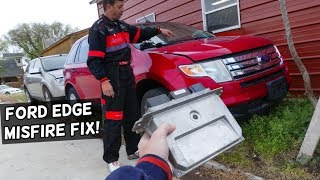
Helpful Videos
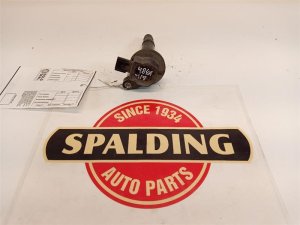
Used OEM Parts in Stock
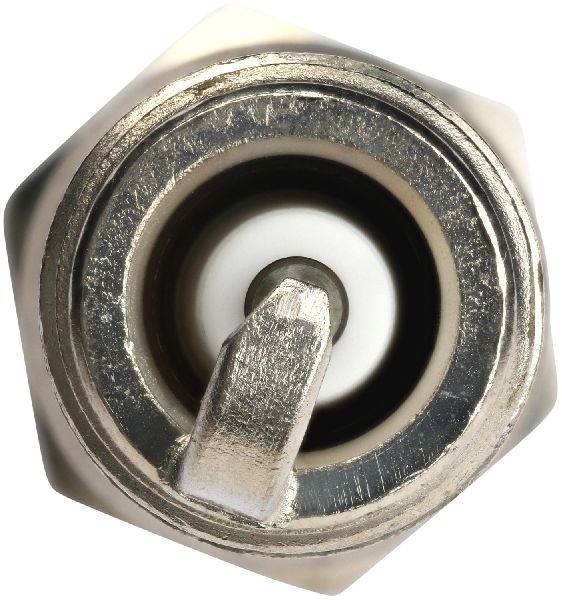
New Aftermarket Parts Available

The information in this article is provided for general reference and educational purposes only. Vehicle specifications, procedures, and part compatibility can vary by production date, trim level, and region. Always consult your vehicle's factory service manual and verify part numbers before purchasing or performing repairs. Safety-critical components such as airbags, seat belts, and braking systems should be installed by a qualified professional.
- Ford EDGE:
- 🧭 Diagnostic Flowchart
- 🎬 Helpful Videos
- 🛍️ Shop This Part
- What's Unique About the 2016-2017 Ford EDGE
- Symptoms You May Notice
- Most Likely Causes
- Rare But Worth Checking
- Diagnosis Steps
- Parts You'll Likely Need
- Related Codes That Often Appear With This One
- Technical Service Bulletins (TSBs) & Recalls
- Platform-Specific Known Issues
- Hidden / Shadow Codes Worth Checking
- Scan Tool Commands That Help
- Wiring & Ground Locations
- OEM Part Supersession History
- Model Year Variations Within This Range
- 🎟️ Get 5% Off