

P0305 on 2011-2019 Ford Explorer 3.5L EcoBoost: Cylinder 5 Misfire Causes and Fixes
P0305 indicates a misfire on cylinder #5. On the 3.5L EcoBoost Explorer, this is almost always a worn-out spark plug or a failed ignition coil. Cylinder #5 is the middle cylinder on the front bank, making it easy to access. A DIY fix for a plug and coil costs approximately $60-$120 and is a common first step.
- P0305 on this Explorer is a misfire in cylinder #5, which is the middle cylinder on the front (radiator side) bank.
- The most likely cause is a bad ignition coil or a worn spark plug. Always perform a coil 'swap test' first, as it's the easiest and cheapest diagnostic step.
- Due to the turbocharged, direct-injection design, spark plugs should be changed more frequently than the manual suggests, typically every 40,000-60,000 miles, to prevent misfires.
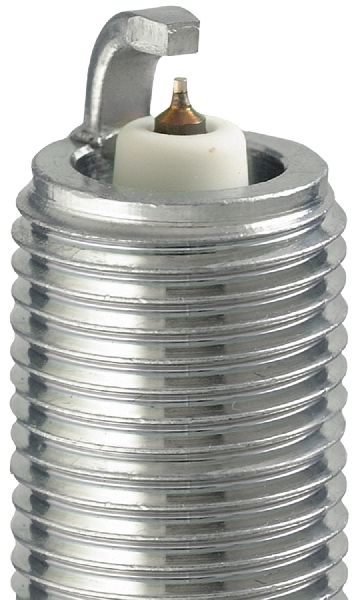
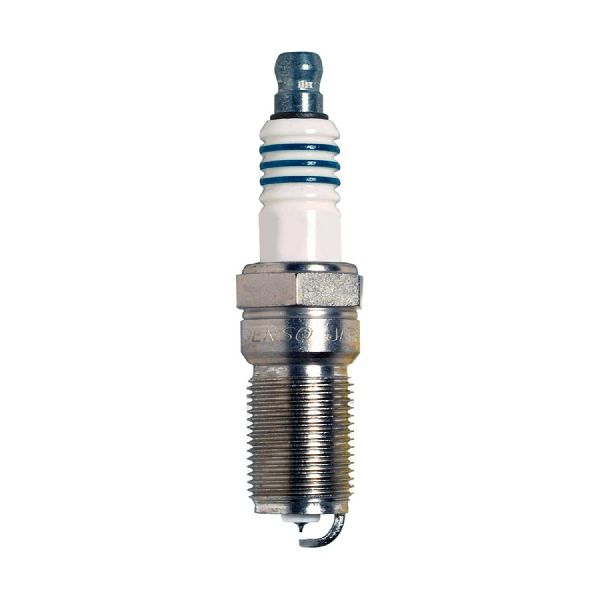
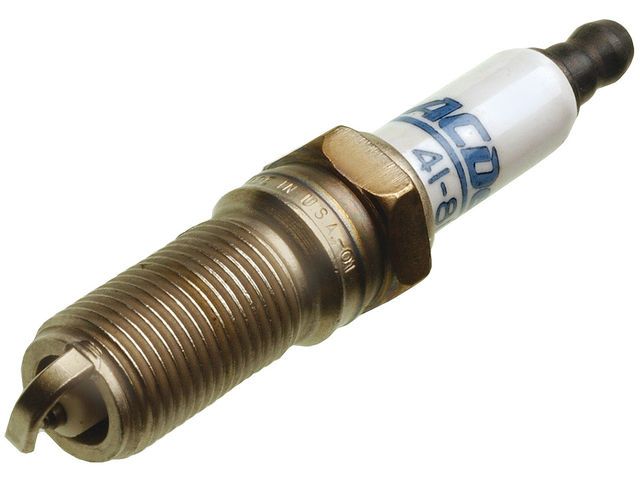
- Use only high-quality Iridium spark plugs (Motorcraft SP-580 is the recommended update) and ensure they are gapped correctly.
- If the Check Engine Light is flashing, stop driving immediately to prevent expensive damage to the catalytic converter.
What's Unique About the 2011-2019 Ford Explorer
The 3.5L EcoBoost is a twin-turbocharged, direct-injection (GDI) engine. This design is powerful but puts immense stress on ignition components, causing spark plugs and coils to wear out much faster than in naturally aspirated engines. While Ford may recommend a 100,000-mile interval, many specialists and owners find that replacing spark plugs every 40,000-60,000 miles is necessary to prevent misfires. The high boost pressures can also 'blow out' the spark if the plug gap is too wide, a common issue as plugs wear. Additionally, as a GDI engine, it is prone to carbon buildup on intake valves over time, which can restrict airflow and lead to misfires, though this is less common than ignition faults.
Symptoms You May Notice
- Rough or shaking idle
- Hesitation, stumbling, or bucking during acceleration
- Noticeable loss of engine power
- Flashing or solid Check Engine Light
- Reduced fuel economy
- Potential fuel smell from the exhaust
- Replacing only the spark plug without testing the ignition coil first. The coil swap test is free and definitive.
- Replacing the fuel injector before thoroughly ruling out the much more common ignition system components.
- Assuming a vacuum leak is the cause. While possible, a vacuum leak large enough to cause a consistent single-cylinder misfire is less common than a bad coil or plug on this engine. A systemic leak would more likely cause a P0300 (multiple misfires).
Most Likely Causes
- Worn or Fouled Spark Plug 🔴 High Probability → Shop Spark Plug The high cylinder pressures of the EcoBoost engine cause accelerated wear on spark plugs. A very common failure is a cracked porcelain insulator, which allows the spark to arc to the cylinder head instead of jumping the gap. Even a hairline crack can cause a persistent misfire.
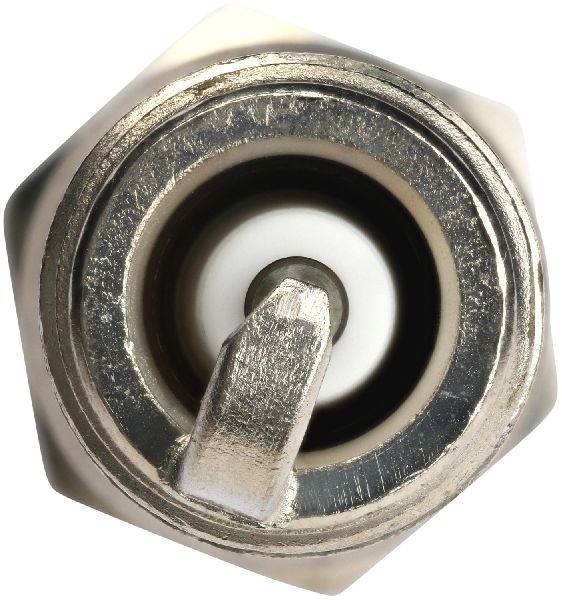
How to confirm: After confirming the misfire is not from the coil, remove the spark plug from cylinder #5 (requires a 5/8" socket). Inspect it for a wide gap, carbon fouling, oil, or cracks in the white porcelain insulator. A cracked insulator is definitive proof of failure.
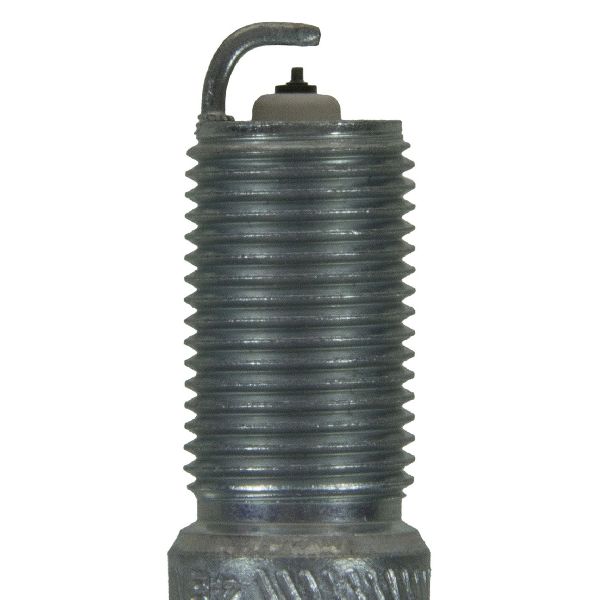
Typical fix: Replace all six spark plugs. It is critical to use the correct Motorcraft plugs (SP-580 is the updated part) and ensure they are gapped correctly for the EcoBoost engine. While they may come pre-gapped, owners and specialists strongly recommend verifying the gap, typically setting it to .028"-.031" to prevent spark blow-out under boost.
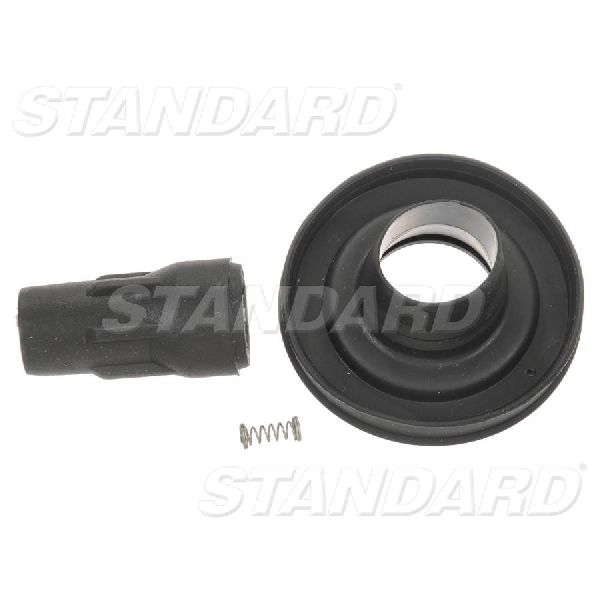
Est. part cost: $15-$25 per plug - Failed Ignition Coil (Coil-On-Plug) 🔴 High Probability → Shop Ignition Coil Engine heat and high voltage demands cause ignition coils to fail over time. The rubber boot attached to the coil can also degrade or become contaminated with oil or moisture, allowing the spark to arc to the cylinder head instead of the plug.
How to confirm: Perform a 'swap test'. Move the ignition coil from cylinder #5 to an adjacent, easily accessible cylinder (like #4 or #6). The coils are held by a single 8mm bolt. Clear the codes and drive. If the code changes to P0304 or P0306, the coil is faulty. This is the most definitive and cost-effective initial diagnostic step.
Typical fix: Replace the failed ignition coil. While you only need to replace the one that has failed, if the vehicle has high mileage or the plugs are being changed, it's wise to replace the coil boots and springs on all cylinders.
Est. part cost: $40-$80 per coil - Carbon Buildup on Intake Valves 🟡 Medium Probability As a direct-injection engine, fuel is sprayed directly into the cylinder, not over the intake valves. This means the valves don't get the cleaning effect of fuel wash, allowing oil vapor from the PCV system and combustion byproducts to bake onto them. Over 80k-100k miles, this can restrict airflow enough to cause misfires, especially at idle.
How to confirm: This requires a borescope to visually inspect the intake valves, which usually involves removing the intake manifold.
Typical fix: A professional service called 'walnut blasting' is used to clean the carbon deposits from the valves without damaging the engine. This service can cost between $500 and $800.
Est. part cost: $0 (service cost is labor) - Clogged or Faulty Fuel Injector ⚪ Low Probability → Shop Fuel Injector
How to confirm: If ignition and spark are good, the fuel injector is a suspect. A professional can perform a power balance test with a high-level scan tool. An advanced DIY method involves swapping injectors between cylinders, but this is much more labor-intensive than a coil swap as it requires removing the fuel rail.
Typical fix: Replace the fuel injector for cylinder #5.
Est. part cost: $100-$200
Rare But Worth Checking
- Intercooler Condensation (Primarily 2011-2014 models): On earlier EcoBoost models, especially in humid climates, a mix of water and oil vapor can pool in the intercooler (CAC). During hard acceleration, this liquid can be ingested, causing a sudden, violent misfire across multiple cylinders. Ford issued TSB 13-8-1 to address this with a PCM reprogram and a deflector plate. A popular community fix is to drill a 1/16" 'weep hole' in the lowest point of the intercooler to allow condensation to drain.
- Low Engine Compression: This indicates a serious mechanical engine problem like a bad valve, worn piston rings, or a head gasket leak affecting only cylinder #5. A compression test is the definitive diagnostic step after ruling out ignition and fuel issues. An owner report for a similar Ford model (NHTSA ODI #11652376) noted a P0305 code caused by low compression on cylinder #5 (110 PSI) compared to 145-150 PSI on other cylinders.
- Under-Torqued Components: Manufacturer Bulletin #SSM 46391 notes that some Ford engines may exhibit multiple misfire codes, including P0305, due to an under-torqued crankshaft pulley bolt.
Diagnosis Steps
- Read the code with an OBD-II scanner to confirm P0305 and check for any other codes.
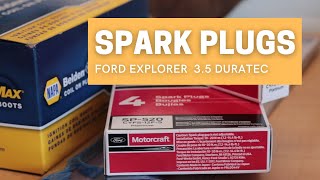
- Locate Cylinder #5. On the transverse-mounted 3.5L V6 in the Explorer, the cylinder banks are arranged with the rear bank (firewall side) being cylinders 1-2-3 and the front bank (radiator side) being 4-5-6, arranged from passenger to driver side. Cylinder #5 is the middle cylinder on the front bank 🎬 Watch this to understand why cylinder 5 specifically fails, making it relatively easy to access.
- Perform an ignition coil swap. Switch the coil from cylinder #5 with the coil from cylinder #4 or #6. The coil is held by one 8mm bolt. Clear the codes, drive the vehicle, and see if the misfire code moves to the other cylinder (e.g., P0304 or P0306). If it does, the coil is bad.
- If the code remains P0305, inspect the spark plug. Remove the plug from cylinder #5 (use a 5/8" spark plug socket with an extension) and check for wear, damage, or a cracked porcelain insulator. A cracked insulator is a very common failure point. Even if it looks okay, replace it if its age is unknown.
- Check the spark plug gap. Use a feeler gauge to check the gap. The recommended gap is between .030" and .033". Many owners of tuned vehicles gap as low as .028". If the gap is too wide, it can cause misfires under boost.
- If the coil and plug are confirmed good, inspect the wiring and connector for the ignition coil and fuel injector on cylinder #5 for any damage, corrosion, or loose pins.
- If ignition components are ruled out, the next steps involve more advanced diagnostics, such as checking the fuel injector, performing a compression test to check for mechanical engine issues, or using a borescope to inspect for carbon buildup on the intake valves.
Parts You'll Likely Need
- Ignition Coil
(OEM #BL3Z-12029-C (Motorcraft DG549))— High heat and electrical load make this one of the most common failure points for a single-cylinder misfire on the 3.5L EcoBoost.
Trusted brands: Motorcraft, NGK, Denso, MSD
OEM price range: $50-$80
Aftermarket price range: $30-$60 - Iridium Spark Plug
(OEM #SP-580 (supersedes SP-534))— The EcoBoost engine wears out spark plugs faster than naturally aspirated engines. The SP-580 is the updated part number that supersedes the older SP-534. Cracked porcelain is a very common failure mode.
Trusted brands: Motorcraft, NGK
OEM price range: $15-$25
Aftermarket price range: $10-$20
Related Codes That Often Appear With This One
- P0300 — If the misfire becomes more widespread due to systemic issues like severely worn plugs, major carbon buildup, or the intercooler condensation issue, a P0300 (Random/Multiple Cylinder Misfire) may accompany P0305.
- P0316 — This code indicates a misfire was detected within the first 1,000 engine revolutions on startup. It often appears with a specific cylinder misfire code like P0305 and points to a component that is failing from a cold start. Manufacturer Bulletin #SSM 46363 links P0316 and P0305 to potential cylinder head issues or excessive oil consumption.
- P0304, P0306 — These codes may appear after performing a coil or plug swap test, indicating that the fault has moved to cylinder 4 or 6 and confirming the swapped component is bad.
Technical Service Bulletins (TSBs) & Recalls
- TSB 13-8-1: Intermittent Stumble/Misfire on Hard Acceleration in humid conditions on 2011-2012 models with 3.5L GTDI engines. Can set P0304, P0305, P0306, or P0430.
- Bulletin #SSM 46363: Addresses illuminated MIL with codes P0300-P0306 and/or P0316, suggesting the cylinder heads as a suspect cause for these issues.
- Bulletin #SSM 46391: Notes that engines built between 10-Sep-2016 and 15-Feb-2017 may exhibit multiple misfire codes including P0305 due to an under-torqued crankshaft pulley bolt.
Platform-Specific Known Issues
- TSB 13-8-1: For 2011-2012 models, this TSB addresses misfires under load in humid weather caused by intercooler condensation.
Mechanic-Grade Diagnostic Values
- Ignition Coil Primary Resistance — expected: 0.5 Ohms. Failure: Significant deviation from 0.5 Ohms, or an open/infinite reading.
- Ignition Coil Secondary Resistance — expected: 6.0 - 6.2K Ohms. Failure: Significant deviation from this range, or an open/infinite reading.
- Direct Fuel Injector Resistance — expected: 1.0 - 2.0 Ohms. Failure: An open circuit (infinite resistance) or a reading far outside this very low range indicates electrical failure.
- Low-Side Fuel Pressure (at idle) — expected: 40 - 60 PSI. Failure: Pressure significantly below this range could indicate a weak in-tank fuel pump.
- High-Side Fuel Pressure (cranking) — expected: ~500 PSI. Failure: Failure to build pressure while cranking points to a high-pressure fuel pump (HPFP) issue.
- High-Side Fuel Pressure (under load / WOT) — expected: 1,500 - 2,175 PSI. Failure: If actual pressure lags requested pressure by more than 200 PSI, it suggests a failing HPFP or leaking injector.
Hidden / Shadow Codes Worth Checking
- Mode $06, Test ID $A6: Provides raw misfire count data for cylinder #5. This allows a technician to see a small number of misfires that have not yet reached the threshold to set a P0305 code. Test IDs $A2 through $A7 correspond to cylinders 1 through 6. (see via An advanced OBD-II scanner or software like FORScan that can display Mode $06 test results.)
Scan Tool Commands That Help
- Ford IDS / FORScan: Power Balance Test — Use this to confirm a weak cylinder when the cause is not obvious. The test disables one cylinder at a time and graphs the RPM drop. A cylinder with a smaller drop than the others (like cylinder 5) is not contributing its full share of power, confirming the misfire location before swapping parts.
- Ford IDS / FORScan: Misfire Monitor Neutral Profile Correction — This procedure must be performed after major engine or transmission repairs, or replacement of the crankshaft position sensor. It relearns the crankshaft position sensor's profile to prevent the PCM from incorrectly flagging misfires. Failure to perform this can lead to false P030x codes.
Wiring & Ground Locations
- C115 (Coil on Plug 5) — The electrical connector on the ignition coil for cylinder #5, which is the middle cylinder on the front (radiator side) bank.. This is the primary connection point to check for damage, corrosion, or a loose fit when diagnosing a P0305. The wires are Pin 1 (12V+), Pin 2 (Ground), and Pin 3 (PCM Control Signal).
- PCM Connector C1551E, Pin 58 — At the Powertrain Control Module (PCM), typically located in the engine bay near the firewall or battery.. This is the specific pin on the PCM that sends the control signal to the cylinder 5 ignition coil. Testing for continuity between this pin and the signal wire at the C115 connector can definitively rule out a broken wire in the harness.
- G104 / G105 — G104 is a primary engine compartment ground on the passenger side. G105 is on the top right side of the engine.. The ignition coils rely on a solid engine ground to function correctly. A loose or corroded ground at these points can cause weak spark and intermittent misfires on multiple cylinders, including cylinder 5.
Real Owner Repair Stories
- YouTube user 'The Auto Rules' (2013 Ford F-150 3.5L EcoBoost) — Check engine light started flashing under heavy load, codes P0305 and P0306 stored.
❌ Tried (didn't work) Initial test drive did not replicate the issue until the engine was put under heavy load multiple times.
✅ What actually fixed it Upon inspection, the spark plugs for both cylinders 5 and 6 had visible cracks in the porcelain insulators. The owner noted that using power tools to install spark plugs can easily cause these cracks. Replacing the two cracked plugs resolved the misfire codes. - Ford F150 Forum user 'Frankenstien907' (2016 Ford Expedition 3.5L EcoBoost, 70k miles) — Flashing check engine light and loss of power when trying to pass. Initially P0300, P0303, P0305, but later isolated to just P0305.
❌ Tried (didn't work) The user was still in the diagnostic phase but had read about common issues and was planning the next steps.
✅ What actually fixed it The user planned to replace the spark plugs first due to the vehicle's mileage (70k) and forum recommendations about incorrect factory gaps. The final resolution was not posted, but the diagnostic path followed the most common cause. - NHTSA ODI #11407153 — An owner reported that their engine started misfiring both while stationary and in motion. Despite replacing the coils and spark plugs, the engine continued to misfire after pulling code P0305.
- NHTSA ODI #10966046 — An owner reported receiving error code P0305 for a cylinder 5 misfire and noted multiple online forum reports of this issue occurring outside of the warranty period.
OEM Part Supersession History
Motorcraft SP-534→Motorcraft SP-580— SP-580 is the updated, official replacement part from Ford for this application. The physical appearance may be slightly different.
Heads up: While SP-534 may still be found, using the latest revision (SP-580) is recommended. Some owners also use the one-step-colder SP-542 plug for tuned applications, though this has also been superseded.Motorcraft DG-511→Motorcraft DG-549 (BL3Z-12029-C)— Updated design for improved durability and performance.
Model Year Variations Within This Range
- 2011-2014: These earlier models were more susceptible to the intercooler (CAC) condensation issue, which could cause sudden, severe misfires under acceleration in humid conditions. Ford addressed this with TSB 13-8-1.
- 2016-2019: The 2016 model year marked a significant facelift for the Explorer, but the 3.5L EcoBoost engine and its common failure points for misfires (plugs, coils) remained largely the same as the 2011-2015 models.
Diagnostic Flowchart
Other Known Issues on This Vehicle
Issues unrelated to this code that are worth knowing about as an owner of this generation:
- Internal Water Pump Failure 🔴 High — Common after 80,000-120,000 miles. A major design flaw on transverse-mounted 3.5L engines.
- Power Transfer Unit (PTU) Overheating/Failure 🔴 High — Common on AWD models, especially over 70,000 miles. Failures are frequent due to design and lack of serviceability.
- Electronic Throttle Body Failure 🟠 Medium — Can occur at any mileage, leading to sudden limp mode. A widespread issue across many Ford models of this era. (Ref: Covered under Customer Satisfaction Program 13N03 for some vehicles.)
- Intercooler Condensation Buildup 🟠 Medium — Most prevalent on 2011-2014 models, especially in humid climates. (Ref: TSB 13-8-1)
Used vs. New Parts: Buying Guide for This Vehicle
When a used part is the smart pick: Used parts are generally not recommended for fixing a P0305 code on this engine. The primary causes are wear-and-tear items (spark plugs, ignition coils) that have a finite lifespan. Installing a used part with unknown history is likely to lead to a repeat failure in the near future.
Donor-vehicle mileage cap: roughly under 20000 miles for the part to have meaningful remaining life.
What to inspect on the donor part:
- For an ignition coil, check for cracks in the plastic housing, corrosion on the electrical pins, and ensure the rubber boot is pliable and free of oil contamination or tears.
- Never install used spark plugs.
OEM-only on this vehicle (don't cheap out):
- Spark Plugs: While some aftermarket brands are reputable, the cost savings are minimal and many owners report the best, most consistent performance with OEM Motorcraft plugs.
- High-Pressure Fuel Pump (HPFP): If the HPFP is diagnosed as the cause, using an OEM part is critical for reliability unless specifically upgrading to a known-quality performance unit for a tuned engine.
Aftermarket brands forum-validated for this vehicle:
- Ignition Coils: MSD, Accel, and Performance Distributors (D.U.I.) are often cited by owners as reliable, higher-performance alternatives to OEM.
Brands owners have reported issues with on this vehicle:
- Unbranded, no-name ignition coils and spark plugs from online marketplaces. These often have high failure rates, use inferior materials, and may not meet the voltage and heat specifications required by the EcoBoost engine, leading to persistent misfires.
Real Owner Stories
Aggregated from forums and TSBs cited above. Mileages and costs reflect what owners reported in those sources.
2016 Ford Explorer 3.5L EcoBoost — 136000 miles
Symptoms: P0305 misfire code present.
What fixed it: Replaced the original spark plug in cylinder #5 which had a cracked porcelain insulator.
Source hint: youtube.com: '2016 Ford Explorer 3.5 Ecoboost P0305 misfire code.'
2016 Ford F-150 3.5L EcoBoost — ~60000 miles
Symptoms: Misfire problems under load.
What fixed it: Reducing spark plug gap from the factory .034" to a tighter .028"-.032" range.
Source hint: f150forum.com: '2016 Eco Boost 3.5 misfire problems'
2011 Ford F-150 3.5L EcoBoost — ~100000 miles
Symptoms: Chronic misfire issue caused by intercooler condensation in humid conditions.
What fixed it: Drilled a 1/16" weep hole in the intercooler to drain condensation.
Source hint: bobistheoilguy.com: 'Drilled the intercooler drain 2011 F150 Ecoboost'
Related OBD-II Codes
Frequently Asked Questions
Which spark plugs should I use for my 2011-2019 Ford Explorer 3.5L EcoBoost?
Does TSB 13-8-1 apply to my Explorer misfire issue?
Where is cylinder #5 located on the Explorer 3.5L EcoBoost engine?
Why does my EcoBoost engine experience carbon buildup on the intake valves?
Can I just swap parts to see if the P0305 code goes away?
Is there a specific gap I should use for my spark plugs to stop the misfire?
Helpful Videos
Used OEM Parts in Stock
New Aftermarket Parts Available

The information in this article is provided for general reference and educational purposes only. Vehicle specifications, procedures, and part compatibility can vary by production date, trim level, and region. Always consult your vehicle's factory service manual and verify part numbers before purchasing or performing repairs. Safety-critical components such as airbags, seat belts, and braking systems should be installed by a qualified professional.
- Ford Explorer:
- 🧭 Diagnostic Flowchart
- 🎬 Helpful Videos
- 🛍️ Shop This Part
- What's Unique About the 2011-2019 Ford Explorer
- Symptoms You May Notice
- Most Likely Causes
- Rare But Worth Checking
- Diagnosis Steps
- Parts You'll Likely Need
- Related Codes That Often Appear With This One
- Technical Service Bulletins (TSBs) & Recalls
- Platform-Specific Known Issues
- Mechanic-Grade Diagnostic Values
- Hidden / Shadow Codes Worth Checking
- Scan Tool Commands That Help
- Wiring & Ground Locations
- Real Owner Repair Stories
- OEM Part Supersession History
- Model Year Variations Within This Range
- Other Known Issues on This Vehicle
- Used vs. New Parts: Buying Guide for This Vehicle
- Real Owner Stories
- 2016 Ford Explorer 3.5L EcoBoost — 136000 miles
- 2016 Ford F-150 3.5L EcoBoost — ~60000 miles
- 2011 Ford F-150 3.5L EcoBoost — ~100000 miles
- Related OBD-II Codes
- Frequently Asked Questions
- 🎟️ Get 5% Off