

P0305 on 2010-2019 Ford Flex 3.5L EcoBoost: Cylinder 5 Misfire Causes and Fixes
P0305 indicates a misfire on cylinder 5. On the 3.5L EcoBoost Flex, this is most often a bad ignition coil or a worn spark plug. A DIY fix is straightforward for cylinder 5 and typically costs between $40 and $120 for parts. Due to the engine's design, spark plugs wear faster than in non-turbo engines.
- P0305 is a misfire on cylinder 5, the middle cylinder on the front (radiator side) bank.
- The most likely cause is a bad ignition coil or a worn-out spark plug.
- Diagnose the issue for free by swapping the coil from cylinder 5 with an adjacent cylinder to see if the code follows the coil.
- If the check engine light is flashing, stop driving immediately to prevent expensive catalytic converter damage.
- Because cylinder 5 is on the easily accessible front bank, replacing the coil or spark plug is a simple DIY job that can be done in under 30 minutes.
What's Unique About the 2010-2019 Ford Flex
The Ford Flex with the 3.5L EcoBoost V6 uses a twin-turbocharged, direct-injection (GTDI) setup. This design is known to be harder on spark plugs due to high cylinder pressures, leading to a shorter service life compared to naturally aspirated engines. Fortunately, cylinder 5 is located on the front bank of the engine (closest to the radiator), making the most common culprits—the ignition coil and spark plug—easily accessible without needing to remove the intake manifold.
Symptoms You May Notice
- Rough or shaky idle
- Hesitation or stumbling during acceleration
- Noticeable loss of engine power
- Flashing Check Engine Light, especially under load
- Solid Check Engine Light
- Poor fuel economy
- Possible smell of unburnt fuel from the exhaust
- Shuddering feeling from the engine, especially in humid weather or under hard acceleration
- Replacing the oxygen sensor. An O2 sensor will not cause a single-cylinder misfire.
- Replacing the catalytic converter. A misfire can damage the converter, but a bad converter will not cause the misfire. The converter damage is a symptom, not the cause.
Most Likely Causes
- Faulty Ignition Coil 🔴 High Probability → Shop Ignition Coil Coil-on-plug systems are a common failure point on modern engines. Heat cycles and vibration eventually cause the internal windings or the boot to fail, allowing spark to escape. Sometimes, a visible crack or carbon track (a fine black line) can be seen on the coil body or boot.
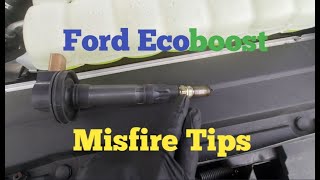
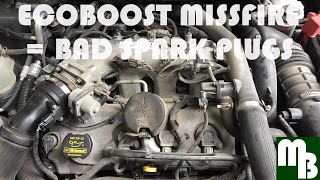
How to confirm: Swap the ignition coil from cylinder 5 with the coil from an adjacent cylinder (e.g., cylinder 4 or 6). Clear the codes and drive the vehicle. If the code changes to P0304 or P0306, the coil is faulty. This is the most definitive DIY diagnostic step. 🎬 See these expert troubleshooting tips for EcoBoost misfire codes
Typical fix: Replace the faulty ignition coil. It is held on by a single 8mm bolt. It is also wise to replace the coil boot at the same time, as they can degrade and cause misfires.
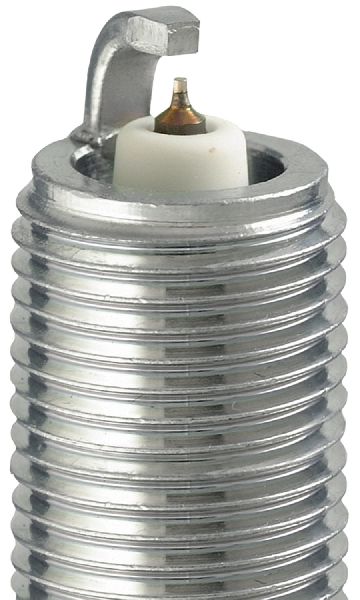
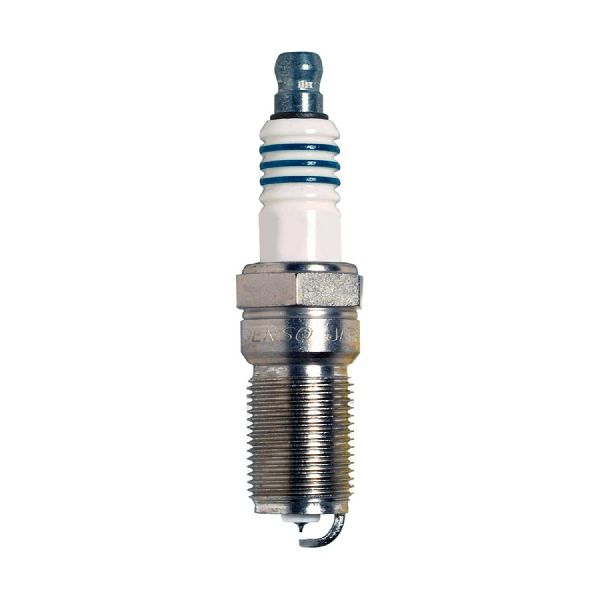
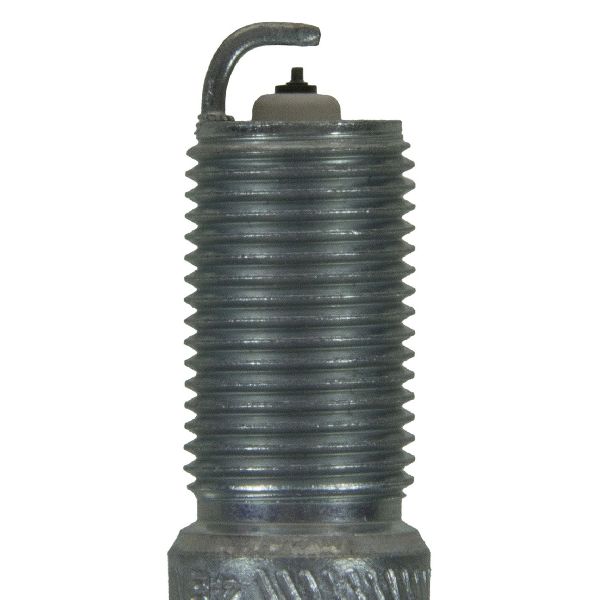
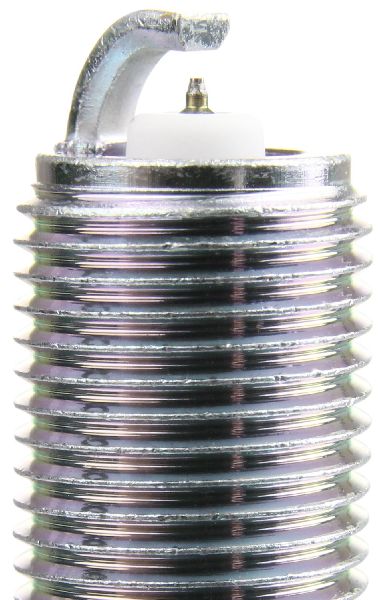
Est. part cost: $30-$70 - Worn or Fouled Spark Plug 🔴 High Probability → Shop Spark Plug The 1st generation 3.5L EcoBoost engine is known to be very hard on spark plugs due to the high cylinder pressures from turbocharging and direct injection. The recommended service interval is often shorter than the owner's manual suggests, with many owners and technicians recommending a 60,000-mile interval. An incorrect spark plug gap is also a common issue; many owners on forums report better performance when gapping new plugs to around 0.028"-0.030" instead of the out-of-the-box gap.
How to confirm: After confirming the coil is good, remove the spark plug from cylinder 5. Inspect it for wear (worn electrode), carbon fouling, oil, or cracks in the white porcelain insulator. A crack can allow the spark to ground before reaching the electrode tip.
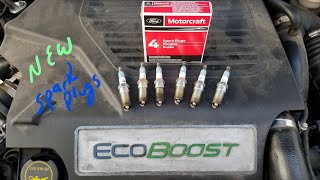
Typical fix: Replace the spark plug. It is highly recommended to replace all six spark plugs at the same time to ensure even performance, especially if they are near the end of their service life. Use a 5/8" spark plug socket with an extension. 🎬 Watch: How to replace EcoBoost spark plugs the right way
Est. part cost: $10-$25 per plug - Clogged or Faulty Fuel Injector 🟡 Medium Probability → Shop Fuel Injector As a direct-injection (GDI) engine, the fuel injectors operate under very high pressure and are located inside the combustion chamber, exposing them to extreme heat and carbon buildup. While less common than ignition issues, an injector failure can cause a persistent single-cylinder misfire.
How to confirm: This is more difficult to diagnose. A professional can perform a fuel injector balance test. A DIY method involves listening to the injector with a mechanic's stethoscope to check for a consistent clicking sound; a silent injector is likely dead. A leaking injector O-ring can also be a cause.
Typical fix: Replace the faulty fuel injector. This is a more involved job than a coil or plug and may require special tools.
Est. part cost: $50-$150 - Intake Valve Carbon Buildup ⚪ Low Probability In direct-injection engines, fuel is sprayed directly into the cylinder, not over the intake valves. This means there is no fuel to wash away carbon deposits from the PCV system, which can build up over time. This buildup can disrupt airflow into the cylinder, causing a misfire, often on cold starts.
How to confirm: Requires a borescope inspection of the intake ports and valves. On the 3.5L EcoBoost, it's possible to inspect the valves by removing the MAP sensor on top of the intake manifold, which provides a direct view.
Typical fix: The intake valves need to be cleaned, typically through walnut blasting or manual scrubbing with solvents after removing the intake manifold. This is a labor-intensive job often left to a professional or experienced DIYer.
Est. part cost: $0 (service cost is labor, ranging from $400-$800)
Rare But Worth Checking
- Vacuum Leak: A vacuum leak is more likely to cause a random misfire code (P0300) or lean codes (P0171/P0174), but a leak isolated to the intake runner for cylinder 5 could cause P0305.
- Low Cylinder Compression: This indicates a serious internal engine problem, such as a bad valve, worn piston rings, or a damaged cylinder head. A compression test is needed to confirm. NHTSA ODI #11652376 notes a case where P0305 was triggered by low compression on cylinder #5 (110 PSI) compared to healthy cylinders at 145-150 PSI.
- Intercooler Condensation: Early 3.5L EcoBoost engines, particularly in humid climates, could accumulate water condensation in the intercooler. During hard acceleration, this water could be ingested by the engine, causing a sudden, violent shudder and misfire codes. Ford addressed this with TSBs involving shields and PCM updates.
Diagnosis Steps
- Read the code: Use an OBD-II scanner to confirm P0305 is the active code. Check for any other codes (like P0300 or P0316) and review the freeze-frame data to see engine conditions when the misfire occurred. NHTSA ODI #10561498 describes a scenario where P0300, P0305, and P0306 occurred simultaneously at 65 MPH and 2578 RPMs.
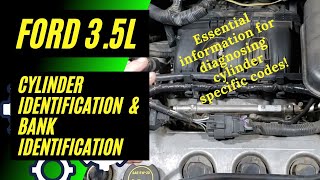
- Locate Cylinder 5: On the 3.5L EcoBoost in a Ford Flex, the engine is mounted transversely. The cylinders closest to the radiator are the front bank (Bank 2). From passenger side to driver side, they are cylinders 4, 5, and 6. 🎬 Watch: How to identify Ford 3.5L cylinder banks and locations Cylinder 5 is the middle cylinder on the front bank, making it easily accessible.
- Test the Ignition Coil: Swap the ignition coil from cylinder 5 with the one from cylinder 4 (the passenger-side front cylinder). This only requires an 8mm socket. Clear the codes, start the engine, and let it run or drive it briefly. Re-scan for codes. If the code is now P0304, the ignition coil is the problem.
- Inspect the Spark Plug: If the misfire remained on cylinder 5 after the coil swap, remove the spark plug from cylinder 5 using a 5/8" spark plug socket. Inspect for cracks in the porcelain, heavy carbon buildup, or a worn electrode. Even if it looks okay, consider swapping it with cylinder 4's plug to see if the misfire follows.
- Check Spark Plug Gap: While the plug is out, check the gap. Many EcoBoost owners find a gap of 0.028"-0.030" works best to prevent misfires under load, even though new plugs may come gapped wider.
- Inspect Wiring: If the misfire still remains on cylinder 5, carefully inspect the wiring harness and connector for the ignition coil and fuel injector on cylinder 5. Look for any signs of damage, corrosion, or loose connections. A broken locking tab on the connector is a common issue.
- Check the Fuel Injector: If ignition components and wiring are good, the problem may be the fuel injector. Listen for a steady clicking with a mechanic's stethoscope. If silent, it may have failed.
- Perform a Compression Test: If the cause is still not found, a mechanical issue is possible. A compression test will determine if cylinder 5 is sealing properly. This step is usually performed by a mechanic.
Parts You'll Likely Need
- Ignition Coil
(OEM #DG549 (Motorcraft))— This is one of the two most common failure items for a P0305 code. It's responsible for generating the high voltage for the spark plug.
Trusted brands: Motorcraft, NGK, Denso, Delphi
OEM price range: $50-$70
Aftermarket price range: $30-$50 - Spark Plug
(OEM #SP-580 (Motorcraft, supersedes SP-534))— Spark plugs are a regular maintenance item and wear out faster on EcoBoost engines. A worn, fouled, or improperly gapped plug is a very common cause of misfires.
Trusted brands: Motorcraft, NGK Ruthenium HX
OEM price range: $15-$25
Aftermarket price range: $10-$20
Related Codes That Often Appear With This One
- P0300 — If the condition causing the misfire on cylinder 5 is also beginning to affect other cylinders, a P0300 (Random/Multiple Cylinder Misfire) code may appear alongside P0305.
- P0316 — This code means 'Misfire Detected on Startup (First 1000 Revolutions)'. It often accompanies a specific cylinder misfire code, indicating the problem is present immediately when the engine starts cold.
Technical Service Bulletins (TSBs) & Recalls
- TSB 14-0180: Addresses misfires on some 3.5L EcoBoost engines built before mid-2013, recommending updated spark plugs and coil boots to combat carbon tracking. It notes this may be covered under the emissions warranty.
- TSB 11-8-19: For 2010-2011 Taurus, Flex, MKS, and MKT with the 3.5L GTDI engine, this TSB outlines procedures for diagnosing shuddering and misfire DTCs.
- Bulletin #SSM 46363: Notes that an illuminated MIL with codes P0300-P0306 and/or P0316 may be caused by the cylinder heads. If accompanied by P0524 or P06DD, the long block may be suspect.
Platform-Specific Known Issues
- A Technical Service Bulletin (TSB 14-0180) was issued for some 2011-2013 3.5L EcoBoost engines for misfires related to carbon tracking on spark plugs, recommending updated plugs (SP-534, now superseded by SP-580) and coil boots (WR-6135). This issue can affect the Flex as well.
- TSB 11-8-19 addresses rough running and misfire codes on 2010-2011 models with the 3.5L GTDI engine, pointing towards ignition component inspection.
- Intercooler condensation causing misfires under acceleration was a known issue on earlier EcoBoost models, particularly in humid weather. A TSB was released to add a deflector shield and update the PCM calibration to manage temperatures differently.
- Manufacturer bulletin #SSM 46363 identifies that persistent misfire codes including P0305 can sometimes be traced back to faulty cylinder heads or the engine long block.
Mechanic-Grade Diagnostic Values
- Ignition Coil Primary Resistance — expected: 0.4 to 2.0 Ohms (specifically ~0.55 Ohms for some Motorcraft coils). Failure: A reading of infinite resistance (open circuit) or near-zero (short circuit).
- Ignition Coil Secondary Resistance — expected: 6,000 to 11,500 Ohms (specifically ~5,500 Ohms for some Motorcraft coils). Failure: A reading significantly outside the specified range indicates a faulty coil.
- Gasoline Direct Injector (GDI) Resistance — expected: 1.0 to 2.0 Ohms. Failure: A reading outside this very tight range, or an open circuit (infinite resistance), points to a failed injector.
- Low-Pressure Fuel System (at Schrader valve or via scan tool) — expected: 60-70 PSI (Key On, Engine Off). Failure: Pressure below this range indicates a weak in-tank fuel pump or a failing Fuel Pump Driver Module (FPDM).
- High-Pressure Fuel Rail (Scan Tool, at idle) — expected: Over 200 PSI, and should closely match the 'desired' pressure PID.. Failure: Actual pressure is significantly lower than desired pressure (e.g., actual is 60 PSI when desired is 400 PSI).
- High-Pressure Fuel Rail (Scan Tool, under load) — expected: Should climb to over 2,000 PSI and track the desired pressure value.. Failure: Actual pressure fails to rise with desired pressure during acceleration.
Hidden / Shadow Codes Worth Checking
- Mode $06, TID $53: This is not a trouble code but a diagnostic monitor that displays raw misfire count data for each cylinder. It allows a technician to see which cylinder is misfiring, and by how much, even if the misfire count is not yet high enough to trigger a P030x code and illuminate the Check Engine Light. (see via A professional-grade scan tool or an advanced OBD-II app that can access Mode $06 data. The data is presented as a count, and a value significantly higher for cylinder 5 compared to others indicates the source of the problem.)
Scan Tool Commands That Help
- Ford IDS (Integrated Diagnostic System): Power Balance Test — This is a bidirectional test used by Ford technicians to pinpoint a misfiring cylinder without swapping parts. The tool graphically displays the RPM contribution of each cylinder, making it easy to spot the one that is underperforming (cylinder 5 in this case). It can also be used to disable individual injectors to see how it affects engine operation, helping to isolate the fault.
Wiring & Ground Locations
- Cylinder 5 Ignition Coil Connector — On the 3.5L EcoBoost, cylinder 5 is the middle cylinder on the front bank (closest to the radiator). The connector is directly on top of the ignition coil.. The two pins on the connector should be tested for power and ground. One pin should have battery voltage with the key on, and the other is the control signal wire from the PCM. Damage to this connector or its wiring is a direct cause of a P0305.
- Main Engine Ground Strap — While specific locations vary slightly by year, a primary ground strap is typically found connecting the engine block to the chassis frame rail on the passenger side of the engine bay.. A loose or corroded main engine ground can cause a host of electrical issues, including weak spark and intermittent misfires that can be difficult to diagnose. While it would likely cause multiple misfire codes (P0300), a poor ground can sometimes manifest as a single-cylinder misfire initially.
Real Owner Repair Stories
- Ford Truck Enthusiasts & Mustang6G Forums (Multiple reports on 3.5L EcoBoost engines) — Intermittent misfire, sometimes only under load, with P030x and P0316 codes.
❌ Tried (didn't work) Replacing ignition coils, Checking spark plug gap
✅ What actually fixed it Replacing the spark plugs and finding a hairline crack in the white porcelain insulator of the old plug. The crack allows spark to arc to the cylinder head instead of jumping the electrode gap, especially under high cylinder pressure (boost). This is often missed during a visual inspection. - YouTube Repair Channel (2013 Ford Flex 3.5L (non-EcoBoost, but same cylinder location and common parts)) — Bucking, hesitation, and loss of power.
❌ Tried (didn't work) Initial diagnosis was uncertain of cylinder location.
✅ What actually fixed it The owner correctly identified cylinder 5 as the middle, front cylinder, replaced both the ignition coil and spark plug for that cylinder, which completely resolved the misfire. - NHTSA ODI #11407153 — An owner reported that after the engine started misfiring both while stationary and in motion, they pulled code P0305. Despite replacing the coils and spark plugs, the engine continued to misfire.
- NHTSA ODI #10966046 — An owner reported receiving a P0305 error code for a cylinder 5 misfire and noted that multiple online forum reports suggest this is a recurring issue.
OEM Part Supersession History
Motorcraft SP-534 (CYFS12YT3)→Motorcraft SP-580 (CYFS12YT4), then SP-580X— Standard part revision and improvement. The SP-534 was an Iridium plug that replaced an earlier platinum plug (SP-528) which was known to have insulator cracking issues. The SP-580 is the current recommended service part.
Model Year Variations Within This Range
- 2013-2019 (Facelift): For the 2013 model year, the 3.5L EcoBoost engine received a power increase from 355 hp to 365 hp. While the fundamental causes of P0305 remain the same, this update came with revised mechanicals and engine calibrations. Additionally, a problematic PCV hose adapter design was noted primarily in 2013-2015 models, which Ford later updated.
- 2010-2012 (Pre-Facelift): These early models had 355 hp and were more prone to the intercooler condensation issue (the 'Eco-shudder') before Ford issued TSBs and hardware updates.
Diagnostic Flowchart
Other Known Issues on This Vehicle
Issues unrelated to this code that are worth knowing about as an owner of this generation:
- Internal Water Pump Failure 🔴 High — Common on engines over 80,000-100,000 miles. Failure can be catastrophic if not caught early.
- Timing Chain Stretch (Early Models) 🟠 Medium — Primarily affects first-generation (pre-2015) 3.5L EcoBoost engines, often appearing after 100,000 miles.
- Intake Valve Carbon Buildup 🟠 Medium — An inherent issue for all gasoline direct injection (GDI) engines. Becomes noticeable after 60,000-80,000 miles.
- Cracked Exhaust Manifolds 🟠 Medium — Can occur at various mileages due to high heat from the turbochargers and numerous heat cycles.
- Turbocharger Coolant/Oil Line Leaks 🟡 Low — Can occur over time as rubber hoses and O-rings degrade from heat. (Ref: SSM 47948)
Used vs. New Parts: Buying Guide for This Vehicle
When a used part is the smart pick: For a P0305 repair, buying used parts is generally not recommended. The primary culprits are wear-and-tear items like ignition coils and spark plugs. A used wiring harness connector pigtail from a junkyard could be a viable option if the original connector is broken and a new pigtail is unavailable or too expensive.
Donor-vehicle mileage cap: roughly under 50000 miles for the part to have meaningful remaining life.
What to inspect on the donor part:
- For a wiring connector, ensure the plastic is not brittle and the locking tab is intact.
- Check for any signs of corrosion on the metal pins inside the connector.
- Verify the donor vehicle is from a dry climate to minimize weather-related degradation.
OEM-only on this vehicle (don't cheap out):
- Ignition Coil
- Spark Plug
- Fuel Injector
Aftermarket brands forum-validated for this vehicle:
- NGK (For both ignition coils and spark plugs)
- Denso (For ignition coils)
- Bosch (For fuel injectors)
Brands owners have reported issues with on this vehicle:
- Unbranded or 'no-name' ignition coils from online marketplaces are frequently cited on forums as being unreliable, sometimes failing immediately or within a few thousand miles. While some 'performance' brands like MSD exist, many forum users report returning to OEM Motorcraft coils after experiencing issues with aftermarket alternatives.
Real Owner Stories
Aggregated from forums and TSBs cited above. Mileages and costs reflect what owners reported in those sources.
2013 Ford Flex 3.5L EcoBoost
Symptoms: Experiencing P0305 and P0306 codes simultaneously.
What fixed it: Replacing all 6 spark plugs and the spark plug boots.
Source hint: https://www.fordflex.net/forums/viewtopic.php?t=19417
2012 Ford Taurus SHO 3.5L EcoBoost
Symptoms: Cylinder 5 misfire (P0305).
What fixed it: Replacing spark plugs as the first course of action.
Source hint: https://www.reddit.com/r/TaurusSHO/comments/8v5n0i/cylinder_5_misfire/
2011 Ford Flex 3.5L GTDI
Symptoms: Rough running, shuddering, and misfire diagnostic trouble codes.
What fixed it: Ignition component inspection and diagnostic procedures outlined in TSB 11-8-19.
Source hint: TSB 11-8-19
Related OBD-II Codes
Frequently Asked Questions
Where is cylinder 5 located on my Ford Flex 3.5L EcoBoost?
Does TSB 14-0180 apply to my Flex, and what does it recommend?
Is there a specific spark plug gap I should use for the EcoBoost engine to prevent P0305?
Could humid weather be causing my engine to shudder and throw a P0305 code?
Will the emissions warranty cover the repairs for a P0305 misfire?
How often should I actually change the spark plugs on my 3.5L EcoBoost Flex?
Helpful Videos
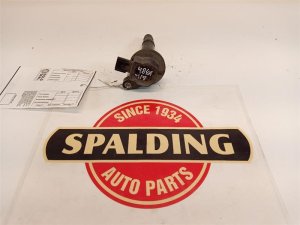
Used OEM Parts in Stock
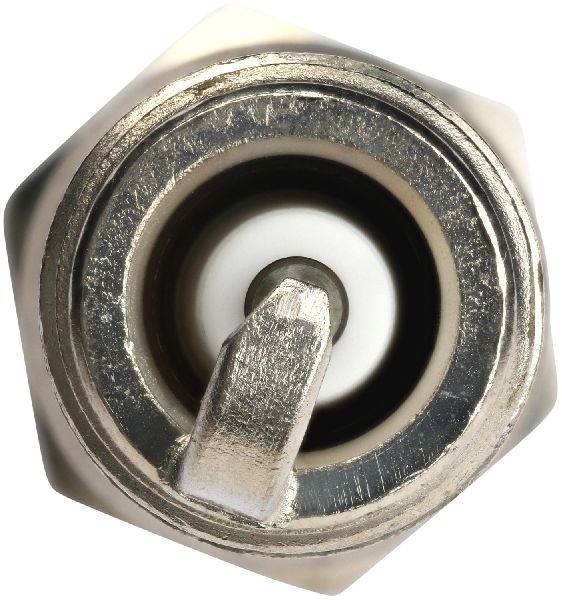
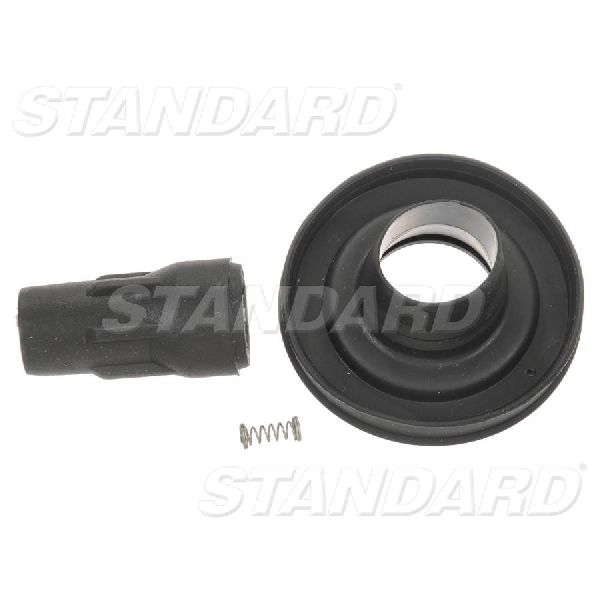
New Aftermarket Parts Available

The information in this article is provided for general reference and educational purposes only. Vehicle specifications, procedures, and part compatibility can vary by production date, trim level, and region. Always consult your vehicle's factory service manual and verify part numbers before purchasing or performing repairs. Safety-critical components such as airbags, seat belts, and braking systems should be installed by a qualified professional.
- Ford Flex:
- 🧭 Diagnostic Flowchart
- 🎬 Helpful Videos
- 🛍️ Shop This Part
- What's Unique About the 2010-2019 Ford Flex
- Symptoms You May Notice
- Most Likely Causes
- Rare But Worth Checking
- Diagnosis Steps
- Parts You'll Likely Need
- Related Codes That Often Appear With This One
- Technical Service Bulletins (TSBs) & Recalls
- Platform-Specific Known Issues
- Mechanic-Grade Diagnostic Values
- Hidden / Shadow Codes Worth Checking
- Scan Tool Commands That Help
- Wiring & Ground Locations
- Real Owner Repair Stories
- OEM Part Supersession History
- Model Year Variations Within This Range
- Other Known Issues on This Vehicle
- Used vs. New Parts: Buying Guide for This Vehicle
- Real Owner Stories
- 2013 Ford Flex 3.5L EcoBoost
- 2012 Ford Taurus SHO 3.5L EcoBoost
- 2011 Ford Flex 3.5L GTDI
- Related OBD-II Codes
- Frequently Asked Questions
- 🎟️ Get 5% Off